Camping Air Mattresses
Coleman Quickbed Air Mattress Review: An Inexpensive Full-Size Option for Occasional Camping
A practical look at the Coleman Quickbed Full air mattress, covering comfort, inflation, air retention, packed size, and the situations where it genuinely makes sense.
Introduction
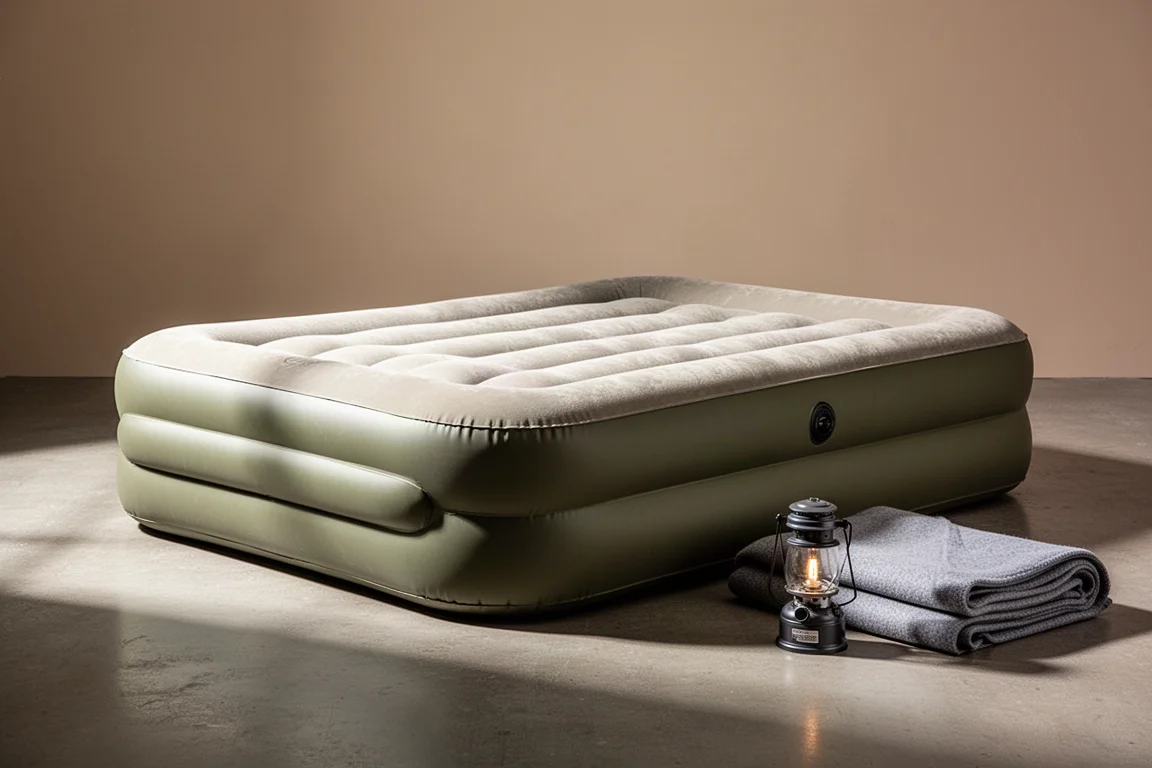
The Coleman Quickbed Air Mattress in Full size is a straightforward inflatable bed aimed at campers who want something affordable rather than something luxurious. It arrives as the mattress alone, along with instructions and warranty information, and it sells at a relatively low price. Our testing focused on comfort, ease of use, portability, and how well it holds air across several nights.
Fully inflated, the Quickbed lifts a sleeper roughly 8 inches off the ground. In every position we tried, on the back, stomach, and side, the body never made contact with the floor beneath. The same held true when leaning on an elbow or sitting up on the mattress.
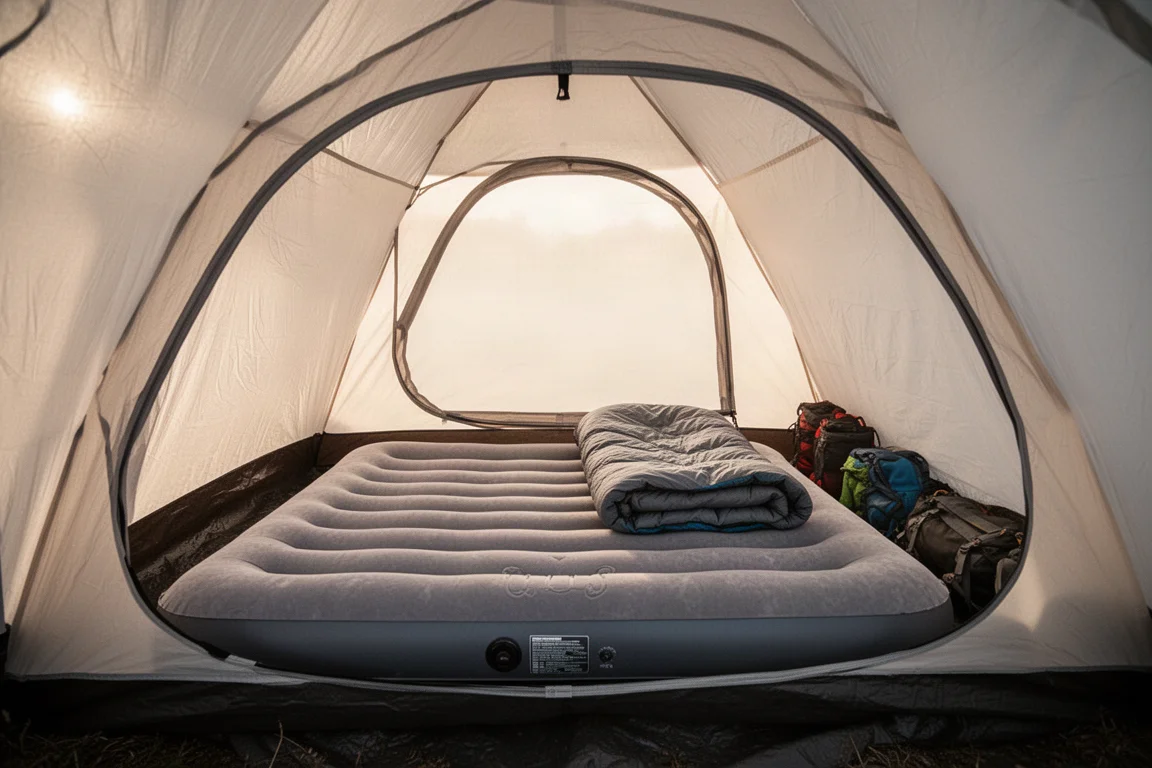
The mattress measures about 73 by 53 inches, which makes it slightly smaller than a standard Full size. It works for two sleepers, though it is not especially spacious. A larger version is also available, described as a Queen at 73 by 58 inches, which is likewise smaller than a true Queen.
Who This Mattress Is For
The Quickbed makes the most sense as a quick fix. It suits one-off nights, occasional guest sleeping, and low-effort summer car camping where the mattress stays close to the vehicle.
It is not a good match for long-term use, frequent camping trips, or anyone who moves around a lot in their sleep. Because it is an air mattress with no insulation, it is best kept to warm weather. At 7.6 pounds for the mattress alone, it is also far too heavy for backpacking, so car camping is the realistic use case.
Main Strengths
Price is the clearest advantage. The Quickbed is inexpensive for a full-size inflatable mattress, and it still delivers a usable sleeping height of about 8 inches.
The sleeping surface is a soft plush top, which is comfortable to lie on and helps cut down the noise the mattress makes when someone shifts position during the night.

Packing is quick once the routine is learned. The mattress folds down to roughly 21 by 14 by 5 inches, a size that fits easily in a car trunk. It also fits inside a four-person dome tent, either horizontally or vertically, leaving plenty of room for camping gear, although there is not enough space for two mattresses of this size.
Things to Consider Before Buying
The biggest complaint is movement. There is quite a bit of bouncing overnight, and it becomes more noticeable with two people sharing the mattress. Anyone sensitive to a shifting sleep surface will feel it.
When the mattress is pumped up very firm, the thick baffles stick out noticeably. They press against some parts of the body but not others, which makes it hard to settle into a comfortable position. The mattress is noticeably better when it is slightly less firm.
Setup, Inflation and Packing
The Quickbed has a single valve along the side, sitting almost flush with the surface. To inflate, the cap is pulled open, the valve is pulled away from the inner post, and a pump nozzle is inserted. Using a pump that fits, full inflation takes slightly under three minutes. No pump or stuff sack is included with the mattress.
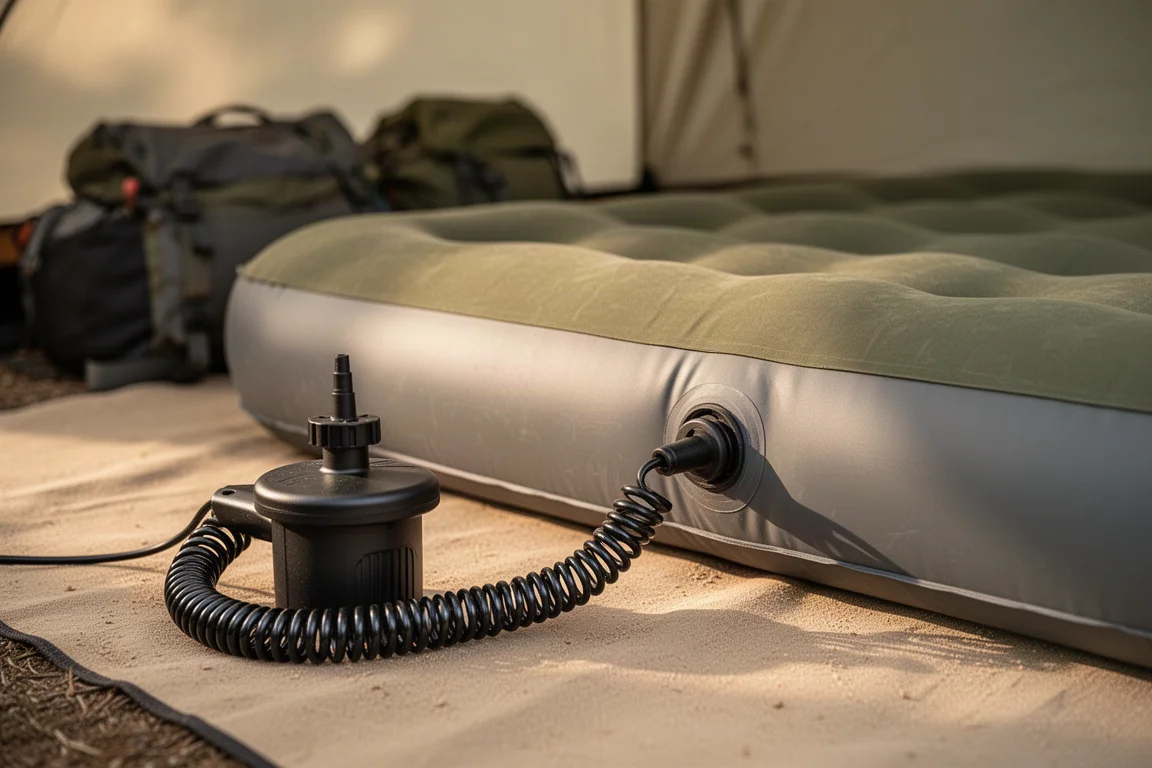
One quirk worth knowing: because the valve is a two-way opening, it has to be pressed in before the pump is switched off, or air escapes. It is easy to lose a little air before the valve is sealed back against the post. The same design makes small firmness adjustments difficult, since letting out a little air tends to release a lot at once.
Deflating is quicker than expected. Opening the cap and pulling the valve lets the air out, and folding the mattress in thirds while leaning on it pushes out most of the rest. The full process, including folding it in half and packing it away, takes around two minutes.
Air Retention and Long-Term Durability
Air retention is average at best. After one night with two sleepers, the mattress lost roughly 10 to 15 percent of its air by morning. Later nights were better, with around 5 percent lost per night. This was not caused by the material stretching, since the mattress had been used several times before the test, and it was not a temperature effect either, as the test was run indoors at regulated temperatures.
Topping it off before bed is a sensible habit. Even so, the loss never reached the point where a sleeper ended up on the ground.
The material feels and smells like PVC. The top is velvety and soft, while the underside feels plasticky, and the new-mattress smell fades after a few days of use. The valve itself is made from a rubbery plastic, and the repeated pushing and pulling it requires is likely to wear faster than a screw-on valve design.
Buying Advice
Buy the Coleman Quickbed if the goal is an inexpensive, full-size mattress for occasional use and you accept its limits. Plan to top it off each night, and inflate it slightly less than fully firm to reduce the pressure from the baffles.
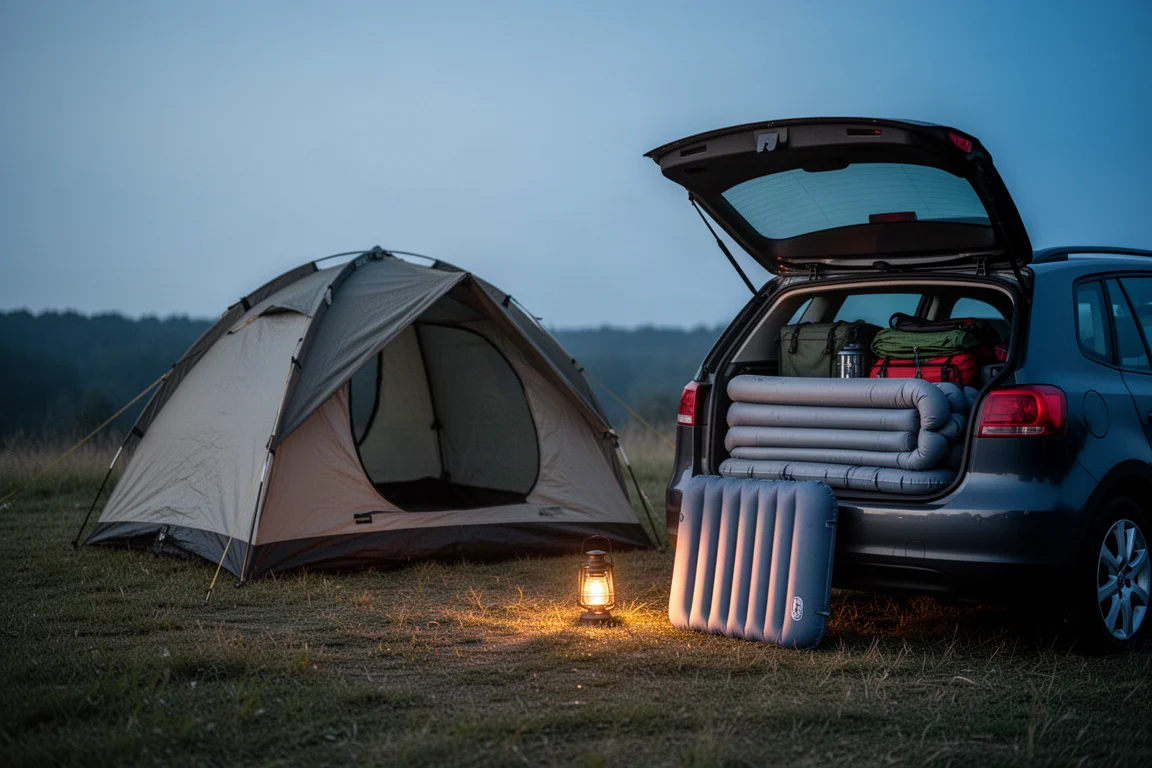
Skip it if you camp often, share the bed with a restless sleeper, or prefer a very firm air mattress. In those cases the bouncing and the baffle pressure will be constant annoyances rather than minor ones. It is also worth remembering that the mattress needs a pump, which is sold separately, and that it takes up a fair amount of space in a car.
Conclusion
The Coleman Quickbed is not a standout air mattress. Its strengths are a low price, a usable 8-inch sleeping height, and a plush top that keeps noise down. Its weaknesses are bouncing, uneven baffle pressure when firm, a two-way valve that is awkward to use, and air loss of around 10 to 15 percent on the first night with two sleepers. As an occasional, warm-weather car camping mattress, it does the job.
Product link
View more details for Coleman Quickbed Air Mattress
This product is mentioned in the review. Check the specifications, options, and compatibility before buying.
View more details for Coleman Quickbed Air MattressFurther reading
Related Reviews
Camping Air Mattresses
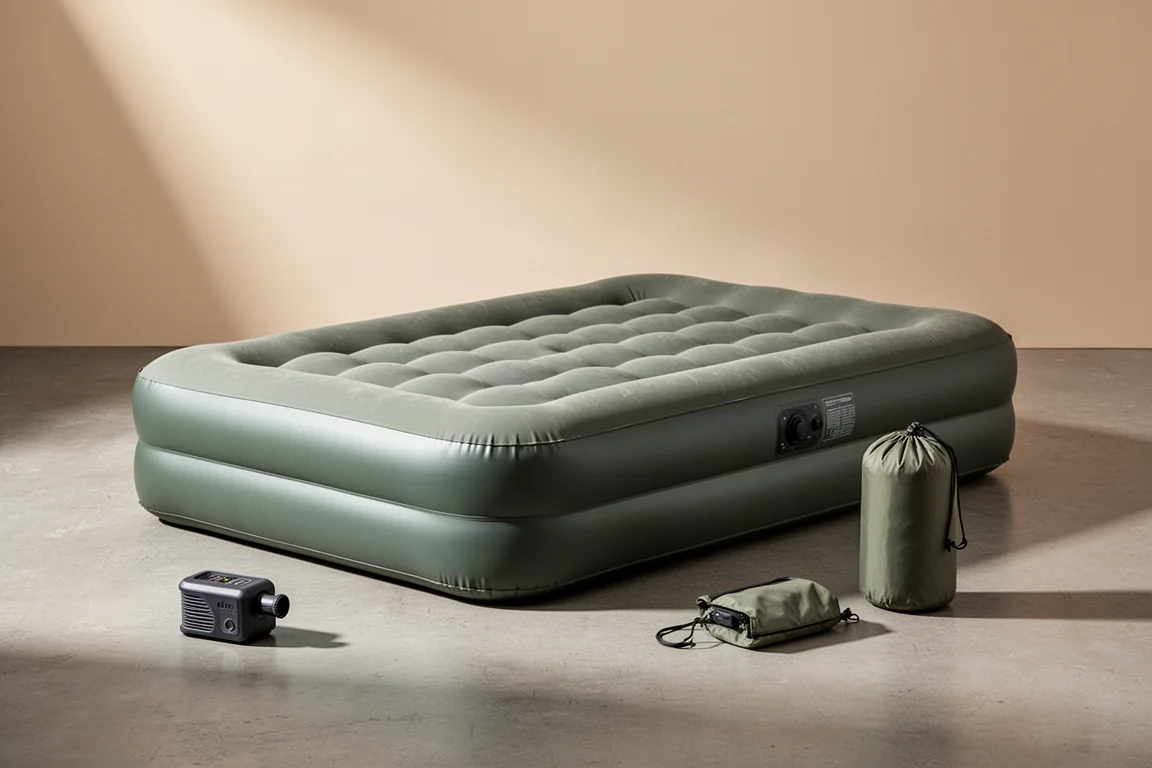
Alps Mountaineering Vertex Air Bed Review: A Nearly Queen-Size Camping Mattress
A detailed look at the Alps Mountaineering Vertex Air Bed, covering comfort, air retention, inflation, packed size, tent fit, and overall value.
Camping Air Mattresses
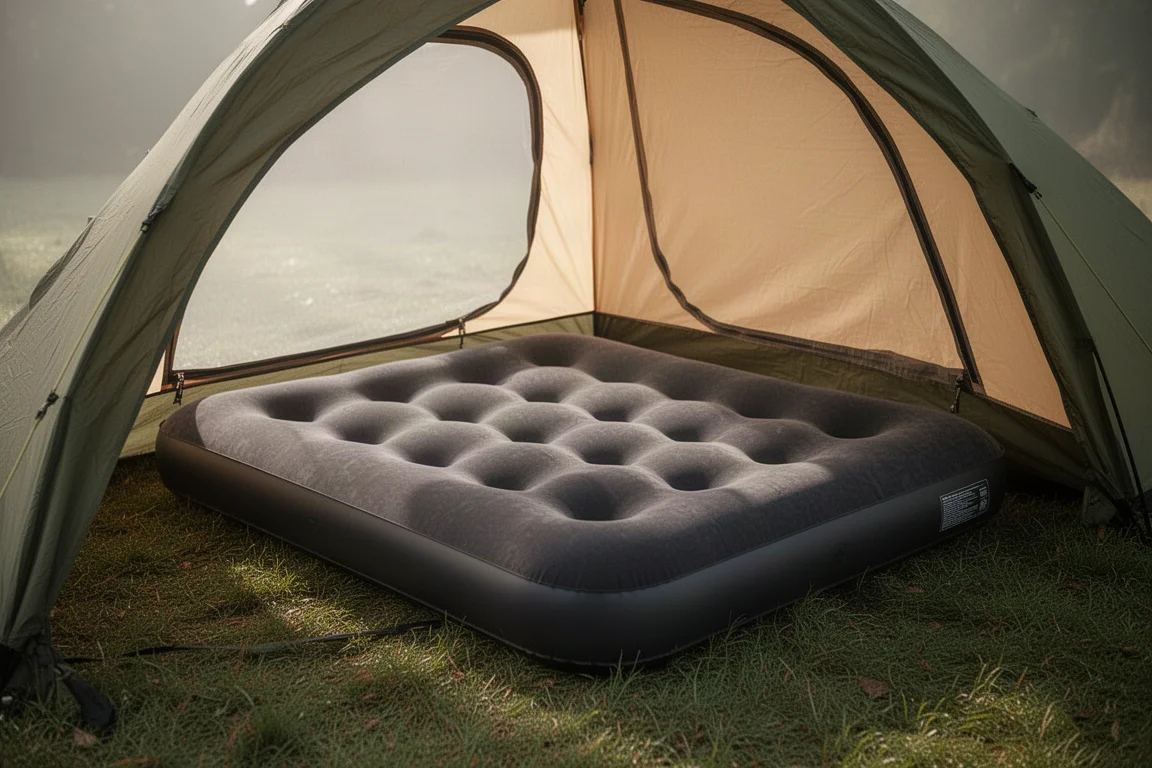
Lightspeed Outdoors 2-Person Camping Air Mattress Review: Comfortable Car Camping, One Fiddly Valve
A practical look at the Lightspeed Outdoors 2-Person Camping Air Mattress, covering comfort, inflation and deflation, packed size, tent fit, and the valve and pump trade-offs worth knowing before you buy.
Camping Air Mattresses
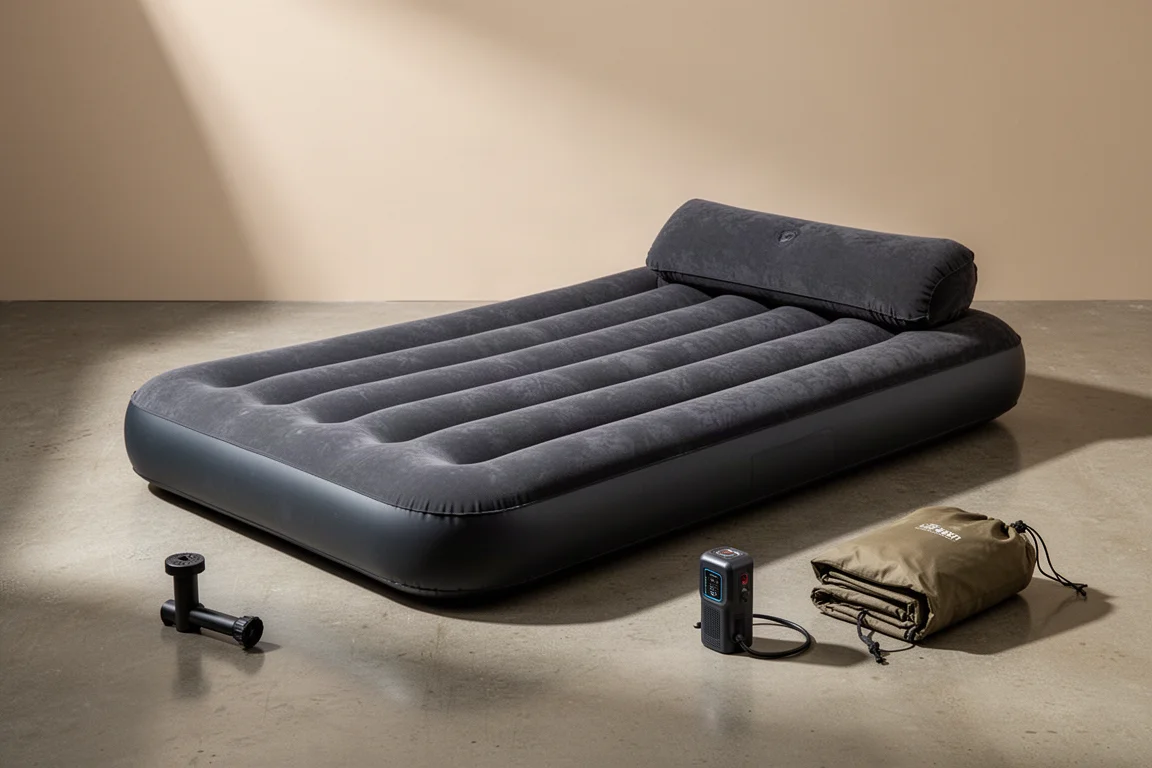
Sierra Designs 2-Person Camping Air Mattress Review: Comfortable Value for Car Campers
A PVC-free two-person air mattress that stays comfortable and holds air well, with a weak pump and some bounce to plan around.