Camping Air Mattresses
SkyMac Air Mattress Long-Term Test: One-Person and Two-Person After a Year
After a year of camping trips, the SkyMac one-person and two-person air mattresses have held up without leaks or holes, and both remain strong value picks.
Introduction
Self-inflating sleeping pads sit in an awkward spot for many campers. They are comfortable enough to replace a traditional air mattress, but they are often priced like premium gear. The SkyMac line takes the opposite approach, pairing a thick foam-filled pad with a price that stays well below the premium tier. The question that mattered most when these pads first appeared was durability, because the manufacturer does not publish the material composition. A year of regular use answers that question.
Why These Two Pads Deserve a Long-Term Look
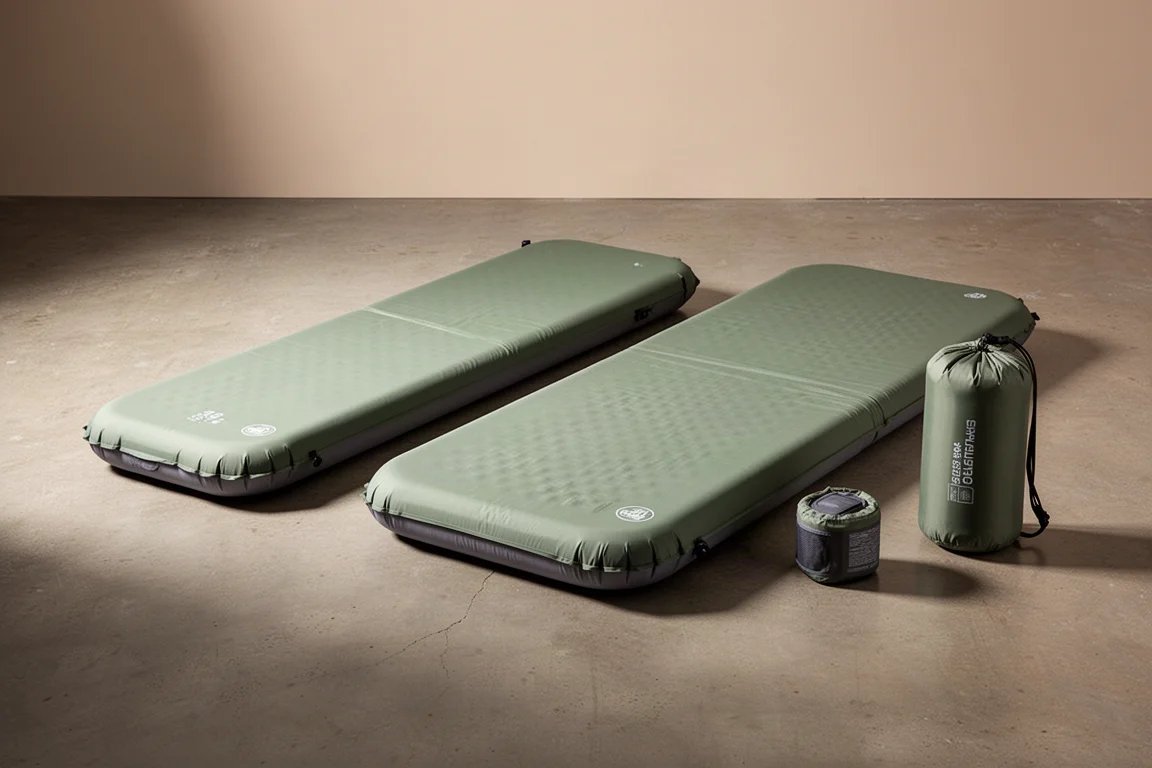
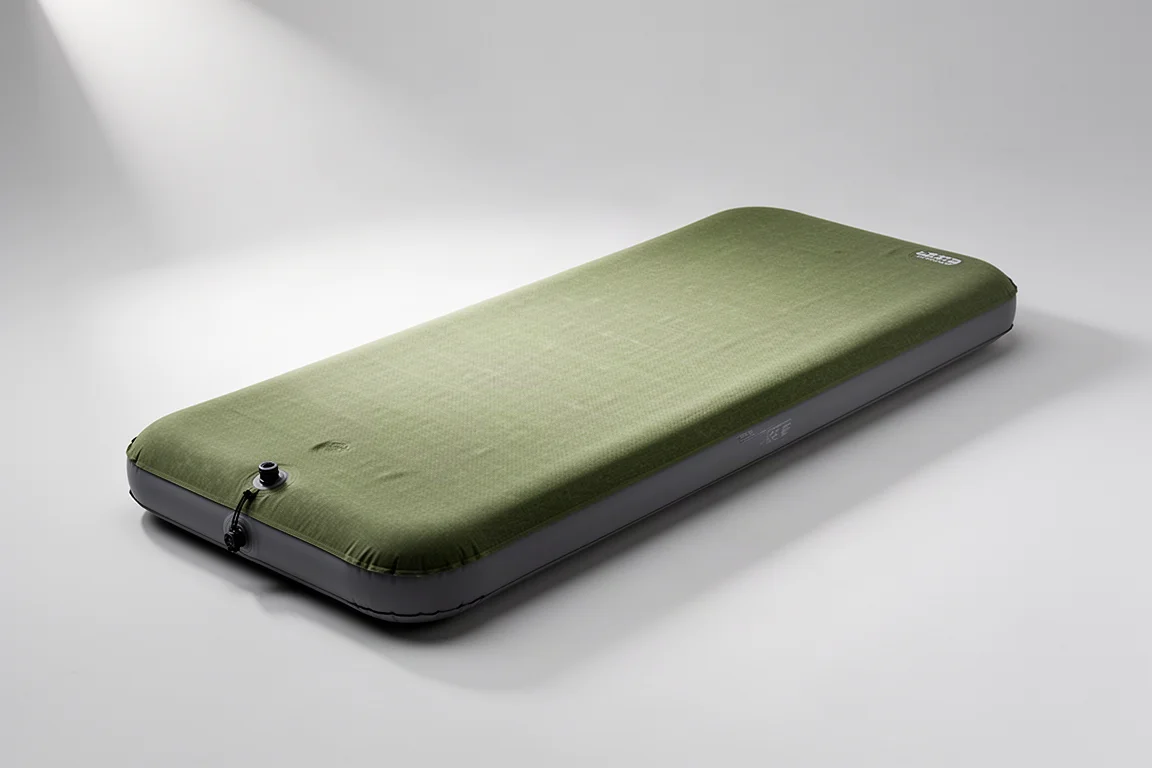
The one-person pad and the two-person pad share the same construction: a green top surface, a grey base, and a foam core that expands on its own once the valve is opened. Both measure about four inches thick when inflated, and both are aimed at car camping, truck camping, trailer trips and guest-room duty rather than backpacking.
The original appeal was straightforward. The pads felt close to premium alternatives at a fraction of the cost, but the lack of published material specifications left a reasonable doubt about how long the shell and foam would last.
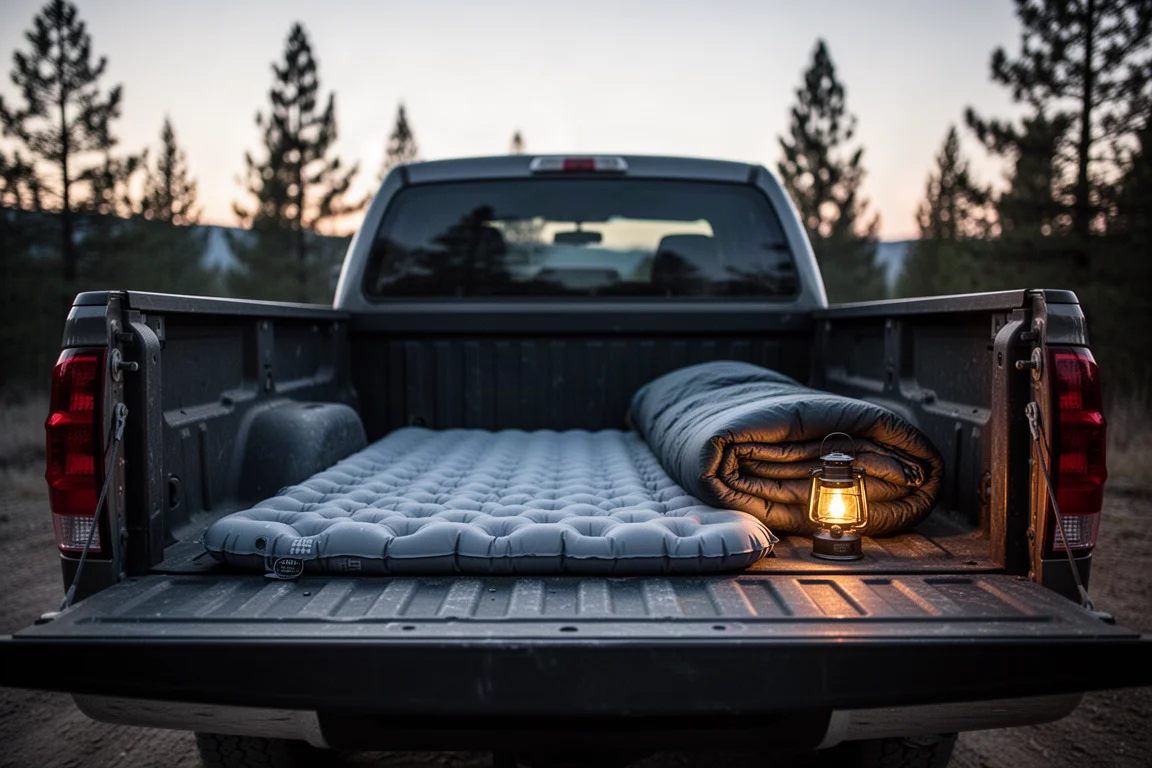
That doubt has largely been resolved. After roughly a year of use, including dozens of trips on the one-person pad and about a dozen on the two-person version, neither has developed a leak, a puncture or a seam failure.
SkyMac One-Person Air Mattress: A Year of Regular Use
The single pad measures 79 inches long, 28 inches wide and 4 inches thick, and it weighs about 7 pounds. That combination makes it a car camping product rather than a backpacking one, since it is too bulky and heavy to carry on foot.
Comfort and Sleep Support
Side sleepers get the most obvious benefit here. The foam core and the four-inch thickness keep hips and shoulders from pressing through to the ground, so there is no hard contact point in the middle of the night. The pad also holds its shape well enough that a full night of sleep does not end with a stiff back.
Setup and Inflation
Setup is simple. Open the valve, let the foam pull air in on its own, and wait about three to four minutes. Self-inflation reaches roughly 70 percent of full firmness, which is normal for this type of pad. From there, the valve can be set to a position that lets you add air by mouth without letting it escape, so you can dial in exactly how firm the surface feels.
Cold-Weather Performance
The thickness helps in cooler conditions as well. Because the pad is deep, cold from the ground has a harder time reaching the sleeper, which makes it usable in a truck bed or an SUV on cold nights. The manufacturer does not publish an R-value, so the insulation benefit is best judged by the thickness and the foam core rather than by a rated number.
SkyMac Two-Person Air Mattress: Wider Sleeping Surface
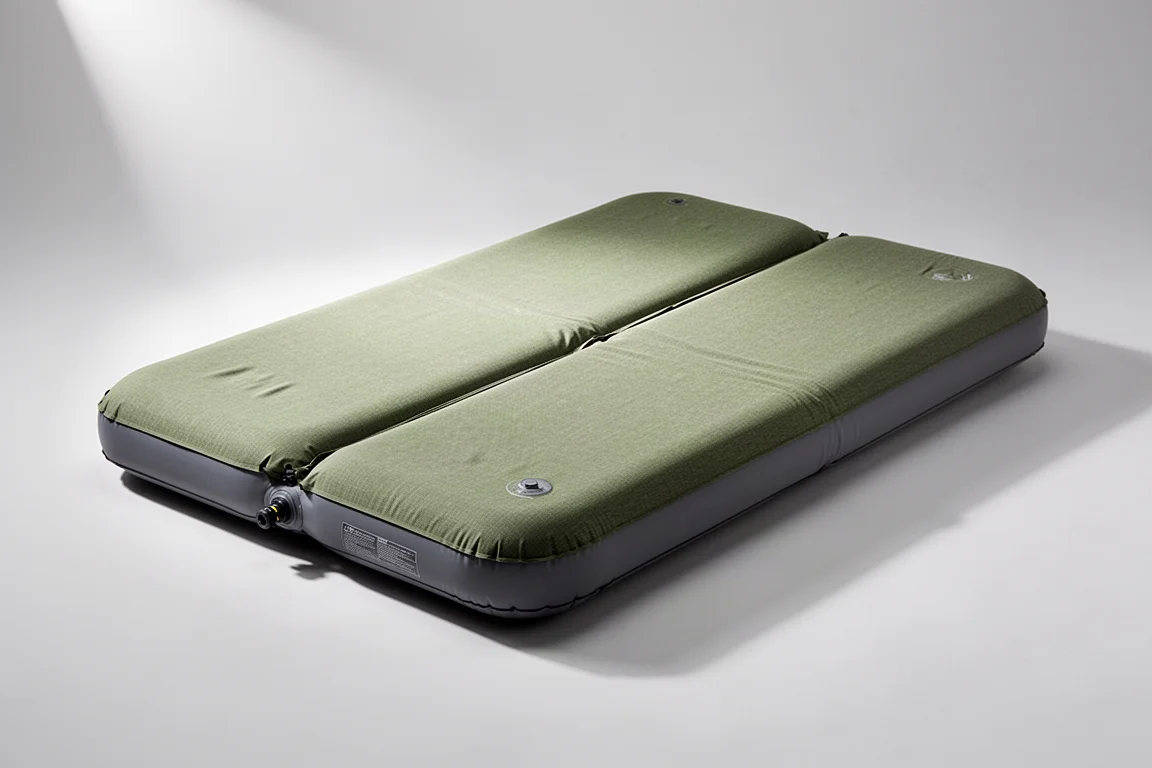
The two-person version is essentially the same pad at twice the width, with a weight of about 14 pounds. It is the version that gets packed for family visits and shared camping trips, and it follows the same routine: unfold it, give it four or five minutes to self-inflate, close the valves, then top up with a few breaths to reach the preferred firmness.

Firmness retention is the standout quality. The thick foam keeps the surface rigid enough that one person getting up in the middle of the night does not disturb the other, and the pad stays firm through the night rather than softening toward morning. Two adults can share it without either feeling crowded.
Durability After a Year of Camping
This is where the long-term picture looks strongest. Both pads have been used across warm summer nights and cold winter trips in a truck bed, an SUV, a trailer and a tent, and neither shows any sign of failure. No leaks, no holes, no loss of loft in the foam.
The material question remains open. The manufacturer does not state what the shell and core are made of, and the most reasonable guess is a polyester shell over a foam core. What matters more is the result: a year of repeated inflation, deflation, packing and use has not produced the wear that the unknown materials might have suggested.
Warmth and Cold-Weather Performance
Cold-weather use is one of the stronger arguments for these pads. In a truck bed or the back of an SUV during winter, the four-inch foam core blocks a meaningful amount of ground chill. That is not the same as a rated insulation value, and the pads do not carry a published R-value, so campers who sleep very cold should treat the thickness as a helpful buffer rather than a guarantee.
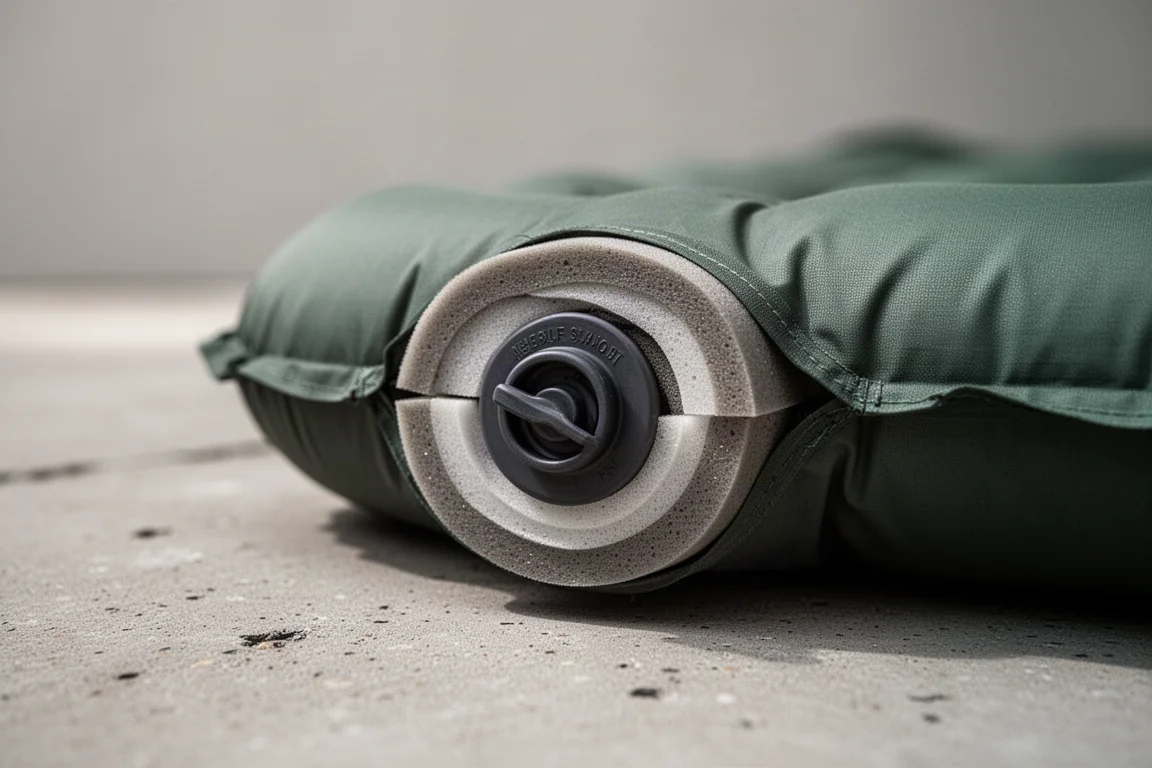
Used inside a tent in summer, the same construction stays comfortable and does not feel clammy. The combination of a foam core and a fabric top makes the surface feel closer to a mattress than to a basic inflatable.
Packing and Storage: The Main Trade-Off
Deflating and rolling these pads is the one area that demands patience. The one-person version takes some effort to roll tightly, and the technique that works best is to release the air at the valve, start rolling by hand, then press down with your knees every few turns to push out remaining air and compress the foam. Closing the valve before bagging keeps air from creeping back in.
The two-person version is a genuine struggle for one person. Because it behaves like two pads joined in the middle, it has to be folded and then rolled very tightly to fit into its storage bag, which is on the small side for the packed size. Two people working together make the job noticeably easier. The one-person pad fits its bag without the same fight.
Value Compared With Similar Pads
Similar self-inflating pads from premium brands commonly sell in the 300 to 350 dollar range. The one-person SkyMac pad sits at roughly 120 dollars, and the two-person version at about 165 dollars, which is a large gap for a product that delivers comparable comfort and, based on a year of use, comparable durability.
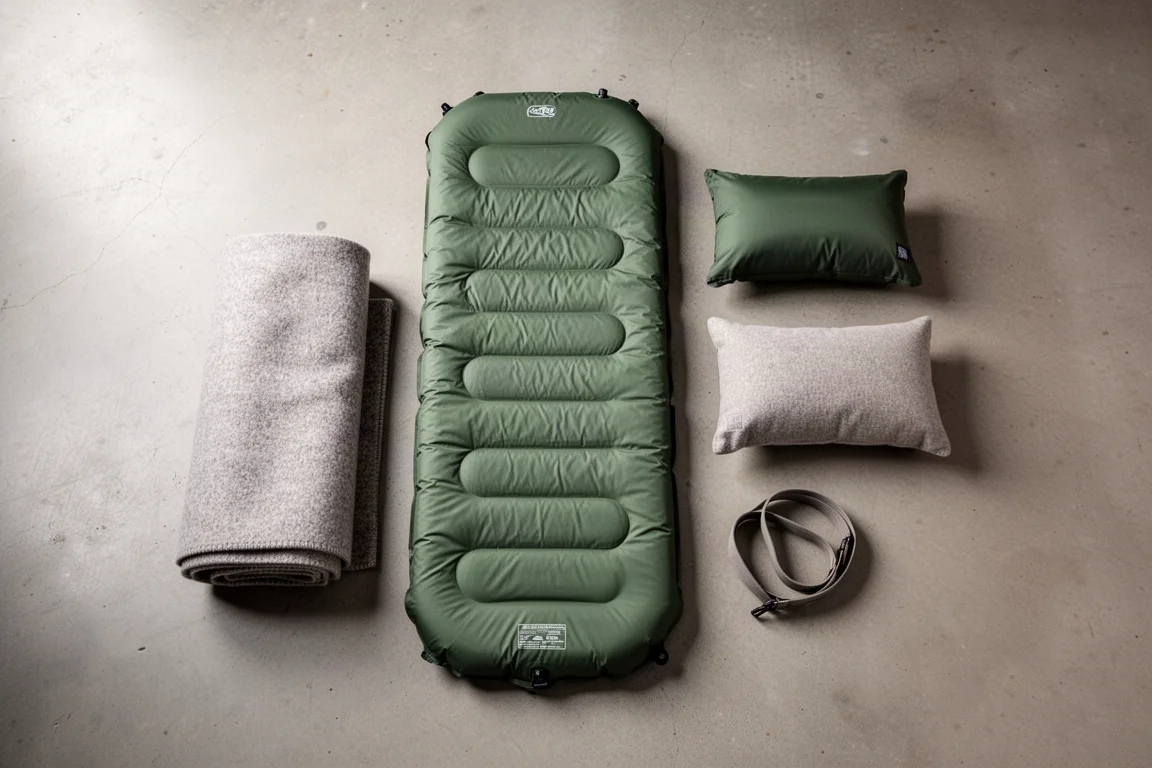
For anyone upgrading from a basic inflatable air mattress, the difference is easy to feel. The thicker foam, the fabric surface and the cold-weather performance push these pads into a more premium category while the price stays in the mid-range. Availability has been intermittent and the pads have a habit of selling out, so timing can matter when restocking is the goal.
Conclusion
Both the SkyMac one-person and two-person air mattresses have earned their place after a year of steady use. They are comfortable, they handle cold ground better than a plain inflatable, and they have shown no leaks or durability problems despite the manufacturer not publishing material details. The trade-offs are real but manageable: rolling them up takes effort, and the two-person version is best packed with a second pair of hands. For car camping, truck camping and guest-room use, they remain an easy recommendation at their price.
Further reading
Related Reviews
Camping Air Mattresses
Alps Mountaineering Vertex Air Bed Review: A Nearly Queen-Size Camping Mattress
A detailed look at the Alps Mountaineering Vertex Air Bed, covering comfort, air retention, inflation, packed size, tent fit, and overall value.
Camping Air Mattresses
Coleman Quickbed Air Mattress Review: An Inexpensive Full-Size Option for Occasional Camping
A practical look at the Coleman Quickbed Full air mattress, covering comfort, inflation, air retention, packed size, and the situations where it genuinely makes sense.
Camping Air Mattresses
Lightspeed Outdoors 2-Person Camping Air Mattress Review: Comfortable Car Camping, One Fiddly Valve
A practical look at the Lightspeed Outdoors 2-Person Camping Air Mattress, covering comfort, inflation and deflation, packed size, tent fit, and the valve and pump trade-offs worth knowing before you buy.