Ski Boots
Ski Boot Comparison 2026: K2 Mindbender, Fischer Ranger 120, and Atomic Hawx Prime S
Three 120-flex all-mountain ski boots compared on volume, flex quality, stance, and build, with the trade-offs to check before you buy.
Introduction
A 120-flex all-mountain boot is one of the most useful purchases a resort skier can make, and also one of the easiest to get wrong. Flex ratings are not standardised, so two boots labelled 120 can behave like entirely different products once you are on the snow.
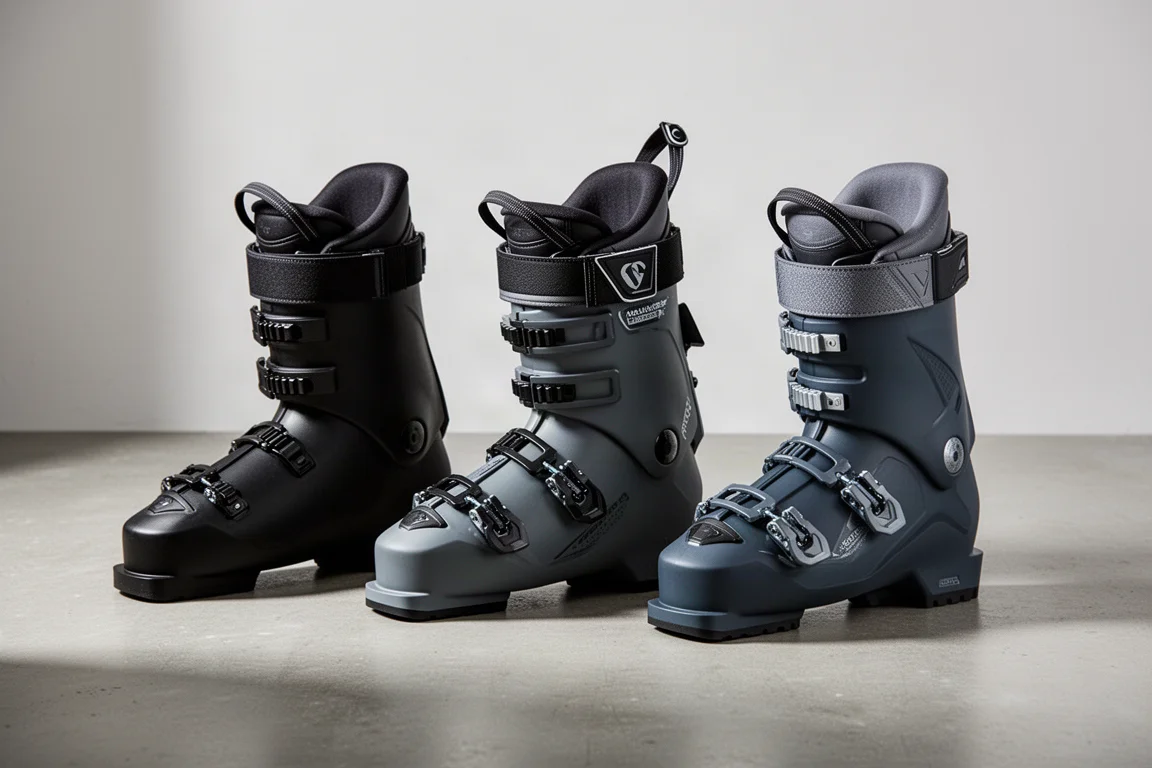
This comparison puts three 120-flex boots side by side: the K2 Mindbender, the Fischer Ranger 120, and the Atomic Hawx Prime S. Each one has a clear character, a genuine strength, and a trade-off worth understanding before you commit a season to it.
How These Three Boots Were Compared
All three boots were assessed in a 120 flex with attention to four things: volume and toe box room, how the flex progresses through its range, how the stance sits under the foot, and how the hardware feels in the hand.
Fit comes first, because a boot that pinches or floats cannot be rescued by buckling it tighter. Flex quality comes next: a good flex is gradual and predictable, while a poor one is vague at the start or abruptly stiff at the end. Stance matters because a boot that tilts the foot will keep tilting it all day. Build quality covers buckles, lacing, the liner, and the general sense that the shell will hold up over multiple seasons.
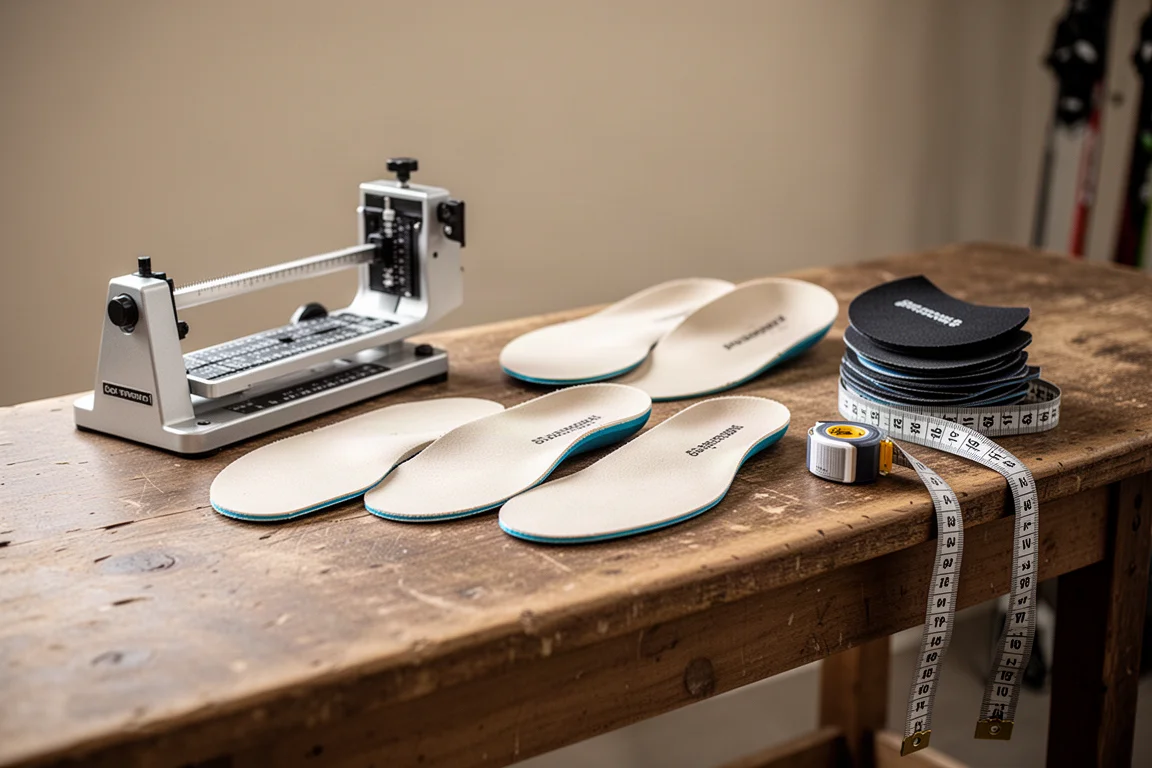
One more point worth knowing before the individual boots: the flex number describes the shell, not the experience. A soft 120 and a firm 120 can both be correct, just for different skiers. The only reliable test is to flex the boot on your own foot.
K2 Mindbender 120: Solid Build, Softer Than Expected Flex
The K2 Mindbender is a well-made boot, and that is the first thing worth saying. The buckles, the lacing, and the overall finish all feel considered, which is notable given how recently K2 entered the boot market.
The toe box is generous and comfortable, and that alone will appeal to skiers who normally feel cramped in a performance-oriented shell.
Flex is where the Mindbender divides opinion. Rated at 120, it feels closer to a 100 or 110 in practice. Skiers who want a relaxed, forgiving flex will appreciate that. Skiers who expect a 120 to push back will not.
There is also a fit consideration in the flexed position. When the boot is flexed fully, the shell pushes the ankle into an awkward angle and the pressure lands on the side of the ankle. For some foot shapes this becomes genuinely uncomfortable rather than merely noticeable, and the flex pattern itself feels uneven at the end of its range.
The build quality is strong enough to make the Mindbender worth trying regardless. Just do it in a shop, in your size, with your own foot inside it.
Fischer Ranger 120: Comfortable, Roomy, and Even Flex
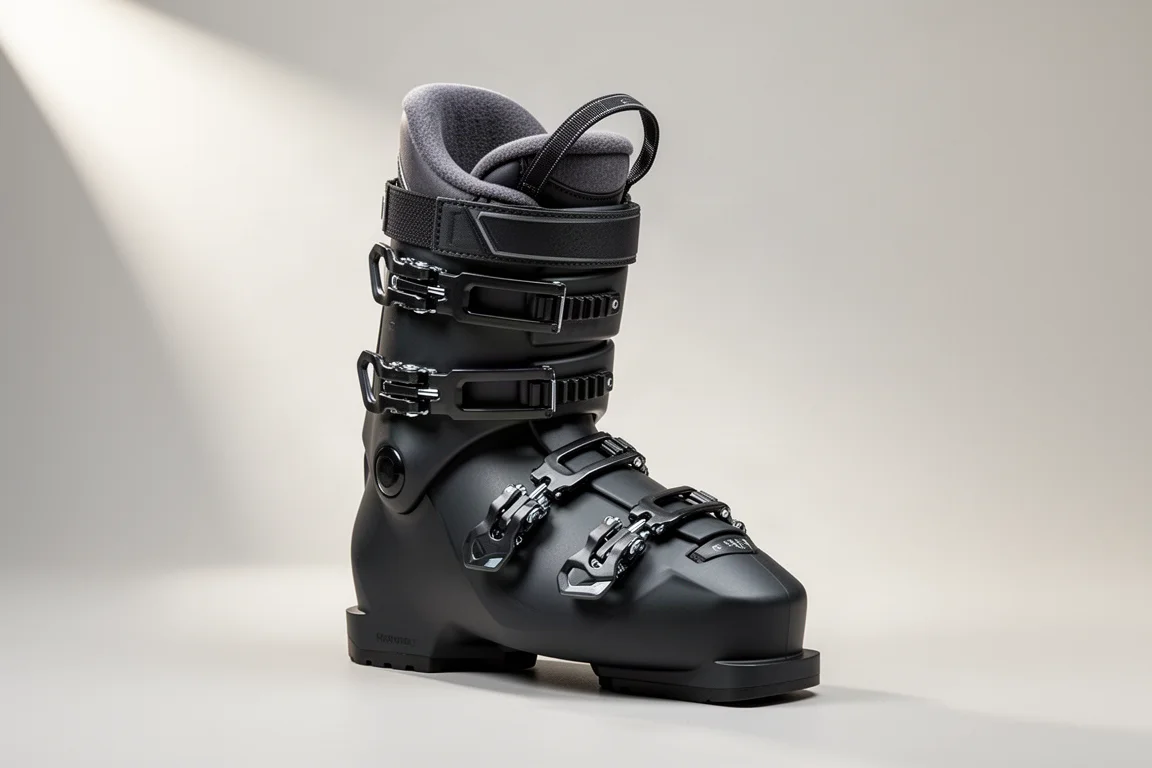
The Fischer Ranger 120 is the most immediately comfortable of the three. It offers plenty of room through the shell, which makes it a strong candidate for wider feet, and the flex is clean and gradual from the first millimetre of travel. Nothing about it feels abrupt or vague.
The stance is the detail to check. The boot sits with a slight outward tilt under the foot. That may be intentional, and for some skiers it will feel natural, but it is exactly what rules the Ranger out for anyone who prefers a flat-footed platform and a neutral stance.
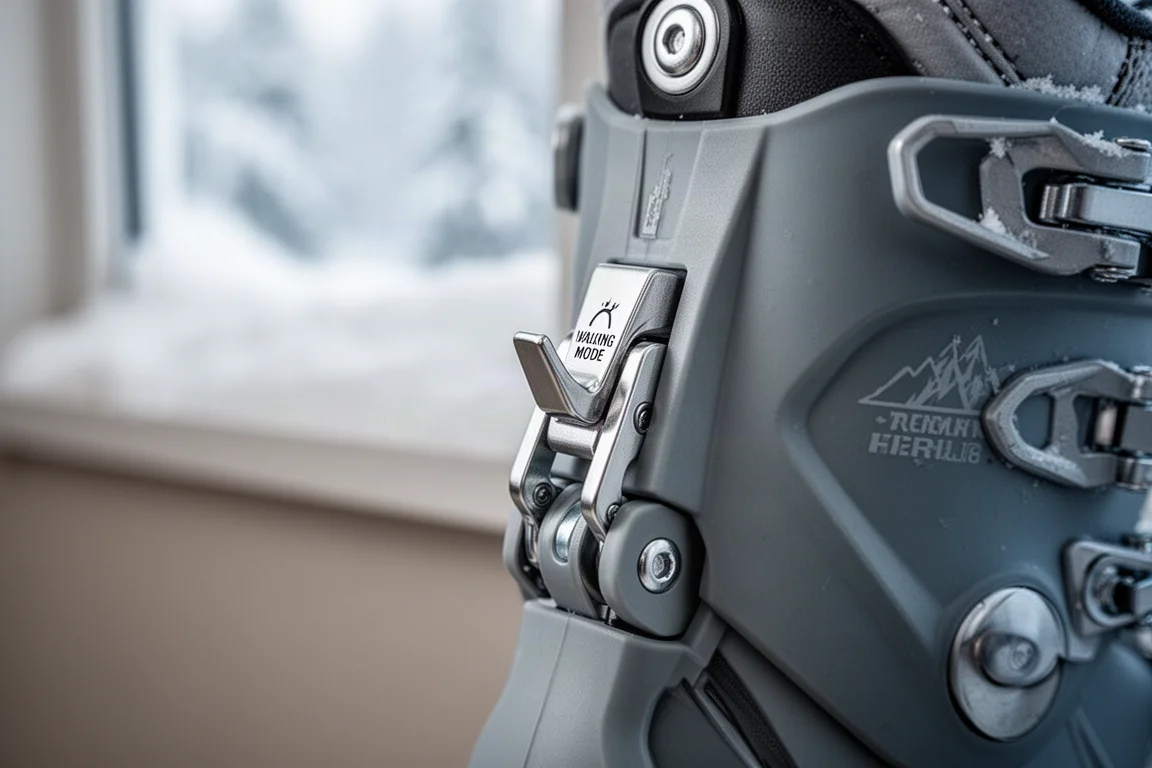
Fischer also builds in a walking mode operated by a small lever at the rear of the shell. It is a neat mechanism and it works well, but it is of limited value to skiers who spend their days in resort, where long lift lines and short car park walks rarely justify the extra hardware. Anyone who prefers a simple, single-mode boot should factor that in.
On flex, the Ranger 120 lands close to what a Lange 120 feels like, which is useful context precisely because flex ratings are not standardised between brands.
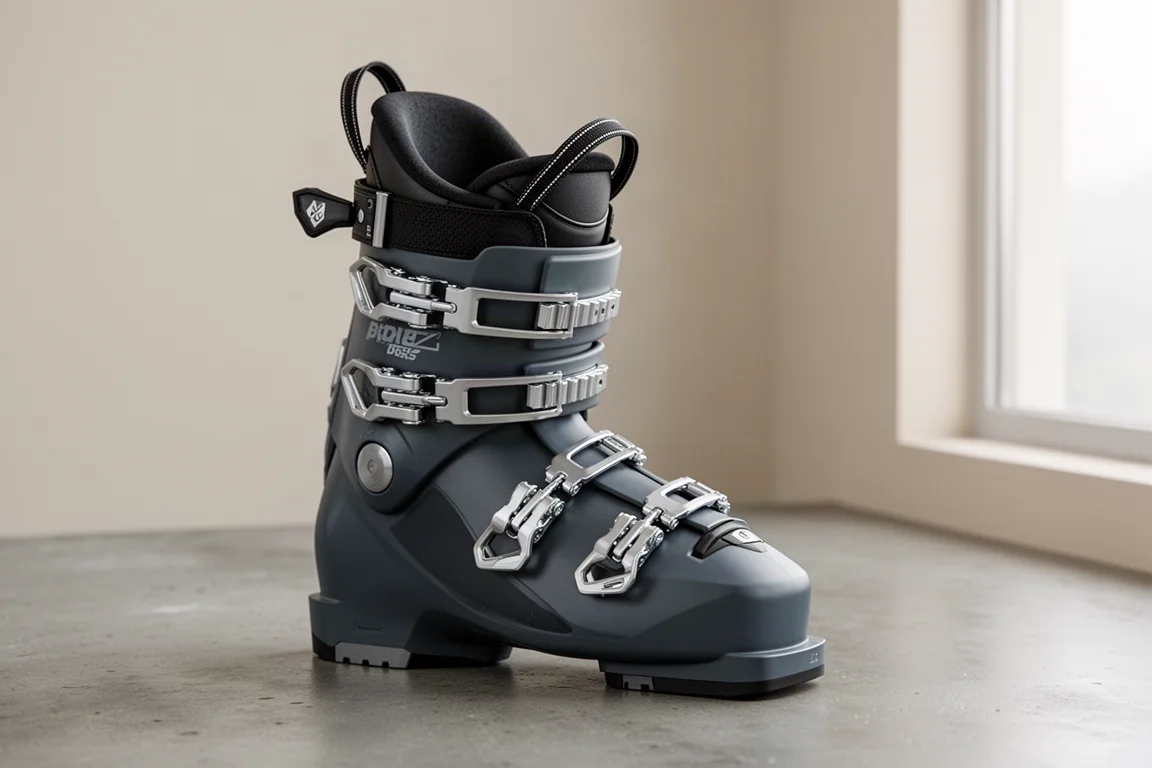
Atomic Hawx Prime S: The Best Fit of the Three
The Atomic Hawx Prime S was the strongest of the three overall. The toe box works, the flex is even through the entire range, and the boot feels balanced from the moment you buckle it.
One detail needs attention. The tongue is narrow, and the shin does not sit against it cleanly. The result is a stance that feels slightly forward of where you want to be, and building tension against the front of the boot takes an extra shift of weight. This is not a sizing problem or a buckling problem. It is the shape of the tongue.
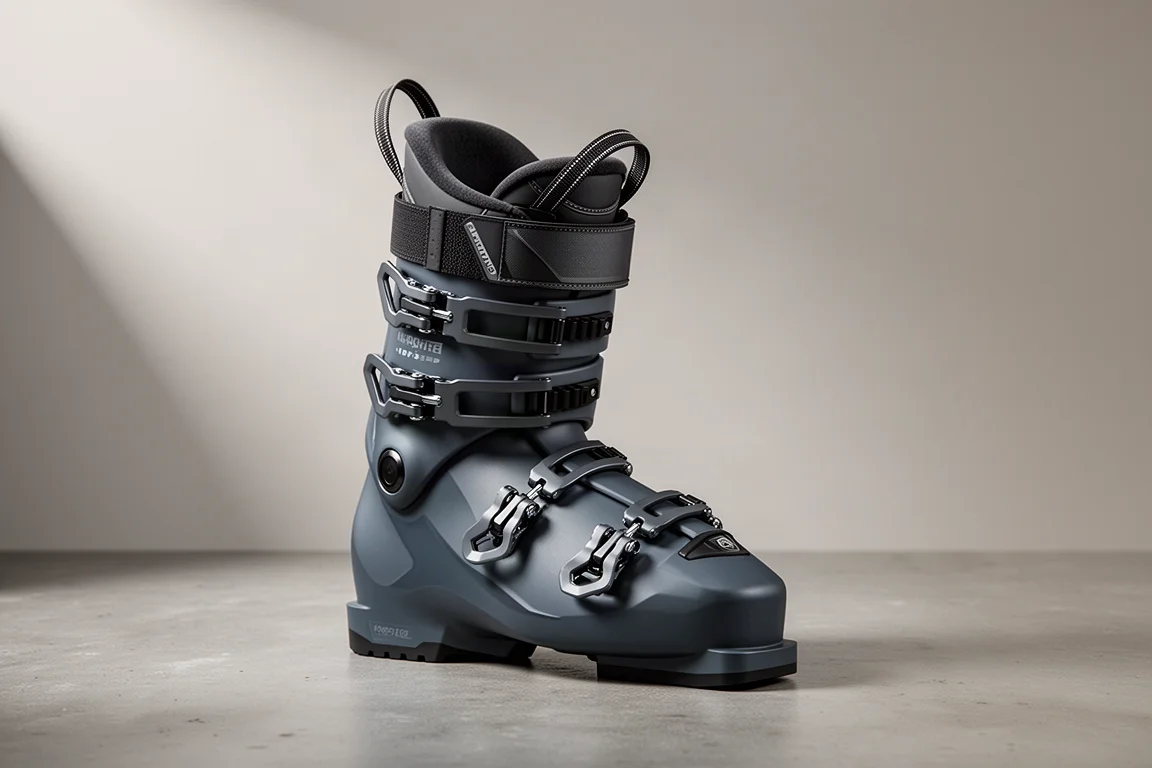
The fix is a spoiler. Spoilers are small clips that attach to the velcro at the back of the liner and hold the foot slightly more forward, so pressure builds a little sooner in the turn. With a spoiler fitted, the Hawx Prime S clicks into place: the stance settles, the flex reads more clearly, and the boot stays comfortable across a full day. Some skiers like spoilers and some do not, but this is the boot that benefits most from one.
What the Flex Numbers Actually Tell You
Flex ratings are not standardised between brands, and these three boots prove the point. A 120 from one brand can feel like a 100 from another, and the same number can describe a forgiving all-mountain flex or a firm, race-adjacent one.
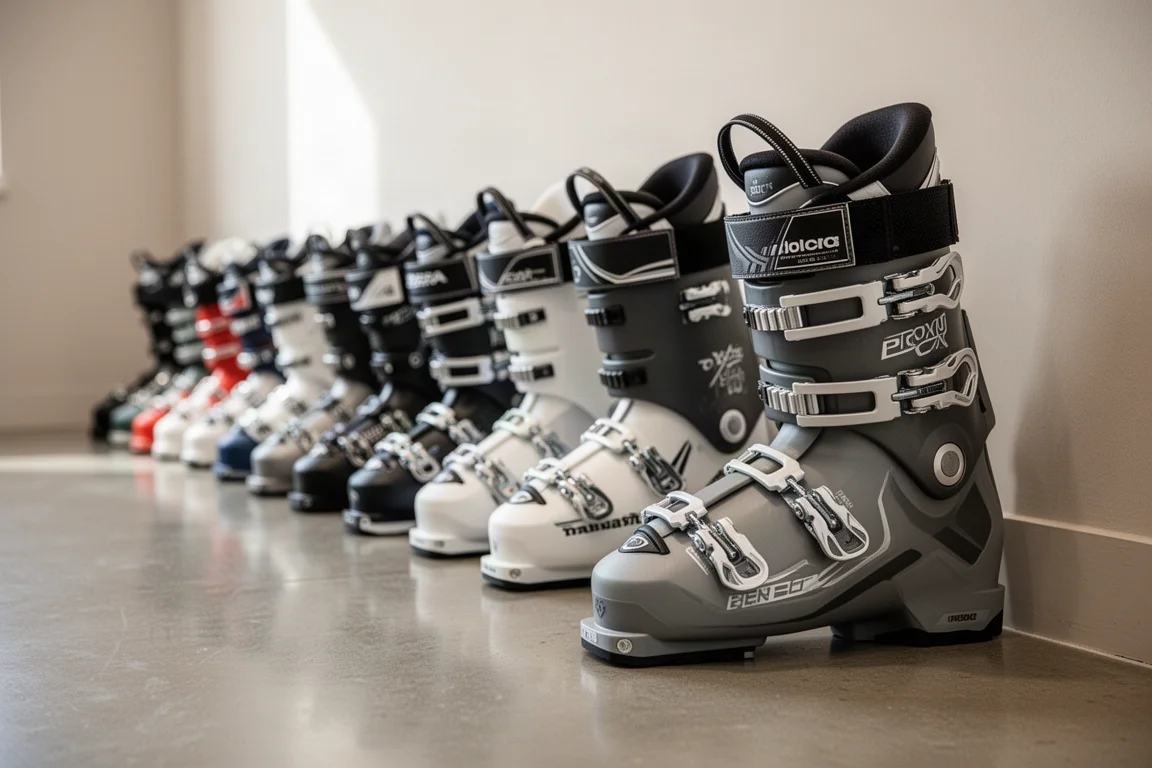
Treat the number as a starting point for a shortlist rather than a specification you can compare across brands. The useful test happens in the shop: flex the boot by hand, then flex it on your foot, and note how much travel you get before the shell stops giving.
Buckle Systems Versus Cable Dials
Closure design changes both the price and the way a boot behaves. Traditional buckles let you set tension independently across different zones of the shell, which matters if your feet are different sizes or if you like a firm lower shell with a relaxed upper. If a buckle breaks, a ski shop can fit a replacement quickly and cheaply.
Cable-dial systems such as BOA use a single crank for the lower shell. They are fast to operate, but they tie the tension of two zones together, so getting the toe and the midfoot exactly how you want them is a compromise. The cable is also a single point of failure, which is a real consideration if you ski away from lift-served terrain, and the system tends to add cost to the boot.
Neither approach is wrong. It comes down to whether you value fast, uniform tightening or independent, field-repairable adjustment.
Buying Advice: Which Boot to Choose
If a roomy toe box and a soft, forgiving flex sound right, the K2 Mindbender is the one to try first. Its build quality is a genuine strength, and the softer-than-rated flex suits skiers who want comfort over a firm response. Go in expecting a flex closer to 110 than 120.
If your feet are wider and comfort is the priority, the Fischer Ranger 120 is the most accommodating of the three, with an even flex that is easy to trust. The outward-tilted stance is the deciding factor: if a flat-footed platform is non-negotiable for you, look elsewhere.
If you want the most balanced flex of the three and you are willing to fine-tune the liner, the Atomic Hawx Prime S is the strongest overall package. Budget for a spoiler if the narrow tongue leaves you fighting for shin contact.
Whichever direction you lean, buy boots in person. Fit, volume, and stance cannot be judged from a spec sheet, and a boot that suits one skier’s foot can be entirely wrong for the next.
Conclusion
All three of these boots are well made, and each solves a slightly different problem. The K2 Mindbender delivers a generous toe box with a soft flex, the Fischer Ranger 120 leads on room and comfort with a clean, gradual flex, and the Atomic Hawx Prime S offers the most even, balanced feel of the group once a spoiler is fitted.
Match the boot to your foot shape and the stance you actually like, and the flex number becomes a detail rather than the decision.
Further reading
Related Reviews

Ski Boots
2027 Ski Boot Roundup: Six 130-Flex Boots Worth Knowing
Six 130-flex ski boots for 2027, plus a low-volume liner upgrade, compared on weight, fit, flex feel, and ease of use.

Ski Boots
Armada AR One Ski Boot Review: A Three-Piece Cabrio That Finally Gets It Right
Armada's first ski boot blends three-piece Cabrio design with Atomic engineering, a heat-moldable shell, and a 100mm last that fits better than any Cabrio before it.

Ski Boots
Armada AR1 Ski Boot Review: A Cabrio and Overlap Hybrid for Park and Freeride Skiers
Armada's first ski boot pairs a three-piece cabrio shell with overlap-style buckles and a cable-driven slingshot buckle. Here is where it shines, and what to weigh before buying.