Ski Boots
Armada AR1 Ski Boot Review: A Cabrio and Overlap Hybrid for Park and Freeride Skiers
Armada's first ski boot pairs a three-piece cabrio shell with overlap-style buckles and a cable-driven slingshot buckle. Here is where it shines, and what to weigh before buying.

Introduction
The Armada AR1 is the brand’s first ski boot, and it is a deliberate hybrid. Rather than choosing between a three-piece cabrio shell and a traditional four-buckle overlap design, Armada borrowed from both and then added hardware that does not exist on either. The result is a boot that feels familiar in some ways and genuinely new in others.
The range covers a broad spread of flexes, with 90, 100, 110, 120 and 130 options, all built on a mid-volume last and offered as a unisex line. The 110 MV and 130 MV are available now, while the 90, 100 and 120 flexes are expected in the late summer and fall.

That spread matters, because the AR1 is not a single-purpose boot. It targets skiers who split their time between the park, natural features and the wider mountain, and the flex you pick changes how the boot behaves at least as much as the shell design does.
Who the Armada AR1 Is For
This boot is aimed at skiers who already like the smooth, forgiving feel of a cabrio design but want more anchoring around the ankle and heel. It also suits riders coming from a park background who want a boot that stays comfortable through a long day and absorbs landings rather than transmitting every impact.
It is a strong match for a fluid, modern freeride style, where the skier keeps pressure moving forward through the turn instead of snapping into abrupt, high-edge movements. Skiers who describe their technique as patient and progressive will find the AR1 easier to adapt to than skiers who rely on instant, hard-edged response.
Fit-wise, the mid-volume last should work for a wide range of feet, and both the shell and the liner are heat moldable. There is no walk mode and no rear tech fitting, so this is not a touring boot, although some flexes include tech fittings in the toes for a hybrid sidecountry setup.
Main Strengths
Progressive Flex That Keeps Building
The headline experience of the AR1 is its flex pattern. Conventional overlap boots have a hinge point, and once you push past it, you can feel the boot stop giving. The AR1 keeps building instead. Push harder and it keeps accepting input, which shows up most clearly in long, drawn-out carved turns at higher speeds.
That quality rewards an aggressive, committed skier. On groomers, with real speed and a sustained turn shape, the boot feels composed rather than walled off. It is a different sensation from a stiff race-derived overlap shell, and for some skiers it is the reason to buy the boot.
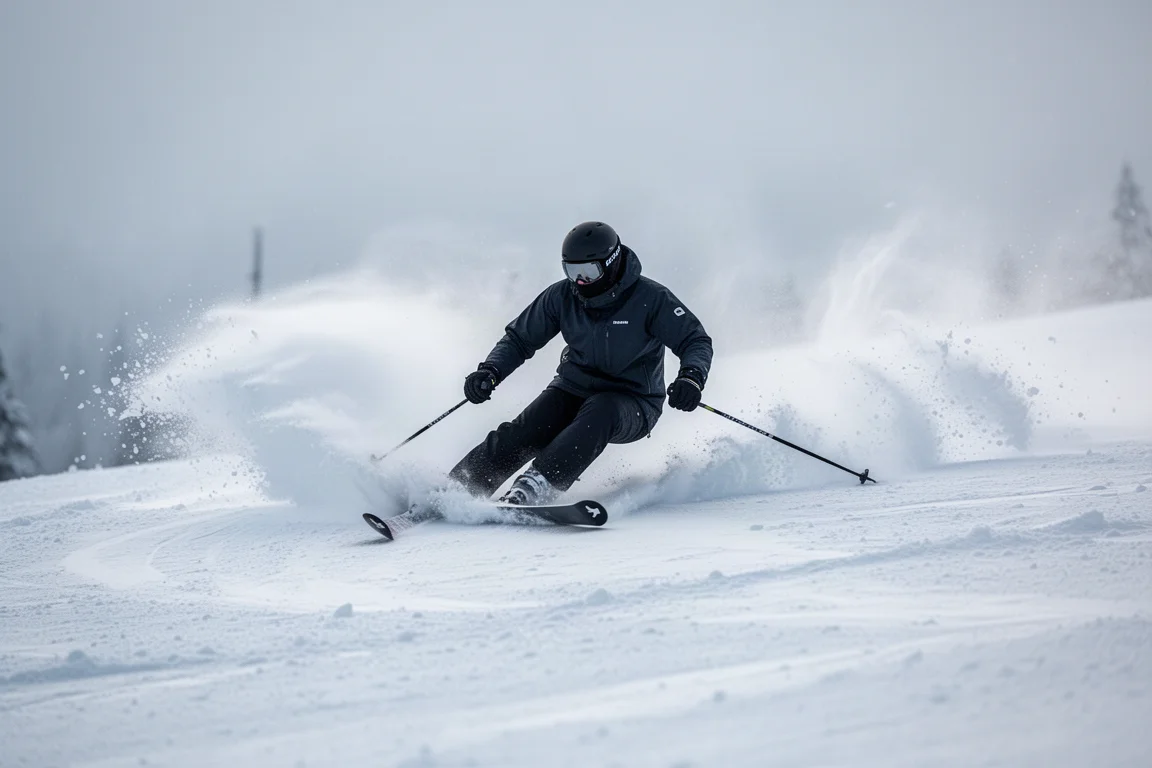
At lower speeds and in tighter, more technical terrain, the same construction feels less immediate. Short, slalom-style turns and quick skidded adjustments do not get the same instant engagement, and the ankle does not snap into position as fast as it would in a four-buckle overlap boot. This is a characteristic of the design rather than a defect, but it is worth knowing before you commit.
The Slingshot Buckle and Heel Hold
The most distinctive part of the AR1 is the mid buckle, which Armada calls the slingshot buckle. A cable runs from the buckle down to a fixed point below the upper cuff, so the base of the buckle acts as a fulcrum. When you close it, the buckle pulls from both the lever and that fixed anchor.
The practical effect is that the buckle occupies the space normally covered by the second and third buckles of a four-buckle boot, while anchoring the ankle deep in the heel pocket and doubling as an instep buckle. A small pulley lets the assembly move rather than locking rigidly, so the closure flexes with the boot instead of fighting it.
On the inside of the shell, TPU anchors align with the slingshot buckle. They are designed to grip the liner and hold the ankle and heel in place while reducing movement between the liner and the plastic. Skier feedback on this buckle varies with speed. At slower speeds the pull across the instep is more noticeable, while at higher speeds it fades into the background.
Comfort, Fit, and Heat Moldability
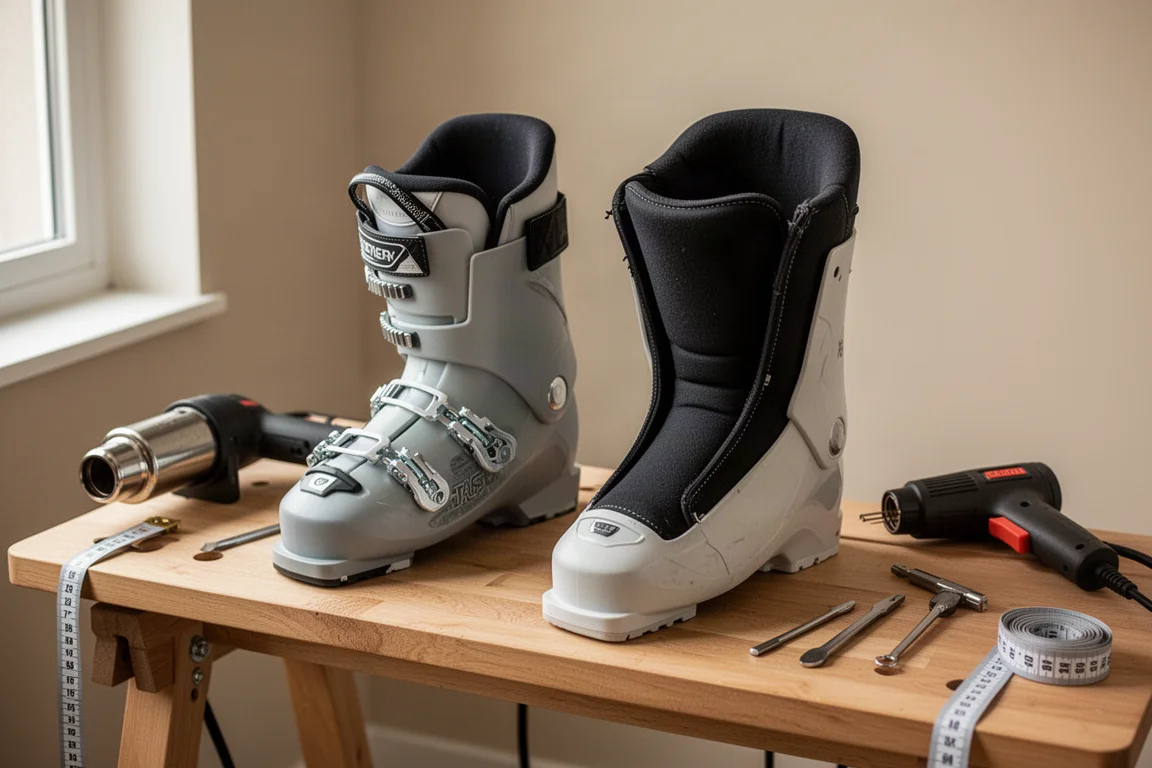
Out of the box, the AR1 is built around comfort. The liner is thick and cushioned rather than dense and race-tight, and both the liner and the shell can be heat molded. For anyone whose foot sits on the edge of the size range, molding the liner is the difference between a boot that feels tight everywhere and one that feels correctly snug.
The forward lean is adjustable between 13 and 17 degrees using a bolt and a plastic shim at the rear of the cuff. The boot ships at 17 degrees. Removing the bolt lets you slide the shim to change the angle, and the adjustment can be made without pulling the upper cuff off the shell.
Underfoot, the boot board is softer than the rigid plates found in race-oriented shells. That softness cushions flat landings and impacts on rails, which is exactly the kind of forgiveness a park skier wants when a trick does not come around perfectly.
Things to Consider Before Buying
The AR1 is not a simple boot. The shell stacks several layers of plastic, and getting the tongue, cuff flaps and buckles to sit correctly takes a little patience each time you put them on. If you value a boot you can step into and forget about, this one asks for more attention.
Precision through the upper cuff is the other trade-off. The layered construction, with a cabrio-style tongue reinforced by plastic flaps, softens some of the direct input you get from a traditional overlap shell. Skiers who are used to hard-charging 130-flex boots may find the 110 flex noticeably limited for aggressive groomer carving, where the boot runs out of support before the ski does. The 130 flex is the version to look at if that matters to you.
Fit pressure points can appear over the instep and the top of the foot, partly where the plastic overlaps near the tongue. In most cases this is manageable with liner molding, and some skiers report no break-in issues at all, but it is a known area to check. Forward lean at the stock 17 degrees also feels unusual to skiers who normally run a more upright stance, and switching to 13 degrees makes a clear difference for park-focused riding.
Finally, note the hardware limits. There is no walk mode and no rear tech fitting, and toe tech fittings are not universal across the line. The 110 MV includes tech fittings in the toes, while the 130 MV and the 120 do not.
Buying Advice
Pick your flex by the skiing you actually do. The 130 MV is the version for strong skiers who want the progressive flex and are willing to accept a little less upper-cuff immediacy in exchange for a smoother, more forgiving ride at speed. The 110 MV is the more relaxed option and a natural fit for park laps, natural features and days that move around the mountain rather than down a single groomer.
Whatever flex you choose, plan on having the liner heat molded at a boot shop. The thick liner responds well to molding, and it is the fastest way to remove the tightness that shows up over the instep and forefoot. Take the time to set the forward lean as well. The stock 17 degrees suits some skiers, but the 13-degree setting changes the feel substantially for a more upright, park-oriented stance.
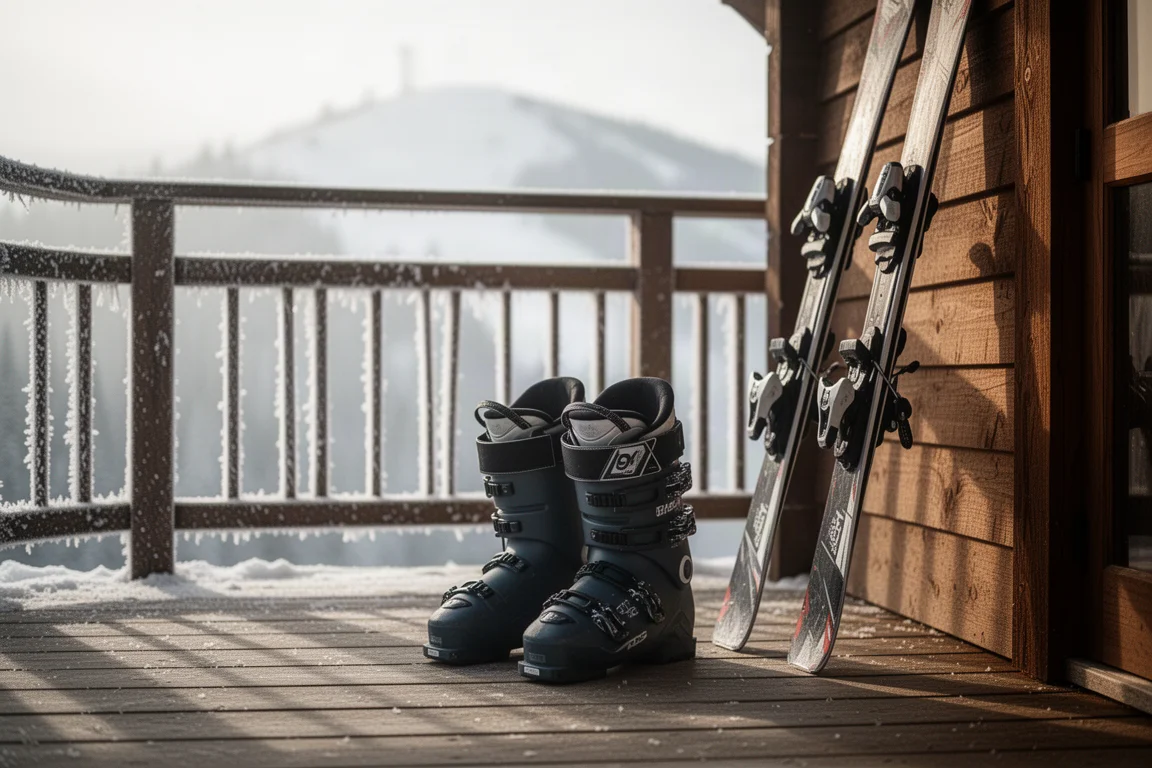
Availability is worth planning around. The 110 MV and 130 MV are on sale now, while the 90, 100 and 120 flexes arrive later in the summer and fall. If your size or flex is in that second group, it is worth waiting rather than settling for the wrong boot.
Conclusion
The Armada AR1 is a confident first ski boot. It captures the brand’s freeride and park character, blends cabrio smoothness with overlap-style heel hold, and delivers a progressive flex that many skiers will find genuinely enjoyable at speed. It is not the simplest boot to live with, and it gives up some precision in short, technical turns. For the skier it was built for, though, that is a fair trade.
Product link
View more details for Armada AR1 Ski Boot
This product is mentioned in the review. Check the specifications, options, and compatibility before buying.
View more details for Armada AR1 Ski BootFurther reading
Related Reviews

Ski Boots
2027 Ski Boot Roundup: Six 130-Flex Boots Worth Knowing
Six 130-flex ski boots for 2027, plus a low-volume liner upgrade, compared on weight, fit, flex feel, and ease of use.

Ski Boots
Armada AR One Ski Boot Review: A Three-Piece Cabrio That Finally Gets It Right
Armada's first ski boot blends three-piece Cabrio design with Atomic engineering, a heat-moldable shell, and a 100mm last that fits better than any Cabrio before it.
Ski Boots
Atomic Hawk Prime 110 Review: A Mid-Volume Ski Boot Built for Progressing Skiers
A closer look at the Atomic Hawk Prime 110, a 100mm mid-volume ski boot with a 110 flex, lightweight Prolite construction, and a liner designed to be easy to live with.