eBike Conversion Kits
Skarper eBike Drive System Review: A Wheel-Free Conversion Kit
A close look at the Skarper eBike Drive System, a disc-rotor based conversion kit with smooth power delivery, a premium price, and a few real trade-offs.
Introduction
Conversion kits that turn an existing bike into an electric one usually work by swapping a wheel for a motorised hub. That approach has a mixed record. It adds weight at the rim, it complicates wheel servicing, and a flat battery can leave a rider pushing a machine far heavier than the bike they started with.
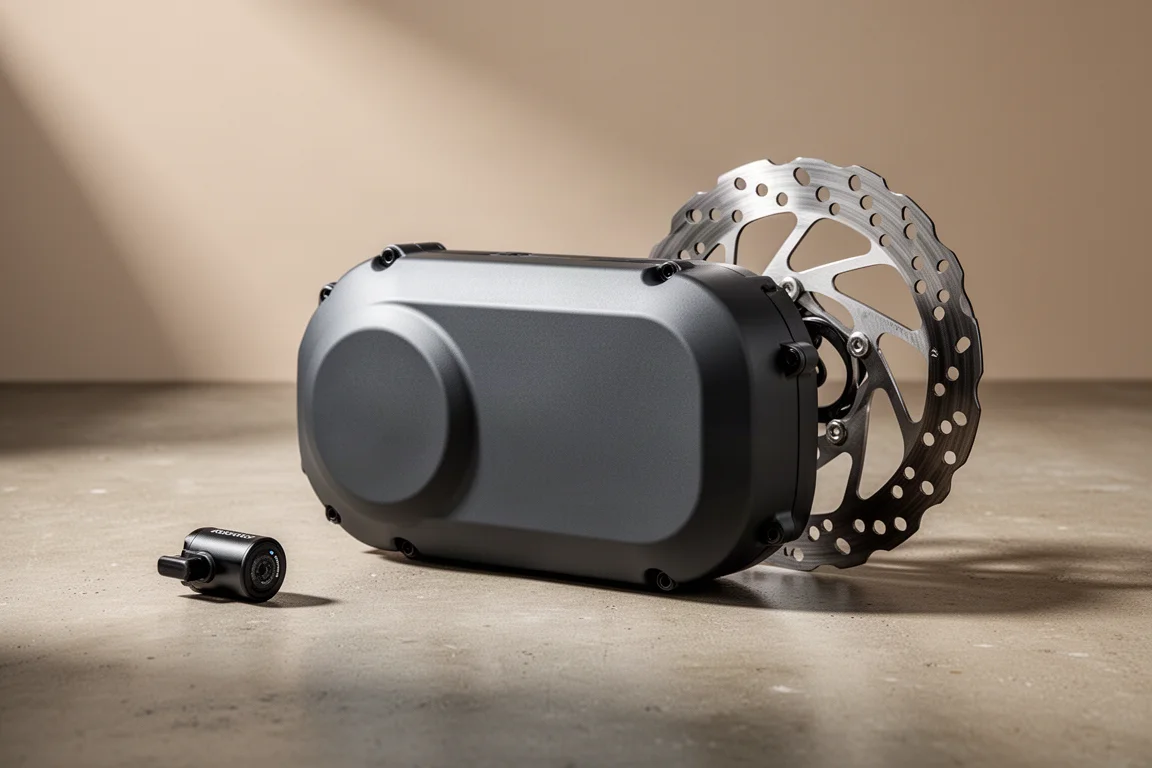
The Skarper eBike Drive System avoids the hub entirely. There is no replacement wheel and no wiring: the kit is a compact drive unit that mounts around a dedicated rear disc rotor, plus a small sensor that straps to the left crank. Skarper positions it as a way to turn a regular bike into a high performance e-bike in seconds.
This review covers what the kit includes, how it installs, how it feels to ride, and the practical trade-offs worth weighing before buying.
Who This Kit Is For
Skarper targets riders who already own a bike they enjoy and want assistance without buying a second, complete e-bike. The system suits disc-brake bikes with wheels between 26 and 29 inches, which covers a large share of modern bikes, including hybrid, gravel, and road models.
The most obvious use case is commuting. Hilly routes in both directions are exactly where optional assistance pays off, because the rider can decide on the day whether to lean on the motor. It also appeals to solo riders who want a gentler effort on days when they are tired but still need to get somewhere.

It is a less natural fit for group rides where the pace is set by stronger riders. The assistance engages as soon as the cranks turn, and there is no brake-triggered cutoff to smooth things out at very low speed, so fine control in tight spaces takes more attention.
Main Strengths
The clearest strength is refinement. Power arrives smoothly and predictably rather than in a surge, the unit feels well built, and the companion app looks and behaves like a designed product rather than an afterthought.
Power Delivery and Ride Feel
Even in the lowest assistance mode, the motor contributes noticeably. It takes the sting out of gradients and makes rough, slightly unpleasant terrain far more relaxed to ride. The delivery is balanced enough that the bike never feels like it is running away from the rider, and there is no sense of the rear end skipping or stepping out under power.
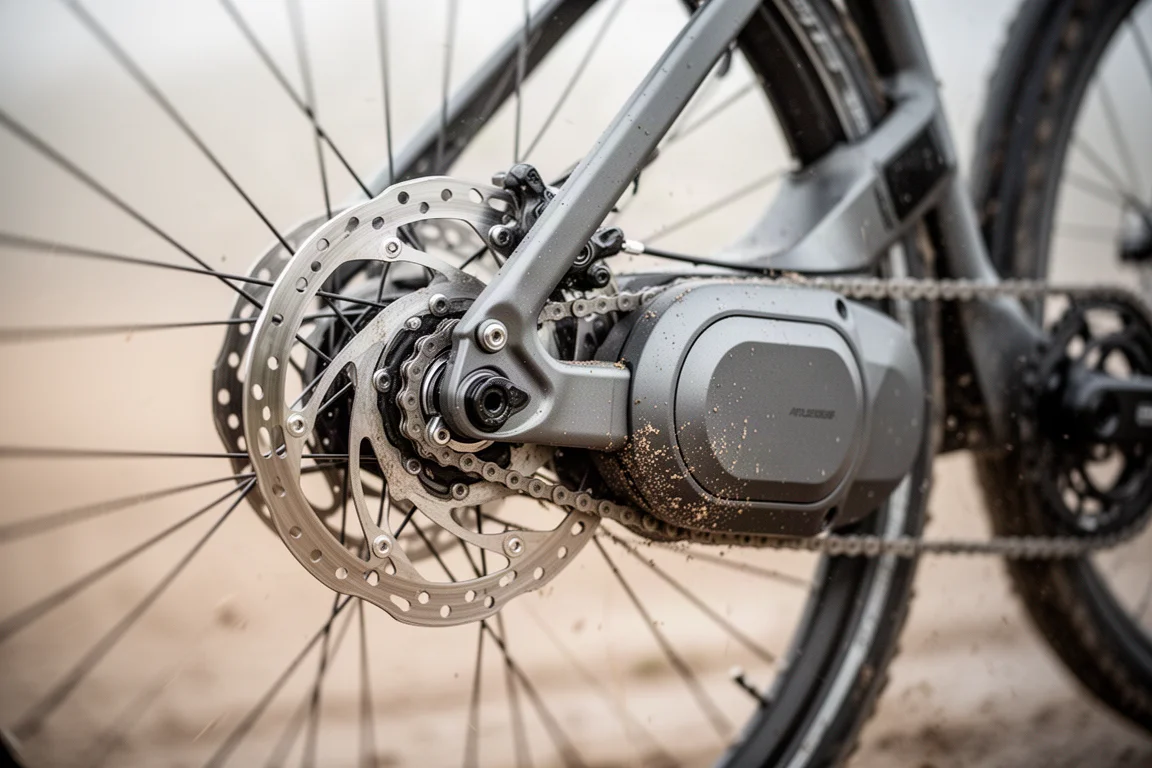
Running the battery flat does not disable the bike. The unit adds resistance and weight, but the wheel keeps turning and freewheels normally. That is a meaningful contrast with hub-based kits that can leave a rider stranded with a locked wheel.
Installation and Everyday Use
Fitting the kit is a genuine garage job rather than a workshop one. The rear wheel comes off, the existing lock ring is removed with a centre lock tool or a six-bolt tool depending on the bike, and the dedicated rotor goes on in its place. The drive unit then slides into position and locks with a lever, though lining up its four mounting holes takes some patience. A small retaining piece keeps everything secure, and the pedal sensor straps to the inside of the left crank.
A short calibration is required before the first ride: the bike must be held upright on level ground while the power and mode buttons are held together. Skarper also offers free professional installation through selected retail partners for buyers who would rather not do it themselves.
Things to Consider Before Buying
Price is the first hurdle. The main kit costs £1,495 and includes the drive unit, the disc rotor, the pedal sensor, and the charger. Dedicated e-bikes are available for less than that, and they arrive as a complete bike. Other conversion kits built around a similar idea sit lower on price, typically around £400 to £500 for one option and around £650 for another, but both require swapping wheels, which is precisely what Skarper avoids.
Weight, Heel Clearance, and Battery Range
The drive unit weighs 4.68 kg and the dedicated rotor adds 774 g, for roughly 5.7 kg of extra mass on the bike. That is a lot to hang on a lightweight carbon race frame, and it is the main reason a steel frame makes more sense as a host.
Heel clearance is the other physical consideration. On a compact race geometry, the back of the shoe can brush the unit with every pedal stroke. Riders who already scuff their cranks are most likely to notice it, and the effect should be smaller on a hybrid or a longer-wheelbase gravel bike where the pedals sit further from the unit.
Range depends heavily on terrain. Skarper claims up to 50 km of pedal assist, and in the lowest assistance mode the kit covered 28 km on a hilly, windy route before shutting down. A rider using the system day to day has reported around 40 km in ordinary conditions, and flatter terrain should comfortably exceed that.
What is not in doubt is how the bike behaves once the charge runs out. The system simply stops assisting and the bike remains rideable, with a little extra drag and a noticeable weight penalty rather than a locked wheel.
Charging, Warranty, and Missing Features
Charging claims are optimistic. Skarper states that 30 minutes delivers an 80% charge and that a full charge takes two and a half hours. In practice, 30 minutes produced 38%, while a complete charge from empty finished in about one hour and 53 minutes. The headline figure does not hold, but a full charge in under two hours is still respectable.
The pedal sensor has its own battery and charges separately over USB, and the app reports the drive unit charge level but not the sensor’s. Forgetting to charge the sensor is an easy mistake to make. The app is otherwise clear and well laid out.
Warranty is worth checking carefully. Skarper’s position is that fitting the system does not automatically void a frame warranty, and that claims are assessed on the specific fault and whether the accessory caused or contributed to it. Several bike brands take a firmer line, with the general response being that aftermarket drive systems will void the warranty. Riders should assume the risk sits with them.
Finally, the kit lacks a brake-triggered motor cutoff. On bikes that have one, a light touch on the brake lever stops the motor instantly, which makes slow manoeuvres such as passing through a narrow gate or rolling over a kerb much easier to control. Its absence here is the most noticeable functional gap.
Buying Advice
The Skarper eBike Drive System is the most polished conversion kit of its type, and the wheel-free design removes the failure mode that makes hub kits risky. It also costs more than a complete entry-level e-bike, which makes the decision less about whether the technology works and more about what the buyer already owns.
If there is a bike in the garage that fits well, gets used often, and would benefit from assistance on hills, the kit can make that bike dramatically more useful without replacing it. If the goal is simply to own an e-bike, buying a complete one will usually cost less.
Who Should Buy It and Who Should Not
Buy it if you have a steel or alloy disc-brake bike with 26 to 29 inch wheels, a commute with real elevation, and a preference for keeping the bike you already know. A steel frame is the safer host given the added weight, and buyers who want the simplest possible start can use Skarper’s partner installation.
Think twice if you ride a lightweight carbon race bike, if you need precise slow-speed control in traffic or on group rides, or if warranty protection on the frame matters more than the convenience of a removable motor. Riders who want maximum range per charge should also plan around the realistic figures rather than the headline claim.

For the right rider and the right bike, this is a well-executed system that delivers smooth assistance and stays rideable when the battery is empty. For everyone else, the price and the weight are the deciding factors.
Conclusion
Skarper has built something genuinely different: a conversion kit with no hub motor, no wheel swap, and no wiring, that installs in minutes and rides with a smoothness most kits cannot match. The trade-offs are equally clear. It is expensive, it adds around 5.7 kg, heel clearance depends on the frame, and it lacks a brake-triggered cutoff. On a suitable steel or alloy bike with disc brakes, though, it turns an ordinary ride into an assisted one without giving up the bike itself.
Product link
View more details for Skarper eBike Drive System
This product is mentioned in the review. Check the specifications, options, and compatibility before buying.
View more details for Skarper eBike Drive SystemFurther reading
Related Reviews

Road Bikes
10 New Road Bikes Worth Watching: Aero, Titanium, Steel and Endurance Standouts
A practical roundup of 10 new road bikes, from aero flagships chasing single-watt gains to titanium, steel and endurance platforms built for real roads.

Saltwater Aquarium Setup
10 Questions About Cycling a Saltwater Aquarium: What You Need to Know
Essential questions and answers for cycling a reef tank or saltwater aquarium, from biome building to light management and bacterial supplements.
Cycling Components
A 20,000-Mile Budget Race Bike Build: Five Parts Worth Knowing
A rim brake race bike assembled from low-cost components and ridden for 20,000 miles. Here is what delivered real speed, what caused problems, and what to weigh before copying the formula.