Coffee Brewing
Siphon Coffee Brewer: History, How It Works, and Why It Still Matters
A deep dive into the theatrical vacuum pot, from its 19th-century origins through modern brewing, exploring why this finicky brewer captivates coffee enthusiasts despite its complexity.
Introduction
The siphon brewer, also called a vacuum pot, stands apart from every other coffee brewing method. It is theatrical, finicky, and undeniably beautiful. Many people buy one after watching someone brew with it, drawn by the visual spectacle rather than the promise of superior coffee. Some take them home, use them a few times, become frustrated, and accept that they have purchased an expensive decoration.
Yet this brewer has a genuine history and a real purpose. Understanding how it works, why it was invented, and why it still matters reveals something deeper about coffee culture and craftsmanship.
The Theatrical Origins of Siphon Brewing
The siphon brewer emerged in the 19th century, though pinpointing its exact inventor is difficult. Patents appeared frequently throughout the 1800s, suggesting that multiple people arrived at the same idea independently. What is clear is that early adopters understood immediately that this was not a practical kitchen tool. It was theater.
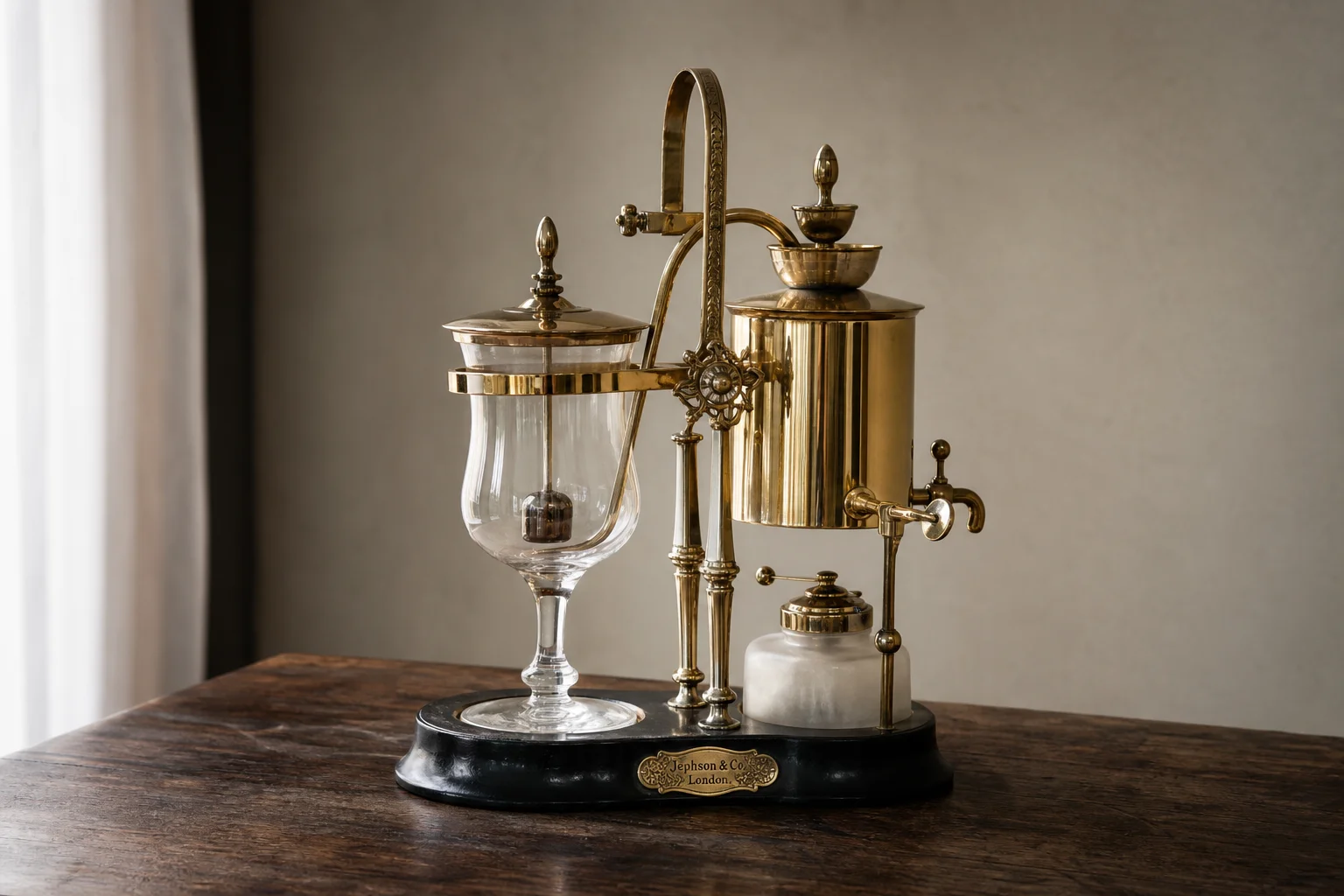
Early siphon brewers were ornate, decorative objects made from fine materials. They were designed to impress. The mechanism itself has remained largely unchanged from inception to today: two chambers, a heat source, pressure, and a vacuum. But the cosmetic innovations were endless, reflecting an understanding that siphon brewing was as much about display as it was about extraction.
The name itself reveals this dual nature. Originally called vacuum pots for obvious mechanical reasons, they were also called siphons early on, referencing the Greek word for tube. The brewer does not actually siphon liquid against gravity in the way we use the term today, but the name stuck.
How the Siphon Actually Works
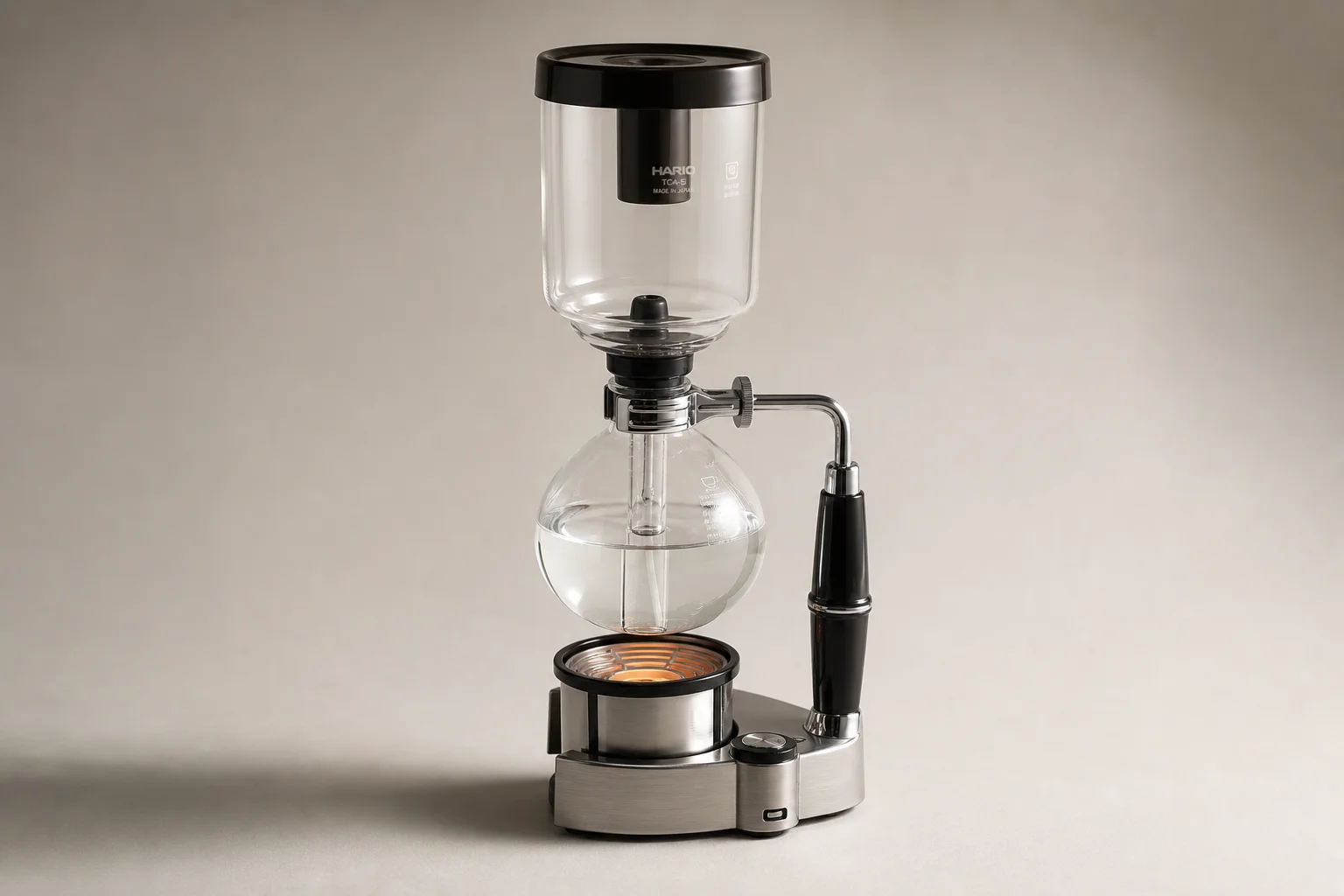
The mechanism is straightforward in principle but requires precision in practice. Water sits in the lower chamber and is heated. As the water approaches boiling, steam forms and pressure builds. Once the upper chamber is sealed, this pressure becomes trapped and pushes water up through a central tube into the upper chamber, where coffee grounds wait.
The water and coffee steep together in the upper chamber while heat continues to feed in from below. When brewing is complete, the heat source is removed. The water and steam in the lower chamber cool, creating a mild vacuum. This vacuum pulls the brewed liquid back down through a filter, leaving the grounds behind.
The result is a cup of coffee that has experienced both infusion and percolation, making the siphon unique among manual brewing methods. The constant heat input during the infusion phase also sets it apart. Most other infusion brewers, like a French press, cool gradually. The siphon stays hot because heat keeps flowing in.
The Rise of Glass Filters and Automation
Through the early 20th century, siphon brewers evolved in two directions: toward greater automation and toward better materials.
The introduction of heatproof glass, particularly Pyrex, was transformative. The Silex brewer became the first widely popular siphon using this innovation. Early glass siphons were fragile and dangerous; if the lower chamber ran dry, the glass would shatter. Heatproof glass solved this problem.
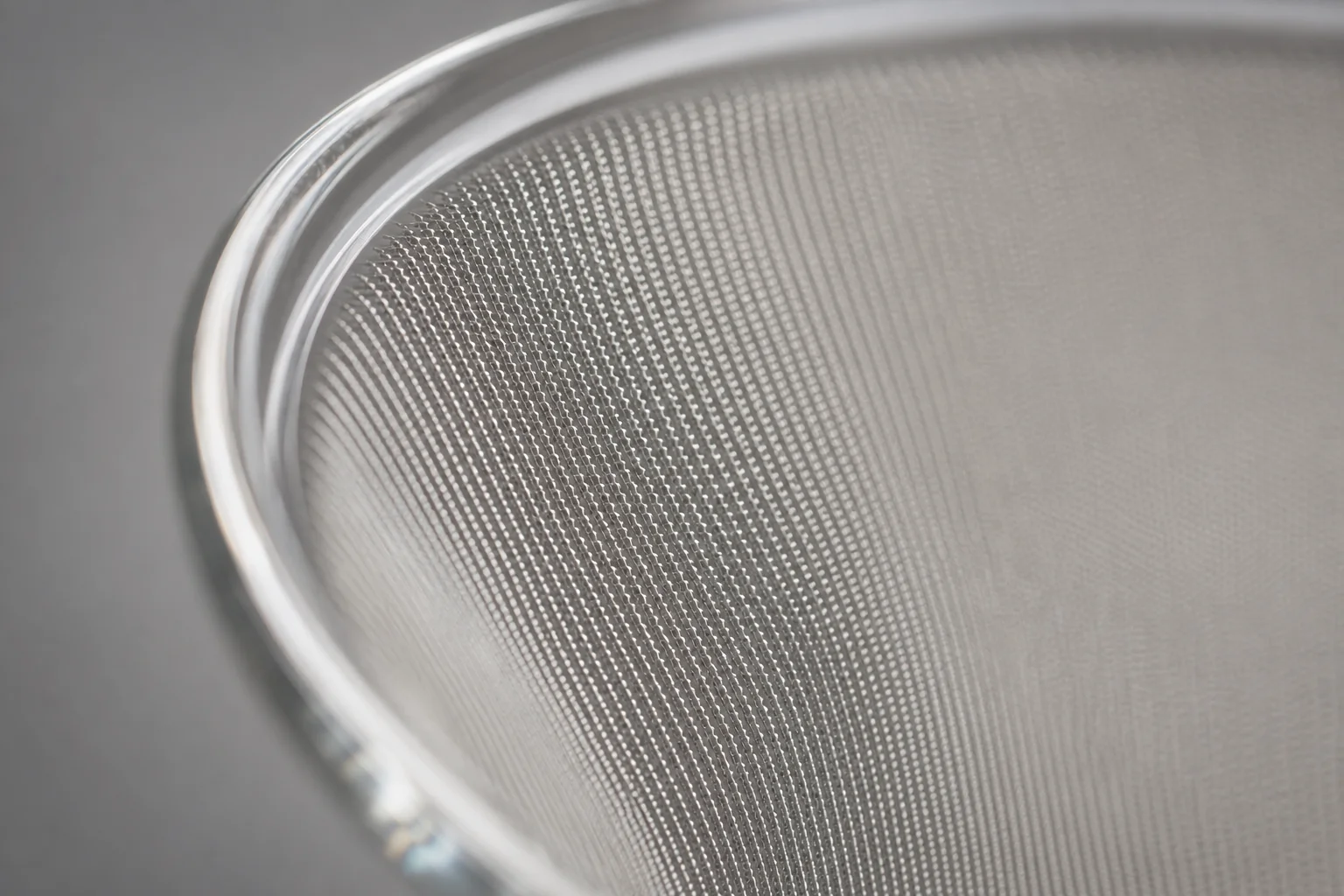
Another innovation emerged in the 1930s: the glass filter. Though Harvey Cory is often credited, the patent actually came from Raymond Kell of the Macbeth-Evans Glass Company in 1932. The genius of the glass filter lies in its texture. The microscopic surface pattern prevents ground coffee from passing through while allowing brewed liquid to flow freely. This created a reusable, easy-to-clean filter that worked remarkably well.
Balance brewers represented another attempt at automation. These placed the two chambers side by side on a balance mechanism. As water boiled and transferred to the brewing chamber, the weight shift would close a lid over the heat source, automating the shutoff. They were visually compelling and still are, but they do not produce the best-tasting coffee. Some manufacturers even created locomotive-shaped brewers, combining the appeal of trains with the spectacle of coffee brewing.
Despite these innovations, siphon brewers began to fade in popularity from the 1950s onward. Instant coffee, convenient filter makers, and eventually Mr. Coffee made the siphon seem impractical. By the time automatic drip coffee became standard, few people had time or patience for siphon brewing at home.
Why Siphon Brewing Persisted in Asia
While siphon brewing nearly disappeared in Europe and North America, it persisted in Asia, particularly Japan. This is not coincidental.
HARIO, originally an industrial glass manufacturer, began making siphon coffee makers in the late 1940s and early 1950s, influenced by American coffee culture of that era. The siphon became HARIO’s first consumer product, and it remained central to their business. Unlike European and American siphons, which often brewed a liter or more, Japanese siphons were smaller, typically 250 to 600 milliliters. These were individual brews, not household quantities.
The persistence of siphon brewing in Japan reflects a cultural appreciation for craftsmanship and skill. Siphon brewing is finicky and requires technique. This is not a bug but a feature. The difficulty itself became valued. A skilled barista who could brew a perfect siphon was respected. The method demanded attention and precision, qualities that aligned with broader cultural values.
This appreciation never faded. The World Barista Championship began in 1999, and the Japanese Siphonist Championship followed shortly after. The World Siphonist Championship, established in 2009, continues today. There is still a global competition dedicated entirely to brewing with this device. The siphon has always held a certain mystique, and in Japan and across Asia, that mystique never diminished.
The Brewing Process in Action
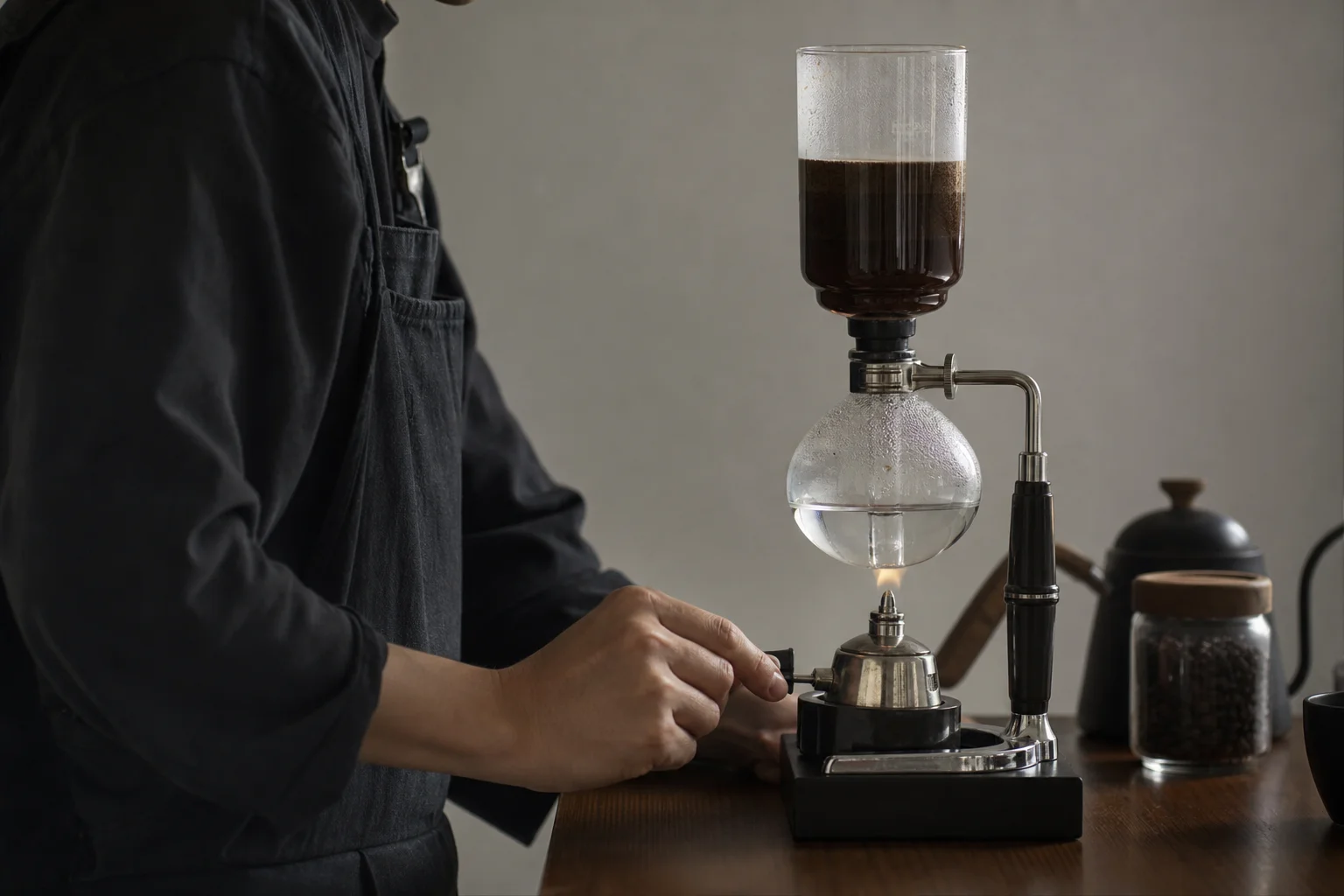
Brewing a siphon requires several decisions. When the upper chamber is sealed, even if water is only at 90 degrees Celsius, pressure builds immediately and water begins to rise before reaching boiling point. The first water to enter the upper chamber may be only in the mid-80s Celsius. Alternatively, you can wait for a full boil before sealing, ensuring hotter water reaches the grounds first.
Once water rises, heat must be reduced. The goal is to maintain gentle activity in the upper chamber without boiling away water that cannot yet make it up the tube. The infusion phase begins once all water has risen. A crust of grounds forms at the surface, a visual cue unique to siphon brewing.
Timing the infusion is partly intuitive. One practical approach is to smell the brew. Early in the infusion, the aroma is piney and resinous. As extraction progresses and reaches an optimal point, the smell becomes noticeably sweet and caramelly. This sensory cue signals when to stop heating and begin the draw-down phase.
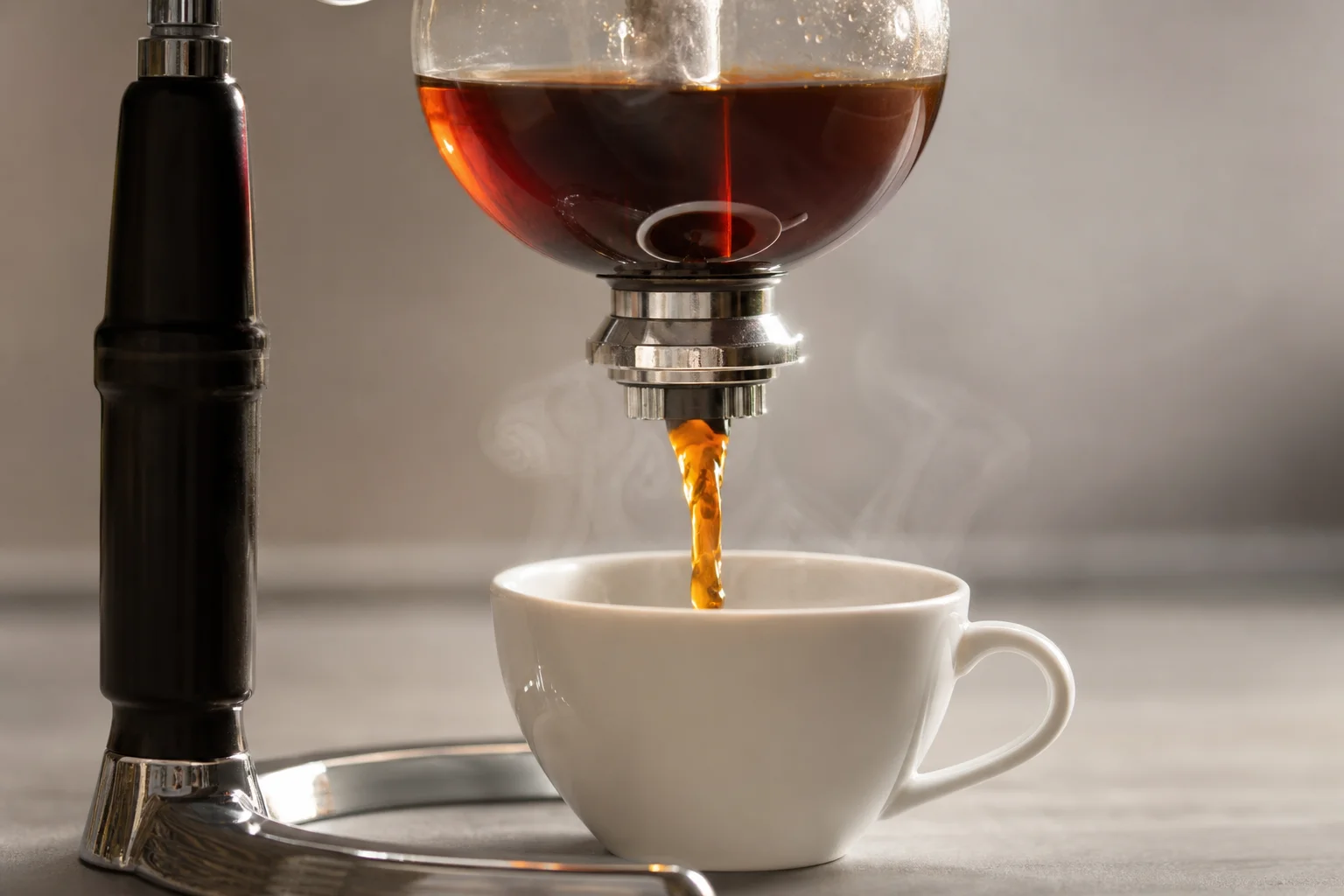
When the heat is removed, cooling begins. The vacuum forms, and brewed liquid is pulled back down through the filter into the lower chamber. A gentle stir ensures the grounds settle evenly. The upper chamber can then be removed and set aside.
The final step is critical: get the brewed coffee out of the glass immediately. The glass is extremely hot and will continue to extract and degrade the coffee if left sitting. The coffee must be poured into a cup or carafe as soon as possible. Even then, the result is often too hot to drink for several minutes. This is perhaps the siphon’s most frustrating downside: you brew something that smells and tastes excellent, but you cannot drink it immediately.
Variables and Complexity
The siphon offers numerous variables to adjust: heat intensity, infusion time, grind size, number of agitations, stirring technique, and draw-down speed. Each affects the final cup. It is easy to produce a brew with a good infusion phase but uneven percolation, or an over-extracted infusion that tastes harsh and angry.
This complexity is part of why siphon brewing appeals to some and frustrates others. It demands attention and skill. There is no set-it-and-forget-it convenience. Every brew requires active participation and decision-making.
Modern siphons also come in variations. The Kazumi brewer, for example, includes a middle chamber with a porous ceramic filter that creates a temperature drop between the boiled water and the upper brewing chamber. This is an unusual innovation that changes the brewing dynamics in ways still being explored.
Conclusion
The siphon brewer is not for everyone. It is slow, requires maintenance, and demands skill. Cleaning cloth filters is annoying. The coffee is too hot to drink immediately after brewing. Yet it persists because it offers something that other methods do not: a direct connection between the brewer and the coffee. Every variable is visible and controllable. The process is transparent and engaging.
For those willing to embrace its complexity, the siphon rewards attention with excellent coffee and a brewing experience that is genuinely theatrical. It remains a living link to coffee’s past and a testament to the enduring appeal of craftsmanship in an age of convenience.
Product link
View more details for HARIO Siphon
This product is mentioned in the review. Check the specifications, options, and compatibility before buying.
View more details for HARIO SiphonFurther reading
Related Reviews
Coffee Brewing
AeroPress Clear Review: A Transparent Upgrade With Caveats
The new AeroPress Clear uses Tritan material and costs $50, but doesn't brew better coffee than the original. We tested durability, staining, and what the price increase means for the brand's future.
Coffee Brewing
Espresso Puck Prep: Techniques and Tools for Better Extraction
A comprehensive guide to espresso puck preparation, covering distribution methods, tamping techniques, and tools that genuinely improve your shots.
Coffee Brewing
Moka Pot Variations: Four Interesting Adaptations Worth Exploring
A detailed look at four moka pot variations, from pressure-valve designs to milk-steaming models and automated float systems, with honest assessments of their brewing strengths and practical trade-offs.