Sim Racing
Simagic Zeus Modular Steering Wheels: Sport, GT, and Formula Compared
Simagic's new Zeus line brings a modular dashboard system to three versatile steering wheels. Here is what you need to know before buying.
Introduction
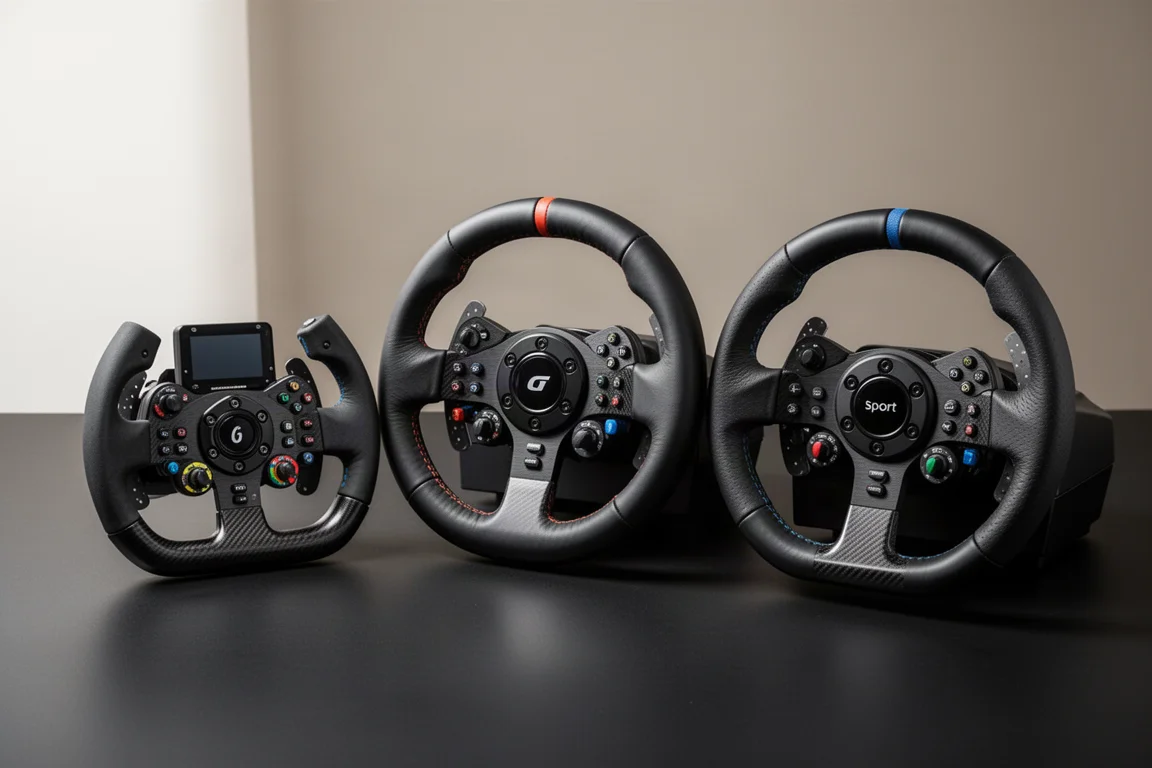
Simagic has introduced a new line of modular steering wheels called the Zeus series. The key idea behind these wheels is a modular dashboard system. Instead of buying a separate display for every wheel you own, you can buy one dashboard module and move it between compatible wheels. This approach can save money for sim racers who want multiple wheel styles.
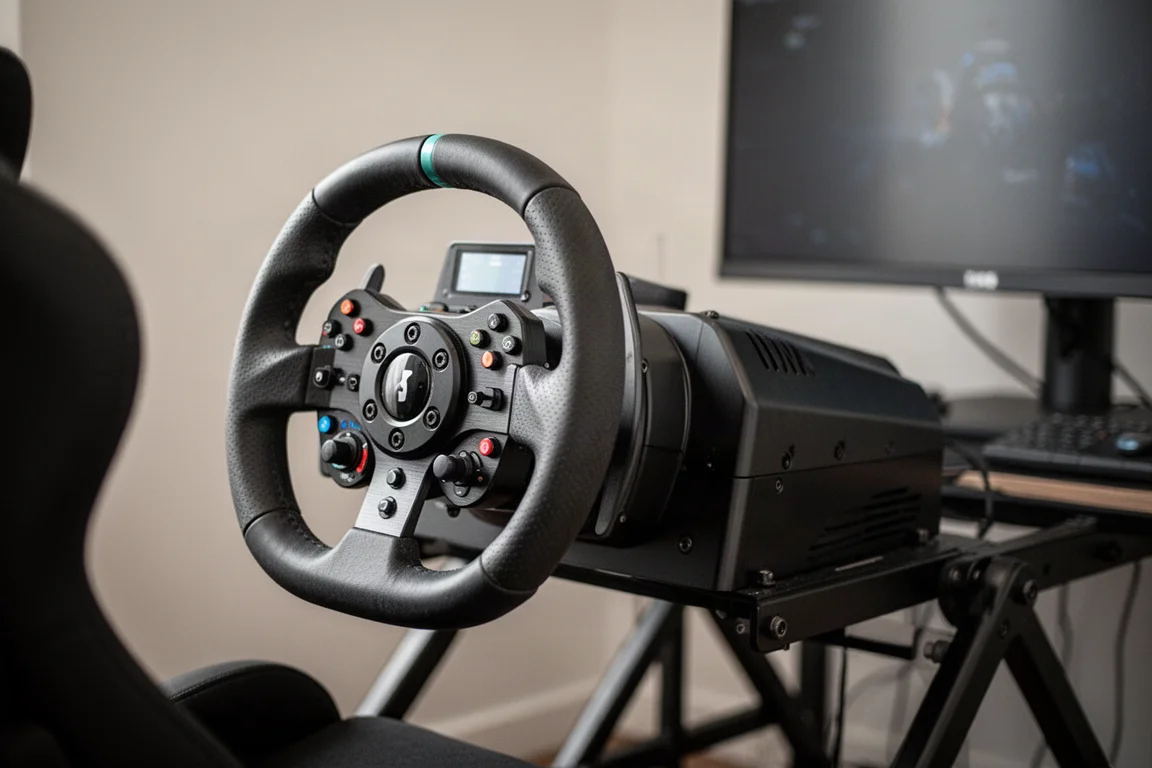
The Zeus line includes three models: the Sport, the GT, and the Formula. Each wheel targets a different driving style, from rally and street cars to GT3 and open-wheel racing. All three share the same quick-release system, shifter modules, and dashboard compatibility.
Compatibility and Setup Considerations
Before looking at the wheels themselves, it is important to understand how they connect to different wheelbases. The setup process varies depending on whether you use a Simagic wheelbase or a third-party unit.
If you run a Zeus wheel without the dashboard on an Evo wheelbase, you simply plug it in via the quick release and it works. For third-party wheelbases, you need the Mag Link system, which replaces the USB-C port on the back of the wheel with a magnetic connection. This requires a power injector and an interface box.
For Simagic Alpha wheelbases, the Mag Link Pro or Mag Link Pro Extend is required. These connect through the wheelbase and provide power and data. If you want the dashboard installed and prefer a wireless connection on an Evo wheelbase, you need the Air Link hub. Simagic has said that future bundles including wheels and dashboards will include the Air Link hub, and early buyers before August 30 can redeem one for free.
The complexity here is worth noting. There are several accessories and configurations to consider, and the Simagic website could be clearer about what you need. That said, the system does work with a wide range of setups.
Simagic Zeus Sport
The Zeus Sport is the most versatile of the three wheels. It comes with a button plate and a wheel rim out of the box, and you can swap in additional rims in different sizes and materials. Options range from 310 mm to 330 mm, with leather and suede versions available.
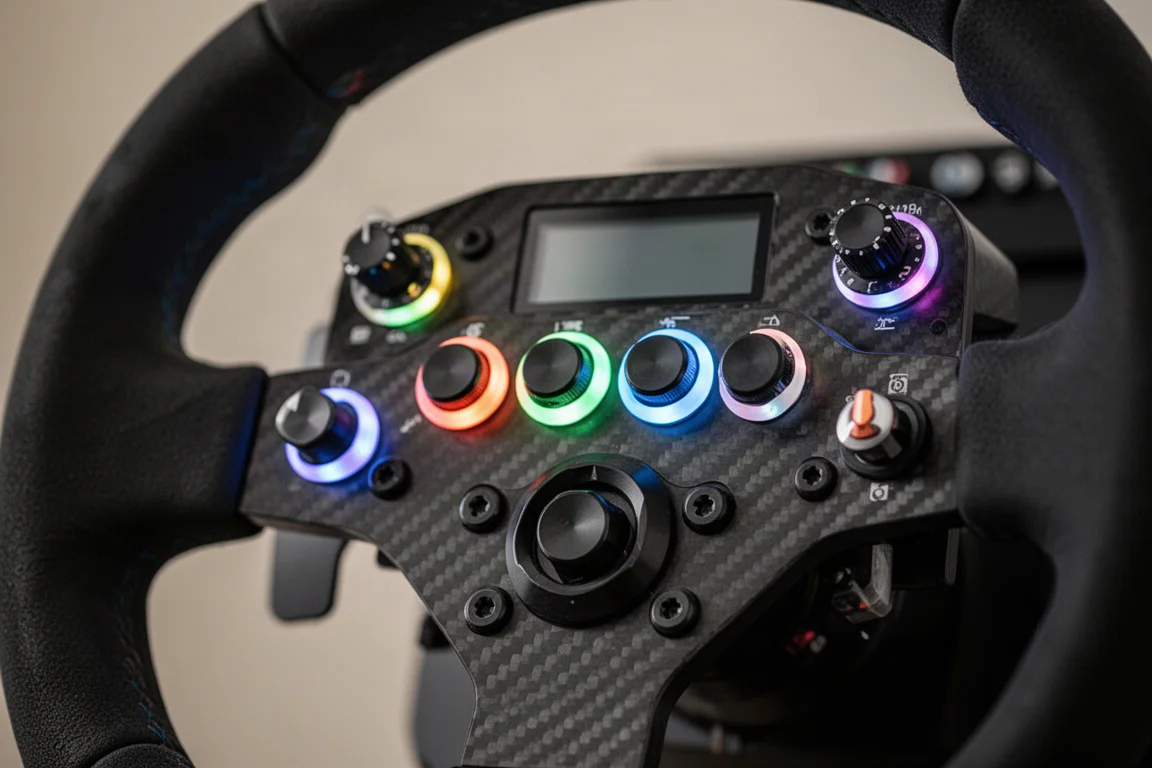
The Sport wheel includes eight push buttons on the front, two seven-way switches, and two thumb encoders. The thumb encoders are positioned slightly awkwardly, requiring you to take your hand off the wheel to rotate them, but they are a welcome addition. The wheel also has an RGB LED strip across the top that works even without the dashboard installed.
Build quality is solid. The aluminum rear housing feels rigid, and the interchangeable rim system holds up well under force. The shifters are quiet and well-designed, with carbon fiber paddles available as an option. One sample we tested had a slightly bent left thumb encoder, which appeared to be a manufacturing issue rather than shipping damage.
The Sport wheel without the dashboard is priced at $329, or $469 with the dashboard. Additional rims cost $89 each.
Simagic Zeus GT
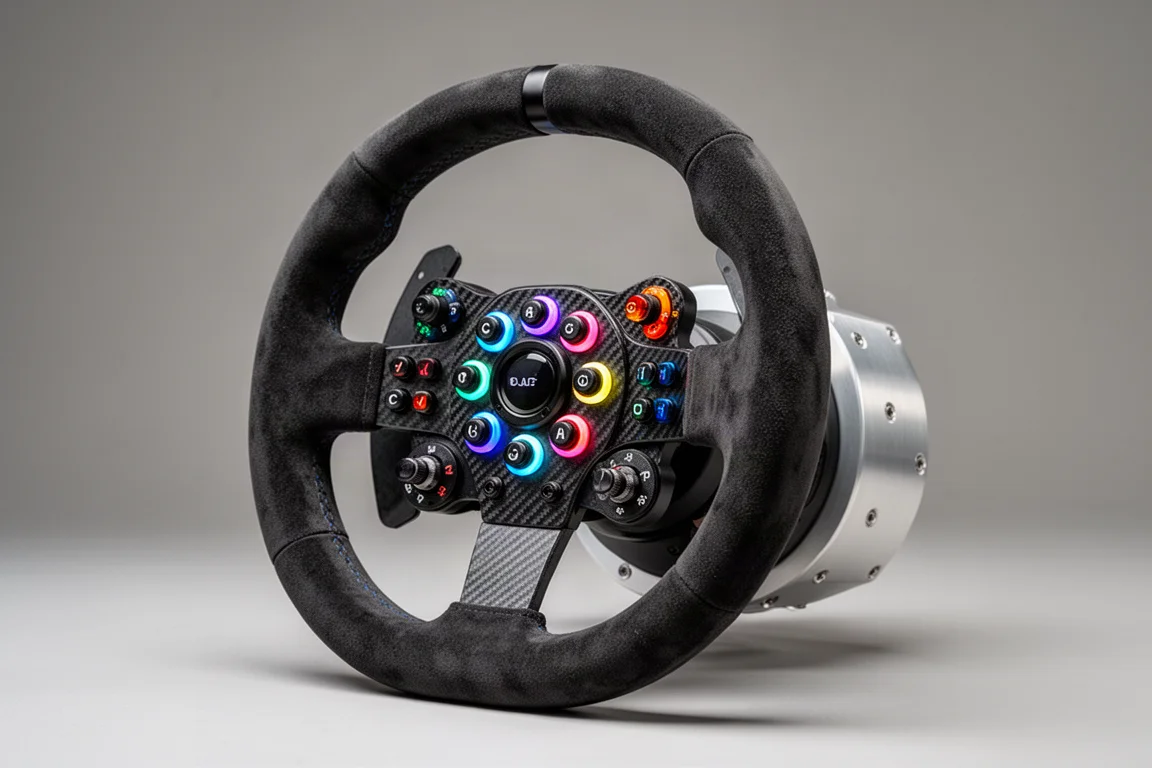
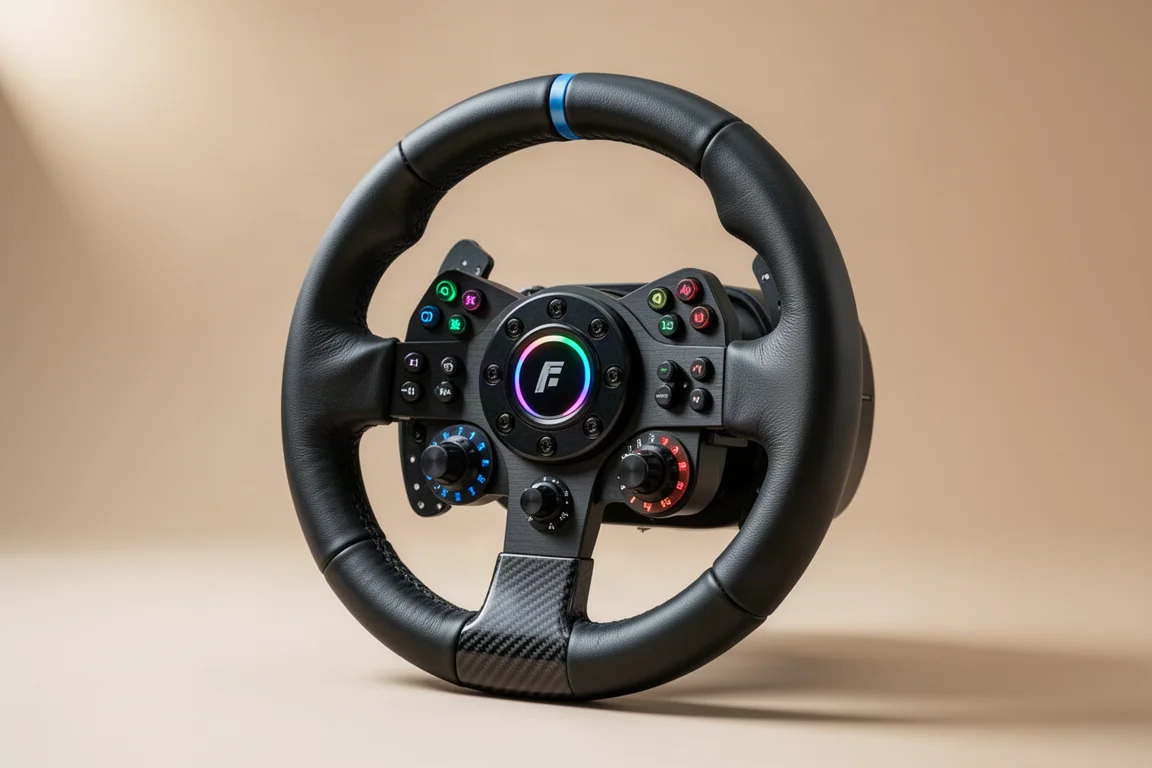
The Zeus GT is a round wheel designed for a wide range of driving styles, from street cars to GT racing. It is available with two rim sizes: a 300 mm open-top version and a 320 mm version that extends over the top.
The GT wheel shares many features with the Formula wheel, including the same buttons, rotary encoders, and seven-way switches. One notable omission is thumb encoders, which some drivers may miss for adjusting settings on the fly. The button packs on either side are plastic, though the main frame is metal and feels very rigid.
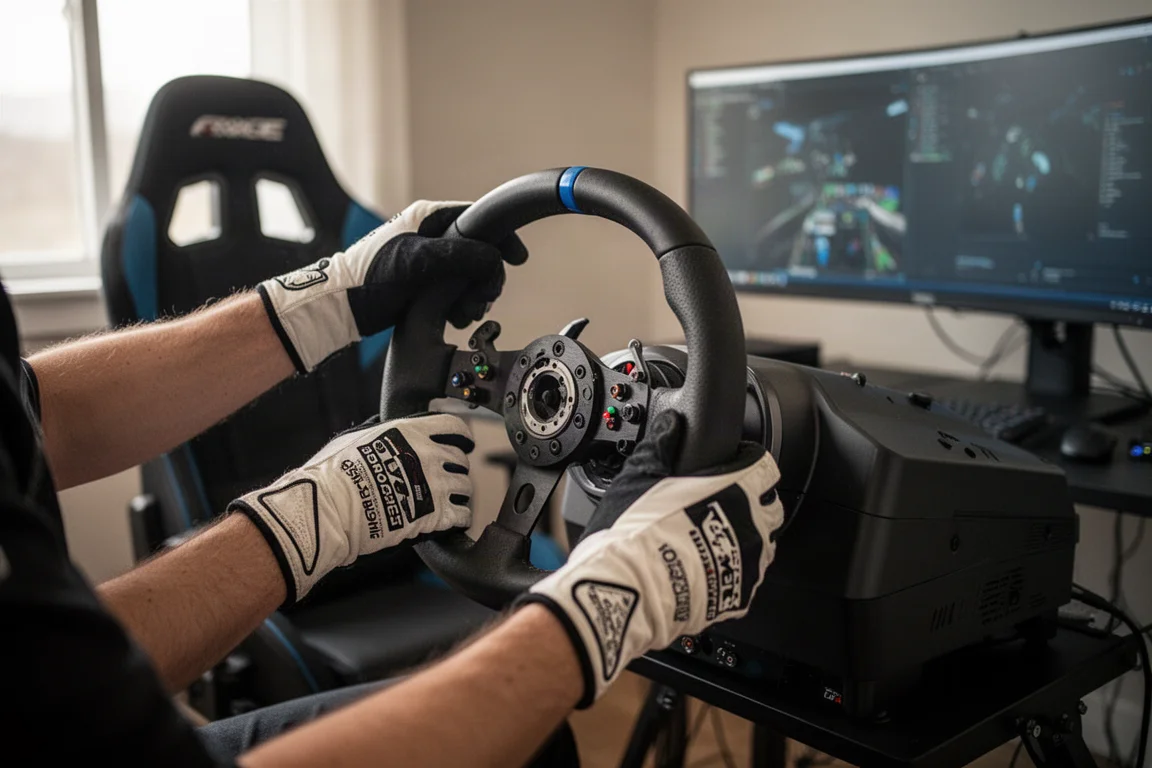
A standout feature of the GT wheel is the RGB LED strip behind the dashboard. Even if you choose the version without the dash, the LED strip remains functional, and the blanking plate looks clean and purposeful. The wheel does not look like it is missing a screen, which is a nice design touch.
The GT wheel is priced at $349 without the dashboard, or $459 with it. Interchangeable rims cost an additional $49 each.
Simagic Zeus Formula
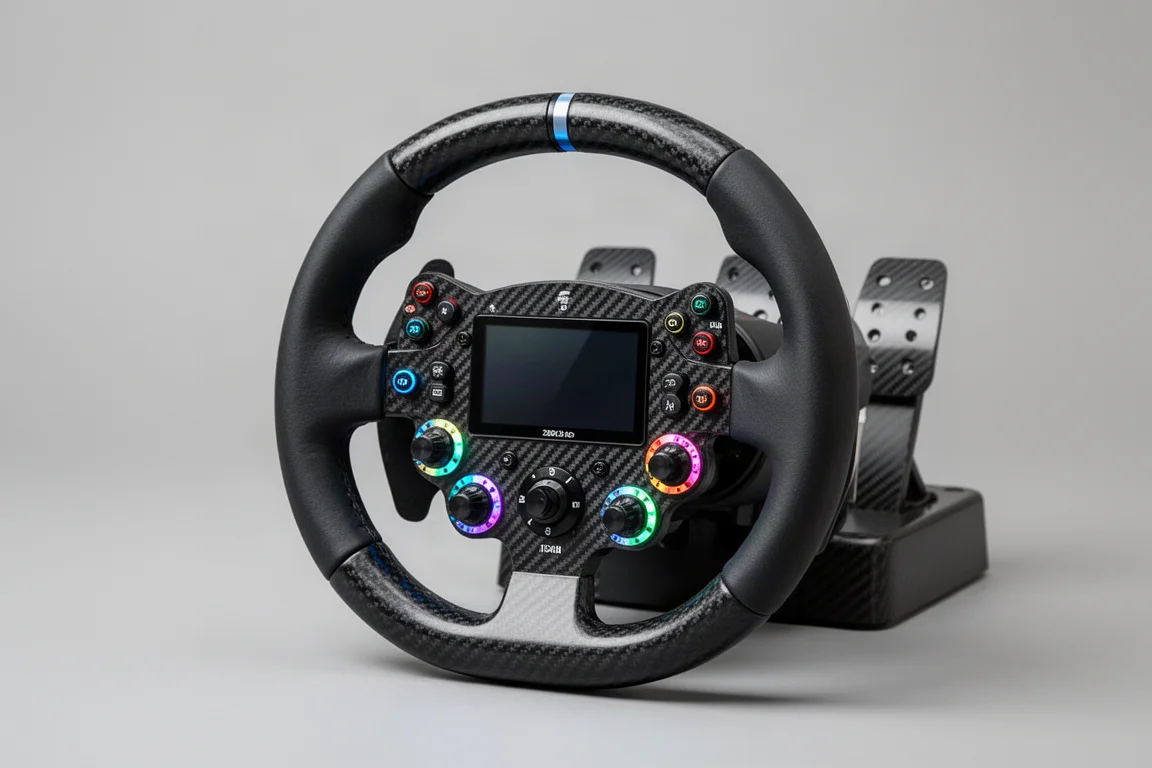
The Zeus Formula is a 280 mm butterfly-style wheel designed primarily for open-wheel racing, though it works well for GT3 and GT4 cars too. The diameter sits at the lower end of the sweet spot for formula wheels, offering a responsive feel without being overly twitchy.
This wheel has the most functionality of the three. It includes 14 push buttons on the face, two more on the back, four rotary encoders, four thumb encoders, and two seven-way switches. All buttons are RGB backlit and customizable. The thumb encoders and hat switches feature aluminum touch points, while the button faces are plastic.
The Formula wheel uses genuine 5 mm carbon fiber for the faceplate, and the CNC-machined aluminum rear cover adds rigidity. There is no meaningful flex anywhere on the wheel. The shifters are among the quietest we have tested, with carbon fiber paddles that feel solid.
One drawback is that removing the dashboard removes the LED strip across the top. The blanking plate also looks less polished than on the GT wheel. Most buyers will likely opt for the dashboard version anyway.
The Formula wheel is priced at $499 without the dashboard, or $669 with it.
The Magic Dash and Modular System
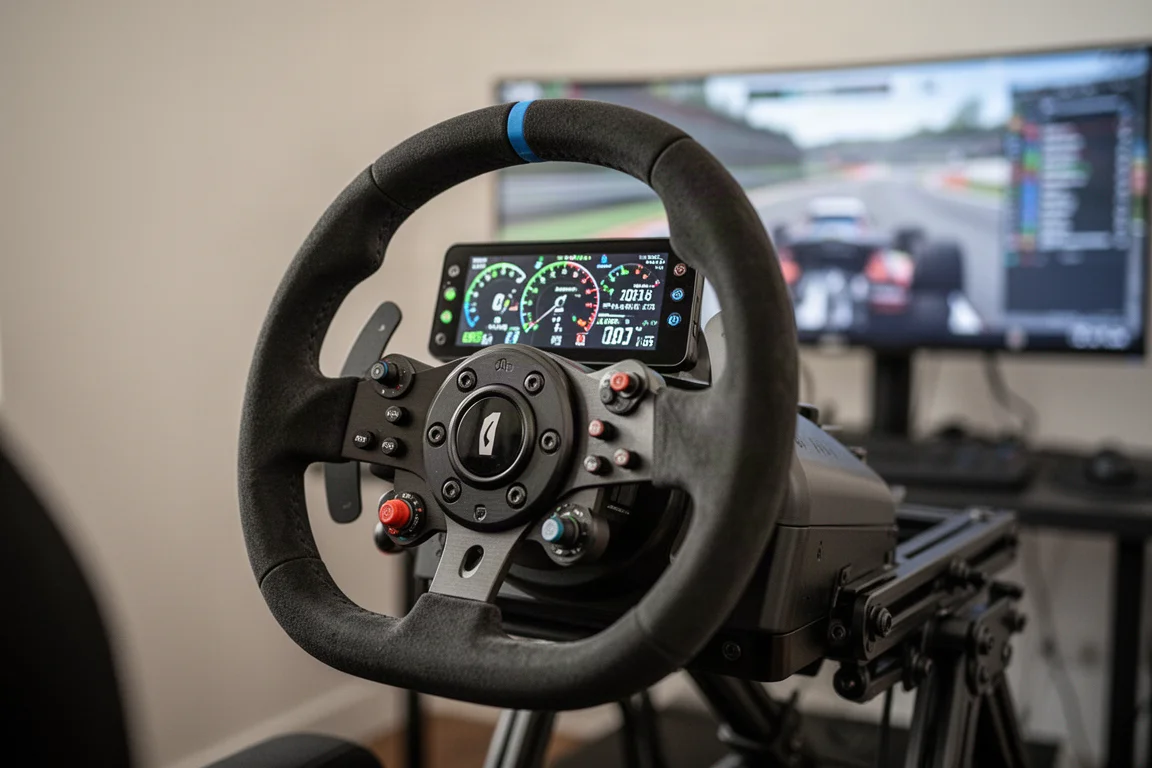
The Magic Dash is the centerpiece of the Zeus system. It is a touchscreen display that can be purchased separately for $199. You can mount it directly on an Evo wheelbase, or use the Mag Dock accessory for $49 to attach it to third-party or Alpha wheelbases.
The dash works with Simagic’s Sim Pro Manager software, which offers a selection of built-in dash layouts. It also supports SimHub, giving you access to a much wider range of telemetry-driven displays. The touchscreen supports mouse mode, letting you control your PC without a separate mouse. This works responsively with current firmware.
The modular design means you only need one dash for multiple wheels. You can pull the dash out of one wheel and pop it into another, provided you have the right blanking plates and mounting points. This can save a couple of hundred dollars compared to buying separate displays for each wheel.
Driving Experience and Day-to-Day Use
All three wheels feel well-weighted and balanced during driving. We tested them across a range of force feedback strengths, from about 5 Nm to over 25 Nm, and found no major issues. The lower the force feedback and the larger or heavier the wheel, the less detailed the feedback feels, which is true of any wheel and wheelbase combination.
The shifters are a highlight across the lineup. They are quiet, with a satisfying action and minimal flex. The optional push-pull paddle modules work well for rally-style driving, and the triple-paddle options add flexibility for different racing disciplines.
One thing to note is that the dash can move easily when mounted directly on an Evo wheelbase. The magnetic force holding it in place is not very strong, so aggressive motion rigs or strong vibration transducers could cause it to vibrate or fall off. The Mag Dock does not seem to have this issue.
In terms of software, the Sim Pro Manager handles button mapping, LED effects, and dashboard configuration. You can assign different button numbers to create profiles for different cars, avoiding the need to remap controls in every game. LED effects can be customized with conditions like ABS activation or DRS enabled. However, there is no multi-layer functionality for rotary encoders, and SimHub control of the LEDs only works when the wheel is connected via USB or Mag Link, not through the Air Link system.
Overall Buying Advice
The Zeus line offers strong value, especially for sim racers who want multiple wheel styles without buying multiple dashboards. The modular system is genuinely innovative, and the build quality across all three wheels is impressive for the price.
For most people, the Sport wheel paired with either the GT or Formula wheel covers all driving styles with a single dash. This combination is more affordable than buying comparable wheels from other brands.
That said, the ecosystem is complex. There are many accessories and configuration options, and the website could be clearer about what you need. If you already own a Simagic wheelbase, you may find that running these wheels on a third-party base is actually simpler in some cases, since you avoid the Air Link hub and other adapters.
If you are looking for a standalone dashboard without the wheels, there are cheaper options that work directly with SimHub. But if you want a modular wheel system with a shared display, the Zeus line is worth serious consideration.
Conclusion
Simagic has delivered a thoughtful and versatile line of steering wheels with the Zeus series. The modular dash system is the standout feature, offering real savings for multi-wheel setups. Build quality is excellent, shifters are quiet and precise, and the software provides solid customization options.
The main caveat is complexity. The number of accessories and connection methods can be overwhelming, and the website does not make the buying process easy. Once everything is set up, though, the wheels perform well across a wide range of driving styles.
For sim racers looking for a high-value wheel system that can grow with their setup, the Zeus line is a compelling choice.
Further reading
Related Reviews
Sim Racing
Asetek Initium Direct Drive Bundle Review: A Strong Entry Point With a Standout Pedal Set
The Asetek Initium bundle brings a 5.5 Nm upgradeable wheelbase, a functional round wheel, and a surprisingly capable pedal set to a crowded entry-level direct drive market.
Sim Racing
ConSimPit Ecosystem Overview 2026: Wheelbases, Pedals, and Wheels
A detailed look at ConSimPit's sim racing ecosystem, covering wheelbases, pedals, and steering wheels with honest observations on quality and value.
Sim Racing
Cube Controls Astra Review: A Lightweight Sim Racing Wheel That Nails the Fundamentals
The Cube Controls Astra is a lightweight aluminum sim racing wheel that focuses on build quality and driving feel over extra features.