Camera Lenses
Sigma 200mm F2 DG Sports Review: A Unique Telephoto for Astrophotography
The first mirrorless-era 200mm F2 full-frame lens, tested against three popular telephoto primes for deep sky astrophotography.
Introduction
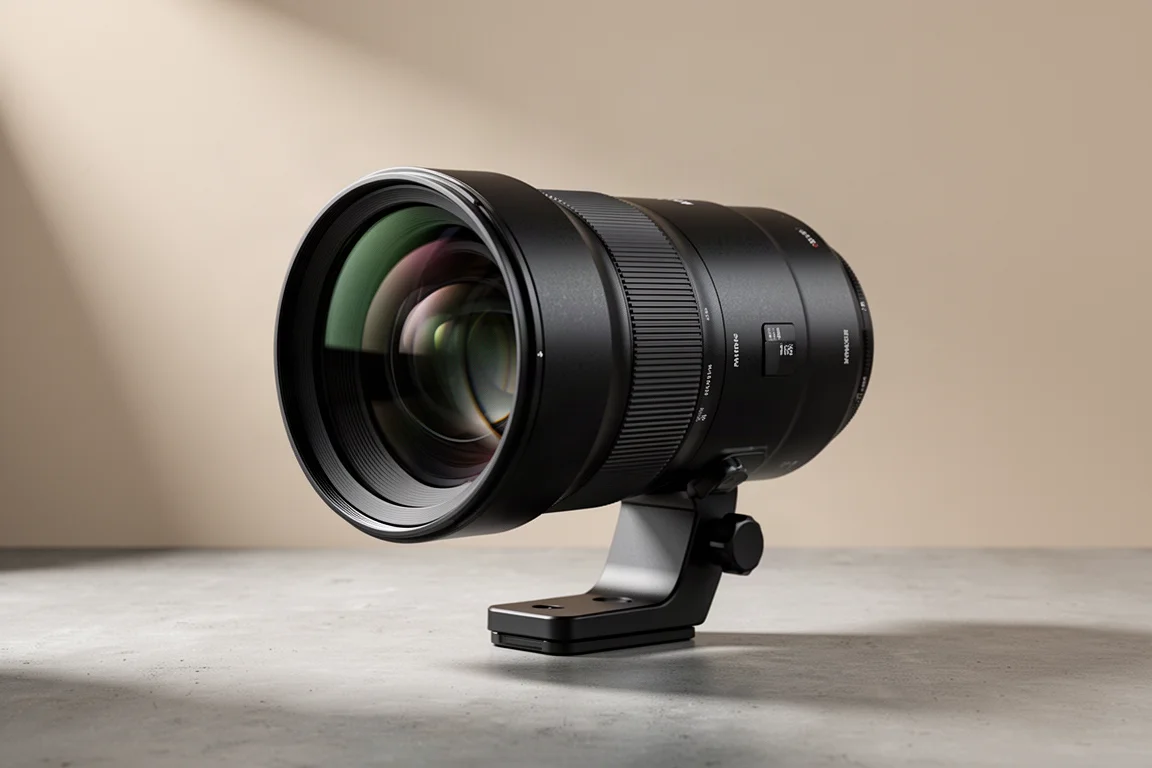
The Sigma 200mm F2 DG Sports is a fairly unique offering. There have been 200mm F2 lenses for full-frame before, but mostly in the DSLR era, and this appears to be the first mirrorless-era lens to arrive with these specs. Going from F2.8 to F2 may not sound like much, but it is a full stop, meaning twice as much light, and it forces the lens to be bigger, heavier, and more expensive to make that work.
Telephoto primes like the Rokinon 135mm F2 are incredibly popular in the deep sky astrophotography community, yet there is no assurance that an expensive lens will be good for the night sky. What astrophotographers care about, such as how a lens renders star shapes in the corners of a high-resolution full-frame sensor, often does not matter much to a portrait photographer. To see where this new lens stands, it was tested on five different nights across a few different mounts, plus one strict technical comparison night against three personal favorite telephoto lenses: the Rokinon 135mm F2, the Sigma 105mm F1.4, and the Canon 200mm F2.8, all shot on the 61-megapixel full-frame Sigma fp-L.

Optics on Test: Vignetting and Sharpness
Vignetting shows up as darkening in the corners and edges of the frame, and with any of these lenses you will definitely want to use flat frames to correct it. Applied flats make a world of difference, leaving only sky gradients that background extraction can handle. In center sharpness at F2, the Rokinon is a little softer than the Sigma 200mm, and the Sigma 105mm looks sharpest of the three, though it is an F1.4 lens already stopped down a full stop to reach that setting. At F2.8, the Sigma 105mm, Rokinon 135mm, and Sigma 200mm all look equally matched, while the Canon 200mm is considerably softer wide open. By F4, all four lenses equalize and are about equally sharp in the center.
Optical Performance Under the Stars
Bright star tests reveal aberrations that matter most to astrophotographers. Wide open at F2, both the Sigma 200mm and the Rokinon 135mm show a very common wide-open distortion sometimes called hourglass distortion or aperture vignetting, where two small bites are taken out of a bright star. At F2.8 the Canon shows some aperture vignetting plus noticeable chromatic aberration on medium stars, while the other three look fairly similar.
When stopped down, the Canon 200mm produces very distinctive, very sharp diffraction spikes from its aperture blades, while the Sigma 200mm F2 and Rokinon 135mm F2 produce a softer star profile with more spikes, which is the preferred look here. At F4, the Sigma 200mm F2 and Rokinon 135mm F2 are the favorites with a nicely soft star profile.

The extreme corner crops on a high-megapixel full-frame sensor tell the clearest story. The Rokinon 135mm does well for its price, but stars show some elongation and a comet-like shape. The Sigma 105mm shows plenty of coma and chromatic aberration. The Sigma 200mm F2 looks by far the best: stars are slightly out of round but much sharper with far less elongation and distortion, which is an impressive result at 400% zoom on this sensor. At F2.8 the Sigma 200mm looks really good, only slightly elongated left to right but very sharp. At F4 the Rokinon catches up and looks about as good as the Sigma, and the Canon is the most consistent across apertures despite staying a little aberrant. Overall, the Sigma 200mm F2 is far in the lead on corner performance, but once stopped down to F4 the other lenses close much of the gap.
Mechanical Design and Handling
The included lens collar is very nice, with a long Arca-Swiss plate, smooth rotation for repositioning the camera and lens, and hard stops at 90-degree angles. The foot also has a quarter-inch screw hole for attaching to a Vixen plate. The included hood is high quality with internal baffles and a black matte interior, nicely long and effective at protecting the lens from stray light.
The lens weighs 1.88 kg (4 lb), and it was used successfully on a SkyWatcher Star Adventure GTi, so it should work fine on most star trackers or mounts.

Two Real Downsides for Astrophotographers
There are two connected downsides worth taking seriously. First, the lens is only available for L-mount and Sony E-mount, which limits camera choices and effectively restricts astrophotography filters to clip-in filters inside the camera body. The front filter thread is 105mm, and there are no serious astrophotography filters available in that format. EF-mount lenses, by contrast, are easy to adapt to almost any camera, including dedicated astronomy cameras.
Second, like almost all new high-end lenses, this one uses focus-by-wire. Turning the focus ring sends an electronic command to the camera, which sends a command back to move the lens elements. If the camera is off or incompatible, manual focus simply will not work. With EF lenses, the focus coupling is mechanical and needs no electronics. Because L-mount offers only 20mm of back spacing and E-mount only 18mm, compared with 44mm on EF, there is no electronic adapter available for dedicated astronomy cameras, and it is hard to imagine one appearing.
Who This Lens Is For
It is definitely an expensive lens, but it is also a unique one. There is nothing else on the market this well corrected with a high-megapixel full-frame sensor at 200mm F2. You could look at well-corrected small telescopes like the Askar SQA55, which reaches a similar focal length, but that optic is over two stops slower at F4.8. While the lens was not designed with astrophotographers in mind, it fills a genuine gap for a very fast, very well-corrected full-frame telephoto that stays sharp on the stars.
A first-night test from Cherry Springs State Park in Pennsylvania, a Bortle 3 dark sky park, produced a stacked and processed image centered on the Dark Shark Nebula in Cepheus with several dark nebula neighbors. With just a couple of hours of integration, the lens and camera combination was genuinely impressive.

Buying Advice
The Sigma 200mm F2 DG Sports launches at $3,299 in L-mount and Sony E-mount. If you shoot deep sky targets on a mirrorless full-frame body and want the fastest, best-corrected 200mm option available, this lens stands alone. If you rely on dedicated astronomy cameras, clip-in filters, or mechanically coupled manual focus, an adapted EF telephoto such as the Canon 200mm F2.8 remains the more flexible path, and the Rokinon 135mm F2 still delivers remarkable corner performance for its price. Match the choice to your camera system and workflow before committing.
Conclusion
For mirrorless shooters doing deep sky work, the Sigma 200mm F2 DG Sports sets a new benchmark for corner star quality at this focal length and speed, with excellent mechanical support for mount-based shooting. Its mount limitations and focus-by-wire design are real constraints, but for the right camera setup it is the only lens of its kind.
Product link
View more details for Sigma 200mm F2 DG Sports
This product is mentioned in the review. Check the specifications, options, and compatibility before buying.
View more details for Sigma 200mm F2 DG SportsFurther reading
Related Reviews
Camera Lenses
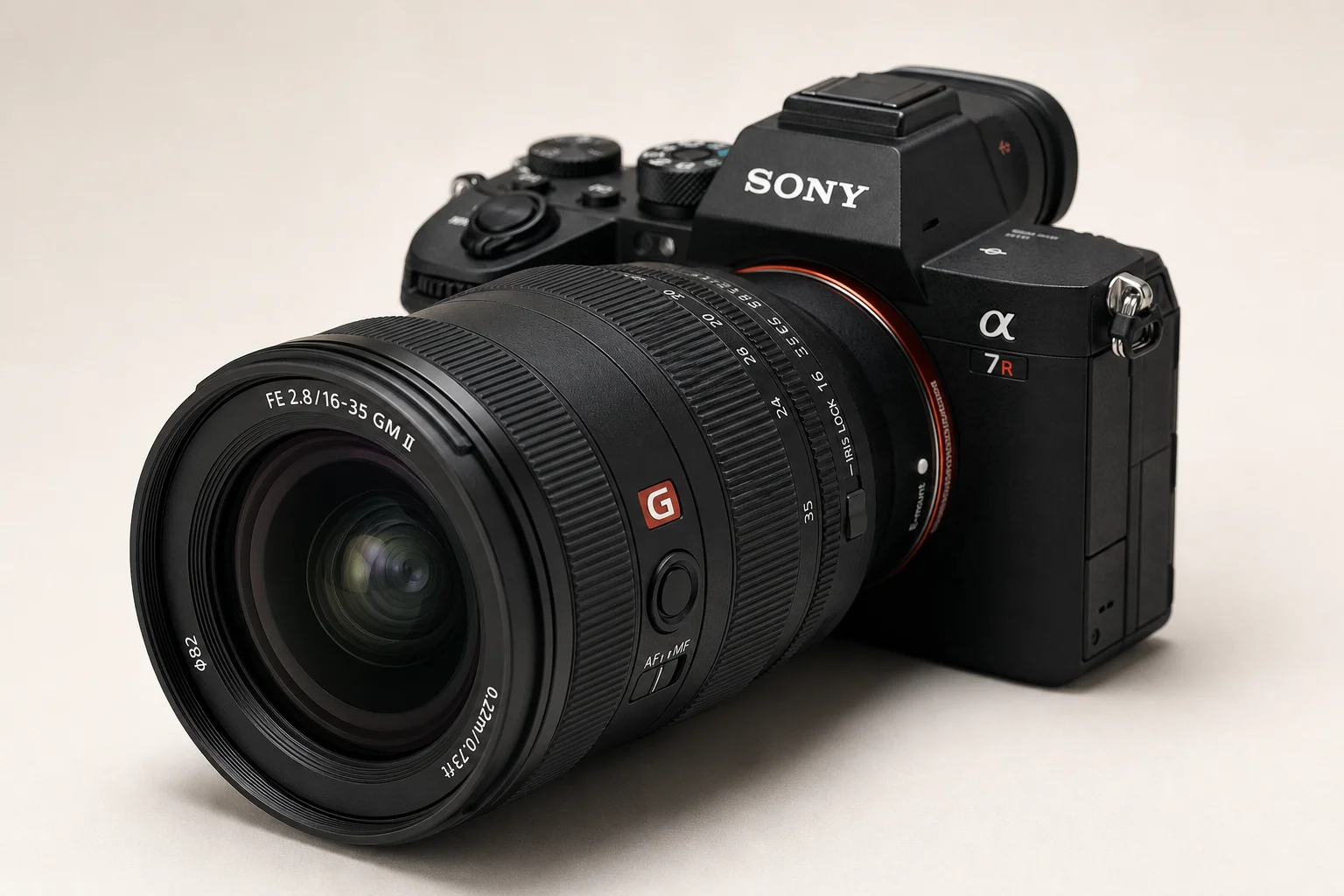
Sony 1635mm F2.8 GM2 Lens Review: Compact Wide-Angle Performance
The Sony 1635mm F2.8 GM2 delivers impressive optical sharpness and a notably lighter design compared to previous F2.8 ultra-wide lenses, making it a practical choice for landscape and video work.
Camera Lenses
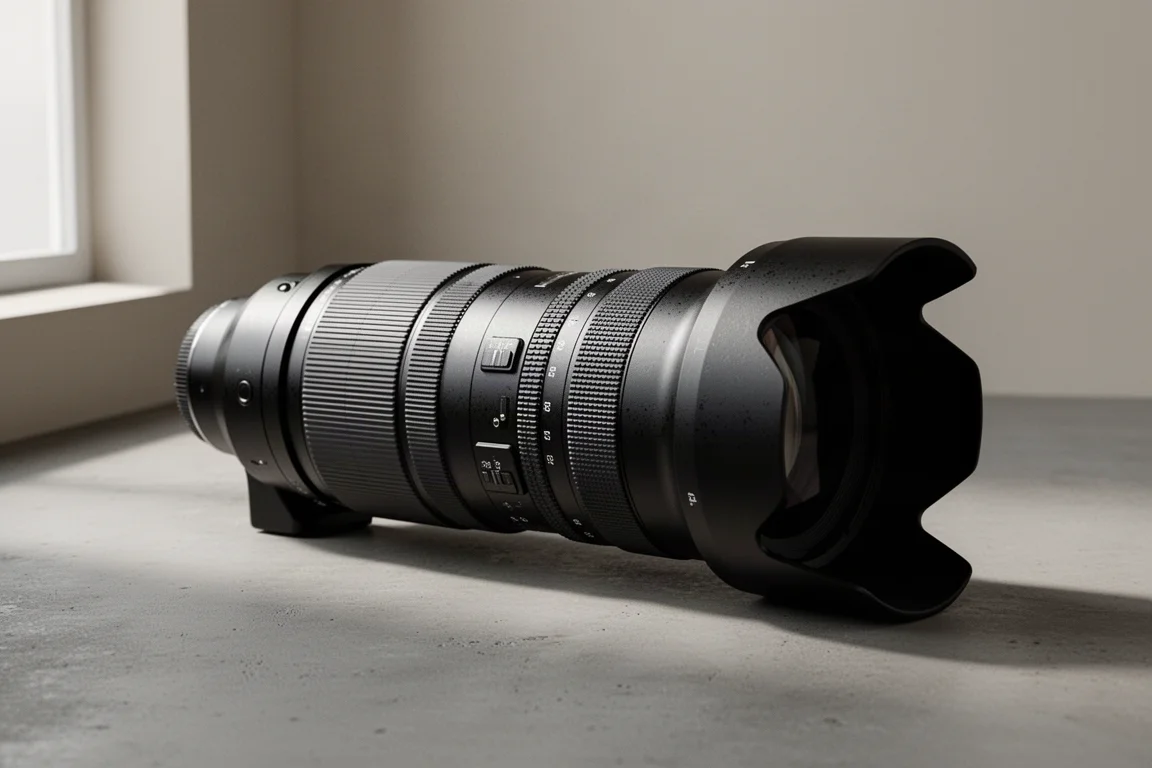
Sigma 150-600mm Lens Review: An Honest Look After 18 Months of Use
A long-term review of the Sigma 150-600mm telephoto lens, covering glass quality, focus behavior, stabilization, and whether it is the right pick for beginner bird photographers.
Camera Lenses
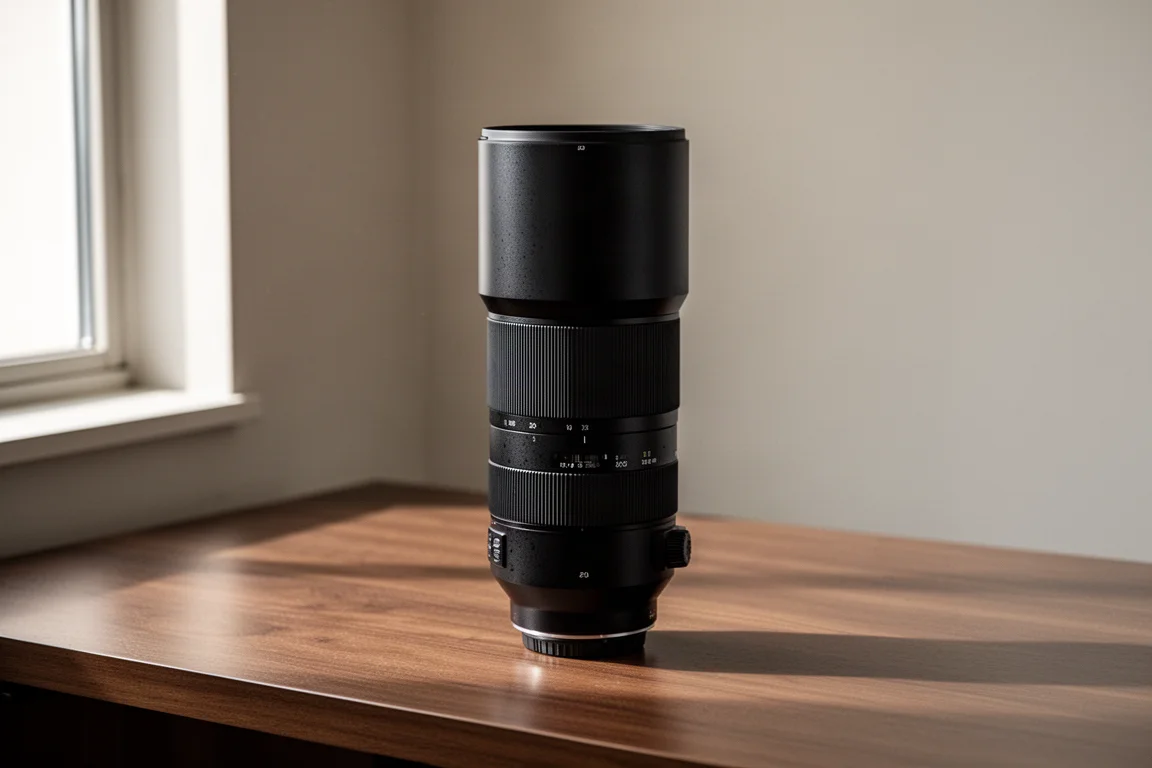
OM System 100-400mm f/5-6.3 Review: A Lightweight 800mm Wildlife Lens
A compact super-telephoto zoom for Micro Four Thirds that reaches 800mm equivalent on OM-1 bodies while weighing just 1,125g.