Camera Lenses
Sigma 14mm f/1.4 DG DN Art Review: A New Benchmark for Astrophotography Lenses
Sigma's new fast ultra-wide prime is built specifically for shooting the night sky, with cleaner corners, a brighter aperture, and a genuinely useful tripod collar.
Introduction
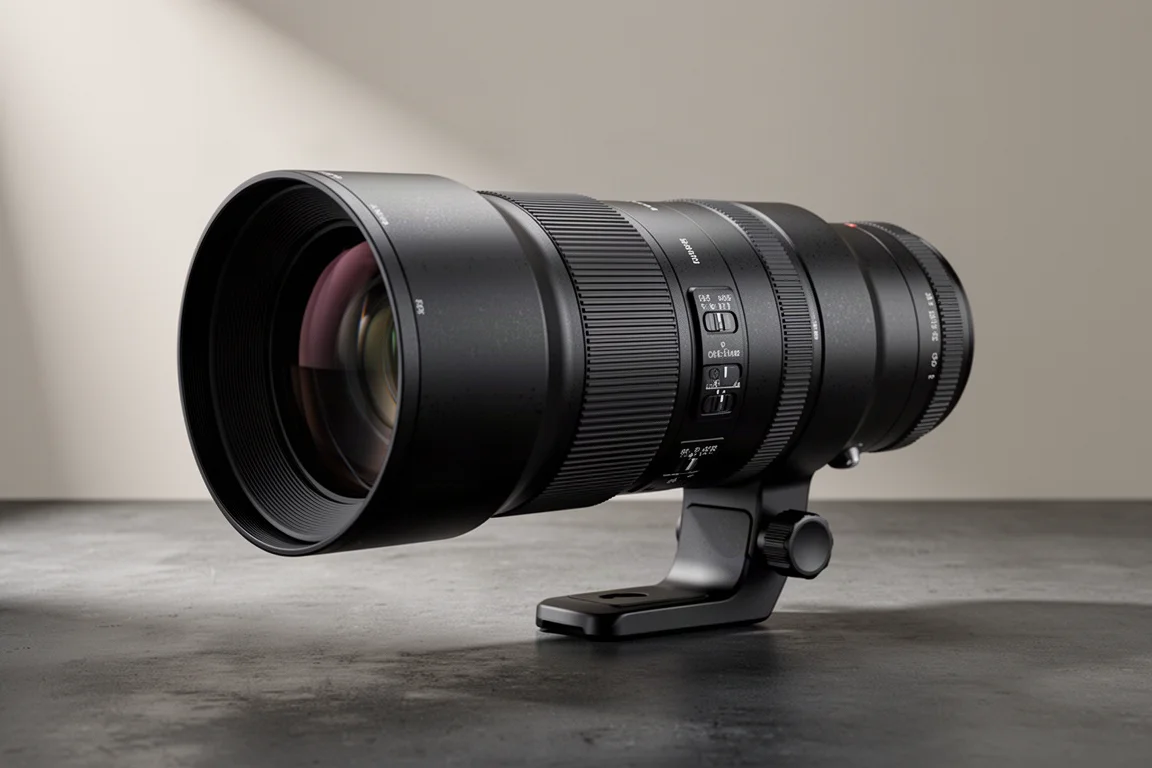
Sigma built the 14mm f/1.4 DG DN Art with one audience in mind: astrophotographers. After spending time with it under a dark sky, the intent shows in almost every design decision. Optically, it is the most impressive ultra-wide angle lens I have used for night-sky work, delivering markedly cleaner corner stars than Sigma’s older 14mm f/1.8 DG HSM Art while also being a full two-thirds of a stop brighter wide open.
The comparison is worth taking seriously, because the older 14mm f/1.8 has long been a favorite among Milky Way shooters. Tested side by side on the same night, the new lens earns its place, though it comes with trade-offs in size, weight, and focus behavior that some photographers will want to weigh carefully.
Who This Lens Is For
This is a lens for photographers who plan their nights around the Milky Way. If your typical session involves mounting the camera on a star tracker, framing a foreground with the horizon, and shooting wide open under dark skies, the 14mm f/1.4 DG DN Art is aimed directly at you.

It is a full-frame lens available at launch for L Mount, used by Sigma, Leica, and Panasonic mirrorless cameras, and for Sony E-mount. Because it is designed for mirrorless with a very short focal flange distance, there is no realistic way to mount it on Canon RF or Nikon Z bodies, and there is no indication that Sigma plans to expand support there.
Main Strengths
The headline attribute is optical quality. In side-by-side night-sky testing, the new lens greatly improves on the star shape in the corners compared with Sigma’s older 14mm Art lens. The older f/1.8 shows pronounced astigmatism in the extreme corners, where bright stars develop a winged, bird-like shape. The new lens eliminates that astigmatism entirely, leaving only mild elongation from standard distortion. At f/1.4, the corners resolve many small background stars, which is remarkable for a 14mm at that aperture.
Center sharpness follows the same story. Wide open at f/1.4 the field is already sharp, and by f/1.8 the new lens matches the sharpness the older lens only reaches around f/2.8. If you shoot fast, as most Milky Way photographers do, that difference matters.
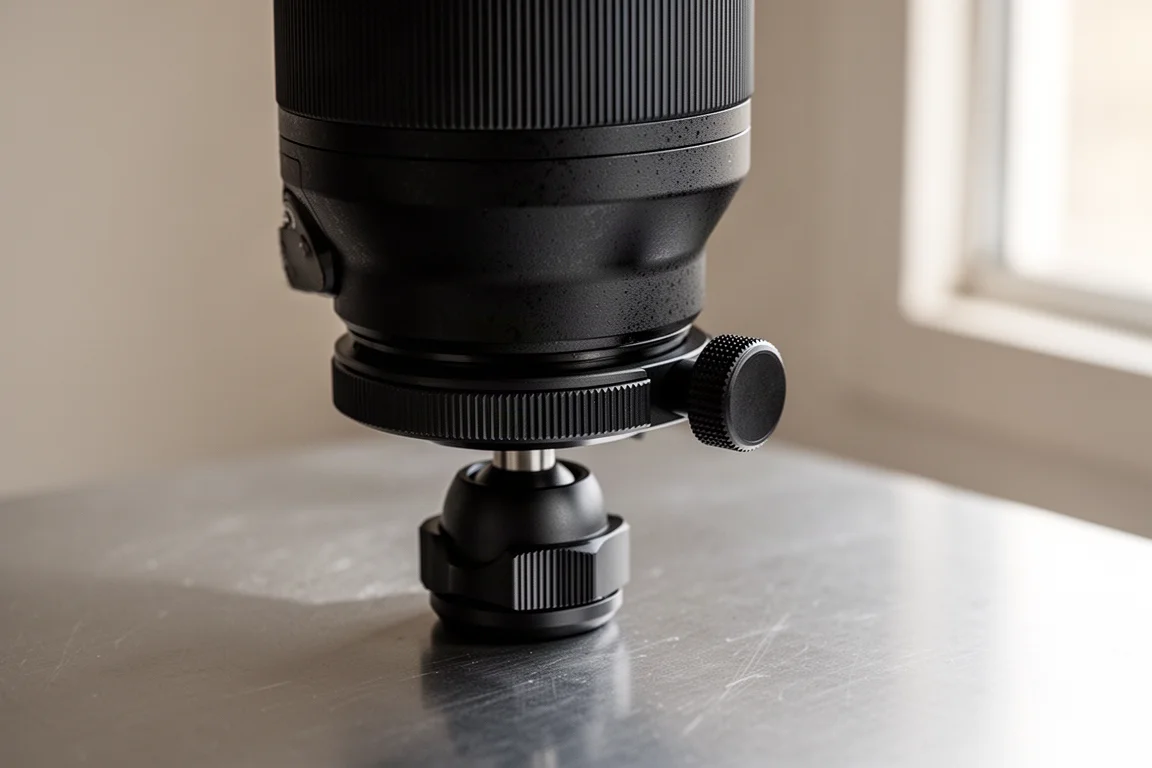
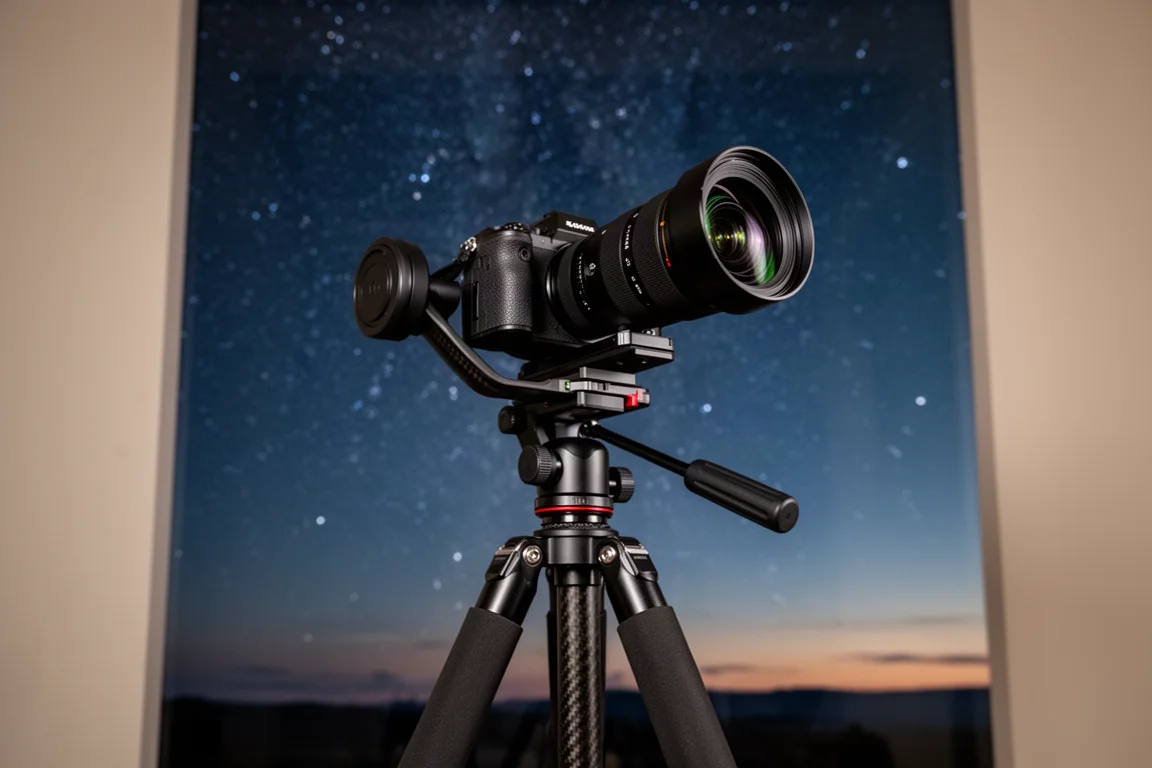
Physically, the rotating tripod collar is a standout. Few ultra-wide lenses include one, and it earns its bulk in two ways. First, it moves the balance point of the camera and lens to a much more sensible position, since mounting the lens and camera normally leaves the rig badly front-heavy. Second, it allows full 360-degree rotation of the camera and lens when attached directly to a star tracker’s declination bracket. That makes it far easier to level the horizon, compose the foreground, shoot an untracked foreground frame, then switch tracking on for the tracked Milky Way shot, with both frames lining up perfectly.
The barrel carries other welcome additions from Sigma’s newer mirrorless Art lenses: an aperture ring, a manual focus lock switch, and a raised lip near the front so a dew heater strap cannot slip into frame. There is a rear slot for cut sheet-type gel filters, and the lens cap includes storage for those trimmed gel filters, a small but thoughtful touch.
Optical Performance Under the Stars
Vignetting is very good for a 14mm f/1.4. There is obvious light falloff at wide open, but noticeably less than other fast wide-angle lenses tend to show. Compared directly at f/1.8, the two lenses are close, and by f/2 the new lens is slightly brighter into the corners. At f/2.8 the older lens catches up, and at f/4 both fields are essentially flat.
In the center of the frame, the new lens is a touch sharper at f/1.8, though small color differences between test frames came from the Milky Way core rising higher between exposures, not from the lenses themselves. Stopping down, both lenses sharpen, but the older lens makes a bigger jump between f/1.8 and f/2, while the new one is already near its peak much earlier.
The corners are where the two lenses diverge most. At f/1.4 the new lens shows only mild elongation and keeps resolving faint stars. The older lens, even stopped down to f/2, retains heavy astigmatism alongside that elongation. By f/2.8 the two start to equalize, and at f/4 the new lens is nearly perfect in the extreme corners while the older lens still shows some oddness in star shape.
Things to Consider Before Buying
The first trade-off is size and weight. The new lens weighs 1,276 grams with caps on, versus 1,238 grams for the older f/1.8; removing the collar and foot brings the new lens down to 1,184 grams. Either way, these are heavy lenses. For comparison, the Sony 14mm f/1.8 GM weighs just 460 grams, so if you backpack to remote shooting locations, the weight and the bulk of that large foot are real considerations.
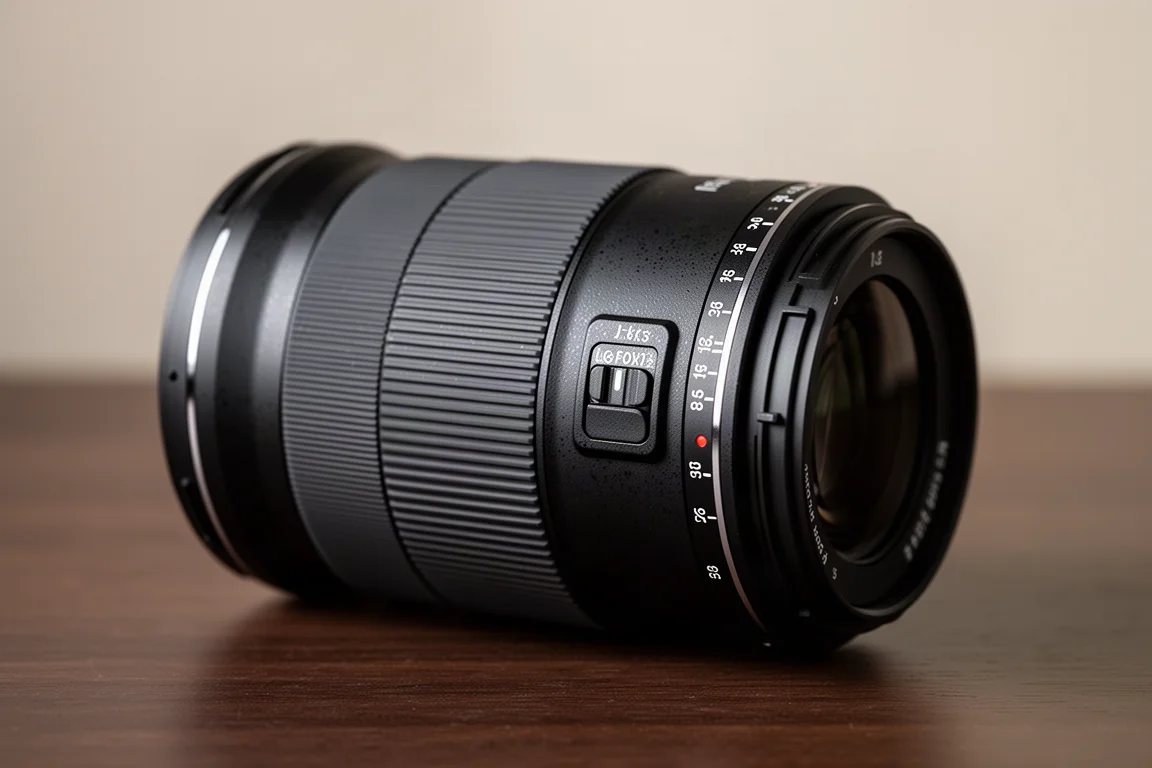
The second trade-off is focus by wire. The focus ring is not mechanically coupled to the glass inside; it sends electronic signals to the camera body, which moves the focus elements. The ring has no hard stops, and the lens needs power and communication with the body to focus at all, even manually. In practice, this means these lenses cannot be adapted to astronomy cameras without some hypothetical very thin smart adapter. Sigma’s implementation does include a useful manual focus lock, which electronically pins the focus position so bumping the ring, for example while fitting a dew heater strap, cannot knock the lens out of focus.
Buying Advice
Both lenses sit at the same $1,600 price, which makes the decision simpler than it might otherwise be. If you plan to stop down to f/2.8 anyway, the older 14mm f/1.8 remains a capable option with the added benefit of native DSLR mounts, including Canon EF, Nikon F, Sigma SA, Sony E, and L, and its more generous focal flange distance means it adapts readily to many camera bodies with excellent Sigma-made adapters.
If you are the standard fast-shooting Milky Way photographer who wants the ultimate 14mm rendering of a star field with nothing holding the optics back, the new f/1.4 DG DN Art is the one to choose. The weight and bulk are the price of admission, and for tripod-and-tracker night work, the collar more than justifies them.
Conclusion
The Sigma 14mm f/1.4 DG DN Art is a purpose-built astrophotography lens that delivers on its promise: cleaner corner stars, a brighter maximum aperture, and a design that genuinely supports star tracker workflows. Its weight and focus-by-wire system are fair trade-offs to understand before buying, but for dedicated night-sky shooters on L Mount or Sony E, it sets a very high bar.
Product link
View more details for Sigma 14mm f/1.4 DG DN Art
This product is mentioned in the review. Check the specifications, options, and compatibility before buying.
View more details for Sigma 14mm f/1.4 DG DN ArtFurther reading
Related Reviews
Camera Lenses
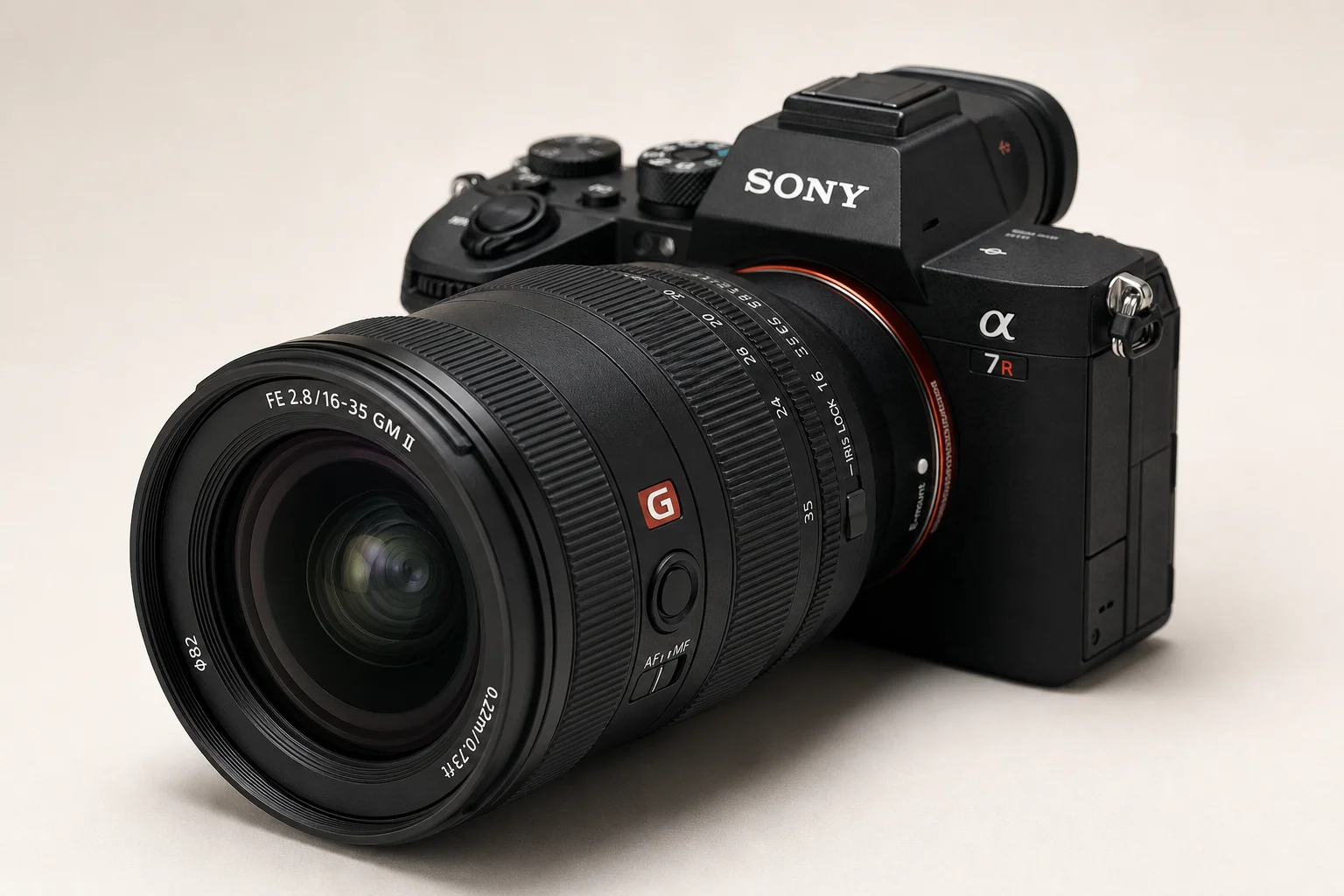
Sony 1635mm F2.8 GM2 Lens Review: Compact Wide-Angle Performance
The Sony 1635mm F2.8 GM2 delivers impressive optical sharpness and a notably lighter design compared to previous F2.8 ultra-wide lenses, making it a practical choice for landscape and video work.
Camera Lenses
Sigma 150-600mm Lens Review: An Honest Look After 18 Months of Use
A long-term review of the Sigma 150-600mm telephoto lens, covering glass quality, focus behavior, stabilization, and whether it is the right pick for beginner bird photographers.
Camera Lenses
OM System 100-400mm f/5-6.3 Review: A Lightweight 800mm Wildlife Lens
A compact super-telephoto zoom for Micro Four Thirds that reaches 800mm equivalent on OM-1 bodies while weighing just 1,125g.