Shop Tools
Siegmund Imperial Series Fixture Table: A Two-Year Shop Review
A long-term look at the Siegmund Imperial Series fixture table, covering build quality, tooling, real-world use, and what to consider before buying.
Introduction
A fixture table is one of those shop investments that either earns its place or becomes an expensive shelf. After two years of regular use, the Siegmund Imperial Series fixture table has proven to be a tool that holds up, speeds up layout work, and makes welding projects more accurate. This review covers what the table offers, how it performs over time, and what to weigh before making the purchase.
Who This Table Is For
The Siegmund Imperial Series fixture table is aimed at welders, fabricators, and metalworkers who regularly build frames, carts, and flat assemblies that need to stay square and true. It is especially useful for anyone who wants to move beyond clamping parts to a bench and instead build repeatable setups with stops, brackets, and quick-lock tooling.
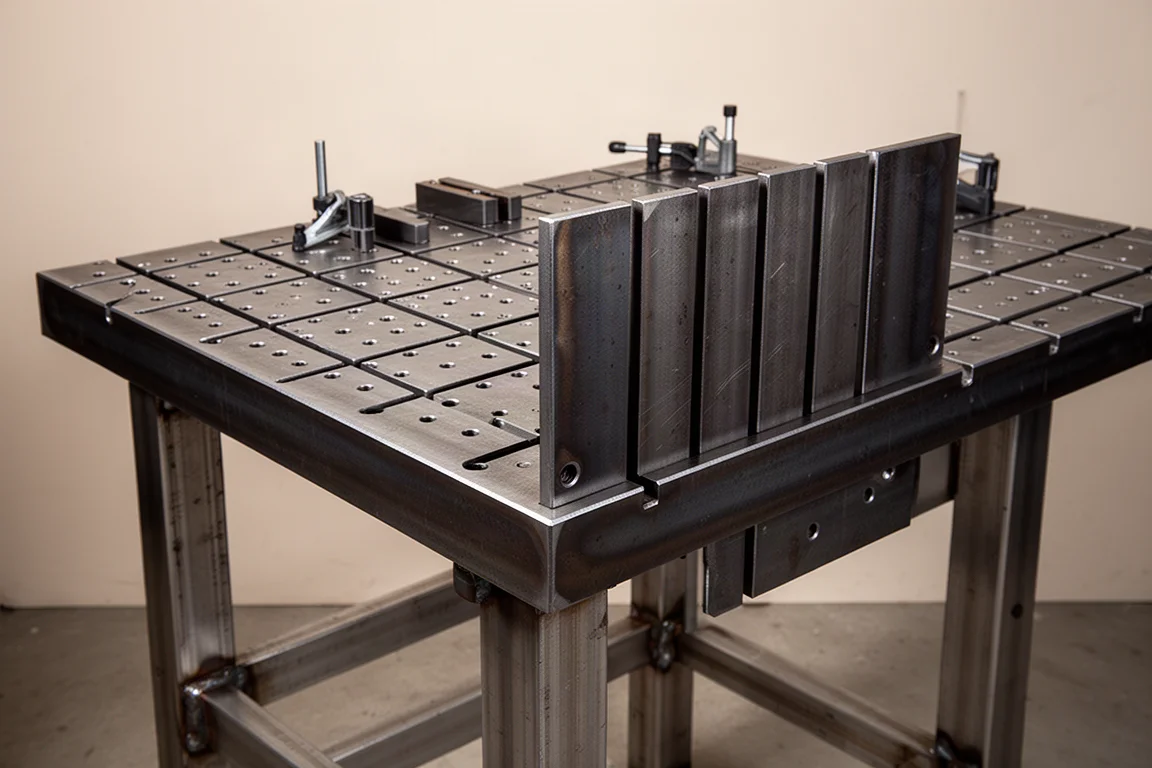
The table reviewed here is the 3 ft by 4 ft model from the Imperial Series, which uses a 2-inch grid spacing. Siegmund also offers a metric version with 50 mm spacing for those who work primarily with metric drawings. The five-sided design includes a top surface and a vertical surface, allowing parts to be clamped in two orientations.
This is not a budget tool. It is a premium purchase intended for a business or an individual who wants a long-term solution. If you do occasional light welding and rarely need precise alignment, a simpler table may be enough. But if accuracy and repeatability matter on a regular basis, this table is designed to deliver.
Build Quality and Surface Durability
The most distinctive feature of the Siegmund table is its construction. Instead of being cast, the table is fabricated from tool steel. A stiffening rib runs in each direction through the center, with intermittent welds along the top to add rigidity. After fabrication, the entire surface is machined to size.
This approach offers a clear advantage over cast iron tables. Cast iron is softer and more prone to dings and pits when material is moved across it. Those imperfections can raise the work surface and throw off alignment. The hardened tool steel surface on the Siegmund table resists that kind of damage.
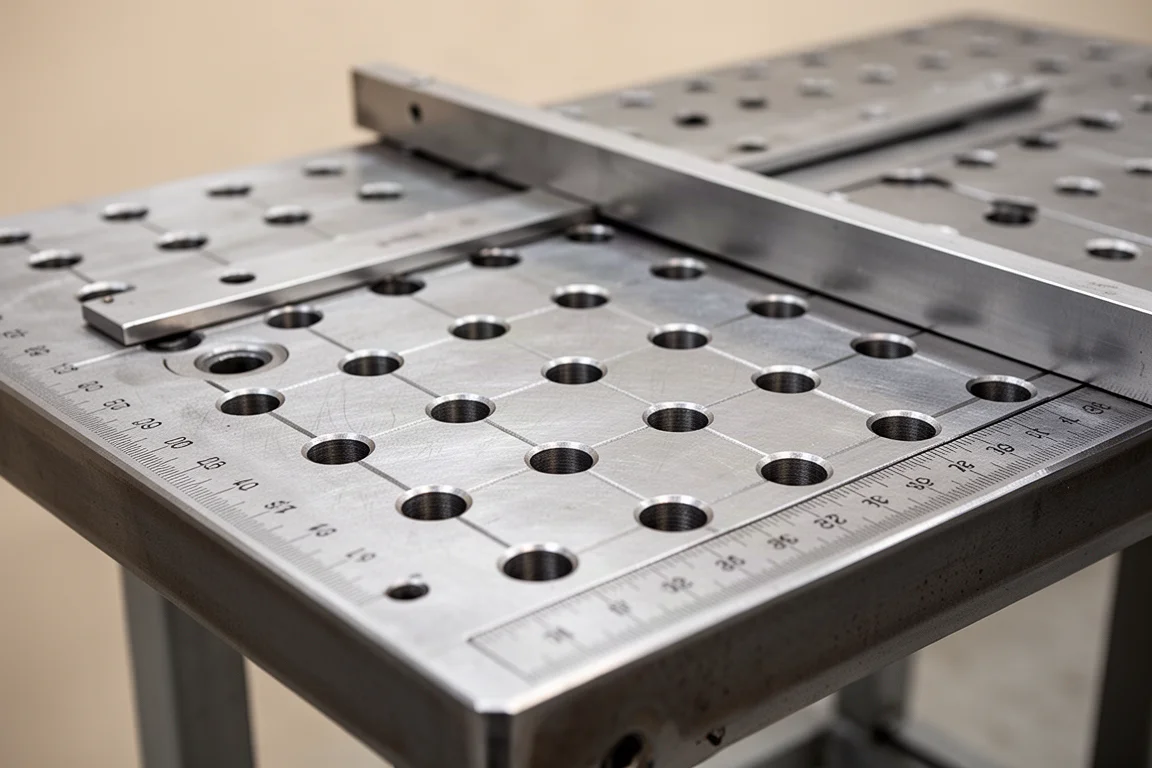
In testing, a steel part was struck against the table surface with enough force to leave a noticeable ding in the steel itself. The table surface showed no appreciable indentation at the point of impact. That durability protects the datum surface, which is critical for accurate work over the long term.
The table also includes a machined scale along one edge. This allows measurements to be taken directly from the table without reaching for a tape measure. Combined with the full grid pattern, layout work becomes faster and more consistent.
The Fixturing Kit and Tooling
The original kit includes a substantial set of tooling. It comes with four high-end clamps, eight adjustable stops, a dozen quick-lock bolts, four angle brackets, cleaning accessories, a tool for tightening bolts, and a torch holder. This is enough to build fairly involved fixtures without needing additional purchases right away.
The quick-lock bolts are a key part of the system. They are fixed length, and when the head is tightened, balls expand outward to lock the bolt into the hole. This requires chamfers machined into the back side of each hole, which the Siegmund table has on every hole. Many budget-friendly cast iron tables do not include these chamfers, which means they cannot use this type of quick-lock bolt.
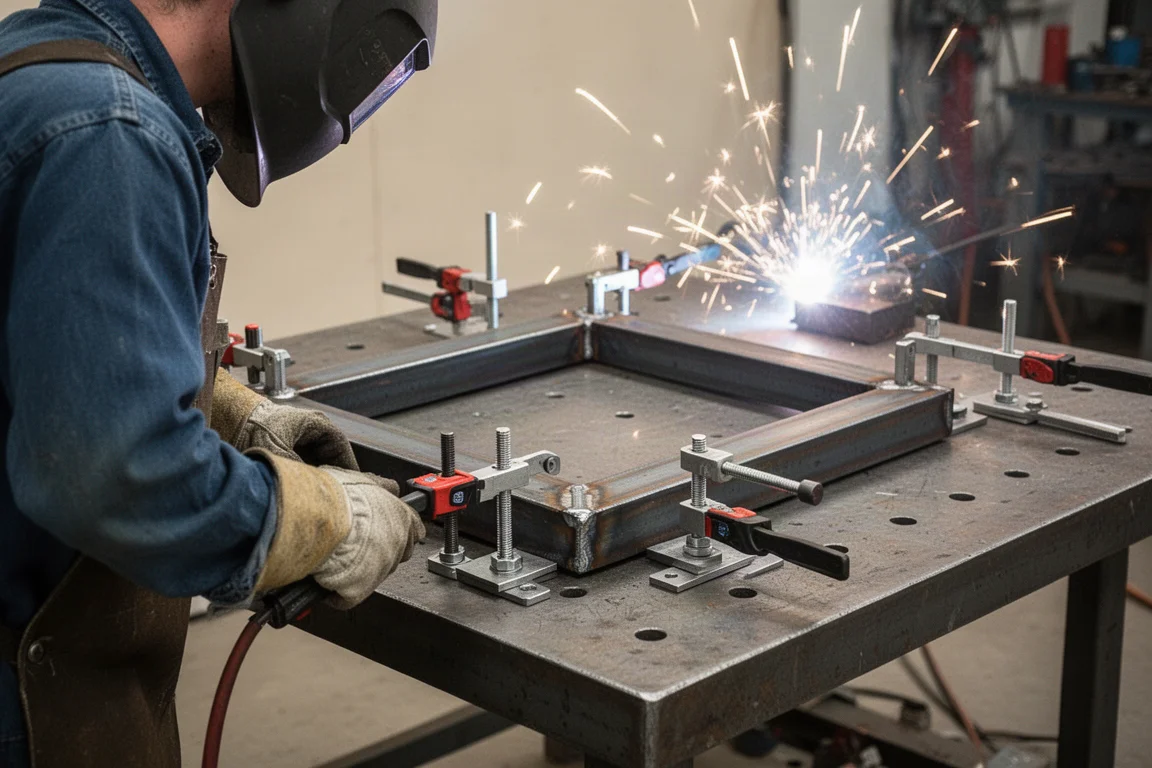
The clamps themselves are noticeably better built than typical competitor clamps. They use a solid welded construction rather than multiple pieces, and they include knobs that lock the height while allowing the clamp to slide back and forth for precise positioning. This makes it easier to place a clamp exactly where it is needed and hold it there while positioning a part. The clamps also accept different feet, and they can even be placed directly into the table as rest pads.
The tooling system extends beyond the original kit. Siegmund offers additional tooling packages with different types of stops, brackets, rest pads, and clamps that can grip sideways or at an angle. These add another layer of flexibility for more complex setups.
Real-World Projects and Versatility
Over two years, the table has been used for a wide range of projects. Building carts and flat assemblies is a common use case. The adjustable stops make it easy to align multiple pieces parallel and clamp everything down before welding, which helps control distortion and keeps parts in place.
For pieces that need to match in width, the stops are particularly useful. Two parts of the same width can be aligned against the same stops, ensuring consistency across the batch. The vertical brackets on the side of the table are also handy for keeping assemblies square while welding.
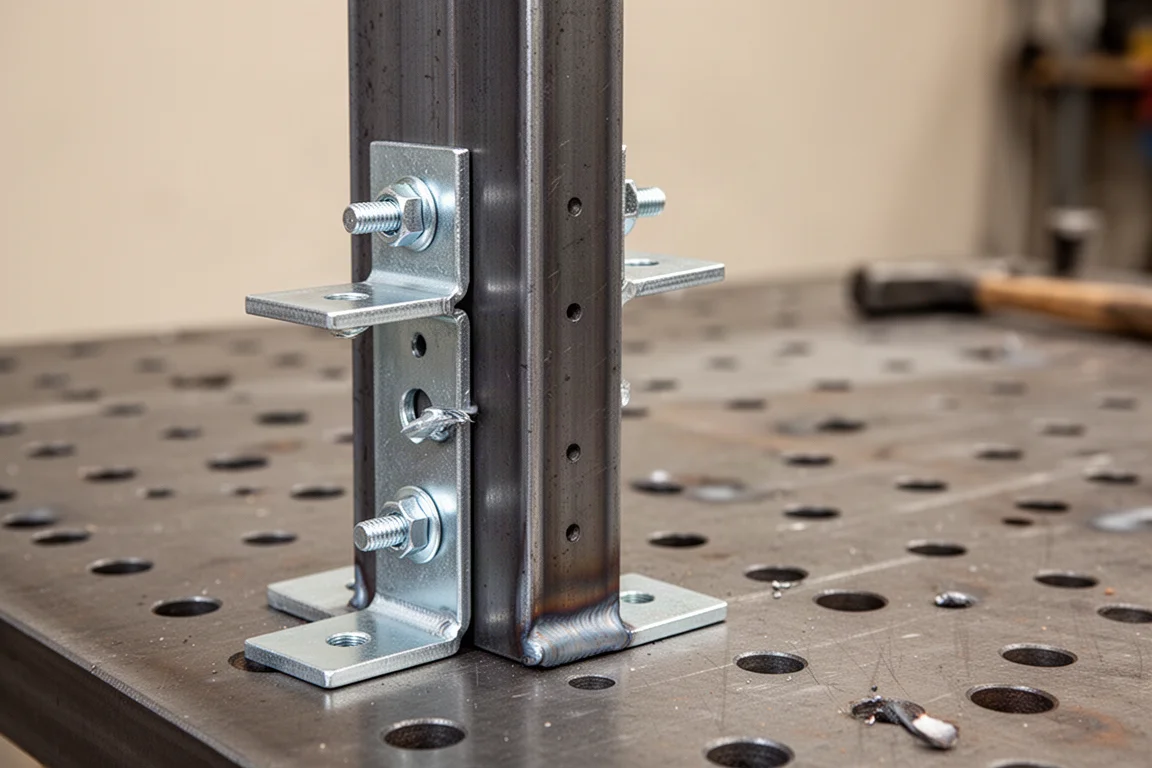
Round tubing work benefits from the table as well. Stops can be used to straighten and true up a frame before crossmembers are added, compensating for spring back and other minor distortions. The ability to clamp everything in place before welding makes a noticeable difference in final accuracy.
Sheet metal projects also work well. In one example, stops were set at specific dimensions to hold sheet metal pieces in place for a chip shoot assembly. The parts stayed aligned both during setup and while welding, producing a cleaner final result.
Another common technique is pairing two angle brackets against each other to tack up legs for tables and carts. This simple jig setup produces a square leg every time. The same approach works for holding two plates parallel and aligned at the bottom.
Long-Term Durability and Maintenance
After two years of significant use, the table surface remains in very good condition. There are some minor marks, mostly from grounding through the table. This is worth noting: no coating will fully resist erosion if you grind directly through it, so it is better to ground directly to the part when welding.
Spatter has not been a problem. Heavy MIG welding may benefit from an anti-spatter spray beforehand, but spatter that lands directly on the table without treatment cleans off without issues. The hardened coating has held up well.
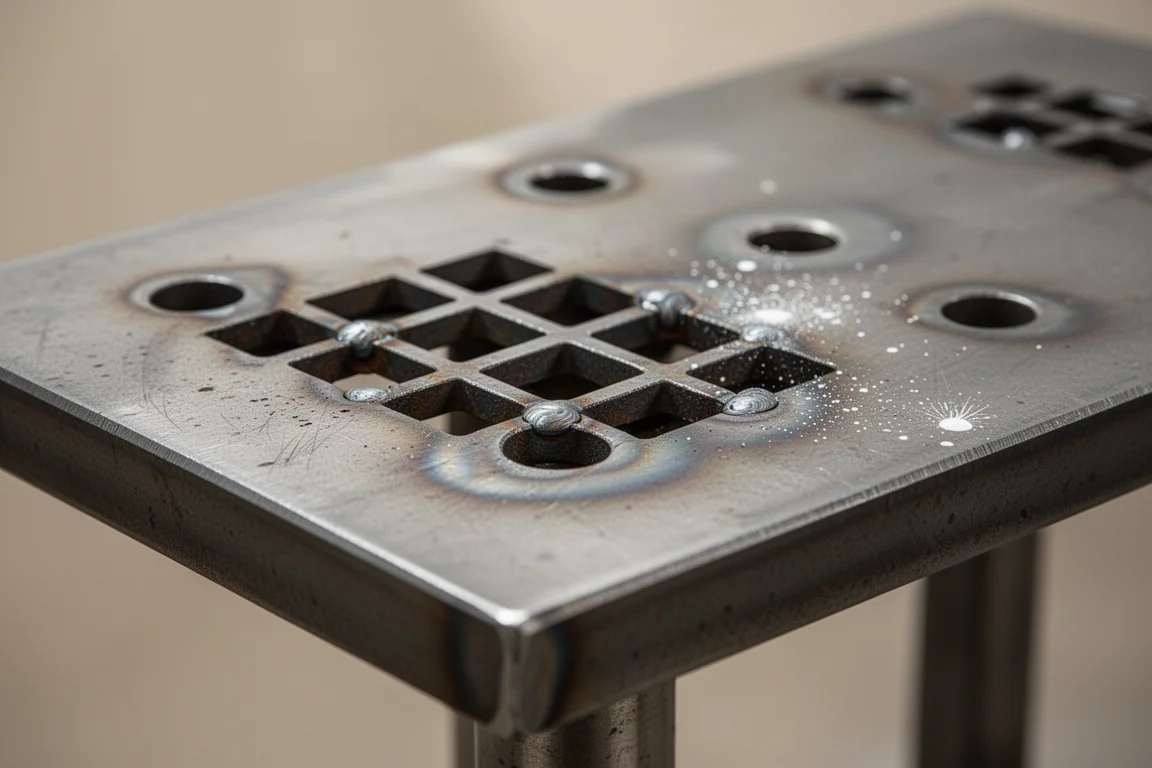
The clamps show some cosmetic wear, including dings on the corners of the paint, but they still function as well as the day they were new. Adding a little WD-40 to the threads from time to time keeps them lubricated and prevents spatter from sticking. The bolts have also taken some accidental grinder hits on the face, yet they continue to work perfectly.
This is the core benefit of the hardened tool steel construction. The table does not wear down over time, and it should continue to perform for many years.
Buying Advice
The original kit with the table and all accessories is priced around $3,700. That is a significant investment, but it is positioned as a lifetime purchase for a business or an individual. The build quality, durable surface, and versatile tooling justify the premium for those who will use it regularly.
For those who find that price too high, Siegmund now offers a workbench flat top style table. The model mentioned here is roughly the same size, slightly smaller, and priced at $1,100. It includes clamps, bolts, and some stops, making it a more accessible entry point into the system.
Before buying, consider how often you will use the table and what kind of work you do. If precision alignment and repeatable setups are a regular part of your projects, the investment makes sense. If your work is more occasional and less demanding, a simpler table may be sufficient.
Conclusion
The Siegmund Imperial Series fixture table has earned its place in the shop over two years of use. The hardened tool steel surface resists damage, the grid and scale speed up layout, and the quick-lock tooling makes complex fixtures practical. It is a premium product with a premium price, but for welders and fabricators who value accuracy and durability, it is a purchase that should last for decades.
Product link
View more details for Siegmund Imperial Series Fixture Table
This product is mentioned in the review. Check the specifications, options, and compatibility before buying.
View more details for Siegmund Imperial Series Fixture TableFurther reading
Related Reviews
Plasma Cutters
BestArc BTC500DP Pro Review: A Budget 50-Amp Plasma Cutter That Surprised Us
We tested the BestArc BTC500DP Pro on steel, aluminum, stainless, and expanded metal. Here is our honest take on this compact, app-connected plasma cutter.

Embroidery Machines
Brother ScanNCut PP1 Review: Three Years of Reliability Concerns
A long-term look at the Brother ScanNCut PP1 embroidery machine, covering durability issues, repair costs, and what to consider before buying.
Welding
Budget Stick Welder vs Flux Core: What Beginners Should Know
A practical look at a sub-$60 drill-style stick welder and why a flux core machine may be the better starting point for home repairs.