Aquarium Filtration
Sicce Whale Canister Filters Compared: 120, 200, 350 and 500
A practical look at the four Sicce Whale canister filter sizes, what each one holds, and how to match one to a freshwater, nano or reef aquarium.
Introduction
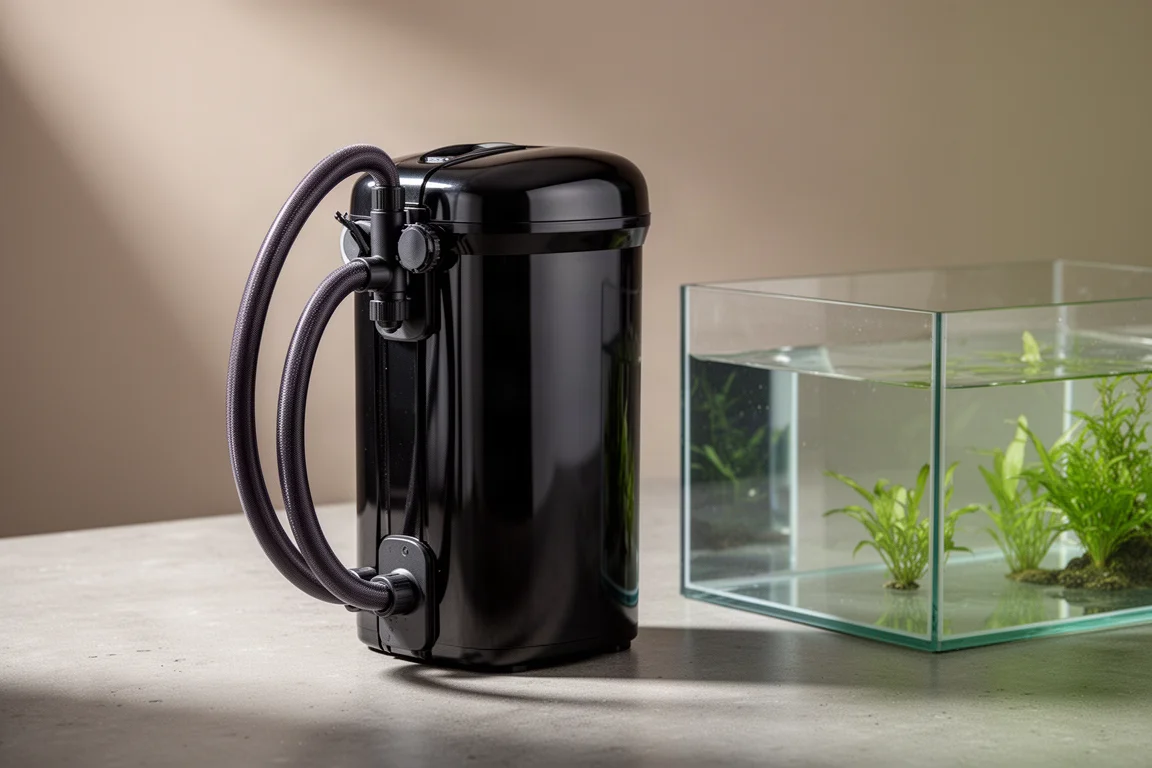
Canister filters have been a fixture of freshwater aquariums for years, and they deserve more attention on the saltwater side than they usually receive. A canister is a closed container that holds media, most often mechanical, chemical and biological stages together, with the motor built into the lid and a pair of hoses to draw water out of the aquarium and return it. Because the pump is part of the unit rather than a separate component, the format frees up rim space so a tank can sit closer to the wall, holds more media than most hang-on filters, and runs quietly, often silently, in a living room.
The Sicce Whale line offers that format in four sizes: the 120, 200, 350 and 500. Across the range, Sicce rates these filters for aquariums between 10 and 90 gallons. Used as a primary filter they move 140, 190, 330 and 390 gallons per hour respectively, and they hold 1.5, 2.2, 5.2 and 7 liters of media.
This guide covers what all four models share, what separates them, and how to run one so it stays genuinely useful in freshwater and reef systems alike.
What Makes the Sicce Whale Line Worth Considering
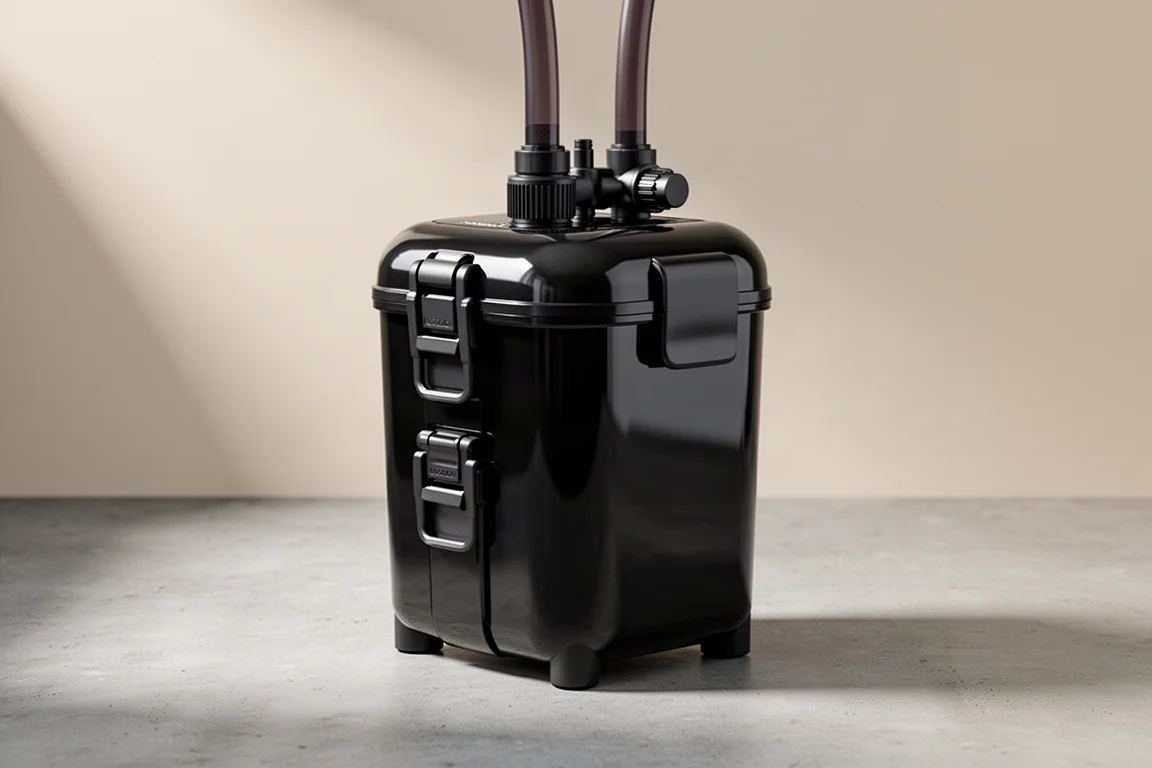
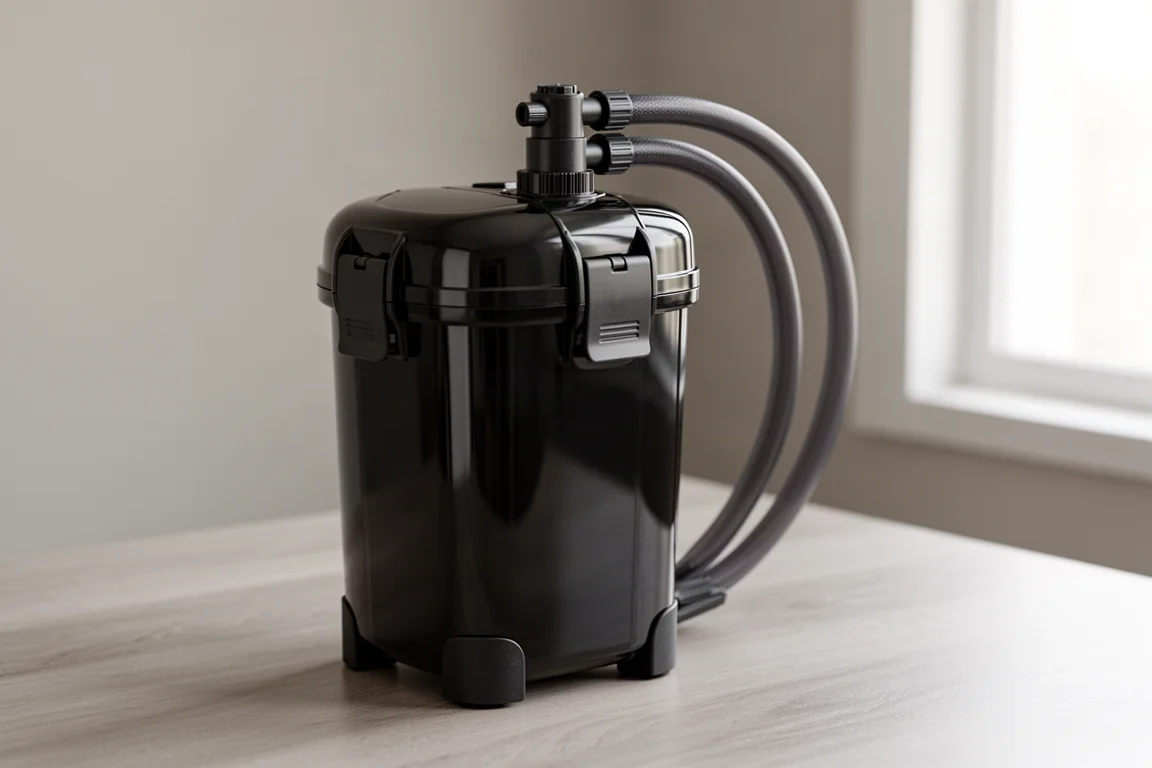
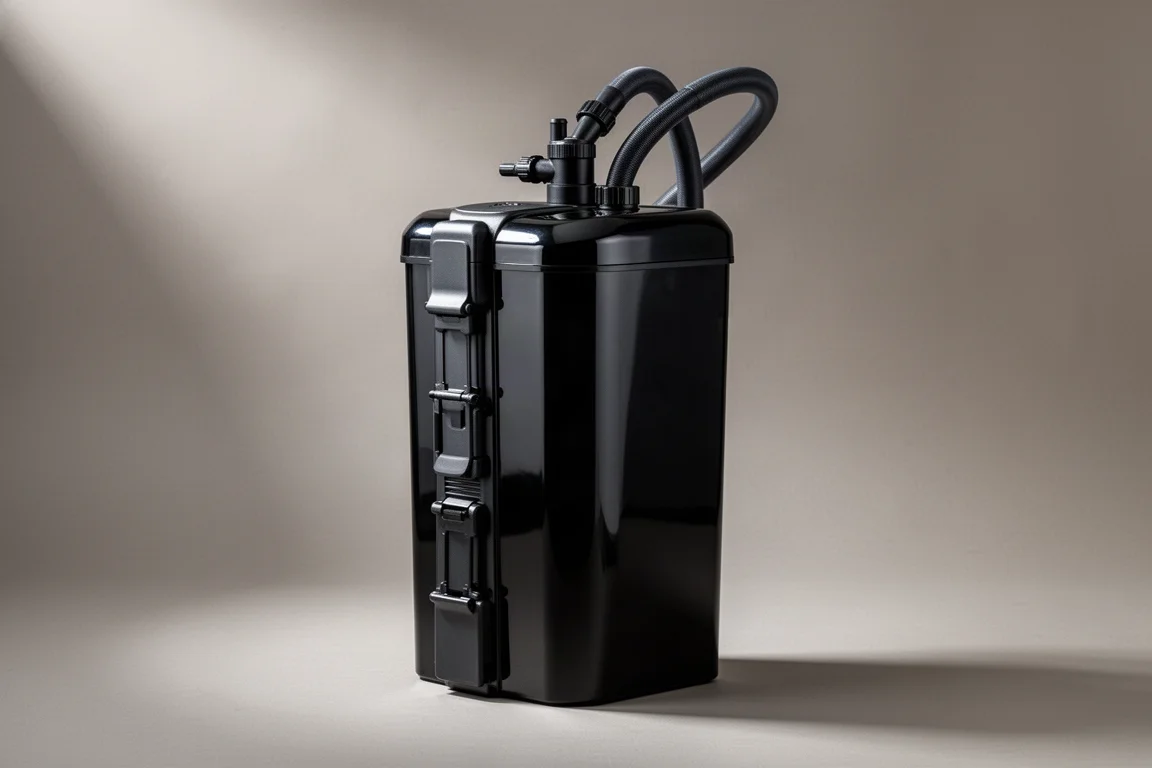
Every Whale model is built around the same design and the same maintenance logic. The body has a glossy piano-black finish, the lid locks down with two-stage clips that close with a firm click, and the tubing is thick-walled so it resists kinking while limiting the light that encourages algae growth inside the line. Simple but effective hose clamps hold everything in place.
The details that matter day to day are the ones that make the filter easy to live with. The intake assembly uses a plunger rod and a built-in check valve for straightforward priming. The output assembly carries a flow control valve and a multi-directional outlet, so the return flow can be aimed wherever it is needed in the tank. The valve block has a single-stage quick release lever that shuts off the tubes and detaches them from the canister in one motion, along with a pair of rotating barbs that make it easier to position the canister no matter which way the hoses have to run. Inside, square media baskets with easy-grab handles make swapping media quick and make cut-to-fit or bulk third-party media simple to use.
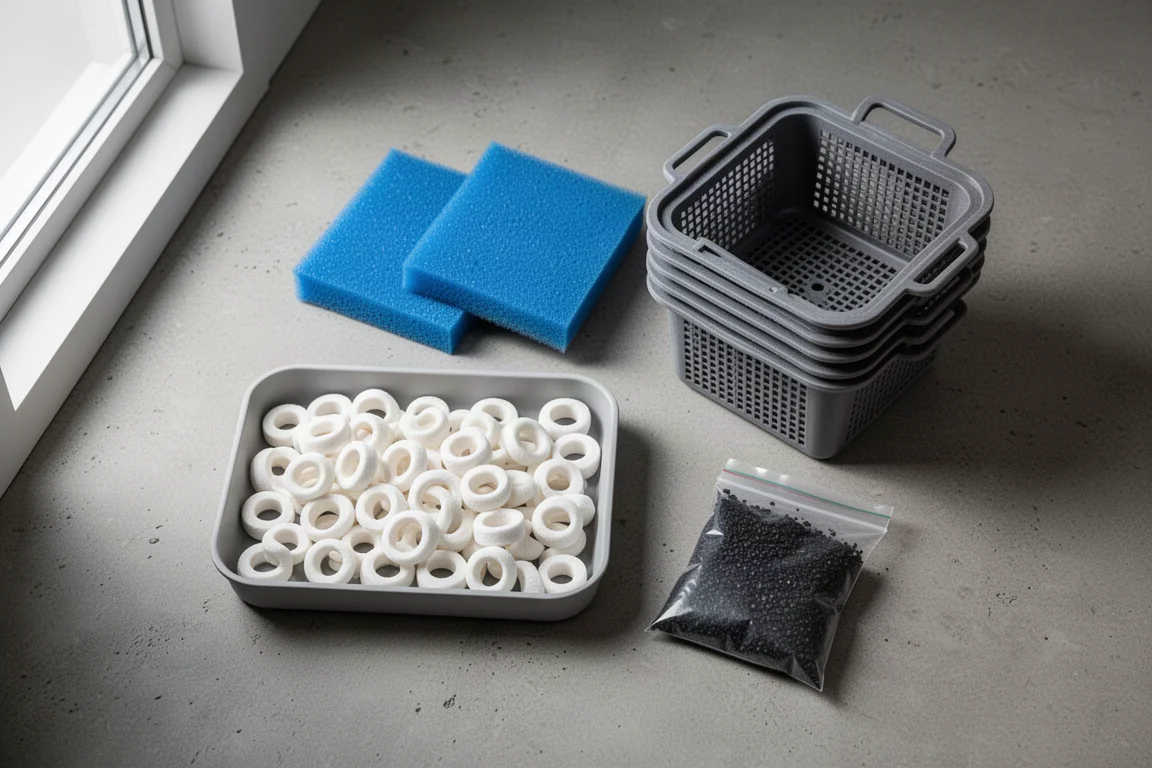
Each filter arrives ready to run, preloaded in the baskets with 10 PPI and 20 PPI foam pads plus core ceramic bio media, together with soft and rigid tubing and everything needed for installation. The accessory set includes the intake assembly, the output assembly, a 90-degree elbow, a water deflector, an intake strainer, four hose clamps, four suction cups, four rubber feet for the canister body, three media basket handles, instructions and a quality control card. One detail is worth noting before the first run: the ceramic bio media should be taken out of its plastic packaging before the filter is started.
Routine maintenance on any of the four sizes follows the same sequence. Unplug the unit, detach the valve block and carry it to a sink or tub, release the clips, lift the lid, and the media baskets are within reach. For a deeper clean of the motor housing, the lid can be flipped over and the impeller cover twisted in the direction of the arrow to unlock it, after which the impeller lifts out for a quick scrub. The intake and output assemblies also come apart for cleaning.
Sicce Whale 120: Compact Filtration for Nano Tanks
The Whale 120 is the smallest model in the line. It moves 140 gallons per hour when used as a primary filter and holds 1.5 liters of media, which makes it a natural fit for smaller aquariums, nano setups and quarantine tanks where a hang-on filter would eat into rim space. It is also a practical way to run an external inline heater or UV sterilizer on a quarantine system without adding another pump or taking up room inside the tank.
On a reef, the 120 is most useful as a polishing tool rather than a primary filter. Loaded with a coarse foam pad, a finer pad and a bag of carbon, it can clear suspended particles and yellowing pigments from a modest system over the course of a day, then be disconnected and stored until it is needed again.
Because the media volume is the smallest in the range, the 120 rewards simple, frequent servicing rather than long intervals between cleanings.
Sicce Whale 200: A Step Up in Media Volume
The Whale 200 sits above the entry model with 190 gallons per hour of flow and 2.2 liters of media capacity. That extra volume of media is the main reason to choose it over the 120, since it gives a little more room for biological media and a slightly more comfortable margin when the filter is asked to handle a small but well-stocked aquarium.
Its strongest role is probably a split one. It can serve as a primary filter on a modest freshwater tank while still being small enough to pull out for periodic water polishing on a larger system, where it adds mechanical and chemical filtration on demand instead of permanently. Aquarists running an all-in-one setup with a rear chamber that is already packed will also find this size easy to place and easy to hide.
Maintenance is the same straightforward process across the line, and it is one of the better arguments for the Whale design. The valve block detaches in one motion with the tubes closed off, the baskets lift out by their handles, and the impeller is accessible without dismantling the rest of the filter. The multi-directional outlet also means the return can be pointed along the surface for gas exchange or down into the rockwork, whichever the tank needs.
Sicce Whale 350: More Media Room for Larger Tanks
The Whale 350 pushes 330 gallons per hour and holds 5.2 liters of media. This is the point in the range where a Whale canister starts to look like a serious primary filter for a stocked freshwater aquarium, or a capable support unit for a larger system that needs extra mechanical and chemical filtration from time to time.
For reef use, the sizing logic matters more than the model number. Canister flow ratings are tailored to the contact time that biological media needs, which is lower than the turnover a reef tank generally wants. The practical answer is to run a canister rated for an aquarium considerably larger than the one it is attached to, so the media still gets the contact time it needs while the system receives useful circulation.
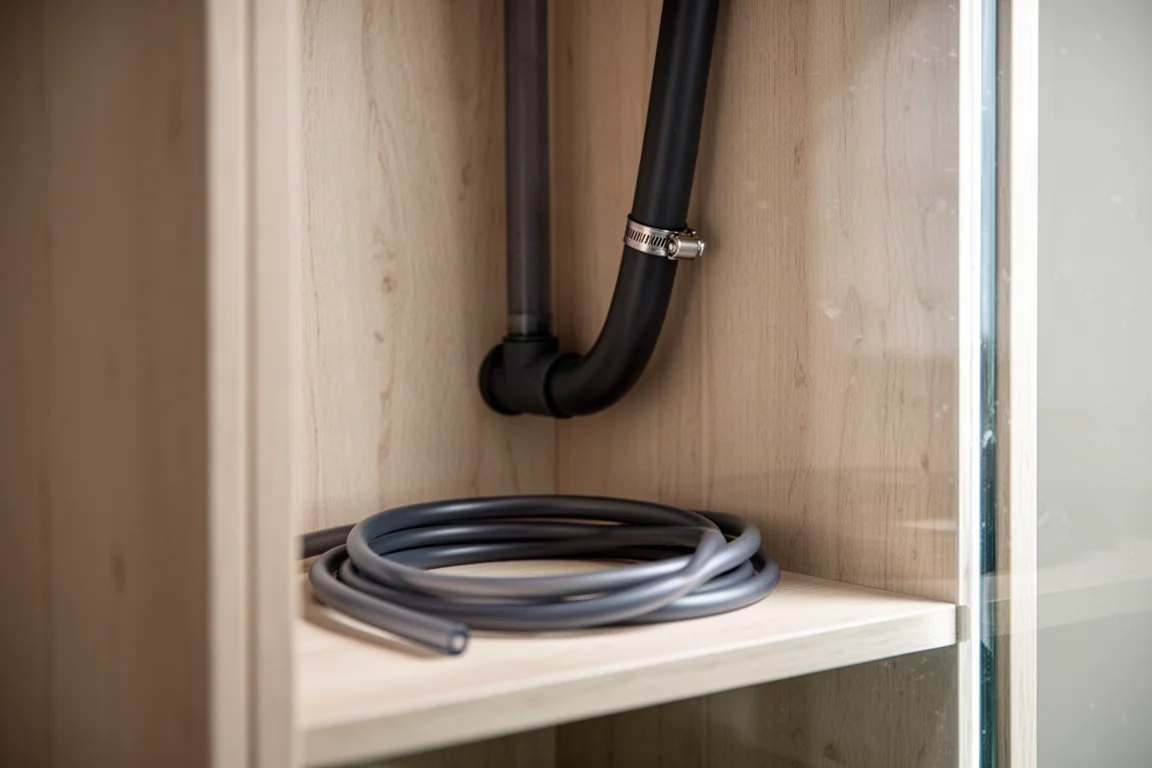
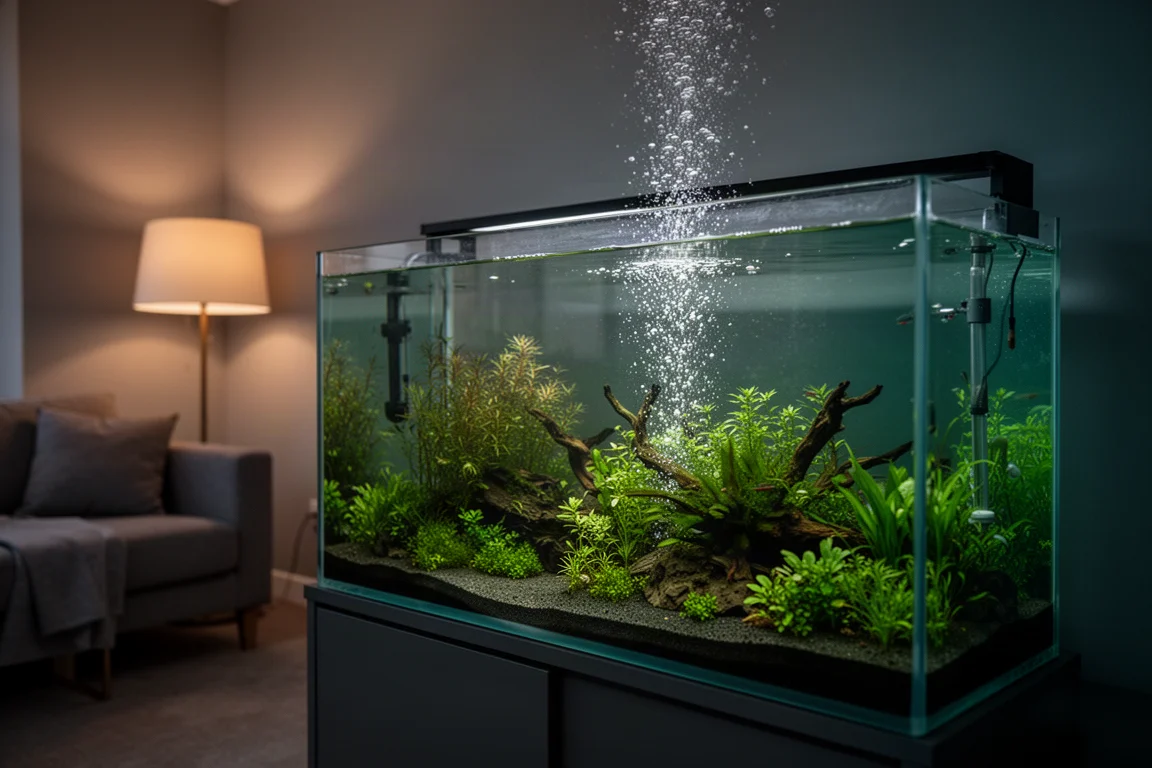
Running quietly is another reason the larger models are easy to live with. Between the closed body, the integrated motor in the lid, and the thick-walled tubing, a Whale canister can sit under a display tank without adding the constant hum that some other filtration choices bring to a room.
Sicce Whale 500: The Largest Whale Canister
The Whale 500 tops the range with 390 gallons per hour of flow and 7 liters of media capacity, and it is the model to look at when the goal is maximum media volume in a single canister. It suits a large freshwater aquarium as a primary filter and works as a heavy-duty polishing unit on a big reef system where a long run of clear water is the objective.
The same sizing caution applies here as with the 350. Even at 390 gallons per hour, the rating is tuned around biological contact time rather than raw turnover, so matching the 500 to a tank several sizes smaller than its rating is the sensible approach if it is going to carry the biological load of a reef.
Getting the Most from a Whale Canister in a Reef Tank
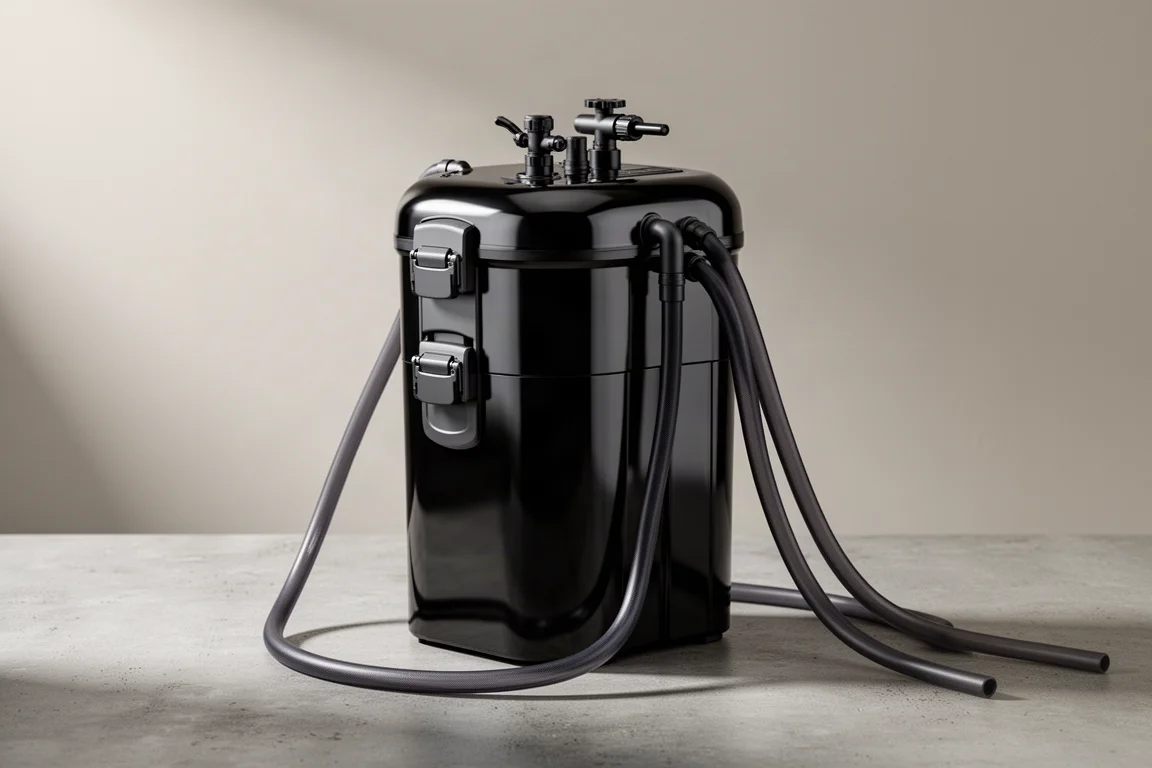
There are two ways to run a canister like this on a saltwater system, and they call for different media layouts.
Used as a primary filter, the priority is keeping maintenance monthly rather than weekly. That means leaving out fine mechanical media such as fine foam pads, polishing pads or filter batting, all of which clog quickly in this position and would force constant servicing. A coarse foam pad goes in the bottom tray, where water enters first, and the remaining trays are filled with biological media. Chemical media is best left out of this setup as well, so the maintenance interval stays predictable. Follow that layout and monthly servicing is realistic.
Used for periodic water polishing, the stack works from the bottom basket upward: 10 PPI foam pads, then 20 PPI foam pads, then a fine filter pad such as felt, floss or batting, topped with a high quality bag of carbon. Run it for a full day, or overnight, and usually not longer than 48 hours. The result is a tank cleared of the fine dust and specks suspended in the water, along with the yellowing pigments that build up over time. It is an easy routine to run before guests arrive, when the display needs to look its best.
Both approaches fit the same three scenarios where a canister earns its keep in a reef system: routine water polishing, adding filtration capacity to an all-in-one tank whose rear chamber is already full, and supporting a quarantine system with an external inline heater or UV sterilizer without extra pumps or extra equipment in the tank.
Overall Buying Advice
Choosing between the four Whale sizes comes down to two questions: how much media volume the job needs, and how the filter will be used.
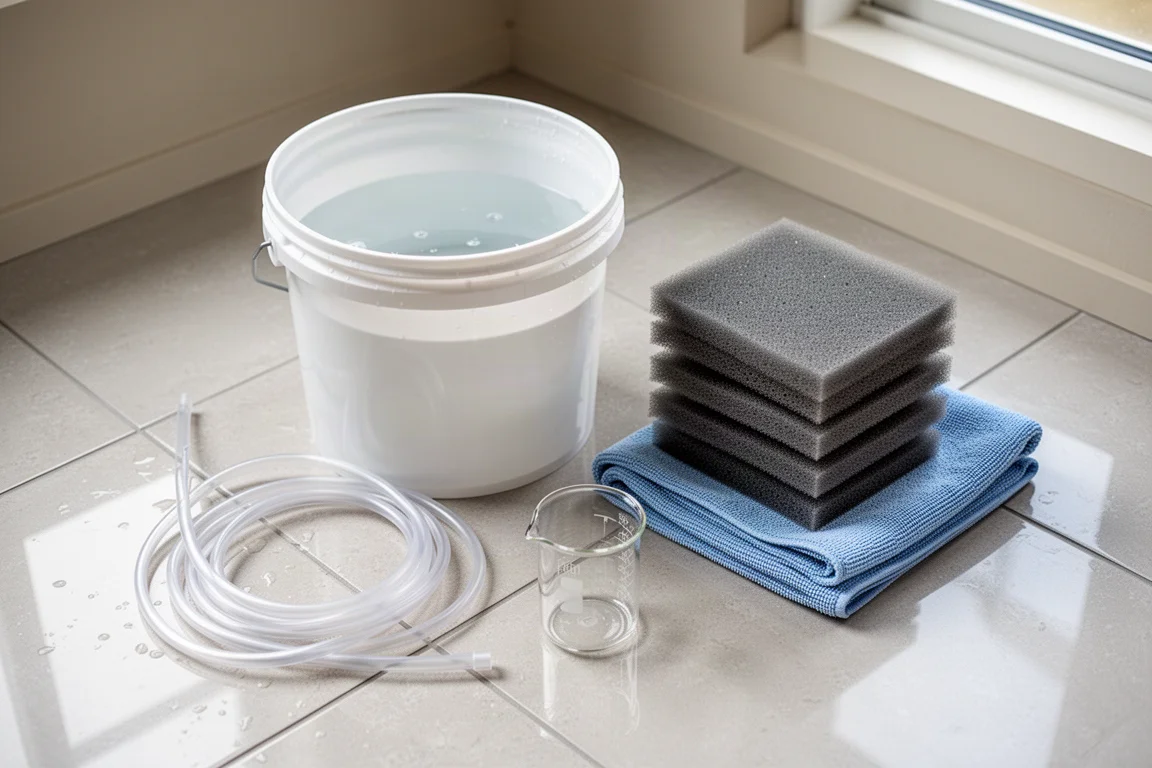
For a nano aquarium, a quarantine tank, or a canister that will only come out for periodic polishing, the 120 and 200 cover the work with a compact footprint. For a larger freshwater display, or a reef system where extra filtration capacity is the point, the 350 and 500 provide the media room that makes longer service intervals practical. In every case, the shared features are the ones that decide how pleasant the filter is to own: simple priming, a valve block that detaches in one motion, baskets that lift out by their handles and accept cut-to-fit media, and the quiet operation that comes from a closed body with an integrated motor.
If any of the situations described above sound familiar, whether that is polishing a display tank, adding filtration to a packed all-in-one system, or setting up a small tank where rim space is scarce, one of these four sizes is likely to fit the job.
Conclusion
The Sicce Whale line takes a format that freshwater aquarists already trust and scales it across four sizes rated for aquariums from 10 to 90 gallons. The 120 and 200 suit small tanks and occasional polishing duty, while the 350 and 500 bring the media volume needed for larger displays and for reef systems that benefit from extra filtration on demand. Whichever size fits the tank, the experience is consistent: quick priming, tool-free media access, quiet running, and maintenance that can stay on a monthly schedule when the media layout is set up correctly.
Further reading
Related Reviews
Aquarium Filtration
Adaptive Reef Refugium Reactor Review: A Simple Way to Grow Nuisance Algae Outside Your Display
A vessel designed to grow nuisance algae in a controlled space so it stops taking over the display tank, with an adjustable stand, a removable basket, and a single LED light on top.
Aquarium Filtration
Affordable Aquarium Filter Media: Testing Budget Alternatives to Expensive Biomedia
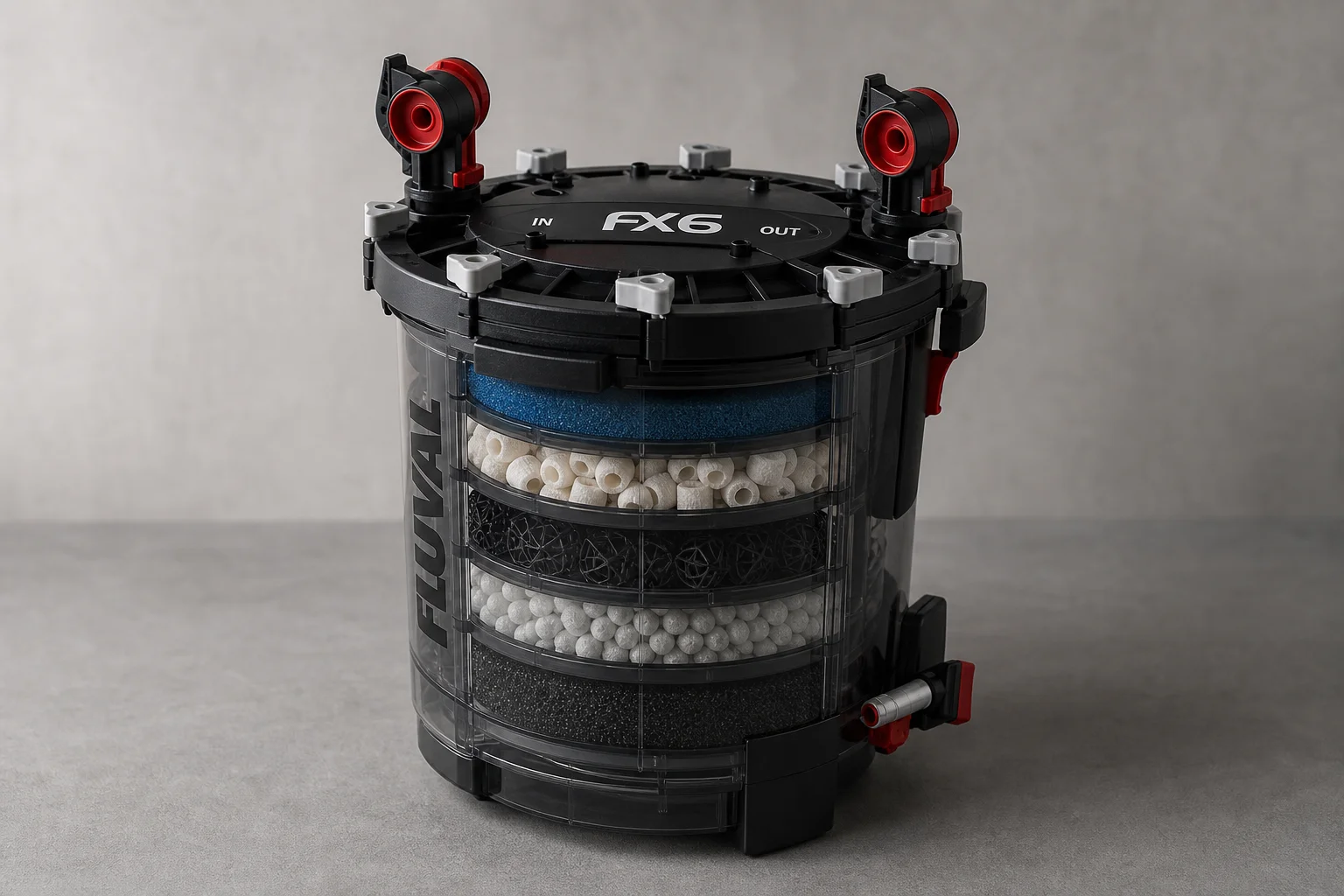
Can cheap pot scrubbers replace expensive ceramic biomedia in a canister filter? One aquarist tests the theory on a heavily stocked 210-gallon tank.
Aquarium Filtration
AquaMaxx Bullet 2 and Bullet 3 Review: Hang-On Protein Skimmers Compared
A closer look at two larger AquaMaxx hang-on protein skimmers, covering capacity ratings, clearance needs, and the design details that separate the Bullet 3 from the Bullet 2.