Aquarium Equipment
Sicce Whale Canister Filter Review: A Practical Solution for Reef Tank Filtration
The Sicce Whale canister filter brings freshwater filtration reliability to saltwater aquariums, with user-friendly design and versatile applications for reef tanks.
Introduction
Canister filters have long been a staple in the freshwater aquarium hobby, praised for their quiet operation, media capacity, and space-saving design. Yet in the saltwater reef community, they remain largely overlooked, often dismissed without serious consideration. The Sicce Whale canister filter challenges that bias by bringing proven freshwater filtration engineering to reef tank applications, with thoughtful design choices and genuine versatility that make it worth reconsidering.
What Is a Canister Filter?
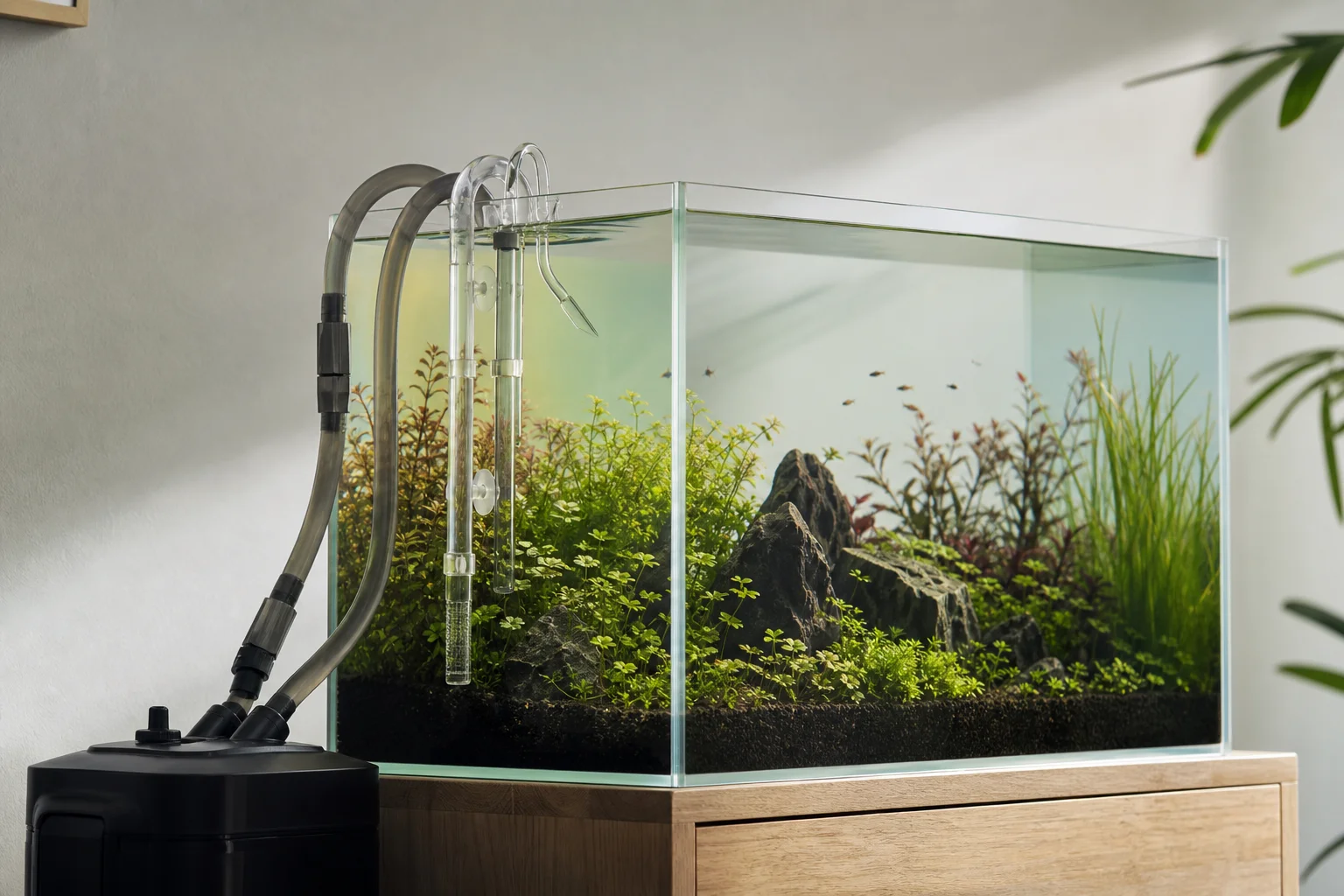
A canister filter is a closed container designed to hold multiple stages of filter media, typically mechanical, chemical, and biological. Unlike hang-on power filters, the motor is integrated into the lid, and water is drawn from and returned to the aquarium via a pair of hoses. This design has made canister filters the preferred choice in freshwater aquariums for decades, primarily because they occupy minimal space on the tank rim, allow the tank to sit closer to the wall, hold significantly more media than comparable hang-on filters, and operate nearly silently.
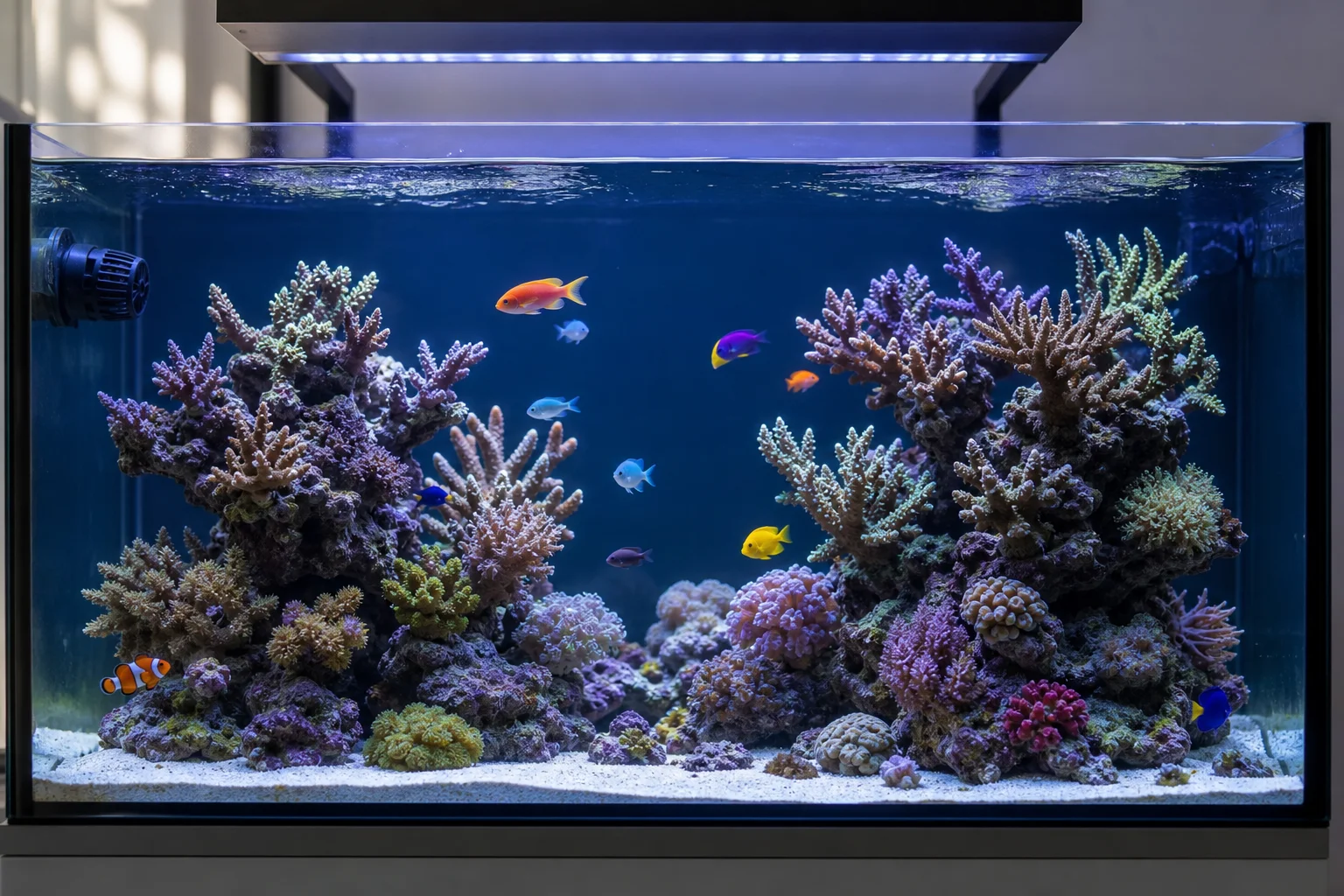
In the saltwater hobby, canister filters have never gained the same traction, despite offering clear advantages for specific applications. They excel at periodic water polishing, supplementary filtration for all-in-one systems with limited rear chamber space, and as external filtration for quarantine tanks without consuming internal real estate.
Design and Build Quality
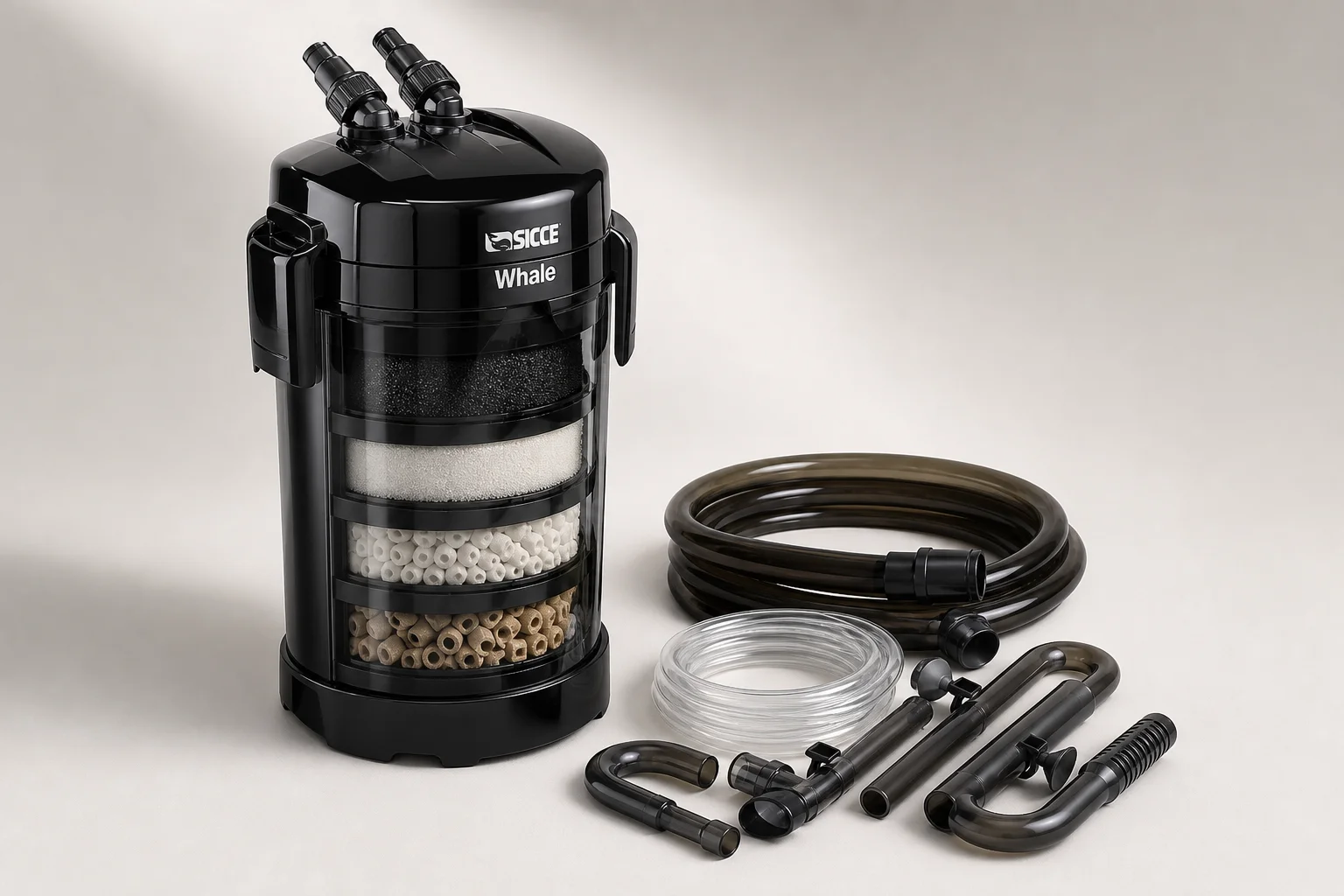
The Sicce Whale comes in four sizes: the 120, 200, 350, and 500, rated for aquariums between 10 and 90 gallons. Flow rates when used as a primary filter are 140, 190, 330, and 390 gallons per hour respectively, with media capacities of 1.5, 2.2, 5.2, and 7 liters.
The canister arrives fully assembled with media pre-loaded into square media baskets. The box includes soft and rigid tubing, an intake assembly with a plunger rod and check valve for easy priming, an output assembly with flow control, a 90-degree elbow, a water deflector, an intake strainer, hose clamps, suction cups, rubber feet, media basket handles, and comprehensive instructions.
The glossy piano-black finish is both attractive and durable. The valve block features a single-stage quick-release lever that closes off and releases the tubes in one motion, and rotating barbs that simplify canister placement regardless of tube routing. The two-stage locking clips that secure the lid have a firm, satisfying click. The included tubing is thick-walled to resist kinking and features a dark color to inhibit algae growth. All of these details reflect Sicce’s reputation for user-friendly design and build quality.
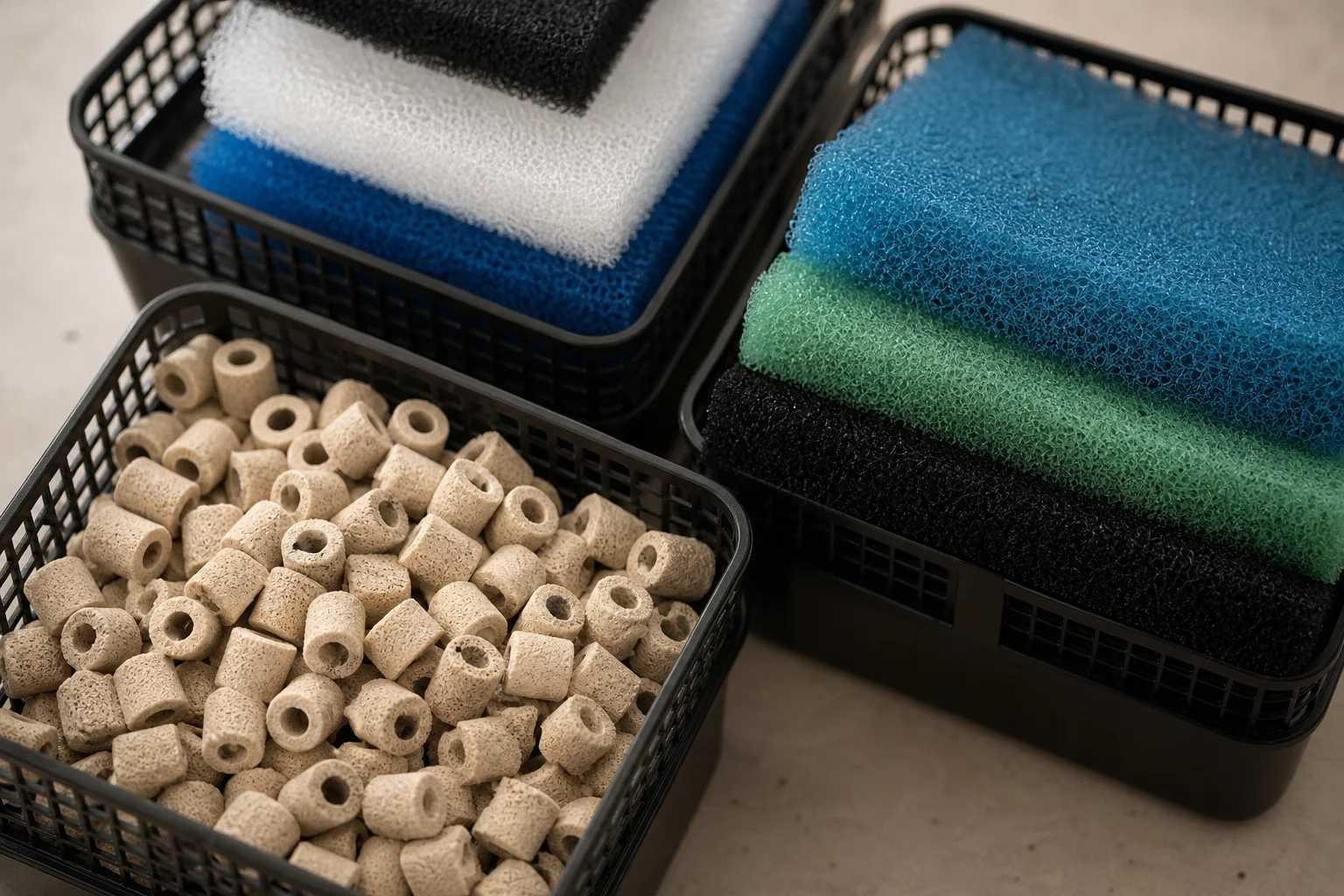
The square media baskets are a practical advantage, making media swaps straightforward and allowing easy use of cut-to-fit or bulk-purchased media. The canister ships with 10 PPI and 20 PPI foam pads plus ceramic bio media, ready to run out of the box, though the bio media should be removed from its plastic packaging before operation.
Maintenance and Serviceability
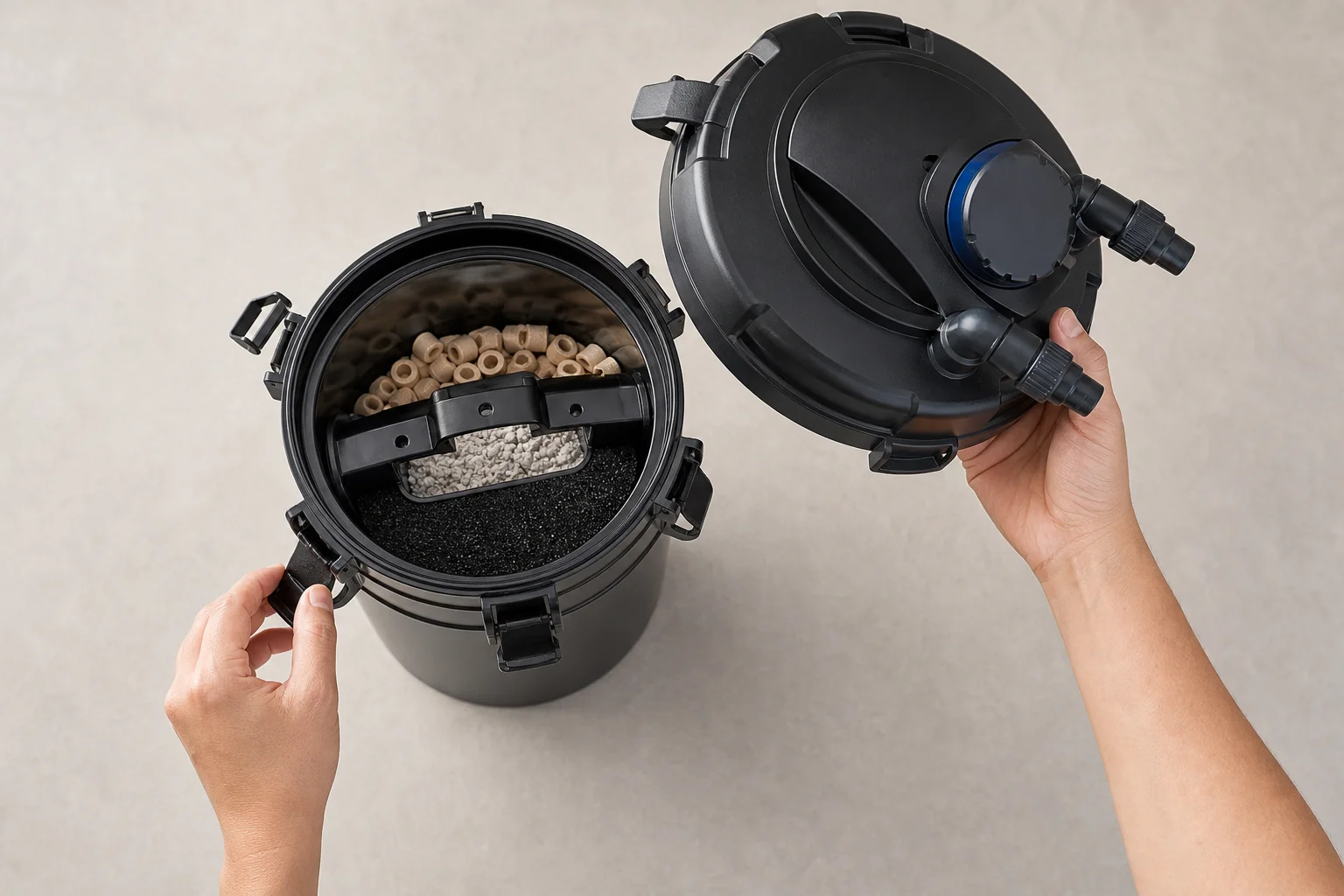
Maintenance is straightforward. Unplug the filter, remove the valve block, undo the locking clips, and lift off the lid to access the media baskets for swaps. For deeper cleaning of the motor housing, flip the lid over and twist the impeller cover to unlock it, then remove the impeller for a quick scrub. Both the intake and output assemblies disassemble for easy cleaning, a feature that simplifies long-term upkeep.
Sicce backs the Whale with a reputation for excellent warranty support and customer service, factors that matter when investing in equipment that will run continuously or regularly over years of use.
Using a Canister Filter in Reef Tanks
Canister filters work well in reef tanks when their limitations are understood and respected. The key consideration is that canister filters have lower flow ratings than many reefers expect, because the design prioritizes contact time with biological media. To compensate, use a canister filter rated for a tank significantly larger than your actual system. For example, use a 350 or 500 model on a smaller reef tank to achieve adequate flow.
If running a canister as the primary filter on a reef tank, remove all fine mechanical media such as fine foam pads, polishing pads, or filter batting. These clog quickly and require weekly or bi-weekly maintenance. Instead, use only a coarse foam pad at the bottom, where water enters first, and fill the remaining baskets with bio media. This approach provides biological support with monthly maintenance intervals. Avoid chemical media in this scenario unless you are willing to service the filter more frequently.
For periodic water polishing, a different media stack works well: 10 PPI foam on the bottom, 20 PPI foam above it, a fine filter pad such as felt or floss, and high-quality activated carbon on top. Run this setup for a full day or overnight, but not longer than 48 hours. This removes fine dust, specks, and yellowing pigments, leaving the water crystal clear. It is an excellent preparation before guests visit or family gatherings.
Conclusion
The Sicce Whale canister filter is a well-engineered, user-friendly option for reef keepers seeking supplementary filtration, water polishing capability, or a primary filter for smaller systems. Its quiet operation, generous media capacity, thoughtful design details, and Sicce’s strong warranty and support make it a practical choice for aquarists willing to work within its design parameters. Whether you are adding filtration to a crowded all-in-one system, setting up a quarantine tank, or exploring canister filtration as a primary option, the Whale delivers reliability and ease of use that justify reconsidering this often-overlooked filtration approach.
Product link
View more details for Sicce Whale Canister Filter
This product is mentioned in the review. Check the specifications, options, and compatibility before buying.
View more details for Sicce Whale Canister FilterFurther reading
Related Reviews
Aquarium Equipment
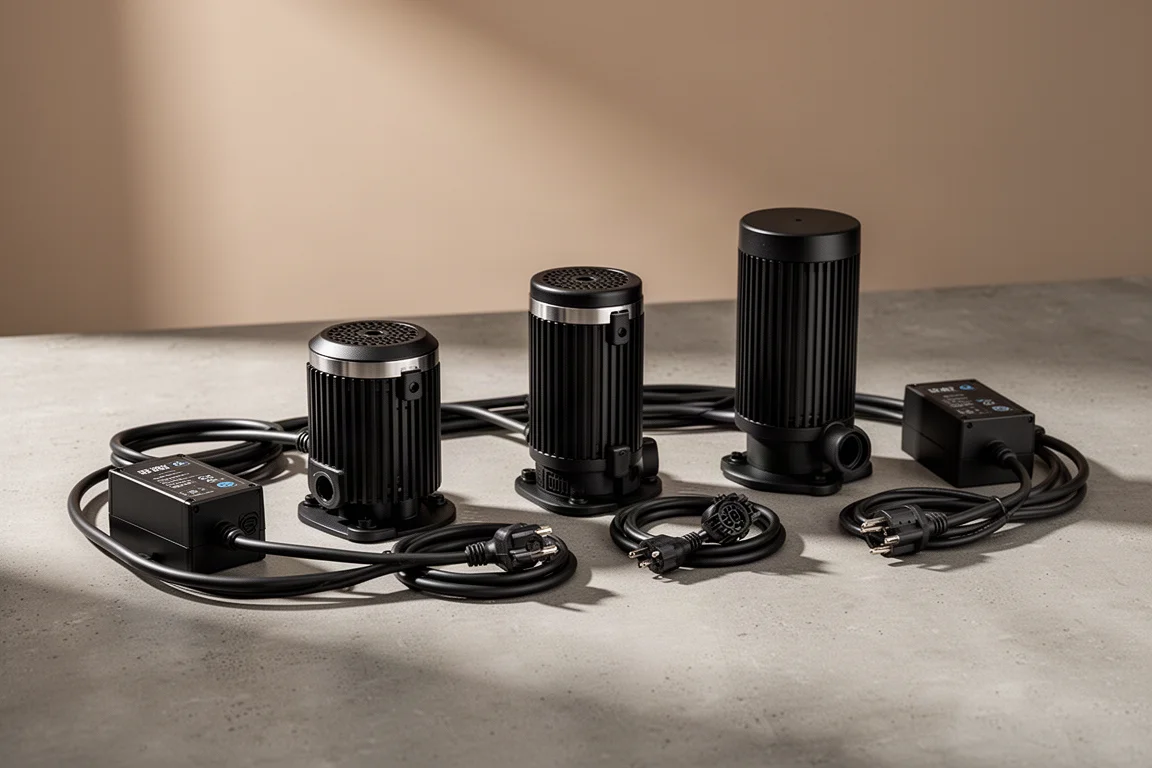
Abyzz Professional DC Pumps: A100, A200, and A400 Reviewed
A closer look at three German-made DC return pumps built for large reef systems, with titanium internals, fine flow control, and a 10-year warranty.
Aquarium Equipment
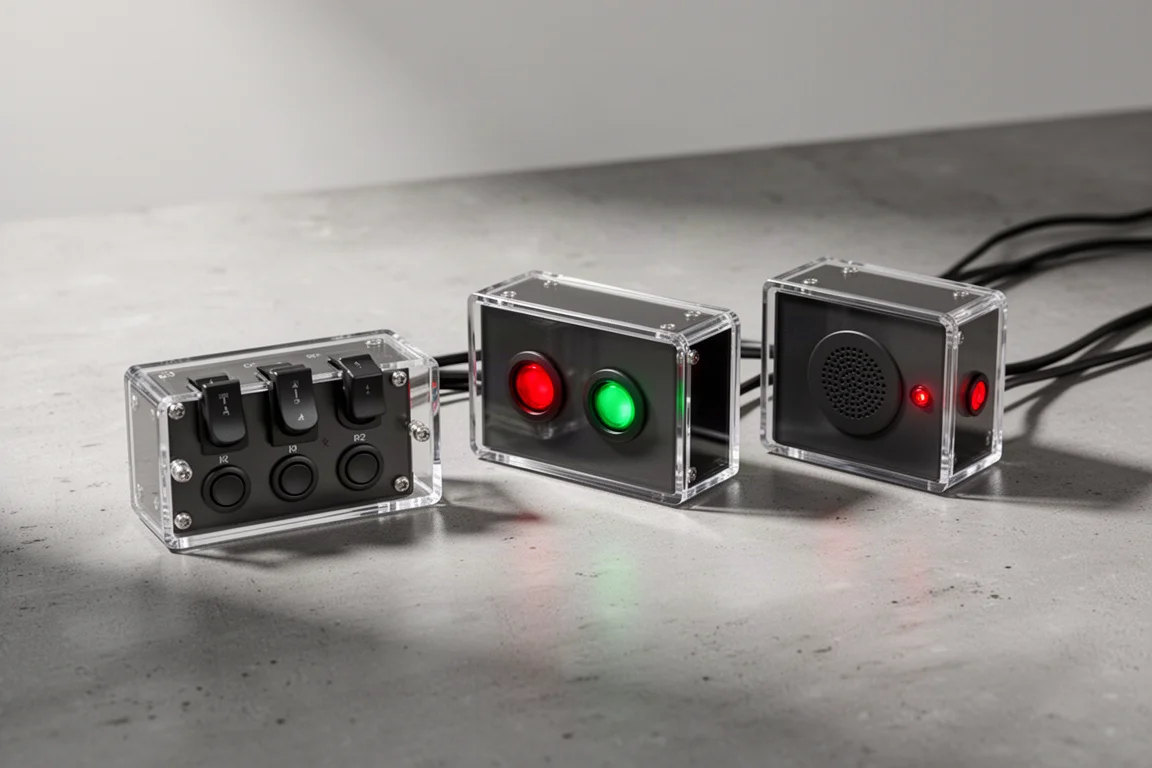
AdaptiveReef Controller Accessories: Three Tactile Upgrades for Your Reef Controller
A practical look at three AdaptiveReef add-ons that put physical switches, at-a-glance status lights, and a loud alarm within arm's reach of your reef tank.
Aquarium Equipment
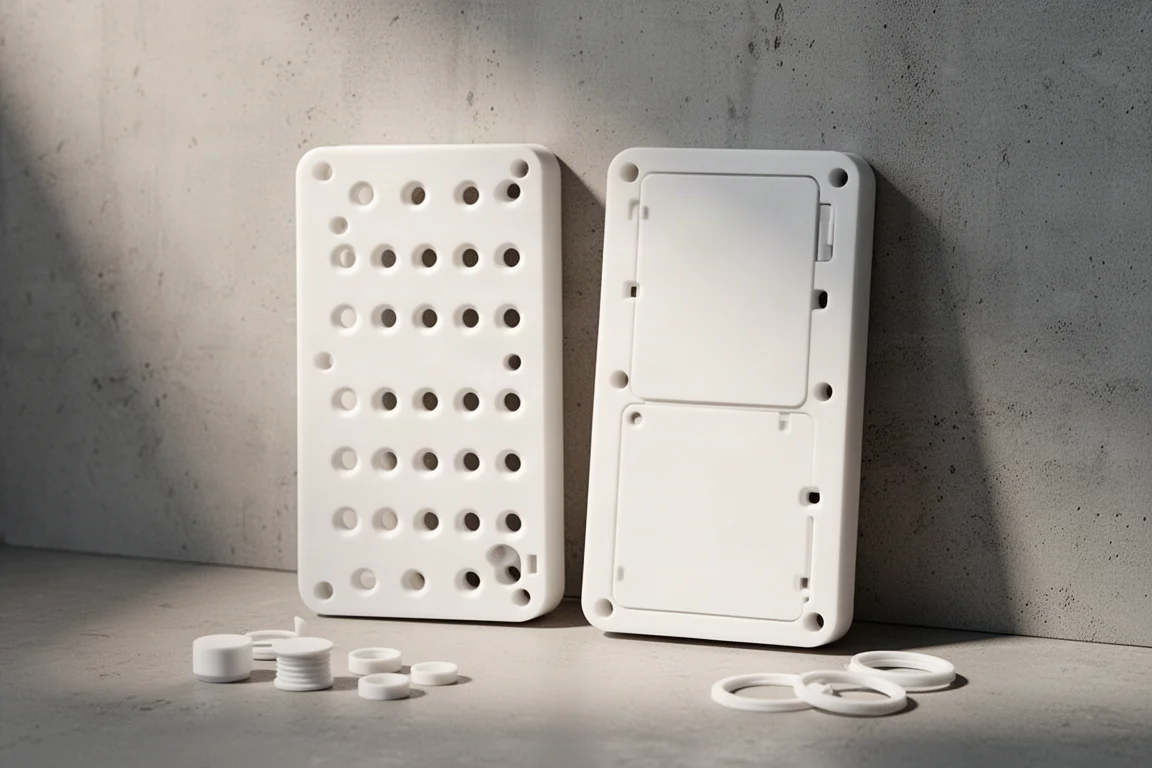
Adaptive Reef Controller Boards: Basic vs Deluxe for Cleaner Aquarium Gear
A practical look at the Adaptive Reef Basic and Deluxe controller boards, what each one includes, and how to choose the right size for your tank gear.