Aquarium Filtration
Sicce Space EKO+ Canister Filter Review: A Flexible Filtration Tool for Reef Tanks
A practical look at the Sicce Space EKO+ canister filter, covering its three sizes, media options, and the reef tank jobs it handles best.
Introduction
Canister filters do not get much attention in the saltwater side of the hobby, and that reputation is only partly deserved. Used with the right expectations, a canister is a genuinely capable piece of equipment. It can add filtration capacity to an all-in-one system, act as a temporary external reactor for chemical media, and handle periodic water polishing after a heavy maintenance session.
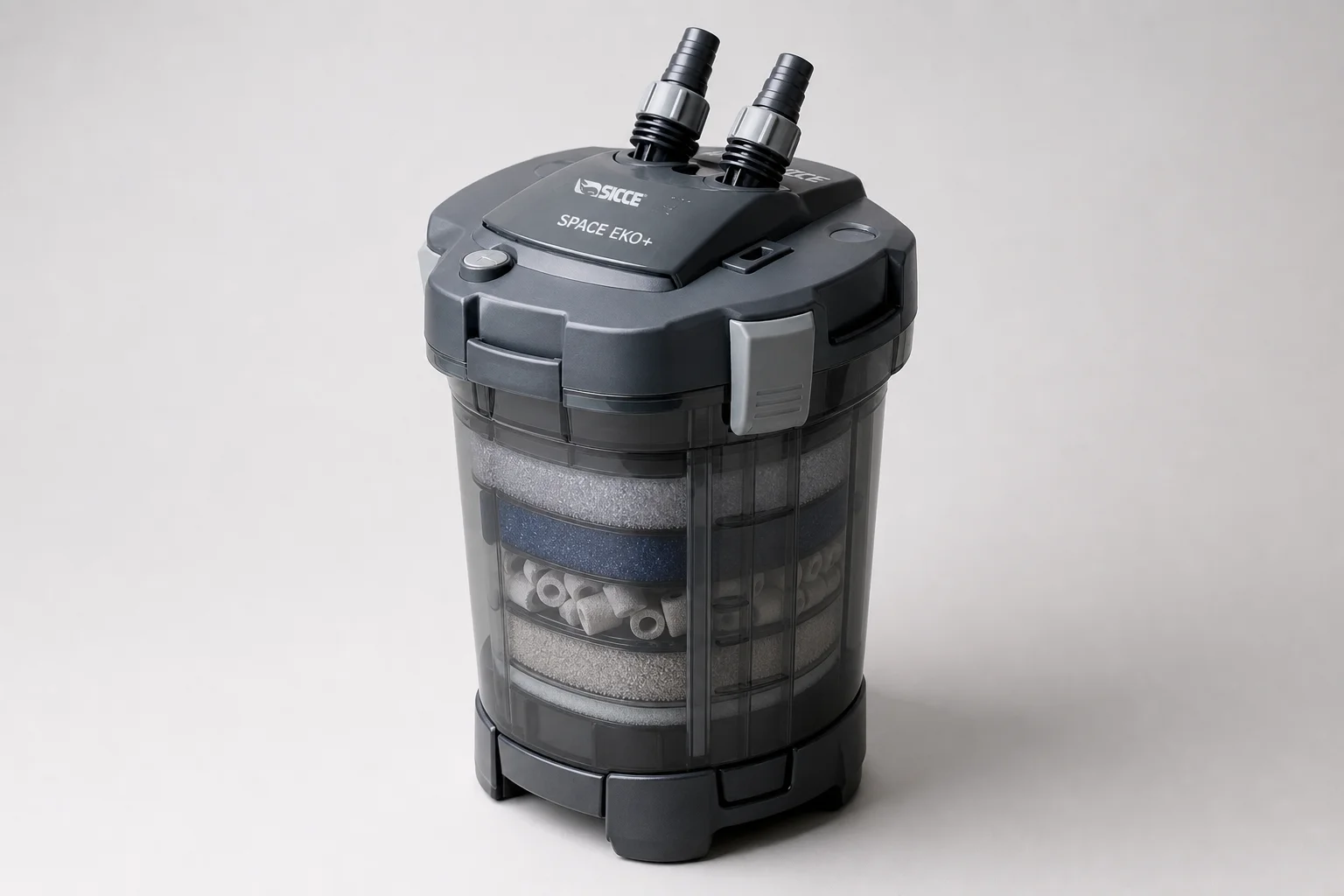
The Sicce Space EKO+ Canister Filter is built around exactly those jobs. It pairs a reliable Sicce pump mounted in the lid with unobtrusive intake and output assemblies, straightforward priming, and a layout that makes media swaps quick. It also arrives with media already loaded, so it works as an immediate reactor-style setup rather than a project.
The filter comes in three sizes: the 100, the 200, and the 300.
What the Sicce Space EKO+ Offers
Out of the box you get the canister filter with its media trays preloaded, the installation set and parts, smoke gray tubing, clear rigid tubing, an instruction set, and a quality control card. The three models are rated for aquariums between 30 and 80 gallons when used as a primary filter, and they move 145, 185, and 240 gallons per hour respectively.
Those tank ratings are written with freshwater aquariums in mind, and reef keepers will find the flow numbers lower than what a reef tank usually wants. That is less of a flaw than a hint about where the filter fits best. Most saltwater aquarists will not run this as their only filter.
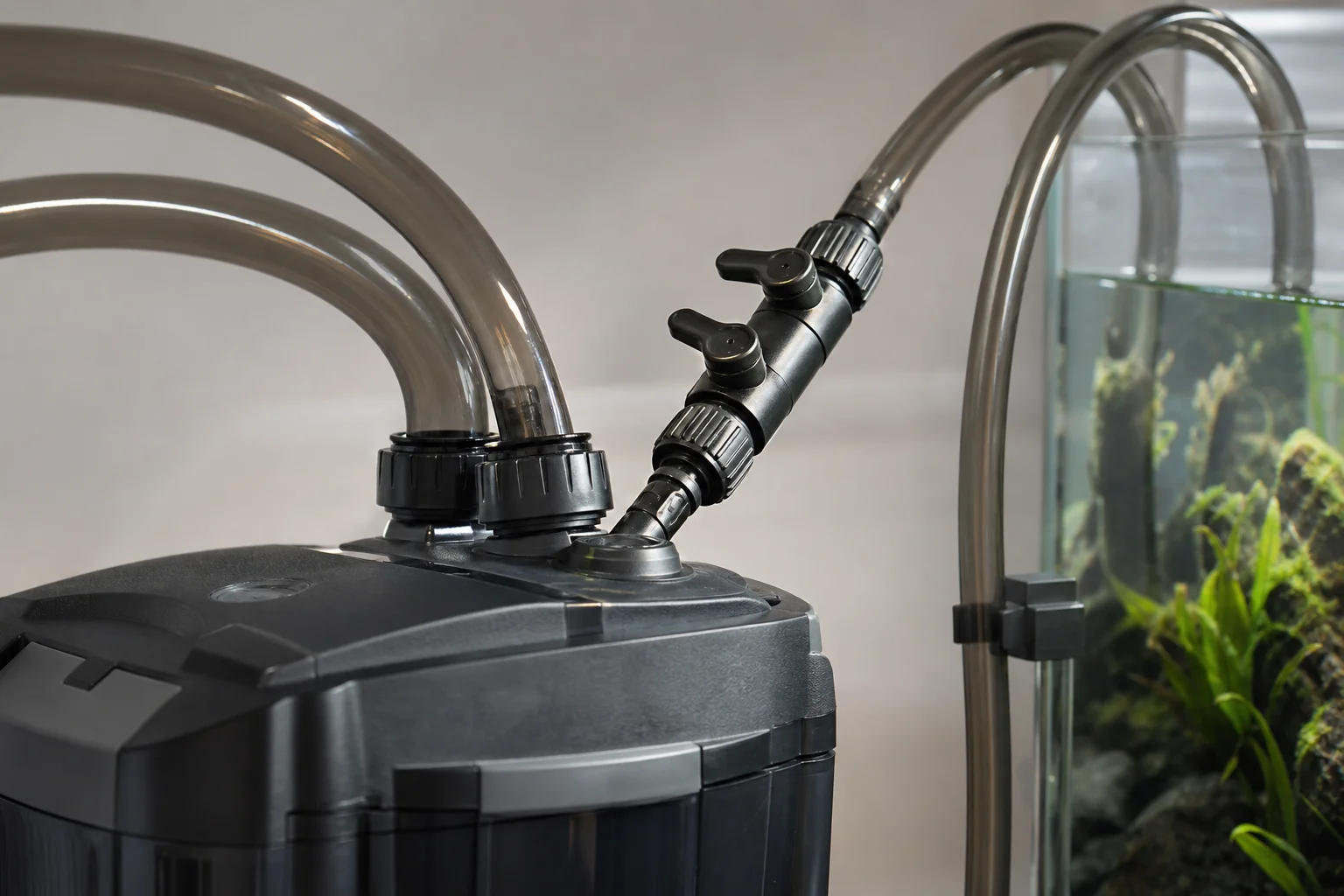
The design keeps the working parts out of the tank. The intake and output are clearly marked so they cannot be swapped by mistake, and the plumbing stays deliberately low profile once installed. Setup is helped along by an easy priming rod and a built-in check valve, which together remove most of the fiddling that canister filters are known for.
Main Strengths: Quiet Operation, Easy Priming, and Simple Media Access
Everyday usability is where this filter stands out, and two features do most of that work. The first is the quick disconnect gang valve, which lets you detach the tubing from the canister before maintenance instead of working around it. The second is the set of internal locking media baskets, which pull out easily by a handle on top.
Because the motor and impeller live in the lid, there is no pump and no power cord sitting inside the aquarium. That keeps the display cleaner and, just as usefully, keeps the noise outside the tank. The filter runs quietly enough that it will be completely inaudible inside an average aquarium stand.
Sicce also includes an extension for the output nozzle. It is a small addition, but it matters if you run the filter on an aquarium with a lower water level, or if you simply prefer to have the output well below the surface rather than disturbing it.
The Media Trays and What Fits in Them
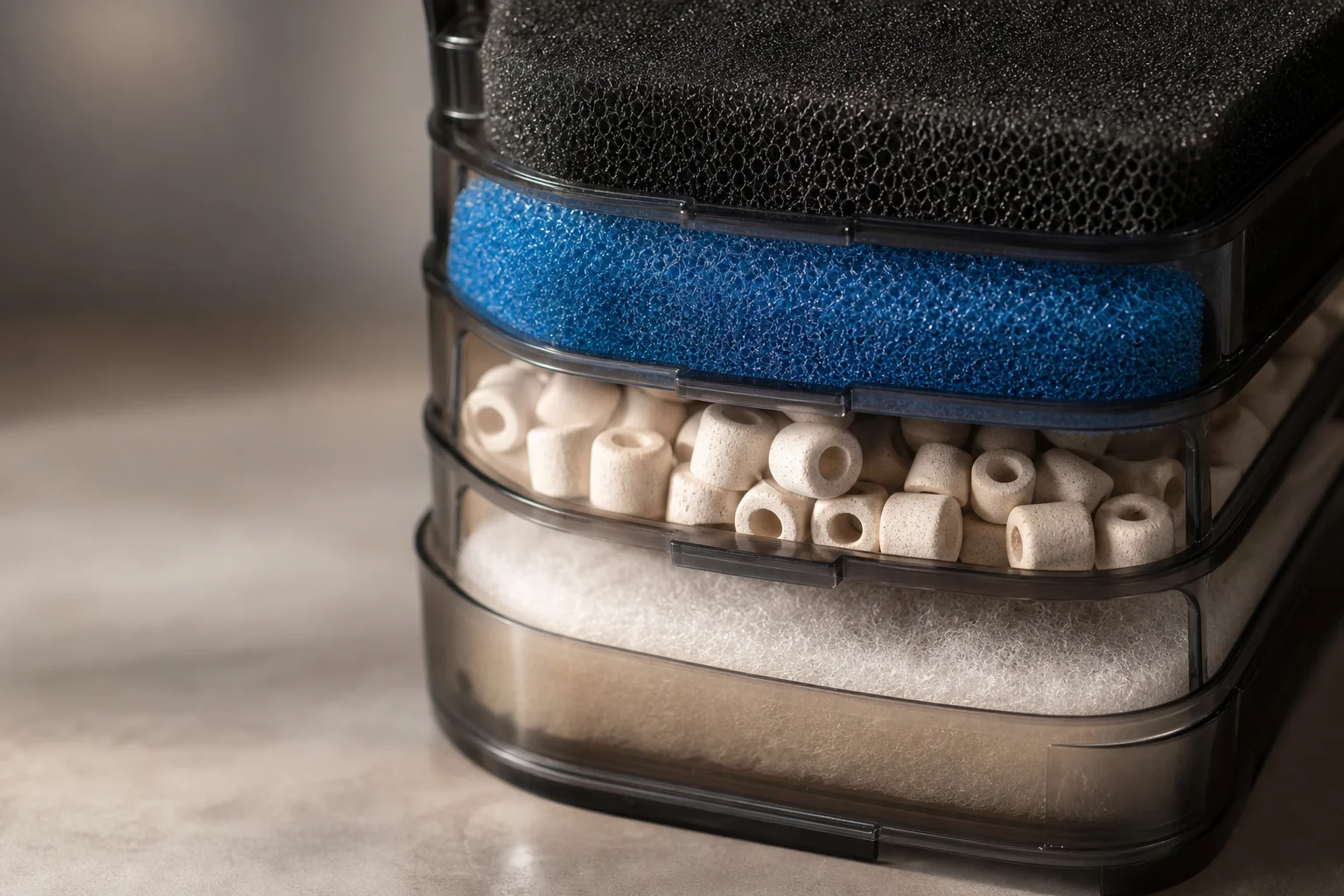
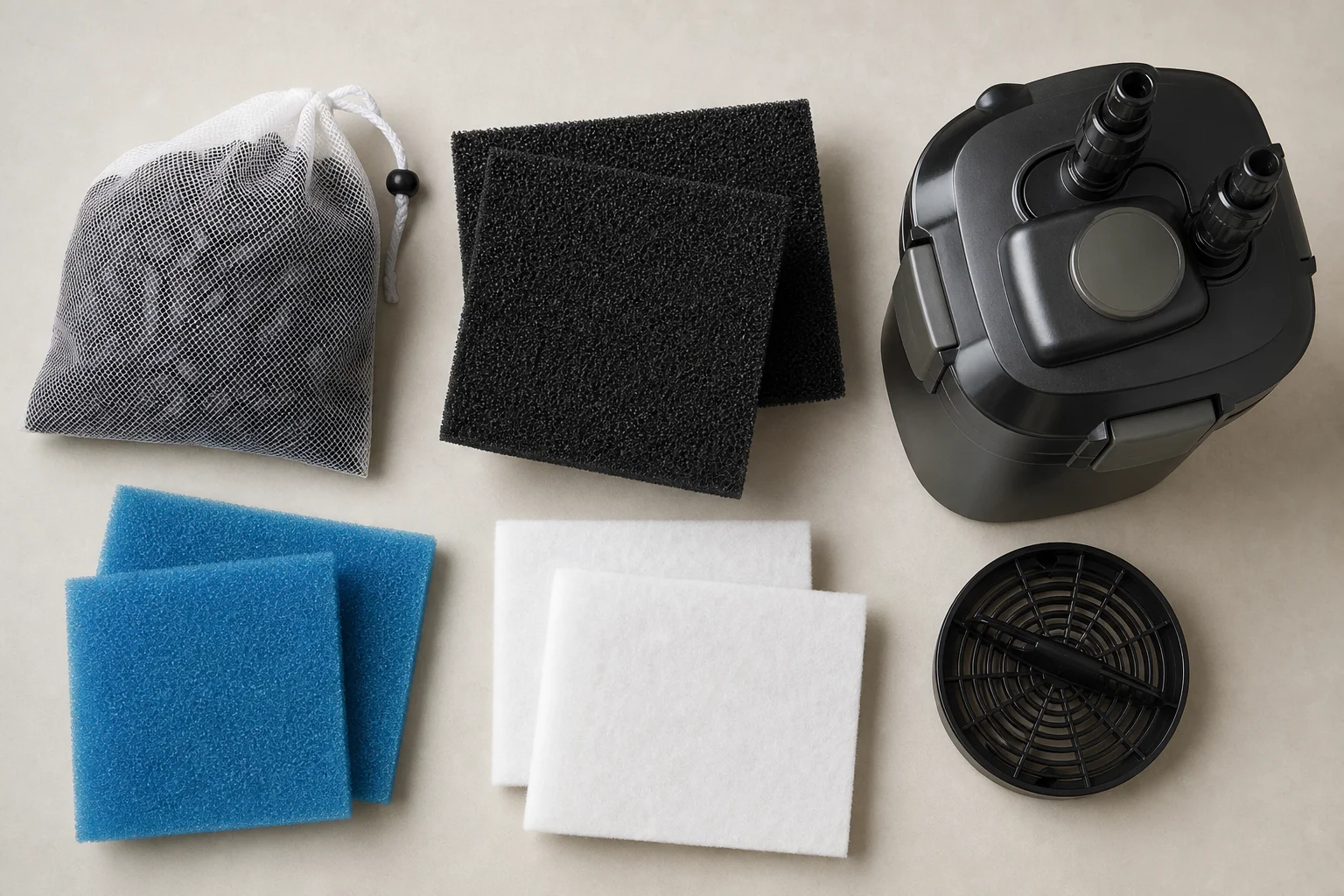
All three models arrive ready to run with media. The standard kit includes a 10 PPI foam pad, a 20 PPI foam pad, and biological media. The largest model, the 300, adds a fine filtration pad and carbon on top of that.
The media is separated into stackable baskets that lift out one at a time. Because the baskets share a consistent round shape, you are not locked into one brand. Off-brand cut-to-fit mechanical media drops straight in, and just about any brand of biological or chemical media will fit as well.
That flexibility is the main reason canisters appeal to reef keepers. Carbon, Purigen, Purit, Cuprisorb, and similar chemical media can all be run in the same housing, which turns the filter into a temporary external reactor whenever the tank needs one.
Setting It Up for Water Polishing
Water polishing is the job this filter does best in a reef system. The goal is to strip out the fine dust and floating specks that appear after heavy maintenance or a large water change, and to pull yellowing pigments out of the water, without loading up filter rollers or filter socks ahead of schedule.
Working from the bottom basket upward, the setup is a 10 PPI pad, then a 20 PPI pad, then a fine filter pad such as felt, floss, or batting, topped off with a high quality bag of carbon. Run it for a full day or overnight, and not longer than 48 hours. The result is a noticeably clearer tank.
Using It as a Primary Filter on a Nano Reef
Can the Space EKO+ serve as the primary filter on a nano reef? Yes, in the right circumstances. If you want the aquarium to sit close to the wall and do not want to leave clearance for a hang-on filter or refugium, a canister is a workable answer.
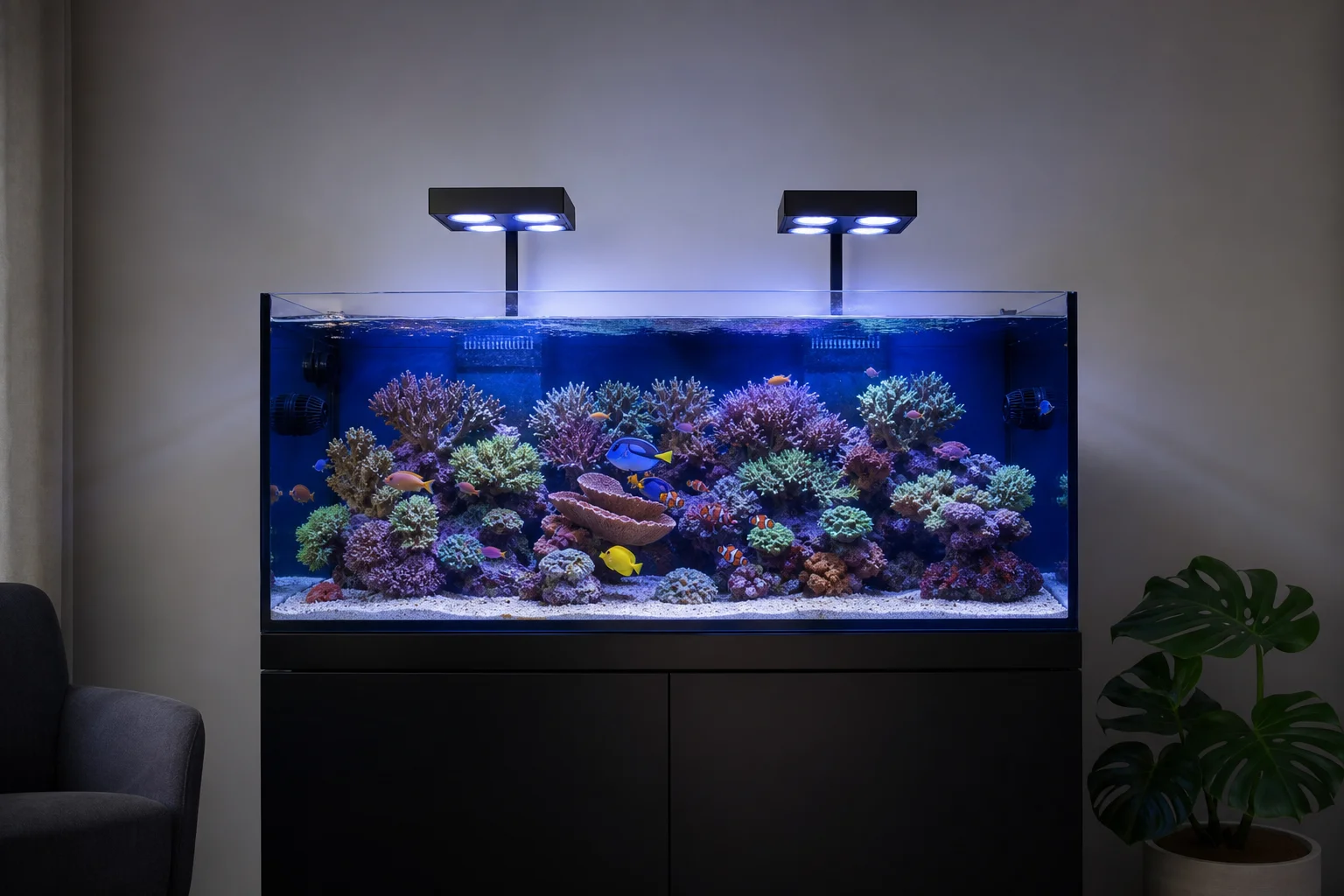
The compromise is flow. Canister ratings are tailored to contact time with biological media rather than to the turnover a reef tank needs, so the missing circulation has to come from additional pumps in the display. Debris buildup is the other consideration. Set the media with a coarse foam pad at the bottom and fill the remaining trays with biological media of your choice, and monthly maintenance is realistic instead of weekly or biweekly cleaning. A canister configured that way has carried a 20 gallon SPS dominated reef successfully for two years.
For that kind of tank, the filter handles biological and mechanical work while the circulation pumps take care of water movement. Keeping those two roles separate is what makes the arrangement reliable.
Things to Consider Before Buying
The flow figures are the main thing to plan around. At 145, 185, and 240 gallons per hour, these filters are not a substitute for dedicated circulation pumps in a reef tank, and the 30 to 80 gallon ratings assume freshwater use.
Chemical media has limits too. The polishing setup described above should not be left running for more than 48 hours, so it works as a maintenance tool rather than a permanent configuration. Plan on media rinses and swaps as part of normal ownership.
Size selection also matters more than it first appears. The 100, 200, and 300 differ in both flow and included media, and the 300 is the only one that ships with a fine filtration pad and carbon.
Buying Advice
Match the model to the job rather than to tank volume alone. If the filter will serve as a temporary media reactor or a water polishing tool on a larger system, the smaller models cover that easily. If it will carry more of the filtration load on a nano reef, the extra flow of the 200 or 300 is the safer choice, and the 300 arrives with a more complete media kit.
Whatever size you choose, budget for the consumables you actually plan to run. The included media gets you started, and the round baskets make it easy to refill with cut-to-fit pads and your preferred chemical media afterward.
It is also worth settling the plumbing plan before the filter arrives. The output nozzle extension and the quick disconnect valve both reward a little forethought about how the tank sits in the room.
Conclusion
The Sicce Space EKO+ is not trying to be everything. It is a well-built canister filter that happens to be very good at three specific jobs in a saltwater system: adding filtration capacity, running chemical media, and polishing water when the tank needs it. Reliable pump hardware in the lid, simple priming, and media baskets that accept almost anything make it easy to live with, and the three sizes make it easy to match to the task. Used with realistic expectations about flow, it earns a lasting place in a maintenance routine.
Product link
View more details for Sicce Space EKO+
This product is mentioned in the review. Check the specifications, options, and compatibility before buying.
View more details for Sicce Space EKO+Further reading
Related Reviews
Aquarium Filtration
Adaptive Reef Refugium Reactor Review: A Simple Way to Grow Nuisance Algae Outside Your Display
A vessel designed to grow nuisance algae in a controlled space so it stops taking over the display tank, with an adjustable stand, a removable basket, and a single LED light on top.
Aquarium Filtration
Affordable Aquarium Filter Media: Testing Budget Alternatives to Expensive Biomedia
Can cheap pot scrubbers replace expensive ceramic biomedia in a canister filter? One aquarist tests the theory on a heavily stocked 210-gallon tank.
Aquarium Filtration
AquaMaxx Bullet 2 and Bullet 3 Review: Hang-On Protein Skimmers Compared
A closer look at two larger AquaMaxx hang-on protein skimmers, covering capacity ratings, clearance needs, and the design details that separate the Bullet 3 from the Bullet 2.