Ski Bindings
Shred Shocks Suspension Ski Bindings: An Ambitious, Unproven Design
A close look at Shred Shocks, a $2,000 suspension ski binding that places a floating, compressible platform between boot and ski, and why most skiers should wait for real world proof.
Introduction
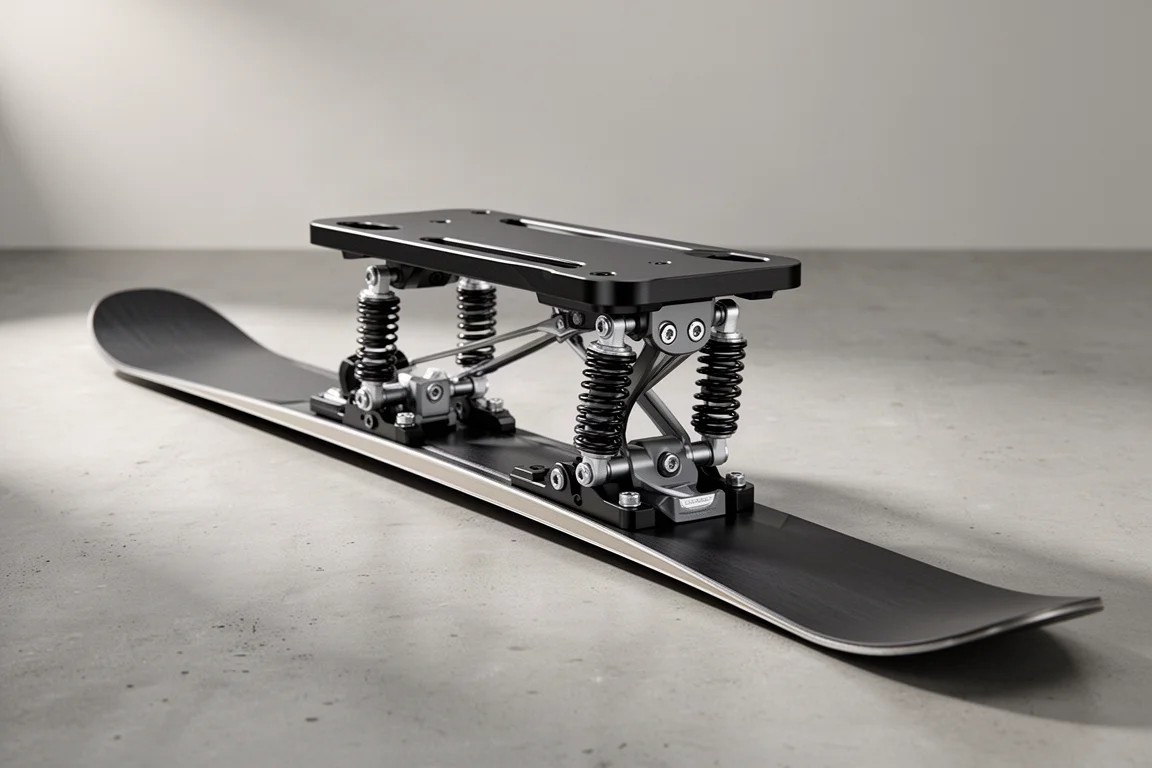
Shred Shocks is a suspension ski binding built around a floating platform. Rather than mounting the boot directly onto the ski, the design uses four mountain bike suspension units, two on each ski, connected by a small arm. The boot clips into a platform that hovers above the ski, and that platform compresses downward, creating travel between the boot and the ski itself.
The stated goal is simple: make skiing less draining on the legs. It is a reasonable ambition. Skiing is repetitive and load bearing, and any genuine reduction in fatigue would be welcome on a long day.
The complication is price and timing. Shred Shocks is listed at $2,000, with a $500 deposit to reserve a pair, and the design has yet to prove itself on snow in any meaningful way. At that combination of cost and uncertainty, the sensible position for most skiers is patience.

That is the central tension here. The idea is genuinely interesting, and the hardware is clearly the product of serious engineering effort. Whether it earns a place on anyone’s skis at this price is a different question.
Who These Bindings Are For
This is the hardest question to answer, and that is itself a warning sign.
The binding is not a natural fit for freestyle skiers. Extra hardware means extra weight, and weight works against anyone spinning or landing jumps. It is not obviously suited to developing skiers either, because more material between the foot and the snow makes it harder to build a feel for how a ski initiates, holds an edge, and releases.
Experienced skiers who value direct feedback are probably the least likely audience of all. The people who would benefit most from smoother input are often the same people who rely on that input to ski well.
So the honest answer is that no clear rider profile jumps out. If you cannot name the problem this solves for you specifically, that is worth sitting with before placing a deposit.
How the Suspension System Works
The mechanism is the most interesting part of the product, and also the most complicated.
Four suspension units sit between the ski and the boot platform, with two per ski. A linkage arm connects the platform to the ski, and the platform itself floats above the top sheet rather than resting on it. When you press into the ski, the platform travels downward instead of transferring load directly into the ski.
Two practical questions follow from that arrangement. First, the system depends on pressurised components, and pressurised components meet subzero temperatures on every winter day. Second, powder snow has a habit of getting into places it was not invited. Hardware that moves needs to keep moving when it is packed with snow and ice.
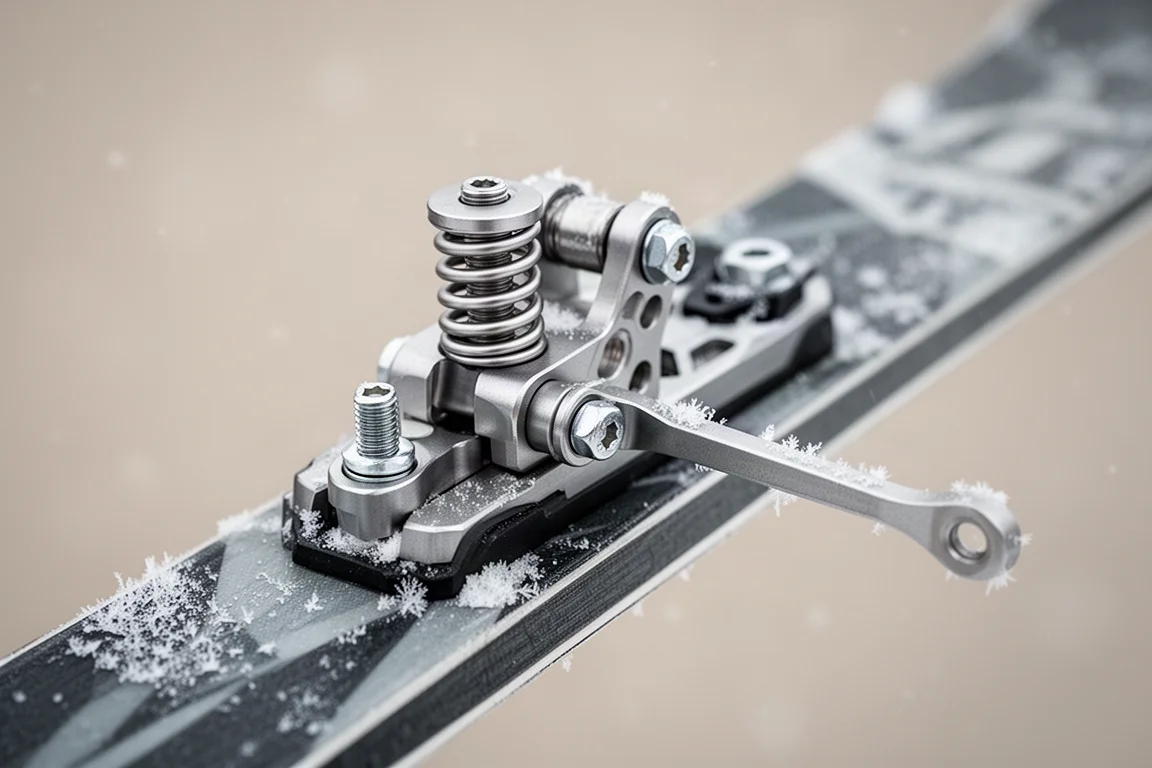
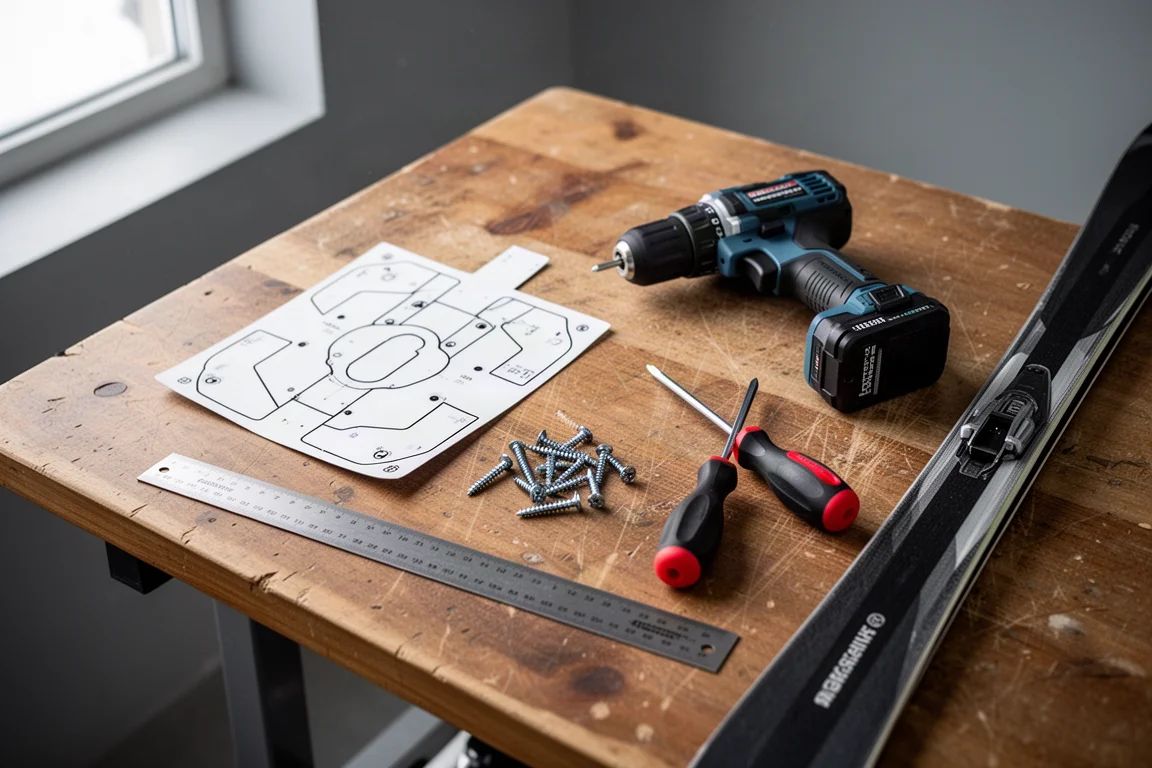
There is also the mounting question. Conventional bindings sit on a defined mounting zone, and ski shops have jigs and decades of experience to place them correctly. This system spreads its attachment points much further forward and further back along the ski, which raises the question of which skis it can even be mounted on, and who is qualified to do the work.
Main Strengths
It is fair to give credit where it is due.
The concept targets a real annoyance. Leg fatigue is genuine, particularly on long resort days and on firm, unforgiving snow, and a design that reduces the load reaching the legs is at least pointed in a sensible direction.
The engineering ambition is also notable. Borrowing suspension thinking from mountain bikes is an unconventional move, and the hardware looks purpose built rather than improvised.
Finally, the binding is offered in multiple colour options, including blue and purple, which at least gives buyers some personal choice at the top of the price range.
Those are real points in its favour. They are also not enough on their own to justify the cost.
Things to Consider Before Buying
Price is the first consideration. At $2,000, this sits at the very top of the binding market, and it does so without a track record.
Mounting and servicing are the second. There is no established jig for this system, no standard service procedure, and no clear answer on who is responsible if a shop gets the installation wrong. Every pivot, rivet, and moving joint is an additional point of failure on a component that has historically been simple and reliable.
Feel is the third. Suspension smooths chatter, but chatter is also information. Skiers use it to read snow, judge grip, and adjust mid turn. Insulating the foot from the ski, and from the way the ski flexes underfoot, risks removing feedback that most people want to keep.
Then there is the practical side. A raised platform can catch on things. High edge angles, the bar on a chairlift, and brush in the trees are all situations where extra hardware on top of the ski is a liability rather than an asset.
Weight belongs on the list too, along with the simple fact that very little publicly available evidence exists of the binding being skied hard. When a product is this expensive and this unusual, the absence of convincing real world skiing is a meaningful gap.
Price and Value
$2,000 is a lot for a binding, and it is only part of the picture. Pair this system with a premium ski and professional mounting, and a complete setup can pass $4,000 before boots, clothing, or anything else enters the equation.
Value is not only about the number, though. It is about what the money buys. A $2,000 binding with a long service history, a wide support network, and a clear performance benefit would be a defensible purchase for the right skier. A $2,000 binding that is still in what looks like a rough draft stage is a much harder sell.
If the design matures, gets serviced by trained technicians, and demonstrates a real advantage on snow, the calculation could change. Until then, the price is carrying a lot of risk.
Buying Advice
Do not buy this sight unseen.
That is the practical recommendation, and it is not a rejection of the idea. It is a recognition that suspension bindings are new, expensive, and unproven, and that early buyers are effectively funding a development phase.
If the concept appeals to you, the sensible path is to wait. Look for independent testing on snow, look for evidence of hard carving and varied conditions, and look for clear answers about mounting, servicing, and what happens after a hundred days of use. Those answers should come before a deposit, not after.
If you are dealing with leg fatigue right now, there are cheaper and better understood routes: technique work, time in the lodge, better fitted boots, or a ski that suits your terrain. None of them carry a four figure premium for hardware that has not yet been proven.
Conclusion
Shred Shocks is an ambitious idea wrapped around a complicated and very expensive product. The floating platform is a clever piece of engineering, and the goal of reducing leg fatigue is a legitimate one.
But at $2,000, with an unproven design, no established mounting or service network, added weight, and a real risk of losing the feedback that makes a ski feel alive, it is hard to recommend to anyone today.
Wait for proof. If it arrives, the conversation changes.
Product link
View more details for Shred Shocks Suspension Ski Bindings
This product is mentioned in the review. Check the specifications, options, and compatibility before buying.
View more details for Shred Shocks Suspension Ski BindingsFurther reading
Related Reviews
Ski Bindings
Alpine Ski Binding Comparison: Entry-Level to Elite Options
A practical guide to alpine ski bindings, covering D-range, stand height, release systems, and top options from Atomic, Marker, Tyrolia, Look, and Armada.
Ski Bindings
Look Pivot 18 vs Look SPX12: Which Look Binding Makes Sense for You?
The Look Pivot 18 is a premium metal binding built for powder and freestyle skiers, while the SPX12 remains the smarter daily-driver choice for most riders.
Ski Bindings
Look Pivot 2.0 Bindings Compared: 11, 13, 15, and 18
A practical breakdown of the Look Pivot 2.0 lineup, including what the redesigned heel changes and which model suits your weight, terrain, and release setting.