Sports Audio
Shokz OpenFit vs OpenRun Pro: Which Open-Ear Headphone Is Right for You?
Two open-ear sports headphones with very different approaches: true wireless air conduction versus battle-tested bone conduction.
Introduction
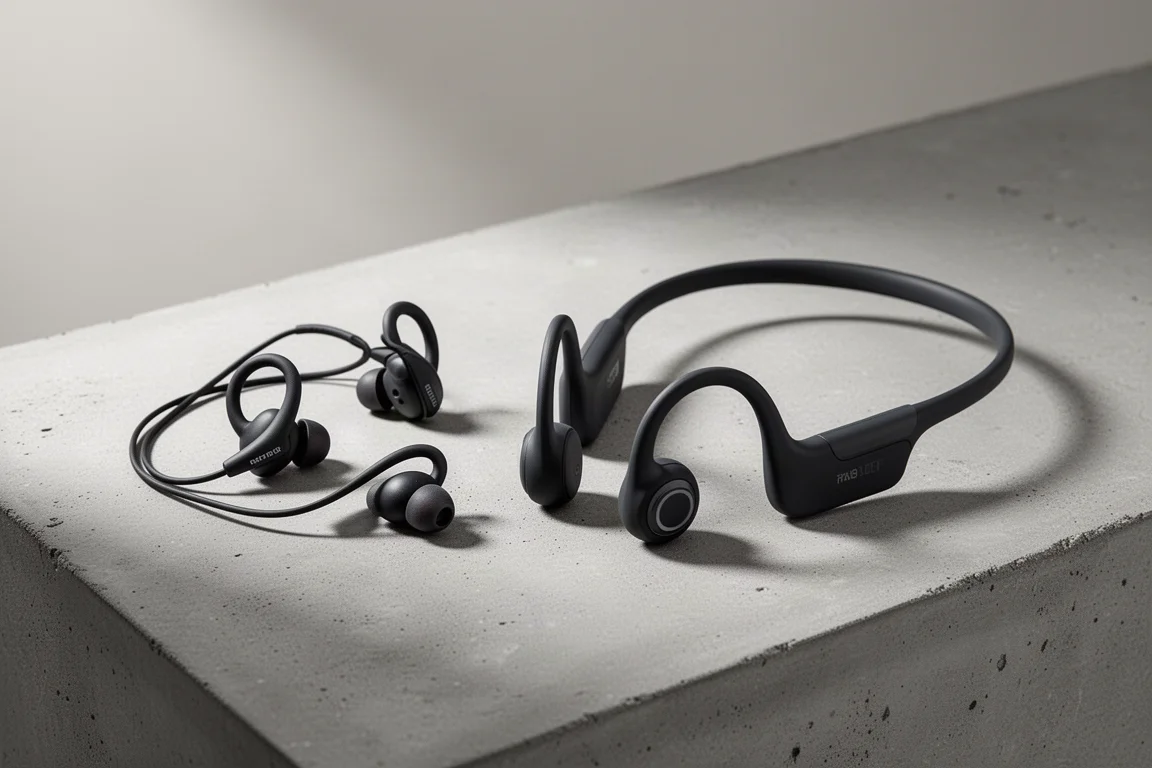
Open-ear headphones occupy a sweet spot for anyone who trains outdoors: you get your podcasts and playlists without losing touch with traffic, trail companions, or the world around you. Shokz currently offers two very different ways to get there. The OpenRun Pro is the company’s flagship bone conduction headphone, while the newer OpenFit swaps the vibration pads for small traditional drivers in a true wireless design.
This comparison breaks down where each one shines, where each one falls short, and which type of listener each was really built for.
Why Open-Ear Beats Transparency Mode
Even the best transparency modes in conventional earbuds struggle in exactly the situations where situational awareness matters most. Microphone-based transparency tries to pipe ambient sound into your ears, and when wind hits those microphones it can actually amplify noise rather than reduce it. Road cycling is a prime example.
A completely open ear design sidesteps the problem entirely. There is nothing sealing your ear canal and nothing trying to recreate the outside world, so you hear traffic, nature, and gym chatter exactly as it is. That is the core promise both of these headphones share.

Shokz OpenFit: True Wireless Open-Ear Design
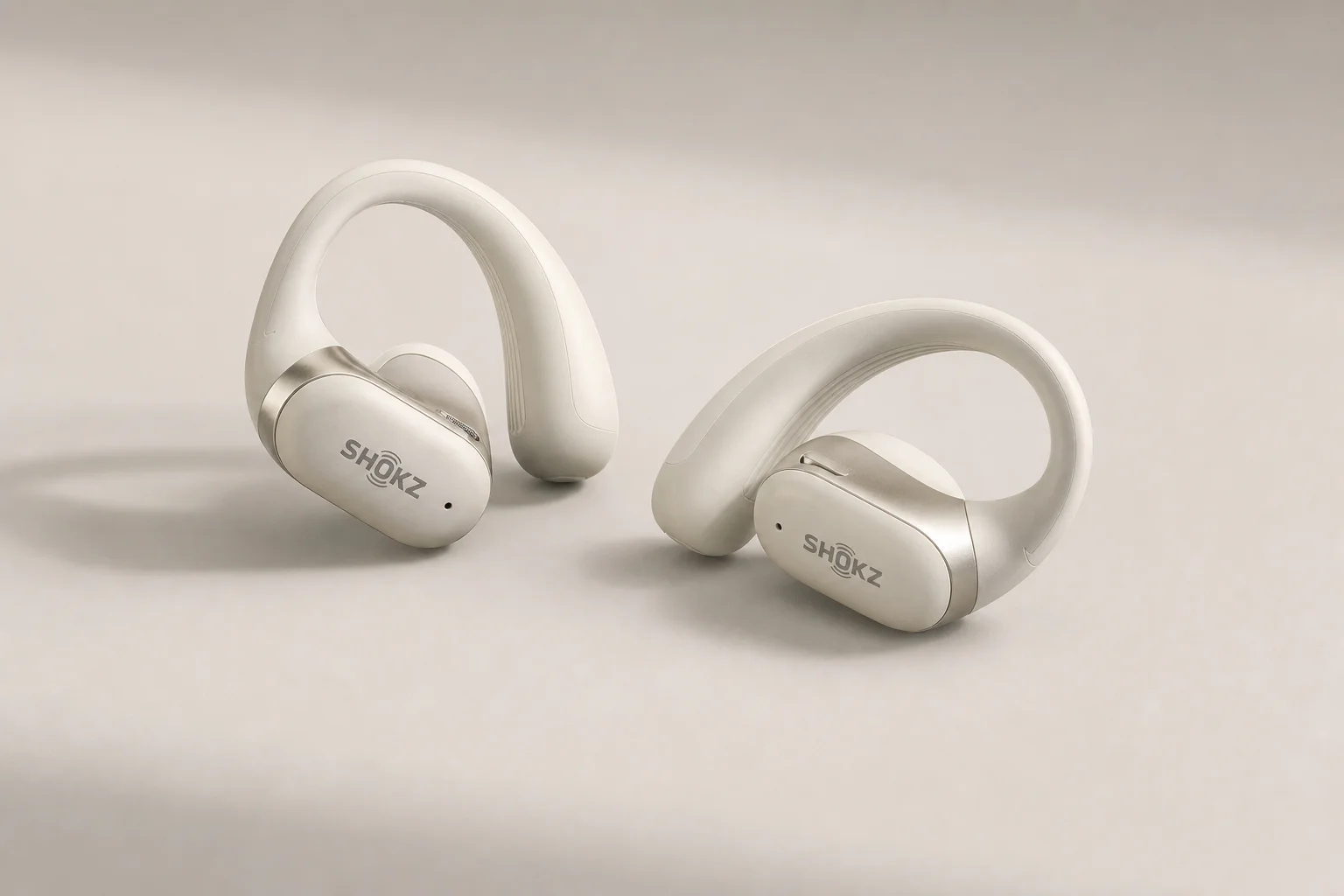
The OpenFit keeps the open-ear philosophy but abandons bone conduction. Instead, small traditional drivers sit near the opening of your ear like tiny speakers, delivering sound much closer to what you would expect from ordinary earbuds.
The hardware is genuinely comfortable. A super soft silicone material covers the part that rests on top of your ear, and a flexible 0.7 mm memory wire in the ear hook balances security with comfort well enough to wear them all day without ear fatigue. Because they are truly wireless, there is no cord connecting the two buds, and each one is small enough to pocket in its charging case, something simply not possible with the OpenRun Pro.

Sound is where the OpenFit earns its place in the lineup. The 18 by 11 mm drivers push noticeably more low end than any bone conduction design can manage, and the presentation feels more spacious and three-dimensional. It still will not match a sealed in-ear or over-ear headphone for bass, but it splits the difference nicely: open-ear awareness with sound quality closer to a normal earbud. They also run loud, reaching comfortable listening levels at around 50 to 60 percent volume where other earbuds might need 70 to 80 percent. Push them to maximum and things get a little tinny with some low-end distortion, but at everyday levels there is none.
Shokz calls the driver arrangement Direct Pitch technology, directing sound into your ear canal while minimising what leaks outward. In practice, someone needs to be roughly two to three feet away to make out what you are playing at moderate volume. Not fully isolated, but polite enough for shared spaces.
Call quality holds up well thanks to dual microphones and software noise cancellation. Calls made outdoors stayed clear with a bit of wind noise in the background, and people on the other end of the line were happy with how they sounded. Battery life is rated at up to 7 hours per charge, with the USB-C case bringing total playback to 28 hours, plus a quick-charge option that returns about an hour of playback in 5 minutes. The earbuds carry an IP54 rating, fine for sweaty workouts but not for swimming, and the case itself should stay dry. Touch controls on each bud handle playback, calls, and track skipping, with customisation available in the Shokz app alongside a customisable EQ with presets like Bass Boost.
Shokz OpenRun Pro: Bone Conduction Done Right
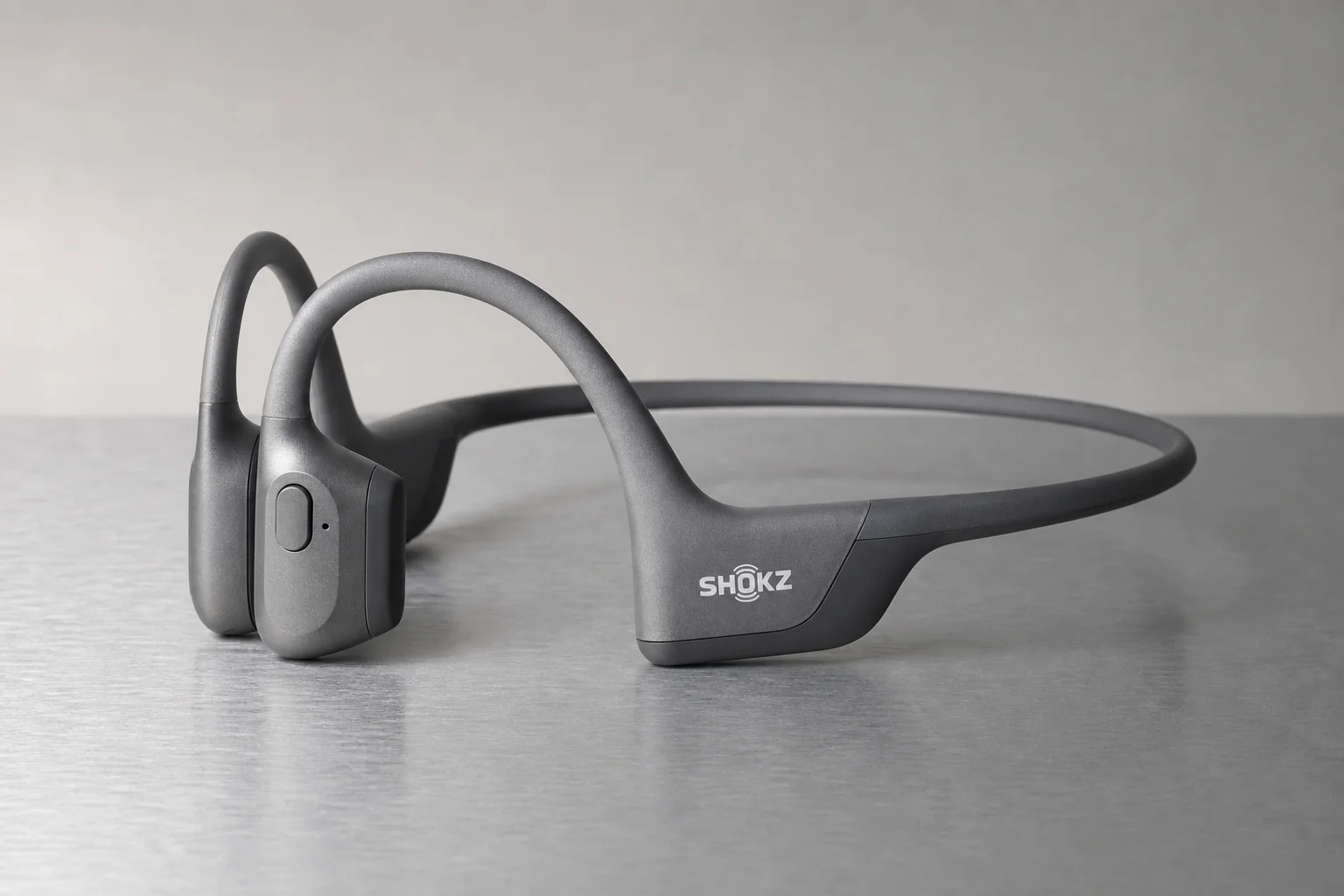
The OpenRun Pro remains the reference point for bone conduction. Transducer pods rest against your temples and vibrate, which your ears interpret as sound. Among bone conduction headphones, these are the best sounding the reviewer had used, with crisp highs and mids, even if the physics of the technology limits how much bass they can reproduce.
Security is the standout trait. It is hard to imagine a scenario where these come off your head, even during a tumble or an aggressive move on the trail. For mountain biking and running, that confidence matters.
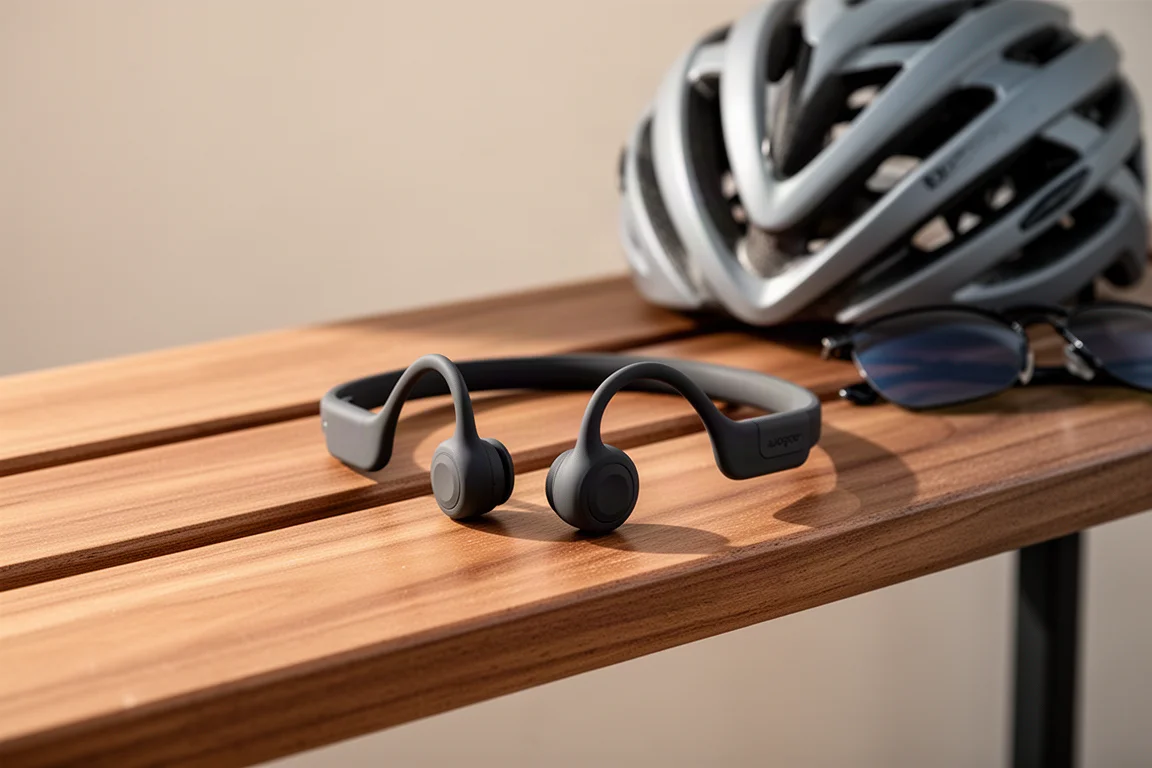
The IP55 rating adds another layer of practicality. These resist water projected directly at them, and would likely survive an accidental trip through the washing machine. The trade-off is the neckband design: they are bulkier, less pocketable, and the band style can cause mild fatigue after three to four hours of wear.
Which One Should You Buy?
Both headphones suit anyone who wants music while staying aware of their surroundings. The OpenFit is the better pick if sound quality closer to a traditional earbud matters to you, if you want all-day comfort without the neckband, or if pocketability is a priority. It handles sweaty workouts confidently even with its lower water resistance rating.
The OpenRun Pro wins on outright security, higher water resistance, and the classic bone conduction form factor that many sports users already trust.

It is also worth remembering what neither of these does: block out the world. If you want noise isolation on a plane or in a busy office, traditional earbuds remain the right tool. These exist for the situations where transparency mode falls short, especially wind.
Conclusion
Shokz has built two headphones that solve the same problem in different ways. The OpenFit brings true wireless convenience and noticeably better bass to the open-ear category, while the OpenRun Pro keeps its crown for fit security and durability. Choose the OpenFit for sound and comfort, the OpenRun Pro for unshakeable stability in demanding conditions.
Further reading
Related Reviews
Sports Audio
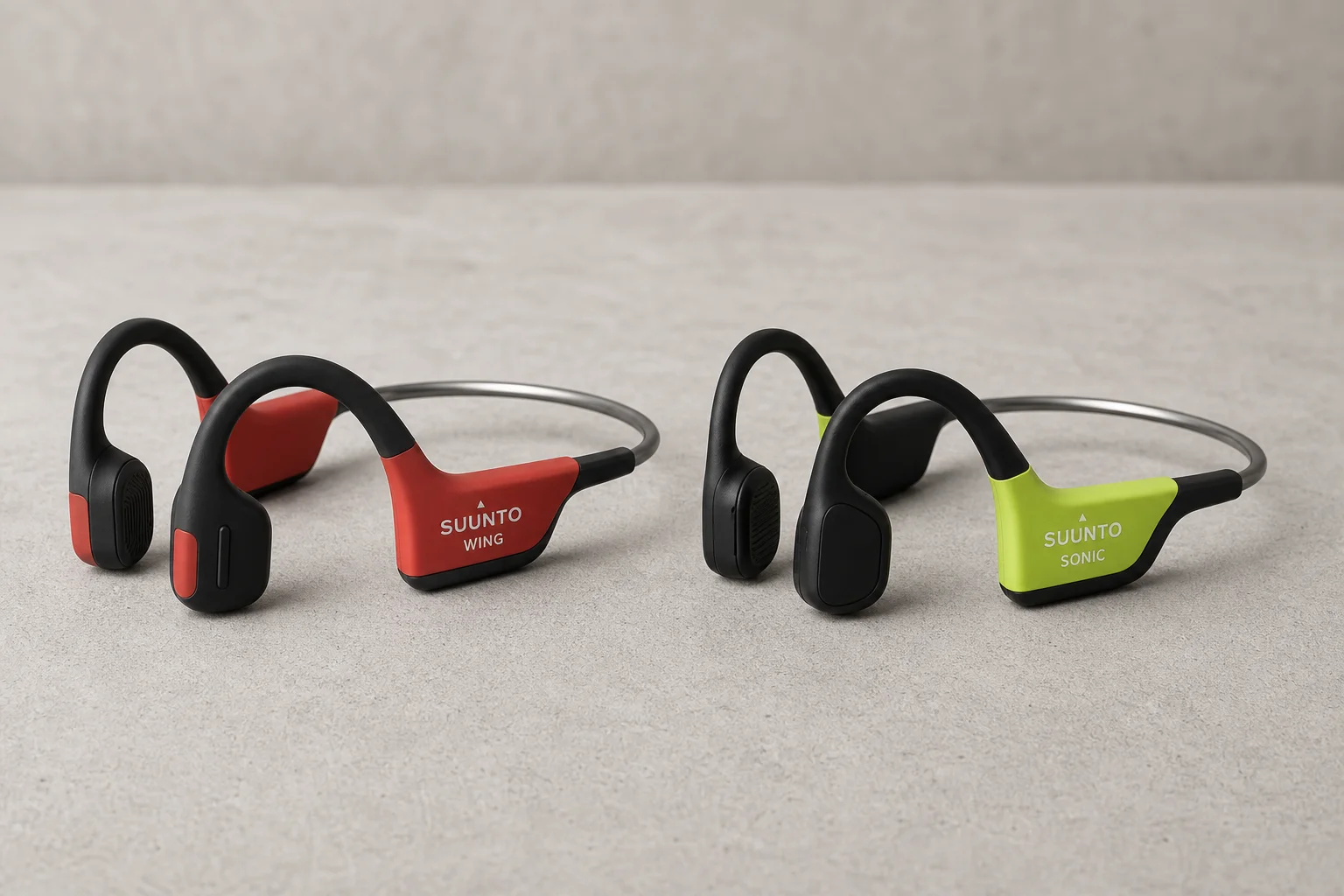
Bone Conduction Headphones for Sports: Suunto Wing and Sonic Tested
Two bone conduction headphones designed for cycling, running, and outdoor activities. We tested the Suunto Wing and Sonic to see if they deliver on spatial awareness, comfort, and sound quality.

Road Bikes
10 New Road Bikes Worth Watching: Aero, Titanium, Steel and Endurance Standouts
A practical roundup of 10 new road bikes, from aero flagships chasing single-watt gains to titanium, steel and endurance platforms built for real roads.

Saltwater Aquarium Setup
10 Questions About Cycling a Saltwater Aquarium: What You Need to Know
Essential questions and answers for cycling a reef tank or saltwater aquarium, from biome building to light management and bacterial supplements.