Sports Audio
Bone Conduction Headphones for Sports: Suunto Wing and Sonic Tested
Two bone conduction headphones designed for cycling, running, and outdoor activities. We tested the Suunto Wing and Sonic to see if they deliver on spatial awareness, comfort, and sound quality.
Introduction
Bone conduction headphones have emerged as a compelling alternative for athletes and outdoor enthusiasts who want to enjoy audio content without losing awareness of their surroundings. Unlike traditional in-ear buds that seal the ear canal, bone conduction technology transmits sound directly through vibrations on the temporal bone, leaving your ears completely open. This approach offers distinct advantages for cycling, running, and other outdoor activities where situational awareness matters.
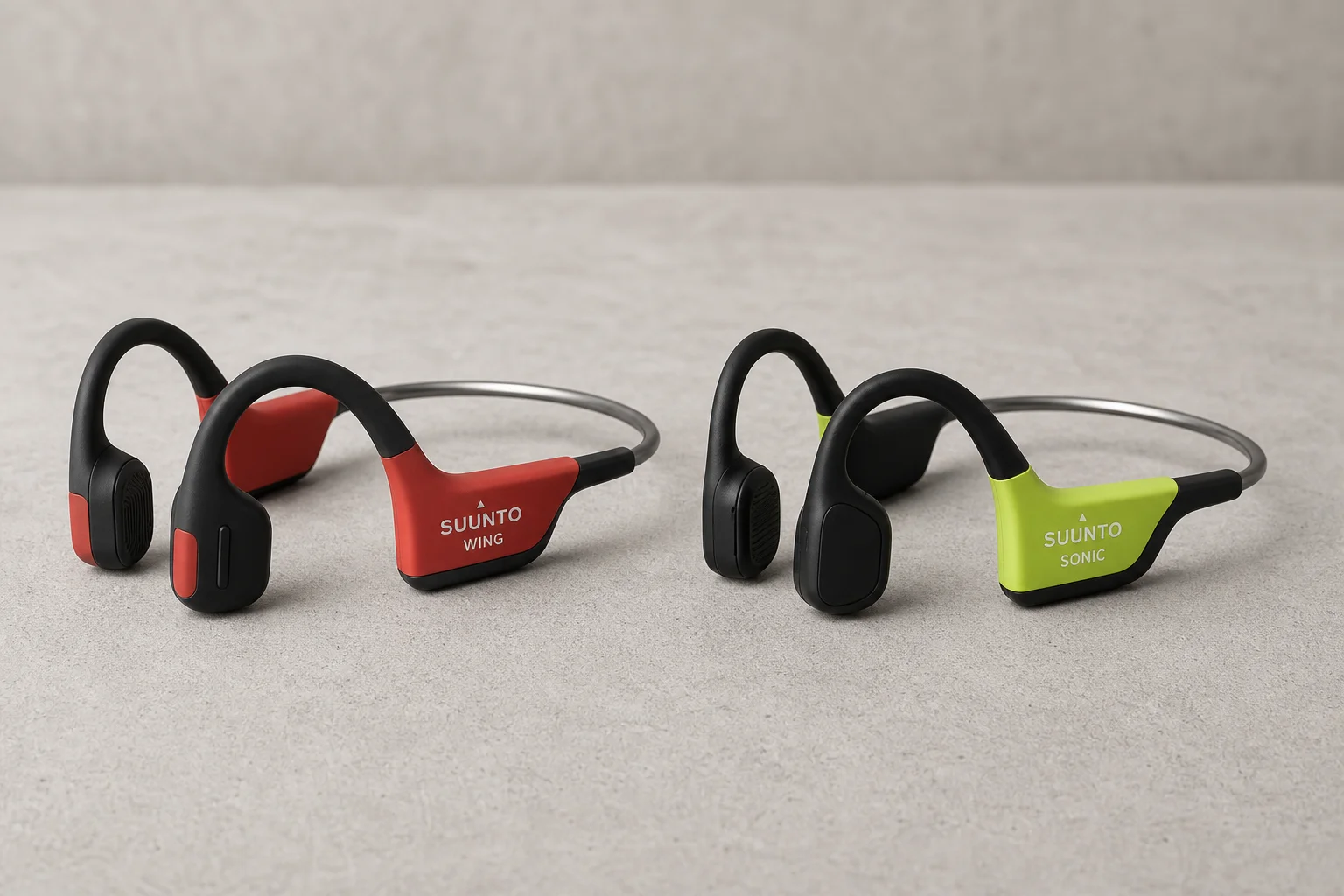
Suunto, known for sports watches and fitness technology, has developed two bone conduction models: the Wing and the Sonic. Both promise extended battery life, water resistance, and the unique spatial awareness that bone conduction delivers. After testing both models extensively over several months, including cycling, running, and varied weather conditions, we can offer a clear picture of how they perform and which might suit your needs.
How Bone Conduction Works
To understand bone conduction, it helps to first consider how normal hearing functions. Typically, sound waves travel through the air and reach your eardrum, which vibrates. These vibrations pass through the middle ear structures to the inner ear, where thousands of tiny hairs detect different frequencies and send signals to your brain.
Bone conduction bypasses the eardrum entirely. Instead of creating sound waves in the air, a small transducer vibrates directly against your temporal bone, sending vibrations straight to your inner ear. This transducer is backed with soft silicon for comfort and sits just in front of your ear. Because the distance to the inner ear is short, the technology works efficiently without requiring high volume levels.

Some models, like the Suunto Sonic, include a small bass port or additional speaker that blends air conduction with bone conduction, helping to balance the overall sound profile. This hybrid approach can improve tonal balance compared to pure bone conduction alone.
Sound Quality and Spatial Awareness
The most important factor with any headphone is how it actually sounds. With bone conduction models, fit is critical. The better the transducers make contact with your cheekbones and temporal bones, the better the sound quality. In our testing, the Suunto Sonic delivered noticeably better sound on our head compared to the Wing, despite the Wing being the flagship model.
The sound profile of both headphones is distinctly mid and treble focused. If you are accustomed to bass-heavy audio systems, the first impression may feel thin in the low frequencies. However, this characteristic becomes an advantage outdoors. The reduced bass actually enhances spatial awareness, allowing you to clearly hear approaching traffic, other cyclists, runners, and environmental sounds. Vocals, guitars, keys, and percussion all reproduce with excellent clarity.
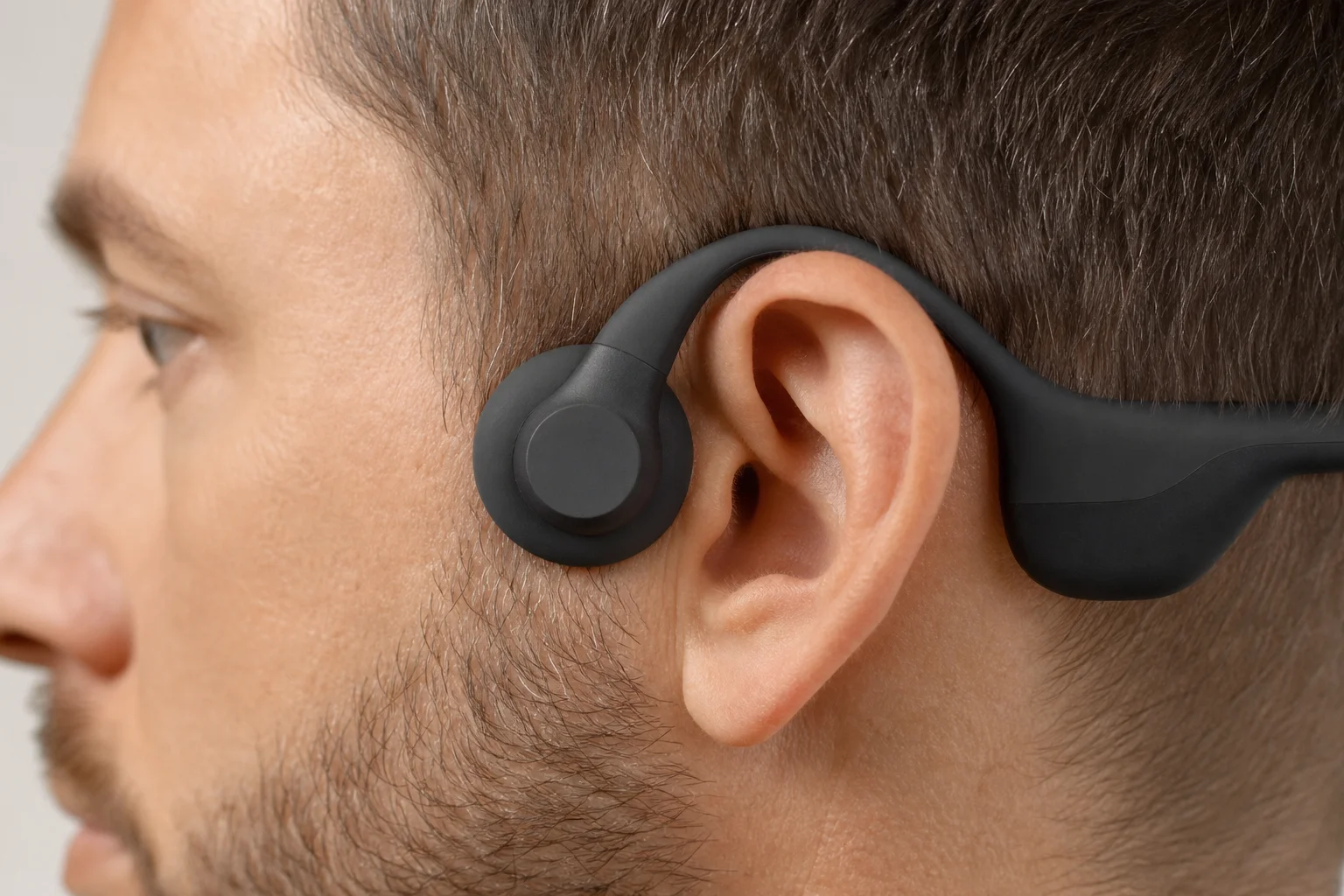
The soundstage creates an unusual effect where audio seems to come from small speakers positioned just in front of you rather than inside your head. This psychoacoustic effect, combined with the open-ear design, creates a sense of listening to a stereo mix with subtle widening. For outdoor use, this is genuinely compelling.
Why Choose Bone Conduction Over In-Ear Buds
Several advantages make bone conduction headphones worth considering for sports and outdoor activities.
Spatial Awareness: Traditional in-ear buds, even those with ambient audio modes like AirPods, use external microphones to pass through sound. However, they do not effectively convey the direction of sounds. With bone conduction, you can easily distinguish whether a car is 100 metres behind you, a motorcycle is 50 metres to your left, or a dog is running on the path to your right. This directional awareness is genuinely useful for safety and simply feels more natural when exploring or exercising outdoors.
Ear Health and Comfort: The ear canal remains completely open with bone conduction headphones, eliminating heat buildup, sweat accumulation, and pressure. In-ear buds cause noticeable ear fatigue after one to two hours of use. In our testing, the Suunto headphones remained comfortable for over four and a half hours without any fatigue, a significant advantage for longer activities.
Secure Fit: Both the Wing and Sonic use a titanium band with grippy silicon contact pads. They do not rely on clamping force to stay in place. Once positioned, they remain secure through vigorous head movement, cycling, or running. They also do not interfere with sunglasses or helmets, and they are durable enough to survive being knocked off repeatedly without damage.

Build Quality and Durability
Both models feature impressive durability. The Sonic is rated IP55 for water resistance, while the Wing is IP67 rated, making it more rugged. We tested both in heavy Scottish rain with no change to sound quality. The titanium band and silicon construction withstand impacts and rough handling. Neither model has shown signs of discoloration, bending, or damage despite extensive use.
Battery Life and Charging
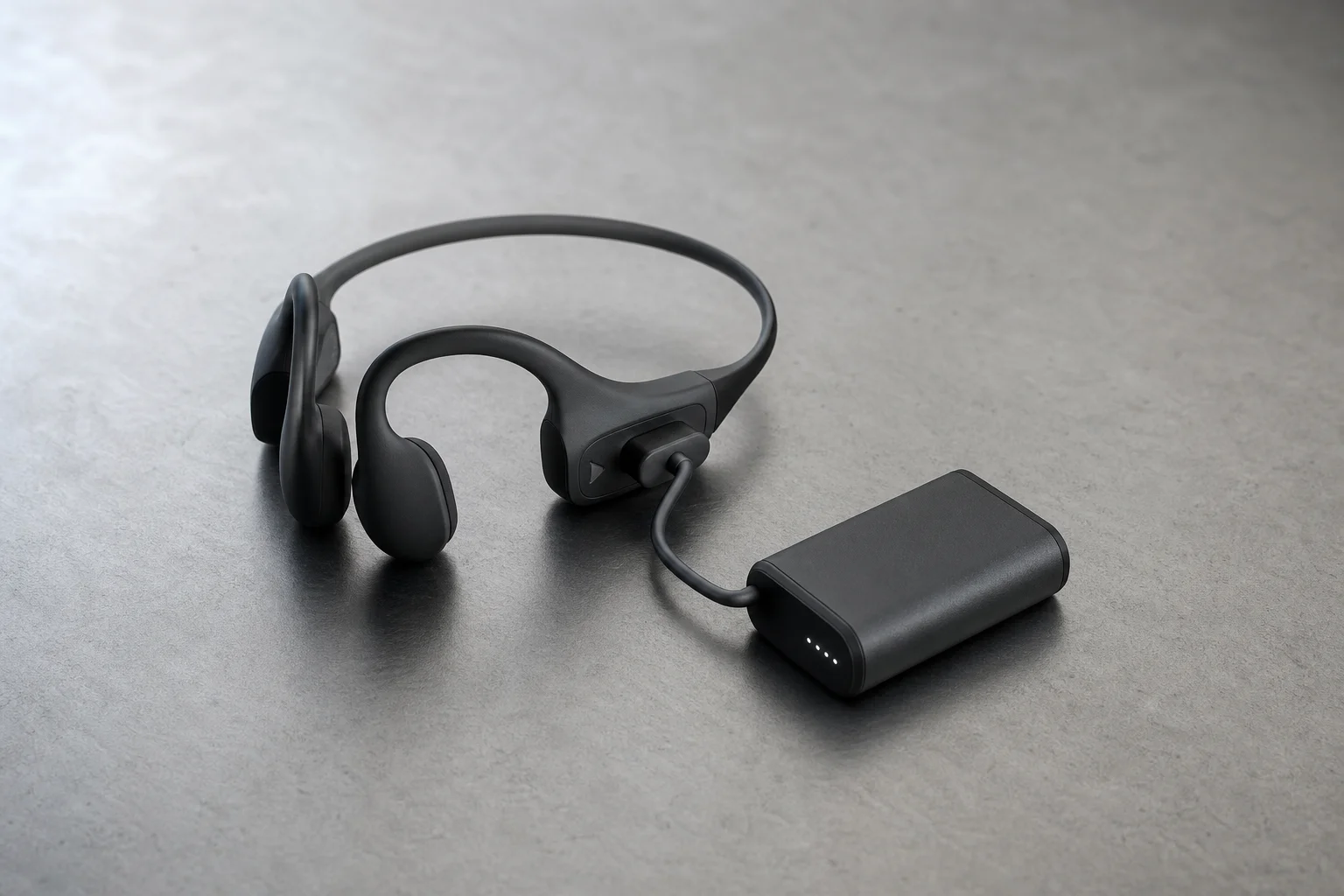
Both the Wing and Sonic claim 10 hours of playback. In our testing, the battery dropped approximately 10 percent per hour during cycling, supporting the 10-hour claim. Both use a magnetic charging connection rather than USB-C, likely to improve the waterproof rating.
The Wing includes a portable power bank that allows two additional full charges, adding 20 hours of playback. This compact bank snaps magnetically to the headphones and is lightweight enough to fit in a bike bag or gym bag. Unfortunately, this power bank is designed exclusively for the Wing and does not work with the Sonic.
Microphones and Controls
Both models include microphones for calls. The Wing offers wind cancellation up to 30 km/h, while the Sonic handles up to 15 km/h. For most runners and cyclists, the Sonic’s capability is sufficient. The Wing’s superior wind cancellation is more relevant for cyclists, though the microphone quality on both is adequate rather than exceptional.
Both headphones feature volume, power, and multifunction buttons for play, pause, and track skipping. The Wing adds gesture control, allowing you to skip songs or answer calls by shaking your head. The Wing also includes lights to improve visibility and safety in low-light conditions.
A companion app (Suunto app) allows you to monitor battery status, adjust sound modes, and control additional features. However, the app is optional; the headphones function fully without it.
Pricing and Value
The Suunto Wing is priced at £169 and comes in red and black. The Suunto Sonic is £129 and available in black and lime green. The price difference reflects the Wing’s additional features: the portable power bank, gesture control, improved wind cancellation, better water resistance, and safety lights. For most users, the Sonic offers excellent value and delivers the core bone conduction experience.
Conclusion
Bone conduction headphones represent a genuinely different approach to sports audio. They excel at maintaining spatial awareness while delivering audio content, making them ideal for cyclists, runners, and anyone who values hearing their surroundings. The Suunto Wing and Sonic both deliver on this promise with solid build quality, impressive battery life, and comfortable all-day wearability.
If you prioritize extended battery life and additional features like gesture control and safety lights, the Wing justifies its higher price. If you want the core bone conduction experience at a lower cost, the Sonic is an excellent choice. Both are durable, water-resistant, and genuinely comfortable for hours of use, setting them apart from traditional in-ear buds for outdoor activities.
Product link
View more details for Suunto Sonic
This product is mentioned in the review. Check the specifications, options, and compatibility before buying.
View more details for Suunto SonicFurther reading
Related Reviews
Wearables
Apple Watch vs Garmin for Running: A Year of Training Compared
After a year training for marathons with both devices, here's what actually matters when choosing a running watch.
Cycling Accessories
BBB Signal Radar Rear Light Combo Review: Performance & Reliability Analysis
The BBB Signal Radar (BLS 251) is a newly released cycling radar rear light with a unique built-in speaker. We extensively test its detection accuracy, battery life, and real-world riding performance.
Cycling Accessories
Best Bike Pumps 2026: Five Top Models for Every Riding Style
A practical guide to five high-quality bike pumps, from reliable floor models to versatile tubeless-ready options, with clear strengths and trade-offs for each.