Headphones
Shokz OpenFit 2 vs OpenFit 2 Plus: Which Open-Ear Earbuds Are Worth It?
Two of the best open-ear earbuds for running compared, covering fit, controls, sound, and the battery life jump that makes both easy to live with.
Introduction
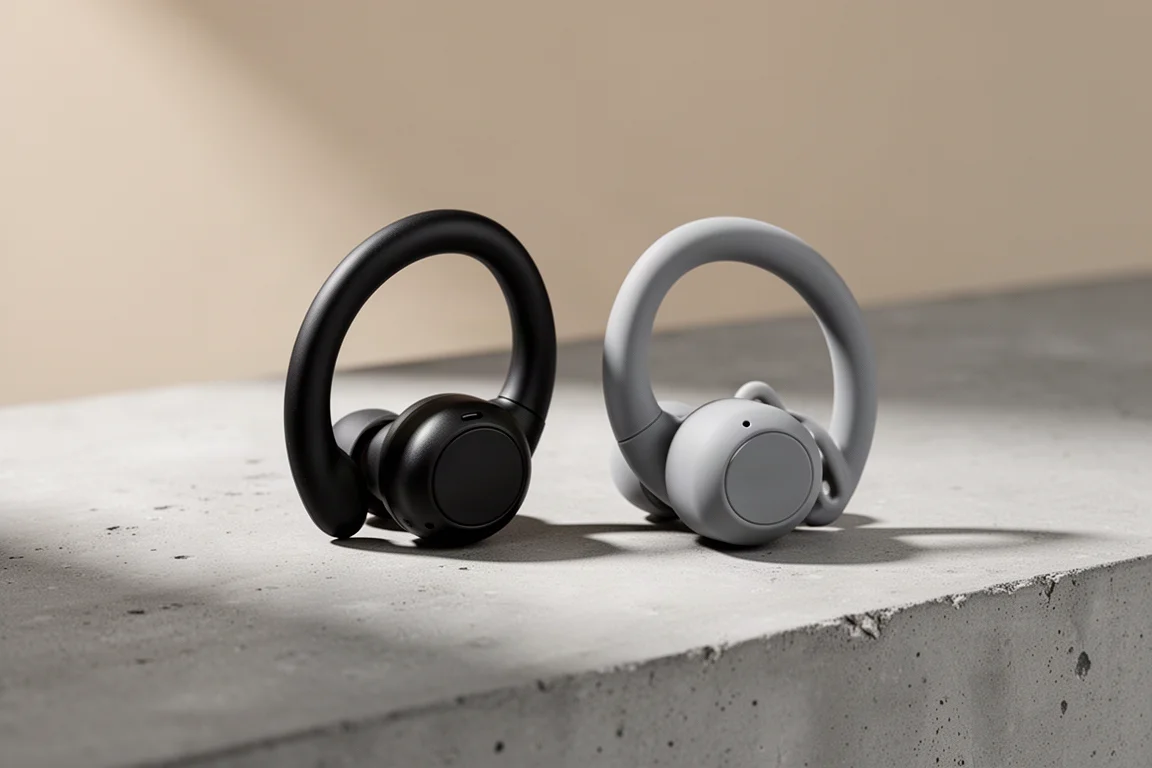
Shokz’s OpenFit 2 and OpenFit 2 Plus are open-ear wireless earbuds built for general use and fitness, especially when situational awareness matters. Both are clear upgrades on the original OpenFit, with better sound, an improved fit, much longer battery life, and most importantly a physical button for controlling music and calls.

Key features shared across both models include 11 hours of listening time per charge, 48 hours total with the case, Bluetooth 5.4, a 10-minute quick charge for 2 hours of listening, IP55 water resistance, multi-point pairing, and two AI-powered microphones. The OpenFit 2 Plus adds wireless charging, Dolby audio, and four AI-powered microphones. The OpenFit 2 costs £169 in the UK and $179.95 in the US, while the OpenFit 2 Plus costs £179 and $199.95 respectively.
Fit and Comfort
The fit has been very good across a mix of runs: trails with heavy landings, hot and sweaty treadmill sessions, and easier road runs. The earbuds hook over the ear without applying pressure, stay reliably in place during hard efforts, and work happily alongside glasses and hats. There is also a new version of the silicone material that feels softer against the skin, plus a slight refinement in the ear hook design.
They are a shade heavier than the original OpenFit and OpenFit Air, and if your ears are differently shaped you may still notice a little wobble on one side at pace. That aside, comfort is strong: one 90-minute run went by without issue, and wearing them in the office or on a long car journey felt unobtrusive enough that you can forget they are on.
Design and Controls
The biggest design win here is the physical button. Touch panels are prone to false triggers from sweat, rain, and wind, and they are hopeless with gloves in winter. The button handles skipping tracks, calls, and customizable click-and-hold actions including volume, and it works reliably with sweaty hands mid-run. Controls can be customized in the companion app, with options for one, two, and three clicks plus a hold action. The touch controls that remain are limited to summoning your smart assistant.
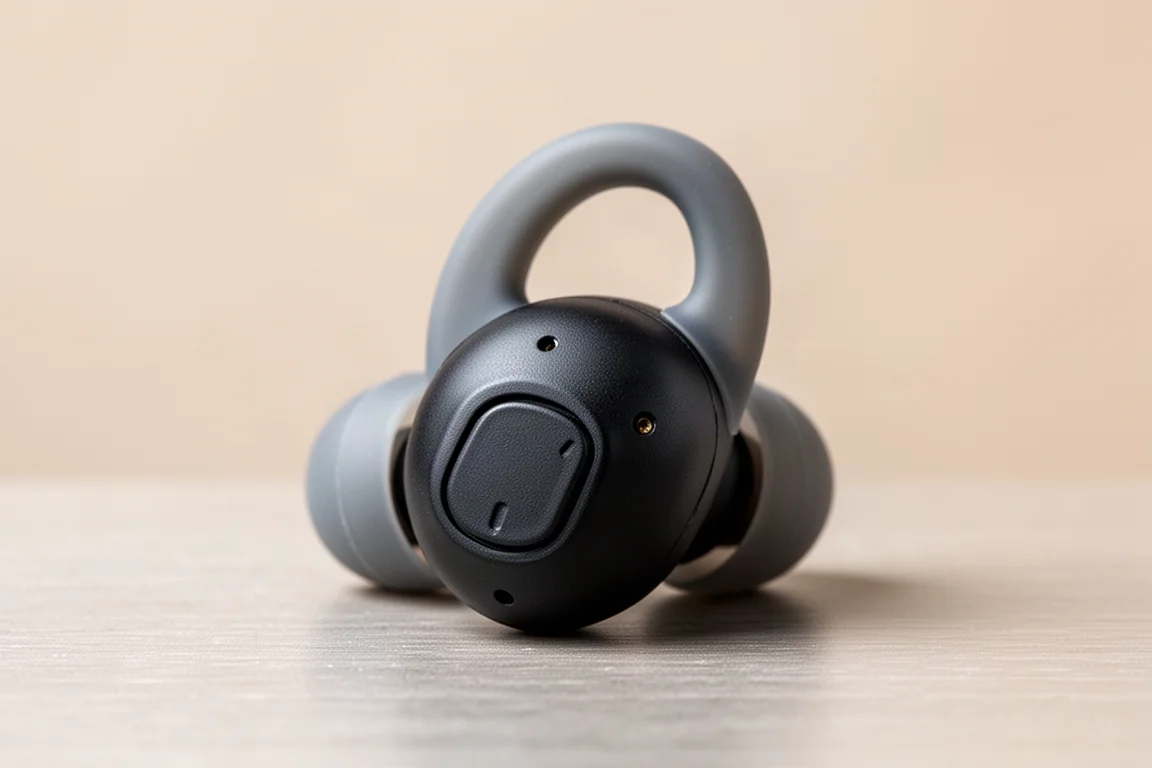
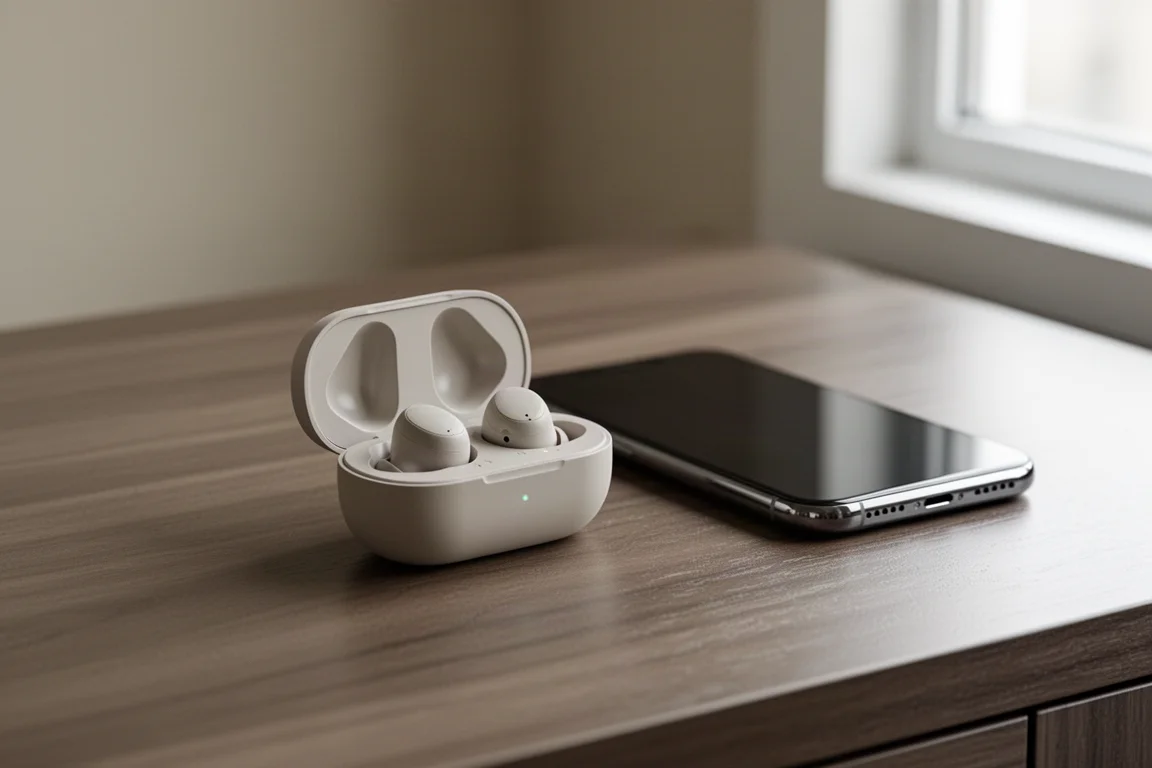
The one form-factor trade-off is the charging case, which is not as compact as regular in-ear or clip-on buds because of the large ear loops. It is less friendly to small running vest pockets or short-belt storage, and the case itself is not IP rated, so it is worth stashing it somewhere protected if you run in heavy rain.
Sound Quality
Both models sound noticeably better than the original OpenFit. The new dual-speaker setup, with one driver for the lows and another for the mids and highs, delivers crisper, more detailed sound with a more powerful low end than the OpenFit Air. Volume is up too, which helps on busier roads and in blustery conditions. EQ presets and custom profiles in the app genuinely improve the balance for certain genres.
The OpenFit 2 Plus’s Dolby audio mode is the real differentiator. It produces a bigger, clearer, more immersive soundstage, and it makes the earbuds a little more audible next to busy roads. The trade-off is that very loud listening with bass-heavy EQ can get slightly distorted, and Dolby mode is arguably better suited to films and video than music. Neither model fully copes with noisy environments like train commutes, but that is partly inherent to the open-ear form factor. The Bose Ultra Open Earbuds still edge them on pure sound quality, though at a notably higher price.
Battery Life
The battery story is one of the most compelling selling points. Both earbuds claim 11 hours per charge, up from 6 or 7 hours on the previous generation, and the case capacity doubles from 24 to 48 hours. In practice that means most runners can go weeks between charges, even with heavy use, and the buds alone should comfortably cover a long ultramarathon-style effort when listening in bursts.
Real-world testing showed the battery holding up close to the claimed numbers unless volume was maxed constantly with bass boost on. An hour of listening at high volume dropped the battery around 10 percent, which roughly tracks to 10 hours. The OpenFit 2 Plus also charges wirelessly, a convenience worth having but arguably not the reason to pay extra.
Which One Should You Buy?
If the price gap were bigger, the OpenFit 2 would be the easy pick. But with only about £10 or $20 between them, the Dolby audio upgrade on the OpenFit 2 Plus is noticeable enough, especially on loud streets, that paying the small extra amount makes sense if sound quality matters to you. If wireless charging does nothing for you and the budget is tighter, the OpenFit 2 still delivers very good sound, the same fit, controls, and battery life, and you sacrifice very little.

It is worth knowing the alternatives before committing. The Shokz OpenFit Air sits around £94 and remains the value pick in the range, though its controls are not as good. The Sony LinkBuds Open, at around £150, offer arguably better sound balance with a more discreet form factor. And compared with bone conduction headphones like the OpenRun Pro, these trade a little ambient awareness for a more encompassing sound. The Nank Ultra clip-on earbuds also undercut them on price with decent but less impressive sound.
Conclusion
Both the Shokz OpenFit 2 and OpenFit 2 Plus sit comfortably among the best open-ear headphones on the market: secure and comfortable fit, simple and reliable physical controls, competitive battery life, and some of the better sound quality in this category. The OpenFit 2 Plus earns the small premium with Dolby audio and a more immersive, louder presentation. Either way, you are getting a genuinely strong option for running and everyday use.
Product link
View more details for Shokz OpenFit 2
This product is mentioned in the review. Check the specifications, options, and compatibility before buying.
View more details for Shokz OpenFit 2Further reading
Related Reviews
Headphones
Apos Audio Caspian Review: Warm Bass, Solid Build, and a Detail Trade-Off
The Apos Audio Caspian is an easy-to-drive open-back headphone with standout bass and a warm, relaxed tuning, though mid-range and treble detail trail the competition.
Headphones
Audeze LCD-X vs LCD-XC vs LCD-3: Which High-End Headphone Fits Your Setup
A practical comparison of three Audeze planar magnetic headphones under $2,000, covering the open-back LCD-X, the closed-back LCD-XC, and the wood-ringed LCD-3.
Headphones
Audeze LCD-X vs HiFiMan Edition XS: Two Open-Back Headphones Compared
A practical comparison of the Audeze LCD-X and the HiFiMan Edition XS, covering build quality, comfort, sound signature, and which listener each one suits.