Road Bike Groupsets
Shimano Ultegra R8100 Review: Dura-Ace Performance at a Friendlier Price
A close look at the Shimano Ultegra R8100 groupset, from 12-speed semi-wireless shifting and Hyperglide+ to Servo Wave brakes, the first Ultegra power meter, and the trade-offs against Dura-Ace.
Introduction
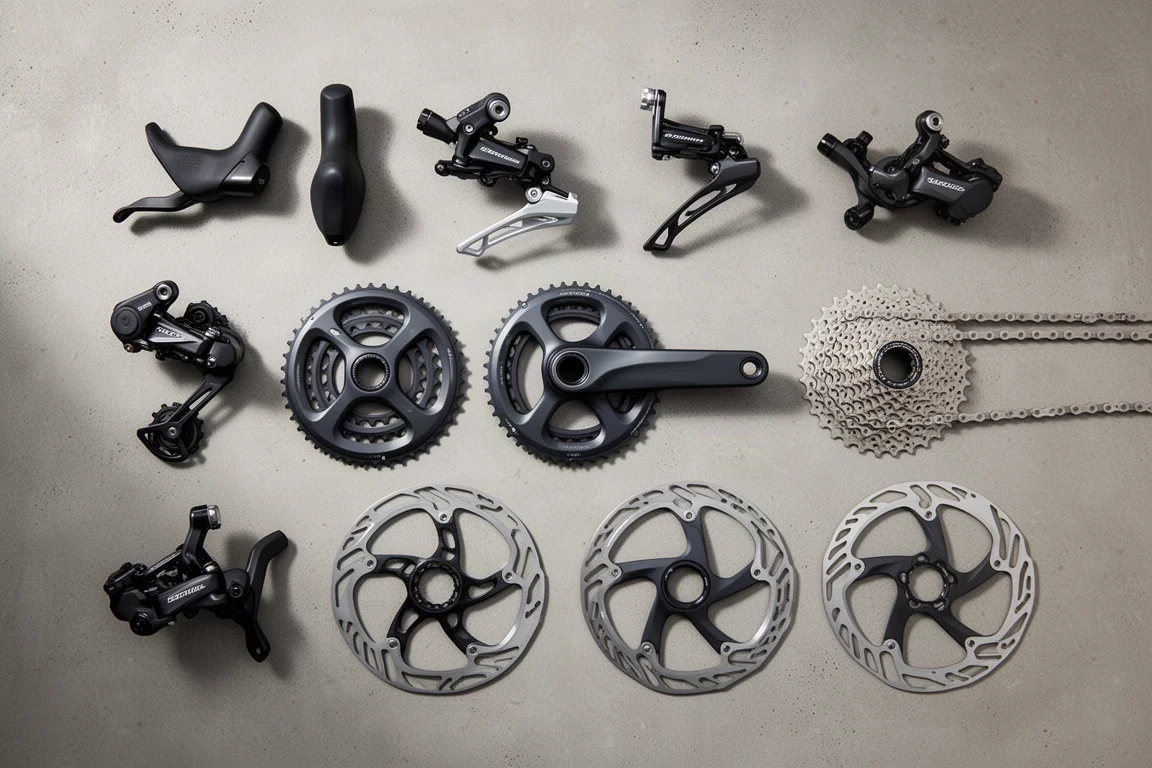
Shimano introduced the Ultegra R8100 groupset at the same time as the new Dura-Ace, and it arrives with the promise Ultegra has carried for generations. Aside from the weight, it is functionally identical to the flagship groupset.
For anyone weighing up a new bike or a fresh component build, that is the important part. The gap between the two groupsets shows up in price rather than in the way the bike shifts, and this one retails for significantly less.
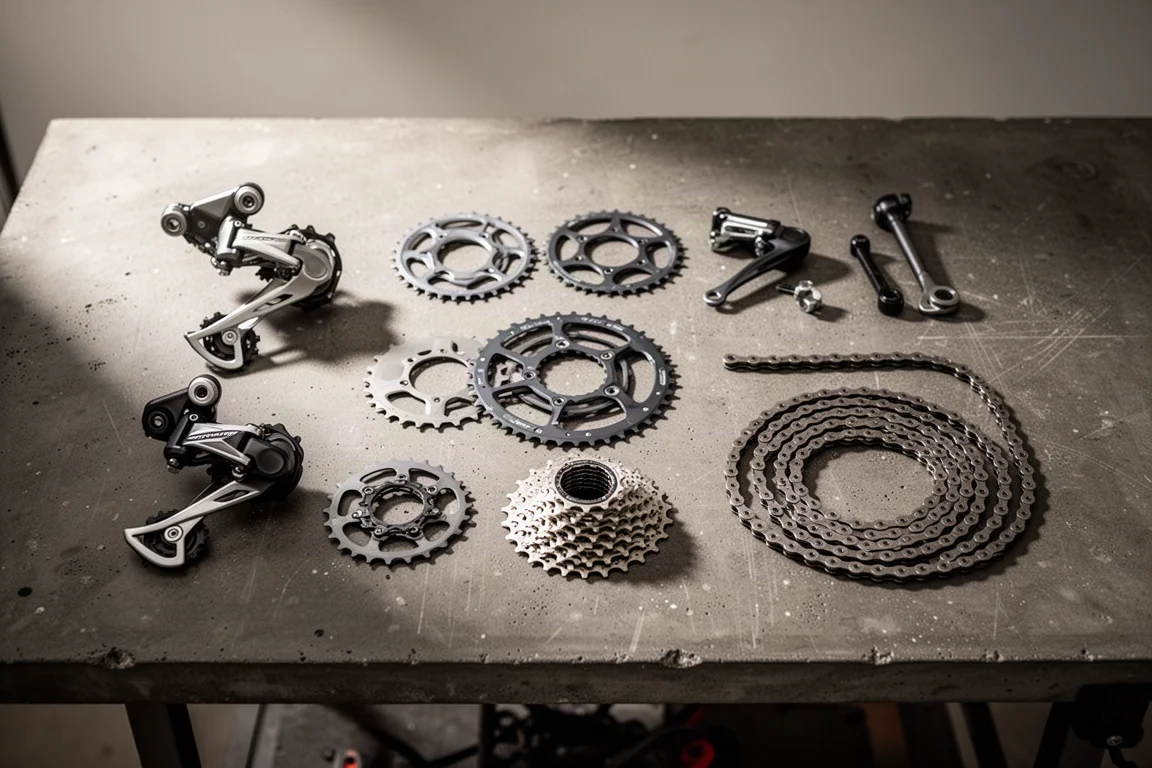
The detail behind that claim is what makes the R8100 worth a closer look: a 12-speed cassette, semi-wireless shifting, an Ultegra power meter for the first time, and brake technology carried over from Shimano’s mountain bike and gravel groupsets.
Who This Product Is For
This groupset is aimed at riders who want flagship-level shifting without flagship pricing. It also appeals to anyone who values a slim lever body, and to riders who want to keep using older 11-speed wheels or an indoor trainer, because the new cassette keeps the same overall width as before.
It is worth being equally clear about who it is not for. Mechanical shifting is no longer an option on Ultegra, so riders who prefer cables should look at 105 or GRX instead. A rim brake version is still available for anyone who needs one.
Main Strengths: Shifting and Drivetrain
The headline changes sit in the drivetrain: one more sprocket, a semi-wireless layout, revised electronics, and a chain designed to work with all of it.
Twelve-Speed, Semi-Wireless Shifting
Ultegra R8100 moves to a 12-speed cassette. The cogs and the spacing between them are narrower, so the cassette is no wider overall than the 11-speed version it replaces. That is good news for compatibility, because 12-speed cassettes still fit older 11-speed wheels and indoor trainers.
The drivetrain is semi-wireless: the shifters communicate wirelessly with the rear derailleur, which is then wired to a centrally mounted battery and to the front derailleur. Shifting is faster thanks to a new chipset and new motors, and Shimano claims the operating time of the rear derailleur has dropped by 58 percent and the front derailleur by 45 percent. The derailleur internals are shared with Dura-Ace, and the front derailleur also borrows the low-profile external design. The differences come down to materials and construction techniques that make manufacturing more economical, which adds 20 grams to the front derailleur and 47 grams to the rear.
Inside the cassette, the five largest sprockets are steel rather than the titanium used on Dura-Ace. That adds 74 grams and removes a meaningful amount of cost. The cogs also carry more splines than the old 11-speed design, which increases the contact area between freehub and cassette on new 12-speed freehub bodies. It remains backwards compatible.
Hyperglide+ and a Quieter Chain
Hyperglide+ is the next generation of a Shimano technology that dates back decades. The original idea was to vary tooth profiles and add ramps on the cassette and chainrings to speed up and smooth out shifts. Hyperglide+ adds further ramps so that shifts into harder gears feel as smooth as shifts into easier gears.
That has a practical benefit beyond refinement. Shimano says you can now shift under full pedaling load without thinking about backing off. The 12-speed chain is part of the package, with chamfered internal edges as part of the Hyperglide+ upgrade, and a useful byproduct is that the drivetrain runs very quietly.
Main Strengths: Ergonomics, Brakes, and Integration
Lever Ergonomics
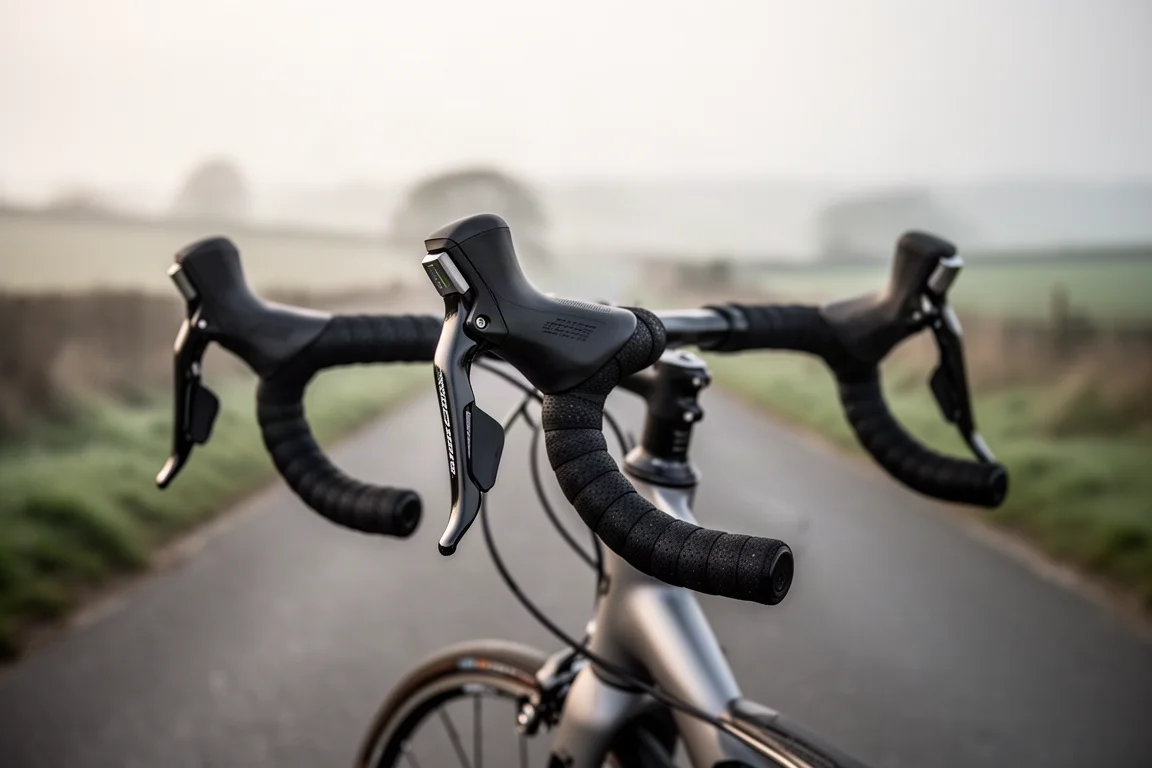
The lever body is the part of a groupset you are in contact with almost all of the time, and it has been reworked. The body has been lengthened slightly, by 4.6 millimeters, for a little more finger room, while keeping the slim diameter that many riders value.
The top of the lever body has also been lengthened and angled gently inwards, a change Shimano describes as a response to feedback from its pro athletes for an aero hand position. It still leaves room to drape your thumbs over the top. The buttons are slightly larger and more pronounced from one another, which should make shifts easier to tell apart in thick winter gloves.
Servo Wave Brakes
The disc brakes now use Shimano’s Servo Wave technology, which has been established in the mountain bike groupsets for a long time and more recently in the GRX gravel groupset. Servo Wave changes the leverage ratio as you pull the lever.
In practice that allows good clearance between the pads and the disc, increased here by 10 percent, without that clearance being felt through the lever stroke. What you do feel is more modulation, because there is more lever travel during the braking phase. A rim brake version of the groupset is still offered.
Power Meter and Connectivity
For the first time there is an Ultegra power meter. It is dual sided, lasts more than 300 hours per charge, and Shimano claims accuracy of plus or minus 1.5 percent. Compared with the Dura-Ace version it sits on an Ultegra crank, which makes it 21 grams heavier and more affordable.
Connectivity has been simplified as well. A Bluetooth module that previously had to be added separately is now integrated into the rear derailleur, so the companion app works straight away. From there you can customize synchro shift, reassign which shifter buttons do what, and adjust gear indexing. You can also pair a head unit with the groupset to see the gear you are in, and use the small buttons on top of the levers to scroll through data screens.
Wheels and Weight
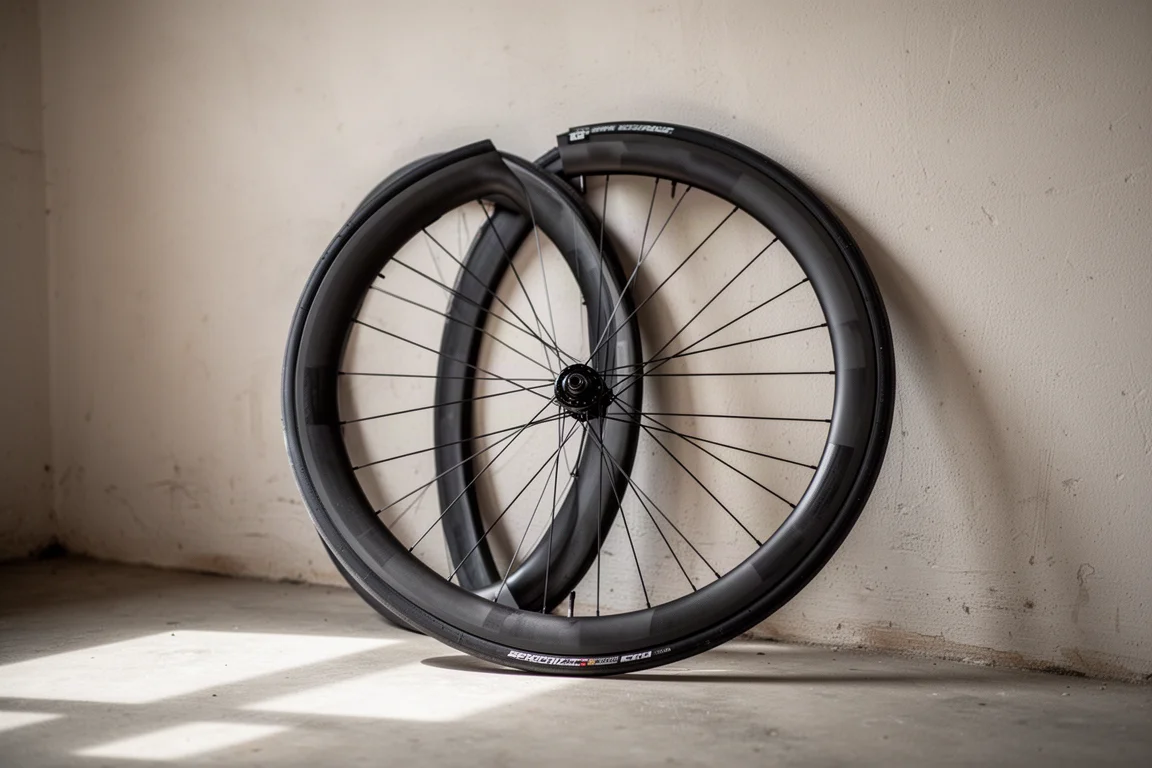
The Ultegra wheels now use full carbon rims with the same rim profile as the Dura-Ace version, so the aerodynamics carry over. The carbon layups are slightly heavier, adding between 40 and 138 grams depending on rim depth, with 35, 50 and 60 millimeter options. The freehub uses a traditional pawl design rather than the ratchet found on Dura-Ace, while the hubs themselves are closely related to the Dura-Ace versions.
On weight, the new groupset is 11 grams heavier than the previous Ultegra despite the move to semi-wireless shifting and the extra cog. Shimano quotes 2,716 grams for a complete groupset. Dura-Ace is now just 278 grams lighter than Ultegra, a smaller gap than in the previous generation. The largest single differences are the cassette, at 72 grams, and the rear derailleur, at 47 grams, while the rest of the components are close enough that the difference is negligible. In pure performance terms, the theoretical gain from Dura-Ace on a maximum-effort climb works out at around nine seconds.
Things to Consider Before Buying
The most obvious consideration is that mechanical shifting has gone from Ultegra. If cables are part of what you enjoy about a road bike, 105 and GRX remain options, but Ultegra is now electronic only.
The cassette range covers an 11-34 option, which gives a bottom gear of 34 by 34 without mixing components, and an 11-30 option with a 16-tooth sprocket placed in the middle of the range to smooth out the jumps used most often on group rides. The chainset options remain 52/36 and 50/34, so the larger 54/40 chainrings offered on Dura-Ace are not available here.
There is also the question of whether the weight difference matters to you. At 278 grams, the gap to Dura-Ace is real but modest, and it is concentrated in a few components rather than spread across the whole groupset. Riders chasing every possible advantage may still want the flagship. On the other side of the ledger, individual components now arrive in fully recyclable packaging with no single-use plastics.
Buying Advice
Complete groupsets are a relatively rare purchase, but the pricing structure is worth understanding if you are choosing a bike or building one up. Ultegra comes in at roughly 30 percent less than Dura-Ace as a complete groupset.
The differences are not uniform across components. Some parts, such as the batteries, retail for the same price because they are identical. Others, including the chain, the shifters and the brake calipers, sit close together in price, while the chainsets, rear derailleur and cassette carry much larger gaps. That opens the door to mixing components from both groupsets if you want to tailor your own balance of performance and value.

Complete bikes are probably the more relevant comparison for most riders. Ultegra-equipped bikes generally retail for around 5,000 to 6,000 euros, pounds or dollars, while Dura-Ace bikes start at roughly 9,000. Not all of that difference sits in the groupset, since wheels, frame carbon grade and finishing kit all change as well, but it is a useful indication of where the two tiers land.
Conclusion
Ultegra R8100 does what the name suggests: it brings Dura-Ace performance down to an Ultegra price point with very few trade-offs. The weight penalty of 278 grams, the absence of the 54/40 chainring option, and the loss of mechanical shifting are the main compromises, and each one will matter differently depending on the rider.
For most people the calculation is straightforward. This groupset delivers the shifting speed, ergonomics, braking feel and integration of the flagship tier, and the savings are significant. Dura-Ace remains the more desirable option, but only you can decide whether the extra expense is justified.
Product link
View more details for Shimano Ultegra R8100 Groupset
This product is mentioned in the review. Check the specifications, options, and compatibility before buying.
View more details for Shimano Ultegra R8100 GroupsetFurther reading
Related Reviews
Road Bike Groupsets
Campagnolo Record 13 and Super Record 13 Review: Wireless 13-Speed, Two Ways
Campagnolo's new wireless 13-speed groupsets answer the criticism of the previous generation. Here is how Record 13 and Super Record 13 differ, and which one suits your riding.
Road Bike Groupsets
Campagnolo Record 13 vs Super Record 13: Which 13-Speed Wireless Groupset Is Worth It?
A practical look at Campagnolo's new 13-speed wireless groupsets, what separates Record 13 from Super Record 13, and which one suits your build.
Road Bike Groupsets
Campagnolo Super Record 13 Review: Wireless 2x13 With the Thumb Shifter Back
Campagnolo's first 2x13-speed wireless groupset brings back the thumb shifter, adds a wider gear range, and lands at a price that finally lines up with Shimano and SRAM.