Gravel Bike Wheels
Shimano GRX Wheels Compared: Does Internal Rim Width Really Change Your Gravel Ride?
A practical look at how 21mm and 25mm internal rim widths change gravel tire shape, comfort, cornering control, and speed, using two Shimano GRX wheelsets as the reference.
Introduction
Internal rim width is one of those specifications that quietly shapes how a gravel bike feels, yet it is often the last number riders check when they shop for a new wheelset. It changes the profile of the tire, the volume of air trapped inside it, and how much support the sidewalls receive when you load them up in a corner. All of that feeds directly into comfort, control, and even rolling resistance.
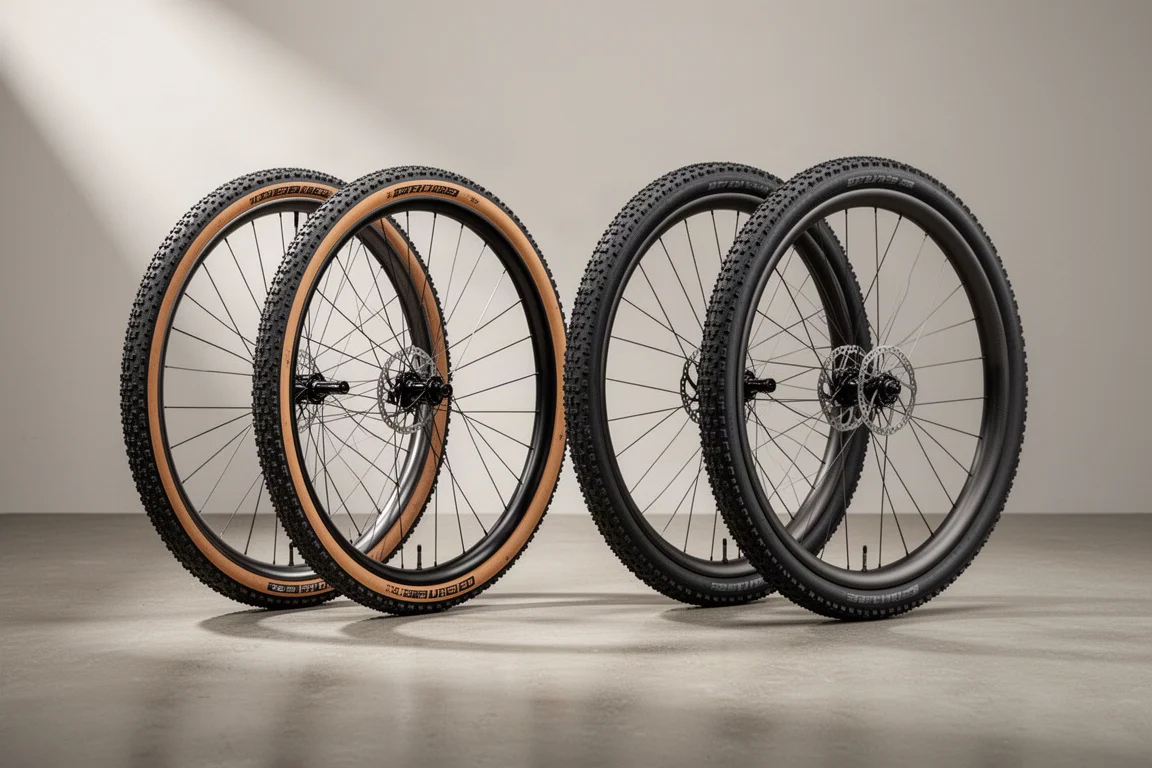
Two Shimano GRX wheelsets make the difference easy to see. One uses aluminium rims with a 21mm internal width. The other uses carbon rims with a 25mm internal width, which is a difference of about 4mm. Both were ridden with the same 40mm gravel tires at the same pressure, which turns a vague specification into something you can actually reason about.
What Internal Rim Width Actually Changes
Start with the basics. Almost every road and gravel wheel shares the same bead seat diameter of 622mm, with some smaller gravel bikes using 584mm. What varies from wheel to wheel is the measurement across the rim itself, and there are two versions of that number: external width and internal width.
External rim width is an aerodynamic concern. It is the surface the tire and the rim together present to the airflow, and a well-matched pair smooths the air as it passes. Internal rim width is the measurement that matters to almost everyone else, because it dictates the shape the tire takes once it is inflated and how much air volume sits inside it.
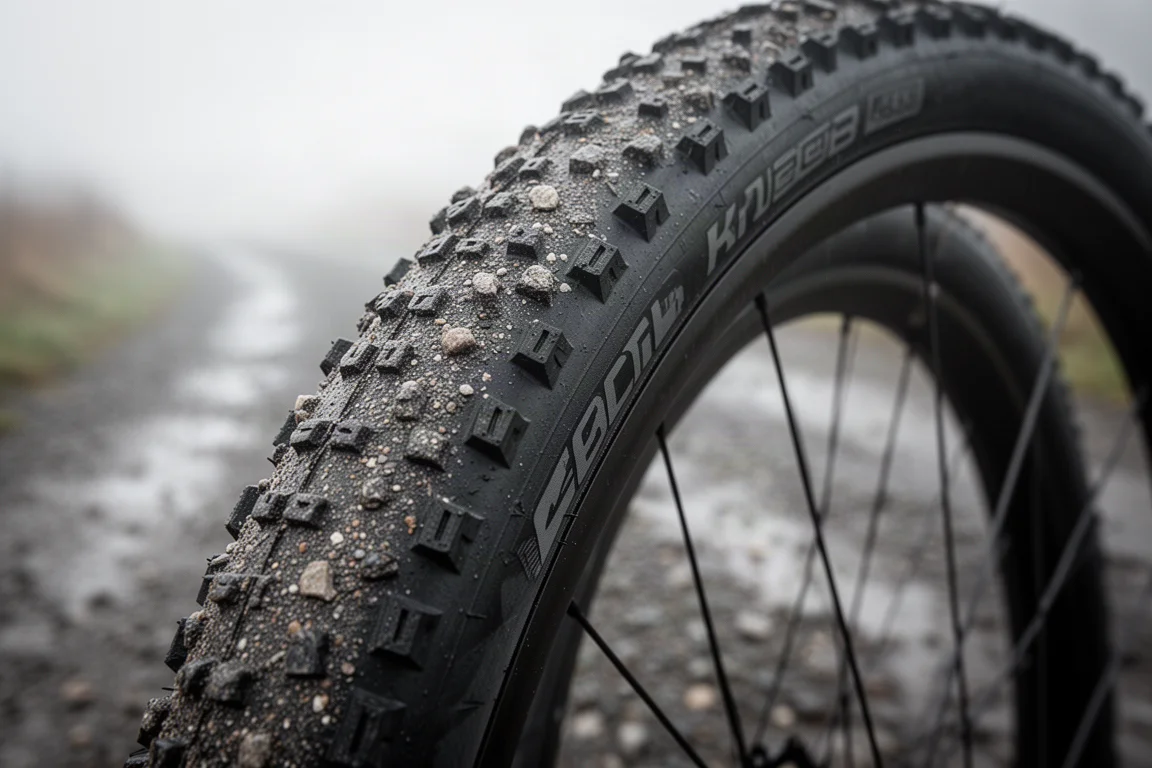
The intuitive assumption is that a wider rim makes the tire wider by the same amount. It does not. On gravel, going from a 21mm to a 25mm internal width widened the same 40mm tire by only around 1.2mm, while adding noticeably more internal air volume. That extra volume, not the outer measurement, is the part you feel on the trail.
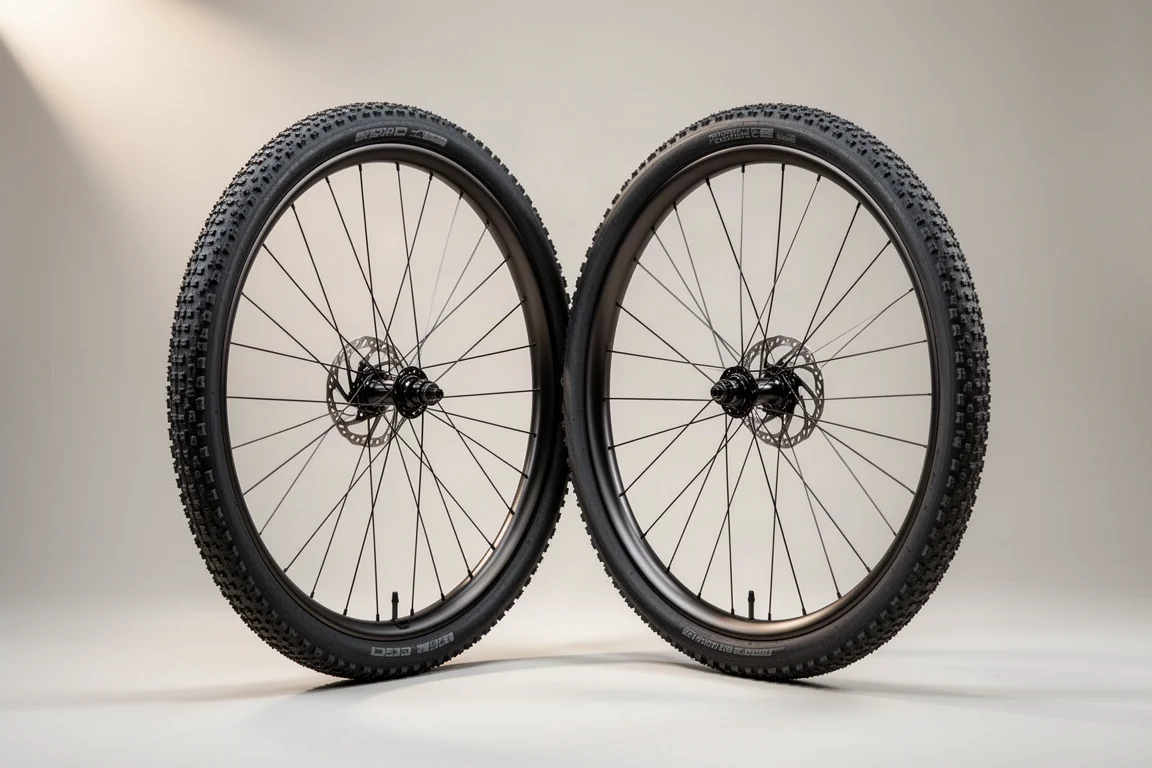
Shimano GRX Aluminium Wheels: 21mm Internal Width
The aluminium GRX wheelset uses a 21mm internal rim width and carries a 40mm gravel tire comfortably. The pair weighs in at roughly 1,650g, which is around 200g more than the carbon option.
Aluminium rims tend to be narrower partly for that reason. Adding width to an aluminium extrusion means adding material, and adding material means adding mass. The result here is a wheelset that keeps a conventional, rounded tire profile, which many riders find naturally comfortable because the tire can compress more readily at a given pressure.
It is a sensible baseline. Nothing about the 21mm internal width prevents you from running a wide gravel tire, and on smoother surfaces or mixed commuting-style gravel it will feel perfectly settled.
Shimano GRX Carbon Wheels: 25mm Internal Width
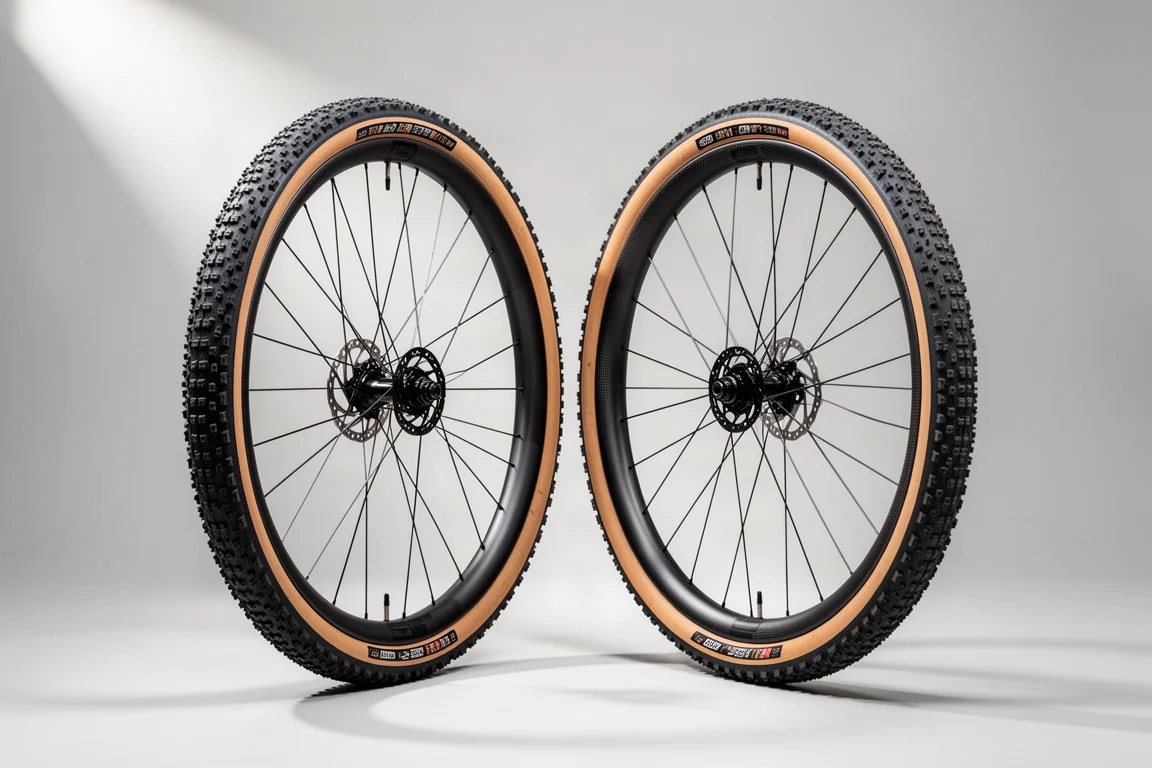
The carbon GRX wheelset steps up to a 25mm internal rim width, and it does so while weighing approximately 1,450g for the pair. That makes it around 200g lighter than the aluminium set despite being wider, which is one of the more interesting quirks of carbon construction. Widening a carbon rim does not carry the same weight penalty as widening an aluminium one.
With the same 40mm tire fitted, the wider rim produces a straighter sidewall and a broader, flatter tread contact area. In practice that reads as a slightly firmer, more planted feel, particularly in corners and when you are pushing hard out of the saddle.
Comfort, Control, and Tire Squirm
The job of a rim sidewall is to hold the tire in place, but it also influences the shape of the tire and how much air it holds. Change the rim width and you change all three at once.
Fit a tire to a narrow rim and it bulges outward, taking on a rounder, more balloon-like profile. That has a genuine upside: the tire compresses more easily for a given pressure, which can feel more comfortable. A tire on a wider rim sits squarer, with more of its sidewall supported.
That support matters most at the other end of the spectrum, in a behaviour known as tire squirm. When the overhang of the tire is significant and pressures are low, the tire can start to collapse under load, for example during hard cornering or when you are standing on the pedals. The bike feels vague and unsettled. Straightening the sidewalls with a wider rim is one way to restore that support, and it is generally the more pleasant option, since building the stiffness into the tire carcass instead tends to cost suppleness and rolling speed.

On gravel this balance is rarely a problem, because the ratio of tire width to rim width means there is always some overhang left, so comfort is preserved. That changes on the road, where a wide rim paired with a narrow tire can leave the sidewall too straight and actually hurt comfort and vibration absorption. For gravel tires, the trade-off is much more forgiving.
Rolling Resistance and Real-World Speed
Rim width does influence rolling resistance, though by a small amount. Published testing across several rim widths and tire pressures suggests that a 4mm increase in internal rim width yields roughly a 0.3 watt reduction on average. At gravel pressures around 30 PSI, the effect is larger, closer to 0.5 watts per wheel, which adds up to about one watt across the bike.
That is not a number that will transform a ride on its own. The more tangible difference shows up in how the bike behaves. In an informal back-to-back comparison using the same 40mm tires at 30 PSI, the wider rims were around 7 seconds faster through a short singletrack section, a margin of more than 6 percent. It was not a controlled experiment and speed was not the objective, but it is a useful signal that the handling difference is real rather than imagined.
Trade-Offs to Consider Before Going Wider
Wider rims are not universally better, and there are a few practical limits worth knowing before you commit.
The most concrete one is minimum tire width. A 25mm internal rim can only safely take tires down to 28mm. If the rim is hookless, that minimum rises to 29mm. The Shimano GRX rims in this comparison are not hookless, so 28mm is the floor, but it still rules out narrow road rubber.
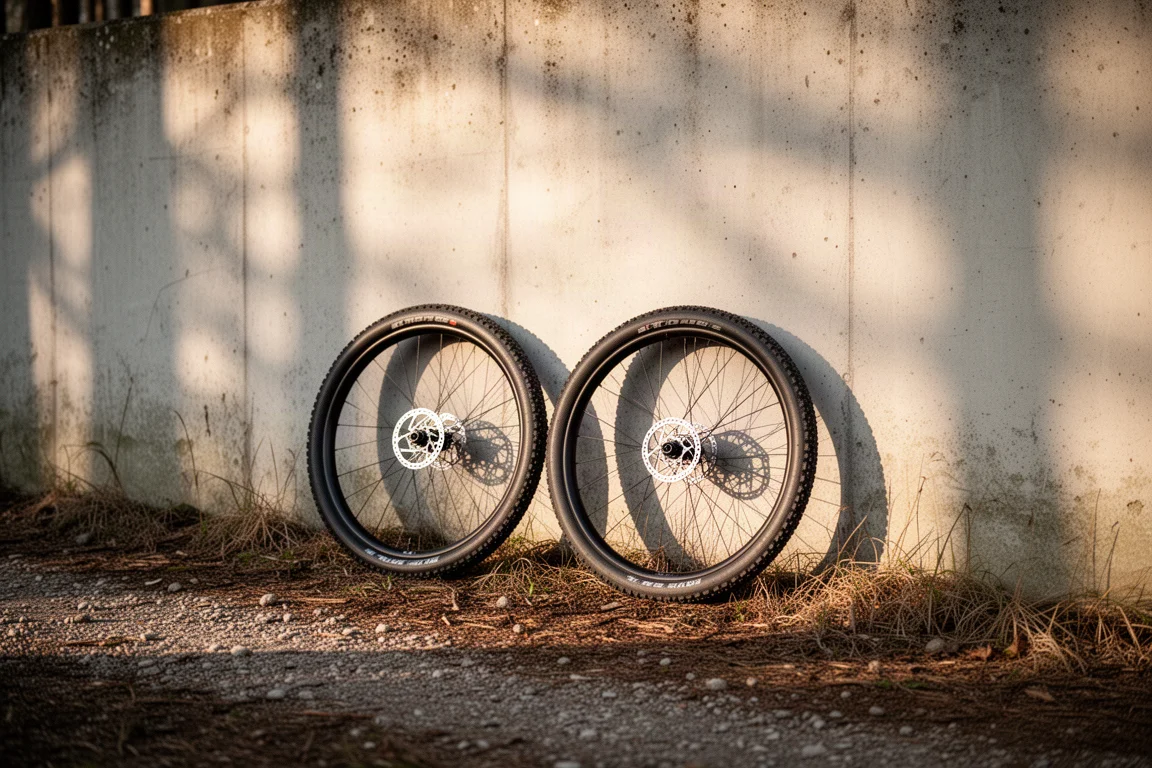
Weight is the second consideration. Aluminium rims get heavier as they get wider because there is simply more material involved, which is part of why aluminium rims often stay narrower. Carbon does not follow the same rule, which is how a 25mm internal carbon wheelset can still come in lighter than a 21mm internal aluminium one.
The third is tire width growth, and it is smaller than most riders expect. On gravel, going 4mm wider at the rim only added about 1.2mm to the outer tire width, so existing tires and frames are rarely affected. On the road the same jump in rim width can add 2mm or 3mm to the tire, so clearance checks matter more there.
Fitting Wider Rims to an Existing Bike
Because a gravel tire only grows by around a millimetre when you move to a wider rim, most frames and forks will accept the change without any drama. If you are already running a 40mm tire with a few millimetres of clearance at the chainstays and fork crown, moving to a 25mm internal rim should not force you to change anything else.
Worth remembering too is that the tire you already own will still fit. The wheel does not require a new tire size, it simply presents your existing tire in a slightly different shape. The main thing to verify is frame clearance at the tightest point, usually near the chainstay bridge or the fork, and to confirm your rim tape and valve setup is suited to the new rim bed.
Buying Advice: Matching Rim Width to Your Gravel Riding
The most useful guidance comes from the tire side of the equation. From a tire manufacturer’s perspective, 25mm is around the optimal internal rim width for a 40mm to 45mm gravel tire. That is the width at which a modern gravel tire gets the sidewall support it was designed for without sacrificing the overhang that keeps it comfortable.

Running a wide tire on a narrower rim is not a mistake. It works perfectly well, and the rounder profile can even add a little comfort. What you give up is some of the extra control that comes with a straighter sidewall, which you can partially recover on a wider rim by dropping pressure a notch while keeping the tire planted.
So the decision comes down to priorities. If you want maximum control and are happy to run lower pressures, the wider carbon option is the more rewarding choice, and it happens to be the lighter one too. If you prefer a conventional tire profile, want to keep costs sensible, or ride surfaces where the extra support is not a deciding factor, the 21mm aluminium wheelset remains a sound and uncontroversial pick.
Conclusion
Internal rim width is not in the same league as saddle height, gear ratios, or tire choice when it comes to changing how a bike rides. It is a second-order detail. But it is a real one, and the difference between 21mm and 25mm is measurable in cornering feel, in tire shape, and in a small way even in rolling resistance.
If you are shopping for gravel wheels, give the internal width a look before you decide. The 25mm carbon option suits riders chasing control and lower pressures, while the 21mm aluminium option covers the same terrain with a more traditional feel and less expense. Both will work with a 40mm gravel tire, so neither choice locks you into anything.
Further reading
Related Reviews
Gravel Bike Wheels
Campagnolo Levante Review: Carbon Gravel Wheels Built Around a Wider Rim
A practical look at the Campagnolo Levante carbon gravel wheelset, covering rim width, tubeless setup, ride feel, and who should consider the upgrade.
Gravel Bike Wheels
Shimano GRX RX870 Gravel Wheelset Review: Carbon Rims for Mixed Terrain
A carbon gravel wheelset with a 25mm internal width, a 1,461g weight, and a wide tyre window. Here is what to check before you buy.
Gravel Bike Wheels
WTB 750D Review: Do Bigger Gravel Wheels Make Sense?
WTB's 750D concept raises bead seat diameter from 622mm to 660mm. Here is how the bigger wheel rides and who it actually suits.