Road Bike Groupsets
Shimano 105 Di2 R7150 Review: Shimano's Most Accessible Electronic Groupset
A component-by-component look at the Shimano 105 Di2 R7150 groupset, with measured weights checked against Shimano's own claimed figures.
Introduction
The Shimano 105 Di2 R7150 is the third tier of Shimano’s electronic road groupsets, sitting below Ultegra and Dura-Ace. It arrived in June 2022 and became the first electronic groupset to carry the 105 name. At around £1,730 or $1,890 it is by no means cheap, but it is nominally the most accessible electronic road groupset in the range, and that makes it the one most riders are likely to consider.
Shimano claims the groupset weighs 2,992 g in its most common specification. The interesting question for anyone weighing up a purchase is whether the real parts come in above or below that number, and where the grams actually sit across the individual components.
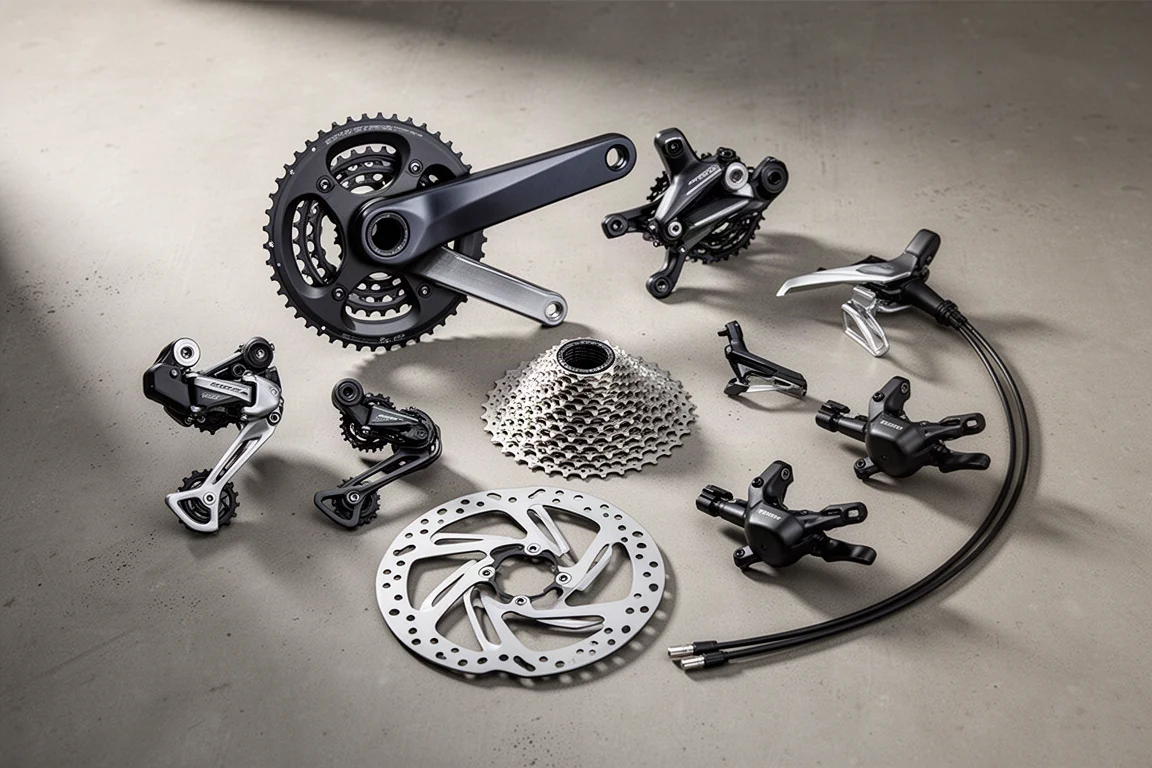
What Comes in the 105 Di2 Groupset
The box covers the full drivetrain and braking system: rear derailleur, front derailleur, crankset, cassette, chain, a pair of disc rotors, hydraulic calipers with hoses, a pair of shifters, the system battery, and the cables that link everything together. Shimano’s own 105-level carbon wheelsets are a separate purchase and are not part of the package, so a complete bike build needs those added on top.
Working through the components on calibrated scales, the measured figures land remarkably close to Shimano’s published numbers. Some parts come in a gram or two under the claim, others a few grams over, but the overall picture is a groupset whose stated weights are honest rather than optimistic.
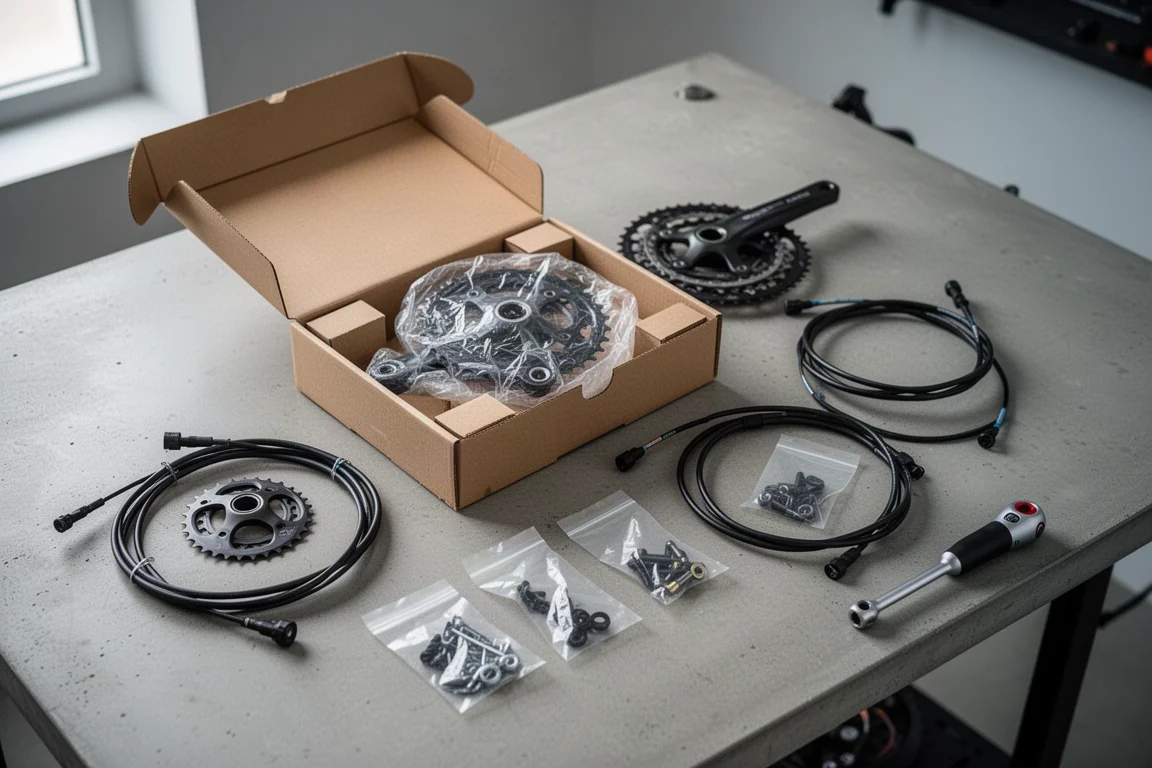
That consistency matters if you are comparing a 105 Di2 build against a mechanical alternative on paper, because the numbers you are comparing with are the numbers you will actually get.
Rear and Front Derailleurs
There is only one rear derailleur in the 105 Di2 range, a long-cage design that will work with every cassette in the 105 line-up. It weighs 301 g, a single gram less than Shimano’s claimed figure.
The front derailleur comes in at 139 g against a claimed 142 g. Visually it is very close to the front derailleurs used on the previous generation of Ultegra and Dura-Ace Di2 groupsets, with a slightly larger body than the current Ultegra and Dura-Ace equivalents. Mechanically the family resemblance is clear, which is reassuring for a third-tier option.
Crankset
The crankset looks very similar to the Ultegra and Dura-Ace versions but is heavier overall. Complete with the right crank arm, left crank arm and compression plug it weighs 768 g, against a claimed 765 g. For reference, an Ultegra R8100 crankset weighs 711 g, so the gap here is roughly 50 g. On its own that is not a huge amount, but across a full groupset the small differences do accumulate.
One genuinely useful detail is sizing. The 105 Di2 crankset is offered in five lengths from 160 mm through to 175 mm, the first time a 105 crankset has been available in such a wide range. The chainring combination is limited to 50/34 for now, with Shimano indicating a slightly larger 52/36 option will follow at a later date.
Cassette and Chain
The 11-34 tooth cassette is the only 105-branded cassette in the range, although an 11-36 tooth cassette is also available at a different tier with essentially the same construction. The largest cogs are mounted to an alloy spider to save a little weight compared with Dura-Ace or Ultegra. What you do not get is Hyperglide+ technology, which forms shift ramps into each individual cog and, in practice, makes a noticeable difference to how smooth and quiet the shifts feel as you move down the cassette.
On the scales the 11-34 cassette comes in at around 360 g including a plastic spacer left in place, which is effectively level with the claimed figure.
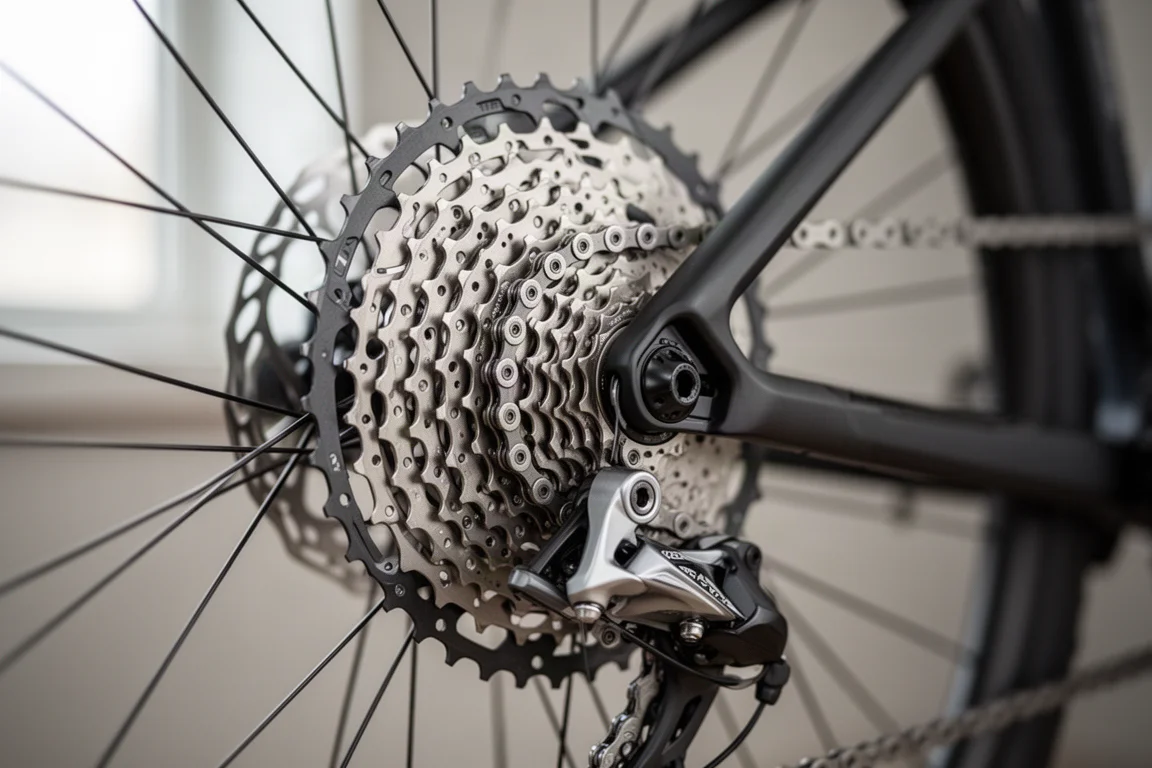
The chain is the M7100, a 12-speed SLX-level chain from the mountain bike side of Shimano’s range. This is a well-established arrangement: because Shimano shares chains across road and mountain bike groupsets of the same speed generation, a 12-speed mountain bike chain works on a 12-speed road groupset. Complete with its quick link the chain weighs 273 g against a claimed 275 g.
Rotors and Brakes
The SM-RT70 rotors are carried over from the previous generation of 105, so there are no changes to report here. A common pairing of a 160 mm and a 140 mm rotor weighs 253 g, slightly less than Shimano’s claimed figure, most likely because the published table assumes two 160 mm rotors.
The caliper and hose are supplied separately from the shifter, which makes it possible to weigh each in isolation. A rear caliper with a long section of hose and pads fitted comes in at 166 g, against Shimano’s figure of 141 g per caliper. That comparison is not entirely fair, since the long hose has to be there on a complete build anyway, so the practical difference is small.
The calipers adopt the newer bleed port layout seen on Ultegra and Dura-Ace, with the bleed point moved to the outside face of the caliper. This makes bleeding noticeably easier, particularly on frames where the caliper sits on the inside of the chainstay, as is common on road bikes.
Shifters, Battery, and Cables
The shifters are visually very close to the Ultegra and Dura-Ace items, with a revised pivot layout and a shroud covering the upper half of the brake lever. Ergonomically the shape is slightly different, and there is a textured hood on the back of the lever that gives a secure feel under hand. Each shifter weighs 221 g against a claimed figure of roughly 212 g, the difference likely explained by brake fluid already inside the unit, plus a plastic cap. Close enough to call it honest.

Power comes from a single shared battery rather than individual batteries per component. That one battery runs both the front and rear derailleurs, which are wired to it, while the shifters communicate with the system wirelessly. The battery typically lives inside the seatpost, and it weighs 53 g, matching Shimano’s claim exactly.
The connecting cables, measured at 900 mm and 1,200 mm lengths, add a further 21 g including the small zip ties used for routing through the frame, against a claimed 19 g.
Who the 105 Di2 Groupset Is For
This groupset is aimed squarely at riders who want electronic shifting and hydraulic disc brakes without stepping up to Ultegra or Dura-Ace money. It makes the most sense on a bike that is being built or upgraded from scratch, where the whole system goes on together.
It also suits riders who care about crank length options. The 160 mm to 175 mm spread is unusually broad for this tier and gives smaller or larger riders a better chance of finding a fit without swapping to a higher groupset. Riders who simply want a reliable mechanical drivetrain and prefer to spend the difference elsewhere are not the target audience here.
Main Strengths
- Measured component weights track Shimano’s claimed figures closely, which makes paper comparisons more trustworthy.
- The 11-34 cassette is available with every rear derailleur in the range, so there is no compatibility puzzle.
- Crank length options span 160 mm to 175 mm, a first for the 105 line.
- Front and rear derailleurs run from a single shared battery, with wireless communication to the shifters keeping the wiring simple.
- The revised caliper bleed port layout makes brake maintenance easier on typical road frames.
- Crank, shifters and derailleurs share clear visual and mechanical DNA with the higher tier groupsets.
Things to Consider Before Buying
The complete set of components measured here totals 2,950 g against Shimano’s claimed 2,992 g, so the real-world figure is modestly lower on paper. That measured total does not include a bottom bracket or rotor lock rings, and the rotor specification used in Shimano’s published table is not stated, so treat the comparison as indicative rather than exact.
Weight is not the whole story. For context, an Ultegra R8100 groupset measured 2,577 g under the same conditions, so stepping down to 105 Di2 adds a meaningful amount of mass across the build. If saving weight is a priority, that gap is worth understanding before committing.
The 105 cassette also lacks Hyperglide+ shift ramps, which is the single most noticeable functional difference against the tiers above. Chainring choice is limited to 50/34 at present, and Shimano’s 105-level carbon wheelsets, offered in 46 mm and 32 mm depths with the same rim profile as the higher tiers, are sold separately and not part of this package.
Buying Advice
For riders who want electronic shifting at the lowest point in Shimano’s road range, 105 Di2 R7150 is a coherent, well-executed option. The components are closely related to Ultegra and Dura-Ace, the claimed weights hold up under measurement, and the broad crank length range makes it easier to fit a wider spread of riders properly.
The decision usually comes down to priorities. If smooth, fast cassette shifts are central to how you ride, the absence of Hyperglide+ is the compromise to weigh up. If you want a lower total build weight, Ultegra is the step that delivers it. For everyone else, this is a sensible place to put the money, particularly on a new build where the whole groupset goes on at once and the hydraulic hoses, calipers and wiring are set up together.
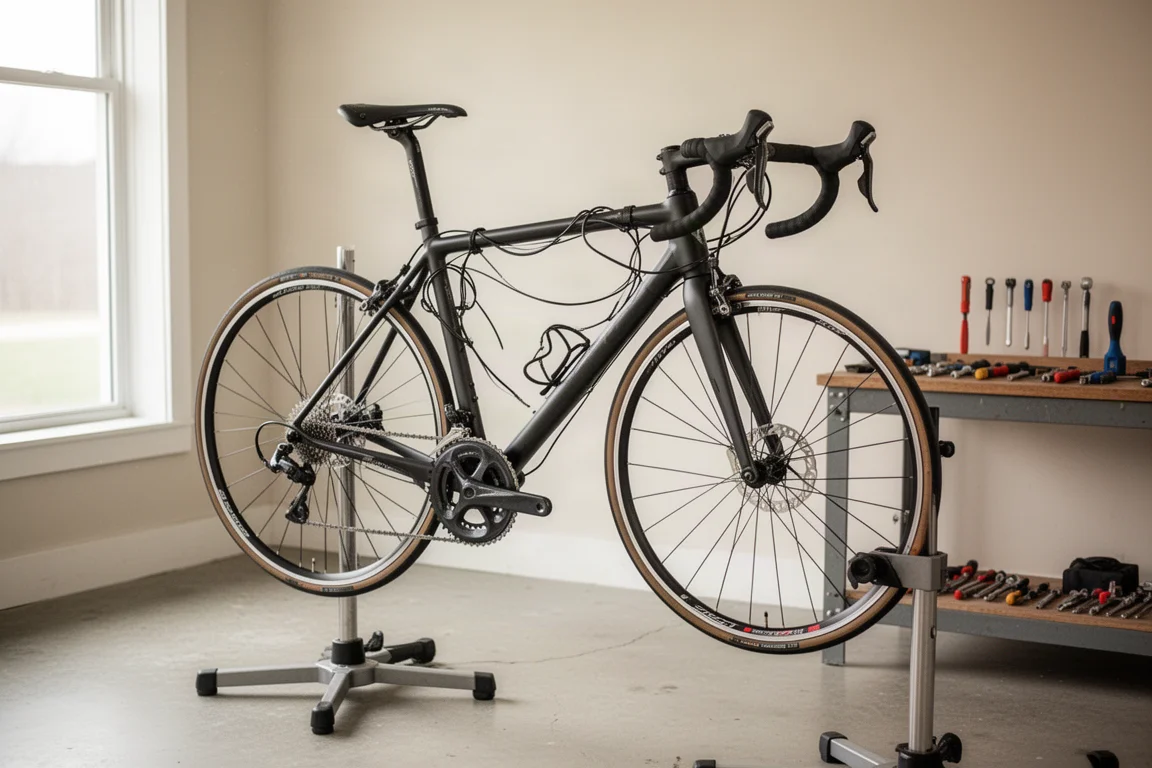
It is also worth budgeting for the parts the box does not include. A bottom bracket and rotor lock rings are needed to finish a build, and if you want matching 105-level carbon wheels, those are a separate purchase. Planning for them up front avoids surprises once the frame is on the stand.
Conclusion
Shimano’s claimed 2,992 g for the 105 Di2 R7150 groupset is backed by real numbers. Component by component, the parts come in within a gram or two of the published figures, and the measured total lands slightly below the claim once you account for a few missing pieces.
The wider story is that this groupset brings much of the Ultegra and Dura-Ace experience down a tier: shared battery architecture, wireless shifters, the newer caliper bleed layout, and a crank length range that has never been offered on 105 before. The trade-offs are real, most notably the extra weight and the simplified cassette shifting, but they are clearly defined rather than hidden. For riders who want electronic shifting without paying top-tier prices, it is an easy groupset to recommend with confidence.
Product link
View more details for Shimano 105 Di2 R7150 Groupset
This product is mentioned in the review. Check the specifications, options, and compatibility before buying.
View more details for Shimano 105 Di2 R7150 GroupsetFurther reading
Related Reviews
Road Bike Groupsets
Campagnolo Record 13 and Super Record 13 Review: Wireless 13-Speed, Two Ways
Campagnolo's new wireless 13-speed groupsets answer the criticism of the previous generation. Here is how Record 13 and Super Record 13 differ, and which one suits your riding.
Road Bike Groupsets
Campagnolo Record 13 vs Super Record 13: Which 13-Speed Wireless Groupset Is Worth It?
A practical look at Campagnolo's new 13-speed wireless groupsets, what separates Record 13 from Super Record 13, and which one suits your build.
Road Bike Groupsets
Campagnolo Super Record 13 Review: Wireless 2x13 With the Thumb Shifter Back
Campagnolo's first 2x13-speed wireless groupset brings back the thumb shifter, adds a wider gear range, and lands at a price that finally lines up with Shimano and SRAM.