Cycling Accessories
Seven Everyday Products That Are Surprisingly Useful for Cyclists
Seven inexpensive household items that make bike washing, drivetrain cleaning, shoe drying and cold-weather riding noticeably easier.
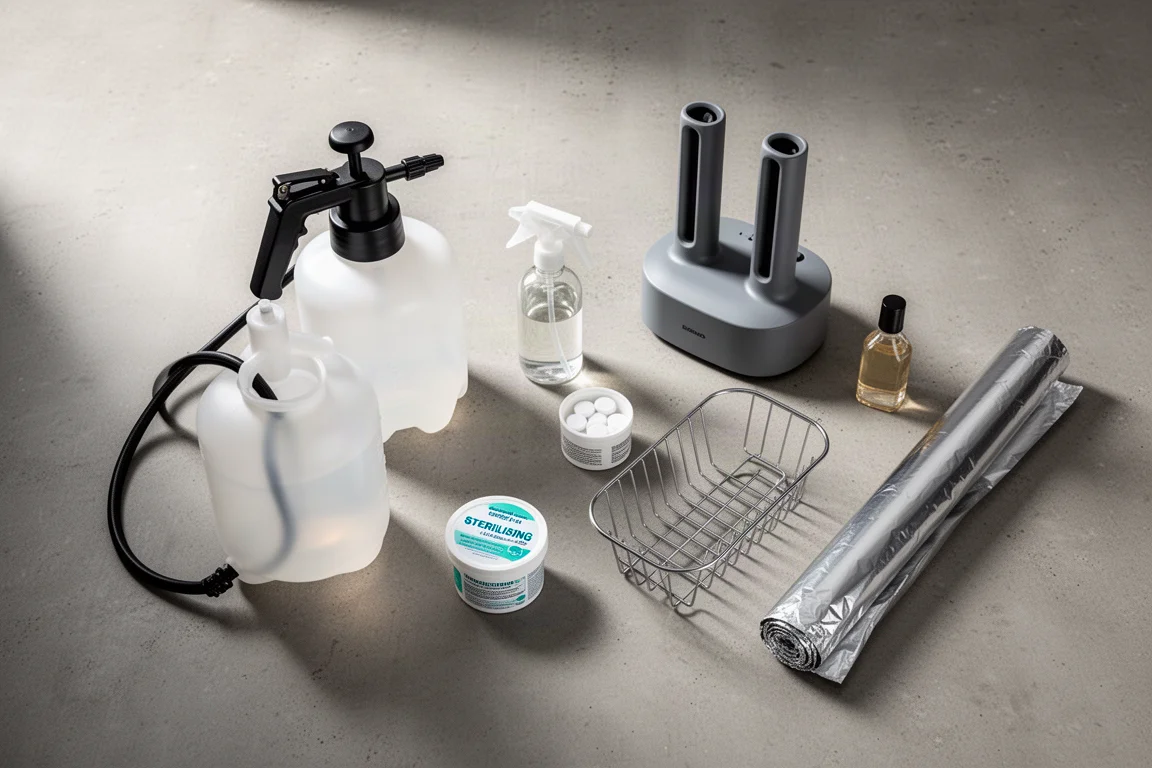
Introduction
Keeping a bike clean and comfortable does not have to mean buying dedicated cycling products. Several ordinary household items do the same jobs for a fraction of the price, and they are usually easier to find. The seven items below cover the chores that come up most often: washing a dirty bike without a garden hose, degreasing a drivetrain, drying wet shoes, cleaning bottles, protecting chipped paint and keeping feet warm on cold rides.
Most of them are already sitting in a supermarket, a hardware shop or a kitchen cupboard. The point is not to replace proper bike care, but to handle the everyday jobs simply and cheaply.
Hand Pump Pressure Sprayer: A Portable Bike Washer
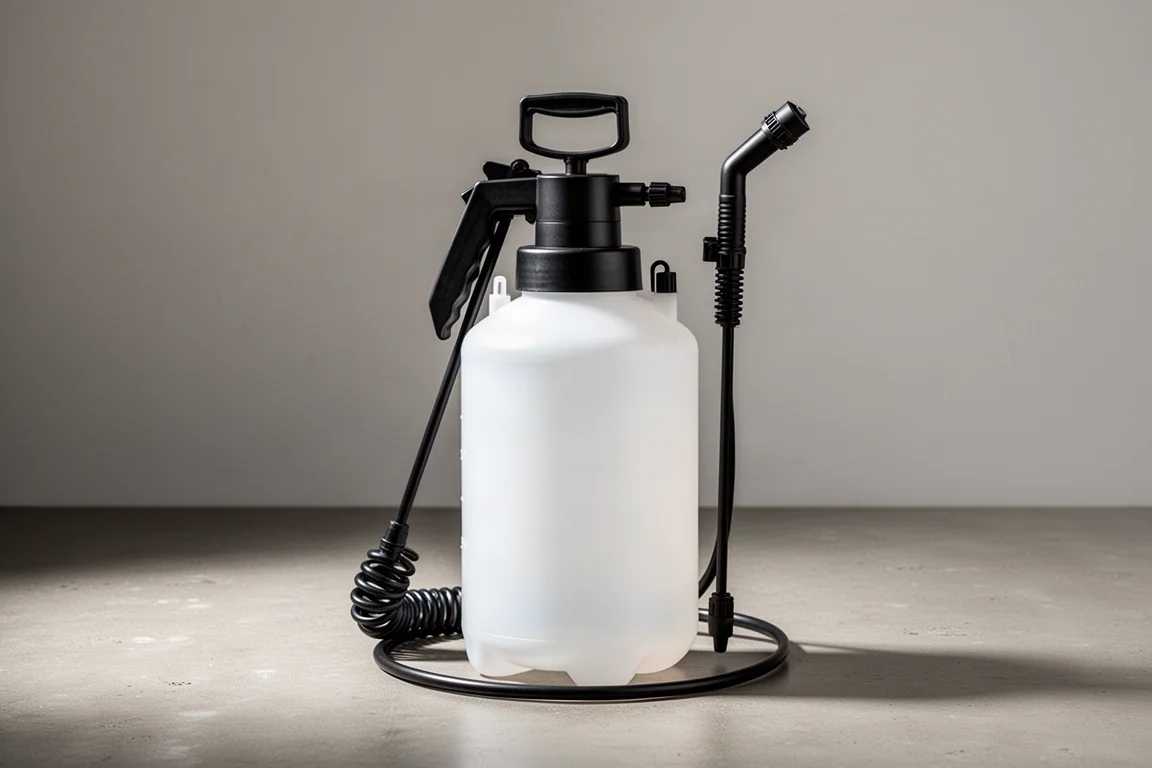
A five litre hand pump pressure sprayer is normally sold for stripping wallpaper, watering plants or spreading lawn chemicals. Used as a portable bike washer, it turns out to be surprisingly effective, particularly for riders who live in an apartment or flat with no garden tap to connect a hose to. Fill the bottle with hot water, carry it to a car park or other open space, and clean the bike there.
The nozzle at the end adjusts the spray pattern, and a pressure relief valve releases excess pressure if the bottle is pumped too hard. A small feature at the trigger allows continuous spraying, so the button does not have to be held down for the whole wash. The output carries enough force to dislodge large pieces of dirt while staying gentle enough not to penetrate bearing seals.
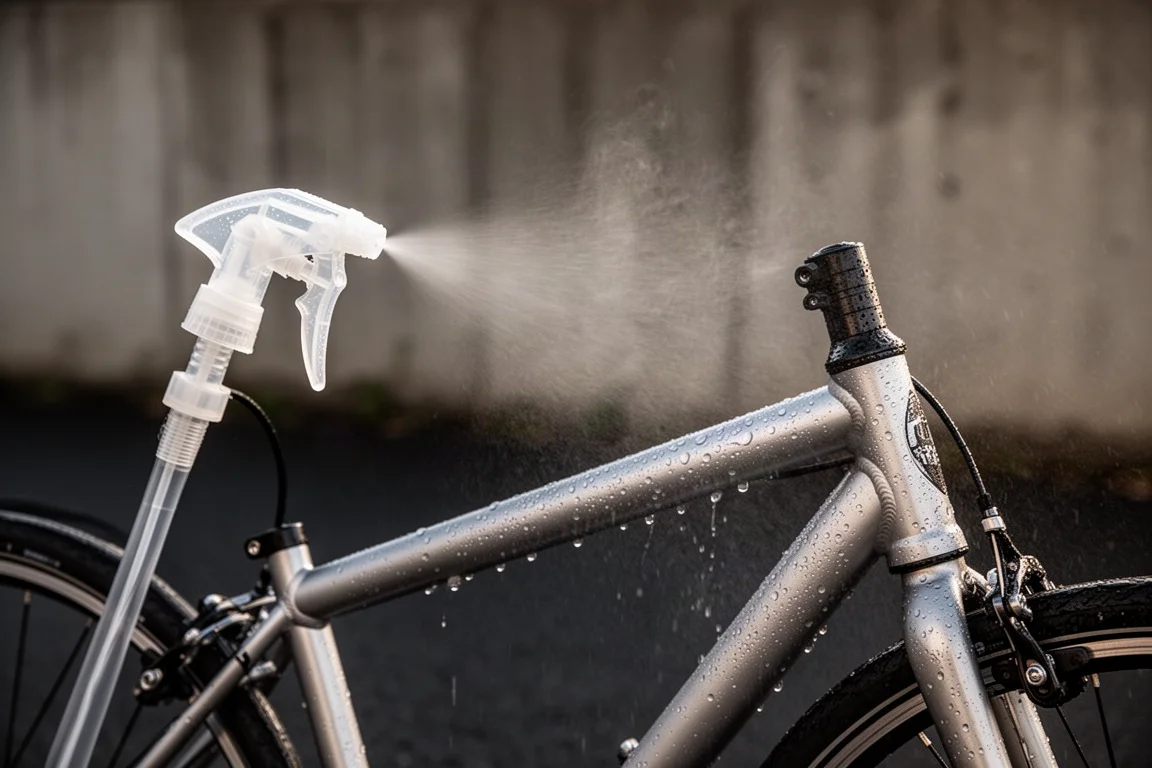
Smaller hand pump sprayers are worth considering alongside the larger unit. Filled with a bike cleaning concentrate and hot water, they work like a pseudo snow cannon, covering the frame more evenly than the usual pump action bottle. A practical routine is to add concentrate to the smaller bottle, top it up with hot water, cover the bike, then rinse with the five litre sprayer.
Isopropyl Alcohol: A Cheaper Degreaser
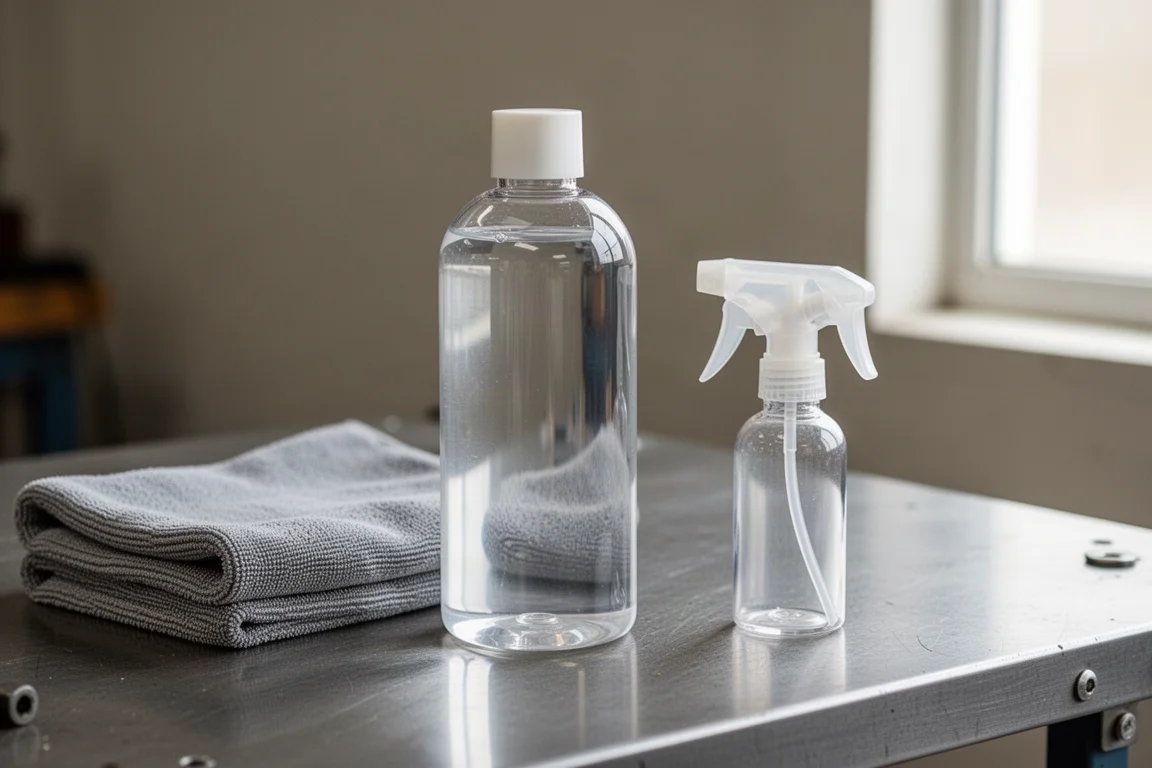
Isopropyl alcohol has been a workshop staple for years as a substitute for more expensive cycling branded cleaners. It is very close to what is typically found in cans of disc brake cleaner. The aerosol version is pressurised, which makes blasting away dirt and grime easier, but a plain bottle costs less and cuts down on disposable cans.
Apply it directly to components with a cloth, or decant it into one of the small hand pump sprayers for jobs such as cleaning a chainset or rotors. Car mechanics often work the same way when they need to degrease components in place.
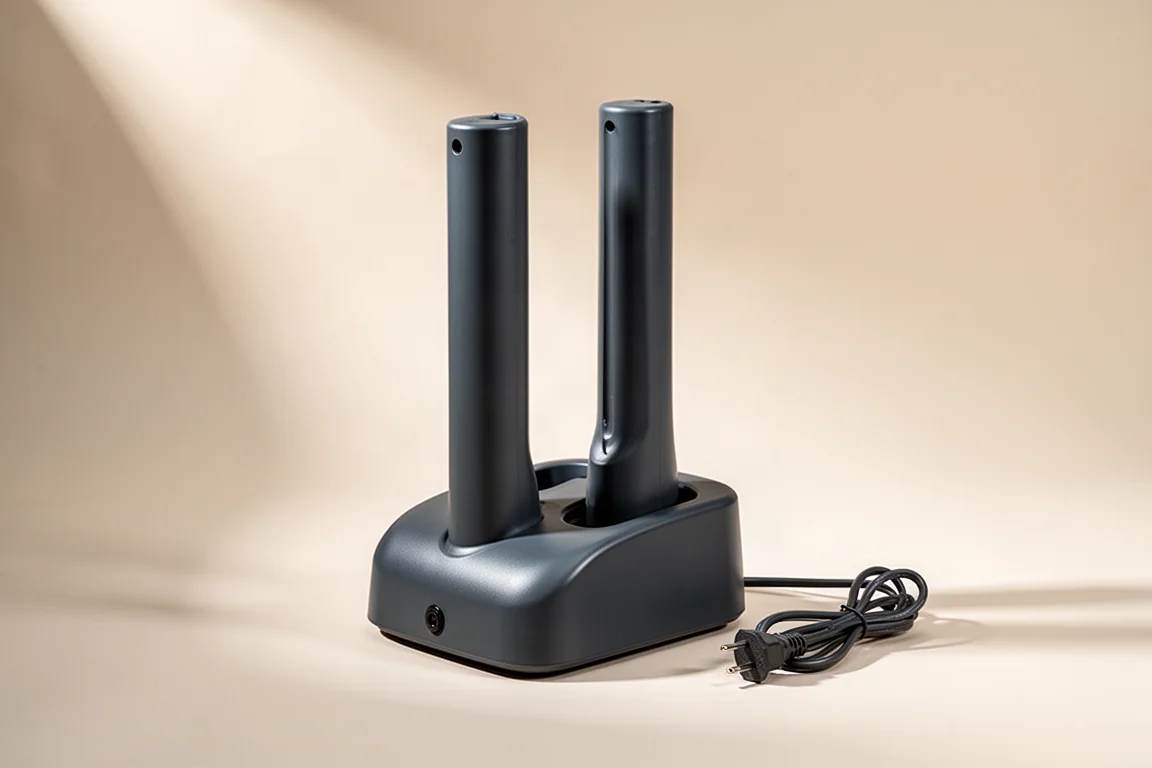
Boot Dryer: Dry Wet Cycling Shoes
Riding in the rain is not much fun, and heading out again while the shoes are still soaked is worse. A boot dryer solves that problem. It was originally designed for hikers, walkers and snow sports, and it could hardly be simpler to use: switch it on and slide the shoes into place. They come out completely dry, which makes the next ride far more pleasant.
Keeping shoes dry also helps prevent the damp, musty smell that builds up in wet cycling footwear. Riders with particularly smelly shoes may prefer to run the dryer in the garage rather than indoors.
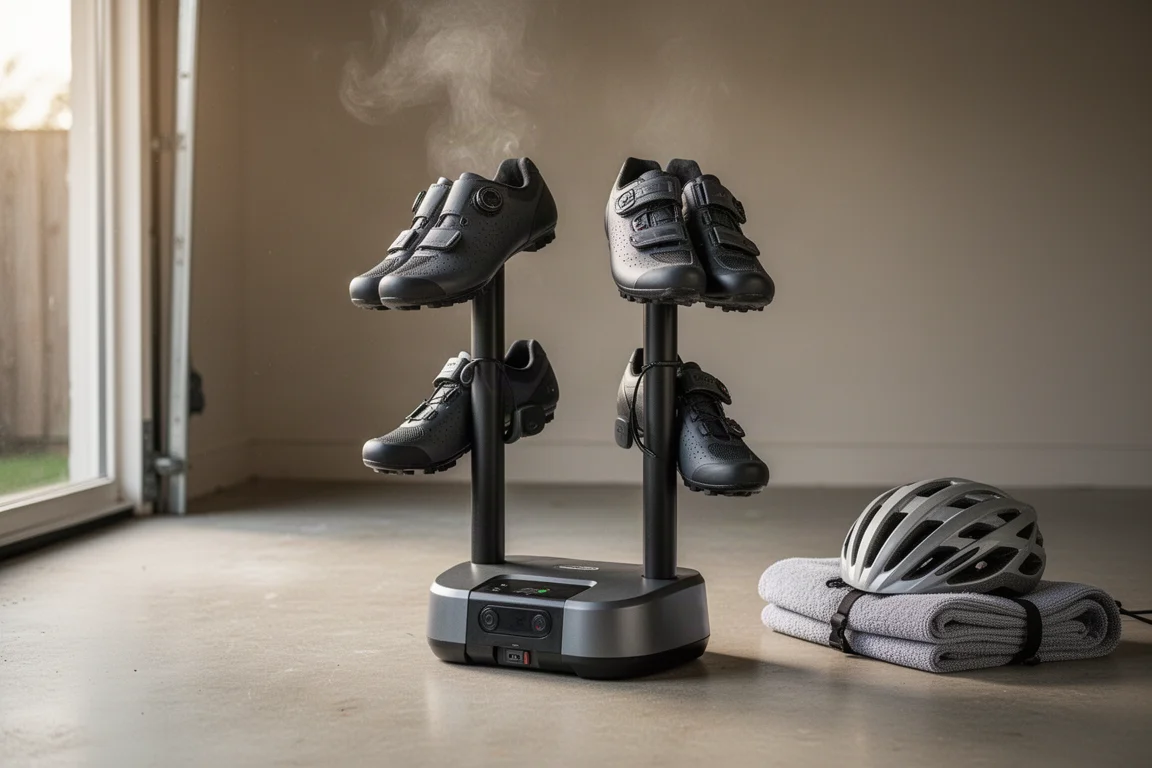
The appeal is how little effort it takes. Turn it on, slide the shoes over the posts and leave them to dry. For anyone who commutes through winter or rides in wet conditions several times a week, that small habit changes how the next ride starts.
Milton Tablets: Clean and Sterilise Your Bottles
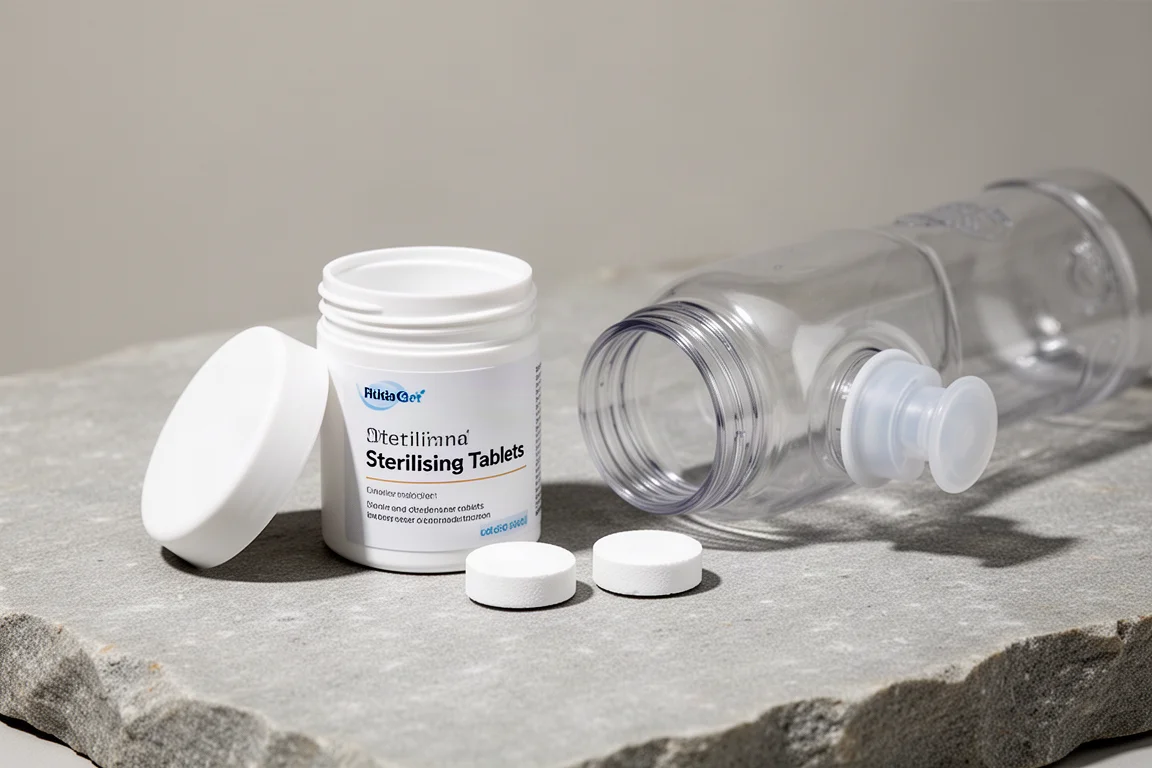
Most cyclists own more bottles than they know what to do with, and all too often one is pushed to the back of a cupboard when a dark patch appears at the bottom that seems impossible to clean. Milton tablets clean and sterilise bottles, keeping them in good condition. They are usually bought for baby bottles, but the same idea works for bike bottles.
Drop a tablet into the bottle, add water and let it fizz away and do its work. When emptying it out, put the lid back on and squeeze the solution back through the mouthpiece so that part gets a thorough clean as well.
Bottle Drainer: Faster Drying and Better Ventilation
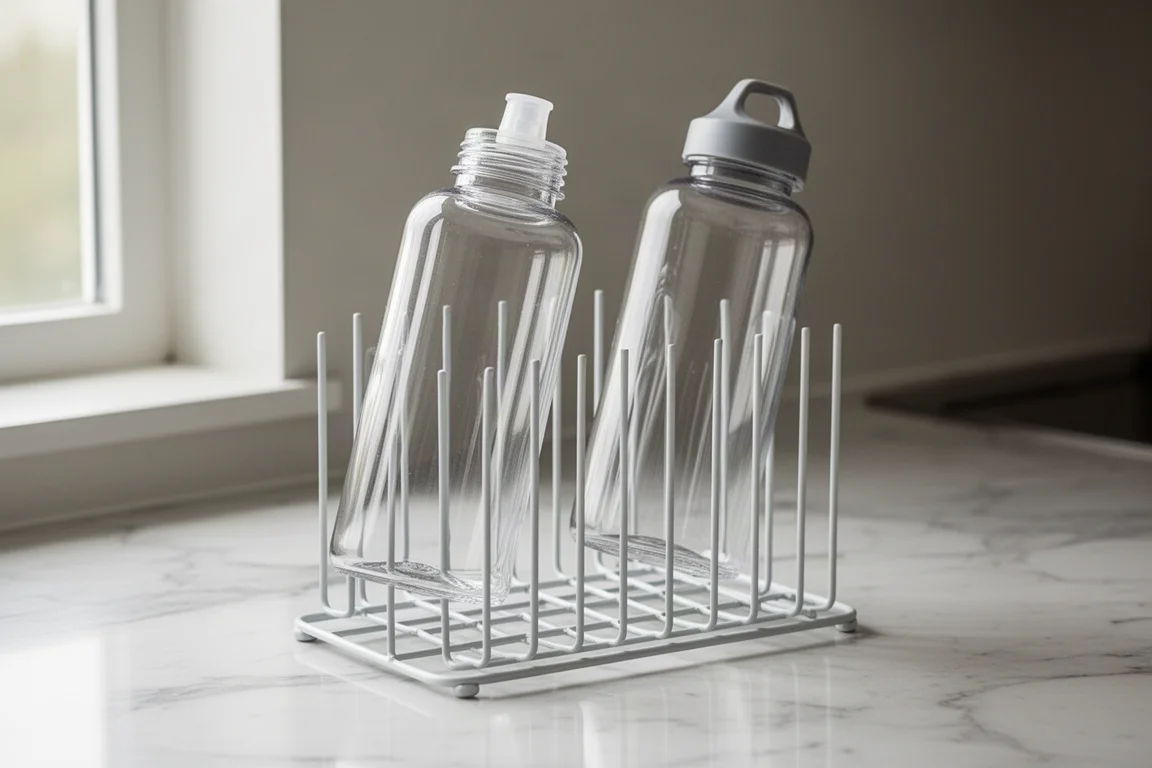
Once bottles are clean, a bottle drainer helps them dry faster. Standing them upside down gives more ventilation inside the bottle, which helps them smell fresher between rides.
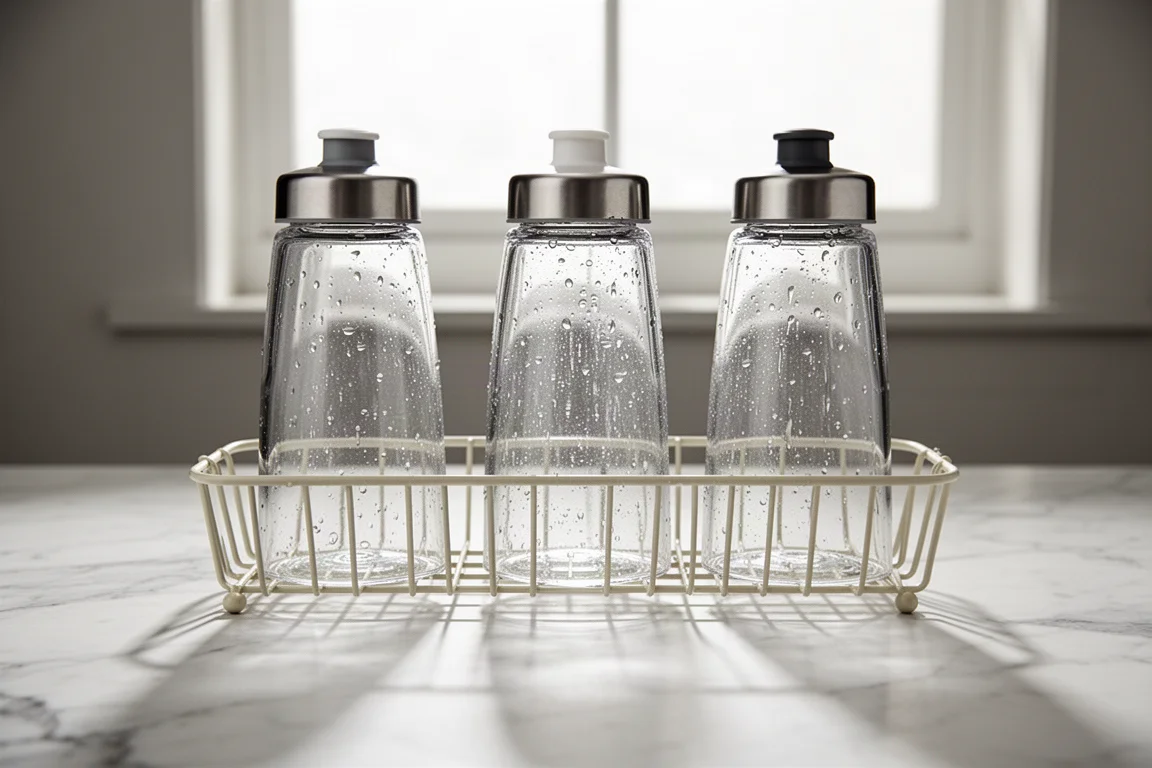
The other benefit is a tidier worktop. A drainer keeps a set of bottles standing together instead of scattered across the counter, and it adds a small touch of colour to a kitchen that doubles as a bike cleaning station.
Clear Nail Varnish: Protect Chipped Paint
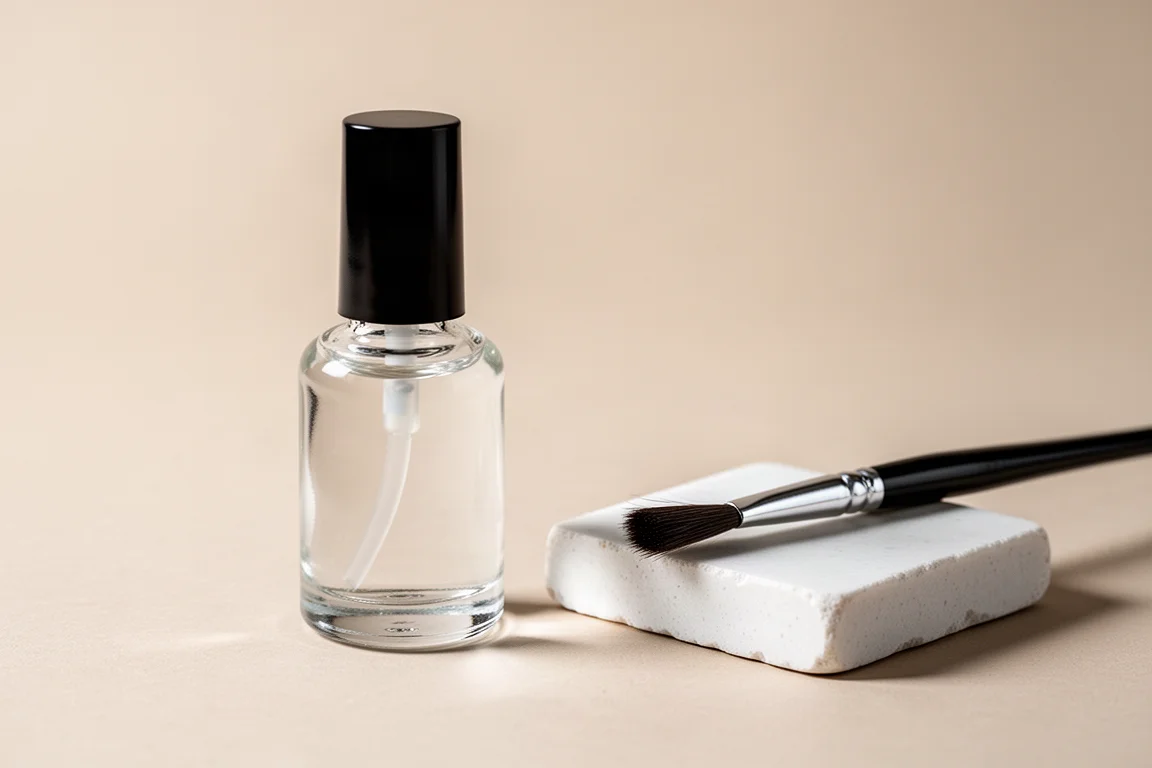
A chip in a bike’s paint is annoying twice over. There is the disappointment of a battle scar on a frame that no longer looks its best, and there is the risk that the material underneath begins to corrode. When touch up paint in the right colour cannot be found, clear nail varnish is a practical substitute. Dabbing it over the chip seals the exposed area against the weather.
Carbon fibre owners should not skip this step either. Carbon itself cannot corrode, but a layer of varnish gives the surrounding paint a little more strength and may help prevent the chip from spreading further.
Tin Foil: A Simple Cold-Weather Trick
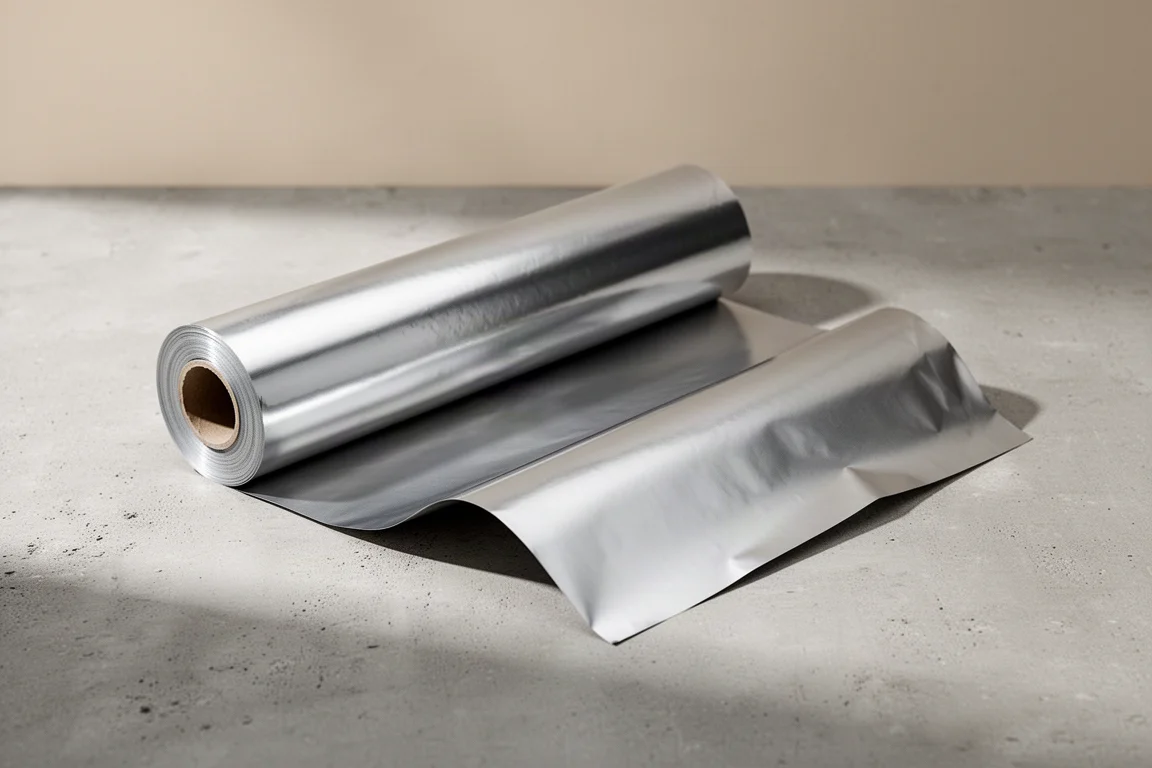
Late winter still delivers cold rides, and feet are usually the first thing to suffer. If overshoes feel like too much of an expense, kitchen foil placed inside the shoes is a simple alternative. It blocks wind coming through the upper and adds insulation, which can be the difference between cold toes and losing feeling in them altogether.
It costs almost nothing to try, and it is easy to remove once the weather warms up.
Overall Buying Advice
None of these items is a performance upgrade, and that is exactly the point. Each one solves a small, recurring problem for very little money, and most are sold in supermarkets or hardware shops rather than bike shops. Start with the job that bothers you most: a portable sprayer for riders with no outdoor tap, isopropyl alcohol for drivetrain cleaning, a boot dryer for wet winter shoes, sterilising tablets and a drainer for bottles, clear varnish for frame chips and foil for cold feet.
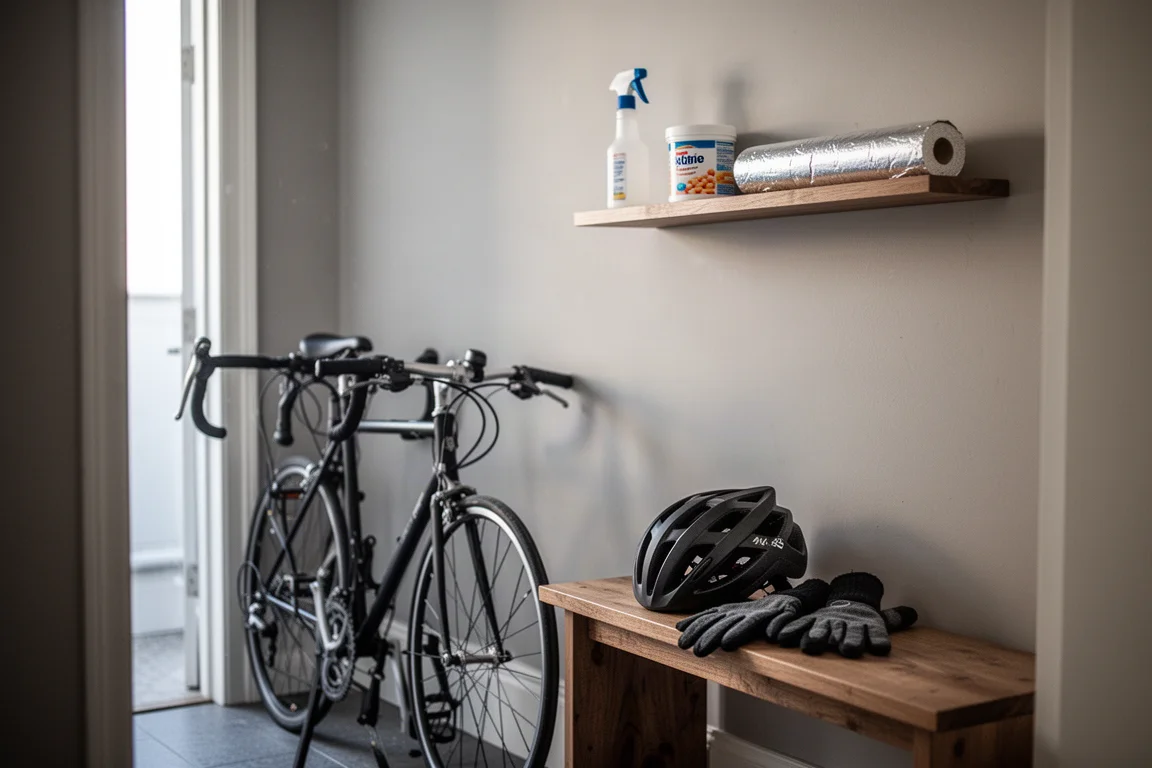
If you are choosing just one or two, think about which problem repeats most often in your own riding. A rider who washes a bike in a car park will notice the sprayer immediately, while someone who commutes through winter will get more value from a boot dryer. Buying for the routine you actually have is what stops a cheap purchase from becoming clutter.
Conclusion
Seven ordinary products, none of them marketed specifically at cyclists, cover most of the unglamorous jobs that come with riding regularly. They cost little, they are easy to replace, and they leave more of the budget for the parts of the bike that genuinely change how it rides.
Further reading
Related Reviews
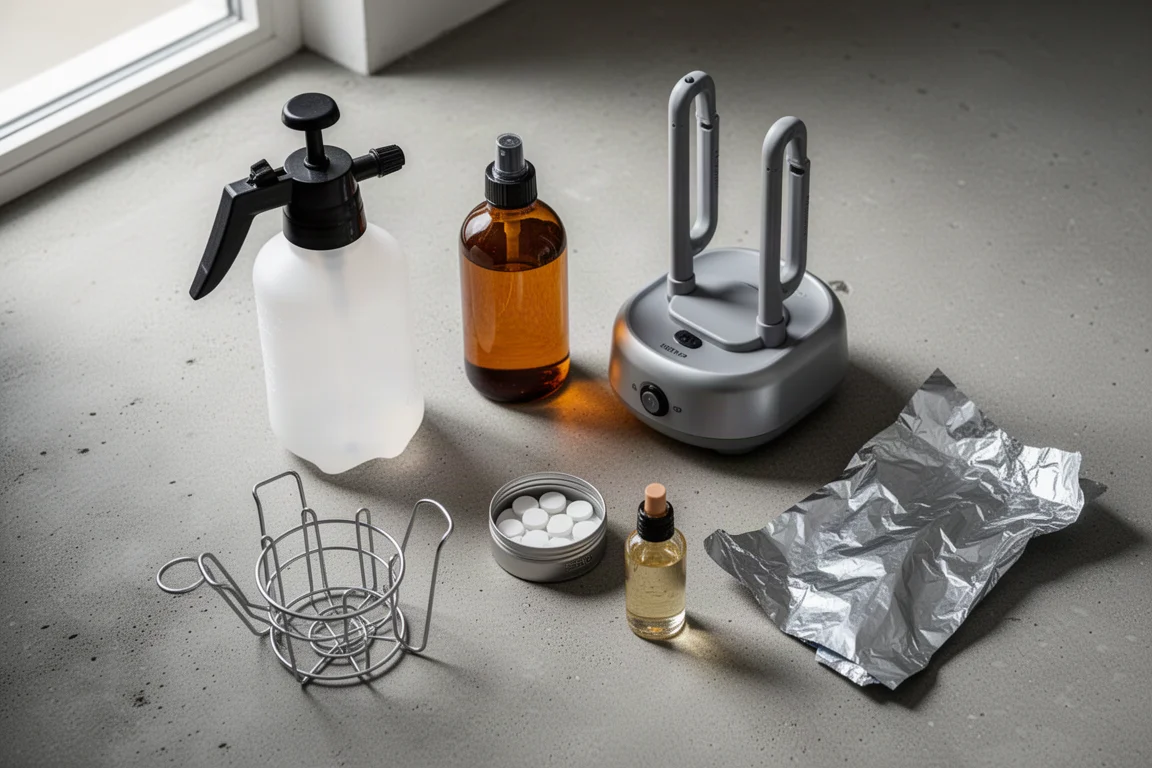
Cycling Accessories
7 Inexpensive Everyday Products That Are Brilliant for Cyclists
Seven cheap household products that solve real problems for cyclists, from portable bike washing and dry shoes to clean bottles and protected paintwork.
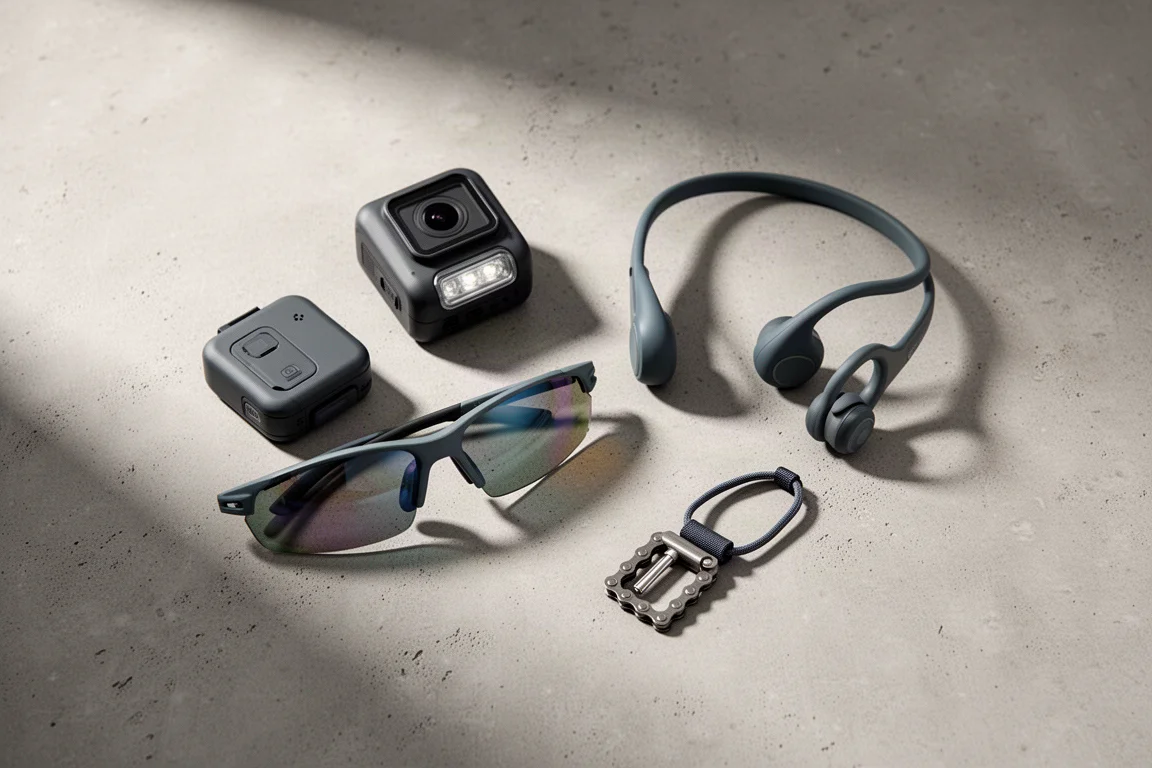
Cycling Accessories
Amazon Cycling Accessories Worth Buying: Five Practical Picks
A basket of low-cost cycling accessories judged on real-world use, from a dash cam style camera and light combo to bone conduction headphones and one tool best left on the shelf.
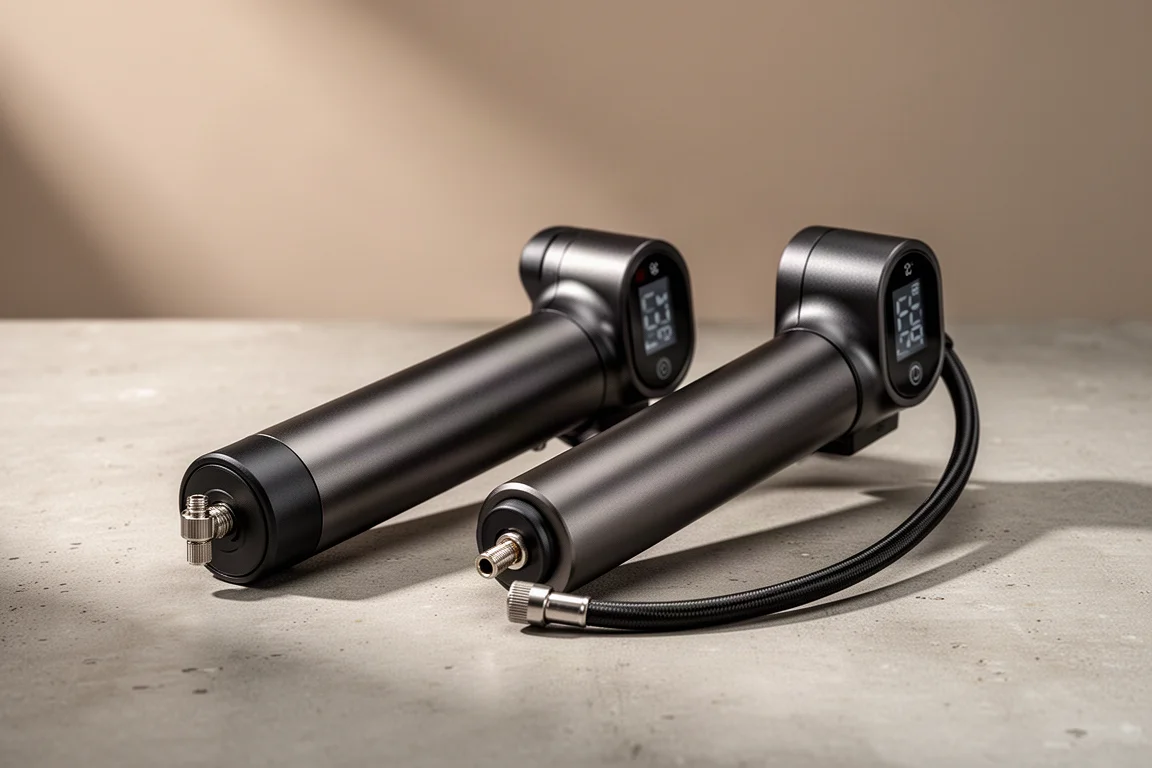
Cycling Accessories
Electric Bike Pumps Compared: AS2 Pro Tiny Pump vs AS2 Pro Max
A practical look at two battery-powered bike pumps: what they do well, where they fall short, and which one suits which kind of rider.