Aquarium Test Kits
Seachem Reef Status Strontium Test Kit Review: Precise Strontium Testing for Reef Tanks
A practical look at the Seachem Reef Status Strontium test kit, covering its 0.5 ppm resolution, included reference solution, six-stage procedure and the safety details worth knowing before you buy.
Introduction
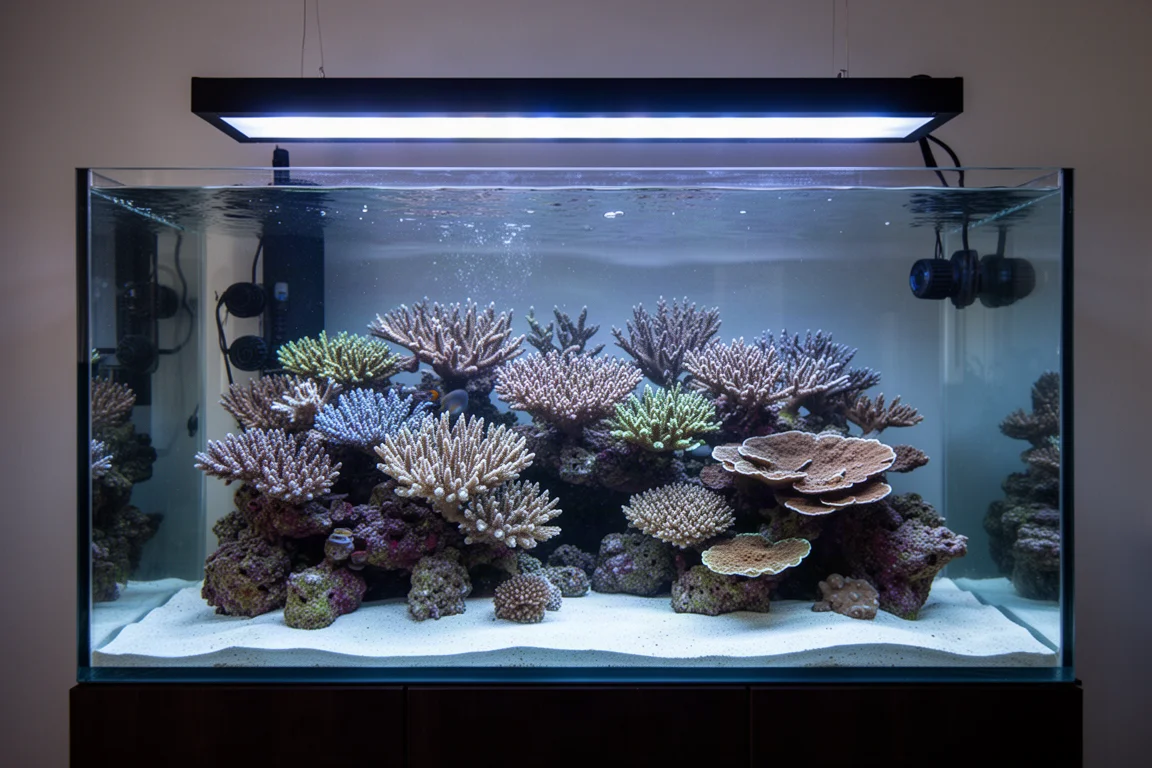
Strontium is an element found in seawater whose molecular shape is similar to calcium and magnesium, and it appears to play a comparable role in the formation of aragonite coral skeletons, as well as in the shells, bones and bodies of other marine organisms. Whether strontium dosing delivers real gains is still a subject of debate, but many reef keepers report that holding natural or slightly elevated strontium levels supports faster growth in LPS and SPS corals, while levels below natural seawater can slow growth down.
For most tanks, regular water changes keep strontium in a workable range. Aquariums with fast-growing SPS colonies or densely packed LPS collections are more likely to run below natural seawater and may benefit from dosing. As with any element added to a reef, the sensible order of operations is to test first: know the current level, decide whether it needs raising, and only then work out how much to add. Trace element additives can already contain strontium, so layering a separate strontium product on top without testing risks pushing the level too high.
The Seachem Reef Status Strontium Test Kit is built for exactly that job. It reads strontium in 0.5 ppm increments, far finer than the 5 ppm increments common to many strontium test kits, and it includes a reference solution so you can verify your technique before trusting a reading from your tank.
Who This Product Is For
This kit makes the most sense for reef keepers who already care about fine-grained water chemistry. If you run a high-growth SPS system, keep a densely packed LPS tank, or dose trace elements and want to know what is actually accumulating in the water, a strontium test that resolves to 0.5 ppm is a practical tool. The natural seawater range of roughly 7 to 9 ppm is narrow, and a kit that only reads in 5 ppm steps makes it hard to tell whether you are sitting inside that window or drifting above it.
ICP testing remains the easiest route to a strontium number, but it is not the most economical option for anyone testing frequently and adjusting a dose in response. A bench test kit fills that gap. It is also worth saying that this is not equipment for someone who will run it once and forget it: it rewards the kind of keeper who tests on a schedule and lets the results drive dosing decisions.
What Comes in the Kit
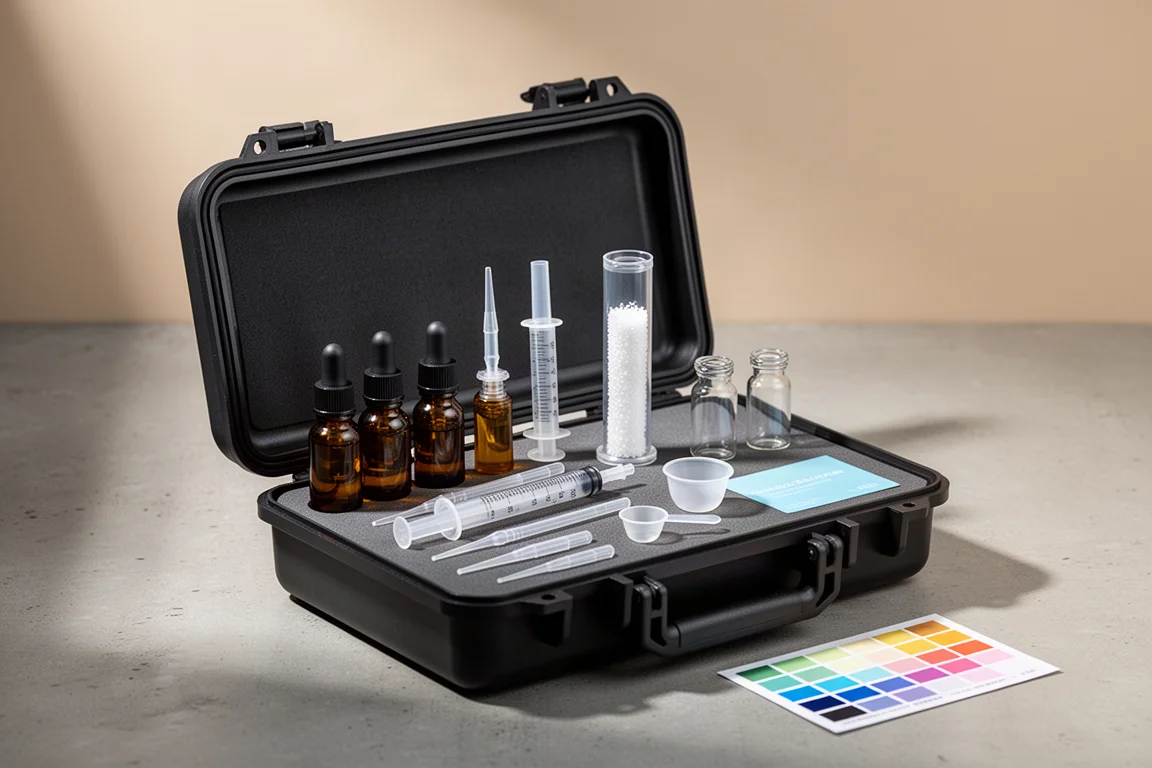
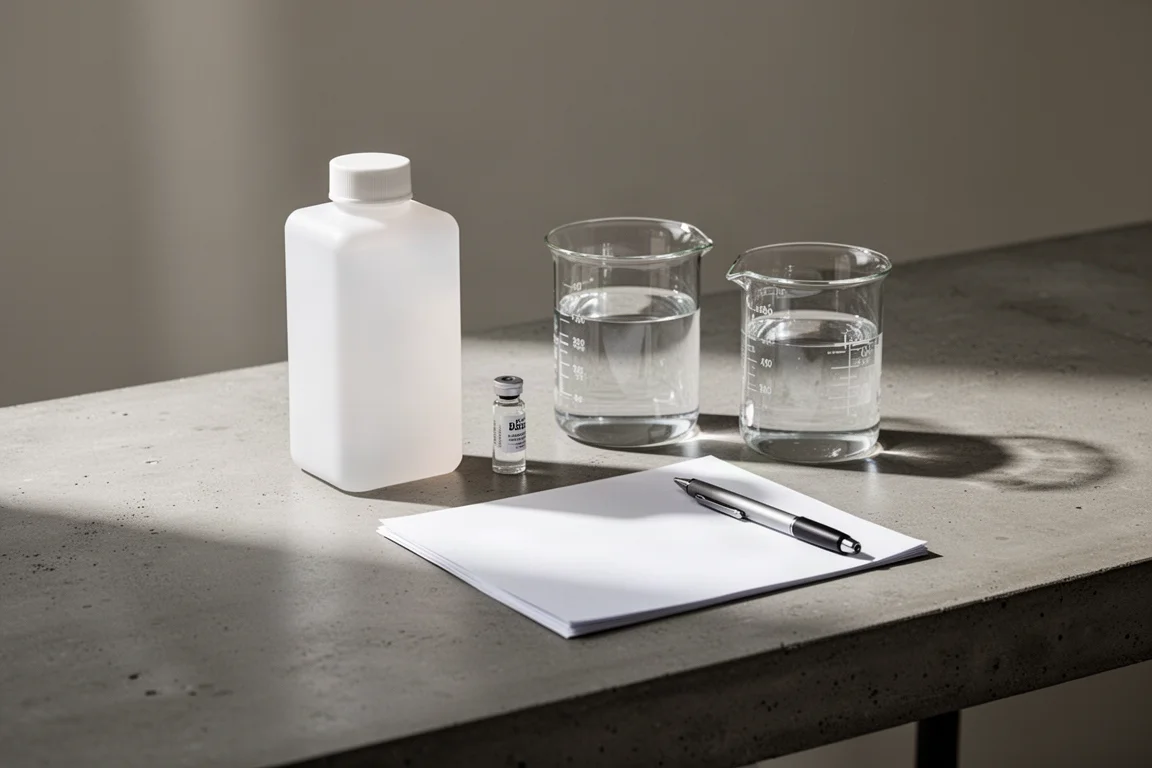
Everything arrives packed in a hard case with a rubber gasket, which is a genuinely useful detail for a kit containing glass and a strong acid. Inside the case you will find strontium reagents one through five, the strontium titrant and a reference solution, along with a sample vial, a graduated pipette, a non-graduated pipette, a separation column, a separation column plunger, a micro scoop, a collection vial and cap, a colour chip and a titration syringe.
Reagent one deserves particular attention. It is a very strong acid, and Seachem includes simple personal protection equipment for use during the test. The bottle is shipped inside a second container filled with vermiculite and a neutralizing agent in case of leaks in transit. It is worth keeping baking soda on hand while you work, so an accidental drip can be dealt with immediately.
Main Strengths
The case for this kit comes down to precision, verification and the way the equipment is organised.
0.5 ppm Resolution for Tighter Dosing
The headline feature is resolution. The kit reads strontium in 0.5 ppm increments, roughly ten times finer than competing kits that step in 5 ppm increments. For a parameter with a natural range of 7 to 9 ppm, that difference matters: a 5 ppm reading leaves you guessing whether you are at 7, 10 or somewhere in between, while a 0.5 ppm reading tells you where you actually sit and how a dose is moving the number over time.
That level of resolution is what makes precise, incremental dosing realistic. Instead of making a large correction and hoping, you can nudge the level and confirm the effect on the next test.
A Reference Solution and a Well-Organised Case
The included reference solution is the second strong point. The procedure is more involved than an average test kit and may take a practice run or two before it feels natural, so being able to run the whole method against a known solution first is a real advantage. You can confirm your technique produces the right answer before interpreting a result from your own tank.
The hard case keeps the reagents, glassware and titration syringe together and protected between tests. Given the number of small parts involved, storage matters as much as the chemistry.
Running the Test: What the Six Stages Involve
The test takes about ten minutes and moves through six stages: pre-wetting, absorption, wash, elution, adding reagents and finally titrating. Before starting, set out fresh RODI water, your protective equipment, a little baking soda and a clear work surface.
Pre-wetting begins with the graduated syringe, which holds a white cotton-like filtration material and is referred to as the separation column. After rinsing the non-graduated pipette with RODI water, you fill the column to the 1 mL mark and flush the water through with the plunger, bottoming it out into the filtration material without forcing it, since compressing that material would affect the results.
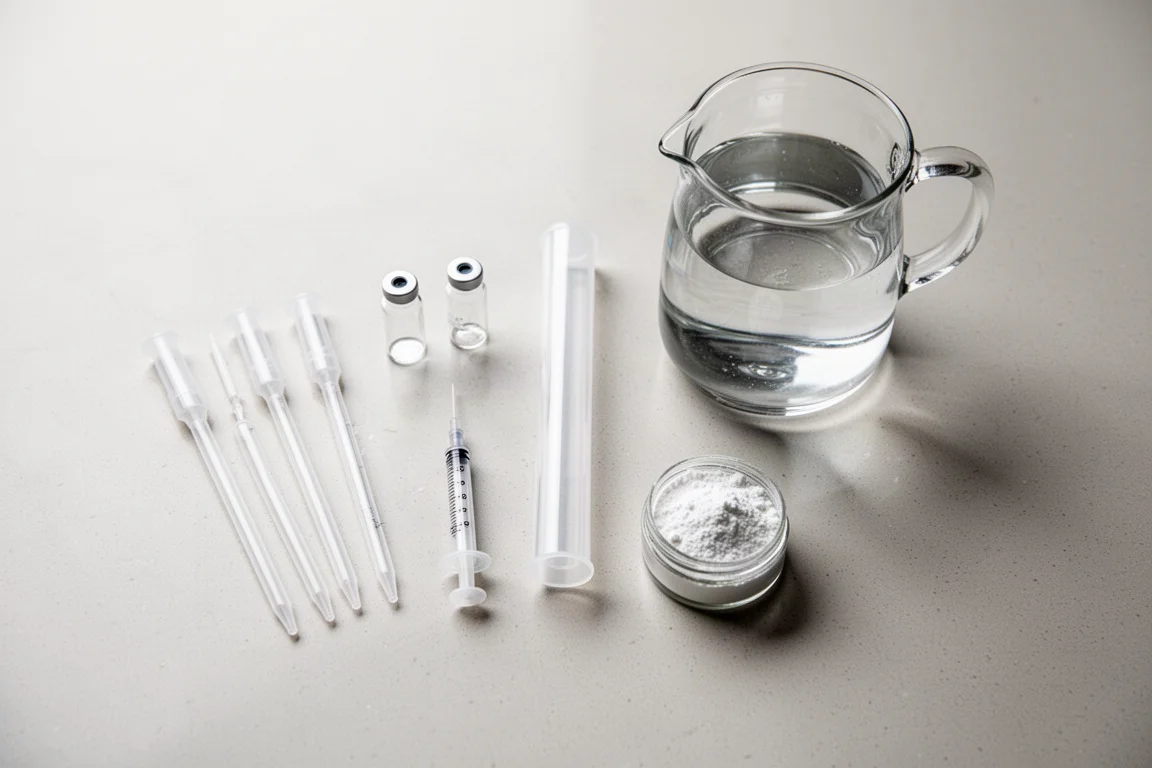
From there, the graduated pipette measures 1 mL of sample water, either from the aquarium or from the reference solution if you are practising. The sample goes into the vial, strontium reagent one is added with the non-graduated pipette, the collection vial cap is attached and the separation column is seated into the hole. The sample is transferred into the column and left to drain on its own, with no pushing, which takes a moment. While it drips, you prepare the wash solution by rinsing the vial and both pipettes with RODI water and repeating the earlier steps using RODI in place of tank water.
Once the column has finished draining, the wash solution is added and pushed through with the plunger, which takes less than five seconds. The liquid in the collection vial is then discarded, which feels counter-intuitive the first time, because the strontium you want to measure is being held inside the separation column. The elution stage brings it back into liquid: RODI water is added to the column and pushed through into the sample vial, repeating until the vial is full to the top, and that contents are then poured into the collection vial.
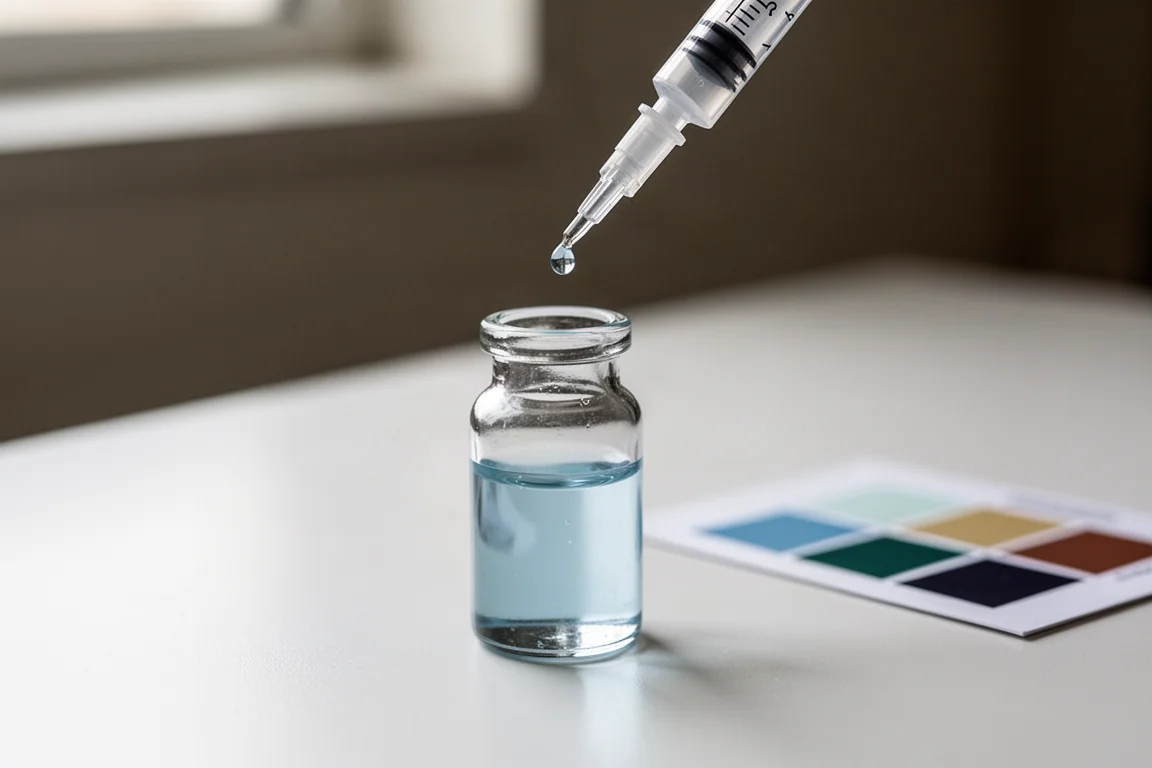
The final stages will feel familiar to anyone who has run a titration kit. One scoop of reagent two goes in and is shaken until dissolved, followed by two drops of reagent three, one drop of reagent four and one drop of reagent five, mixing between each. After a two-minute wait, the titration syringe is filled to the 1 mL line, the collection vial is placed on the colour chip, and titration solution is added one drop at a time with shaking between drops until the solution shifts from light blue to the darker blue shown on the chip. The volume of titration solution used is then matched against the supplied chart to give your strontium reading.
Things to Consider Before Buying
The procedure is not difficult, but it is not a two-minute dip test either. Six stages, a separation column and a drop-by-drop titration mean the kit asks for a clean workspace, some patience and a willingness to follow instructions closely. Budget for a practice run or two on the reference solution before you start drawing conclusions about your tank.
Reagent one is a very strong acid, so the kit comes with protective equipment and the secondary storage container described above for a reason. Treat the handling instructions seriously and keep baking soda nearby. The kit also depends on a steady supply of fresh RODI water, since it is used for rinsing and for the wash and elution steps.
Finally, there is the question of necessity. Reef keepers who maintain strontium through frequent water changes may never need a test kit at all. The value case is strongest for tanks that consume strontium quickly or that already run trace element dosing.
Buying Advice
Strontium is worth testing before it is worth dosing. If you have never measured it, the first useful step is a baseline reading, and the 0.5 ppm resolution here gives you a genuine picture of where your tank sits relative to the natural 7 to 9 ppm range. From there you can decide whether an additive is needed, how much to add, and whether a trace element product you already use is quietly supplying strontium on its own.
If you only want an occasional number, ICP testing is the easier path and requires no equipment. The case for this kit is frequency and control: repeatable readings that let you tune a dose rather than guess at it. For keepers chasing maximum growth from SPS and LPS corals, or anyone who enjoys the chemistry side of the hobby, that trade is a reasonable one.
Conclusion
The Seachem Reef Status Strontium Test Kit targets a narrow but real need. It reads strontium at 0.5 ppm, roughly ten times finer than common alternatives, includes a reference solution for verifying technique, and packs the whole procedure into a gasketed hard case that keeps the parts together. The trade-offs are a multi-stage, ten-minute procedure with a strong acid reagent, plus a learning curve that may take a practice test or two to smooth out. For reef keepers who dose trace elements and want to hold strontium inside the natural range, it is a considered, precise tool rather than an impulse buy.
Product link
View more details for Seachem Reef Status Strontium Test Kit
This product is mentioned in the review. Check the specifications, options, and compatibility before buying.
View more details for Seachem Reef Status Strontium Test KitFurther reading
Related Reviews
Aquarium Test Kits
Best Hanna Checkers for Reef Tanks: Five Digital Test Kits Explained
A practical look at five Hanna digital checkers for reef aquariums, which ones belong in every routine, and the habits that keep results reliable.
Aquarium Test Kits
Best Saltwater Test Kits for Reef Tanks: Four Kits Worth Buying
A practical guide to the reef tank parameters worth testing, plus four kits that make alkalinity, calcium, nitrate, and phosphate testing faster and easier to read.
Aquarium Test Kits
Hanna High Range Copper Checker Review: Digital Copper Testing for Aquariums
A handheld digital photometer that measures aquarium copper from 0 to 5.00 ppm in under two minutes, so copper treatments stay measurable.