Cycling
Scott Foil 20 Frame Set Review: An Aero Build With Fully Hydraulic 1x12 Shifting
A close look at a Scott Foil 20 frame set build, covering the aero frame, integrated cockpit, Rotor hydraulic 1x12 drivetrain, finishing kit, and the practical points to weigh before buying.
Introduction
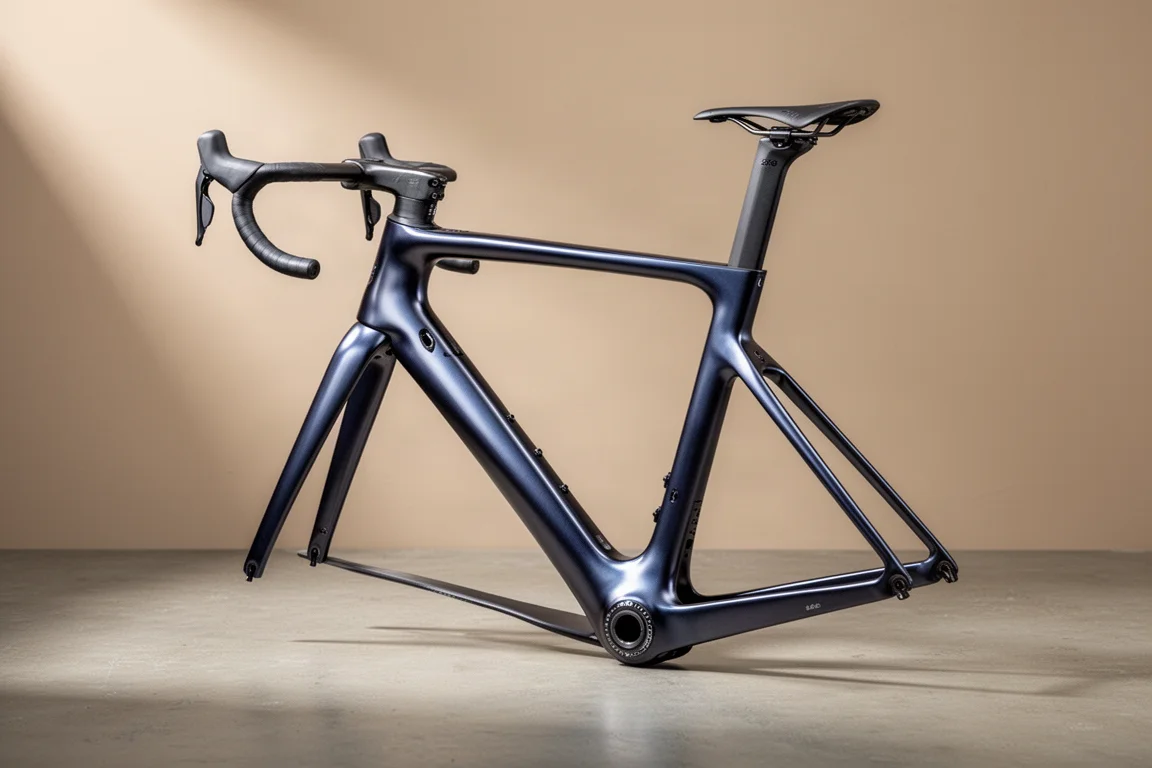
The Scott Foil 20 frame set is the starting point for an aero road build that leans heavily on integration. The frame arrives with a one-piece bar and stem, an integrated seat post, and a Syncros saddle, so most of the contact points are decided before a single component is bolted on.
This particular build took a different route than a standard off-the-shelf groupset. With supply shortages affecting the cycling industry, the drivetrain came from Rotor instead: a fully hydraulic 1x12 system in which both the brakes and the shifting run on fluid. The frame set itself is a size small, and the geometry sits close enough to a previous bike that a fully slammed position still works well.
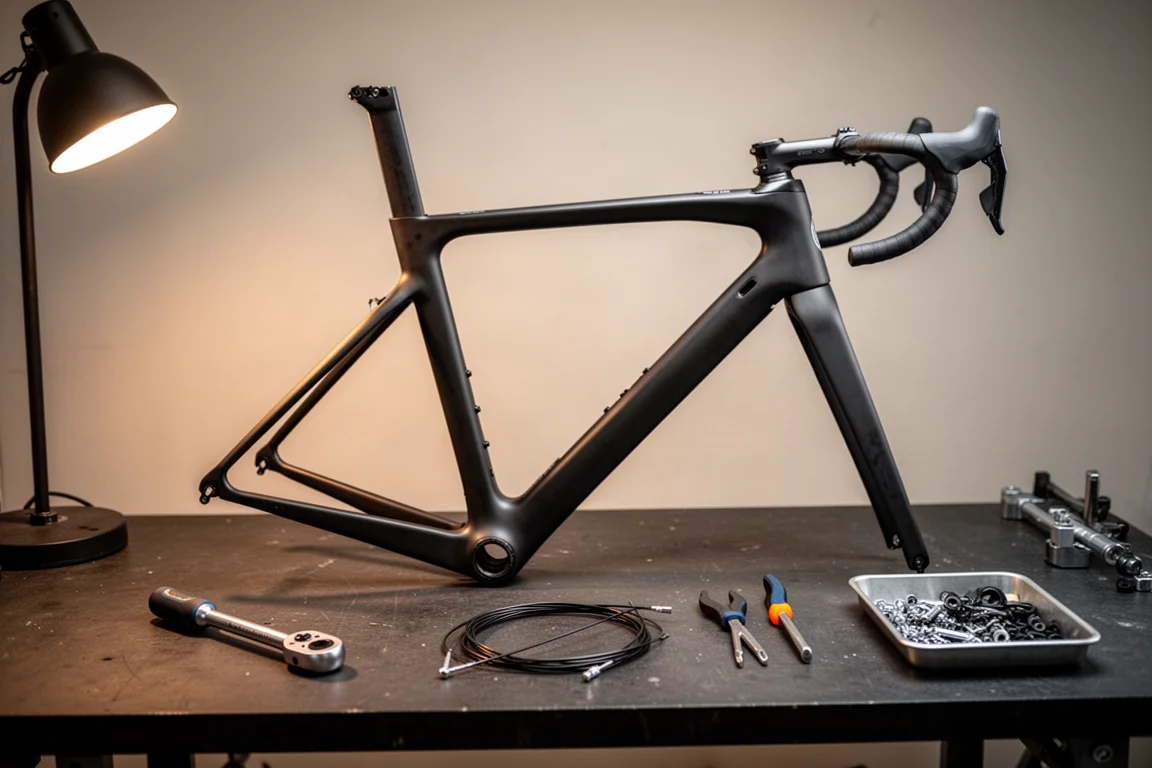
The result, once assembled, came in at almost exactly 7.5 kilograms with bottle cages and power pedals fitted. That is a strong figure for an aero platform, and it reflects how much of the specification has been pared back in the name of integration.
Who This Frame Set Is For
This is a frame set for riders who want aerodynamic efficiency and are comfortable with a one-by drivetrain. Because the Foil range shares the same core carbon frame across most of its models, the Foil 20 gives access to the same underlying platform used higher up the line, including the frame raced at WorldTour level. The difference at the top of the range comes down to the ultimate version, which uses a different grade of carbon.
It also suits riders who value a clean front end. The integrated bar and stem removes the usual tangle of hardware, and the integrated seat post keeps the silhouette tidy. Anyone who prefers to swap stems and bars frequently, or who wants a wide spread of front gearing, may find a more conventional setup easier to live with.
Main Strengths: Aero Frame, Integrated Cockpit, and Fit
The core of the build is the frame itself. Across the Foil range, most frame sets use the same grade of carbon fibre, which means the Foil 20 is effectively the same frame that the brand’s WorldTour team races, with only the very top model stepping up to a different material.
Up front, the integrated bar and stem measures 100 millimetres in length with a bar quoted at 42 centimetres measured outside to outside, which works out to 40 centimetres centre to centre. A stack of spacers is supplied, and the build currently runs one centimetre of spacer under the stem, finished with an aero cap that covers the hardware and keeps the profile smooth.
At the rear, the integrated seat post carries a Syncros Belcarra saddle, a short-nose design with a pressure relief channel running down the middle. Combined with a geometry that is not far from the previous bike, the rider was able to run the position completely slammed and still sit comfortably.
The Hydraulic 1x12 Rotor Group Set
The most unusual part of the build is the Rotor group set. It is a one-by 12-speed system, and it is fully hydraulic: the disc brakes run on fluid as expected, but so does the shifting. There is a single chainring, which means no front derailleur and no front shifting adjustments at all.
Gearing is handled by a 42-tooth chainring paired with an 11-39 cassette. The cassette is a fully machined one-piece unit, and the finish is one of the visual highlights of the build. Because there is only a rear derailleur, a single thin hydraulic hose runs through the frame and exits to curve around toward the rear mech. That hose is noticeably thinner than a standard brake hose, and routing it cleanly took two people.
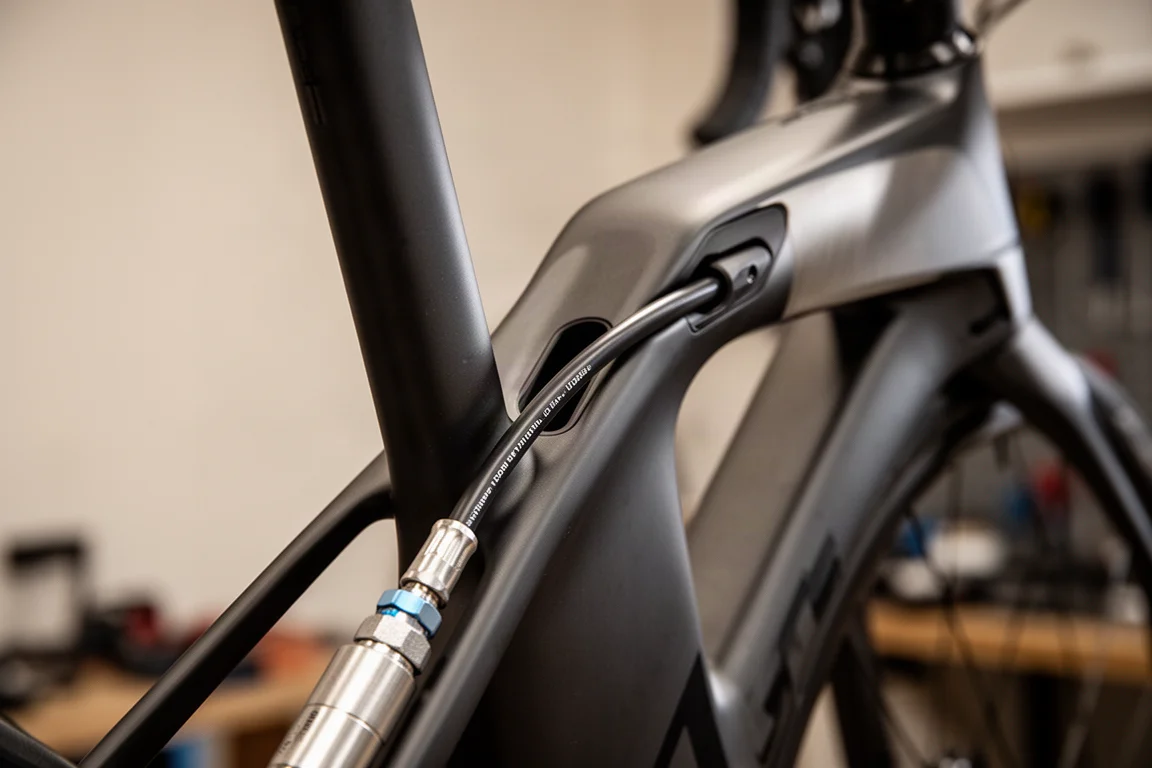
Setup turned out to be straightforward. The gears indexed immediately after the system was connected, without any need to bleed it, because enough pressure was already present. Fine adjustment works on the same principle as a conventional bike: turning the barrel adjuster changes the pressure of the fluid, which sharpens upshifts and slows downshifts in turn. Whether the system needs a tune-up after a few weeks of riding is still an open question.
Braking comes from disc rotors and calipers developed in collaboration with Magura, a manufacturer with long experience in brakes. The rotors are 160 millimetres front and rear, and they are visibly machined down, with material removed in the name of weight saving. How they perform on the road is something only real riding will establish.
Wheels, Tires, and Finishing Kit
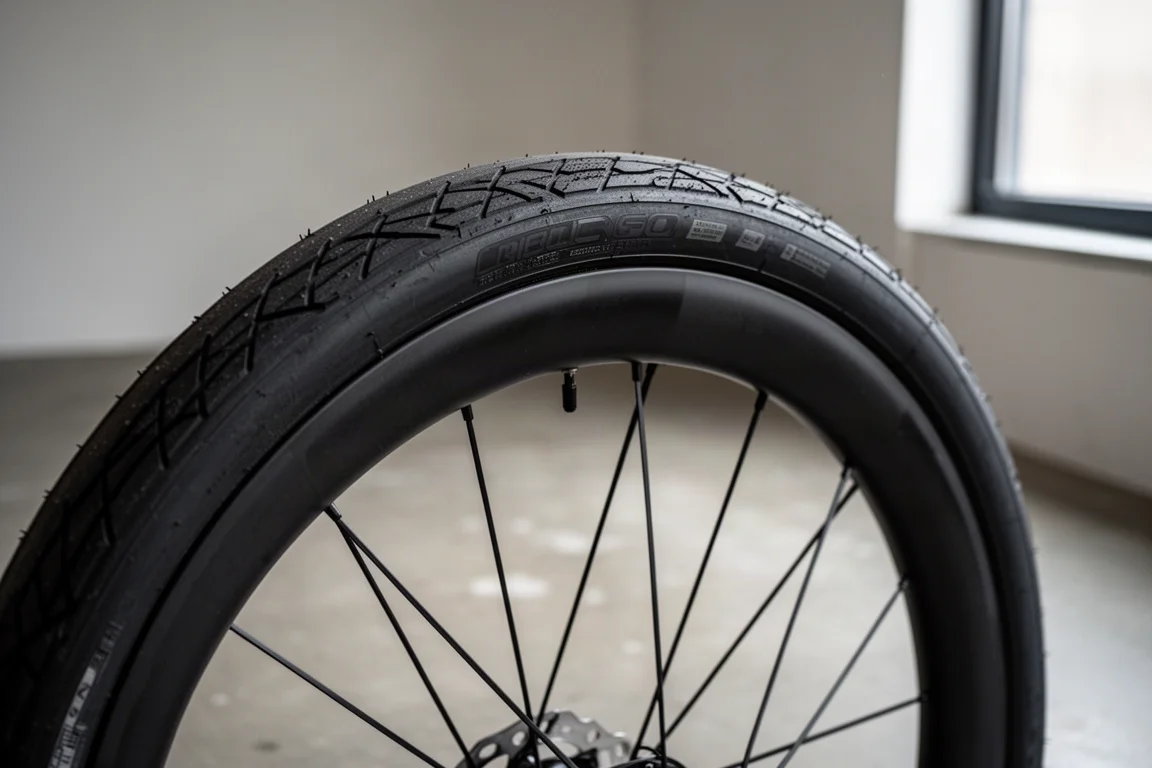
The wheels are an existing all-road set, described as wide and aerodynamically tested, which makes them a natural fit for a build that will also be used for a bikepacking trip in Spain. They are fitted with Hutchinson Fusion 5 Performance edition tires set up tubeless at 30 millimetres wide. On an already wide rim, that combination produces a smooth and comfortable ride quality.
The finishing kit is deliberately practical. Power measurement comes from Garmin Rally pedals in their Shimano SPD version, so they work with existing Shimano cleats. Bottle cages are magnetic Fidlock units, and the bar tape is a BBB option that is grippier and more durable in the hand than the cork tape commonly found on stock bikes. A Garmin head unit will eventually sit out front, though the mount had not yet arrived at the time of the build.
Things to Consider Before Buying
Hydraulic shifting is genuinely unusual, and this build represents a first experience with the system. Initial impressions during assembly were positive, but the feel over a full season of riding is not yet known, and the plan is to assess it properly over several rides.
Internal routing deserves honest expectations. Feeding hydraulic hose through the frame was a two-person job, and the process needed bleed kits and the right fittings on hand. It was not difficult in the end, but it is not a task to start without the correct parts.
There are also the usual trade-offs of an integrated aero platform. The one-piece bar and stem limits how much you can change reach and width without replacing the whole unit, and a one-by drivetrain with a 42-tooth chainring and an 11-39 cassette trades front shifting for simplicity and lower weight. At 7.5 kilograms the build is light, but the Foil is an aero bike rather than a dedicated climbing frame, so weight is a consequence of the specification rather than the design goal.
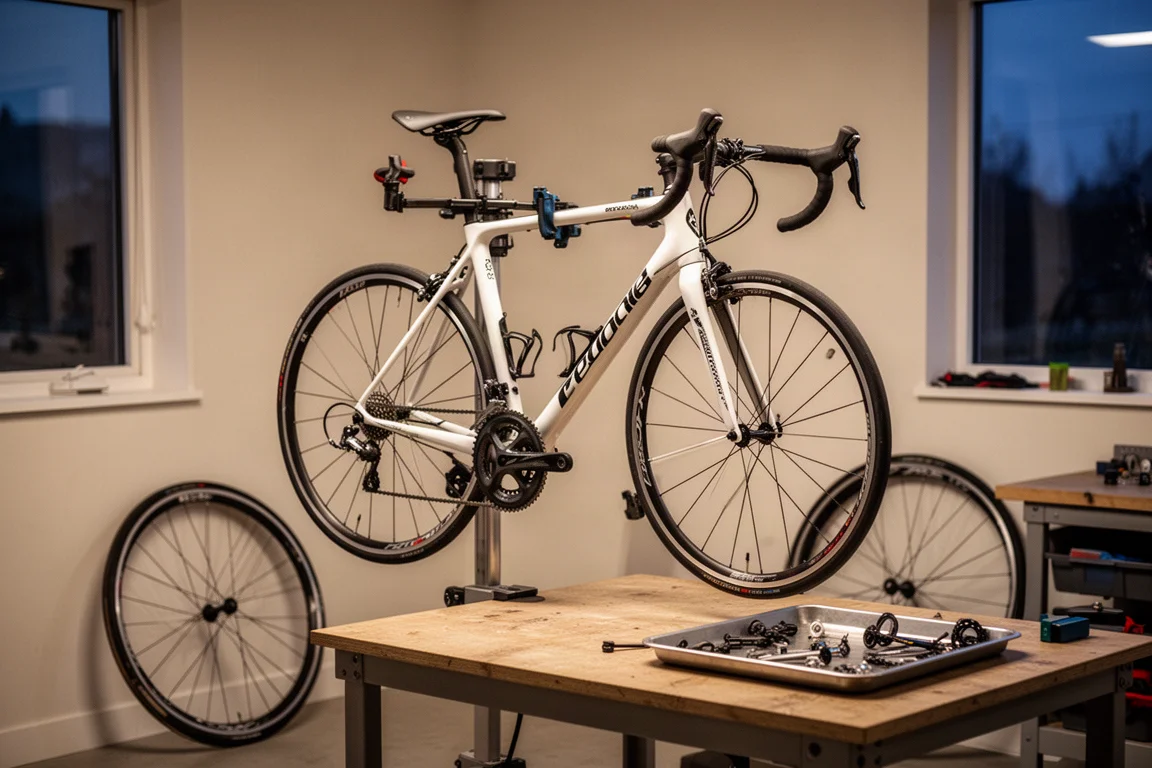
Finally, the first proper ride and the outdoor segments were delayed by high winds, which means the aero claims and brake performance were not yet tested in the conditions that matter. That is worth factoring in if you are considering the same route.
Buying Advice
The strongest argument for the Foil 20 frame set is the platform. Because most of the range shares the same core carbon frame, this entry point into the Foil line gives you the aero shape, the integrated cockpit, and the integrated seat post without stepping up to the ultimate model.
Plan the rest of the build around availability. The drivetrain here was chosen because supply shortages made the originally intended groupset difficult to source, and a fully hydraulic 1x12 system is a real commitment in terms of maintenance knowledge and spare parts. If you are not comfortable with that, a mechanical or electronic drivetrain on the same frame will be easier to live with.
Budget for the details as well as the frame. Bar tape, bottle cages, pedals with power measurement, a head unit mount, and tubeless tires and sealant all add up, and the weight figure quoted here includes several of them. Choose your wheels with the riding you actually do in mind, since a wide all-road set changes the character of the bike compared with a dedicated race wheel.
Sizing matters more than usual on an integrated frame. Because stem length and bar width are fixed by the one-piece unit, the fit needs to be right from the start. Confirming reach and stack against a bike you already know is the most reliable way to avoid an expensive change later.
Conclusion
The Scott Foil 20 frame set delivers a genuinely modern aero platform with the cockpit, seat post, and saddle already resolved, and it shares its core carbon frame with far more expensive models in the range. The Rotor hydraulic 1x12 group set makes this build distinctive, and the fact that it indexed without bleeding suggests the system is more approachable than its rarity implies.
The sensible approach is to treat the frame as the fixed decision and the drivetrain as the variable. If fully hydraulic one-by shifting appeals and you are prepared to learn how it behaves over time, this is a compelling and impressively light aero build. If you want proven simplicity, the same frame will reward a more conventional groupset just as well.
Product link
View more details for Scott Foil 20 Frame Set
This product is mentioned in the review. Check the specifications, options, and compatibility before buying.
View more details for Scott Foil 20 Frame SetFurther reading
Related Reviews
Cycling
2026 Bike of the Year and the Cycling Gear Worth Watching
A drop bar roundup for 2026 covering the Ridley Kanzo Fast 2.0, Shimano Dura-Ace Di2 R9300, Trek Checkpoint ALR Gen 3, Specialized Tarmac SL9, Garmin Fenix 9 and Insta360 X6.

Cycling
Best All-Road Bikes 2026: Six Versatile Endurance Road Bikes Worth Considering
A practical look at six all-road and endurance road bikes, from lightweight carbon speed machines to steel all-rounders and comfort-focused mile eaters.
Cycling
Best All-Road Bikes 2026: 8 Endurance Bikes for Road and Light Gravel
Eight all-road bikes that blur the line between endurance road and light gravel, compared on tire clearance, ride character, practicality, and value.