Cycling
Can You Use a Gravel Bike as a Road Bike? Scott Addict RC vs Scott Addict Gravel Tuned
A practical comparison of a dedicated Scott Addict RC road build and a Scott Addict Gravel Tuned running two wheelsets, covering tires, gearing, frame aerodynamics and fit.
Introduction
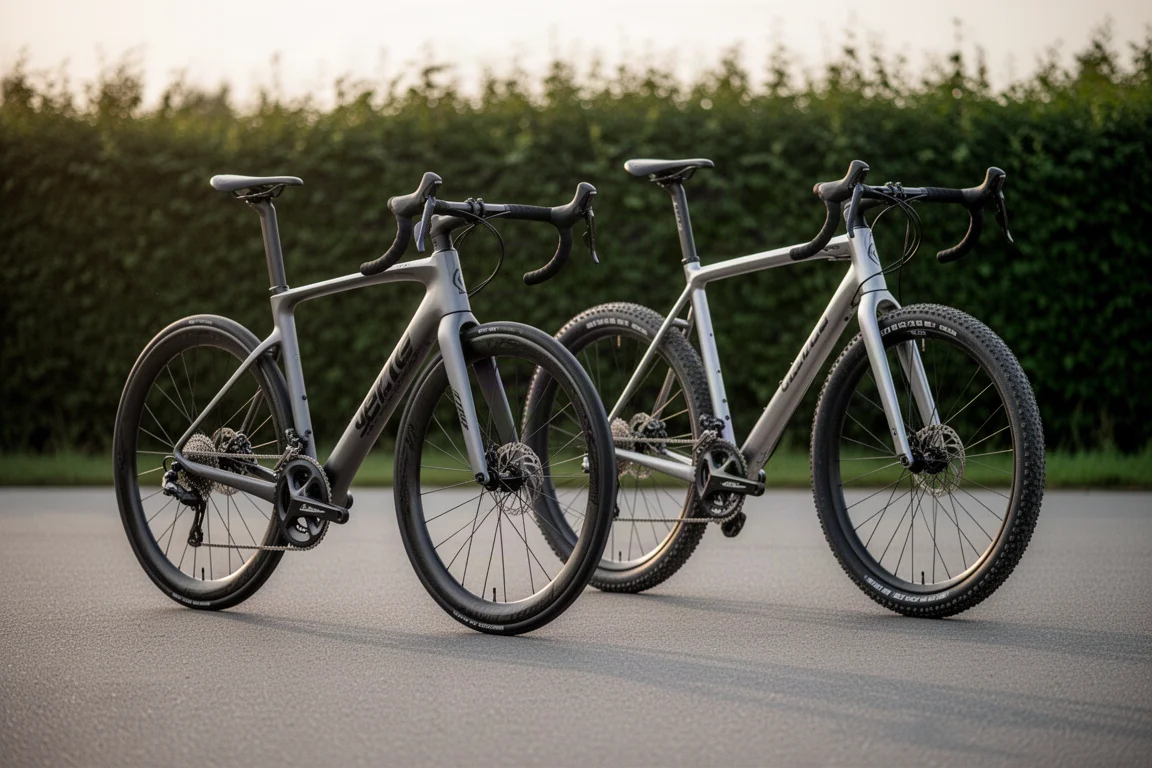
The question of whether a gravel bike can double as a road bike comes up constantly, and the honest answer depends on what you change. Two Scott Addict builds make the comparison easy: an Addict RC road bike running SRAM Red eTap with 30mm Hutchinson slick tires, and an Addict Gravel Tuned running SRAM Rival eTap with two sets of mid-depth wheels, one fitted with slick road tires and one with gravel tires.
Riding them over the same roads separates the differences into four areas: tires, gearing, frame aerodynamics and riding position. Most of them are smaller than the marketing suggests, with one clear exception.
Tires Make the Biggest Difference
Tire choice is the first thing to change and the change you will feel immediately. A road tire is faster for two reasons. It is slick, which gives it lower rolling resistance, and it has a narrow, flush profile that sits neatly against the rim, so it moves through the air as one smooth shape.
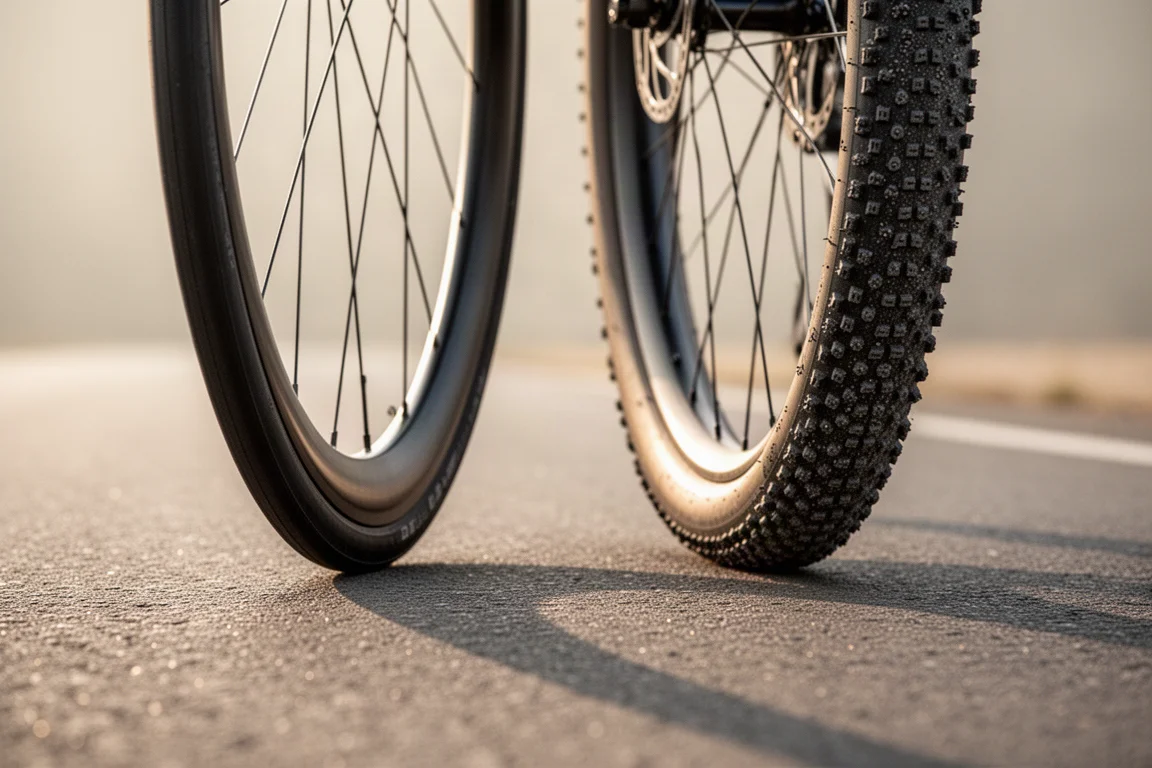
A gravel tire does the opposite. It is wider, so it presents a bigger object to the wind, and it bulges over the rim in a light bulb shape rather than sitting flush. The knobs that provide off-road grip also compress and rebound as you pedal, and that movement adds rolling resistance. On a road ride the difference in effort is obvious: a rider on slicks can sit up and glide while a rider on gravel tires has to keep pushing to hold the same speed.
That said, gravel tires on the road are not slow in absolute terms. They are simply slower than slicks for the same effort, and they are surprisingly quick for what they are. Swapping to a set of road tires remains the single most effective change you can make to a gravel bike that spends time on tarmac.
Gearing and Cadence on the Road
The second change worth making is gearing. A road cassette has closely spaced ratios, which makes it easy to find the exact gear that matches your preferred cadence. A gravel cassette such as a 10-50 spreads its ratios much wider. The upside is a very easy climbing gear that will get you up almost anything, even with luggage. The downside is that the gaps between gears are wide enough that you may struggle to settle into a comfortable cadence on flatter roads.
A middle ground makes sense for a bike that does both. A SRAM Explorer cassette sits between a mountain bike cassette and a road cassette in spacing, and comparable options exist from other brands, including GRX. The practical setup is a wide-range cassette for gravel and something tighter for road, rather than committing fully to either extreme.
Frame Aerodynamics and Riding Position
A gravel frame has to leave room for wide tires at the rear and in the fork, and that extra clearance makes it slower through the air than a purpose-built aero road frame on paper. Measured in a wind tunnel, moving from a non-aero frame or a gravel frame to an aero road frame saves roughly three to seven watts at 40 km/h. That is not many watts, and it is not something you notice on an ordinary ride. Real aerodynamic gains tend to appear only once everything else is optimised too, including skinsuit, helmet, socks, shoe covers and wheels.
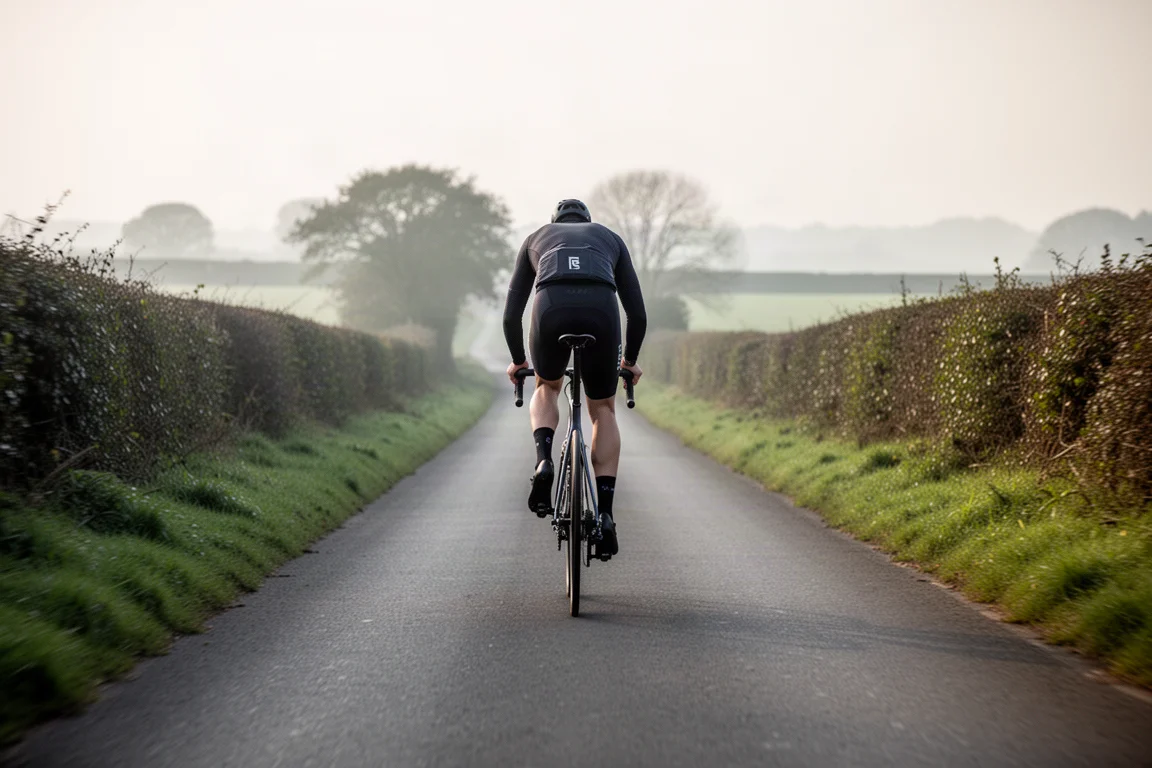
Geometry is far more noticeable than aerodynamics. Gravel frames are typically slacker, more upright and more compact. A road frame puts you in a longer, lower position that feels faster and twitchier, which is exactly what many road riders want. The catch is that most riders cannot comfortably hold a really aggressive road position. A shorter, higher gravel fit suits a wider range of people, and that matters a great deal if you want one bike to cover everything.
Scott Addict RC: Purpose-Built Road Speed
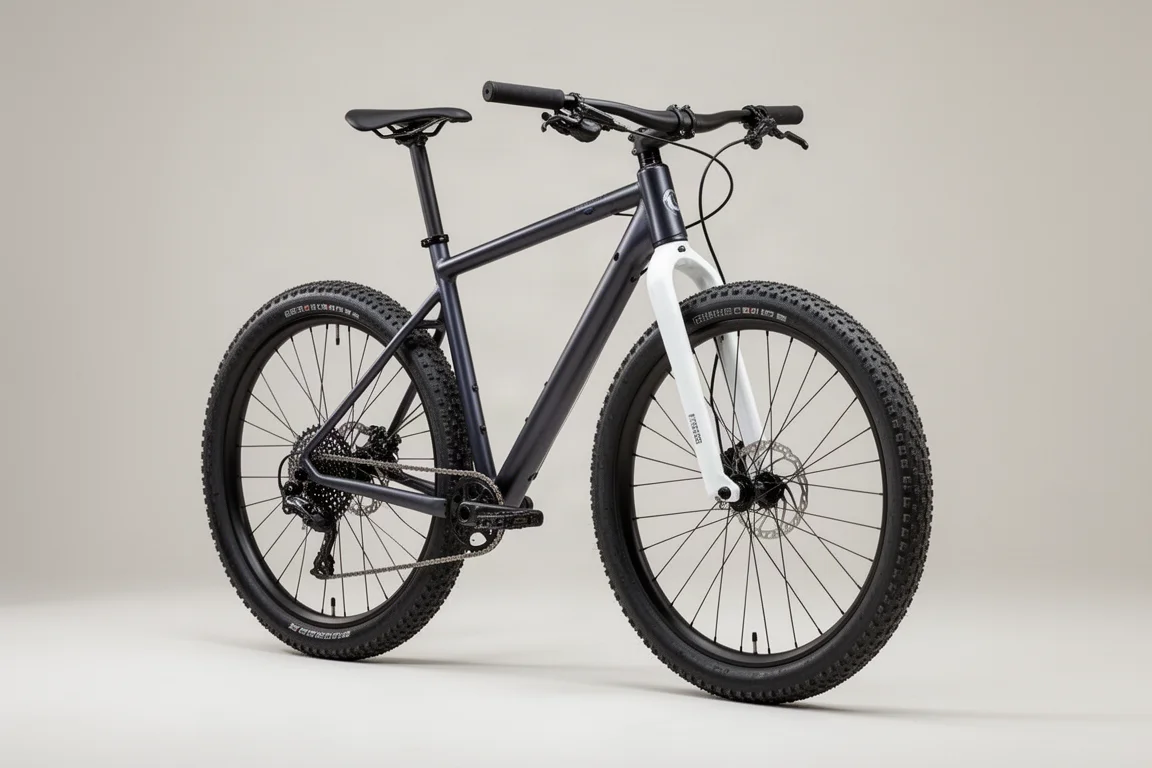
The Addict RC is the road bike in this pairing. It runs SRAM Red eTap, rolls on mid-depth wheels and is fitted with 30mm Hutchinson slick tires. On tarmac it is the faster machine: it holds speed with noticeably less effort, and the longer riding position gives it the sharper, more eager feel that road riders look for.
Its limits are the same as any dedicated road bike. Tire clearance is narrow, so you cannot fit wide rubber for rough surfaces, and the aggressive position will not suit every rider. If your riding is almost entirely on tarmac and you want the quickest feeling bike of the two, this is the one that delivers it.
Scott Addict Gravel Tuned: One Frame, Two Wheelsets
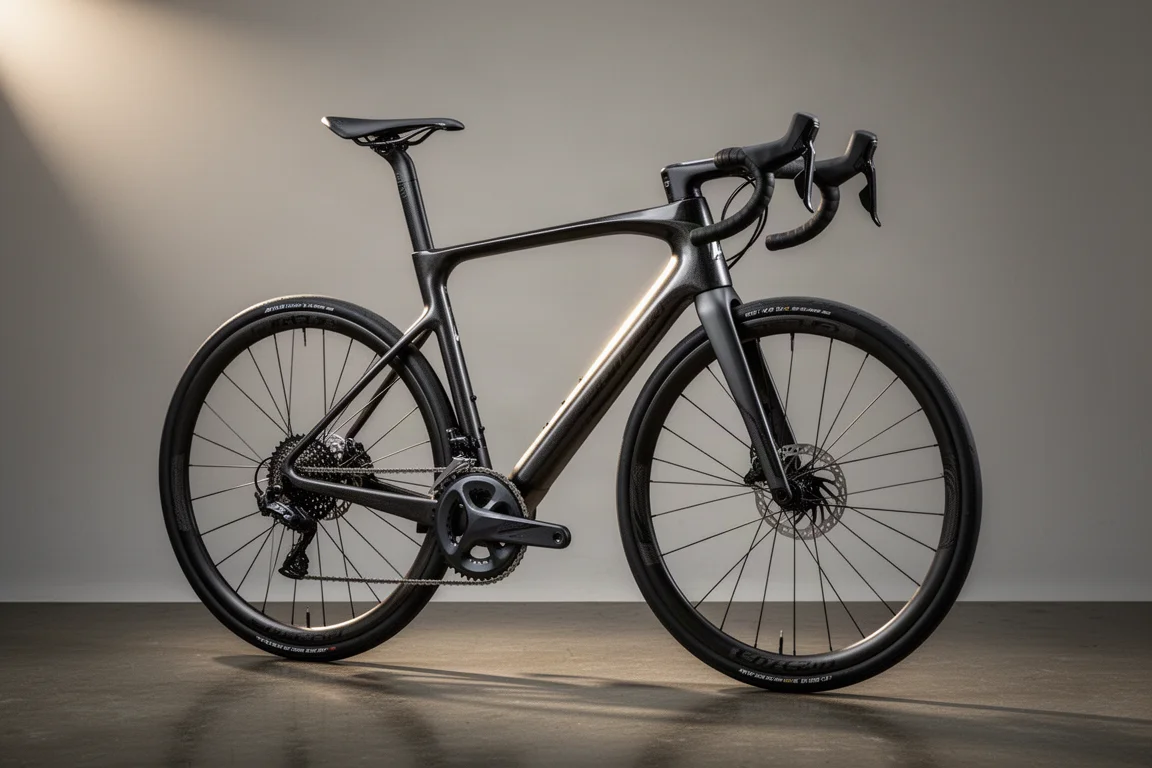
The Addict Gravel Tuned is the more versatile option, and this build shows why. It runs SRAM Rival eTap and comes with two sets of mid-depth wheels: one with slick road tires, one with gravel tires. Two wheelsets mean you can switch between road and off-road setups in minutes instead of changing tires in the garage.
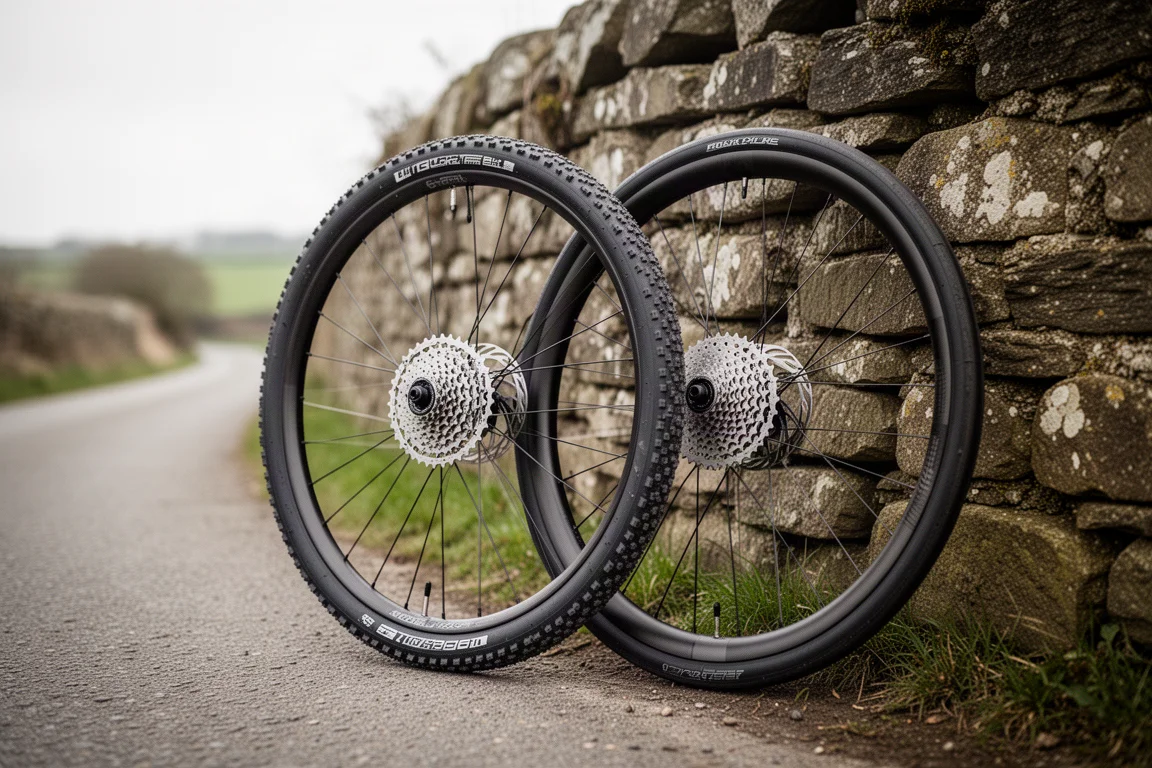
With road tires fitted it is genuinely quick on tarmac, faster than the frame’s clearance and geometry would suggest. The upright position and shorter reach stay comfortable over long distances, and the wide tire clearance means the same bike can head onto rough surfaces whenever the mood takes you. The trade-offs are a small aerodynamic penalty and a slightly less immediate feel than the dedicated road frame.
Shoes, Pedals and Practical Comfort
Shoes matter less than most riders expect. A road shoe uses a large three-bolt cleat that creates a stable platform, usually paired with a stiff carbon sole. A gravel or mountain bike shoe uses a smaller cleat with some tread, which makes walking far easier. Road shoes are generally lighter and slightly stiffer.
The one thing to watch with a flexible mountain bike shoe is that the sole can flex around the smaller cleat, which can cause foot pain over long distances. If you want one pair of shoes for everything, there is nothing wrong with running SPD pedals and mountain bike cleats on the road. The performance difference is small.
Buying Advice
The changes that genuinely matter are tires and gearing. Everything else sits in the margins, which makes the decision simpler than it first appears.
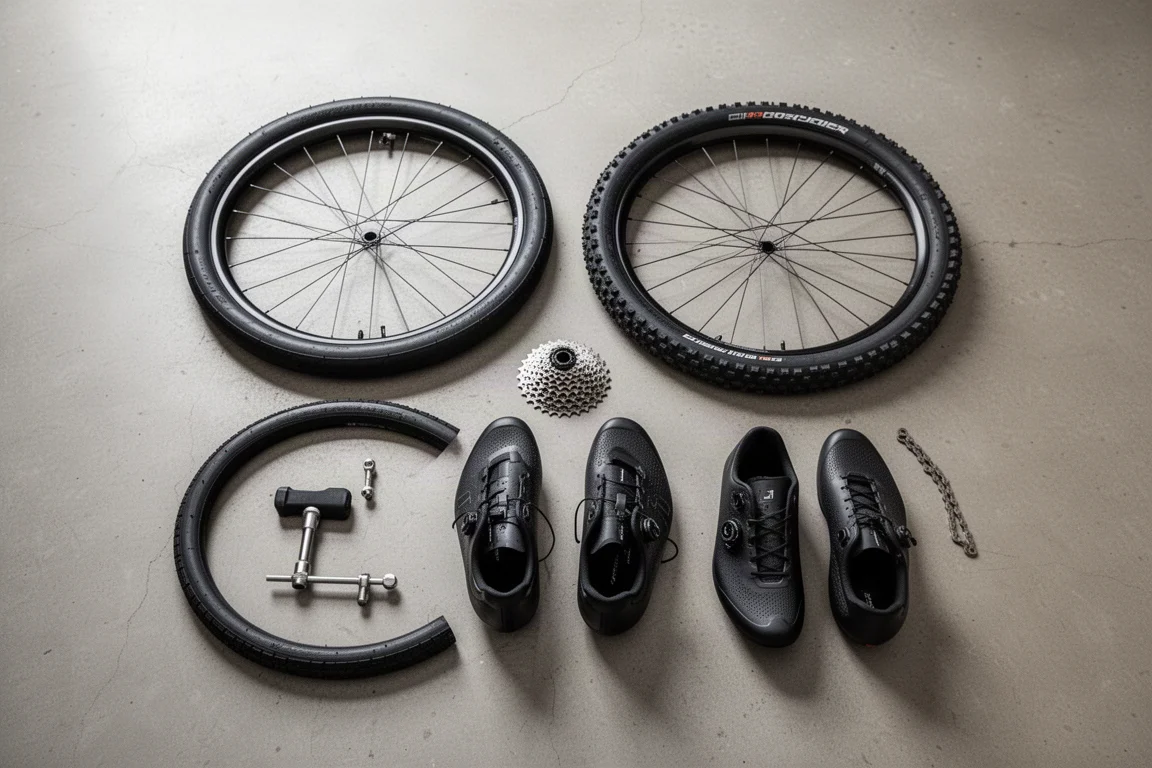
A second wheelset is the most convenient way to run both setups. Keeping one set with slicks and one with gravel tires removes the hassle of swapping rubber, and it lets you change the character of the bike in a few minutes. Pair a tighter cassette with the road wheels and a wider one with the gravel wheels, and the same frame works well in both roles.
The Addict Gravel Tuned suits riders who want one bike for commuting, long steady rides, harder efforts and amateur racing. The Addict RC suits riders whose riding is almost entirely on tarmac and who want the sharper, faster machine. At the sharp end of a professional race, where marginal gains decide results, the dedicated road bike still has the edge. For most riders the gap is far smaller than the labels suggest.
Conclusion
A gravel bike can absolutely be used as a road bike. Fit road tires, choose gearing that suits the terrain, and the performance difference narrows to something most riders will never notice on a normal ride. The Addict RC remains the faster, more focused road machine, while the Addict Gravel Tuned with two wheelsets is the more flexible choice. For many riders that flexibility is worth more than the last few watts.
Further reading
Related Reviews
Cycling
2026 Bike of the Year and the Cycling Gear Worth Watching
A drop bar roundup for 2026 covering the Ridley Kanzo Fast 2.0, Shimano Dura-Ace Di2 R9300, Trek Checkpoint ALR Gen 3, Specialized Tarmac SL9, Garmin Fenix 9 and Insta360 X6.
Cycling
Best All-Road Bikes 2026: Six Versatile Endurance Road Bikes Worth Considering
A practical look at six all-road and endurance road bikes, from lightweight carbon speed machines to steel all-rounders and comfort-focused mile eaters.
Cycling
Best All-Road Bikes 2026: 8 Endurance Bikes for Road and Light Gravel
Eight all-road bikes that blur the line between endurance road and light gravel, compared on tire clearance, ride character, practicality, and value.