Headphone Amplifiers
Schiit Lyr+ Review: A Hybrid Headphone Amp and Preamp With Two Personalities
A practical look at the Schiit Lyr+, a hybrid headphone amplifier and preamp with a 6SN7 tube stage, a MOSFET solid-state stage, and generous output power.
Introduction
Some audio components win you over with a specification sheet. Others win you over the first time you press play. The Schiit Lyr+ belongs firmly in the second category. It is a hybrid headphone amplifier and preamp that combines a 6SN7 tube stage with a MOSFET solid-state stage, and it lets you move between those two characters from the supplied remote control. At $600 it is not cheap, but it sits in a range where saving up is realistic for a dedicated listener.

That dual personality is the heart of the product. It is also why the Lyr+ can work as a first serious desktop amplifier for one listener and as a flexible preamp for another. This review covers the design, the two amplification modes, the power on tap, and the practical compromises worth weighing before you buy.
Who This Product Is For
The Lyr+ suits listeners who want two distinct flavours from a single box. In solid-state mode it delivers a punchy, dynamic presentation. Switch the tube into the circuit and the presentation opens into something more spacious. Few amplifiers at this price let you choose between those characters without buying a second unit.
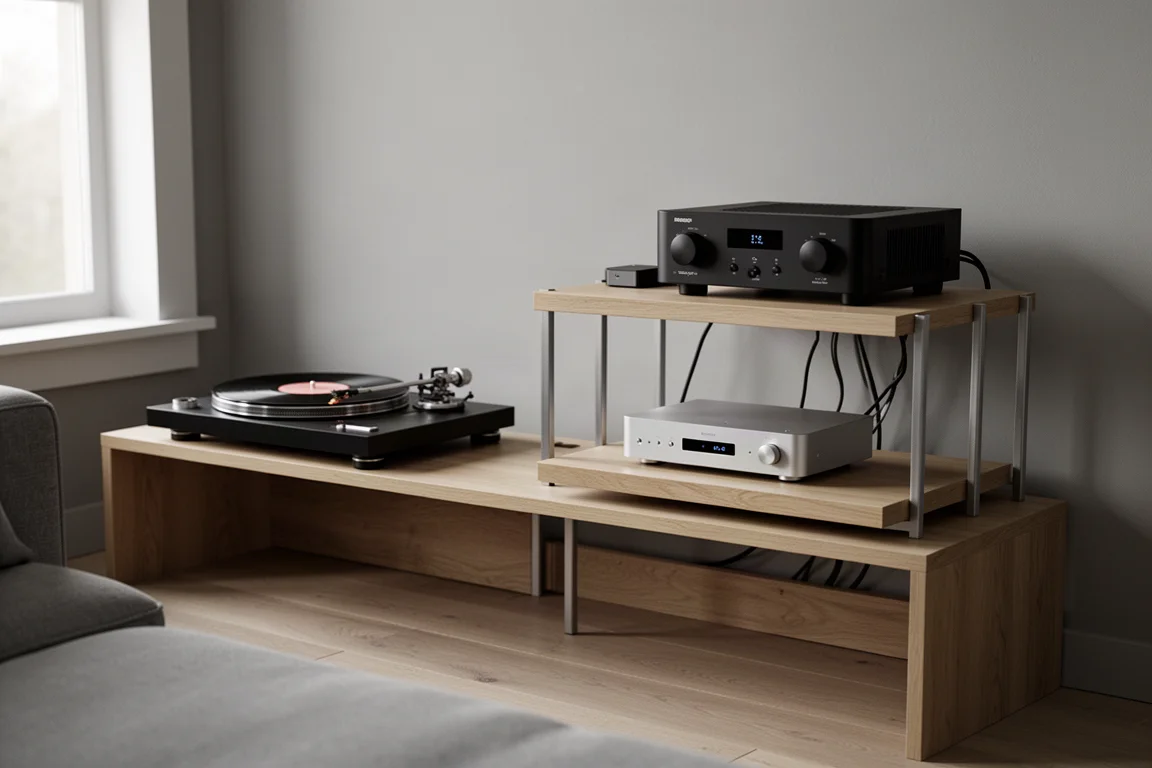
It also makes sense for anyone who wants a preamp with a tube buffer feeding a power amplifier. Two single-ended inputs are enough for a digital converter plus a phono stage, which covers a turntable and a digital source at the same time. The output power also makes it relevant for owners of demanding headphones, from sensitive dynamic models to harder-to-drive planar designs.
Design and Connectivity
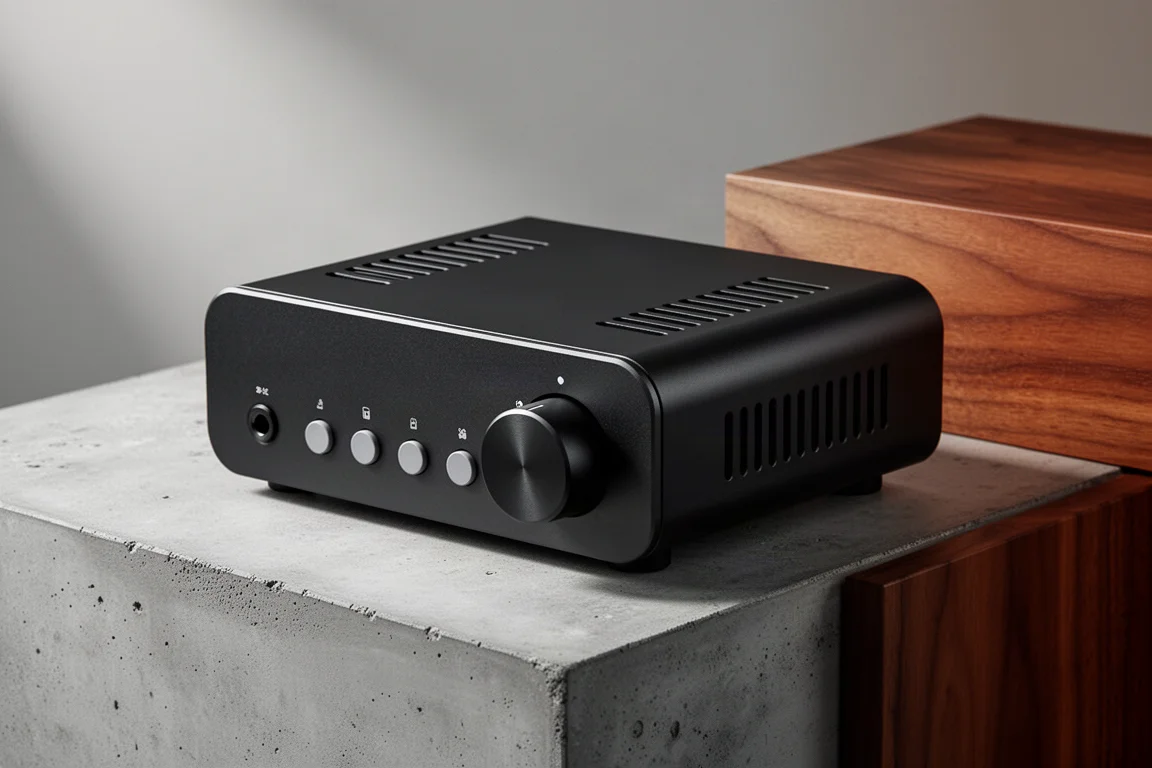
The chassis is compact and neatly finished, with contrasting grey buttons set against black rounded edges. Ventilation slots run along the sides and across the top, and the front panel carries an infrared receiver so the amplifier can be controlled remotely. The included remote is small and metal-bodied, with a magnetic attachment.

The front panel keeps things simple: an input selector, a button that disables the preamp output, a rotary volume control, a small indicator light, a gain button, and a single 6.35 mm single-ended headphone jack. The volume control uses a relay-switched ladder attenuator, the same general approach used in the brand’s Freya and Freya+ preamps, so adjustment feels stepped and precise.
Around the back there are two single-ended inputs and a power toggle. The power switch sits on the rear panel, which will not bother anyone who keeps the unit on a shelf, rack, or countertop, and there is no power button on the remote.
One detail is worth knowing before purchase. The tube and MOSFET stages cannot be switched from the unit itself. Mode changes happen through the remote, or by removing the tube, at which point the amplifier senses the empty socket and moves to the solid-state stage automatically. A supplied tube cover lets you close off the socket when the tube is out, which is a practical touch in a household with children or pets.
How It Sounds: Tube Mode and Solid State
With the tube in the circuit, the Lyr+ produces an unusually wide soundstage. Instruments and voices are spread out with clear placement, and the effect is immersive rather than analytical. The low end is leaner than in solid state, with less weight and punch, and some listeners will want a small low-frequency lift around 60 to 125 Hz to fill it out. What tube mode gives in return is space and atmosphere, and that trade is the whole point of the design.
Remove the tube and the amplifier switches to its MOSFET stage. Dynamics increase noticeably, the bass gains punch, the midrange cleans up, and the top end lifts slightly. The result is a livelier, more energetic presentation that suits rock and electronic material particularly well. Two modes, two very different listening experiences, from the same chassis.
On the power front the Lyr+ is generous: 9 W RMS into 16 ohms, 6 W into 32 ohms, 4 W into 50 ohms, 900 mW into 300 ohms, and 450 mW into 600 ohms. That is close to a full watt into a 300 ohm load, which is more than enough headroom for high-impedance headphones.
Main Strengths
Versatility is the strongest argument for the Lyr+. It works as a headphone amplifier, as a preamp with a tube buffer, and as a switchable tube or solid-state design, and it does all three without feeling compromised. The preamp output can be toggled on and off, which makes it straightforward to integrate with a power amplifier and speakers.

The remote control deserves credit as well. Input selection, tube and MOSFET switching, gain, mute, volume, and the preamp output can all be handled without leaving your seat, and the magnetic metal remote feels more substantial than its small size suggests. Combined with the relay ladder volume control and the high output power, the package covers a lot of ground for a single desktop component.
Things to Consider Before Buying
The input count is the main limitation. Two single-ended inputs will not suit anyone running several analog sources at once, and there is no balanced headphone output, only the single 6.35 mm jack. Listeners who need XLR connections or multiple line-level sources should weigh other options.
Mode switching is another consideration. Because the tube and solid-state stages cannot be toggled from the front panel, you rely on the remote for quick changes, and the rear-mounted power switch means the unit stays on unless you reach behind it.
The tube itself is also a wear item. The supplied 6SN7 can be replaced, and vintage 6SN7 alternatives, such as older Sylvania examples, are sometimes recommended as a way to adjust the sound. That path adds cost and requires some care, but it does give owners a degree of tuning freedom that a fixed solid-state design cannot offer.
Buying Advice
Buy the Lyr+ if you want both a tube experience and a punchy solid-state option without owning two amplifiers, or if you need a preamp with a tube buffer for a small speaker system. It is an especially good match for listeners who keep a digital converter and a phono stage as their two analog sources and rarely need more inputs.
Skip it if your system depends on balanced connections, if you need three or more line-level inputs, or if you prefer to switch modes without picking up a remote. For everyone else, the combination of output power, two distinct voicings, and remote control makes the $600 asking price easier to justify than the specification list alone suggests.
Conclusion
The Schiit Lyr+ earns its place by making listening more enjoyable rather than more clinical. Its tube mode offers a wide, immersive stage, its solid-state mode brings punch and energy, and the preamp output turns it into a flexible hub for a small system. The two single-ended inputs and the remote-only mode switching are real limitations, but for the right listener this is a desktop amplifier that stays in the system for a long time.
Product link
View more details for Schiit Lyr+
This product is mentioned in the review. Check the specifications, options, and compatibility before buying.
View more details for Schiit Lyr+Further reading
Related Reviews
Headphone Amplifiers
Creative Labs Sound Blaster X5 Review: A Flexible USB DAC and Headphone Amp
The Sound Blaster X5 pairs a fully balanced dual-DAC headphone amp with DSP, mixing, recording, and console audio in one compact USB-powered enclosure.
Headphone Amplifiers
Fosi Audio K5 Review: A Tiny Budget DAC Amp for Travel, Gaming, and Hotel Listening
A compact USB-C DAC amp with tone controls, optical and coaxial inputs, and a clean mid-forward sound that suits efficient headphones and IEMs.
Headphone Amplifiers
Fosi Audio SK01 Review: A Tiny Headphone Amp That Doubles as a Three-Band EQ
A compact $72 audio box with treble, mid-range, and bass controls, a loudness button, and a capable headphone stage. Here is where it earns its place.