Floorstanding Speakers
Scansonic MB 2.5B Review: A Slim Floorstander With Real Bass Weight
A close look at the Scansonic MB 2.5B, a slim Danish floorstander with a ribbon tweeter, carbon fibre drivers, and bass that belies its size.
Introduction
Scansonic is the sister brand to Raidho, the Danish high-end marque known for ribbon tweeters and carbon fibre drivers, whose range-topping models sell for around 200,000 pounds a pair. The MB 2.5B brings those same core technologies into a floorstanding speaker built for far smaller rooms and far smaller budgets.
The MB 2.5B is a two-and-a-half-way tower that stands a fraction under one metre tall, priced at 3,750 pounds a pair in white or black, or 4,500 pounds in walnut. It is small enough for a room of roughly 4.3 by 3.7 m, yet it uses the same woven carbon fibre cone material and ribbon tweeter technology found further up the Raidho family tree.
The result is a speaker that sounds considerably bigger than its slim cabinet suggests. It is also a speaker that rewards patience, because the bass output is generous enough that placement decisions matter more here than with most compact designs.
Who the Scansonic MB 2.5B Is For
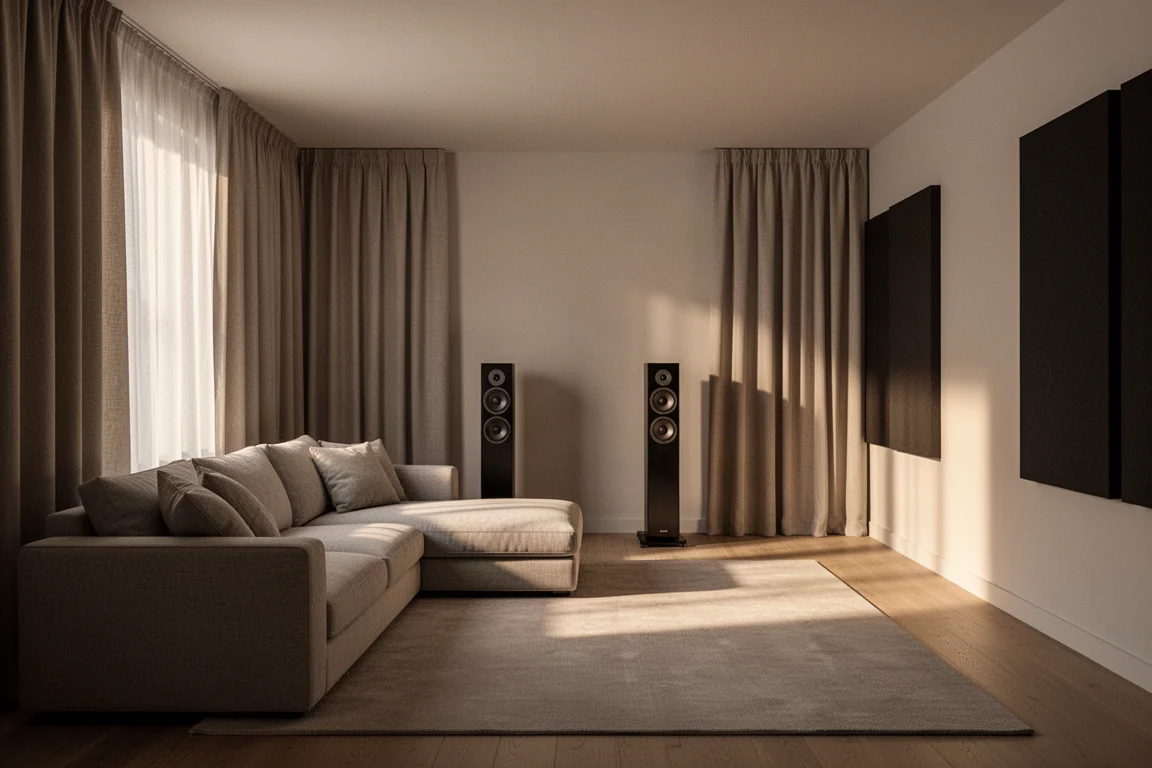
The MB 2.5B makes most sense in a small to medium room. The cabinet is narrow and shallow, so it occupies very little floor space, but the low-frequency output is far more generous than those dimensions suggest. Listeners who want the weight and presence of a floorstander without a bulky tower should find it a natural fit.
It is also unusually easy to drive for a speaker of this type. Listed at 88 dB sensitivity into 6 ohms, it worked with a 300B valve amplifier producing only 8 watts per channel, provided average listening levels stayed below roughly 80 dB. That opens the door to low-power valve and Class A designs that would struggle with many rivals.
The design does ask something in return: flexibility with placement. The MB 2.5B is sensitive to small changes in position, and it needs room to breathe in order to tighten its bass. Buyers who cannot move speakers away from walls, or who sit in a fixed spot with no option to adjust toe-in, are likely to get better results from a less demanding design.
It is not the obvious first choice for listeners chasing the very last word in low-frequency resolution, nor for those who want maximum realism on brass and other bright, forward recordings.
Design and Build Quality
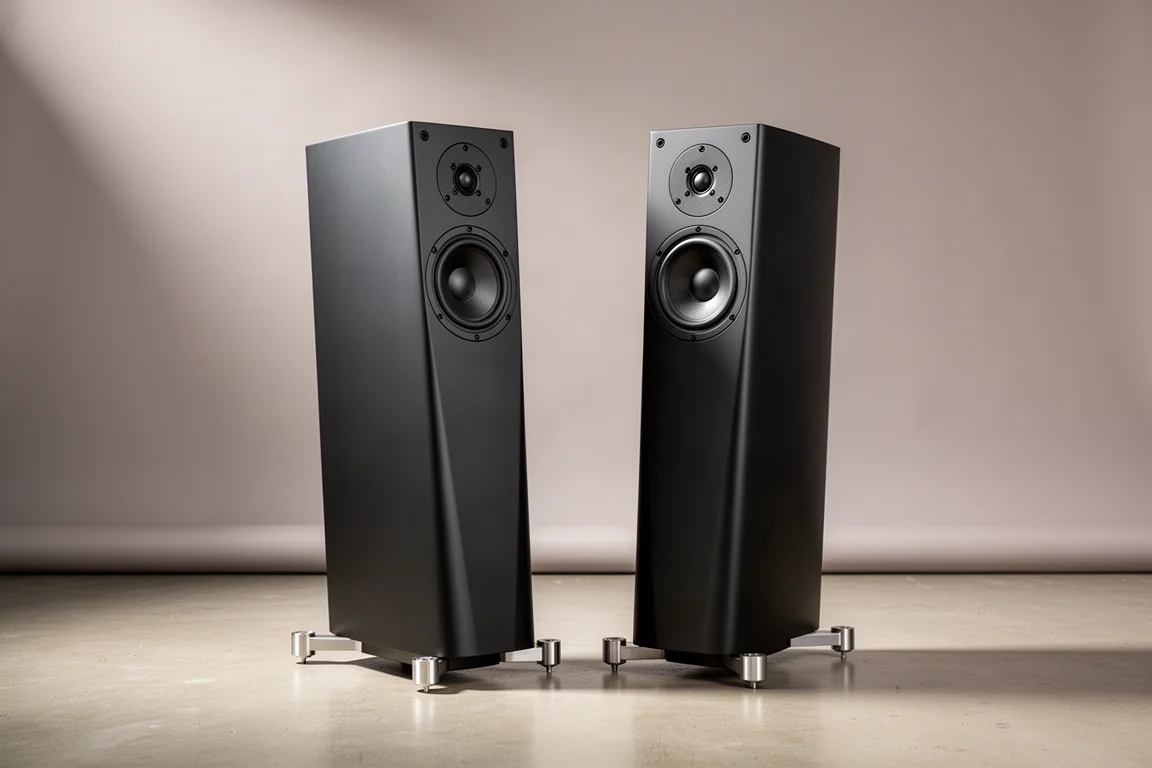
The MB 2.5B stands a fraction under one metre tall, measures 178 mm wide and 286 mm deep, and weighs 15.4 kg, or about 34 lb, per speaker. It is available in white or black at 3,750 pounds a pair, with a walnut finish at 4,500 pounds.
Construction is unusually thorough for the money. The cabinet sits on machined outrigger feet and leans back slightly to time-align the drivers. The sides curve and taper toward the rear to reduce internal standing waves. The main structure is MDF, with carbon fibre inserts on the front and top panels to raise rigidity, and the enclosure is extensively braced inside.
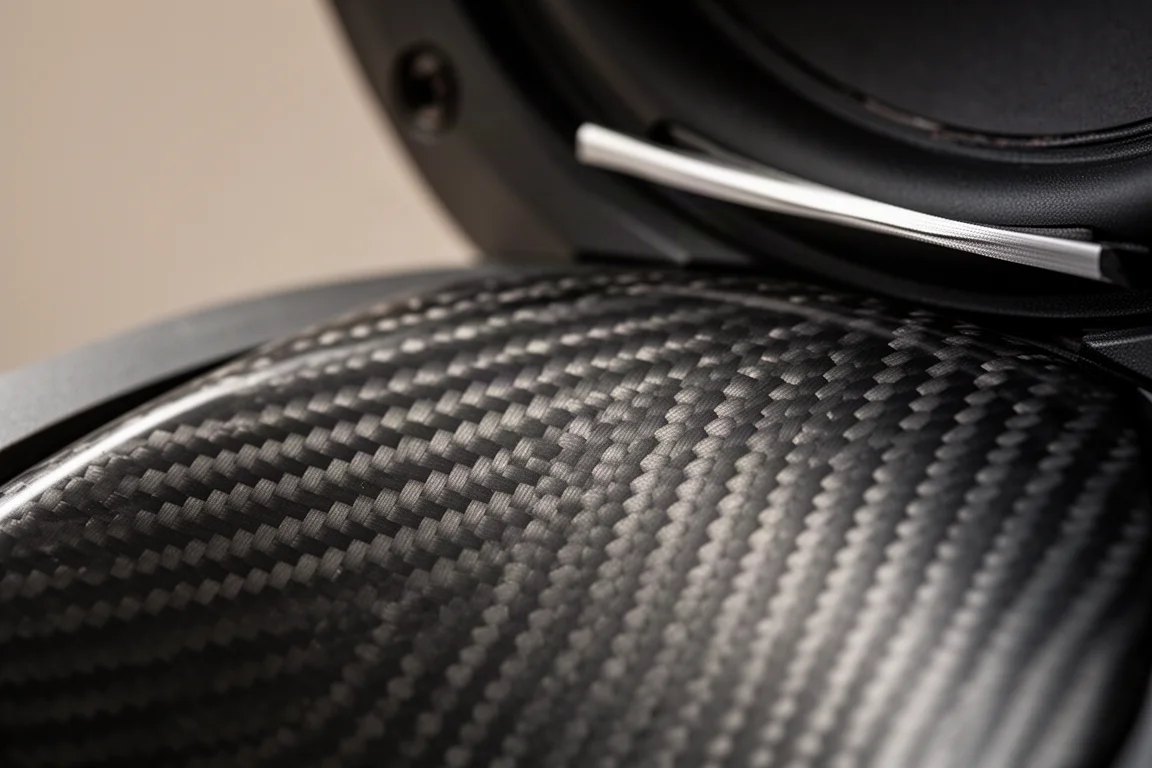
The driver complement is a two-and-a-half-way arrangement. A 130 mm, or 5 1/4 in, woofer at the bottom covers a stated 36 Hz to 500 Hz. An identical mid-woofer plays up to 2,600 Hz, where an in-house ribbon tweeter takes over. The woven carbon fibre cone material is inherited directly from Raidho and was chosen for high stiffness and low mass. It is a dust cap free design, which tends to reduce breakup modes at low frequencies. The driver uses a cast aluminium basket, an overhung magnet system favouring a long stroke over linearity, and an optimised spider and suspension to reduce losses. The mid-woofer is designed, developed, and built in-house.
The tweeter is also built in-house. It is formed from a Kapton and aluminium sandwich just 20 microns thick, with a moving mass of 0.03 grams, roughly 50 times lighter than a conventional dome. Sealed sides help it integrate cleanly with the mid-woofer.
Two practical details are worth noting. The bass port fires downward from a concealed opening in the base, a configuration that generally allows closer placement to room boundaries. On the rear panel, a single set of binding posts sits low down, keeping the back of the cabinet visually clean.
The design lineage is worth a mention. The original MB range was the work of Michael Børresen, which is where the MB initials come from, before he moved on to co-found AudioGroup Denmark. In 2019 the range was revised by Benno Baun Melgaard, current chief designer for both Raidho and Scansonic, and the models gained the MB-B designation.
Main Strengths: Sound Quality
The MB 2.5B is one of the most well-sorted floorstanding speakers at its price. It sounds clean, and it is considerably more dynamic than the size of the cabinet would lead you to expect. Soundstage and imaging are excellent, with clear separation between instruments and a wide, open presentation.
Bass is the headline surprise. It arrives with authority, weight, and agility, closer to the character of a capable stand-mount than to a small tower. That composure depends on keeping cabinet resonances under control, and the bracing, the carbon fibre panels, and the tapered cabinet all contribute here.
The ribbon tweeter is exceptional. There is a lovely airiness to the top end, with refinement and timing that hold up on well-recorded material, and the midrange is full and resolving. The overall balance is one of unbridled highs that still manage to stay refined.
How It Compares With Other Speakers
Against the Quad Revela 1, a stand-mount retailing at 1,800 pounds, the slim Scansonic matches its information retrieval, with a similarly wide-open soundstage and clear instrument separation. Neither speaker extracts quite as much nuanced timbre from vocals and lead instruments as a ProAc Response 1SC.
Tonally, the three differ in meaningful ways. The Revela 1 is a little more forward in the midrange than the Response 1SC, though never aggressive. The MB 2.5B also pushes the critical mid-band slightly further forward than the Response 1SC, but pairs that with a more relaxed upper midrange. That takes the edge off bright recordings, at the cost of some realism with instruments such as brass.
Against the Buchardt S400, the Danish character is familiar: a beautifully open top end, a natural and resolving midrange, and a polite upper midrange. Both produce an impressive soundstage, but the MB 2.5B delivers greater bass weight and extension, while giving up a little assurance in the localisation of performers.
The Neat Elite Classics, at 3,250 pounds in the UK, cannot match the Scansonic for deep bass or dynamics, though they offer similar midrange detail without the recessed presence region, along with a wonderfully revealing and civilised tweeter.
Compared with a 5,000 pound Audio Note stand-mount of transmission line design, the MB 2.5B is not as resolving in the low frequencies, and the Audio Note also has a little more resolution across the rest of the range. The equivalent Audio Note floorstander, however, sells for 9,000 pounds.
Positioning, Room Fit, and Amplifier Pairing
The MB 2.5B produces more bass than its enclosure size suggests, helped by long-throw drivers and a second woofer covering 500 Hz and below. In a modest room, that makes placement the single biggest factor in performance.
To tighten the bass, the speakers needed to sit further into the room than most stand-mounts. Spacing them wider apart stopped the midrange from sounding thick, and toeing the tweeters in directly toward the listening position delivered maximum energy in the upper midrange. Small adjustments made an audible difference, and the effort paid off. Buyers without that flexibility should look elsewhere.
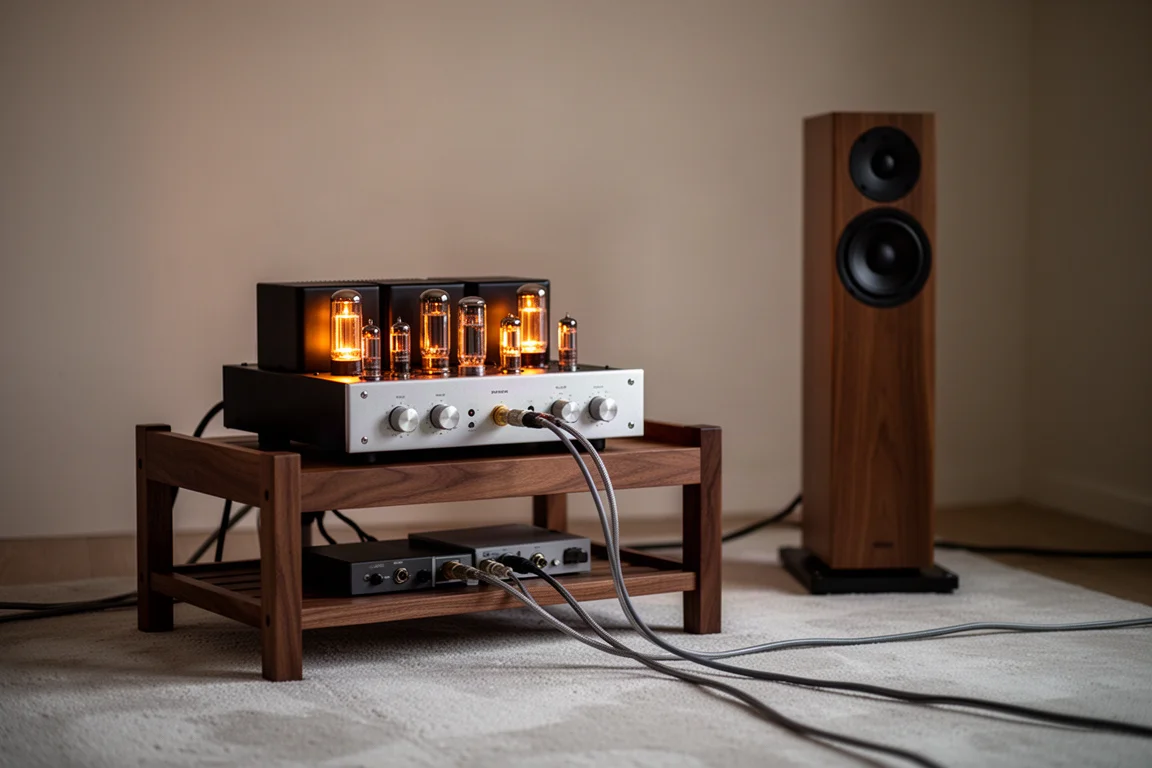
Amplifier matching is refreshingly forgiving. The speaker is easy to drive, and its impedance curve appears fairly flat, with no unusual electrical phase angles. A 300B amplifier producing 8 watts per channel sounded gloriously open and rich in detail at moderate levels, and it never turned soft. An Exposure 2510 integrated maintained its composure where many speakers at this level strain its modest power supply, including the Quad Vena One and the ProAc Response 1SC.
More power is available from something like the Hegel H190, which adds grip and control. That may help in larger rooms at high playback levels, but in a small room at moderate levels the improvement was marginal. Moving up to an Exposure 3510 preamp and monoblock pairing produced a clearly better result.
Things to Consider Before Buying
Positioning sensitivity is the main caveat. The MB 2.5B is not a speaker to drop into a fixed spot and forget. If the room does not allow the cabinet to come out from the wall, or the listening seat cannot be adjusted, a more forgiving design will deliver better value.
The polite upper midrange is a deliberate trade-off. It makes poor or bright recordings easier to live with, but it also removes a little realism from brass instruments and similar material.
The bass, while impressive, may be at the limit of what a small room can absorb. Listeners in compact spaces should expect to spend time tuning placement rather than simply turning the speakers loose.
Finally, low-frequency resolution is good but not class-leading. Designs at higher prices dig deeper into bass detail, and a 5,000 pound transmission line stand-mount offers more resolution across the range.
Buying Advice
At 3,750 pounds a pair in white or black, and 4,500 pounds in walnut, the MB 2.5B sits in a competitive part of the floorstanding market. What sets it apart is the combination of a genuinely small footprint, careful cabinet engineering, and bass performance that most slim towers cannot approach.
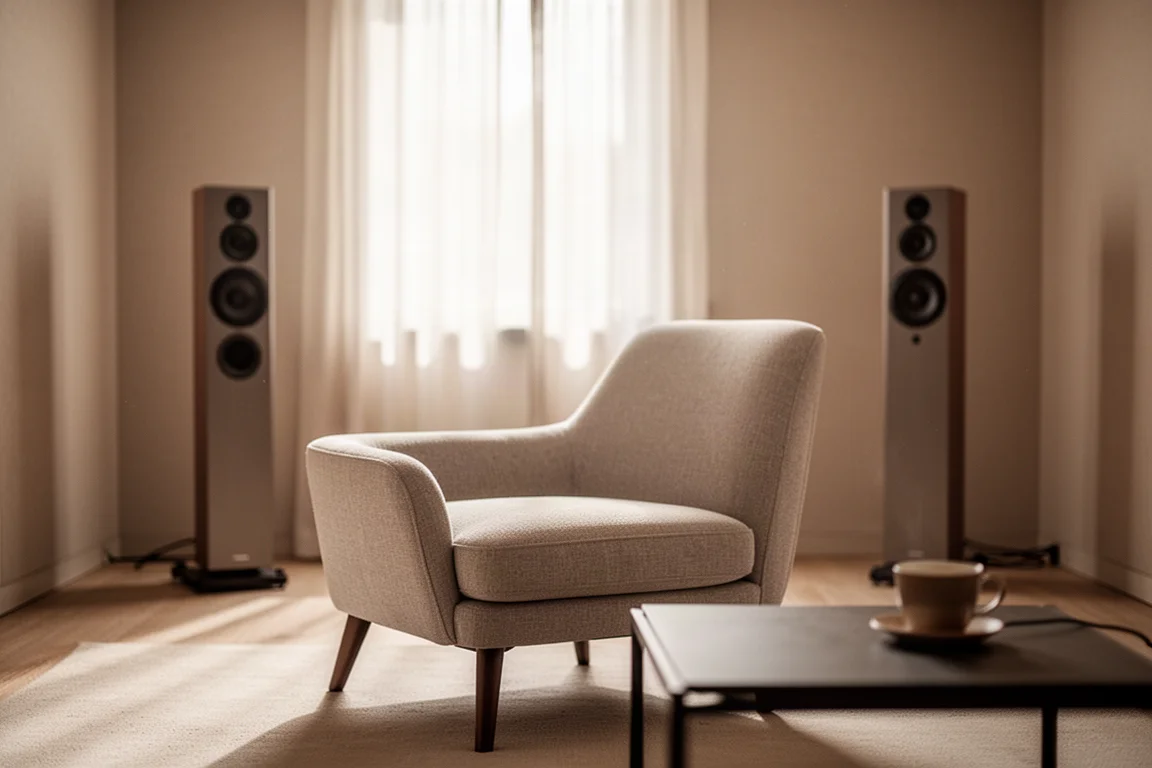
Pairing is straightforward. A modest integrated amplifier, or even a low-power valve design, will get strong results at moderate listening levels. Extra power helps mainly in larger rooms and at higher volumes, so there is little need to over-invest in amplification.
The real budget line is room setup. Factor in the space to move the speakers well clear of the wall behind them, spread them wider than a typical stand-mount, and angle them toward the listening position. Buyers who can do that will hear a speaker that punches well above its size.
Conclusion
The Scansonic MB 2.5B proves that looks can be deceiving. An ultra-slim tower with relatively small carbon mid-woofers and a ribbon tweeter is neither bright nor weedy. Bass is deep, weighty, and articulate, the midrange is full and resolving, and the highs are gloriously unbridled while staying refined.
The trade-offs are clear and manageable. It is finicky about positioning, and its polite upper midrange sacrifices a little realism for the sake of forgiving bright recordings. Buyers who can work with those characteristics, and who have the room to place them properly, will find one of the finest sounding speakers available for the money.
Product link
View more details for Scansonic MB 2.5B
This product is mentioned in the review. Check the specifications, options, and compatibility before buying.
View more details for Scansonic MB 2.5BFurther reading
Related Reviews
Floorstanding Speakers
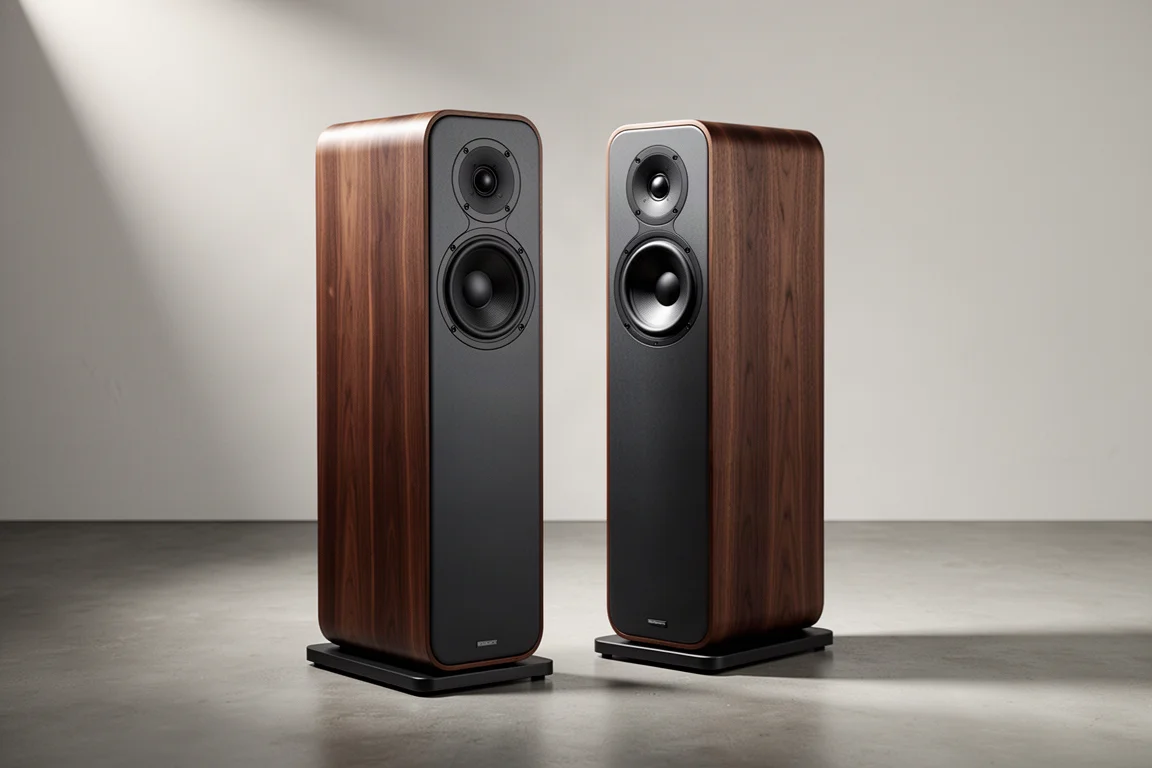
Acoustic Energy AE109 Mark II Review: A Refined Floorstander at £699
The Acoustic Energy AE109 Mark II is a slim, warm sounding floorstander that delivers clarity, midrange body and strong imaging in small to medium rooms.
Floorstanding Speakers
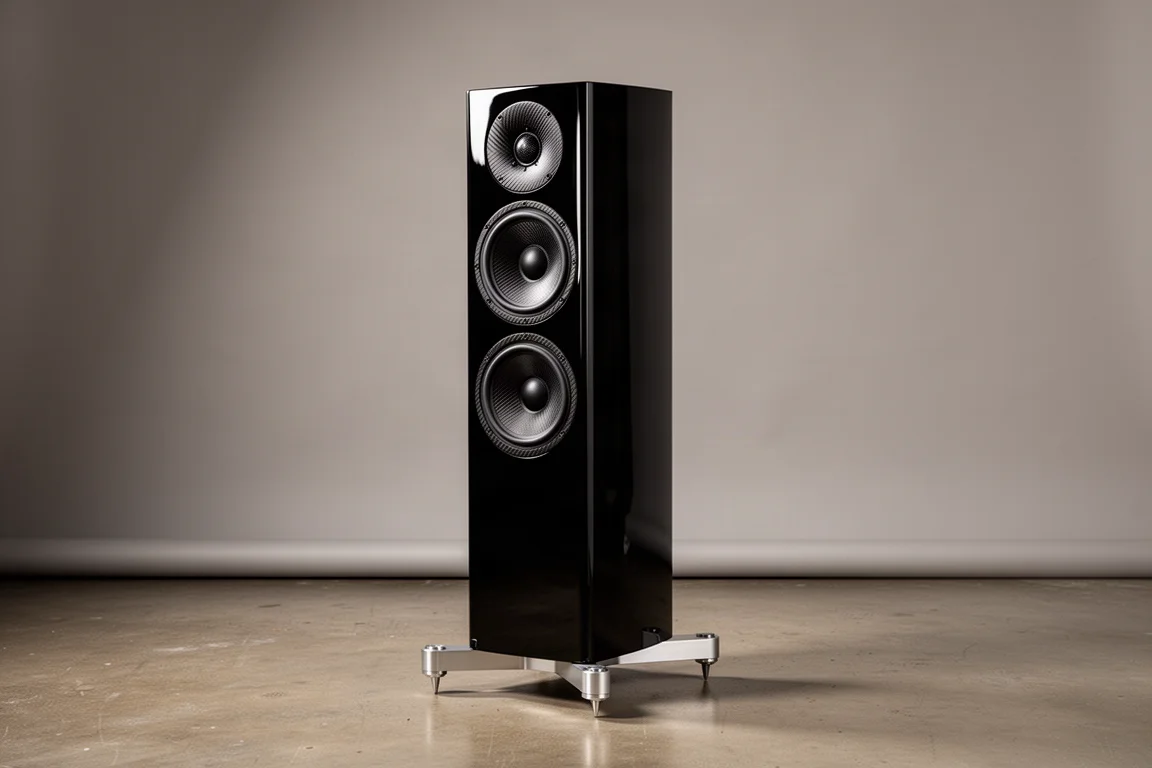
Acoustic Energy AE509 Review: A Slim Floorstander With Deep, Defined Bass
A practical look at the Acoustic Energy AE509, a slim floorstanding speaker with carbon fibre drivers, deep and well-defined bass, and an easy-going character that rewards careful system matching.
Floorstanding Speakers
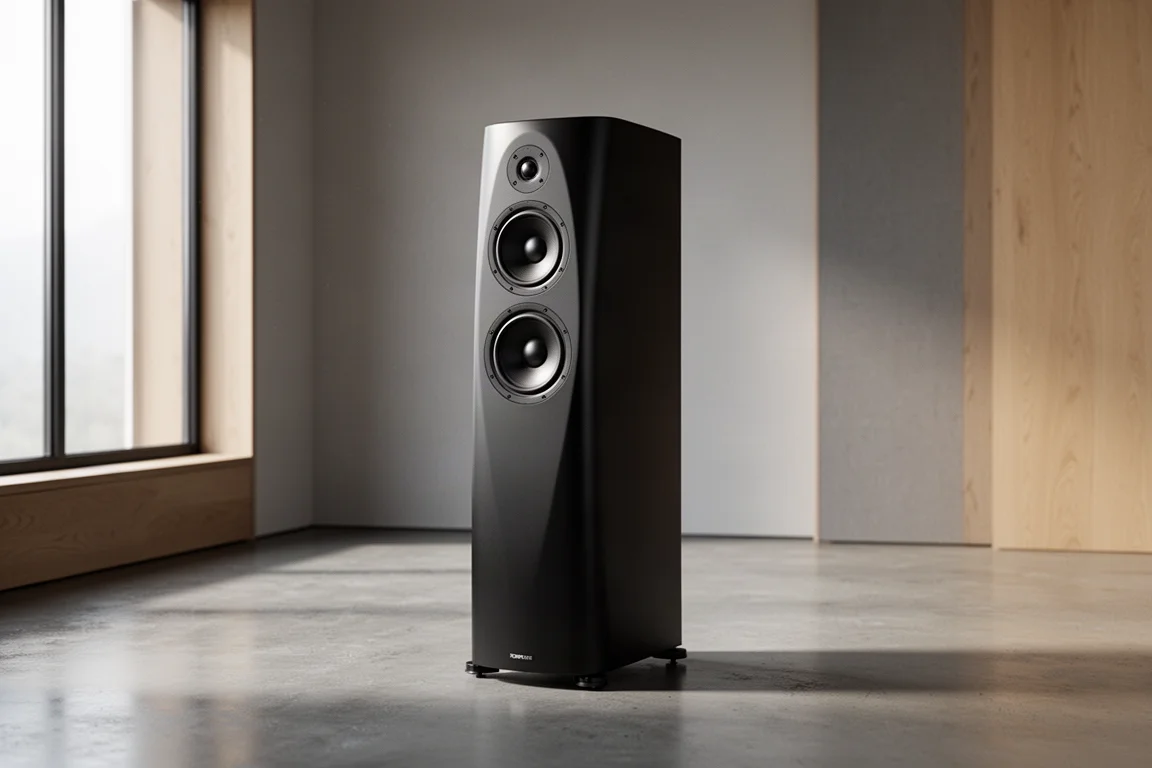
Arendal 1528 Tower 8 Review: Reference Neutrality With Real Demands
A close look at the Arendal 1528 Tower 8, a nearly five-foot, 200-pound floorstander that rewards generous space, serious power, and high listening levels with reference-grade neutrality.