Road Bikes
Sarto LAV 71 Review: Inside a 5.5 kg True Monocoque Hill Climb Bike
A close look at the Sarto LAV 71, a 5.5 kg hill climb build with a claimed 670 g true monocoque frame, aggressive geometry and a price tag of around EUR 21,000.

Introduction
The Sarto LAV 71 is not a bike most riders will ever own, and that is exactly what makes it worth a closer look. It is an Italian carbon frameset built into a complete machine that weighs 5.5 kg, around 300 g lighter than the previous season’s build, and it is the bike the reigning men’s national hill climb champion, Andrew Feather, races on.
Two numbers frame the whole story. The frame is quoted at roughly 670 g, and the finished bike is priced at about EUR 21,000, which works out at close to GBP 3.78 per gram. That combination of very low weight and very high cost tells you almost everything about who the LAV 71 is built for.
This guide covers what is actually inside the frame, how it behaves on a climb, what the build includes, and where the money stops making sense.
Who the Sarto LAV 71 Is For
Hill climbing rewards one quality above all others: stiffness to weight. The LAV 71 is designed around that single ratio, so it makes most sense for riders who race short, steep ascents and want every gram accounted for.
This season’s national championship course is a sharp effort of roughly three minutes, very different from the long, steep climb used the year before. A bike like this is set up for exactly that kind of explosive test, where seconds separate the top riders.

It is also a machine for riders who already know their position, their gearing and their tyre pressures, because very little about it is forgiving. The geometry is aggressive and race oriented, the wheelbase is short, and the clearances are tight.
If you want a comfortable bike for long days in the saddle, this is the wrong machine. The LAV 71 belongs at the sharp end of amateur racing, where a rider is chasing seconds on a climb and has the budget to match the ambition.
Frame Technology: Monocoque Construction and Carbon Layup
Sarto builds the LAV 71 as a true monocoque, which means the frame comes out of a single mould with no lugs, no bonded tubes and no joins. The brand claims this is one of only a small number of genuine monocoque frames available, and that around 99% of carbon frames are instead produced by bonding multiple carbon tubes and pieces together. The process is demanding and costly, which is part of why the frame carries the price it does.
That claim also raises a question about marketing language. Some brands use wording such as multiple monocoque structures or modified monocoque construction. Read in isolation, statements like those can be accurate, but they do not describe a true monocoque frame in the sense Sarto uses the term. Buyers comparing high end framesets should treat the word monocoque carefully rather than assuming it always means a single moulded structure.
The material story here is unusually transparent. Sarto specifies NTPT high performance carbon textiles with a dense unidirectional weave of up to 29 plies, against the four or five plies typical of standard carbon fabric. The brand states that this produces a higher stiffness to weight ratio than is usual in frame manufacturing, which is the quality hill climb riders value most. The 670 g frame figure reflects that approach, and further weight reductions are in development, since removing another 100 g from a frame this light would be a significant step.
Ride Feel and Geometry
The LAV 71 changes direction from the previous version of the frame. Where the earlier model was more relaxed, this one is far more aggressive and race oriented, and the difference is obvious on a climb. Acceleration is immediate, and the frame stays stiff under power despite its low weight.
The wheelbase is almost 4 cm shorter than the Cannondale LAB 71 raced in previous seasons. Everything sits tight, with the tyres close to the frame, and the compact package translates into a bike that feels rapid the moment you press on the pedals.
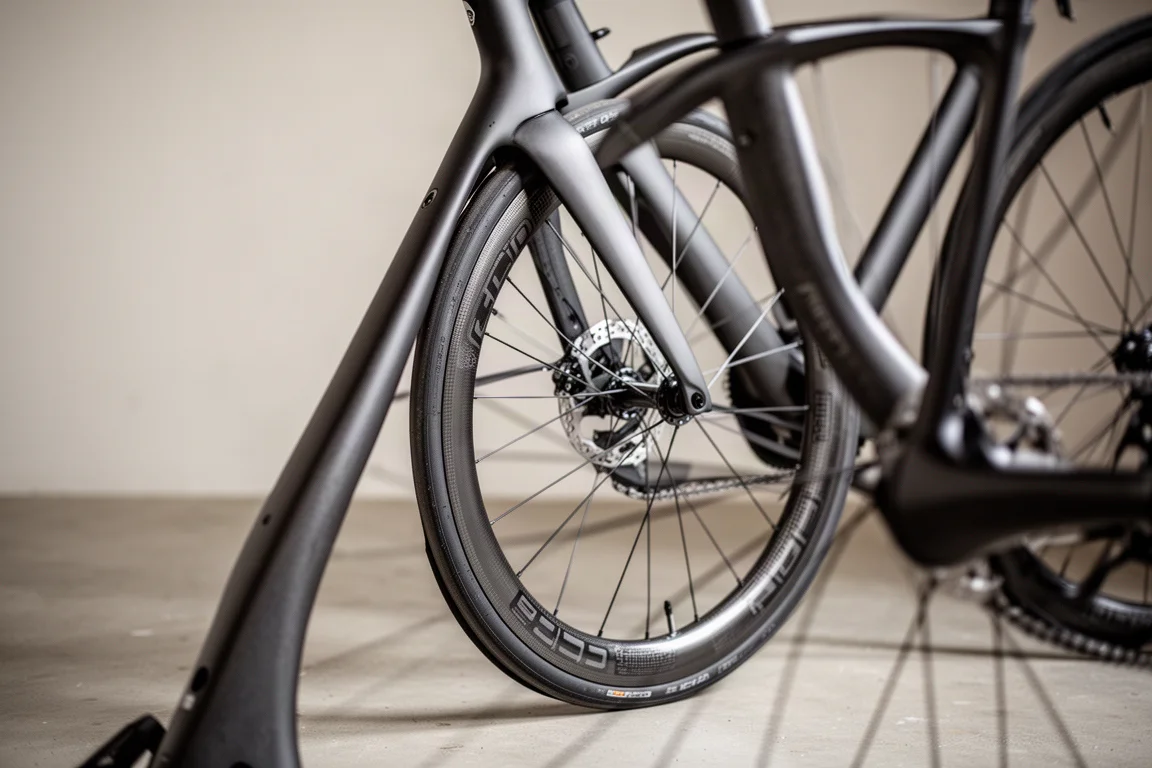
Tyres are 23 mm tubulars, narrow by current standards, and the race day choice is a lightweight track oriented tubular with no puncture protection at all. That makes pressure selection part of the strategy: just under 60 PSI in wet conditions and around 75 PSI on a dry day. Test rides were done in Italy near Monte Grappa, at the foot of which Sarto is based, in the heat of late August.
The narrow rubber and tight clearances are worth noting if you ride rough or wet roads. This is a setup built for a dry, grippy climb on race day rather than for general training.
Build Details and Components
The drivetrain is Shimano Dura-Ace Di2 12-speed, the same groupset used the previous season and, in the owner’s assessment, among the lightest and most efficient options available for a frame of this type.
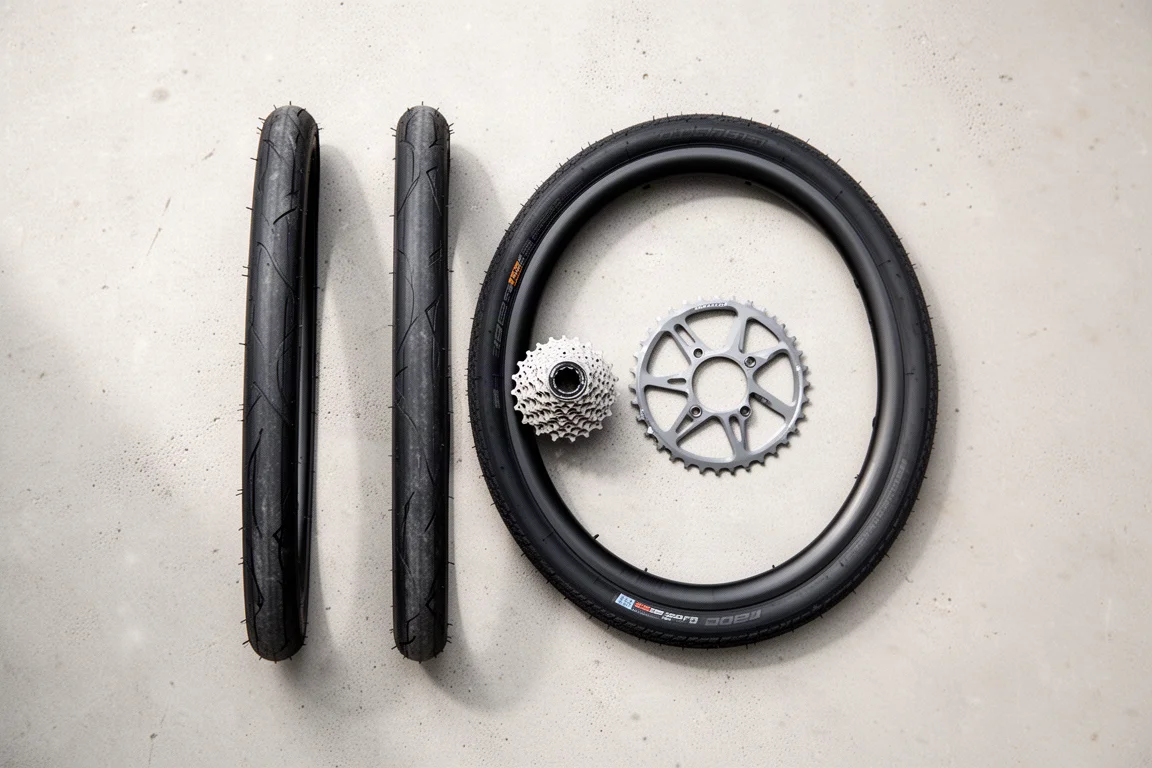
Rotor cranks carry the power meter, and the current unit has a thinner, lighter profile than the previous version, which keeps the build consistent with the frame’s weight focus. Gearing is a 39-tooth front ring paired with a 30-tooth rear cassette. The front ring is a standard design rather than a narrow wide 1x ring, and no chain catcher is fitted. The reasoning is that 12-speed drivetrains retain the chain more reliably on an ordinary ring than 11-speed systems did, and testing supported that conclusion.
Finishing kit comes from Sarto, with cables routed internally through both the stem and the bars. The result looks clean, though it makes the build slower and more fiddly for a mechanic, since every brake hose has to pass through small openings. Dura-Ace SPD pedals with a large platform complete the contact points, and small 3D printed lights keep the build tidy.
Things to Consider Before Buying
The first consideration is the price. Around EUR 21,000 for a complete build, or roughly GBP 3.78 per gram, puts the LAV 71 well beyond most riders, and the premium is tied directly to the monocoque construction and the carbon specification behind it.
The second is whether that construction actually changes anything for you. For riders who are not producing very high power, a true monocoque frame offers little practical advantage. A conventional carbon frame is more than adequate for the vast majority of riding, and the difference between the two is difficult to notice without the watts to expose it.
Then there is fit and setup. The geometry is aggressive, the wheelbase is short and tyre clearance is minimal, so tyre choice is limited and the riding position needs to suit the frame’s race oriented shape. Race day tubulars with no puncture protection add another layer of commitment.
None of these are flaws in the design. They are the consequences of building a bike for one specific job, and buyers should decide whether that job is theirs.
Buying Advice
The LAV 71 makes sense for a narrow group of riders: those competing in hill climbs, where stiffness to weight is the main performance lever, and who are comfortable spending at the top of the market to get it. If that describes your season, the frame’s low weight, its stiffness and its short wheelbase all point in the same direction.
For everyone else, the case is harder. A standard carbon frame will handle the same climbs with very little practical penalty, and the money saved can go towards wheels, a power meter or simply more riding.
If you do decide to go ahead, work through three things first. Check that the aggressive geometry suits your position and flexibility, confirm your wheel and tyre plans against the tight clearances, and match your gearing to the gradients you actually race on. The 39-tooth front ring and 30-tooth cassette here are tuned for a specific kind of climb, so a different course may call for a different setup.

It also helps to buy with the whole build in mind. The frame is the centrepiece, but the groupset, cranks and finishing kit all contribute to the final weight, and every component choice moves the cost per gram.
Conclusion
The Sarto LAV 71 is a focused, expensive and impressively light hill climb machine. Its 5.5 kg build, roughly 670 g frame and true monocoque construction set it apart from mainstream carbon framesets, and the aggressive geometry makes it feel fast the moment the road tilts upwards.
The trade offs are just as clear. At around EUR 21,000, with tight clearances, an uncompromising position and race day tubulars, it is a bike for a specific rider with a specific goal. If that goal is a fast hill climb, the LAV 71 delivers exactly what it promises. If it is not, a conventional carbon frame remains the smarter purchase.
Product link
View more details for Sarto LAV 71
This product is mentioned in the review. Check the specifications, options, and compatibility before buying.
View more details for Sarto LAV 71Further reading
Related Reviews

Road Bikes
10 New Road Bikes Worth Watching: Aero, Titanium, Steel and Endurance Standouts
A practical roundup of 10 new road bikes, from aero flagships chasing single-watt gains to titanium, steel and endurance platforms built for real roads.
Road Bikes
2026 Tour de France Road Bikes: Six Race Machines Worth a Closer Look
Six race bikes from the 2026 Tour de France grid, reviewed for paint, silhouette, wheels and the specification details that matter to buyers.

Road Bikes
3T Strada Italia Review: A Radical Aero Road Bike That Rides Smooth
A made in Italy carbon aero road bike with a deep head tube, wide tire clearance and a genuinely comfortable ride. Here is what to know before buying.