Soundbars
Samsung Q990F Review: A New Subwoofer, Familiar Flagship Sound
Samsung's Q990F keeps the 11.1.4 Dolby Atmos blueprint and swaps in a smaller, more linear subwoofer. Here is what buyers should know before choosing it.
Introduction
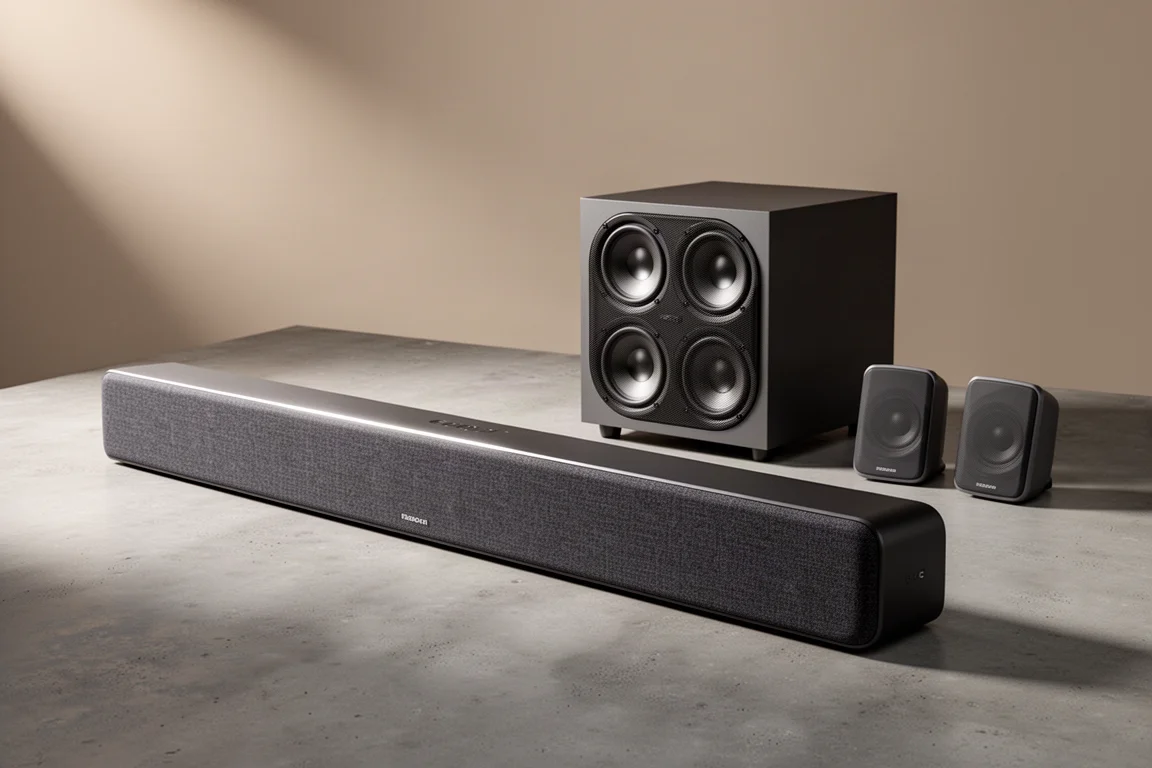
The Samsung Q990F is the latest flagship in Samsung’s long-running Q series of all-in-one Dolby Atmos soundbar systems, and the most notable change this generation sits on the floor: a completely redesigned subwoofer. The rest of the package follows a familiar blueprint, an 11.1.4 channel system made up of a main soundbar, a single wireless subwoofer, and two wireless surrounds, refreshed with software and voicing tweaks rather than a wholesale redesign.
Samsung has also added Eclipsa Audio, an open-source surround sound format co-developed with Google that is positioned as an alternative to Dolby. It was announced only recently, so there is very little material that demonstrates it yet, but the Q990F is compatible should that content appear. At roughly $1,500, the system stays in familiar territory for a flagship soundbar package.
Who This Product Is For
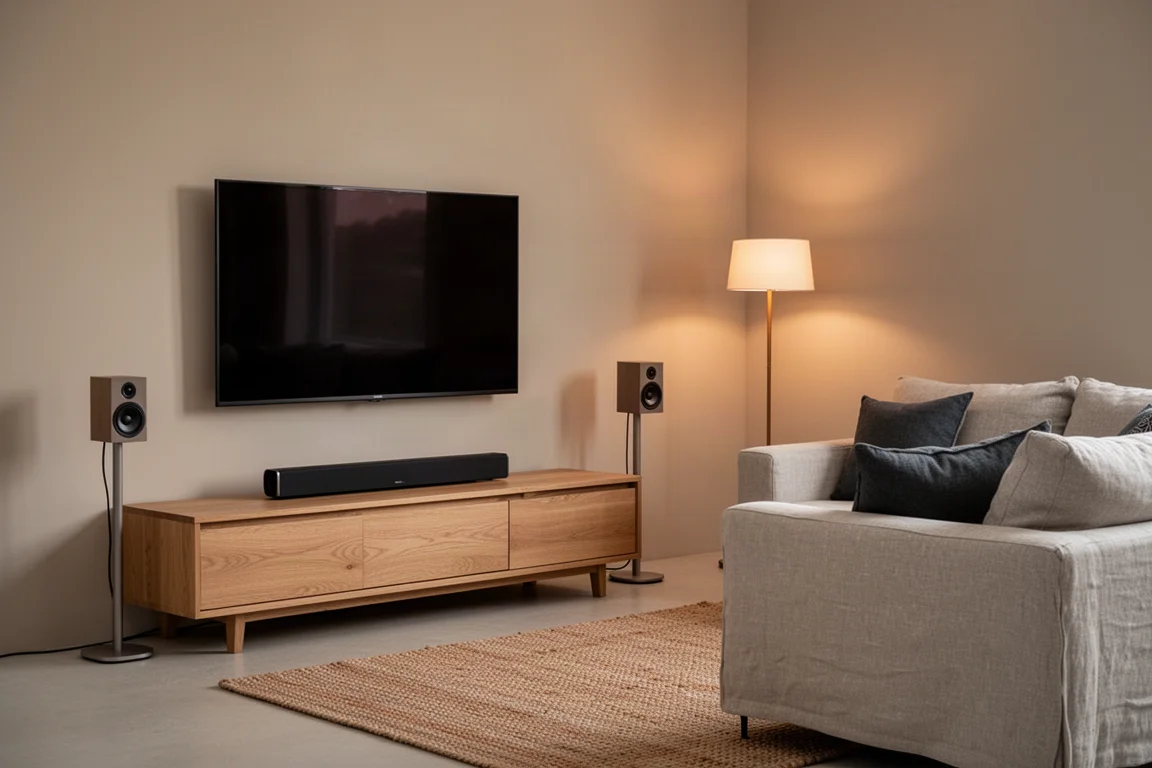
This is a system for listeners who want a complete Dolby Atmos setup without buying separate components, amplifiers, or speaker pairs. Everything needed for an 11.1.4 presentation is in the box, and setup is as close to plug and play as soundbars get: the surrounds pair wirelessly, and a single HDMI cable to the television’s HDMI ARC port is enough to get sound running.
It also suits buyers who value convenience. Volume control works over HDMI CEC, so a television remote can run the system day to day, and the SmartThings app unlocks network features and the deeper settings. The bundled remote works as well, but the small display on the bar makes menu adjustments slow, so the app is the more practical route for anyone who wants to fine-tune the sound.
Where it is less suited is two-channel listening. The surrounds can be moved to the front of the room in what Samsung calls front speaker mode, and that feature works, but it does not transform the Q990F into a true two-channel setup.
Main Strengths
The Q990F arrives balanced out of the box. Depending on the room, the subwoofer volume may need adjusting to blend with the rest of the system, but beyond that there is very little that needs changing. Four sound profiles are available, standard, surround, game pro, and adaptive sound, along with bass and voice enhancement toggles, and there is still no custom profile.
Cinematic 11.1.4 Dolby Atmos Performance
The system totals 15 channels, and the mode you choose decides how many of them you actually hear. Standard mode plays the incoming signal one for one: a stereo track comes out of the left and right channels of the bar with bass from the subwoofer, and a 5.1 feed uses only those corresponding channels. Surround, game pro, and adaptive sound modes instead remix everything that comes in to use the full channel count, turning stereo into Atmos and basic 5.1.2 Atmos into a 15-channel presentation.
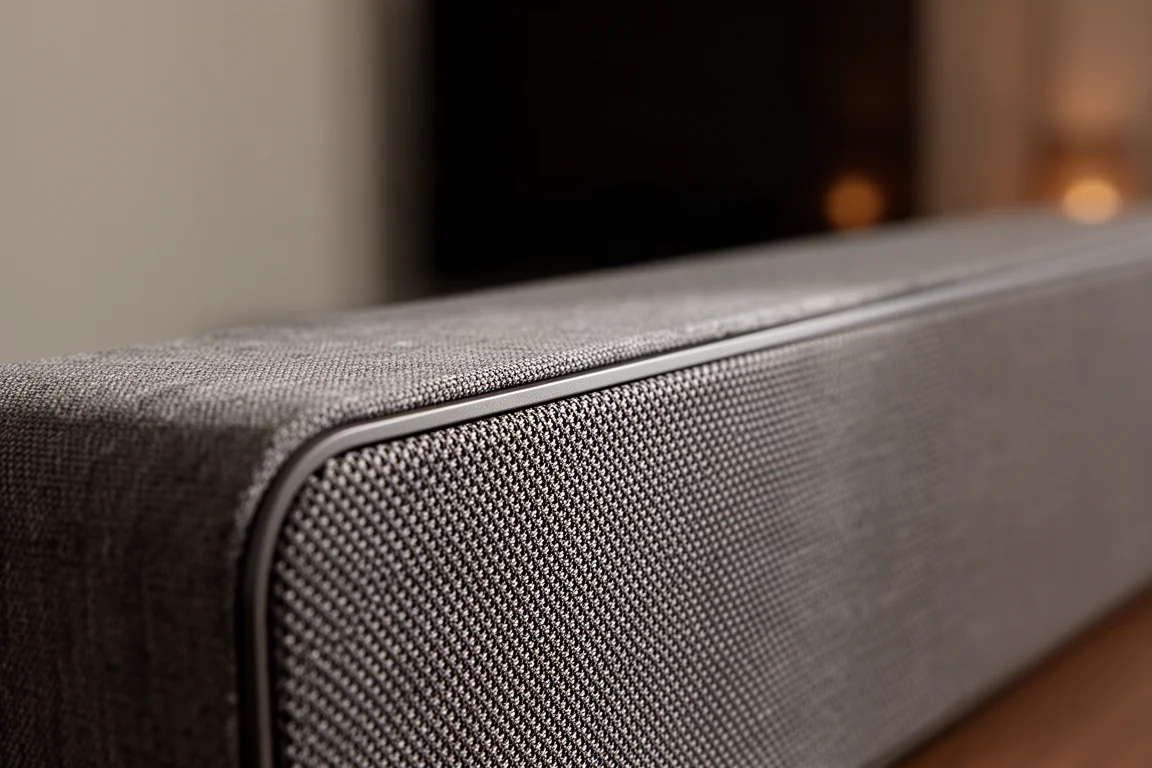
Surround and adaptive sound are the modes that make the most of the system, and both keep the sound cinematic and enveloping across films and television. Standard mode remains useful for one reason: it is the only profile that offers more granular EQ control beyond the basic tone controls and the bass and voice toggles.
A Redesigned Subwoofer
The new subwoofer is the headline change. It uses dual opposing 8-inch drivers in a smaller cabinet, replacing the taller ported design of the previous generation. Samsung’s marketing points to a more linear response, and that holds up in practice: in-room results are more linear than before, with output reaching just below 30 Hz with a decent amount of headroom.
The character of the bass has shifted along with the design. The new subwoofer favours finesse over brute force, delivering what is arguably the most nuanced bass available from a mass market all-in-one soundbar system under $2,000. Listeners who prefer a booming, punchy low end may still prefer the older ported subwoofer from the previous generation.
Voice Enhancement, Sound Modes, and Room Correction
Active Voice Amplifier is effective at what it sets out to do. With it engaged, there is a clear lift in the upper mid-range and treble, and dialogue gains presence and intelligibility. That boost can also sound less natural than the system’s baseline response, which makes it best treated as a tool for difficult dialogue rather than a default setting. The Q990F is intelligible on its own, and it performs well with the feature switched off.
Room correction comes in the form of SpaceFit Sound Pro, which analyses the system’s output in real time using microphones built into the bar. It can improve results across different rooms, but the before and after difference is subtle rather than transformative compared with more complex room correction systems.
Things to Consider Before Buying
Subwoofer Placement Changes the Result
Placement matters, even with a subwoofer designed to complement a mainstream soundbar. Keeping the subwoofer close to the bar produces the most coherent sound from top to bottom. When it sits toward the back of a room, parts of the mix, vocals in particular, can be heard coming from the subwoofer, which makes the presentation feel disjointed. Along the front wall, that problem disappears, at the cost of a little bass output.
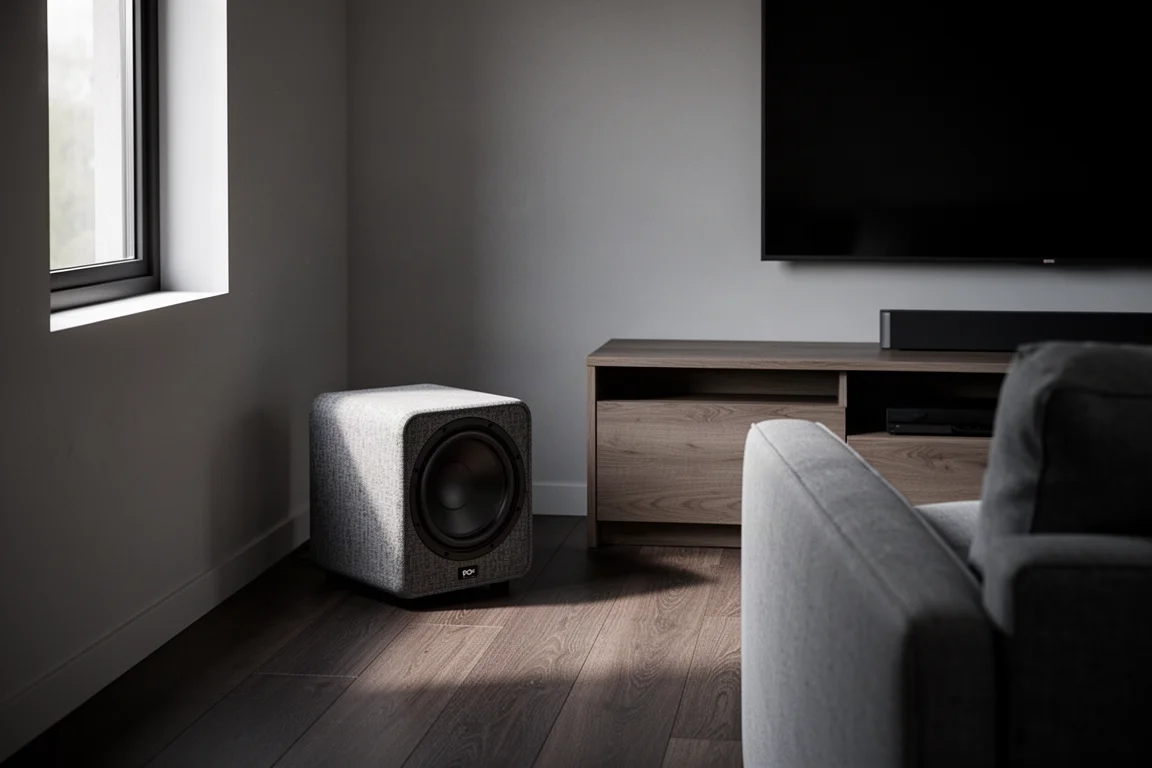
The trade-off is worth understanding before purchase: a rear-corner position that often measures well with other subwoofers may not suit this one, and the front wall is the safer starting point.
High-Volume Behaviour and Cabinet Noise
At high listening levels, with peaks around 90 to 95 dB, the subwoofer cabinet creaks and rattles as the drivers bottom out. The previous generation subwoofer also bottomed out near those levels, but its ported construction hid the mechanical noise more effectively. Keeping in-room volume below about 90 dB avoids the issue, and results will vary with room size and listening habits.
It Is Still Largely the Same System
The main criticism of the Q990F is how familiar it is. Apart from the subwoofer, the system is largely the same as the one Samsung has offered for the past three or four years, and setup is identical to the previous generation. Designing an entirely new subwoofer required new molds, which makes the absence of a wider refresh more noticeable. There is also no path for existing owners to pair the new subwoofer with an older system, which could have produced an 11.2.4 layout, and no firmware option to do so.
Buying Advice
Owners of the previous generation Q990D do not need to upgrade. The changes in the Q990F are not substantial enough to justify replacing a system that already delivers a similar experience from roughly 100 Hz to 20 kHz, where the two are difficult to tell apart.
For anyone buying a first Dolby Atmos soundbar system, the Q990F is the straightforward choice, particularly if it is priced the same as the older Q990D, as it was at the time of writing. Should the Q990D be discounted, the older model becomes the better value, since it delivers essentially the same performance for less.
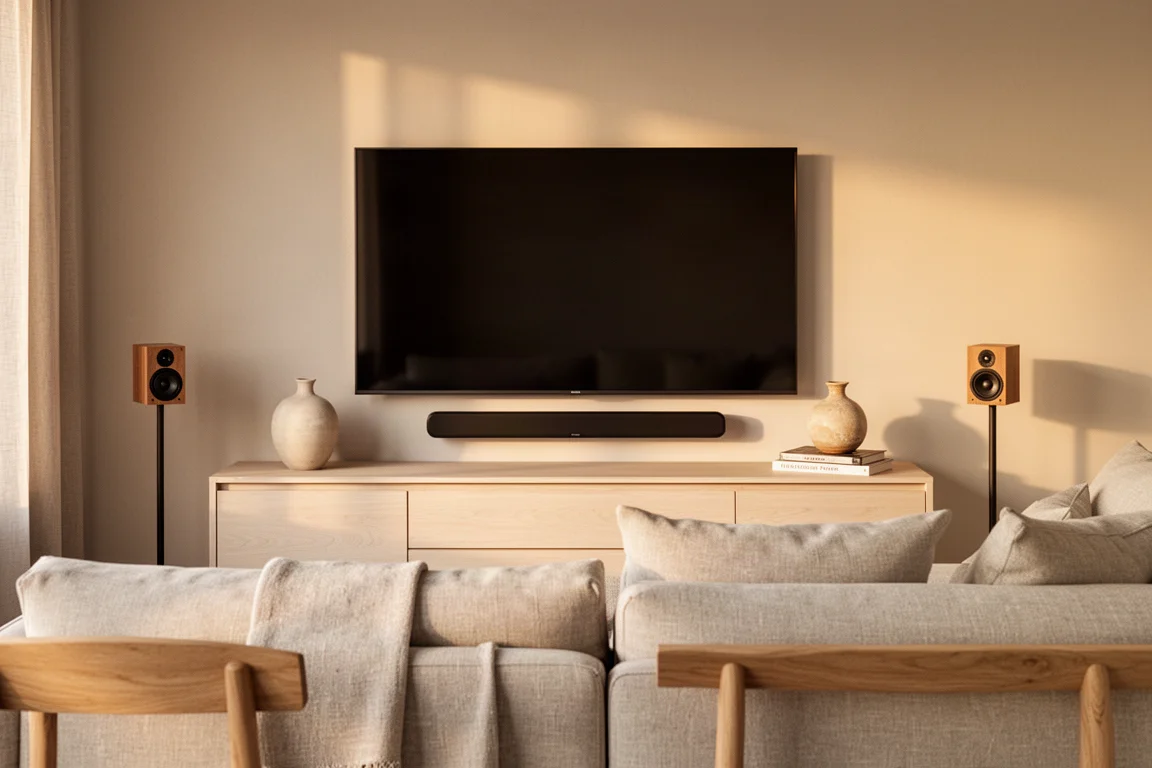
Price is the other half of the value story. Against the Sony Bravia Theater Quad, the Q990F is every bit as cinematic and nearly as enveloping for roughly half the cost, and the Sony system only reaches its full potential once the separately sold SW5 subwoofer is added. Where Sony pulls ahead is the more traditional discrete home theater experience and the more convincing two-channel presentation that its four identical speaker panels make possible. That is a genuine advantage, but it costs more to get there.
The Q990F’s other close rival is the Sonos stack, built around the Arc Ultra, the Sub Gen 4, and a pair of Era 300 speakers. It is the more expensive option, though Sonos has become more competitive on price recently, and the extra investment is worth it for the tuning and the resulting sound. Channel count favours the Q990F, but that advantage is harder to notice than the numbers suggest: the Sonos system is just as flexible for two-channel listening with better results, and the Sub Gen 4 handles spirited listening better while playing deeper.
Conclusion
The Samsung Q990F is a polished, easy to live with flagship soundbar system with a genuinely improved subwoofer. Its bass is more linear and more nuanced than before, the 11.1.4 presentation remains cinematic, and setup is about as simple as a full surround system gets. The trade-offs are real but manageable: the subwoofer rewards careful placement, it can protest at very high volumes, and the rest of the system is a familiar design rather than a new one.
For first-time buyers who want an all-in-one Atmos system at roughly $1,500, it is an easy recommendation, and it is especially compelling when it matches the price of the previous generation. Existing Q990D owners can comfortably sit this one out.
Product link
View more details for Samsung Q990F
This product is mentioned in the review. Check the specifications, options, and compatibility before buying.
View more details for Samsung Q990FFurther reading
Related Reviews
Soundbars
Bang & Olufsen Premiere Review: A Compact Soundbar Built to Last
A close look at the Bang & Olufsen Premiere, a compact soundbar with deep bass for its size, automatic sound profiles, and a clear modular upgrade path.
Soundbars
Best Dolby Atmos Soundbars: Six Picks for Movies, Music, and Small Rooms
A practical roundup of six Dolby Atmos soundbars, from compact dialogue-focused bars to expandable systems and an all-in-one flagship.
Soundbars
Bluesound Pulse Cinema Review: A Music-First Soundbar With a Software Catch
A close look at the Bluesound Pulse Cinema, a 3.2.2 soundbar with a genuinely expressive midrange and natural tone, plus the app and expansion limits worth knowing before you buy.