Soundbars
Samsung Q990B Review: An 11.1.4 Dolby Atmos Soundbar System to Beat
A close look at the Samsung Q990B, an 11.1.4 channel Dolby Atmos and DTS:X soundbar system with 22 speakers, wireless surrounds and deep adjustability, plus the trade-offs worth knowing before you buy.
Introduction
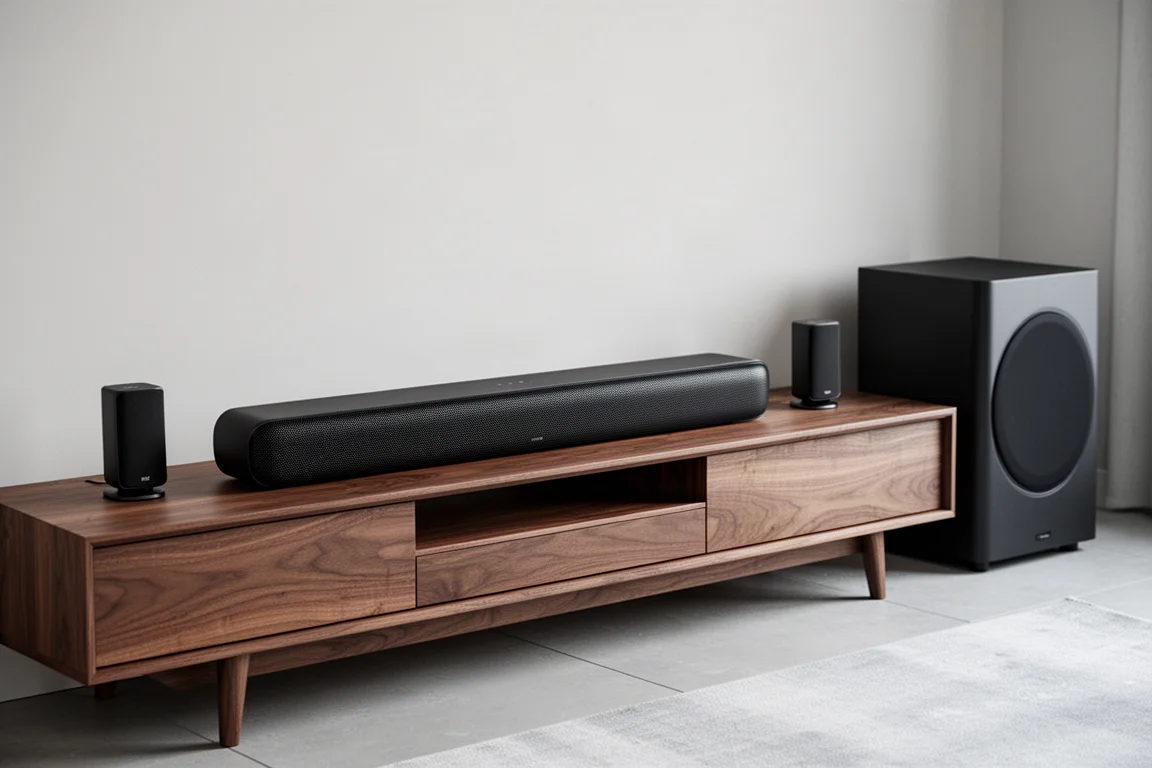
Flagship soundbars have become genuine alternatives to entry-level home theater speaker packages, and the Samsung Q990B sits at the center of that shift. It is an 11.1.4 channel Dolby Atmos and DTS:X system built around a main bar, a pair of wireless surround speakers and a wireless subwoofer, and it takes the place of the Q950A in Samsung’s lineup.
On paper the generational changes look small. Total power rises to a modest 656 watts, and the speaker count stays at 22 across the bar, the surrounds and the subwoofer. The more meaningful differences show up in the chassis design, the amount of control available to the listener, and the way the system behaves in real rooms.
This review covers what the Q990B does exceptionally well, where it asks for patience, and who should put it on a shortlist.
Who This Soundbar System Is For
The Q990B is for listeners who want true surround sound without running speaker cable around a room. Because the surrounds and the subwoofer are wireless, the system suits open-plan living spaces where a conventional receiver and a wired speaker array would be impractical.
It is also a natural fit for Samsung display owners. Q Symphony lets the bar work in tandem with the speakers inside a compatible Samsung TV, and Dolby Atmos playback can be handled wirelessly as part of that arrangement.
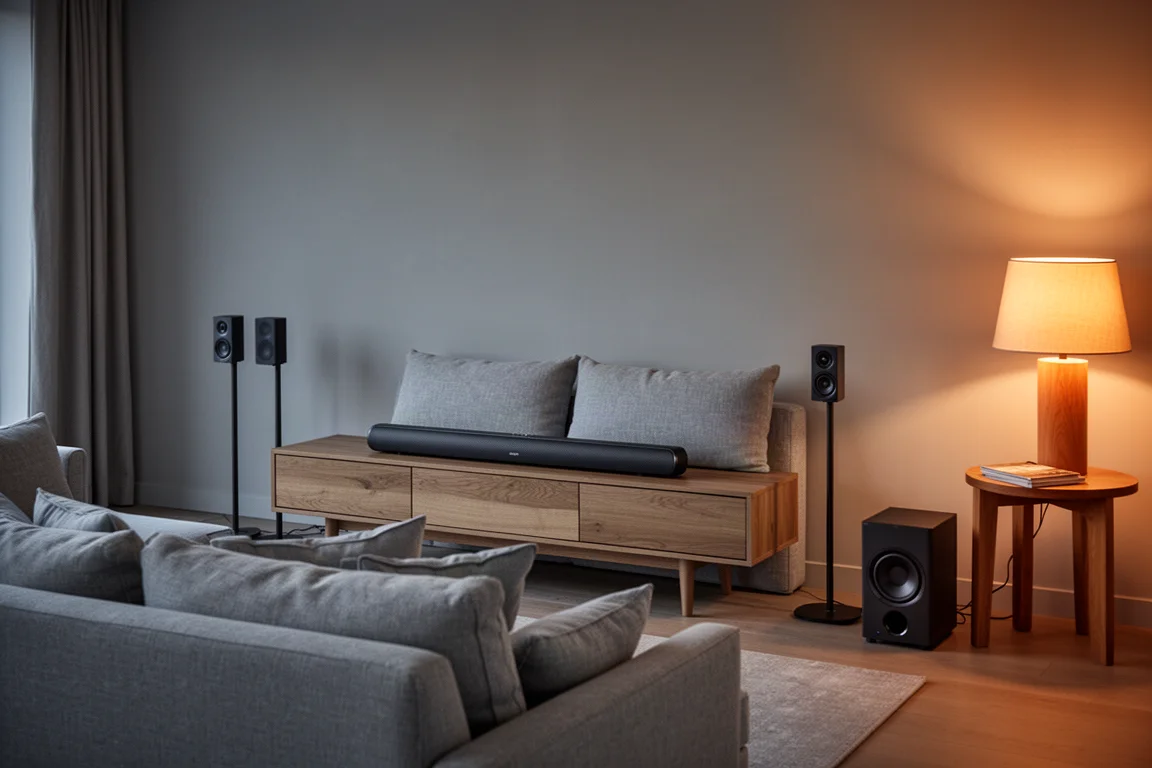
The system also rewards anyone who likes to fine-tune. The SmartThings app exposes individual speaker volume, tone controls and room equalization, which is exactly the kind of adjustability that helps a system settle into a room with hard floors, large windows or an awkward seating position.
Main Strengths: Dolby Atmos and DTS:X Immersion
Immersive audio is the headline. Four upward-firing height drivers work alongside side-firing reflective speakers on the bar and on both surround speakers, producing a 360-degree field that travels front to back with no obvious sonic gaps, even in a large open-plan space.
Watching the climactic dogfight in Top Gun: Maverick, the sense of action passing overhead is convincing enough to make you check whether in-ceiling speakers have somehow been connected. The effect comes from the height array alone, and it works.
Music holds up just as well. Dolby Atmos mixes place vocals and instruments firmly front and center while ambient and spatial cues move around and above the listening position, something a two-channel setup cannot replicate. Switched to adaptive sound mode, ordinary stereo tracks sound surprisingly hi-fi, with a balanced presentation, fine nuance and a strong focus on dialogue and vocals.
Setup, Control, and the SmartThings App
Setup is straightforward. The system can be configured with the included remote or with the Samsung SmartThings app for iOS and Android, and the app is the better route: it gives easier control over individual speaker volumes, a feature new to this generation, along with tone controls and room equalization.
Auto EQ handles room correction and is worth running, though its effect is modest. Measurements taken with and without it engaged show only small differences, so it is not a substitute for a more advanced calibration suite. Bass also arrives slightly over-emphasized by default; taking the subwoofer down to around -6 produced a noticeably flatter response and a more seamless handoff between the sub and the bar.
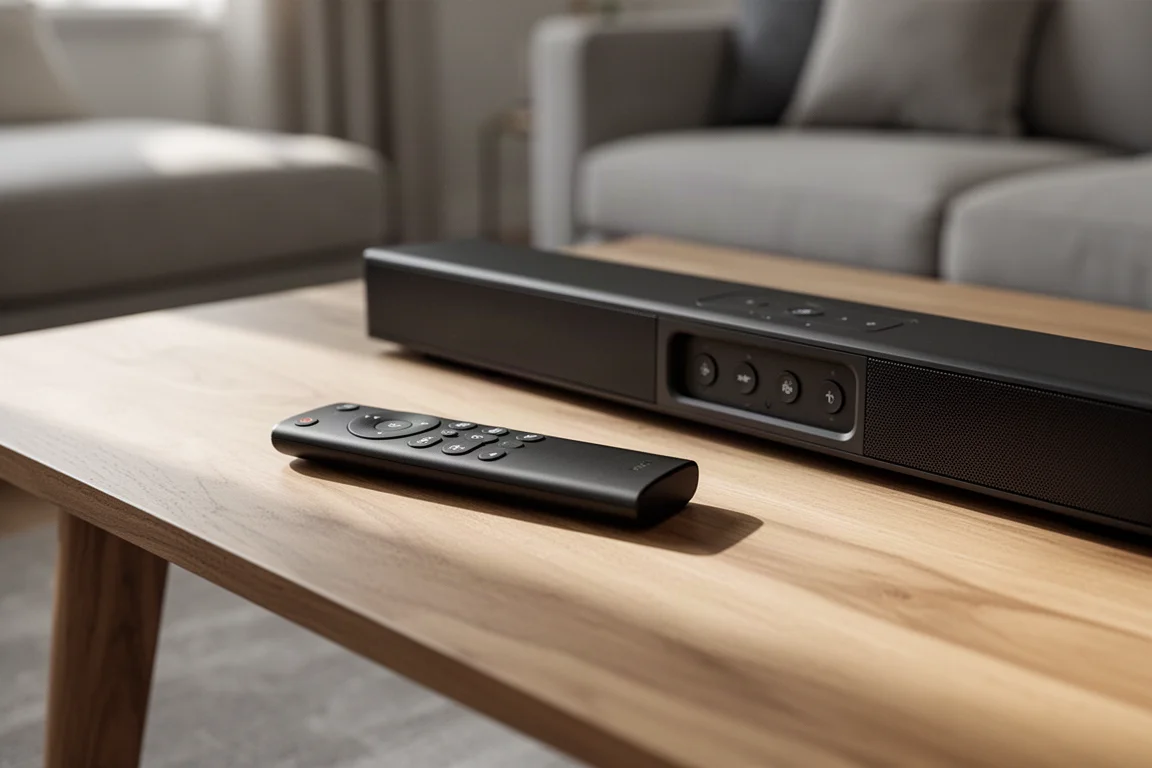
The app is where most of the tuning happens. Raising the side-firing and overhead speakers by roughly three steps made two-channel content more convincing, and the eight-inch woofer proved surprisingly agile once its level was brought under control. It is also worth staying in adaptive sound: the surround, game and standard modes sound noticeably more localized and undercut the system’s greatest strength.
Connectivity is generous. The bar links over HDMI eARC, and the pairing behaves perfectly with an LG C2 OLED. Additional HDMI inputs mean a Blu-ray player or game console can be attached directly for 4K content.
Things to Consider Before Buying
The most significant caveat concerns Sony displays. With an LG OLED, the connection was flawless. With a Sony X95K, getting the two devices to recognize each other’s eARC capability took far more troubleshooting than it should, and the partnership is not plug and play, even though it eventually works well.
The companion app has its own quirks. On an older phone, the SmartThings app became buggy after a round of updates, while the same app performed flawlessly on a newer model, which suggests the issue sits with older hardware rather than with the system itself.
Auto EQ is useful but limited, and the subwoofer needs manual trimming to blend cleanly with the bar. Buyers who prefer to leave everything at factory defaults may find the out-of-the-box balance a little bass-heavy.
How the Q990B Compares to Other Flagship Soundbars
The Sennheiser Ambeo remains the benchmark all-in-one. Its greatest strength is that it packs the majority of its performance into a single chassis, which saves space and simplifies setup, and no rival matches it on that front. For movie watching specifically, the Q990B is every bit the older Ambeo’s equal and arguably superior when it is set up correctly.
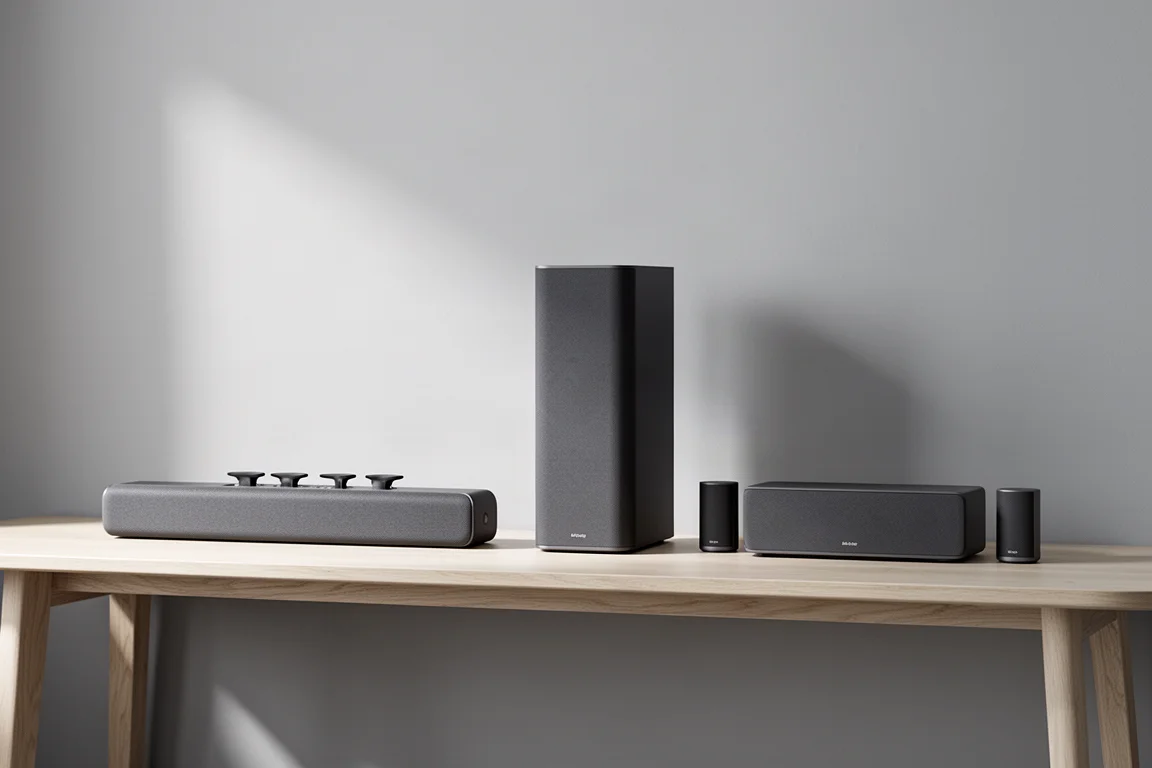
The Sony HT-A9 is a genuinely impressive piece of technology, but it demands more from its owner. Its SW5 subwoofer is a requirement rather than an option, and it benefits from a clean Wi-Fi network. Where ease of use is a criterion, the Samsung is the better choice and sounds just as good. Buyers who have criticized the HT-A9 for the lack of a center channel will also find the Samsung a stronger fit, and dropouts are less likely.
The Sony A7000 is not a system to shortlist in this class. The LG S95QR is a different proposition altogether: it appears best suited to small and medium-sized rooms, while the Q990B can fill just about any space. The Denon Home Wireless 5.1 system retails for roughly the same money and looks and feels more compact, but on performance and sound quality alone the Samsung is the far more capable system.
Should You Upgrade From the Q950A?
No. Measured with identical settings, the sonic differences between the Q950A and the Q990B are slight, and unlikely to be immediately audible. What the newer model adds is adjustability, including per-speaker levels, and a cleaner design that drops the fabric wrap that made the previous bar difficult to keep clean, particularly in homes with pets.
If you already own a Q950A, you still have one of the best soundbar systems on the market, and there is no pressing reason to replace it. If you are shopping fresh, note that Q950A stock still appears online, but typically at full MSRP, sometimes at a higher figure than the new model. Discounts seen so far are not large enough to justify choosing the older system. A closeout near $1,000 would change that calculation, but that is not the current picture.
Buying Advice
Around the $1,700 mark where flagship soundbar systems compete, the Q990B is cross-shopped against the LG S95QR, the Denon Home Wireless 5.1 system, the Sony A7000 with a comparable subwoofer, the Sony HT-A9, and all-in-one options such as the Ambeo.
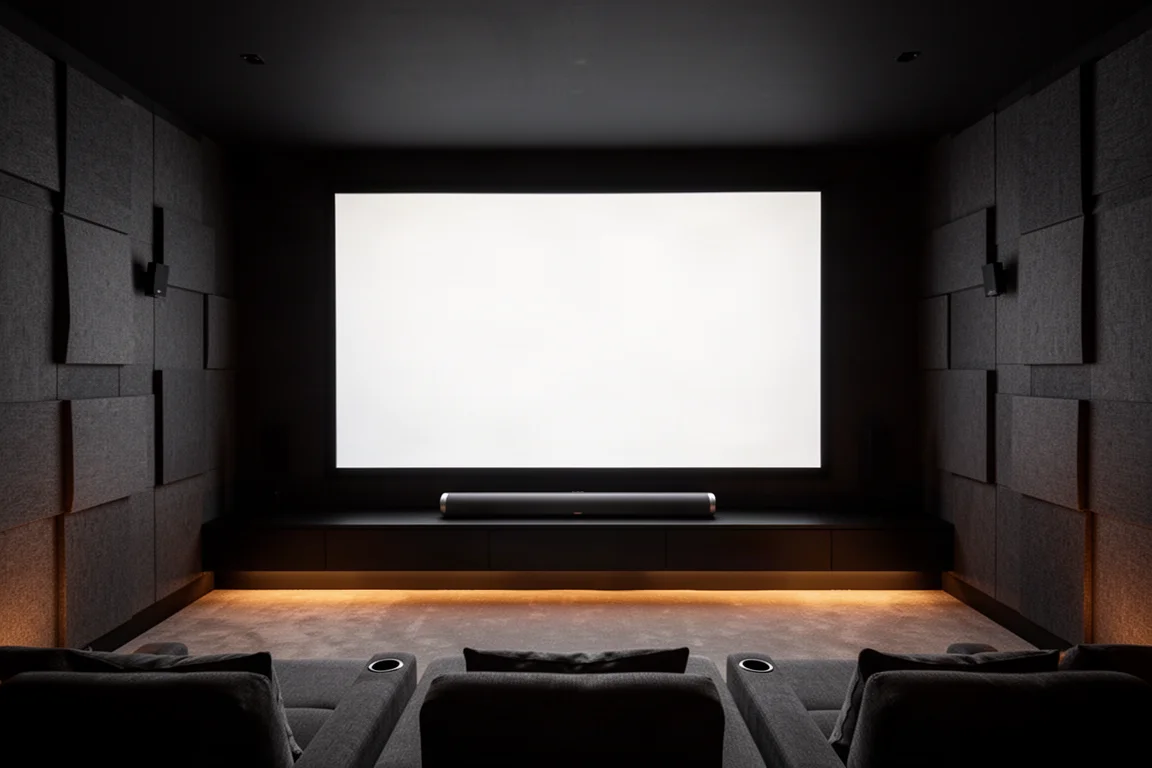
For buyers who can place wireless surrounds and a subwoofer, the Q990B is the most complete package in its class. It can go toe-to-toe with modest to mid-level home theater speaker systems at or near the same price, and it is easy to enjoy and live with day to day.
If space is the deciding factor and an all-in-one bar is the only realistic option, the Ambeo remains the system to beat. If you own a Sony display, set aside extra time for the eARC handshake before committing.
Conclusion
With one practical caveat, the Samsung Q990B is the soundbar system to beat. It recreates a cinematic experience with 22 speakers and a genuinely immersive height and surround array, keeps dialogue clear, and offers a level of adjustment that makes it adaptable to difficult rooms.
For new buyers who want flagship performance without a wired speaker installation, it is an easy recommendation. For Q950A owners, the sensible advice is to stay put and enjoy what is already a very capable system.
Product link
View more details for Samsung Q990B
This product is mentioned in the review. Check the specifications, options, and compatibility before buying.
View more details for Samsung Q990BFurther reading
Related Reviews
Soundbars
Bang & Olufsen Premiere Review: A Compact Soundbar Built to Last
A close look at the Bang & Olufsen Premiere, a compact soundbar with deep bass for its size, automatic sound profiles, and a clear modular upgrade path.
Soundbars
Best Dolby Atmos Soundbars: Six Picks for Movies, Music, and Small Rooms
A practical roundup of six Dolby Atmos soundbars, from compact dialogue-focused bars to expandable systems and an all-in-one flagship.
Soundbars
Bluesound Pulse Cinema Review: A Music-First Soundbar With a Software Catch
A close look at the Bluesound Pulse Cinema, a 3.2.2 soundbar with a genuinely expressive midrange and natural tone, plus the app and expansion limits worth knowing before you buy.