Ski Boots
Salomon S/Pro Alpha C130 BOA Review: Exo Drive, BOA, and a Full Season on Snow
A low-volume 130-flex alpine boot built on a fully redesigned shell. Here is how the Salomon S/Pro Alpha C130 BOA performs across groomers, bumps, park, and technical big-mountain terrain.
Introduction
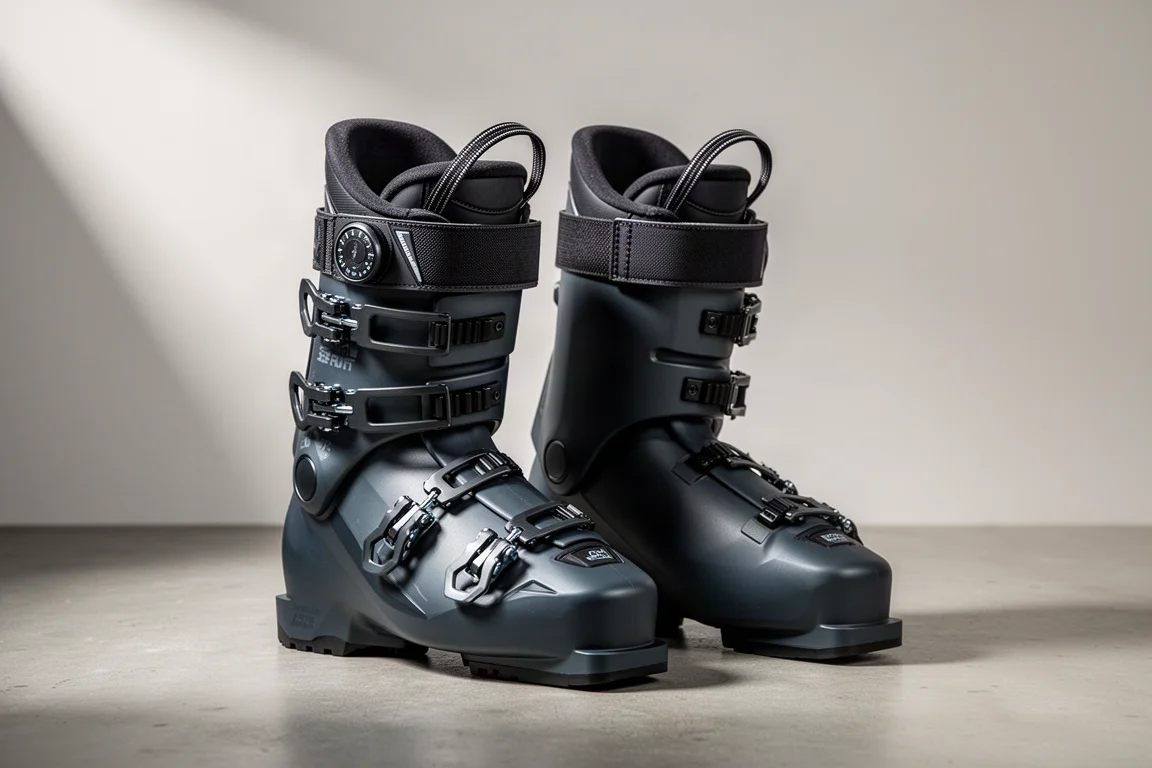
The Salomon S/Pro Alpha C130 BOA is a low-volume, 130-flex alpine boot built on a completely new shell rather than a tweaked version of the previous S/Pro Alpha. Salomon rebuilt the design from the ground up, and the most consequential change is a construction called Exo Drive.
Across close to 180 collective days on snow, spanning groomers, powder, moguls, trees, park laps, and technical big-mountain terrain, the pattern has been consistent. This boot behaves differently from a conventional four-buckle design, and the difference shows up most clearly on the medial side of the shell.
Who This Boot Is For
This is a low-volume boot on a 98 mm last, with an anatomically shaped shell and cuff. Skiers with narrow feet and ankles will find the fit close to the plastic. Skiers with a wider forefoot should expect to spend time with a bootfitter before the fit feels right.
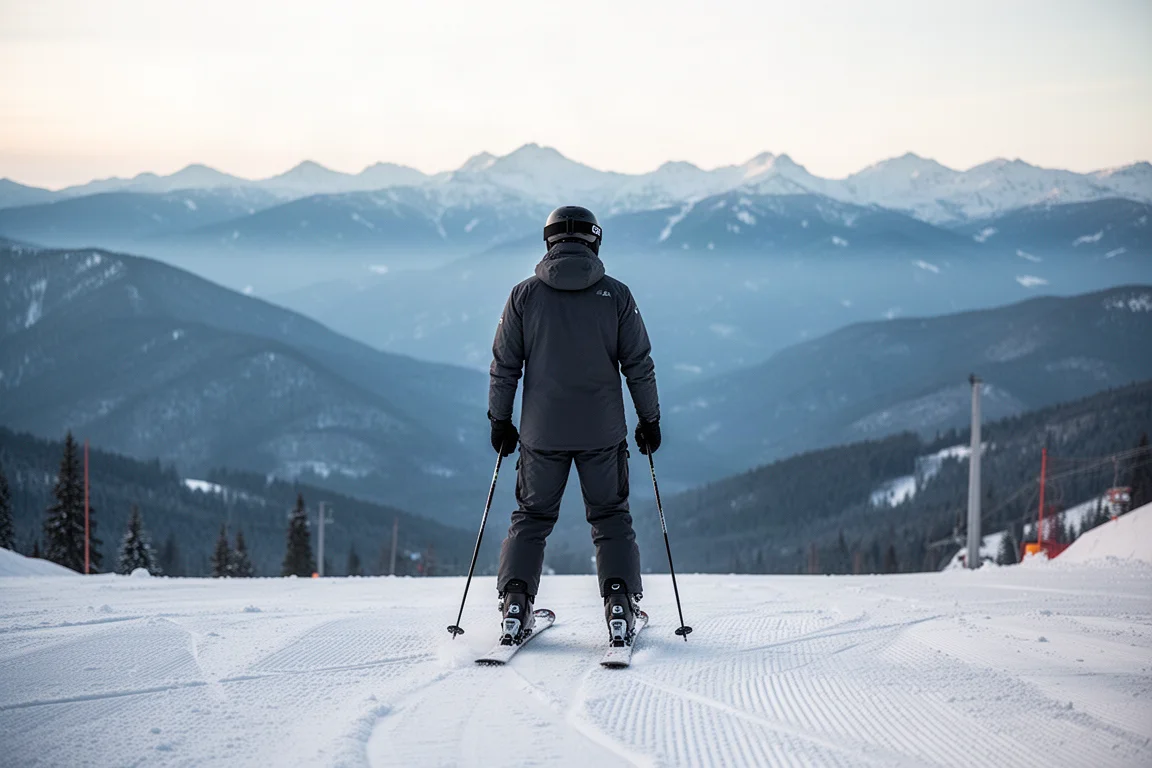
It suits strong intermediates through expert skiers who prioritise edge connection, heel retention, and low weight over the cushioning and forgiveness of a softer recreational shell. It also makes sense for skiers who hike for their turns, because the reduced weight matters over a long day.
Skiers moving from a mid-volume boot into this one should plan on an adjustment period rather than an instant fit.
Main Strengths
Exo Drive and Medial Stiffness
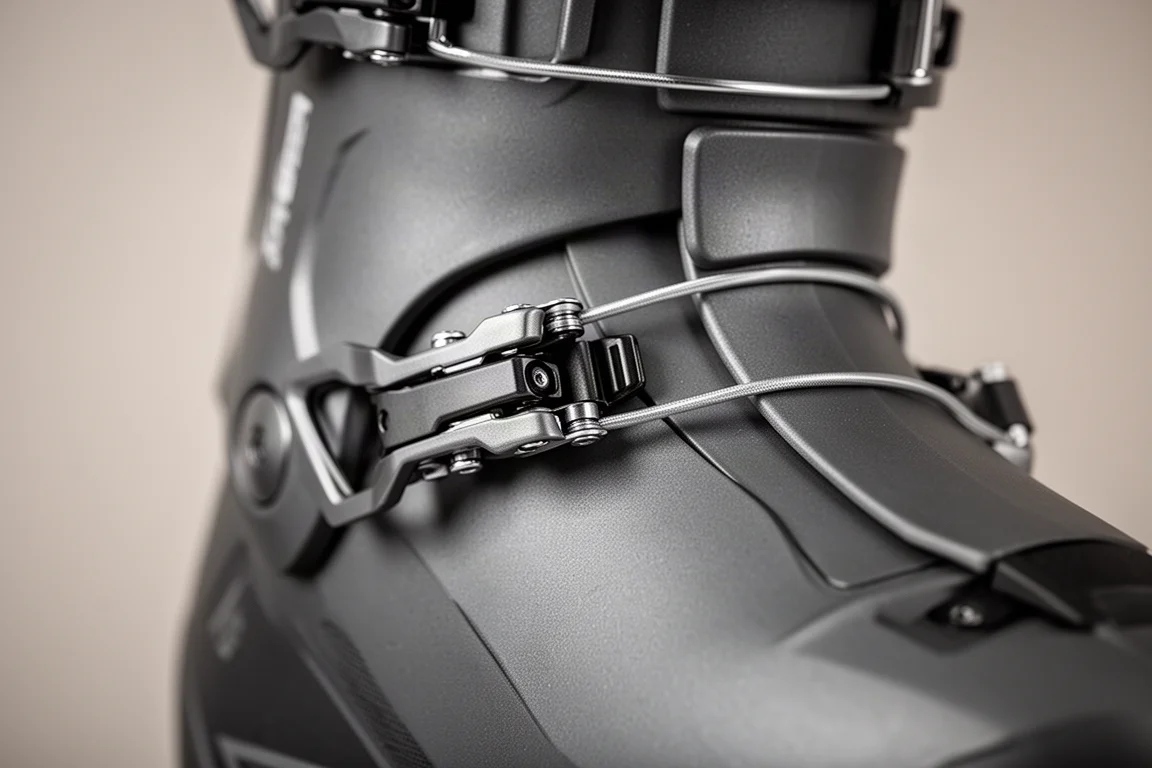
Exo Drive removes the medial hinge and replaces it with an overlapping section of shell plastic. That moves the flex point lower in the boot instead of leaving it at the ankle. The practical result is a much stiffer medial wall: tipping the boot on edge or flexing forward transmits energy more directly, with less of the shell deforming under load.
Because the overlap adds structure, Salomon is able to use a lower-density plastic and still achieve more power transfer than comparable boots in the category. Salomon presented comparison data suggesting roughly 25 percent better power transfer than some comparable boots, alongside a lower weight. A power curve comparison against the previous S/Pro Alpha showed the older boot building force steeply, falling off, then climbing again, while the new shell is more progressive and linear.
Heel Retention and the Repositioned Instep Buckle
The instep buckle has been moved up and angled, and on the medial side it connects to the same piece of plastic that becomes the upper cuff. The buckle does not connect on the lateral side. The effect is that tightening the instep pulls the cuff across and over the foot and back, which is why heel retention is the single most commented-on trait of this boot. Testers consistently described never having felt their heel and ankle wrapped and locked in that way before.
The stock liner is a good one, with lace-up capability. It is not especially dense, but it sits thick over the forefoot, and in a low-volume shell that thickness takes some molding. One tester moved to a low-volume race liner to tighten the forefoot and sit closer to the plastic. With the stock liner, the fit from the ankle back was already very snug.
Light Weight Without Feeling Fragile
The shell plastic is thinner and the boot is lighter than thick-walled 140-flex designs. That weight difference is noticeable when you pick the boot up and again at the end of a long day. What is unusual is that it does not translate into a vague or wavering feel. The doubled plastic on the medial side keeps the boot planted, so the lighter chassis still feels stable under load.
Upper Cuff BOA and Fine Adjustment
Cuff-level BOA is becoming common on high-performance boots, so it is not the novelty here. It is, however, a good match for this shell. Because the boot is stiff and the heel is already locked, most skiers do not need to crank the cuff down. Backing the BOA and the power strap off restores forward flex, and the dial allows small changes for temperature and conditions. The cable closure is less static than buckles, and one tester noted that two buckles in that position would have pushed the boot too far toward pure precision.
Real-World Performance
The first days on this boot are not necessarily love at first turn. Multiple testers described needing several days before the feel clicked, with one reporting that it took about five days to go from uncertain to convinced, and another needing roughly twenty days before feeling faster in it across all terrain. Once the technique adjusts, the performance is immediate and repeatable.
Carving and Edge Connection
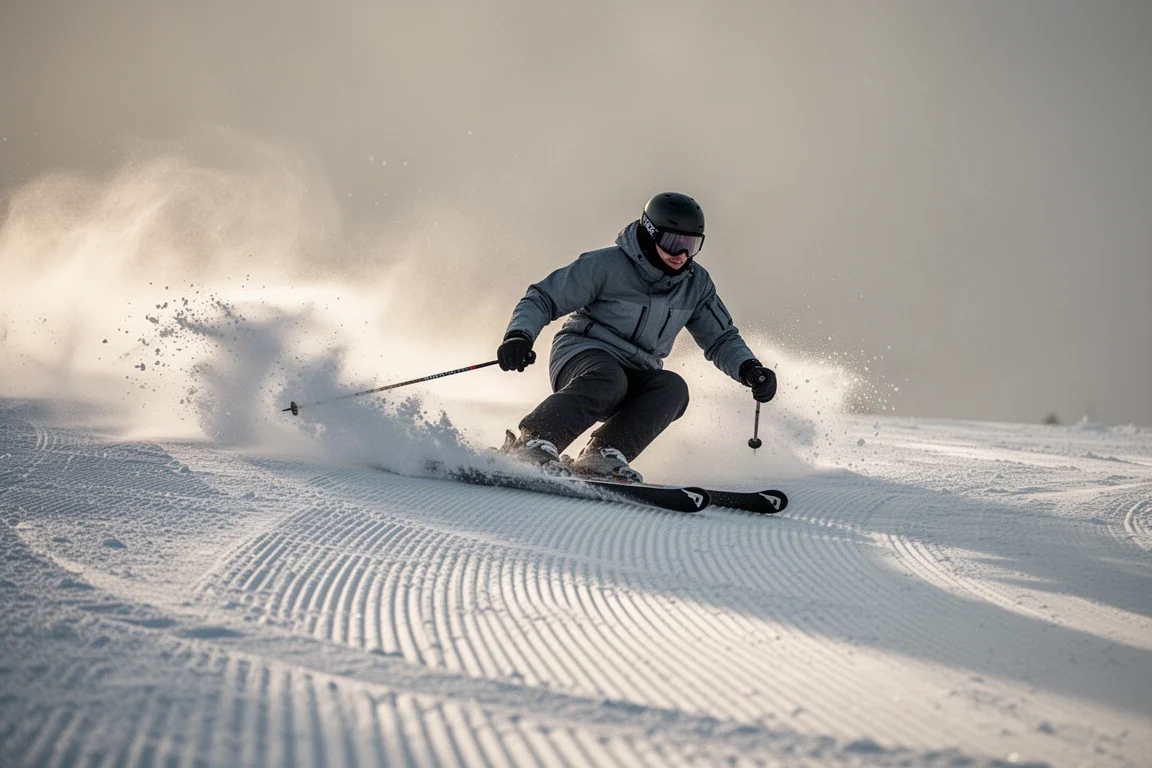
Carving is where the design makes the most obvious sense. Connection to the inside edge of the downhill ski is direct and immediate, and the boot hooks up as soon as it is tipped. The shell is effectively asymmetric: stiff and supportive on the medial side, slightly more supple laterally. That asymmetry matches how a carved turn loads an inside edge, and it is why the boot feels so planted without feeling dead.
Bumps, Trees, and Park
In moguls and trees the low weight is the advantage, and the boot is reactive rather than elastic. It rewards deliberate, specific inputs and a fluid style, and it pairs better with a more drifty ski than with a strongly directional one. Skiers who end up behind the boot will feel the difference, because there is no soft hinge to fold into.
Park skiing follows the same logic. The direct connection makes foot movements quicker, and backing the upper cuff off slightly gives the initial movement needed for switch-ups and butters. The progressive setting on the power spine softens the flex a small amount.
Big Mountain Terrain
In technical big-mountain terrain, the absence of a hinge point is the confidence factor. High-speed impacts and sudden compressions did not fold the boot, and it stayed stable through choppy, cut-up snow. One tester ran it with a 186 cm freeride ski and found the boot piloted the ski without losing power transfer. The lighter weight also paid off on hikes, with no difficulty spending full days in the boot.
Things to Consider Before Buying
- The 98 mm last is genuinely low volume. Forefoot pressure is common, and most skiers will want a bootfitter to stretch or grind the shell.
- Expect a learning curve. The shell does not flex the way a traditional four-buckle boot does. It needs a centred, heel-pocketed stance and rotation through the turn rather than simple forward pressure.
- Colder days can feel firmer, and comfort depends more on fit quality than on padding.
- The boot is stiff. Skiers who want a soft, forgiving flex should look elsewhere.
- Skiers who split time between this boot and a wider, more relaxed model may notice the forefoot trade-off on colder or more casual days.
Buying Advice
Fit comes before everything else with this boot. The shell and cuff are anatomically shaped, and the instep buckle and upper cuff do most of the work holding the heel, so a properly fitted heel pocket matters more here than raw clamping force. If the boot matches your foot shape, it can be skied with the BOA and power strap relatively loose, which is where it feels most versatile.
Because the forefoot is tight on a 98 mm last, budget for a professional fit session and give the boot several days before judging it. Skiers stepping out of an old pair and into this one for the first time are likely to notice a bigger jump in precision than they expect.
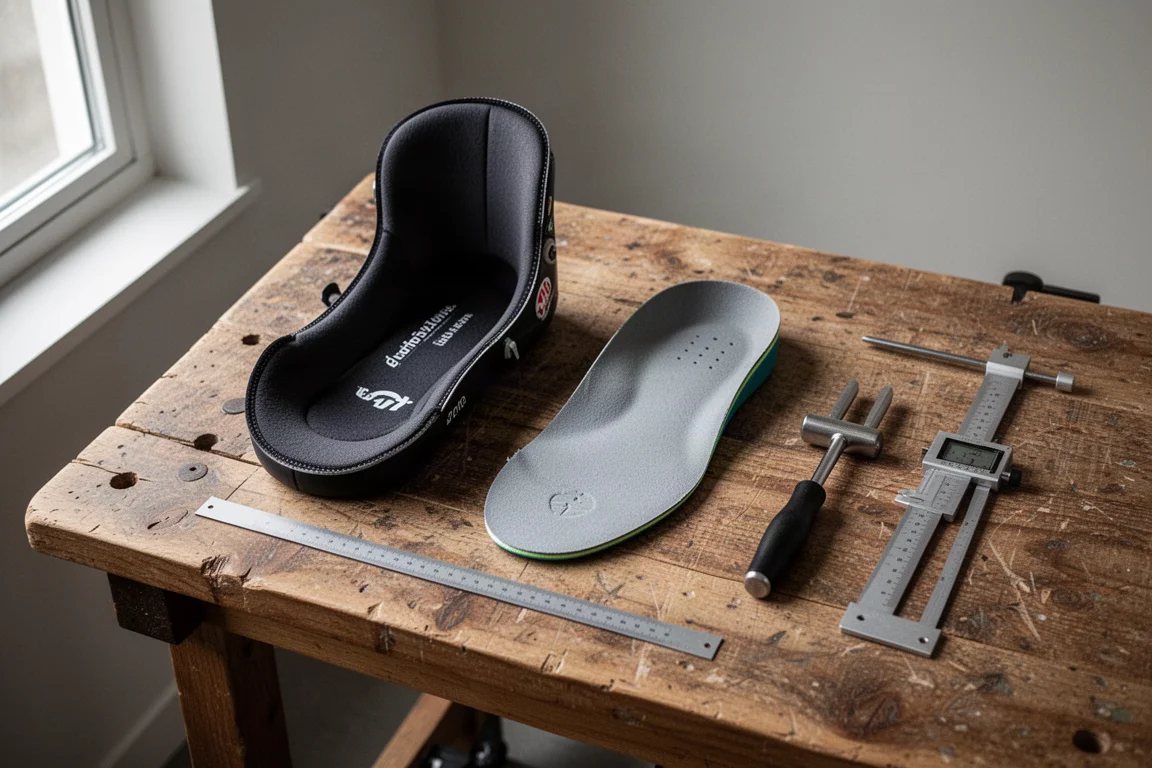
The stock liner is capable, and a low-volume race liner is an option for skiers who want a tighter forefoot and closer contact with the shell.
Conclusion
The S/Pro Alpha C130 BOA earns its reputation on the medial side of the shell. Exo Drive, the repositioned instep buckle, and the cuff BOA combine into a boot that locks the heel down, drives the inside edge, and stays stable at speed, all at a weight that is easy to live with over a full day. It asks for patience and a proper fit, and it rewards both.
Product link
View more details for Salomon S/Pro Alpha C130 BOA
This product is mentioned in the review. Check the specifications, options, and compatibility before buying.
View more details for Salomon S/Pro Alpha C130 BOAFurther reading
Related Reviews

Ski Boots
2027 Ski Boot Roundup: Six 130-Flex Boots Worth Knowing
Six 130-flex ski boots for 2027, plus a low-volume liner upgrade, compared on weight, fit, flex feel, and ease of use.

Ski Boots
Armada AR One Ski Boot Review: A Three-Piece Cabrio That Finally Gets It Right
Armada's first ski boot blends three-piece Cabrio design with Atomic engineering, a heat-moldable shell, and a 100mm last that fits better than any Cabrio before it.

Ski Boots
Armada AR1 Ski Boot Review: A Cabrio and Overlap Hybrid for Park and Freeride Skiers
Armada's first ski boot pairs a three-piece cabrio shell with overlap-style buckles and a cable-driven slingshot buckle. Here is where it shines, and what to weigh before buying.