Ski Boots
Salomon S/MAX 130 Review: A Stiff, Low-Volume Boot for Expert Skiers
A close look at the Salomon S/MAX 130, a 98 mm low-volume alpine ski boot with a stiff 130 flex, a heat-moldable shell, and race-style precision.
Introduction
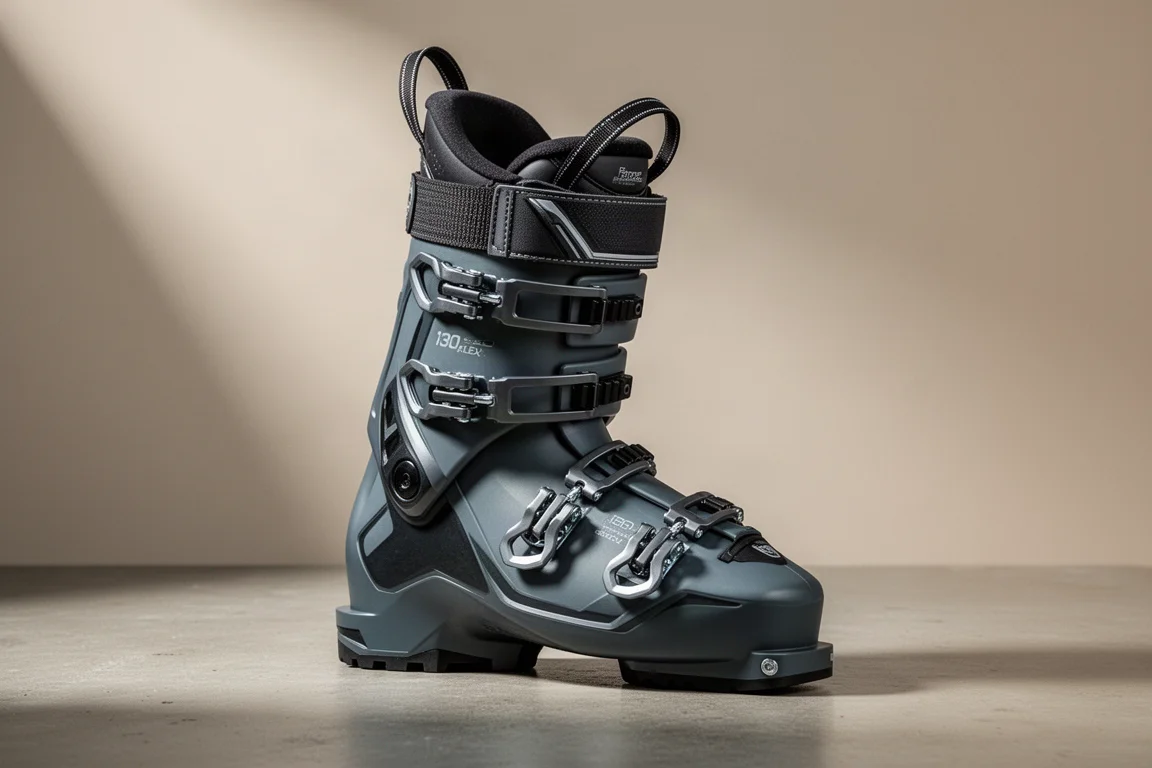
The Salomon S/MAX 130 is a narrow, low-volume alpine ski boot built around a stiff 130 flex. It is made for the high-end, aggressive expert skier who wants a race-style fit and race-style performance, just short of stepping into a plug boot. Out of the box the shell measures 98 mm across the forefoot, and the fit stays tight over the instep and through the ankle.
That combination of a narrow last and a very stiff shell is deliberate. Every input is meant to travel straight from the foot to the ski, with as little movement lost along the way as possible.
Who This Boot Is For
The S/MAX 130 is a specialist boot rather than an all-rounder. It suits strong, technically confident skiers who already know they prefer a low-volume fit, and who want a shell that stays stiff both fore and aft and laterally.
Skiers with a racing background will recognise the feel immediately. The boot holds the foot closely, so tipping the ski on edge feels direct and predictable. Anyone who prefers a roomier fit, a softer flex, or a more forgiving stance will likely find this boot is more than they want.
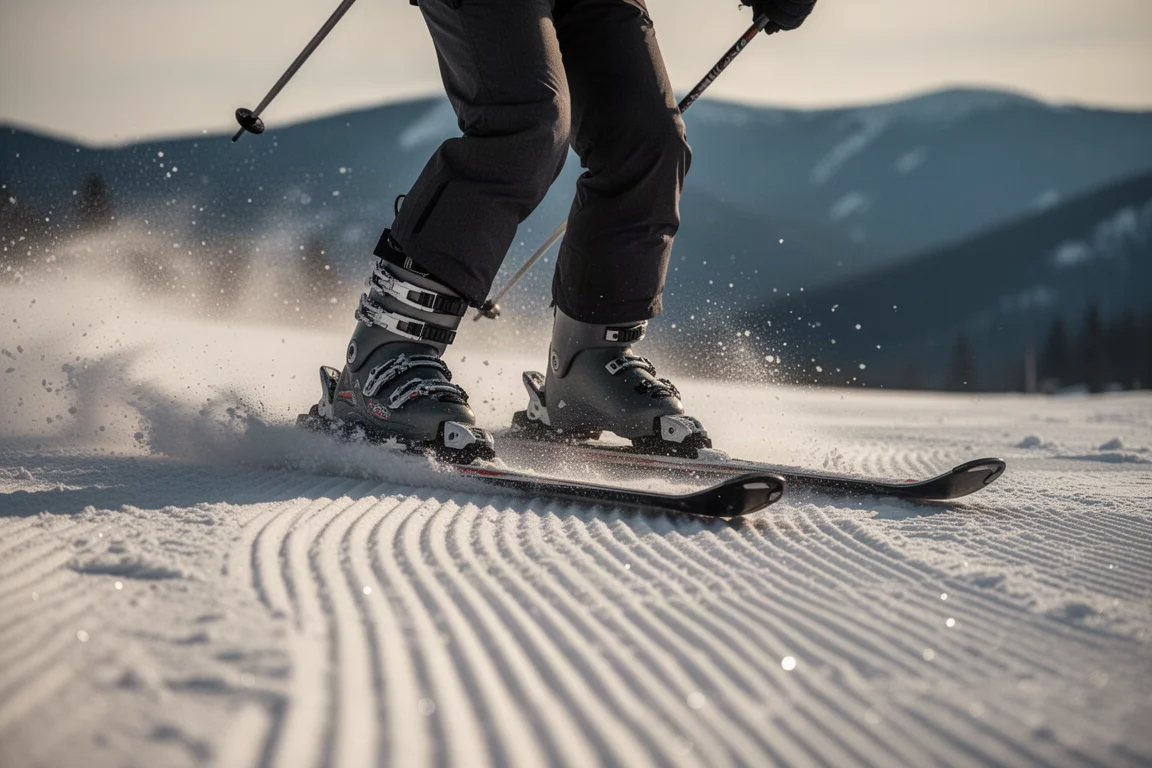
If your current boot feels vague when you roll it onto edge, this is the kind of fit and stiffness that changes that sensation. The trade-off is that a 98 mm last leaves little margin, so the boot rewards a proper fitting rather than a hopeful guess at sizing.
Main Strengths
The S/MAX 130 earns its place on two things: stiffness and a very precise, close-fitting shell. Both are supported by details that make the boot more usable than its race-oriented brief suggests.
A Stiff, Precise Flex
At 130 in the flex, this is a very stiff boot in every direction. Fore and aft, the shell resists deflection. Laterally, the stiffness comes partly from new materials built into the side of the boot, where they form the main frame of the shell. The rest of the boot is made from a custom shell material that can be heated, stretched, and molded around the foot.
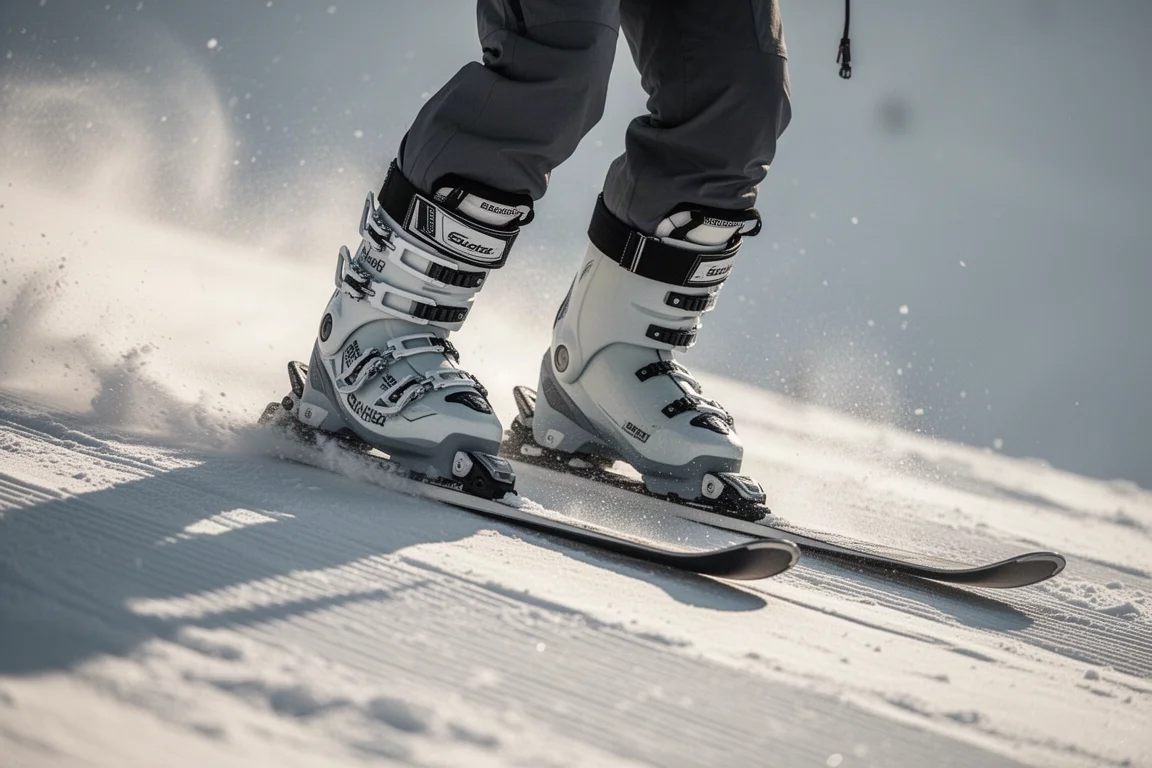
That stiffness is what produces the immediate power transmission the boot is designed around. When you move, the movement goes into the ski instead of disappearing into the shell. A flex adjuster lets you soften the forward flex a little if the stock setting is too firm for your weight or your style of skiing.
Fit and Shell Customization
The stock forefoot width is 98 mm, and a boot fitter can take it out to roughly 104 mm with the right equipment. That range matters, because it means the S/MAX 130 is not locked to the very narrowest foot. It can be made to work for a slightly wider forefoot while keeping the low-volume heel, ankle, and instep that give the boot its character.
Most skiers drawn to this model, though, are looking for exactly that narrow, low-volume hold. The shell material is designed to be oven-molded as a complete unit, which allows a fitter to reshape it to the contours of your foot rather than relying on the out-of-the-box shape alone.
Buckles, Power Strap, and Pivot
Four micro-adjustable buckles secure the boot, and the top two are macro-adjustable. Their catches can be unscrewed and repositioned to suit a narrower or wider lower leg, which is a useful range of adjustment on a boot with such a close fit.
The power strap is a ratchet system attached to the inside of the upper cuff. It pulls pressure toward the outside lateral zone of the cuff, and because the strap material is thick, it also adds stiffness to the forward flex. The oversized pivot on the side of the boot is the other notable piece of hardware. A larger pivot surface makes the lateral transfer of energy more efficient and more direct than a smaller, looser screw arrangement, which is why the boot feels more confident when you tip it on edge. Modern skis ask for a lot of lateral input, and this hardware is built to keep up with that.
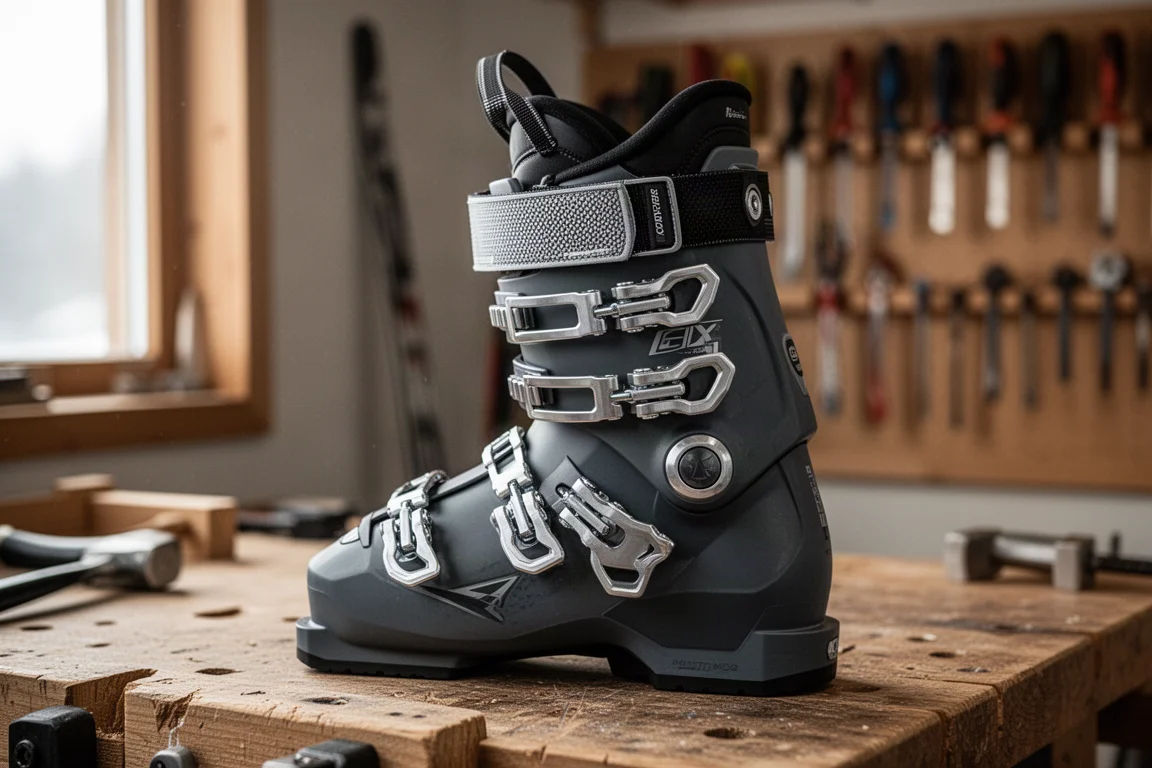
Together these details add up to a boot that feels solid and connected rather than vague, particularly when you are rolling from edge to edge.
Liner and On-Off Ease
The low-volume liner matches the close fit of the shell. Its foam is heat moldable, and the new liner design uses fewer seams than before, with the remaining seams taped so they sit flatter against the foot. The liner also pre-molds to your foot through your own body heat and through skiing, and a boot shop can speed that process up.
For a boot this stiff, getting in and out is surprisingly manageable, which makes it easier to live with across a normal ski day.
Things to Consider Before Buying
The first thing to weigh is fit tolerance. A 98 mm last with a tight instep and ankle is not forgiving, and the boot is only worth it if the shape genuinely suits your foot. A qualified boot fitter can assess whether the shell can be stretched enough for you, and that assessment matters more here than it would with a mid-volume boot.
Second, consider how much stiffness you actually want. The flex adjuster gives you some room to soften the forward flex, but the lateral stiffness is inherent to the construction of the shell. Skiers who are not used to a race-style boot may find the S/MAX 130 demanding on softer snow or at lower speeds.
Third, plan for the fitting itself. The custom shell material is meant to be molded and the liner foam responds to heat. Buying this boot without a proper fitting leaves much of its potential unused.
Buying Advice
Choose the S/MAX 130 if you are an expert or former racer skier who wants a narrow, low-volume fit and a genuinely stiff, race-influenced flex, and if you are prepared to have the shell and liner properly molded.
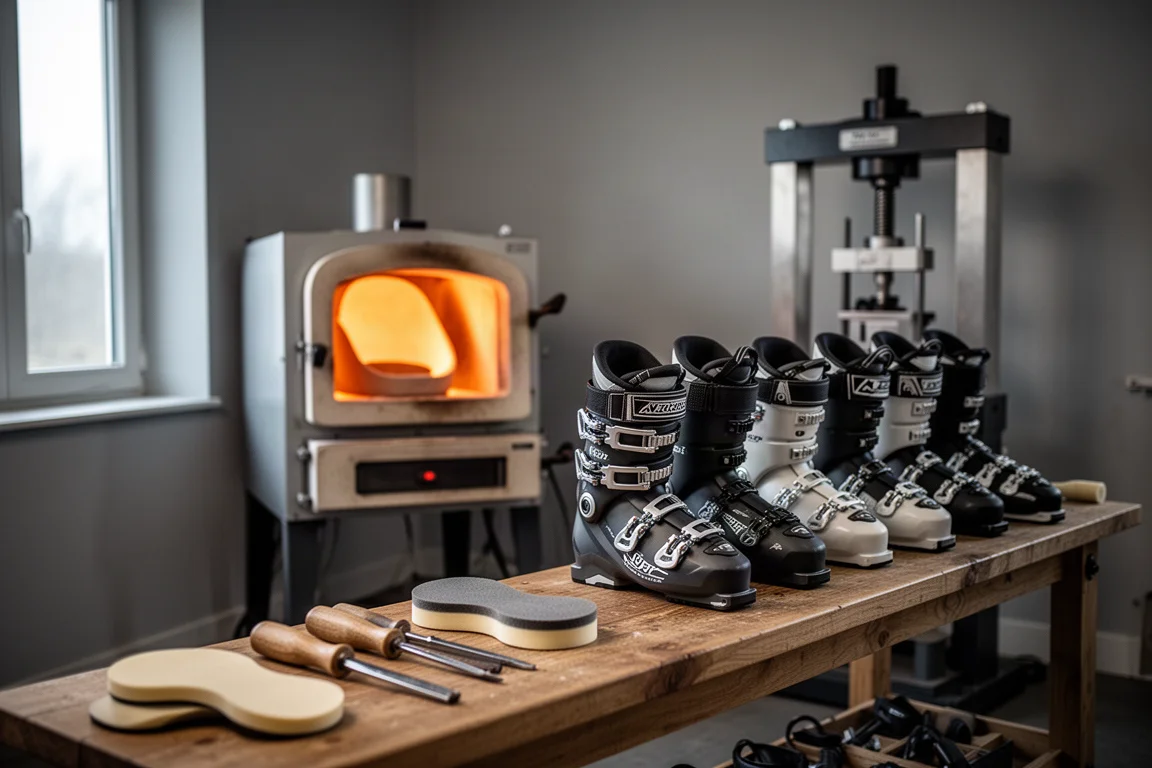
If you are undecided between this boot and something softer and wider, be honest about your foot shape and your skiing. The S/MAX 130 rewards skiers who want precision and are willing to commit to a close fit. For everyone else, a mid-volume shell with a lower flex rating will be easier to enjoy from the first run. Treat the fitting appointment as part of the purchase rather than an optional extra, and this boot is likely to feel properly dialled in.
Conclusion
The Salomon S/MAX 130 is a focused, high-performance alpine boot. Its 130 flex, 98 mm last, customizable shell, and oversized pivot all point in the same direction: precise, direct control for strong skiers who like a tight, race-style fit. If that describes you, and if you are willing to have the boot properly fitted, it is a confident choice.
Product link
View more details for Salomon S/MAX 130
This product is mentioned in the review. Check the specifications, options, and compatibility before buying.
View more details for Salomon S/MAX 130Further reading
Related Reviews

Ski Boots
2027 Ski Boot Roundup: Six 130-Flex Boots Worth Knowing
Six 130-flex ski boots for 2027, plus a low-volume liner upgrade, compared on weight, fit, flex feel, and ease of use.

Ski Boots
Armada AR One Ski Boot Review: A Three-Piece Cabrio That Finally Gets It Right
Armada's first ski boot blends three-piece Cabrio design with Atomic engineering, a heat-moldable shell, and a 100mm last that fits better than any Cabrio before it.

Ski Boots
Armada AR1 Ski Boot Review: A Cabrio and Overlap Hybrid for Park and Freeride Skiers
Armada's first ski boot pairs a three-piece cabrio shell with overlap-style buckles and a cable-driven slingshot buckle. Here is where it shines, and what to weigh before buying.