Indoor Cycling
Saga Holographic Smart Bike Review: Glasses-Free 3D Indoor Riding
A Kickstarter smart bike with a holographic stereoscopic display that delivers VR-like immersion without goggles. Here is what it does well and where it needs work.
Introduction
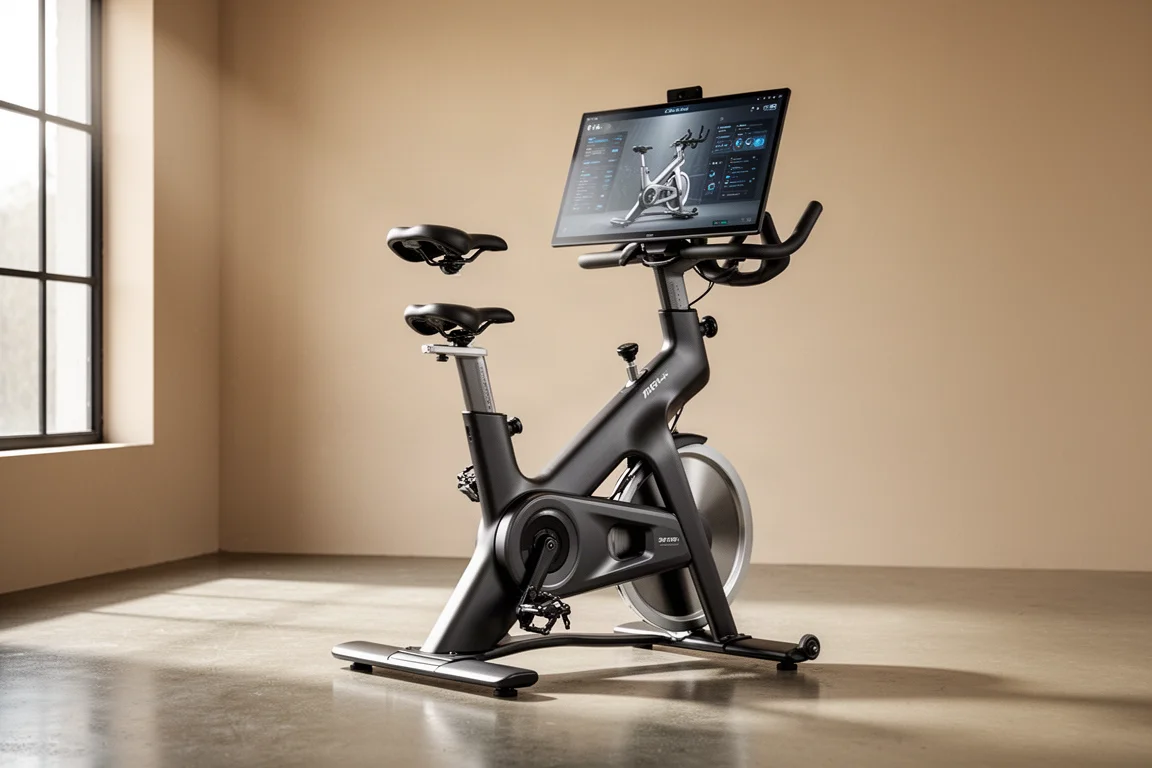
Most indoor cycling platforms try to pull you into their world through a flat screen. The Saga Holographic Smart Bike, currently a Kickstarter project under the name Hollow Bike, takes a different route entirely: a stereoscopic display that projects a genuine 3D image with no glasses, no VR headset, and no goggles of any kind.
The idea comes from a former Google engineer with an AR and VR background who wanted to combine the immersion of something like a high-end AR headset with a smart bike, while sidestepping the obvious problems of goggles during a workout: weight, sweat, and motion sickness. The display technology is custom built, and the result is genuinely unlike anything else in indoor cycling right now.
Who This Product Is For
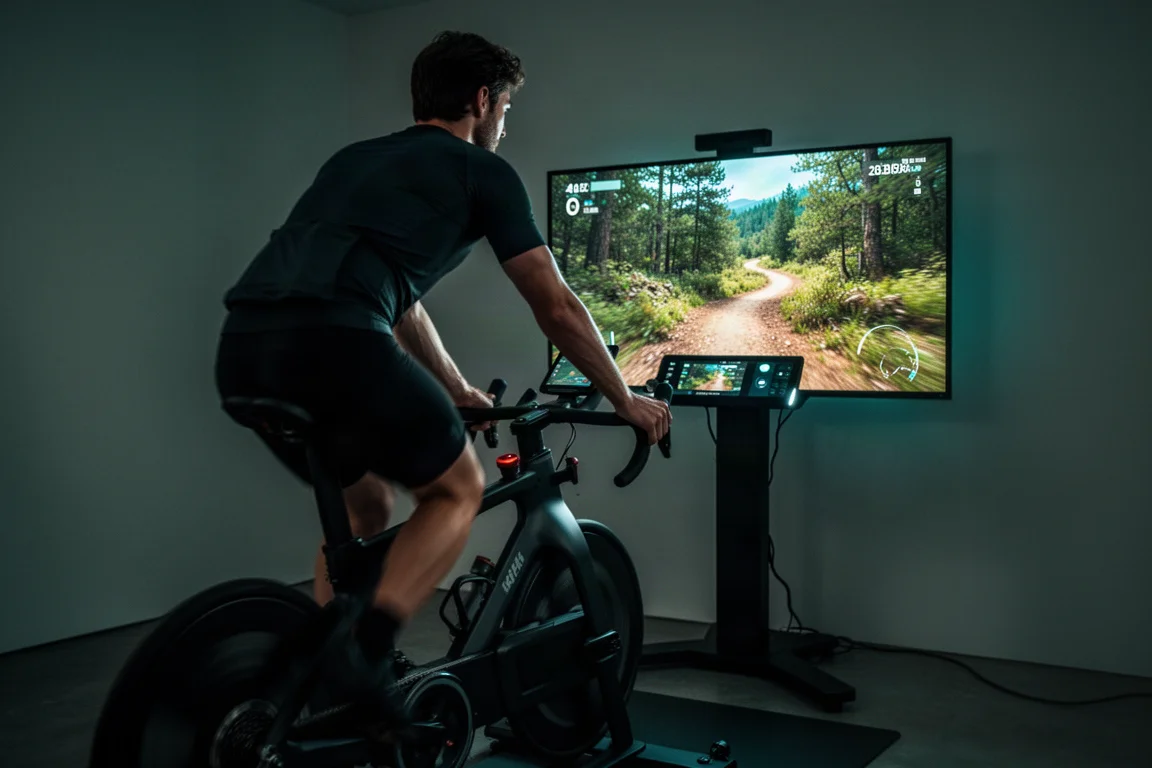
The indoor cycling market is crowded. Zwift leans on gamification and social riding, TrainerRoad is built around structured training, and Peloton centers on instructor-led classes. The Holographic Bike is not chasing any of those riders. Its creator believes that a strong feeling of moving through real space can make you forget you are indoors at all, and that sense of immersion is the product’s core pitch.
In practice, this is not a bike for the dedicated Zwift racer, the TrainerRoad numbers-focused rider, or the Peloton class regular. It is aimed at someone who wants the most immersive possible indoor experience without the hassle of a headset. For a dedicated cyclist who already uses several platforms, it would likely work best as an option in the mix rather than an everyday replacement.
How the Holographic Display Works
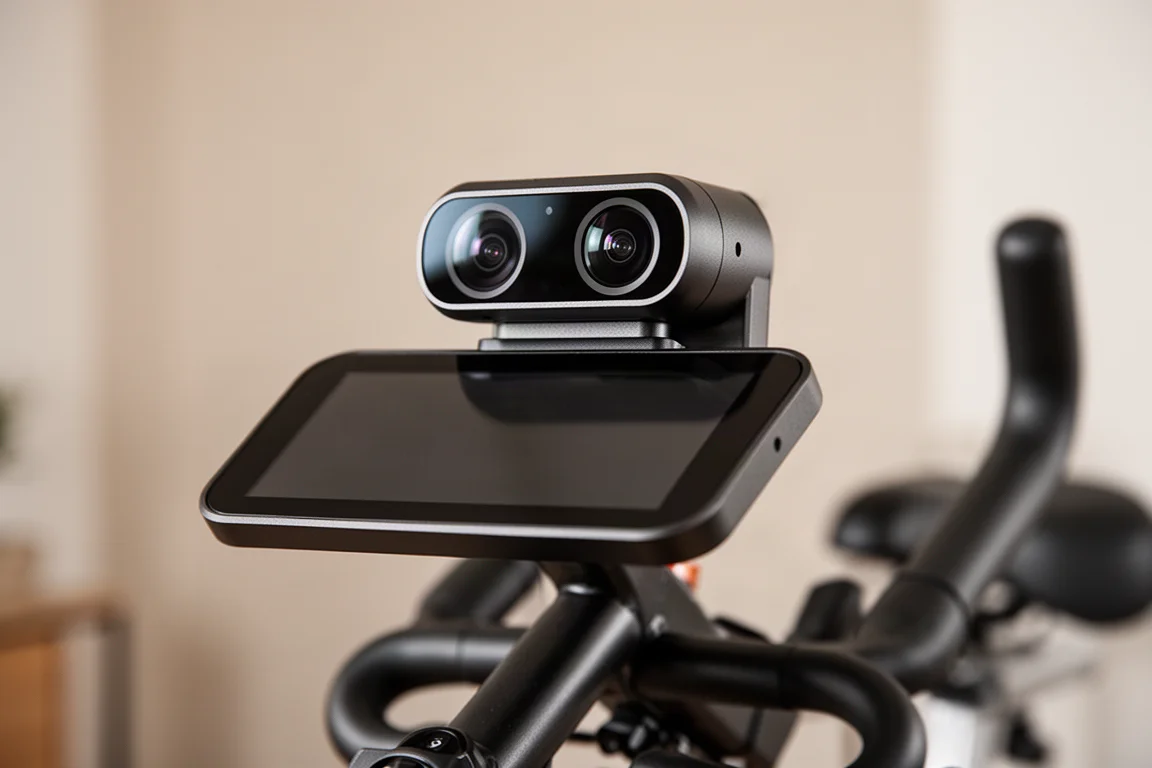
To create a 3D image without glasses, the system needs a stereoscopic display: a separate image for each eye, differing slightly, that your brain merges into depth. A stereoscopic camera above the monitor tracks the position and movement of each eye in real time, measuring to a fine precision so the image adjusts to your body position.
The hardware is not off the shelf. It is a custom 27-inch panel that behaves like two 4K displays stacked together, each delivering a slightly different image, rendering two 4K streams at 60 frames per second.
The Riding Experience
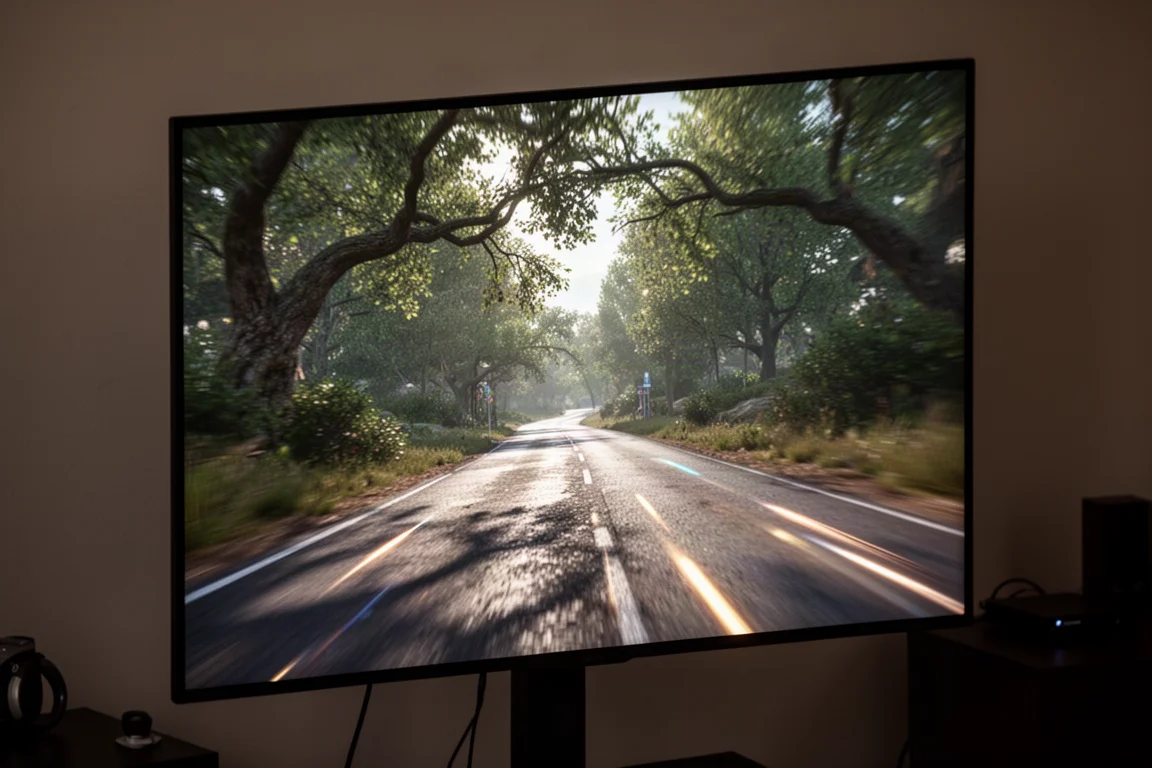
The first impression is startling. Seeing a genuine 3D trail scene floating in front of you with nothing on your head is disorienting in the best way, and it takes a moment for your brain to accept what it is seeing. Tree branches hang over the virtual road at points where you instinctively want to duck, and light streaks are layered into the visuals to reinforce the sensation of moving through space.
The environments themselves are built from real-world LiDAR scans of actual roads and trails, rendered in real time on high-powered GPUs with roughly the combined power of two gaming consoles, then matched with real map data. Sound design is also tuned specifically to support the feeling of being outside.
Graphics and Real-World Route Scanning
The visuals from the original rendering pipeline already sit at the level of a very high-end video game, easily a step beyond the more stylized, game-like look of typical cycling platforms. Since the first prototype rides, the team has introduced a new route creation method based on drone footage captured at multiple angles and altitudes, called radiance field scanning, processed through AI-based gaussian splatting on a large GPU cluster. This is described as the first consumer application of the technique, and it should make routes faster to produce and more realistic. At launch the plan is five to six environments, up from the single world with one route available on the early prototype.
Things to Consider Before Buying
Body position matters enormously. Seated and relatively still, the experience holds together well, and small side-to-side head movement is fine. But sudden movements outpace the eye tracking: the prototype samples at 90 Hz and the imagery lags behind quick changes. Shifting side to side narrows the ideal viewing angle, sitting up or taking hands off the bars affects the image, and standing out of the saddle breaks the immersion almost completely as the picture jumps around.
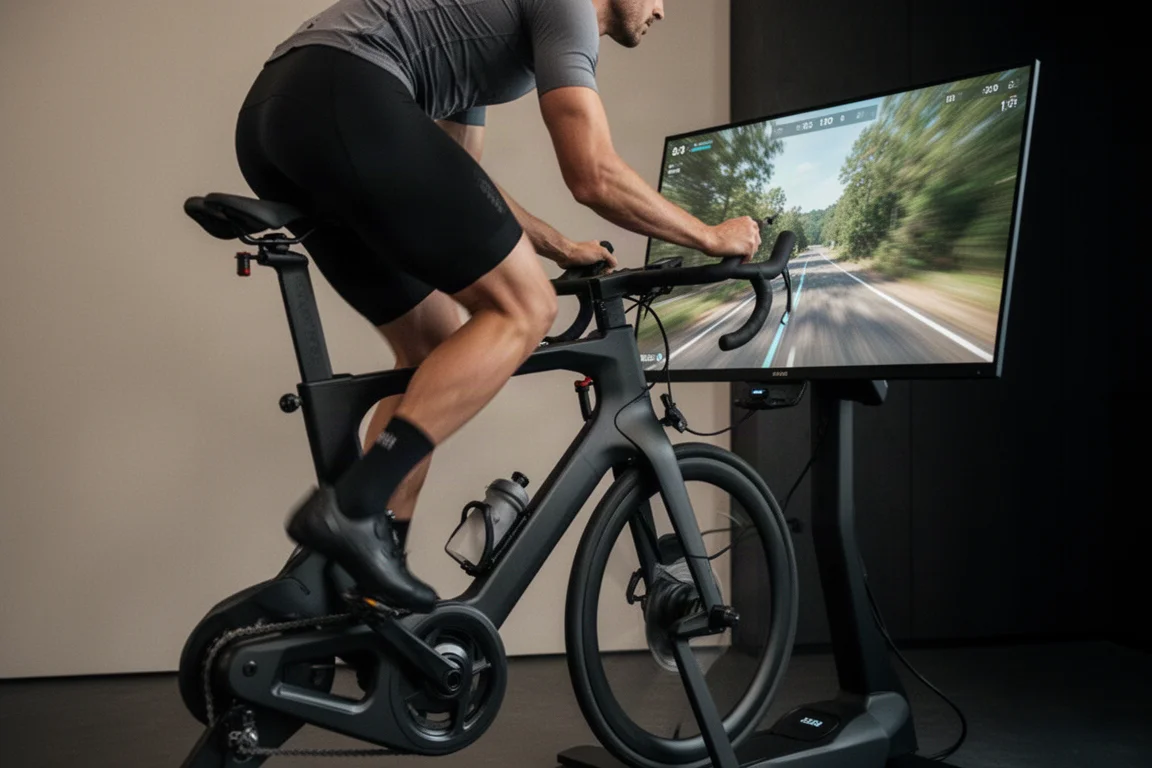
The team is aware of these limits. The shipping model is planned to sample at 120 Hz and will include an inertial measurement unit in the display module to correct for micro movements in real time, which may improve how it handles quick efforts. Still, right now this is really a seated-position experience.
There are broader caveats too. The prototype rode with static resistance; the final product promises fully interactive automatic resistance matched to hills and gradients, assembled from off-the-shelf components but developed in-house, with a delivery target around winter 2024. That is a tight timeline for a system that did not yet have a working resistance prototype at the time of testing. The all-in-one smart bike format, rather than a standalone display, was chosen deliberately because the bike’s ergonomics must match the display’s ideal viewing angle, but it does reduce flexibility. One reassuring detail: the core of the machine is a powerful gaming PC, so other cycling apps could potentially be installed alongside.
There is also the novelty question. VR headsets tend to feel incredible for a while before fatigue, motion discomfort, or the simple desire to see the real world sets in around the hour mark. Whether the glasses-free version sustains its appeal through 60 to 90 minute sessions remains to be seen. Finally, this technology really has to be experienced in person, and public demos are not currently scheduled, though Kickstarter funding may make them possible later.
Buying Advice
As a Kickstarter project, this is a bet on a promising concept rather than a finished product. If you want a proven training tool today, established platforms and trainers remain the safer choice. If you are drawn to the idea of VR-level immersion without a headset, and you are comfortable with the risks of a pre-production product with a small content library at launch, the Hollow Bike is the most ambitious attempt at that idea so far. Watching its progress over the following months, particularly the automatic resistance system and expanded route library, would be a sensible step before committing.
Conclusion
The Holographic Smart Bike is a genuinely cool and unique concept, arguably the most immersive indoor cycling experience tried to date, built on custom display hardware that no one else is shipping. But it is not finished. Eye tracking needs to keep pace with real riding, the resistance system is still in development, and the content library is just beginning. For the right buyer, someone who values immersion above all, it could be a compelling alternative to headset-based VR riding. For everyone else, it is worth watching closely before jumping in.
Product link
View more details for Saga Holographic Smart Bike
This product is mentioned in the review. Check the specifications, options, and compatibility before buying.
View more details for Saga Holographic Smart BikeFurther reading
Related Reviews
Indoor Cycling
Best Budget Smart Indoor Trainer Setups: Six Options Worth Considering
Smart indoor trainers keep getting better while prices come down. Six setups and components worth considering, from the cheapest Zwift-ready option upward.
Indoor Cycling
Best Budget Smart Indoor Trainers for Immersive Cycling in 2026
A practical guide to affordable smart indoor trainer setups, including budget and mid-range options with virtual shifting.
Indoor Cycling
Best Indoor Cycling Apps and Smart Trainers: A Winter Buying Guide
A practical look at the indoor training platforms and smart trainers that matter this season, from a new challenger to Zwift to the entry-level trainer that stands out on value.