Outdoor Gear
Russian Ratnik Bivvy Review: Military Surplus Shelter vs the Snugpak Stratosphere
A close look at the Russian Ratnik bivvy, a military surplus shelter with taped seams, two aluminium poles, and a snow cover, plus how it compares with the Snugpak Stratosphere.
Introduction
Some of the most useful outdoor gear never reaches a mainstream catalogue. Military surplus shelters sit in that space: designed to a service specification rather than a retail price point, then sold on at a fraction of what a commercial equivalent costs.
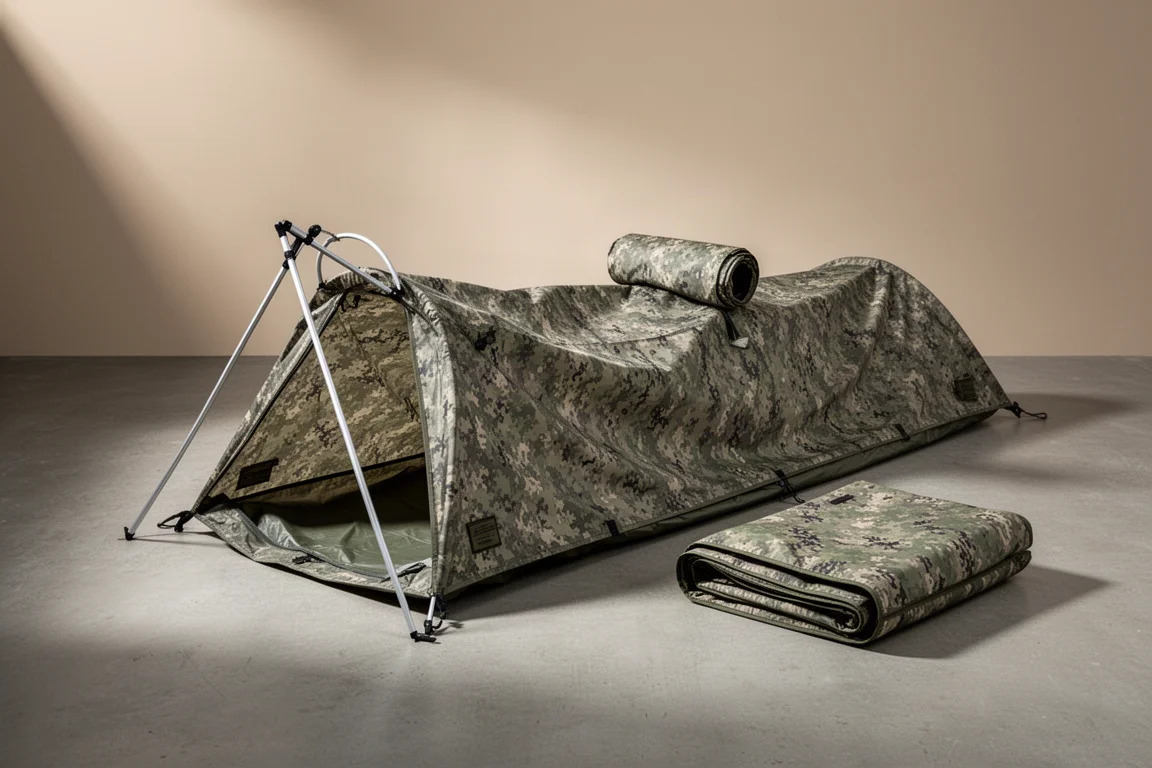
The Russian Ratnik bivvy is a clear example. “Ratnik” translates as warrior, and the design was developed for Russian special forces. It is a one-person bivvy with a low hoop at the head end, a full-length zip, and a snow cover that can be pitched on its own.
It has also been widely imitated. The Snugpak Stratosphere Bivvy follows a very similar brief and is far easier to buy through normal retail channels, which makes the two worth comparing directly. Surplus Ratnik units have been selling for around $85 with shipping included, while the Stratosphere typically runs around $150.
This is a first look based on a full inspection and a test pitch rather than months in the field, so treat the notes below as an early assessment.
Russian Ratnik Bivvy: Military-Grade Build and Setup
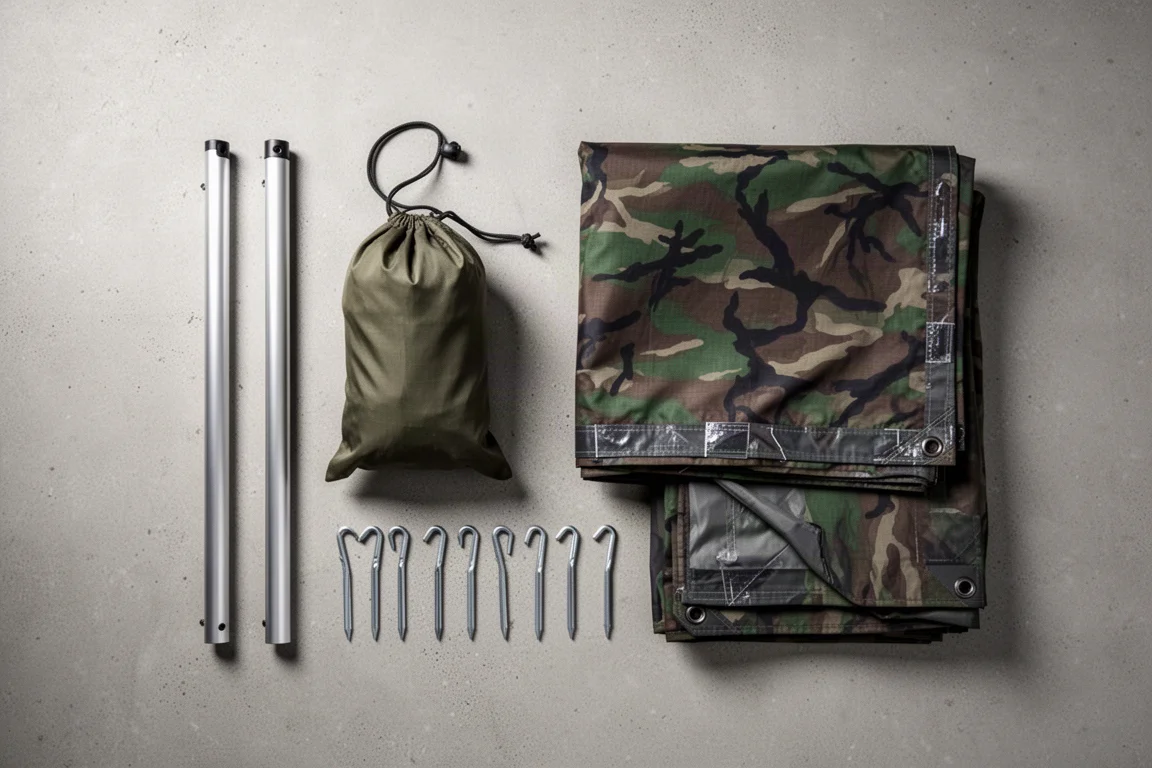
The complete kit arrives in a compact bundle measuring roughly 14 by 8 inches, and it can be compressed further. The storage bag closes with a drawcord and has no handles or loops. Inside you get the bivvy itself, two aluminium poles, and a snow cover.
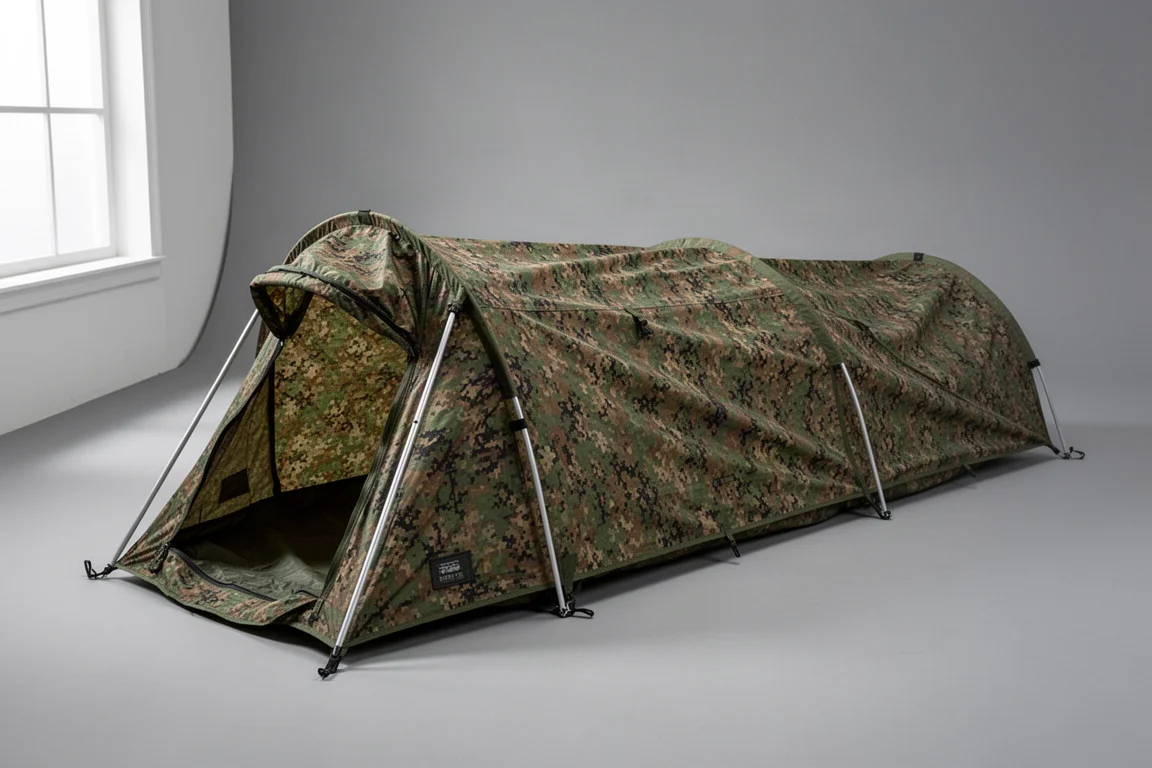
Pitching takes very little time. Unroll the shelter, thread the two poles through the sleeves that run in opposite directions, seat them in the grommets at the head end, and stake the shell out. The poles are identical in length and cross at the top. Stakes are not included, so supply your own. There are two staking points, one at the head and one at the foot.
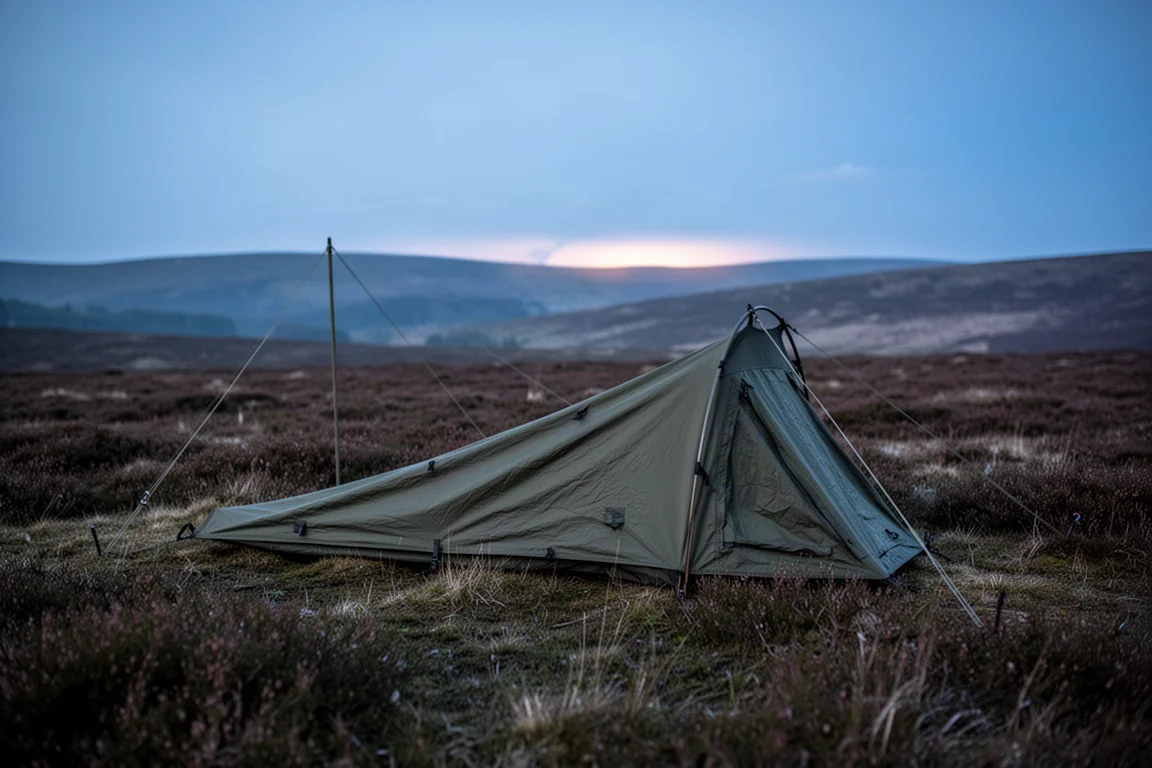
Set up properly, the bivvy measures 82 inches long and stands 18 inches tall at the head, tapering from the shoulders down toward the foot. The shape is intentional: a narrow head end, a wider shoulder area that gives a sleeping bag room to loft, and a slim foot box.
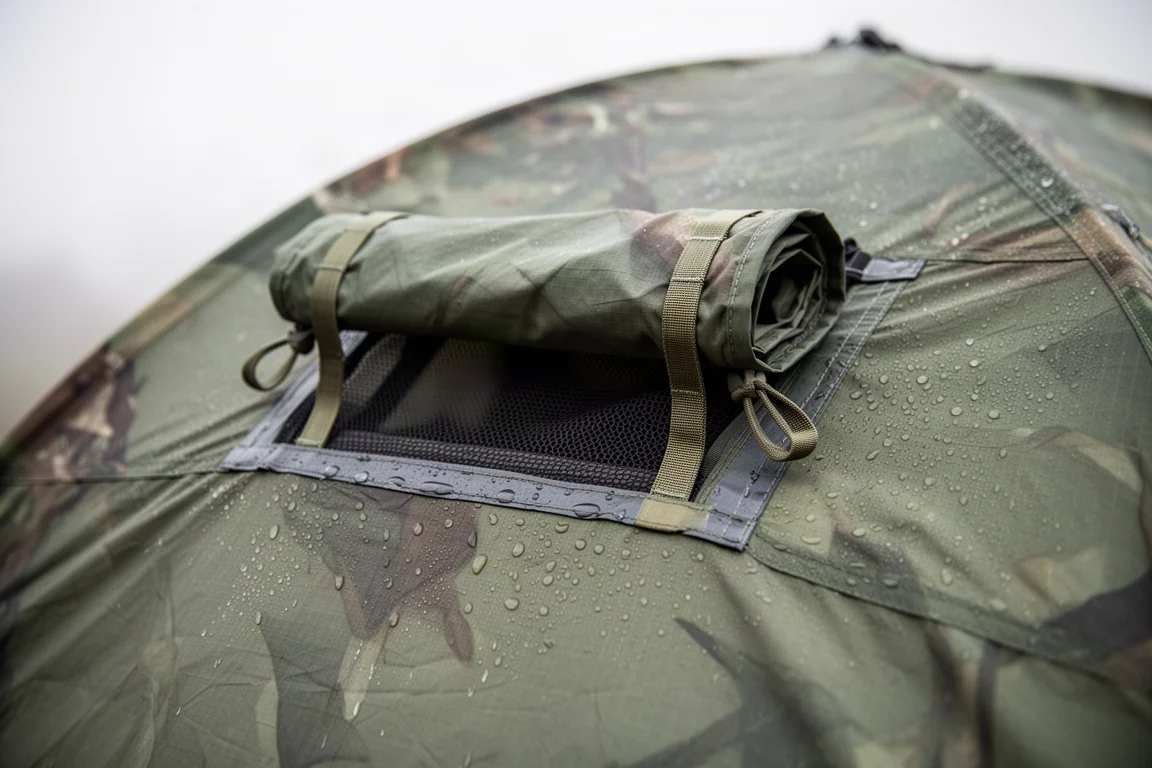
The detailing is where the military specification shows. The zip begins in one corner and runs around the opening so the whole front can be peeled back for easy access. A hooded flap covers the zip and acts as a storm flap. Beneath it sits a mesh vent with its own cover that stakes out in front, and two loops at the top let you roll that cover back when you want airflow. Inside, a secondary mesh panel can be zipped closed to keep insects out, and a mesh pocket holds a phone or small items. All of the seams are taped, the zipper runs smoothly, and there are attachment loops both outside and inside the shelter.
Snugpak Stratosphere Bivvy: The Widely Available Alternative
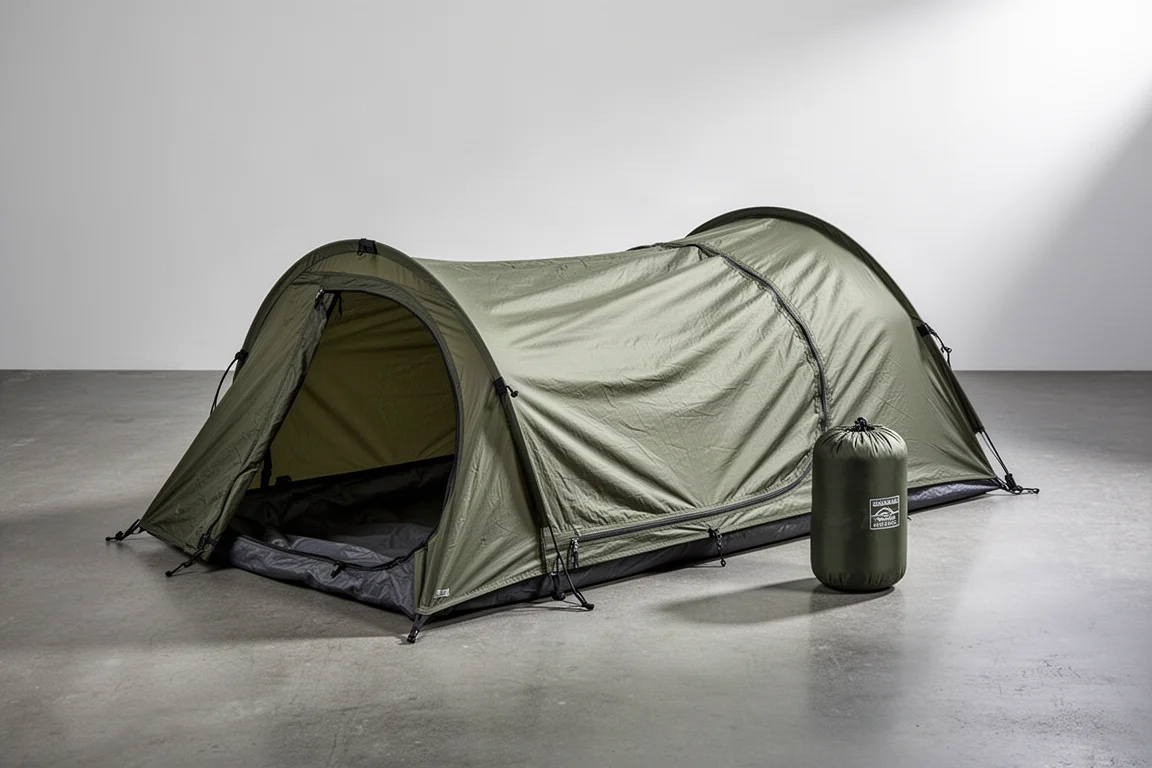
The Snugpak Stratosphere Bivvy covers the same ground: a low-profile, one-person shelter built around a similar tunnel concept. Its advantage is availability. It is stocked through mainstream outdoor retailers, which makes it far simpler to order, and it usually sells for around $150.
The trade-offs show up in the details. The Stratosphere has a well-known reputation for letting water in, and the materials do not feel as substantial as the surplus shell. The difference in build quality between the two is obvious the moment you handle them side by side.
Ratnik vs Stratosphere: Where They Diverge
On paper the two shelters promise similar things. In practice, the differences come down to price, build, and how each one handles weather.
Price is the first split. The Ratnik kit, with the bivvy, two aluminium poles, and a snow cover, has been selling for around $85 including shipping. The Stratosphere sits at roughly $150 for the shelter alone.
Build is the second. The Ratnik is military-grade throughout: substantial fabric, taped seams, a smooth full-length zip, and a hooded storm flap over the opening. The Stratosphere does not match that feel.
Weather protection is the third, and it matters most. The Stratosphere has a known leaking problem. The Ratnik has not yet been through a full field test, but the taped seams, the covered vents, and the storm flap point to a more weather-ready design.
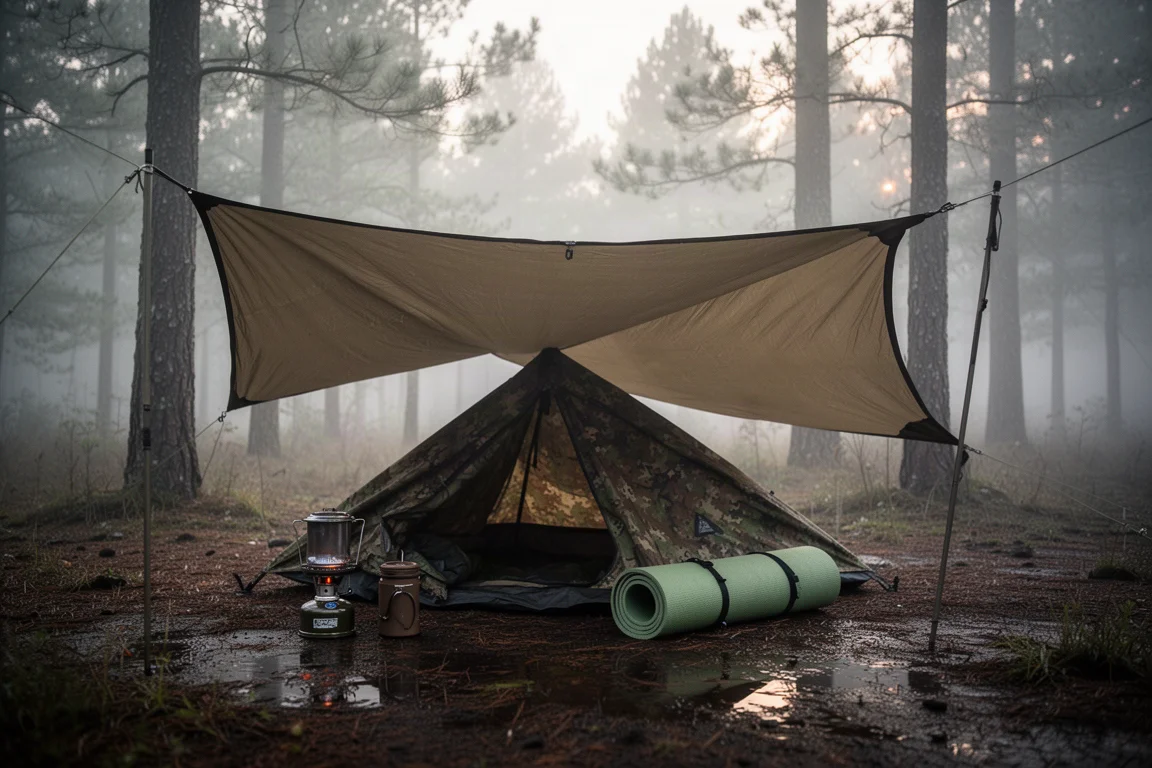
One point applies to both. Getting in and out of any bivvy of this type lets water into the shell, and there is no way around it. A tarp overhead is the practical answer regardless of which shelter you choose.
Materials, Seams, and Weather Protection
The Ratnik shell is a polyester fabric treated with polyurethane. It is clearly a ripstop weave, though the denier is not published. The texture is unusual for a bivvy: firmer and more papery than most commercial fabrics, and it feels substantial in the hand.
Seam taping runs throughout, and the hooded flap over the zip adds another layer of protection at the most vulnerable point. The vent cover stakes out over the mesh opening so airflow can be adjusted without leaving the interior exposed.
The practical weakness is access. Climbing in and out of a shelter this low means water on the outside of the shell ends up inside, and the design offers no way to prevent it. If rain is likely, bring a tarp and pitch the bivvy underneath it. That single addition solves the problem.
Ventilation, Condensation, and Comfort
Condensation is the eternal bivvy problem, and the Ratnik attacks it from two directions. A covered mesh vent sits at the head end, and a secondary mesh panel inside can be zipped shut to keep insects out while still letting air move. With the shelter fully sealed, there is still noticeable airflow through the front and back.
Interior space is generous by bivvy standards. The 82-inch length gives a sleeping bag room to stretch out, the shoulder section is wide enough to avoid feeling pinched, and the mesh pocket keeps a phone or headlamp within reach.
It is worth being realistic about summer use. Any bivvy gets warm in hot weather, and the mesh helps without turning it into a tent. The Ratnik’s strength is the opposite scenario: when conditions turn, it can be closed up completely and sealed against wind and rain.
Packability, Weight, and the Snow Cover
The full kit weighs 4.7 pounds. Leave the snow cover at home and that figure drops to 3.1 pounds, which is reasonable for a military shelter, though lighter commercial bivvies do exist. The snow cover accounts for 1.6 pounds on its own.
That snow cover is more useful than it first appears. It mirrors the shape of the bivvy, has its own hood, and closes with a zip on the side, so it can be pitched on its own as a lightweight shelter. In a snowstorm it also works as a protective layer over a sleeping bag under a tarp, keeping snow off and holding in some warmth.
The bivvy is available in several camouflage patterns, including EMR Digital Flora. The digital flora print is one of the more distinctive surplus patterns, and it is a genuine point in the shelter’s favour if you want gear that blends into northern European terrain.
Buying Advice: Price and Value
At around $85 for the complete kit, the Ratnik is difficult to beat on value. The Stratosphere, at roughly $150, costs noticeably more for a shelter with a well-documented leaking issue. If the choice is purely about what you get for the money, the surplus bivvy wins.
Two practical points before ordering. First, stakes are not included, so add a set to your kit. Second, plan for a tarp in wet conditions, because water will find its way in during entry and exit.
If you want a shelter that can be sealed tight, like the idea of a snow cover that doubles as a standalone bivvy, and are comfortable buying surplus gear, the Ratnik is the more compelling purchase. If you would rather order from a mainstream retailer and accept the leaking risk, the Stratosphere remains the easier option to find.
Conclusion
The Russian Ratnik bivvy is a genuinely impressive piece of military surplus. The construction is solid, the materials feel substantial, the seams are taped, the zip is smooth, and the kit includes two aluminium poles and a snow cover that works as a shelter in its own right. At around $85, the value is hard to argue with.
The caveats are honest ones: no stakes in the box, water ingress when you climb in and out, and a first look rather than a long field test. A tarp solves the water issue, and the weight is acceptable for what the shelter is.
Against the Snugpak Stratosphere, the Ratnik comes out ahead on build quality and price, with the Stratosphere’s advantage being availability rather than performance. For anyone comfortable with surplus gear, that makes the Ratnik the more interesting buy.
Further reading
Related Reviews
Outdoor Gear
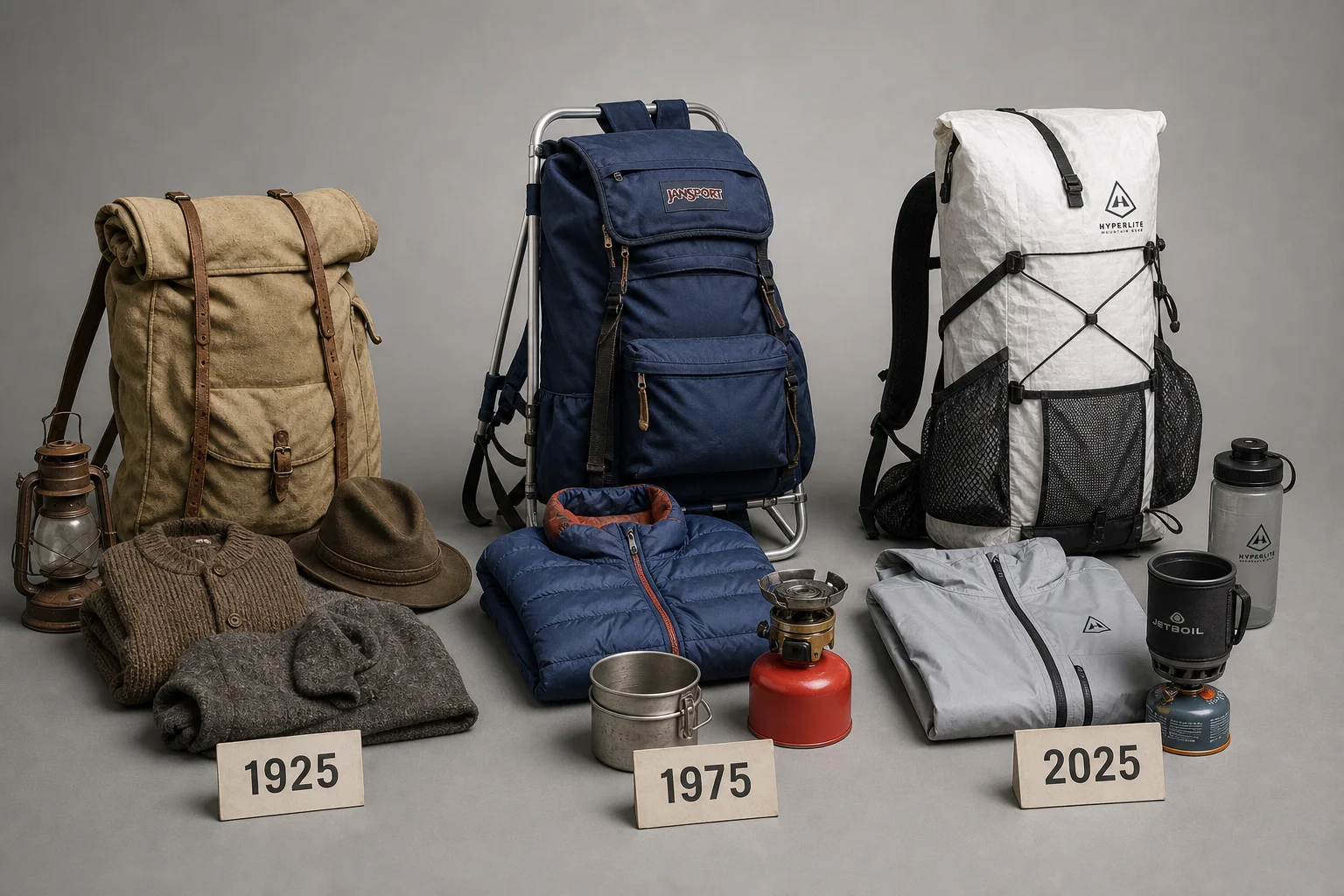
Backpacking Gear Evolution: 100 Years of Technology Compared
We tested backpacking gear from 1925, 1975, and 2025 across a three-day hike in Yosemite. Here's how technology has transformed comfort, weight, and the outdoor experience.
Outdoor Gear
Best Affordable Hiking Watches: Five Rugged Options for Outdoor Adventures
Five durable hiking watches that balance ruggedness, functionality, and value for outdoor enthusiasts who need reliable GPS tracking and weather resistance.
Outdoor Gear
Best Backpack Coolers 2026: Five Practical Options for Outdoor Adventures
Five backpack coolers with distinct cooling capabilities, storage features, and design trade-offs to help you choose the right one for your outdoor needs.