Engraving Materials
Rowmark LaserMax Review: A Versatile Engraving Material Worth Testing
A practical look at Rowmark LaserMax sheets from Johnson Plastics Plus, covering tri-layer, reverse, and specialty finishes for engraving projects.
Introduction
Rowmark LaserMax from Johnson Plastics Plus is an engraving material that promises versatility across a wide range of projects. After several weeks of hands-on testing with tri-layer sheets, reverse laser mark sheets, and standard sheets with specialty finishes, the material proves to be far more than a one-size-fits-all product. Each variant has its own strengths, quirks, and ideal use cases.
This review covers what we learned from making actual projects, dialing in settings, and working through the inevitable mistakes. If you are considering LaserMax for signs, tags, house numbers, or decorative pieces, here is what you should know before you start.
What Makes Rowmark LaserMax Stand Out
The first thing that stands out is the sheer number of options. Different colors, different layer combinations, and different applications mean this is not a material where every sheet behaves the same way. Each type has its own personality, and that variety is both the biggest strength and the source of the learning curve.
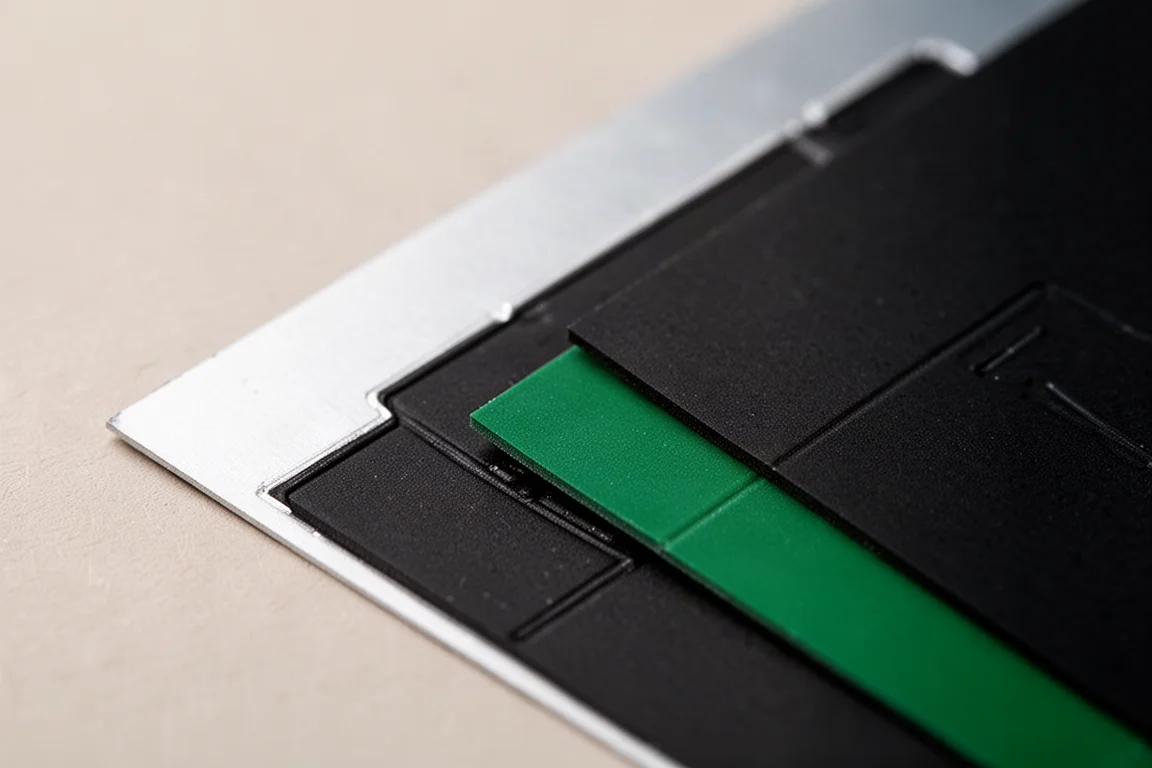
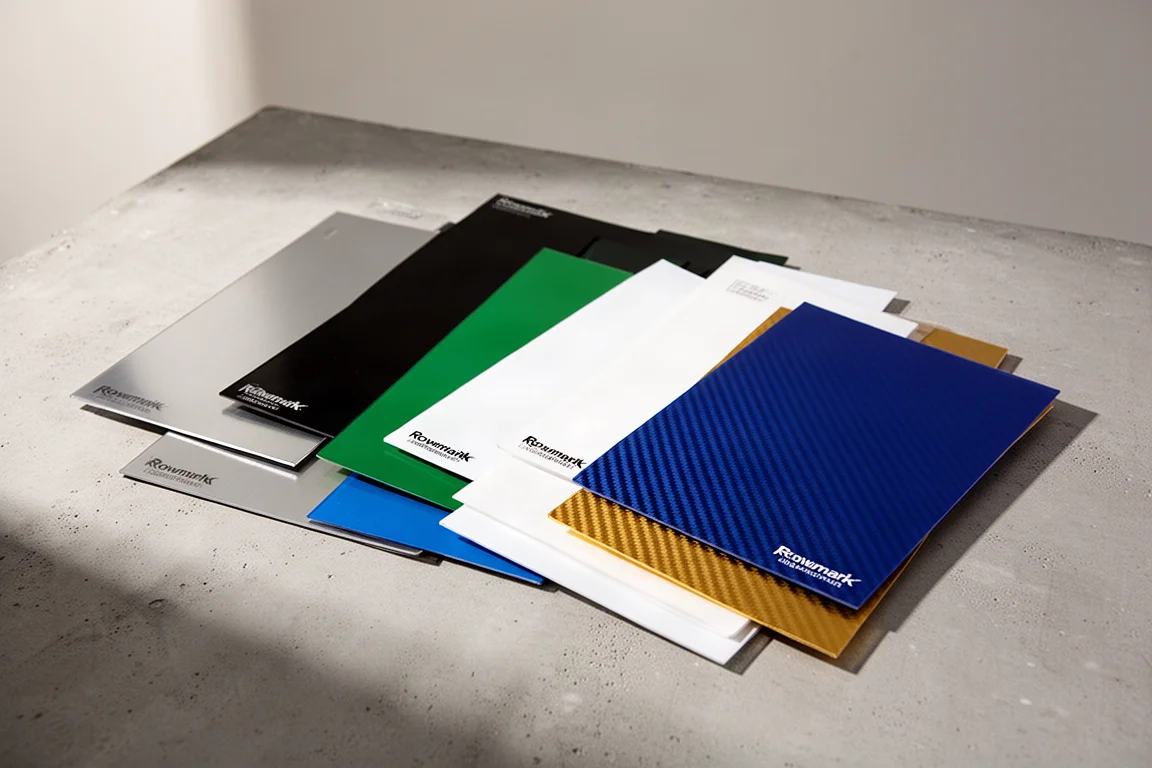
The tri-layer sheets we tested came in silver, black, green, white, blue, black, and white, black, white combinations. The concept is simple: three colored layers stacked together, and the depth of your engraving reveals different colors underneath. In practice, getting the settings right took considerable testing. The layers are surprisingly thin, and a little too much power cuts deeper than intended, causing burning and unwanted textures. Too little power leaves material behind, as we discovered in early tests with masking tape.
Once dialed in, the results looked fantastic. The silver, black, green sheet became a recycling sign with excellent color contrast and crisp engraving. The white, blue, black sheet turned into an Arctic themed sign where the multi-layer contrast made the design stand out. The white, black, white sheet proved surprisingly interesting for double-sided signage, though it highlighted a key challenge: because the layers are thin, careless settings can affect the opposite side of the sheet. Finding the sweet spot between a clean engraving and show-through took experimentation.
Reverse Laser Mark Sheets: A Different Approach
The reverse sheets work differently from traditional engraving materials. Instead of engraving from the front and viewing from the engraved side, you engrave the colored side in reverse, and the finished piece is viewed through the clear acrylic. This opens up creative possibilities that standard materials do not offer.
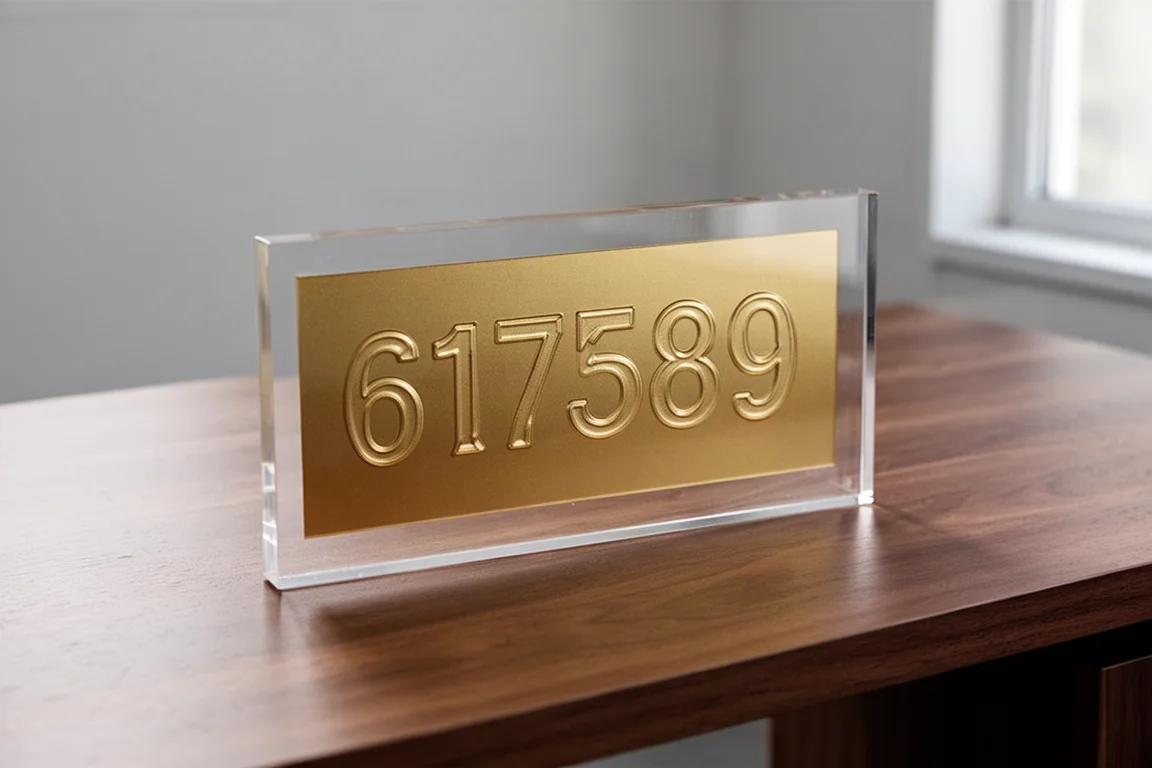
For the smooth gold sheet, we made house numbers. The finished result looked incredibly clean and professional when viewed from the front through the clear layer. For the white sheet, we created a door hanging sign and experimented with backfilling the engraved areas using red paint. This turned out to be one of the most interesting parts of testing, because it showed how customizable the material can be. You can leave the engraving as is, backfill it with paint, place it in front of lighting, or mount it over another material to create entirely different looks.
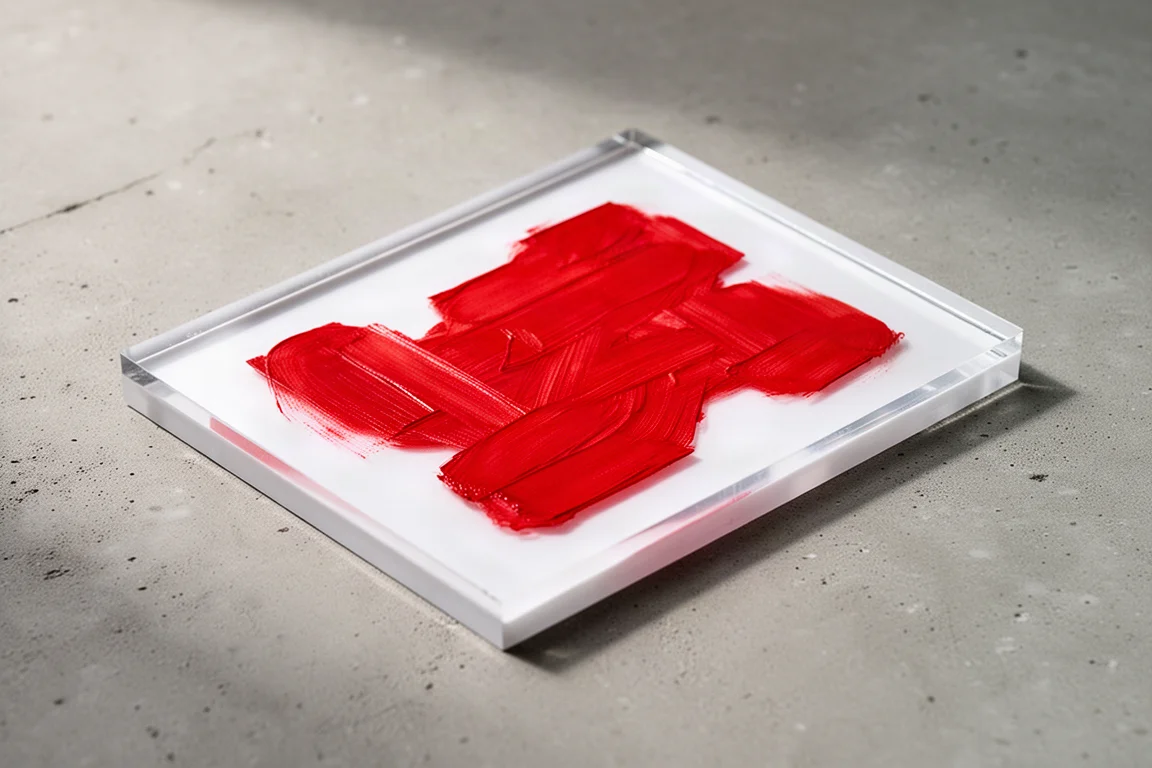
The flexibility here was impressive. A single sheet can produce multiple distinct finished looks depending on how you treat the engraved areas, which makes the reverse sheets particularly appealing for makers who like to experiment.
Specialty Finishes: Quick Results with Less Fiddling
The standard LaserMax sheets with specialty finishes are more straightforward than the tri-layer or reverse products. We tested the DigiCam finish, which became a live round sign, and the carbon fiber finish, which we turned into a collection of cat pins and magnets. These materials were easier to find settings for and quicker to produce finished products with.
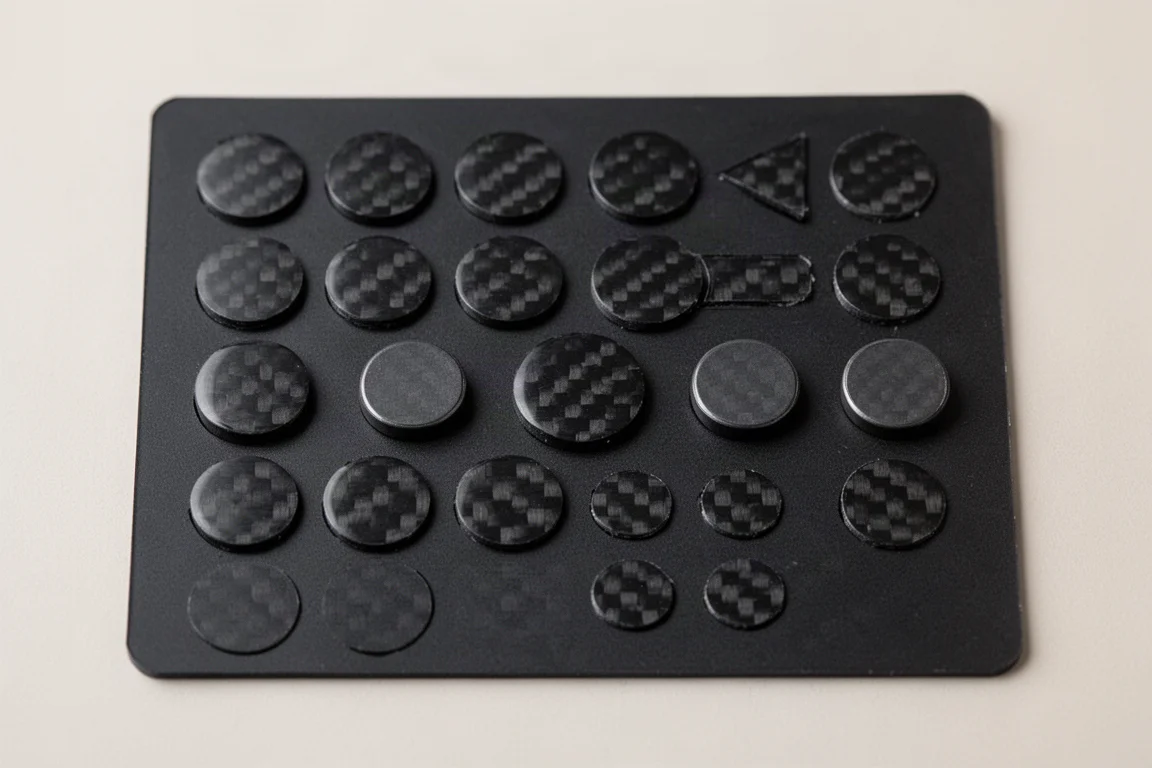
The carbon fiber finish in particular gave premium-looking results with minimal effort. For makers who want a reliable material that does not require extensive testing, the specialty finishes are the most approachable option in the LaserMax lineup.
Things to Consider Before Buying
The biggest challenge with Rowmark LaserMax is the setup and testing process, especially with the tri-layer sheets. The engraving window between not enough power and too much power can be fairly small, and it took quite a bit of testing to find settings we were happy with. This is not a material you can expect to work perfectly on the first try.
Cleanup also presented some issues. On lighter engravings, small amounts of adhesive residue from the mask occasionally remained. Normally, a glass cleaner handles this, but a few spots did not cooperate. Trying alcohol turned out to be a mistake, as it left marks on the material that made it appear dirty, and those marks could not be removed. If you work with these materials and run into adhesive residue, avoid alcohol.
Acrylic dust can also get messy during production. This is not unique to LaserMax, but it is worth planning for if you are producing projects in volume.
One unexpected discovery involved masking. In many cases, we got better results without the mask applied. This will not necessarily hold true for every machine or setup, but during our testing, removing the mask often improved engraving results and made cleanup easier.
Buying Advice
Rowmark LaserMax is worth recommending, but the key is understanding what you are buying. If you want a material that is incredibly forgiving and requires almost no testing, this is probably not the top choice. However, if you are willing to spend time dialing in your settings, the range of effects and applications is impressive.
The tri-layer sheets create unique multi-color engravings that are hard to achieve with other materials. The reverse sheets open up opportunities for backfilled, illuminated, or layered projects. The specialty finishes give premium-looking results with minimal effort. After working through the testing process, these materials are something we will continue using for future projects.
Conclusion
Rowmark LaserMax is a versatile engraving material that rewards patience and experimentation. The tri-layer sheets deliver striking multi-color results, the reverse sheets offer creative flexibility, and the specialty finishes provide quick, professional-looking outcomes. The learning curve is real, especially with the tri-layer products, but the finished pieces look genuinely good in real-world applications. If you are willing to invest the time in setup, LaserMax is a material that can handle a wide range of projects.
Product link
View more details for Rowmark LaserMax
This product is mentioned in the review. Check the specifications, options, and compatibility before buying.
View more details for Rowmark LaserMaxFurther reading
Related Reviews
Laser Cutters
Best Laser Cutters 2026: Four Machines for Different Users
A practical guide to choosing the right laser cutter in 2026, based on your skill level and workflow rather than raw specs.
Laser Cutting & Welding
xTool MetalFab: Common Questions Answered Before You Buy
A practical look at the xTool MetalFab laser cutting and welding system, covering cutting detail, software ease, welding performance, and real-world trade-offs.
Laser Cutters
xTool MetalFab and xTool P3: Two Laser Tools for Metal and Wood Projects
A look at two laser cutting tools that handle metal fabrication and wood cutting with precision, speed, and minimal cleanup.