Indoor Cycling Apps
Rouvy Review: Augmented Reality Indoor Cycling on Real Roads
Rouvy pairs a smart trainer with real-world video routes and augmented reality overlays. Here is how the platform works, what it costs, and who it suits.

Introduction
Rouvy is an indoor cycling app that pairs with a smart trainer, a bike, or a power meter and lets you ride through a virtual world built on real roads. What sets it apart from fully synthetic platforms is that its virtual world is augmented reality: you ride through images of real places with virtual objects projected on top, including other riders, road signs, and barriers. In practice, you pedal a virtual avatar along a road that genuinely exists.
The route library runs to more than 1,500 options. It includes iconic climbs from around the world as well as more far-flung locations such as Madagascar, Peru, and Iceland, plus full routes drawn from races including the Vuelta a España and the Tour de Suisse, and climbs from the Tour of Flanders. Terrain is reconstructed by combining real-life video footage with GPS data, so gradients and difficulty are intended to track the real route as closely as possible.
Who this product is for
Rouvy suits riders who want an indoor session to feel like a real road rather than a fictional course. The platform is described as designed for a wide user group, covering both performance-oriented riders and those who simply want to build general fitness. If your motivation comes from exploring places and previewing routes you hope to ride outdoors, the format speaks directly to that instinct.
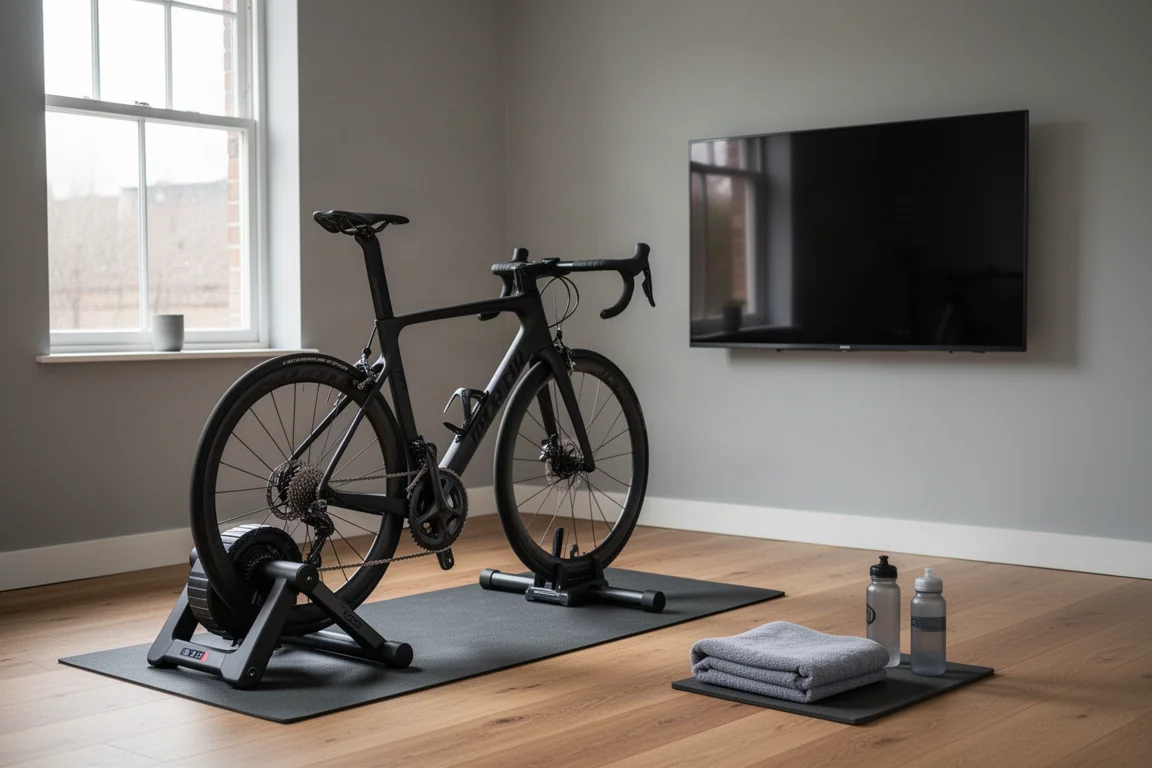
It is also a practical choice for anyone preparing for a specific event or climb. Riding a route beforehand gives you a sense of its length, where the gradient changes, and how the hard sections are spaced out, all of which is useful context to carry into the real ride. Because the footage is tied to real geography, the recon value is part of the appeal rather than a side effect.
Main strengths
Augmented Reality on Real Roads
The augmented reality approach is the core of the experience. You are not riding a computer-generated landscape, but real-world footage with virtual riders, signage, and barriers layered onto it. That combination gives the ride a sense of place that a purely invented world cannot replicate, and it makes the terrain feel anchored to somewhere you could actually visit.

Route detail is unusually transparent before you start. Each route page lists distance, elevation gain, maximum gradient, and video quality, and it indicates whether augmented reality is enabled for that route. One example route runs over 12 km with more than 1,200 m of elevation gain and a maximum gradient of 22 percent, which is a clear signal of what you are committing to before the first pedal stroke.
Workouts, Plans, and Route Variety
Beyond free riding, the platform includes specific workouts and structured training plans, some of them designed by a World Tour squad. That gives riders with a defined goal a more precise session to complete rather than an open-ended route. The homepage brings routes, workouts, events, racing, and challenges together in one place, so the session type is a choice rather than a hunt.
Route variety is genuinely broad, and the library is added to every Monday, so the list keeps growing. Challenges add a lighter layer of motivation on top, for example tracking how many different countries you can ride in on the platform. Between the race routes, the iconic climbs, and the distant locations, there is usually something that matches the kind of session you have in mind.
Things to consider before buying
The experience depends on your connection. Video streaming can buffer on a slow internet connection, which is why routes can be downloaded ahead of time to avoid interruptions. If your setup is reliable and your device is capable, this is a minor consideration; if your connection is inconsistent, downloading in advance becomes part of the routine rather than an optional extra.
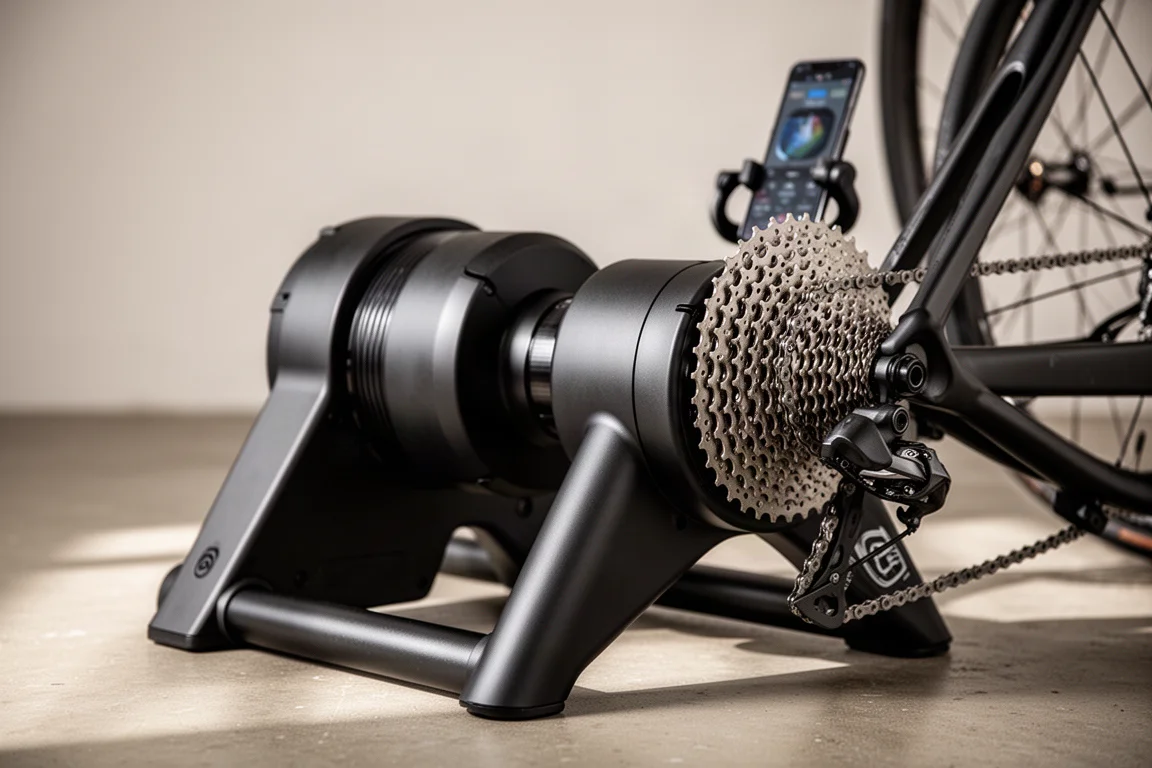
Controlling the app is easier with the companion phone app, which lets you manage the platform from your riding position instead of reaching for a laptop or tablet. The platform also connects to third-party services, including Strava live segments, Wahoo, TrainingPeaks, and Ride with GPS, so your training data can flow into whichever system you already use. If you rely on a particular training ecosystem, it is worth confirming your usual tools are covered before committing.
Buying advice
Membership Options and Subscription Flexibility
Pricing starts at $14.99 per month for a single account. A Duo membership covers two people for $19.99, and a group membership covers five people for $32.99, which works out at roughly $7 per person per month and makes splitting the cost between a small group of riders genuinely worthwhile.
Flexibility is a real strength here. You can pause a subscription for up to 180 days and still ride 20 km each month for free, or buy a daily pass, a two-day pass, or a three-day pass and jump on when it suits you. If your indoor riding is seasonal, that structure avoids paying for months you will not use.
Making the Most of Your First Rides
Start with a route that matches your current fitness rather than the most famous climb in the library. The route pages give you distance, elevation, and maximum gradient up front, so a demanding route is easy to identify and equally easy to save for later. Downloading your first few routes removes any streaming uncertainty and lets you focus on the riding itself.
Give the augmented reality format a fair trial across two or three different locations before deciding how you feel about it. Riding a climb you know, then riding somewhere entirely unfamiliar, shows both sides of the platform: accurate route recon for a goal event, and the simple pleasure of pointing at a place on a map and riding it the same day.
Conclusion
Rouvy makes most sense for riders who want their indoor training to resemble real roads in real places. The augmented reality layer, the depth of the route library, the structured workouts, and the flexible membership options all support that goal, and the ability to preview a climb before you ride it outdoors is a genuinely useful feature rather than a novelty. If you value realism and route discovery over a purely game-like environment, this platform is well worth a closer look.
Product link
View more details for Rouvy
This product is mentioned in the review. Check the specifications, options, and compatibility before buying.
View more details for RouvyFurther reading
Related Reviews
Indoor Cycling Apps
Best Indoor Cycling Apps Compared: TrainerRoad, Zwift, RGT Cycling and Wahoo SYSTM
Four indoor cycling platforms compared for riders who want structured training, virtual worlds, or World Tour race simulations.
Indoor Cycling Apps
Rouvy Review: Indoor Cycling on Real-World Routes, Workouts, and Group Rides
A practical look at Rouvy, an indoor cycling app built around roughly 1,500 real-world routes, structured training plans, group rides, and multi-account pricing.

Road Bikes
10 New Road Bikes Worth Watching: Aero, Titanium, Steel and Endurance Standouts
A practical roundup of 10 new road bikes, from aero flagships chasing single-watt gains to titanium, steel and endurance platforms built for real roads.