Indoor Cycling
Rouvy Review: How Close Does an Indoor Climb Come to the Real Thing?
A practical look at Rouvy as an augmented reality indoor cycling app, from physics accuracy and drafting effects to who benefits most from riding virtual routes indoors.
Introduction
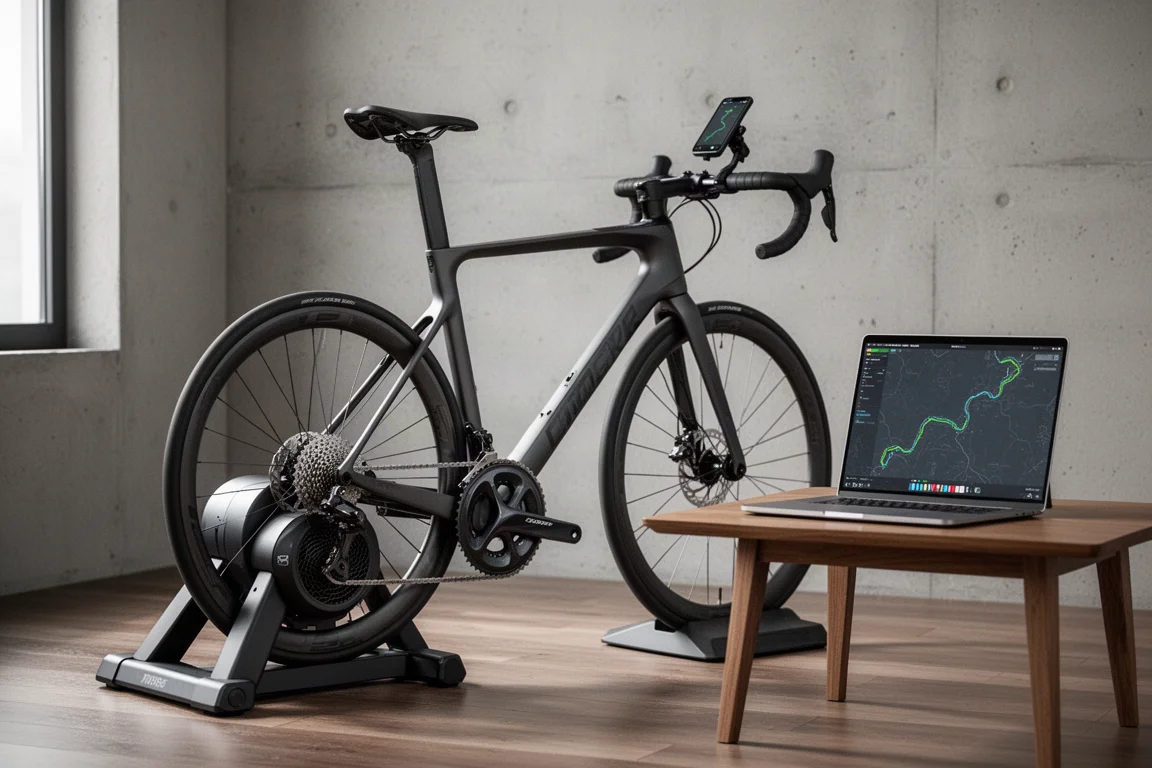
Riding a climb indoors and riding the same climb outdoors are two very different experiences, and the interesting question is whether the numbers behind them match. Rouvy is an augmented reality indoor cycling app that connects to a power meter on your bike and reproduces real routes, including the climbs that are out of reach for part of the year.
The appeal is obvious for anyone who has watched a favourite mountain disappear under snow, or who wants to preview a route before travelling to ride it. Rouvy states that its physics modelling accounts for rider differences, using height and weight to calculate frontal surface area so that a lighter rider and a heavier rider get results that reflect their real-world performance.
The practical test is simple: ride a hard climb outdoors with the app running alongside, and see how the two compare. This review looks at what the app does well, where it adds genuine value, and what to weigh up before committing.
Who Rouvy Is For
Rouvy suits riders who want indoor sessions tied to real geography rather than abstract training worlds. Two groups stand out.
The first is riders whose local roads or target climbs become unavailable for part of the year. Snow, travel restrictions and seasonal closures can put a signature mountain out of bounds for months, and an indoor route keeps that specific effort available.
The second is riders preparing for a trip or an event. Riding a route beforehand helps with pacing decisions, gear selection and knowing where the hard sections actually start. Event-style routes, including long-distance triathlon courses, are part of the library, which makes the preview use case realistic rather than theoretical.
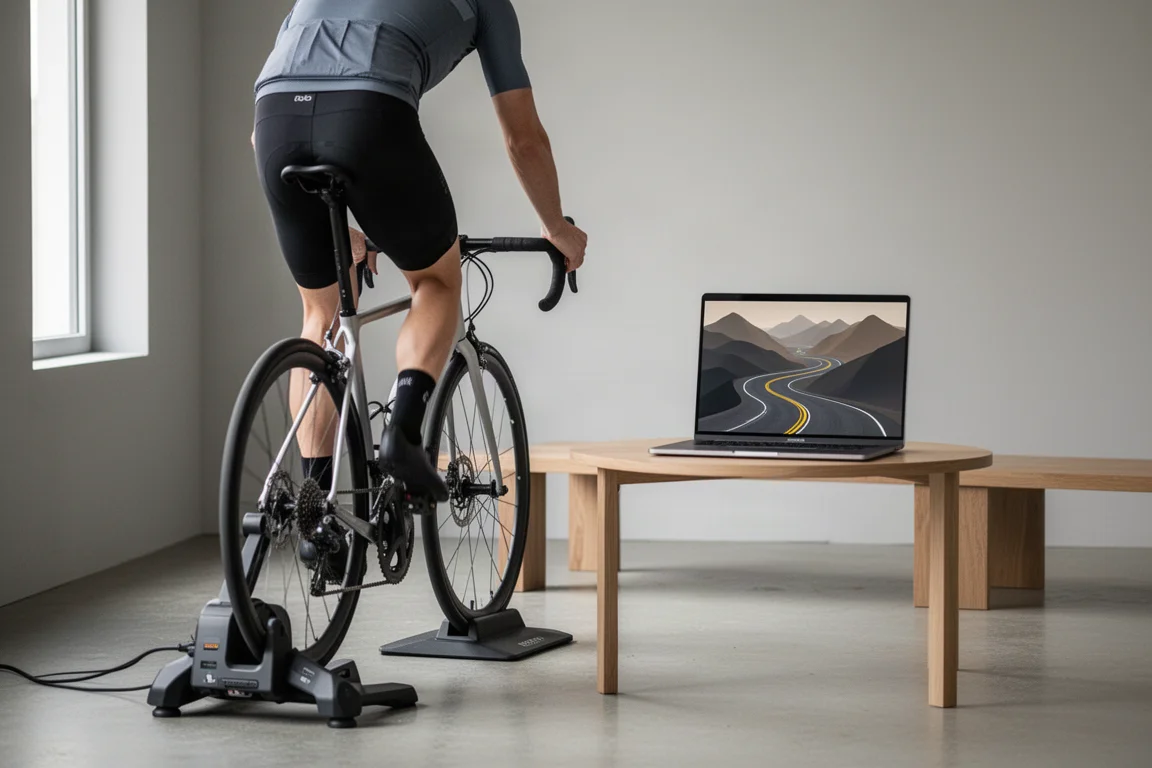
It also helps that the setup is not complicated. The app connects to a power meter, and a phone is enough to run it, so a rider does not need a dedicated computer or a permanent training room to get started.
Main Strengths: Route Accuracy and Rider Physics
The strongest argument for Rouvy is that the effort feels proportionate. Ride a climb outdoors with the app tracking the same segment, and the completion times come out close. In a direct comparison on a 21-hairpin mountain climb, the virtual avatar crossed the line roughly 20 seconds ahead of the rider on the real road.
That gap is small enough to be meaningful. Rouvy’s approach is that without a fan it cannot reproduce the wind on your face, but it can use physics modelling to get close to the differences seen between riders in real rides and races. Height and weight feed into the surface area calculation, which is why the app asks riders to confirm those details before a session.
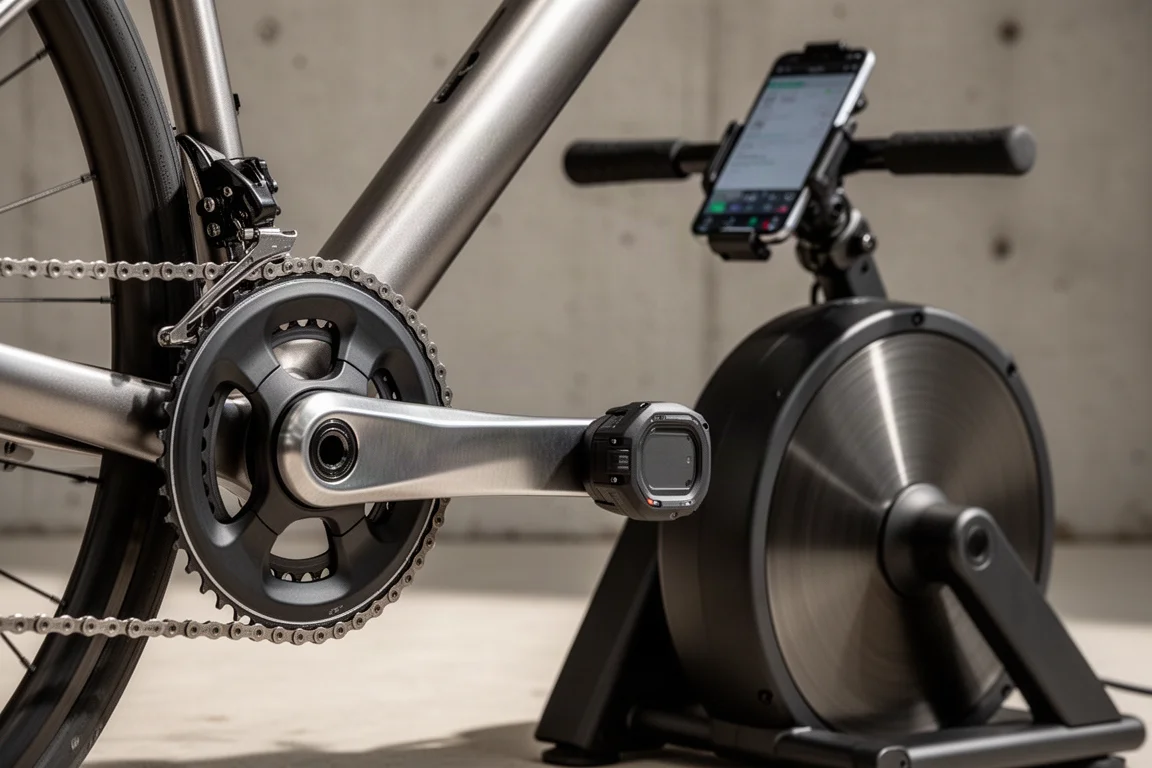
That accuracy matters most for pacing. If a route predicts a certain time at a certain effort, riders can plan around it with reasonable confidence, whether the goal is a personal best or simply finishing a long course comfortably.
Ride Feel and Drafting Dynamics
The other factor that shapes indoor results is drafting. In Rouvy, other avatars on the road are a mix of real riders and bots, and riding near them produces a drafting benefit. A small indicator next to the power figure turns green when that boost is active.
On a mountain climb the advantage is modest, since there is not much slipstream to be had at low speeds on a steep gradient. The observed difference is likely around 20 seconds over the course of a long ascent, noticeable but not transformative. It becomes more relevant on the flatter sections between hairpins, where gradients ease to something closer to four percent rather than ten.
That is also where virtual riders tend to drift ahead of their real counterparts. On the gentler pitches, the combination of a small drafting gain and steady pacing adds up, while steep ramps bring both versions back to parity.
Riders who want a neutral comparison can turn the other avatars off. Leaving them on makes the virtual environment busier and, arguably, more realistic, since group riding behaviour is part of what an event route actually feels like.
Things to Consider Before Buying
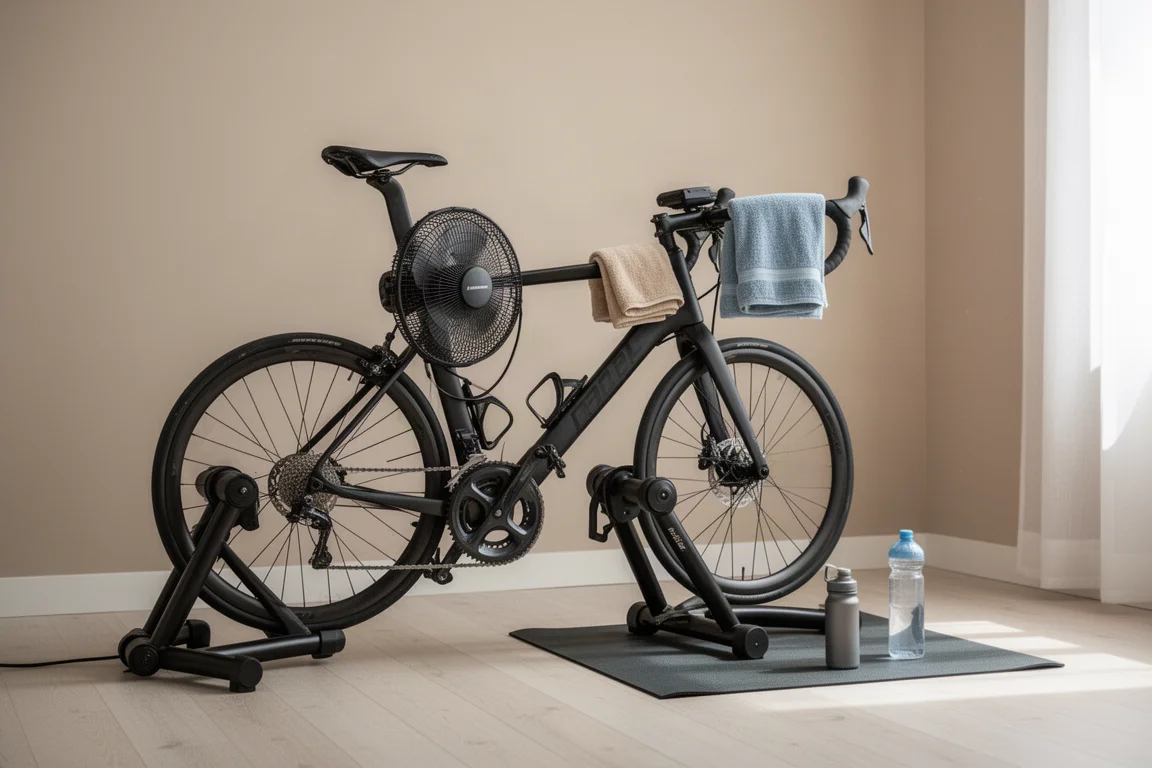
Indoor riding is still indoor riding, and the app cannot change the physical reality of a stationary bike. Without airflow, a hard climb indoors feels warmer than the same effort outdoors, and overheating becomes the limiting factor long before the legs give out. A good fan is not optional for serious sessions.
There is also the accuracy caveat that comes with any modelling. The physics engine handles the broad differences between riders well, but it is a simulation, and small variations in trainer calibration or power meter accuracy will show up in the results. Riders who care about precise comparisons should make sure their power source is consistent between sessions.
Route availability and device compatibility are worth checking before subscribing, particularly if a rider has a specific event course in mind. Setup itself is quick, but confirming that the routes you want are in the library is the sensible first step.
Buying Advice
Rouvy makes the most sense for riders who want structured, route-based indoor training rather than open-ended virtual riding. If the goal is to preview a course, keep a favourite climb in rotation through the off-season, or compare indoor and outdoor efforts on the same segment, the app supports all three use cases without much friction.
The drafting feature is a genuine part of that realism, though it is worth understanding how it works so that results are not misread. Riders chasing clean comparisons can disable other avatars; riders who want the bustle of an event route can leave them on.

For anyone weighing up an indoor subscription, the deciding question is whether real geography matters to your training. If it does, the ability to ride a specific climb on a snowed-in winter day is a strong argument. If the goal is simply to turn the legs over, a simpler option may be enough.
Conclusion
Rouvy answers a fair question well: can indoor riding reproduce the effort of a real climb closely enough to be useful? Based on a direct comparison on a long mountain ascent, the answer is yes, with the virtual version finishing around 20 seconds ahead over the full climb.
That margin comes from small drafting gains on the flatter sections rather than any dramatic shortcut, and it is close enough that the app is a credible tool for pacing, route previews and off-season training. Riders who value riding real places indoors will find a lot to work with here.
Product link
View more details for Rouvy
This product is mentioned in the review. Check the specifications, options, and compatibility before buying.
View more details for RouvyFurther reading
Related Reviews
Indoor Cycling
Best Budget Smart Indoor Trainer Setups: Six Options Worth Considering
Smart indoor trainers keep getting better while prices come down. Six setups and components worth considering, from the cheapest Zwift-ready option upward.
Indoor Cycling
Best Budget Smart Indoor Trainers for Immersive Cycling in 2026
A practical guide to affordable smart indoor trainer setups, including budget and mid-range options with virtual shifting.

Indoor Cycling
Best Indoor Cycling Apps and Smart Trainers: A Winter Buying Guide
A practical look at the indoor training platforms and smart trainers that matter this season, from a new challenger to Zwift to the entry-level trainer that stands out on value.