Road Bikes
Rose Shave 2026 Review: FFX, FF, And The Endurance Model Compared
A close look at the new Rose Shave range, covering the 795 g FFX race frame, the value-focused FF layup, relaxed endurance geometry, tire clearance, and pricing.
Introduction
Rose has replaced its team’s previous race frames with a new platform for 2026, and the Shave arrives as three closely related models rather than one. The range-topping Shave FFX is the frame the race team uses, the Shave FF takes the same shape and mould in a heavier carbon layup, and the Shave itself applies that silhouette to more relaxed geometry aimed at riders who are not built like a Grand Tour professional.
Two other details make this launch worth a careful look. Every model in the range accepts tires up to 36 mm, and the pricing sits below several well known aero and all-round race bikes while still offering flagship SRAM Red AXS builds.
What Defines the New Rose Shave Range
All three models share a common starting point. The frame shape is aero-led, the handlebar is proprietary, and every complete bike ships with Rose’s own branded wheels, which are 55 mm deep with a generous width. Rose also offers aero bottle cages for the frame, and the handlebar accepts a data adapter so riders can fit aero or triathlon extensions.
Frame weight is where the FFX separates itself. Rose quotes 795 g for the range-topping frame. That is roughly 100 g more than the top-tier Specialized Tarmac SL8, close to the non-flagship Tarmac SL8 and the Trek Madone, and noticeably lighter than bikes such as the Canyon Aeroad or the Cervélo S5. Rose says complete FFX builds start from 6.6 kg, which puts them under the UCI weight limit.
Clearance is another practical point in the range’s favour. All three models accept tires up to 36 mm, which leaves room to run the UCI’s 35 mm maximum at races such as Paris-Roubaix if a team chooses to.

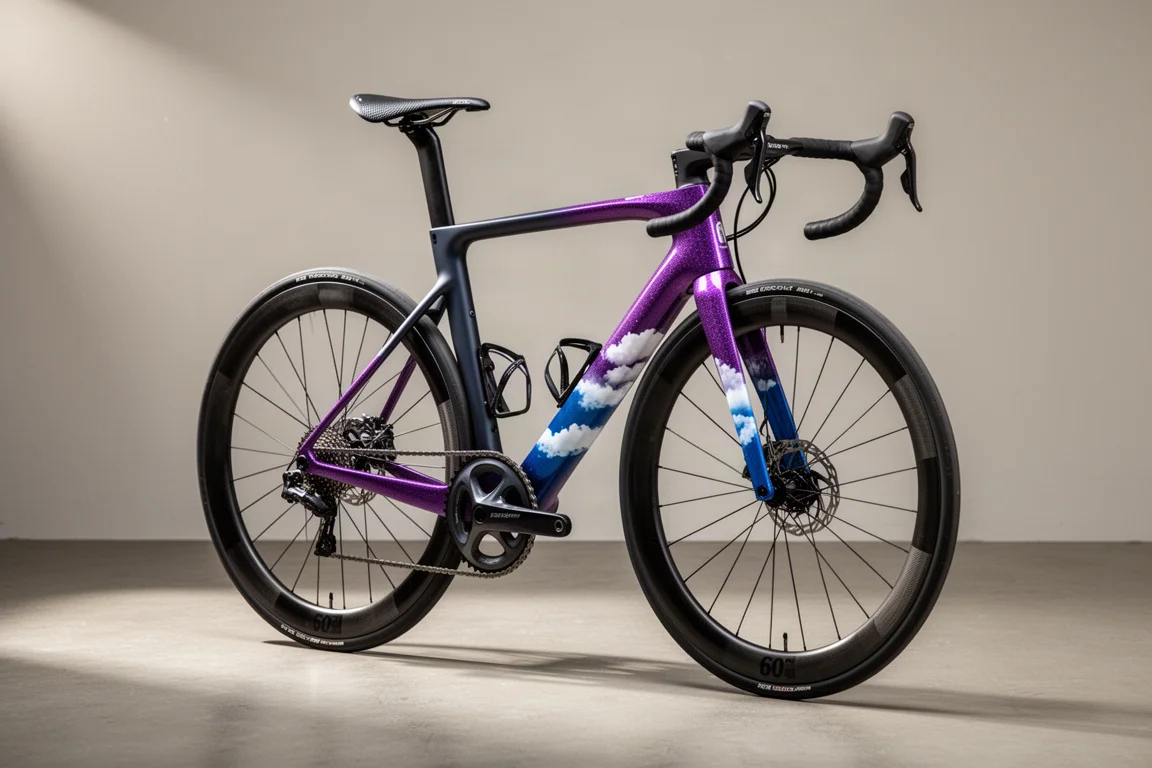
Fit and setup vary by model. The team’s own bikes show how far rider-specific builds can go. The race bikes carry a purple front end, the training bikes use a different purple treatment, and many rider bikes run noticeably shorter crank arms paired with longer stems than the stock build.
Rose Shave: Relaxed Geometry For Everyday Speed
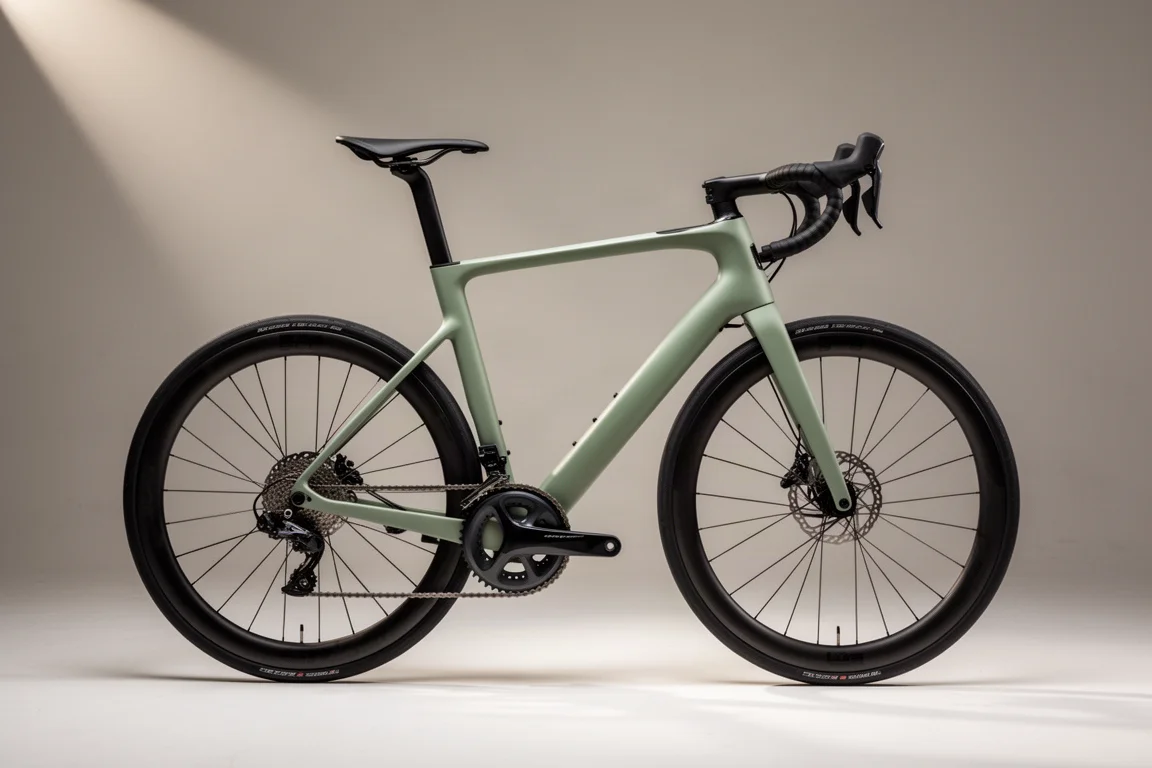
The Shave is the model to look at if a conventional race position has always felt like a stretch. In a size medium the front end sits about 4 cm taller than the race geometry, reach is around 15 mm shorter, and the head tube and seat tube angles are more relaxed.
Rose describes the concept as combining ergonomics with aerodynamics and pushing riders to ride faster for longer. The thinking is close to what other brands have done with race bikes aimed at everyday riders rather than only the extremely flexible.
Builds pair this geometry with Shimano 105 Di2, SRAM Rival AXS, Shimano Ultegra, or SRAM Force AXS. Pricing starts at €3,600 and reaches €5,200 for the Force AXS version. Colors include sage green, a supersonic gray, and slate.
Rose Shave FF: Same Mould, Different Carbon
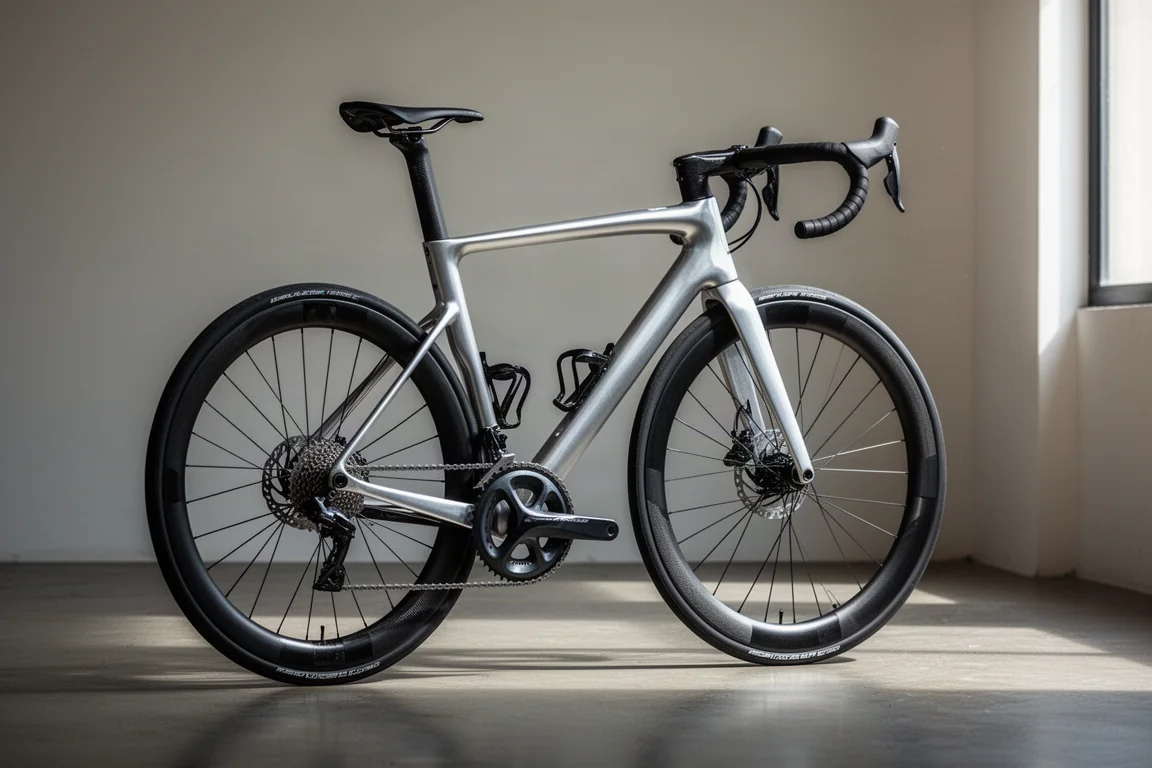
The Shave FF uses the same shape and the same mould as the FFX, so the aerodynamics and geometry are unchanged. The difference is the carbon layup, which makes the frame slightly heavier in exchange for a lower price.
Two builds are listed: Shimano Ultegra Di2 from €5,600 and SRAM Force AXS at €5,900. Finishes include a clean supersonic gray, a silver that suits the frame’s lines, and a much louder bubble gum option for riders who prefer their bikes to be noticed.
For most riders stepping up from an alloy or older carbon bike, this is the sensible entry point into the race-shaped end of the range.

The FF also benefits from everything that comes with the shared frame: the same tire clearance, the same proprietary bar, and the same accessory mounting options. Nothing about the less expensive layup limits how the bike can be set up.
Rose Shave FFX: The Range-Topping Race Frame
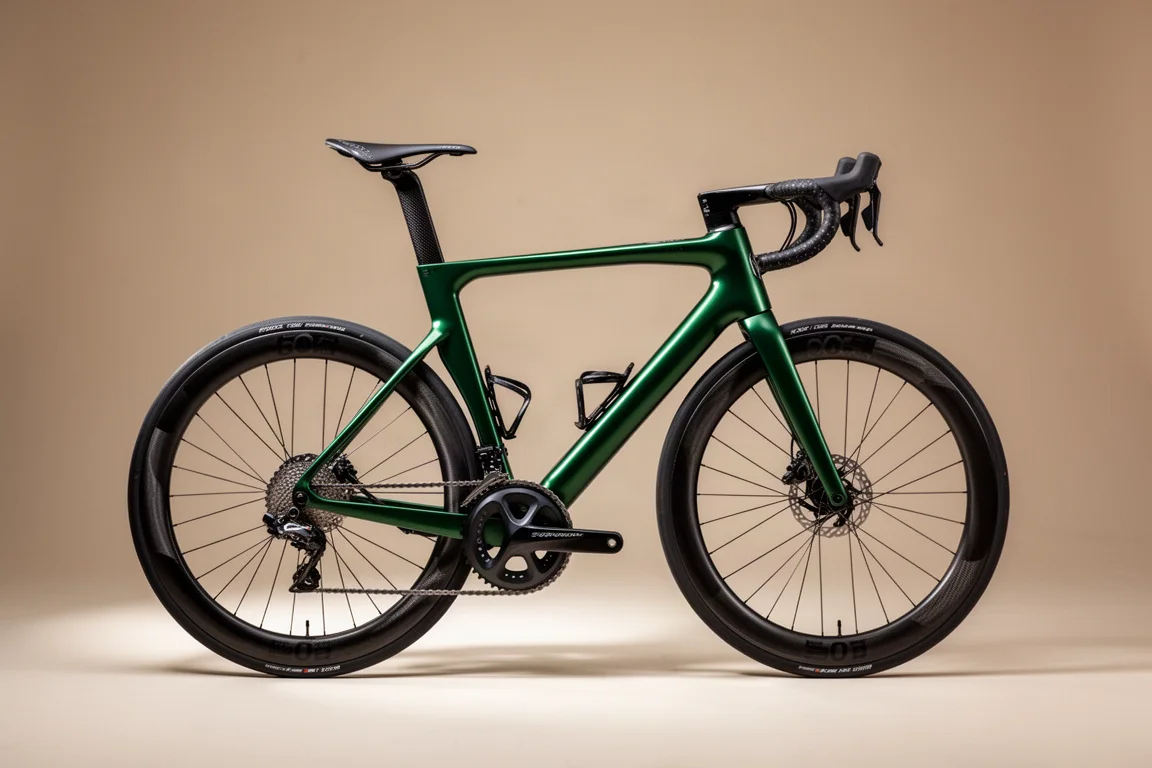
The FFX is the model the race team uses, and it is specced accordingly. The build shown here runs Vision’s RS60 wheels, 60 mm deep with carbon fibre spokes, wrapped in 30 mm Vittoria Corsa Pro tires set up tubeless. Drivetrain duties fall to SRAM Red AXS, with 175 mm cranks on this particular bike, Time pedals, and a Selle Italia SLR saddle with 3D printed padding and carbon rails.
The cockpit is proprietary and carries a dimpled texture that appears to be there for grip. It looks narrow head-on, which is no accident, and this example measures 390 mm wide with a 110 mm stem, 120 mm of drop, and 13 degrees of flare. That flare gives a narrow position between the hoods when riding low and a wider, more stable base for sprinting, a setup that is increasingly common in the professional peloton. A Garmin 1050 head unit and a pair of bottle cages round out the build.
Pricing is €8,000 with Shimano Dura-Ace or €8,500 with SRAM Red AXS, and the FFX is offered in liquid racing green or a ghost pearl finish.
Wheels, Tires And Compatibility Details
Tire width has been one of the more debated topics in road racing, and Vision has published aerodynamic testing suggesting width matters less than many riders assume. In that data, the type of tire had a far greater effect on the drag of the whole system than the width, and a 30 mm tire matched the pace of a competitor’s 28 mm tire. The practical takeaway is that a narrower tire is not automatically the faster choice.
That helps explain why the team’s race bikes and training bikes both run 30 mm Vittoria Corsa Pro tires. Mechanics also mark each tire with a number indicating when the sealant was installed, a simple system for making sure tubeless setups do not dry out between services.
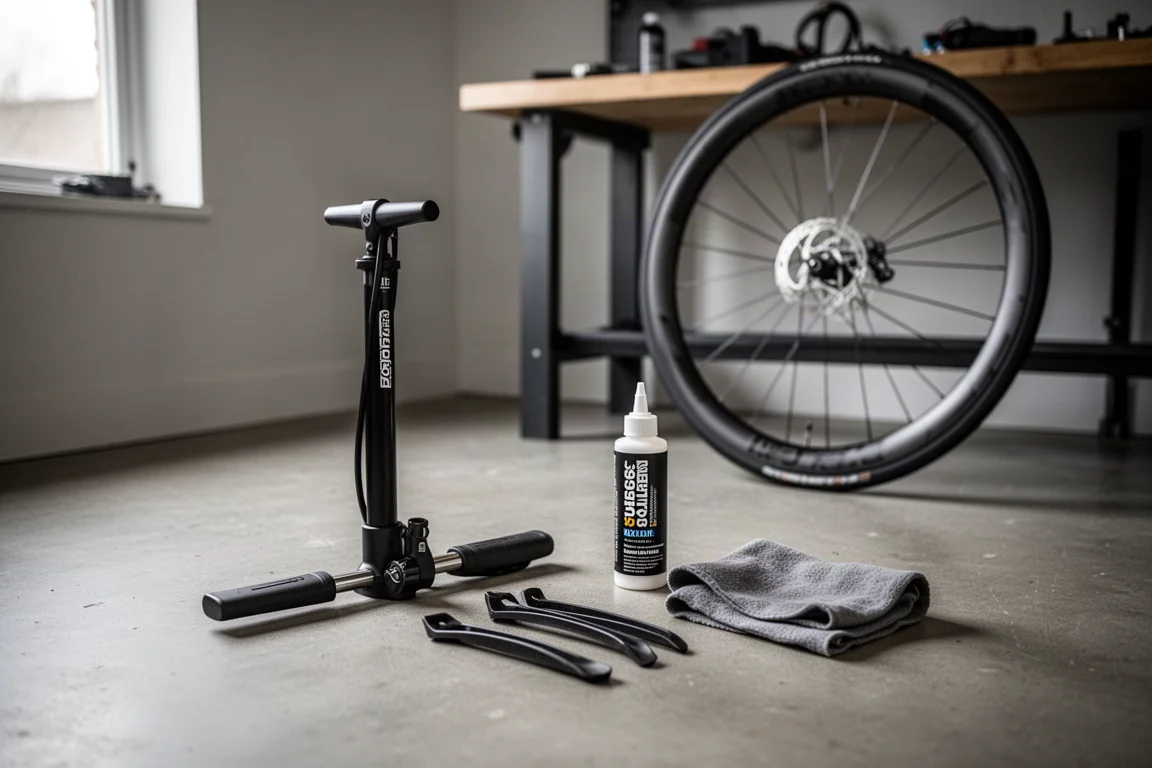
Beyond tires, the range keeps its options open. The 36 mm clearance covers everything from fast road rubber to wider, more forgiving setups, and the bar’s compatibility with aero extensions means the FFX can be adapted for time trial or triathlon style efforts without changing the front end.
Colors And Pricing Across The Range
Colors vary by model. The more endurance-focused Shave comes in sage green, supersonic gray, and slate. The FF adds supersonic gray, silver, and the bubble gum option. The FFX keeps things more restrained with liquid racing green and ghost pearl.
On price, the Shave starts at €3,600 and tops out at €5,200, the FF runs from €5,600 to €5,900, and the FFX sits at €8,000 or €8,500 depending on groupset. That is a significant sum, but it is also well below what several comparable aero and all-round race bikes cost, which is a meaningful part of the appeal here.
Buying Advice: Which Rose Shave Suits You
Choosing between the three comes down to position and budget more than outright performance.
If you want the race-bike feel but your body does not enjoy a long, low reach, the Shave is the obvious pick. The taller front end and shorter reach make long days more comfortable without abandoning the aero silhouette, and the lower entry pricing leaves room in the budget for wheels or a power meter later.

If you want the quickest frame Rose makes at the lowest price, the FF is the value option. You give up a little frame weight, not shape, clearance, or setup flexibility.
The FFX is for riders who want the top layup, the lightest complete builds, and the flagship groupsets, and who are willing to pay for the last few hundred grams. Riders who value an aggressive position should look here first, since the geometry is the same across the FF and FFX and the difference is weight rather than fit.
Conclusion
The Rose Shave range is appealing because the same core design covers three quite different riders. Wide tire clearance, a proprietary aero cockpit with extension compatibility, and pricing that undercuts several established race bikes give all three models a strong starting point. The question is simply which geometry and which carbon layup fit the way you actually ride.
Further reading
Related Reviews

Road Bikes
10 New Road Bikes Worth Watching: Aero, Titanium, Steel and Endurance Standouts
A practical roundup of 10 new road bikes, from aero flagships chasing single-watt gains to titanium, steel and endurance platforms built for real roads.
Road Bikes
2026 Tour de France Road Bikes: Six Race Machines Worth a Closer Look
Six race bikes from the 2026 Tour de France grid, reviewed for paint, silhouette, wheels and the specification details that matter to buyers.
Road Bikes
3T Strada Italia Review: A Radical Aero Road Bike That Rides Smooth
A made in Italy carbon aero road bike with a deep head tube, wide tire clearance and a genuinely comfortable ride. Here is what to know before buying.