Water Filtration
Rosave DOZ Sediment Filter Review: Graded Density for RO Systems
Why the cheapest cartridge in a reverse osmosis system can matter most, and how the Rosave DOZ graded-density sediment filter fits into a pressure-first maintenance plan.
Introduction
Most reverse osmosis owners put their attention on the expensive parts of the system. The carbon block, the membrane and the DI resin all feel like the components that decide water quality, and they are the ones that cost real money to replace.
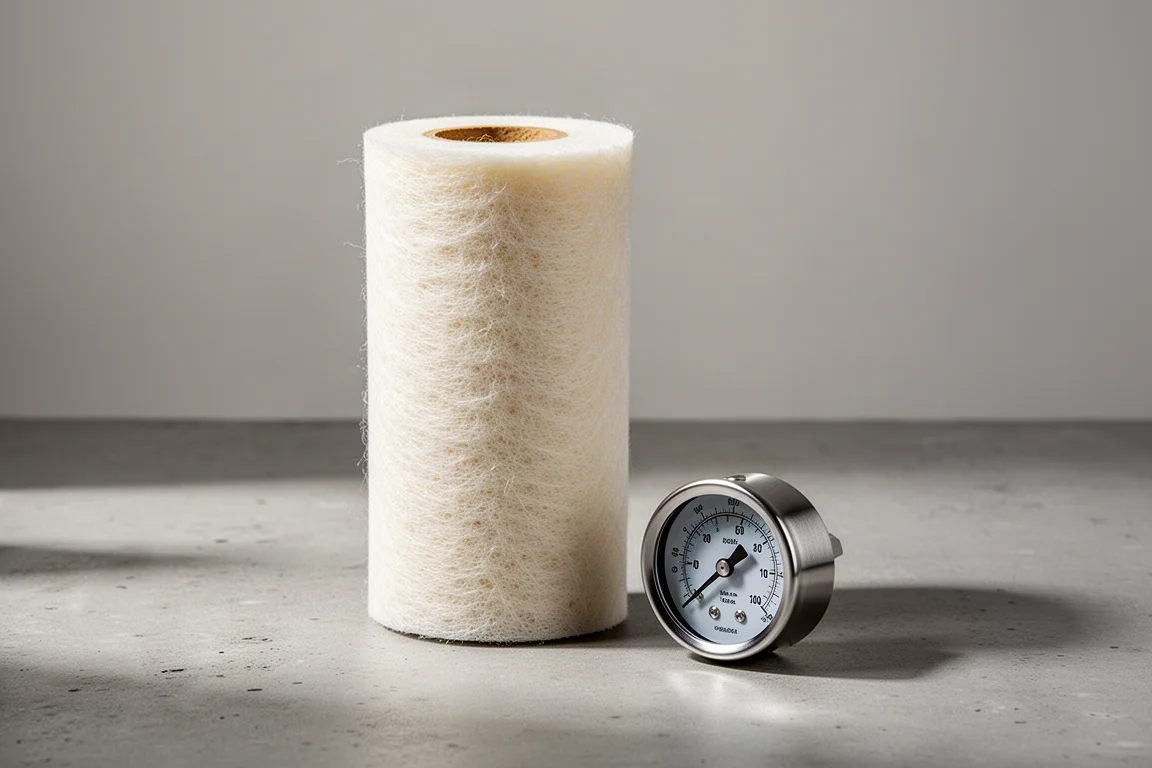
The sediment filter sits ahead of every one of them. It is the cheapest cartridge on the rack, and it looks like little more than a tube of wound fibre. Its job is narrower than people assume: it is there to stop dirt, rust and larger particles from reaching the carbon block, and to keep the membrane from fouling.
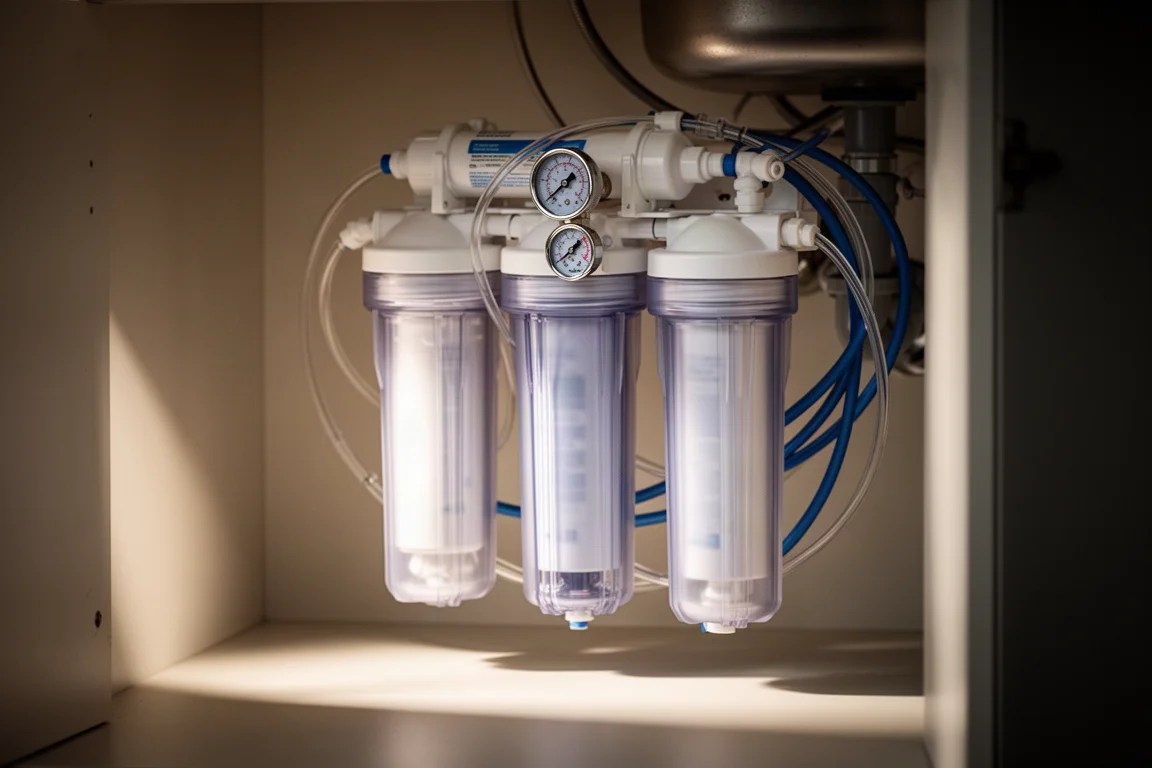
That narrow job has a wide effect. Because it sits first in line, anything the sediment filter holds back changes the pressure available to the cartridges behind it. A system reading 50 psi at the house can drop to 30 psi at the membrane once the sediment filter is loaded, and that is enough to lose half of the flow performance or to let twice as much dissolved solids through. A few-dollar cartridge is quietly setting the ceiling on the whole system.
So the sequence that works is straightforward: choose a sediment filter that traps a range of particle sizes through its full thickness, watch a pressure gauge instead of the calendar, and replace the cartridge before the membrane starts paying for the delay.
Who This Filter Is For
The Rosave DOZ is a graded-density sediment cartridge for RO owners whose current filter is not keeping up. There are a few situations where it earns its place.
The first is resin consumption. Owners who find themselves replacing DI resin constantly may discover that maintaining the sediment filter properly is dramatically cheaper than repeatedly buying resin. Restoring rejection performance can cut resin consumption by half or more, which means a cartridge costing a few dollars more can pay for itself several times over.
The second is premature clogging downstream. If carbon blocks sitting after the sediment filter are turning visibly dirty, the sediment filter is either depleted or already past the point where it is doing useful work. A better depth cartridge is one response to that pattern.
The third is a sediment filter that clogs too quickly and needs constant attention.
Not everyone needs this. If your carbon blocks stay clean, pressure holds steady and your current filter lasts a sensible interval, there is no reason to change what works. A graded-density cartridge is a response to evidence, not an upgrade for its own sake.
Why Graded Density Matters
Almost every sediment filter on the market describes itself as a depth filter. The idea is that the outer layers are more open and the core is tighter, so particles are caught throughout the wall rather than forming a cake on the surface.
How well each cartridge delivers that varies. Some step down through two or three discrete stages, and others work within a fairly narrow range, which limits how much sediment they can hold before flow starts to fall.
The Rosave DOZ takes a different approach. It uses a true graded density construction, and that difference is something you can feel in your hand: the outer material is softer and the centre is noticeably denser, with density rising gradually through the wall rather than in steps. Sediment of various particle sizes is captured through the entire thickness of the filter, not just at the surface.
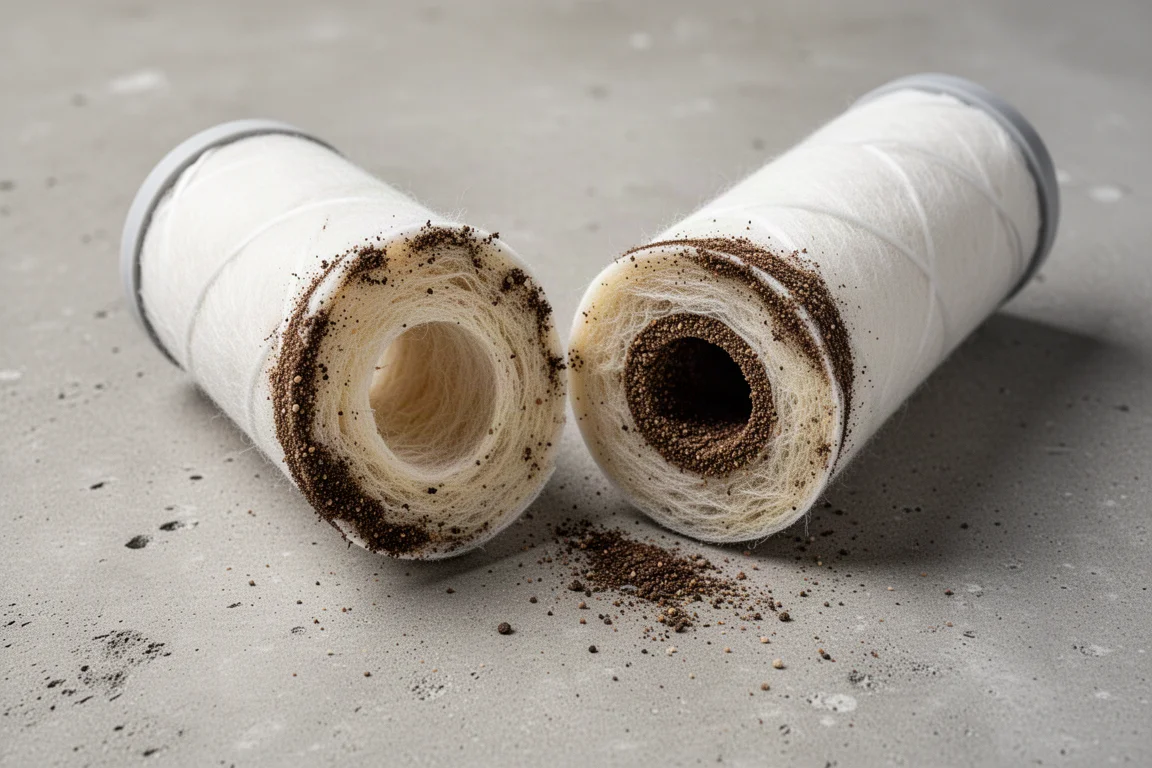
Cutting one open makes the behaviour obvious. Dirt and sediment collect in layers through the full depth of the wall, which is why a cartridge built this way can last substantially longer than a basic alternative. Rosave DOZ cartridges cost a few dollars more, but they can often run more than twice as long, which makes them both the more cost-effective choice and the one that demands less work.
How a Clogged Sediment Filter Affects Pressure and TDS
It helps to separate what a sediment filter does directly from what it does indirectly.
Directly, the cartridge has little to say about water quality. TDS readings before and after the sediment filter will typically be close to identical, because dissolved solids are not what it is designed to remove. Judging a sediment filter by TDS across that single stage is the wrong test.
Indirectly, it can be the lowest cost way to improve TDS performance across the whole system. As the cartridge fills with dirt, rust and sediment, it restricts the pressure reaching everything downstream, including the membrane that needs pressure to operate efficiently. Take a house with 50 psi at the tap, add a clogged sediment filter, and the membrane might see 30 psi. That can halve flow performance, or double the dissolved solids passing through, or do both.
The good news is that the fix is small. There is no need to replace the whole filter set to get back to ideal performance. Replacing the sediment filter alone can restore rejection rates and cut DI resin consumption by half or more. For owners burning through resin, that single change is often the cheapest correction available.
How to Tell When It Is Time to Replace It
Visual inspection is the most common method and the least reliable one. Sediment filters can look convincingly dirty on the outside while still having plenty of capacity left, because a proper depth filter keeps capturing particles throughout its wall.
Signs worth acting on:
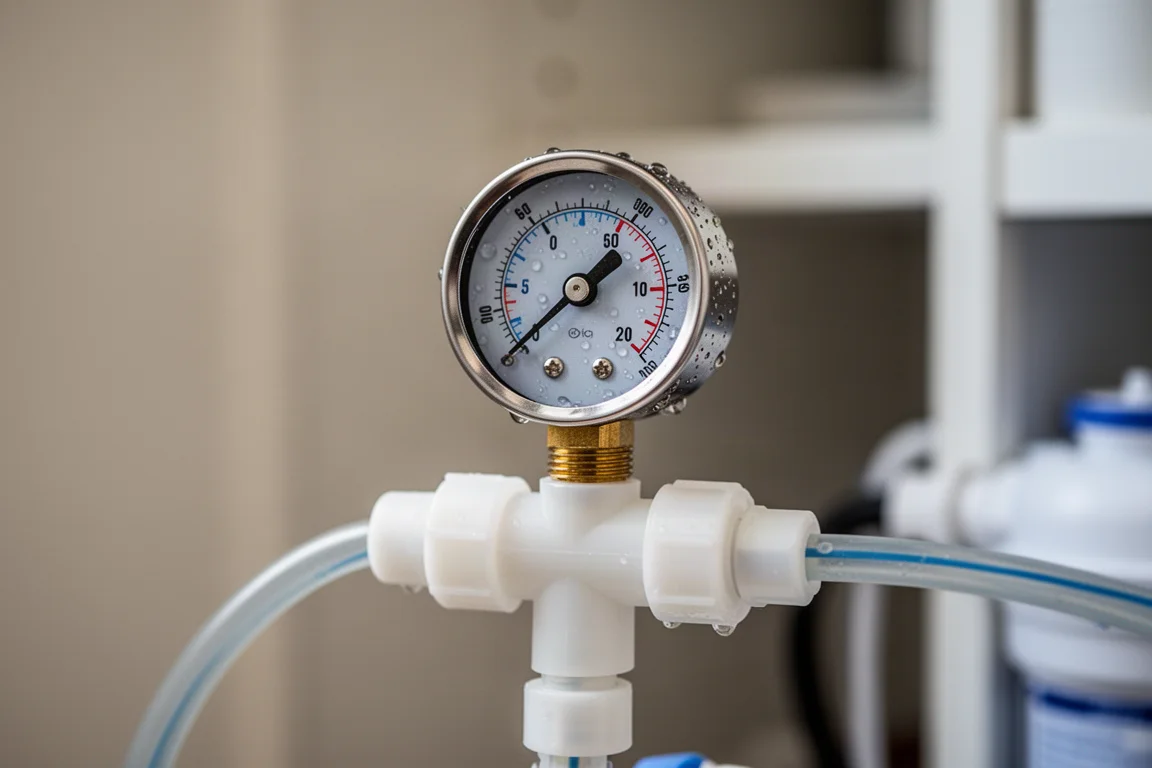
- A pressure gauge reading that drops. This is the best single indicator. Fit a gauge immediately before the membrane, note the reading after a fresh filter swap, ideally close to or above 50 psi, and then watch it. When pressure falls far enough to affect rejection or flow rates, which can happen with as little as a 5 psi drop, change the sediment filter. A gauge costs less than $15 and is a straightforward addition to any system.
- Downstream carbon blocks that are visibly dirty. That points to a sediment filter that is exhausted or beyond it. If carbon blocks keep fouling, the sediment in your water may be fine enough to pass through, and moving to a smaller micron rating is worth considering.
- A second gauge on the system input line, which is optional but useful. It lets you compare household pressure against membrane pressure in real time. Bear in mind that filters themselves, even brand new ones, will pull the reading down slightly.
Things to Consider Before Buying
A few trade-offs are worth understanding before choosing this cartridge.
The Rosave DOZ costs a few dollars more than a basic sediment filter. The value depends on how long it lasts in your system. Where it lasts more than twice as long, the arithmetic is clearly favourable. Where a cheap cartridge already runs for a long interval, the case is weaker.
Smaller is not automatically better. Most RO owners do not need to run a 1 micron sediment filter. If the carbon blocks stay clean and pressure holds, staying with a 5 micron cartridge is the sensible choice, and 5 micron filters are less expensive as well.
If your sediment filter clogs unusually fast and needs changing constantly, a larger micron rating is often the simplest fix. Moving from 1 micron to 5 micron usually extends the interval. Running two sediment filters in series, a larger micron first followed by a smaller micron, will greatly extend the time between changes, but that setup suits very few systems. You will know if you are in that group, because premature carbon block clogging will keep repeating.
Finally, no sediment filter, however good, is a substitute for monitoring. The cartridge protects the carbon block and the membrane, and its condition is measured in pressure, not in appearance or in months on a calendar.
Buying Advice
Treat the sediment filter as the pressure-management component it is. Fit a gauge before the membrane, record the reading when the filter is fresh, and replace the cartridge when the number slides rather than when the packaging says so.
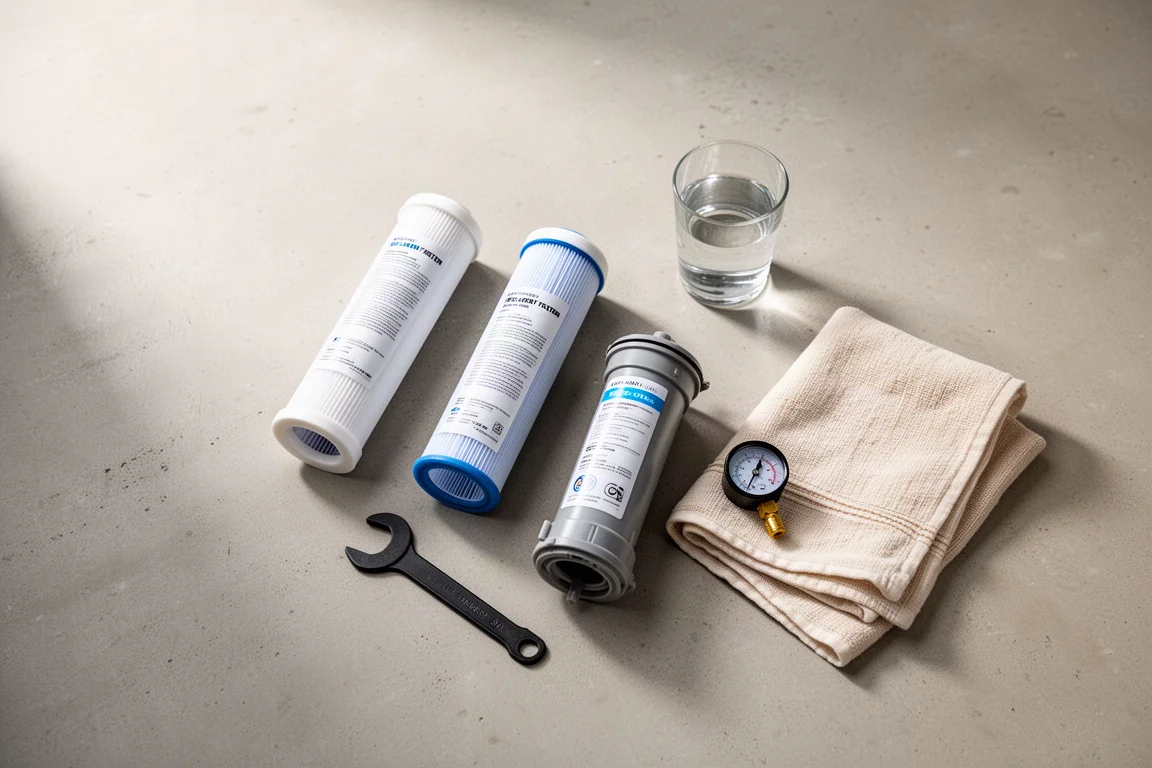
For most owners running a 5 micron sediment filter that holds pressure well, there is nothing to fix. For owners replacing sediment filters constantly, watching carbon blocks foul, or buying DI resin far more often than they would like, the Rosave DOZ is the pragmatic choice. It costs a little more per cartridge and lasts substantially longer, which makes it the cheaper option over a season of use and much less work to live with.
Conclusion
The sediment filter is the least expensive part of a reverse osmosis system and one of the most consequential. Its job is to protect the carbon block and the membrane, and the pressure it passes along determines how efficiently everything behind it performs. A true graded-density cartridge such as the Rosave DOZ captures sediment through its full thickness, lasts substantially longer than a basic filter and, at a few dollars more, often pays for itself many times over by keeping downstream components clean and resin consumption down.
Product link
View more details for Rosave DOZ
This product is mentioned in the review. Check the specifications, options, and compatibility before buying.
View more details for Rosave DOZFurther reading
Related Reviews
Water Filtration
DuPont FilmTec 75 GPD vs 100 GPD: Picking the Right RO Membrane
How the two most popular RODI membranes differ in rejection rate, flow rate, and long-term DI resin cost, and which one suits a typical reef system.
Aquarium Filters
Best Aquarium Filters 2026: Five Options for Clear Water and Healthy Fish
Five aquarium filter options ranging from ultra-quiet models to multi-stage systems, each designed to maintain water clarity and support healthy aquatic environments.
Aquarium Water Filtration
Best BRS RODI Systems for Reef Tanks: Matching the Stage Count to Your Water
A practical breakdown of the six BRS RODI systems, from the four-stage value models to the seven-stage Pro Plus, and how to choose the right one for your source water.