Camp Chairs
Rocking and Reclining Camp Chairs Compared: NEMO Stargaze and GCI Outdoor
A close look at the NEMO Stargaze Reclining Camp Chair and two GCI Outdoor rockers, covering setup, seat comfort, recline range, rocking motion, and packed size.
Introduction
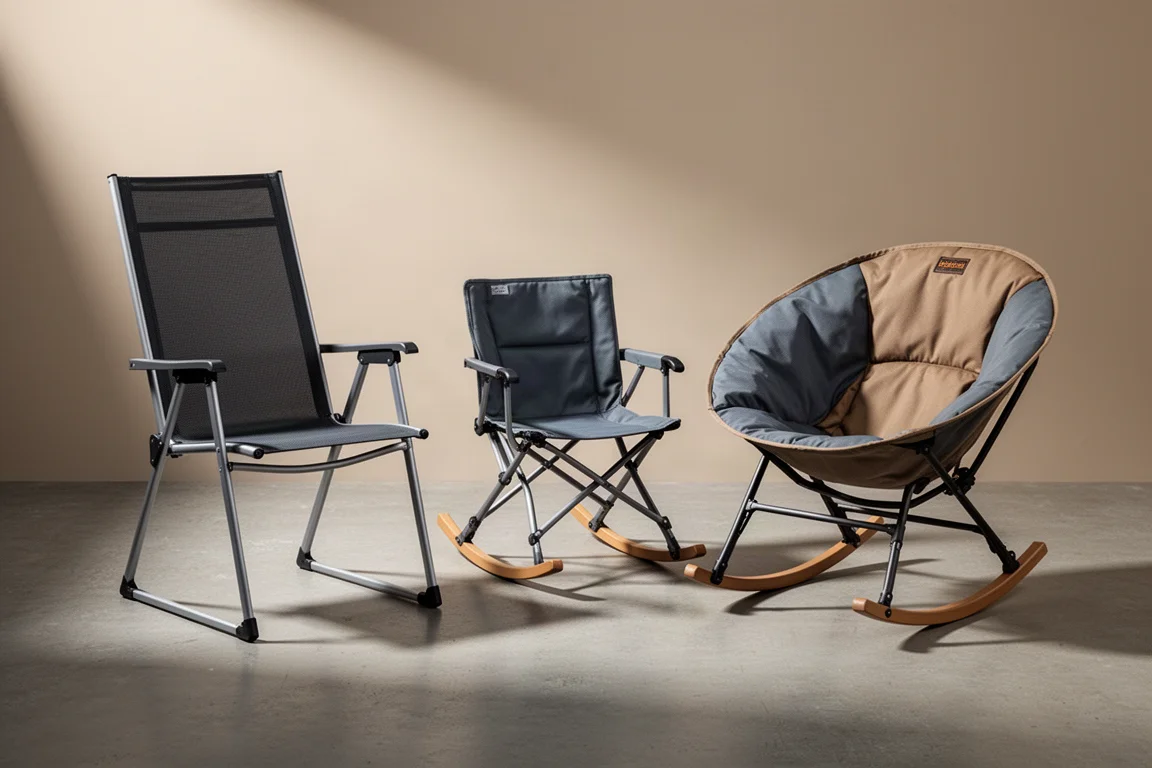
Rocking camp chairs are easy to find. Chairs that recline are rare. A chair that does both is rarer still, and the NEMO Stargaze Reclining Camp Chair is one of the few that manages it. Two GCI Outdoor models, the Kickback Rocker and the Pod Rocker, take a different route: they rock, but they do not recline.
This comparison covers the details that decide whether a chair earns its space in your vehicle: setup and pack-away time, seat and backrest dimensions, recline range, rocking range of motion, mesh coverage for hot weather, build materials, packed size, weight, and price positioning.
What Matters in a Rocking Camp Chair
Not every rocking chair rocks the same way. Two designs dominate. One suspends the seat fabric from the frame at a small number of attachment points, which lets the whole seat move. The other keeps the front legs fixed and puts spring-loaded pistons at the rear, so only the back of the chair travels. The first gives a longer, hammock-like arc. The second gives a shorter, more controlled rock.
Recline is the second dividing line. Some chairs recline through a wide angle using tensioned straps that lengthen as you lean back. Others have a fixed back angle that cannot be changed at all.
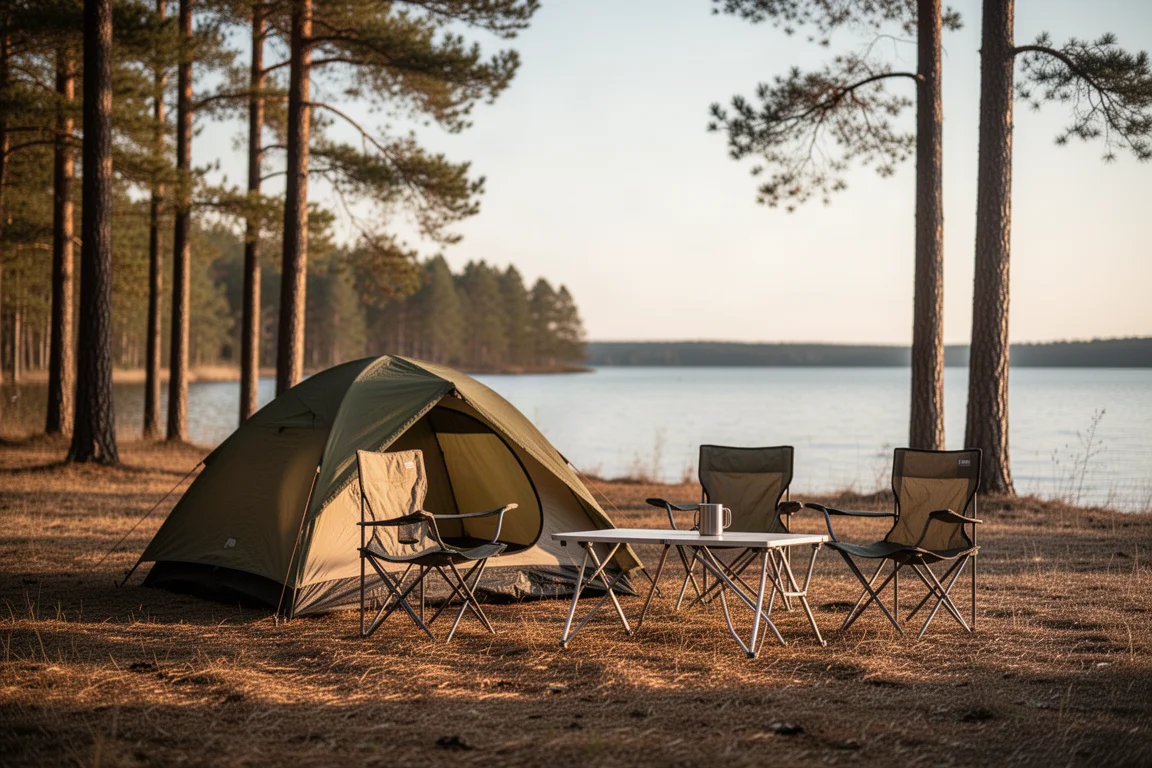
Beyond motion, four measurements matter most. Seat depth and width decide how roomy the chair feels over a long evening. Backrest height decides whether you can rest your head. Seat height decides how easy the chair is to get out of. Mesh coverage decides how the chair behaves in direct summer sun, because a seat that traps heat becomes uncomfortable quickly.
Packed size and weight matter just as much if you are loading a car rather than a garage. A chair that packs 50 percent longer than a two-person tent takes up real space.
NEMO Stargaze Reclining Camp Chair: Full Recline and Full Rock
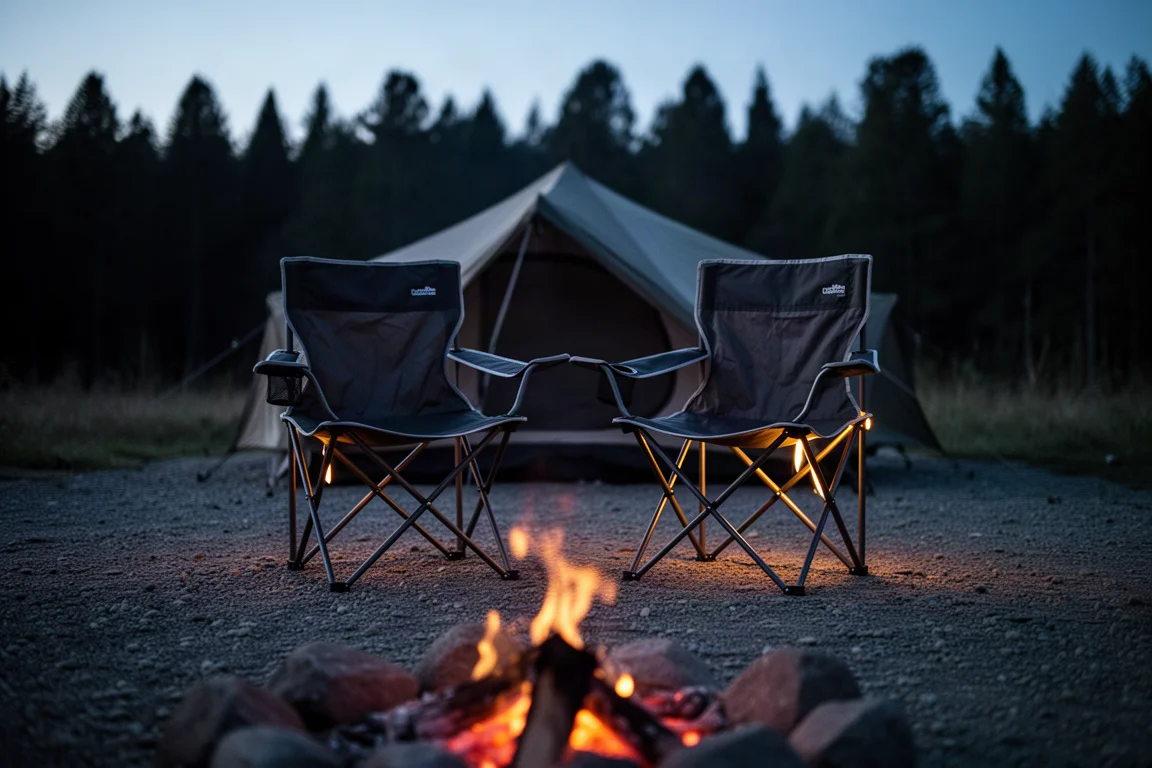
The Stargaze arrives as three pieces: a carry bag, a set of shock-corded poles, and the seat fabric. Setup is intuitive once you follow the shock-cording. Six poles go together, and each one carries white direction marks that show how far it should be inserted. When the poles are fully seated, none of the white markings should still be visible. The fabric then clips onto the frame using two connected metal buckles at the widest points, pressed to expand the pole insert and released to lock it in place. In testing, setup took about 43 seconds and pack-away about 52 seconds.
The unfolded footprint measured about 37.5 inches from pole tip to pole tip, 28 inches from the back of the chair to the front of the seat, and 40.5 inches from the ground to the top of the chair. Those figures line up closely with the marketed dimensions. The seat measured about 22 inches wide and 19 inches deep, and it feels genuinely roomy. Seat height is listed at 12 inches; measured unloaded it came in at about 11.5 inches, and with a person seated the distance from the ground to the seat was just over 10 inches.
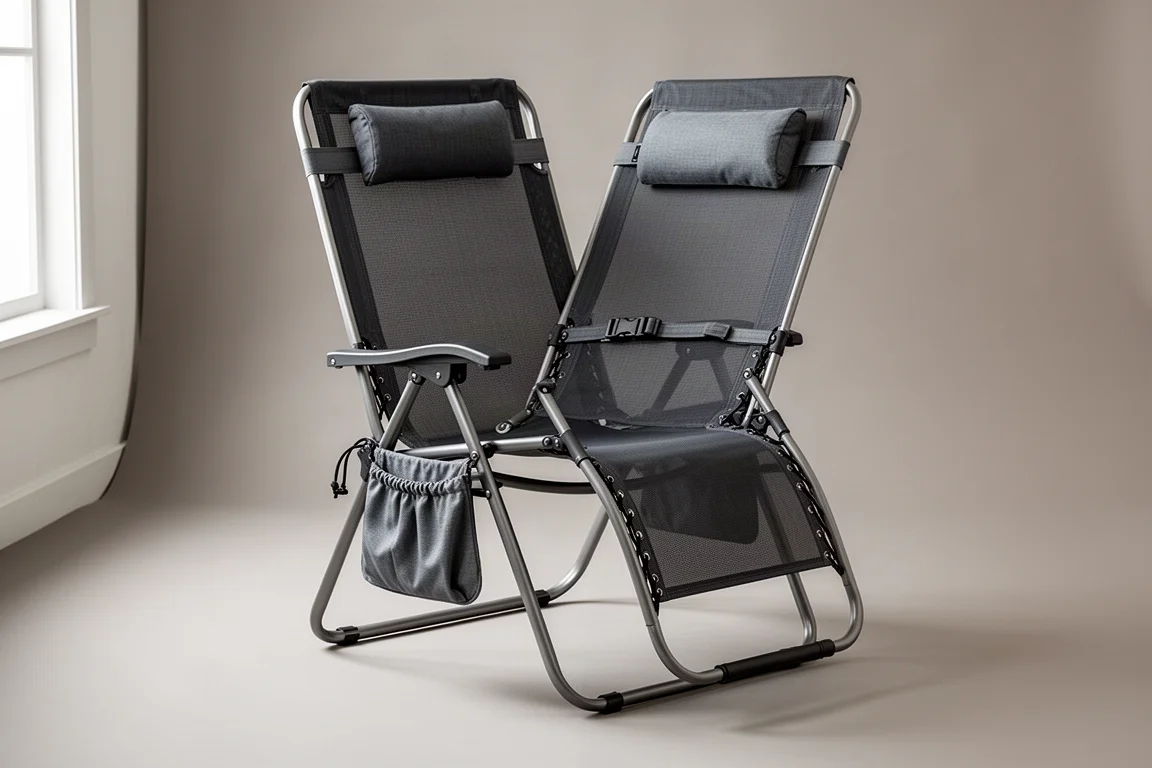
The backrest is the headline number. It measures 30 inches tall, which covers the whole back and extends past the head, so you can rest your head while rocking. It is about 24 inches wide at its widest point and about 19.5 inches nearer the bottom, tapering from the middle in both directions. An adjustable pillow attaches to the top of the backrest with two Velcro strips and can be positioned low, in the middle, or higher up for taller users.
Recline is where this chair separates itself. In its neutral position the back angle measures about 11 degrees. Lean back and the tensioned straps lengthen, taking the chair to as much as 57 degrees. That is a deep, genuinely relaxing angle, though it takes more effort to push back than you might expect, especially for lighter users. Stand up and the chair returns to its neutral position on its own.
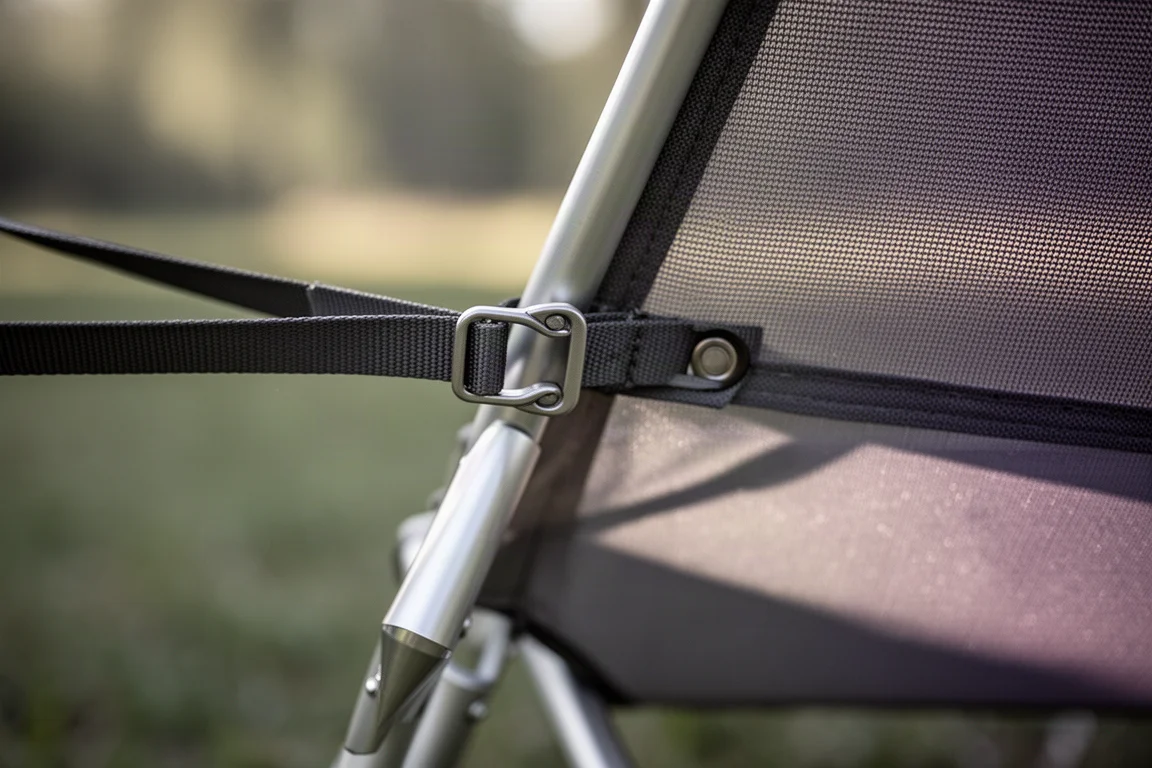
Rocking works because the seat is attached to the aluminum frame by only two steel buckles at the widest points. That minimal attachment leaves a lot of freedom, and the chair swings through a long arc. It also keeps rocking gently when your feet are off the ground, which gives the seat a hammock-like feel rather than the stiff, fixed platform of a conventional camp chair.
Breathability is unusually good. Roughly 44 percent of the chair is mesh: 15 of the seat’s 19 inches, 19 of the backrest’s 30 inches, and 17 of the chair’s 27 inches of width. The mesh is a monofilament type, a strong weave that showed no sign of tearing. Because the mesh sits exactly where the body contacts the chair, a one-hour sit test produced almost no rise in temperature. The remaining polyester fabric is thin and stayed cool as well, including the padded front section that cushions the back of the knees.
Frame hardware is reassuring. The poles are aircraft-grade aluminum, as are the pole joints. The foot poles measure 0.87 inches thick, the bars that hold up the chair measure 0.91 inches, and the center bar is close to a full inch. Stitching was consistent across the whole chair. Stability is good for a suspended seat, with a wide enough foot spread for balance, and pushing the chair back far enough to tip it takes a great deal of force.
Two side pockets double as cupholders. Each is about 4 inches long and takes a bottle up to 3.5 inches in diameter, which covers a 1-liter Nalgene. A cinch at the back adjusts the diameter, so they also work for a phone, sunglasses, or other small items. The chair carries a lifetime warranty and is the only chair in this comparison with UV protection built into the fabric.
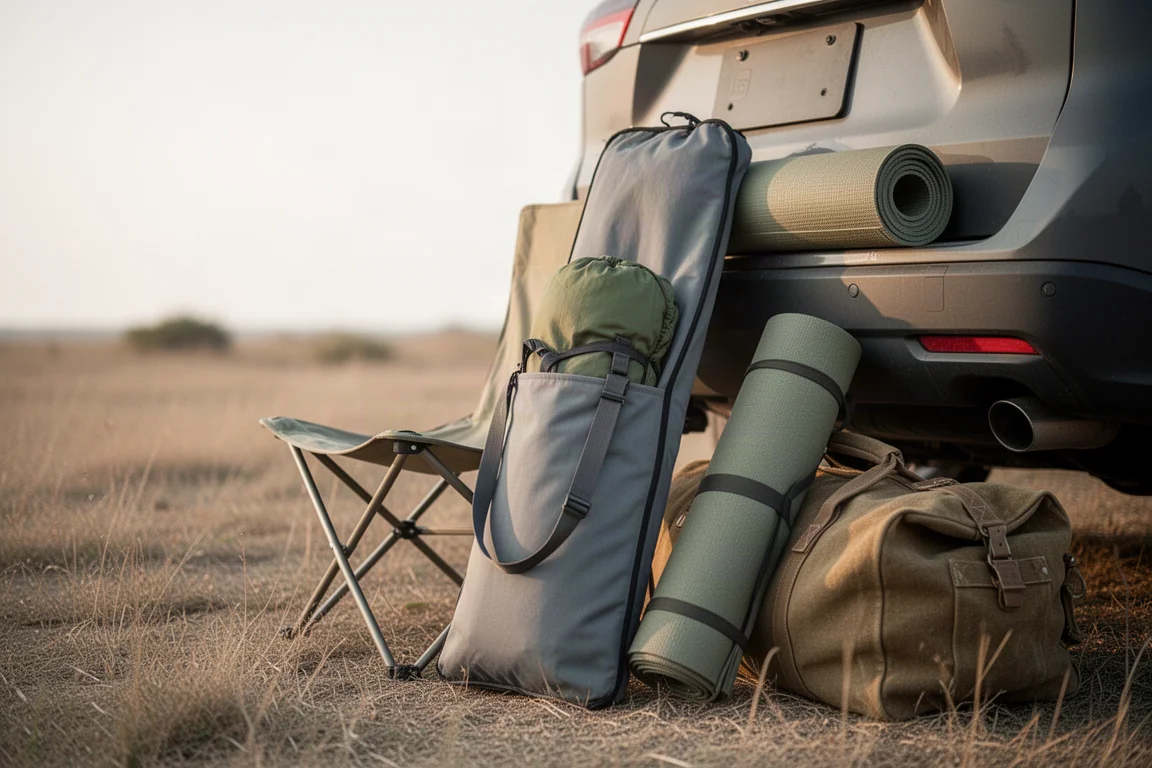
Portability is a strong point. Packed, the chair measures about 27 inches long, 9.25 inches wide, and 8.5 inches tall, roughly 12 percent longer than a mid-sized two-person tent. The carry bag has an adjustable shoulder strap plus a smaller handle at one end. Total weight came in at 8.4 pounds, made up of 7.8 pounds for the chair and 0.6 pounds for the bag, about half a pound more than the marketed figure.
The trade-offs are worth stating plainly. Setup and pack-away take longer than on the GCI rockers, and because the seat is always suspended from the two buckles, the chair sways slightly even when you sit upright, so it does not behave like a rigid camp chair at a table. The price is higher than either alternative.
GCI Outdoor Kickback Rocker: Simpler, Sturdier Seating
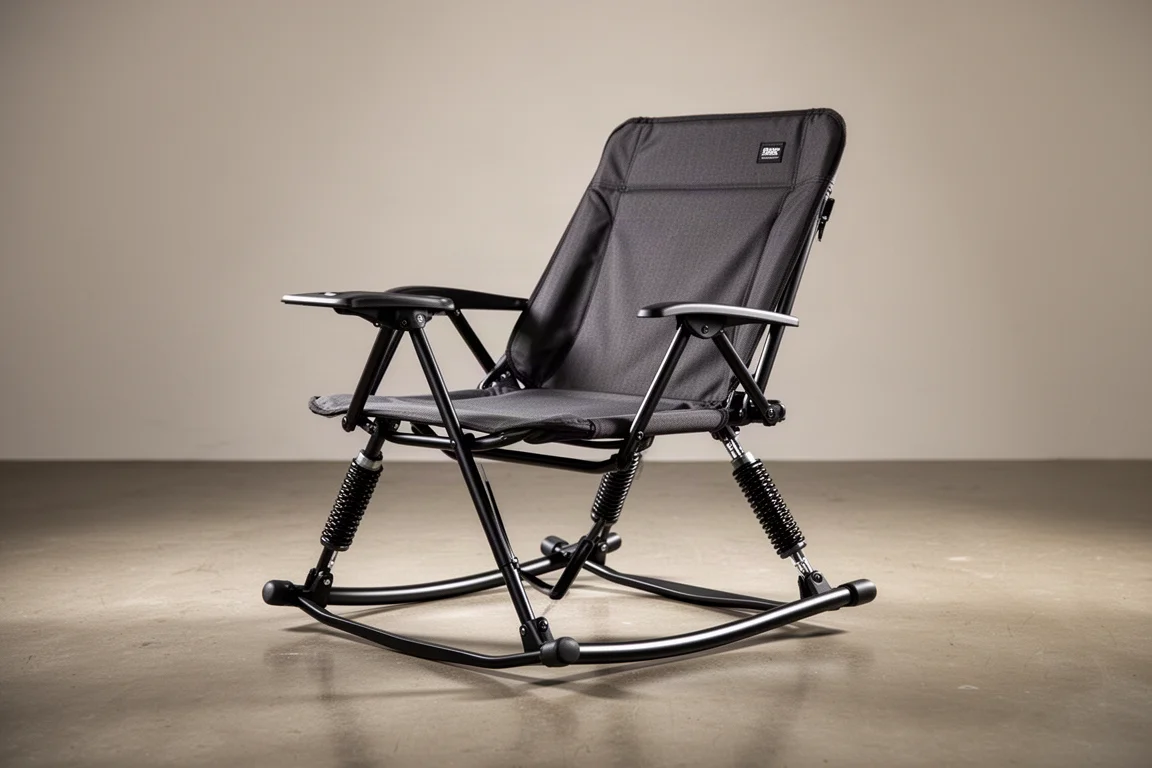
The Kickback Rocker is a conventional folding camp chair with a rocking mechanism. Instead of a suspended seat, it uses spring-loaded pistons at the rear, with two standard front legs. Only the back of the chair travels, so the rocking arc is noticeably shorter than the Stargaze’s, and the chair does not move at all when your feet are off the ground.
Recline is fixed. The back angle is set by the frame and cannot be adjusted, so there is no equivalent of the Stargaze’s 57-degree recline.
Setup is the Kickback’s clearest advantage: pull on the corners and the chair unfolds. Pack-away is just as quick, which makes it the easier chair for short stops and repeated pitching. The backrest does not extend past the back, so there is no head support, and there is no pillow. Seat size is average for a camp chair.
That fixed front leg design has a second benefit. Shift your weight forward and the front legs stabilize the chair, so it works like a normal camp chair at a table for a meal. The Stargaze, suspended as it is, cannot match that.
The compromises show up in materials and size. Mesh coverage is much lower, the fabric is less breathable, and the chair runs warmer on hot days. Packed, it is about 50 percent longer than the Stargaze, which makes it bulkier to store and carry. There is no UV protection, and the fabric has been reported to break down after extended exposure to strong sun. Weight capacity is lower than the Stargaze’s, and the price is lower too.
GCI Outdoor Pod Rocker: Wide Seat, Bucket Shape
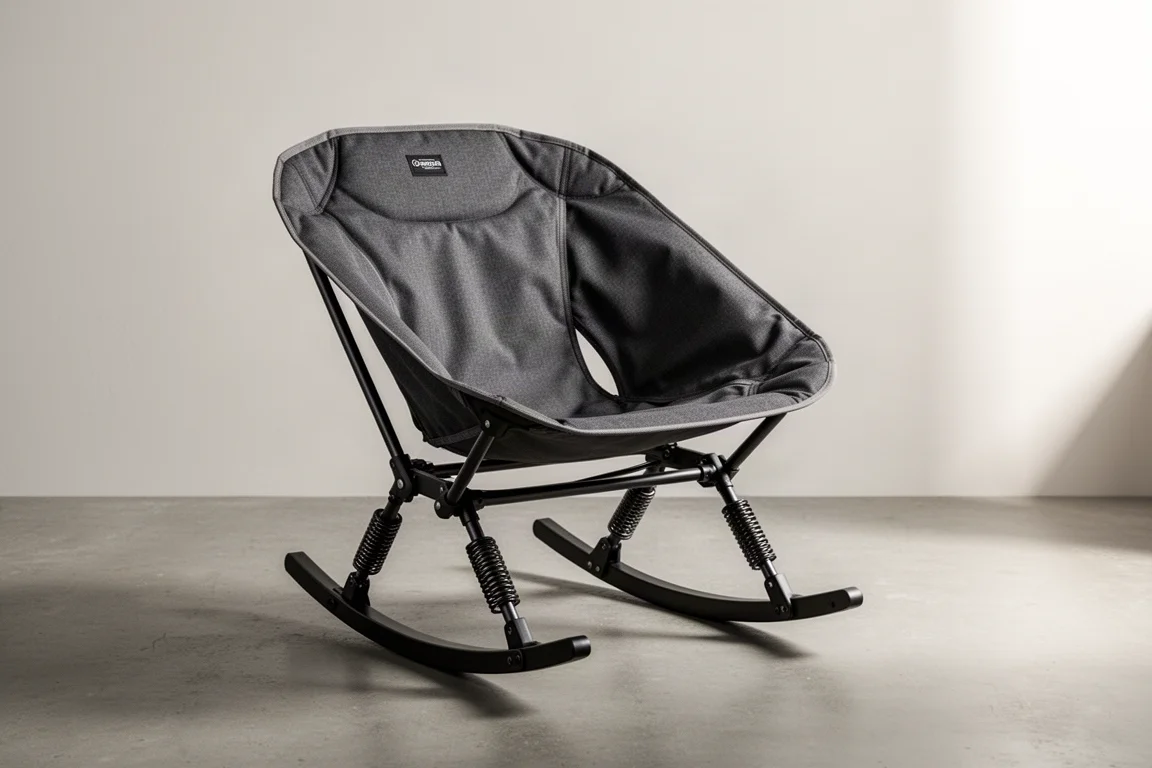
The Pod Rocker shares the Kickback’s approach: spring-loaded pistons at the rear, a partial rocking arc, and a fixed recline angle. Setup and pack-away follow the same pull-the-corners routine, and the packed length is similarly long compared with the Stargaze.
Its distinguishing feature is a very wide seat length, which makes the chair feel spacious across the hips. The catch is seat depth, which is actually less than an average camp chair, so the overall seating area is not as generous as the width alone suggests.
The bigger issue is the shape. The Pod Rocker’s seat forms a bucket that curves up around the sides, and that profile offers poor lumbar support. For long evenings around a fire, that matters more than the extra width. Mesh coverage is limited, breathability is lower than the Stargaze’s, and the fabric has no UV protection. The price sits below the Stargaze, in line with the other GCI rocker.
Buying Advice
The choice comes down to how much you value recline and full-range rocking.
The NEMO Stargaze Reclining Camp Chair is the pick if the budget stretches and you want the most complete chair here. It is the only one of the three that reclines, and it reclines deeply, from an 11-degree neutral angle to 57 degrees. It also rocks through a longer arc, keeps rocking with your feet off the ground, offers a 30-inch backrest with an adjustable pillow, covers about 44 percent of its surface in breathable monofilament mesh, includes UV protection and a lifetime warranty, and packs down smaller than either GCI chair. The cost is a longer setup, a permanent slight sway, and a higher price.
The GCI Outdoor Kickback Rocker is the sensible choice for a tighter budget. It opens and closes in seconds, rocks through a shorter arc, and, thanks to its fixed front legs, doubles as a stable chair at a table. You give up recline, head support, mesh coverage, UV protection, and packed size.
The GCI Outdoor Pod Rocker makes sense only if a wide seat is your priority and you do not need lumbar support. Its bucket-shaped seat and shallow depth make it the least comfortable of the three for long sitting.
One caveat applies to all three chairs. None of them sit high. Seat heights land between roughly 10 and 11 inches, so anyone who has trouble rising from a low seat should look elsewhere before buying.
Conclusion
The NEMO Stargaze Reclining Camp Chair is the most capable of the three because it is the only one that both reclines and rocks, and it backs that up with a tall backrest, an adjustable pillow, strong mesh coverage, UV protection, and a smaller packed size. The GCI Outdoor Kickback Rocker trades those features for faster setup, a more stable feel at a table, and a lower price. The GCI Outdoor Pod Rocker offers a wide seat but a bucket shape that limits long-term comfort. Match the chair to how you actually camp, and any of the three will serve you well.
Further reading
Related Reviews
Camp Chairs
GCI Outdoor Pod Rocker Review: A Camp Chair That Also Rocks
A close look at the GCI Outdoor Pod Rocker, covering setup and pack-away times, seating position, the spring-loaded rocking function, storage, and who it genuinely suits.

Backpacking Gear
Building a 10 lb Base Weight: An Ultralight Backpacking Gear List
A practical walkthrough of the ultralight pieces behind a 10 lb base weight, from a 765 g pack and a roomy one-person tent to a full camp chair and a dependable water filter.

Road Bikes
10 New Road Bikes Worth Watching: Aero, Titanium, Steel and Endurance Standouts
A practical roundup of 10 new road bikes, from aero flagships chasing single-watt gains to titanium, steel and endurance platforms built for real roads.