Camp Chairs
ROA Outdoor Gear Carbon Fiber Viking Chair Review: A Camp Chair Built to Outlast the Trip
A carbon fiber take on the Viking chair that sets up in about two seconds, shrugs off mud and embers, and carries a premium price to match.
Introduction
There is a moment on nearly every backpacking trip when you want to sit down for ten minutes and there is nowhere to sit. Folding camp chairs solve that problem, but most of them live in a stuff sack, take a minute or more to assemble, and feel a little fragile once you are actually in them.
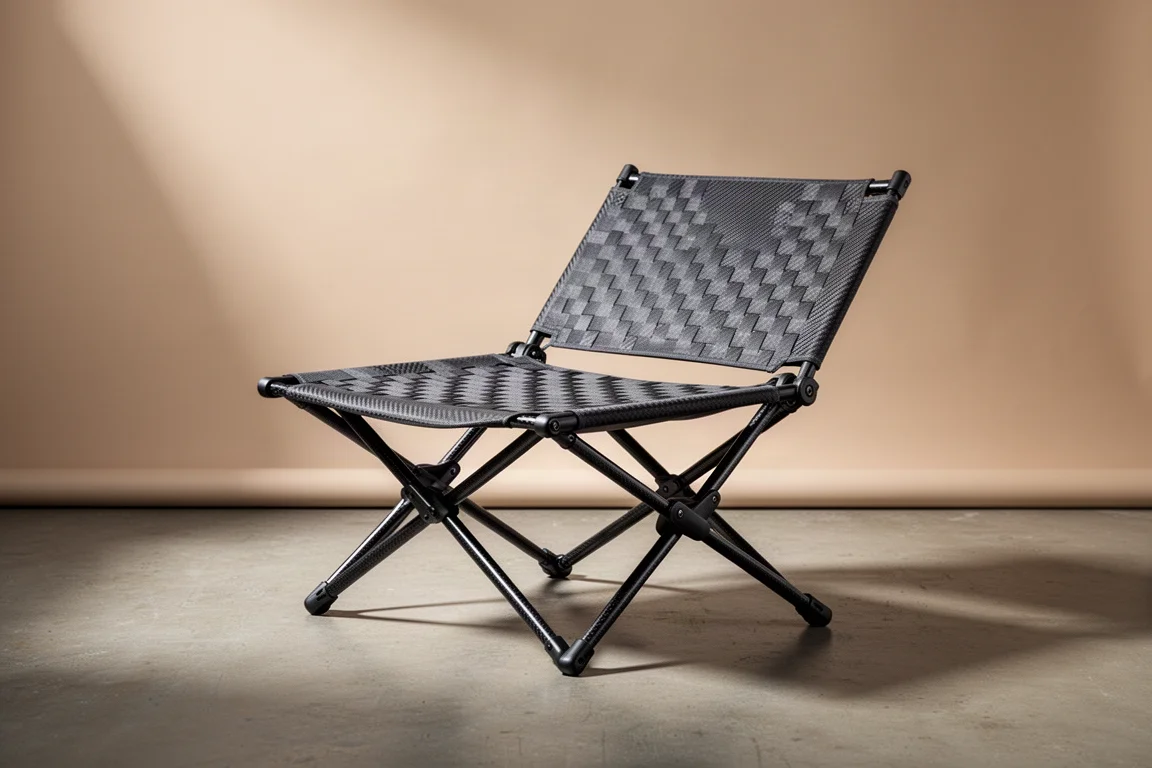
ROA Outdoor Gear has taken a different route. Its carbon fiber Viking chair is built on one of the oldest seating designs in the world, and it looks nothing like the hub-and-pole chairs most hikers carry. Instead of a bundle of poles and fabric, it is a pair of rigid carbon panels that lock into an X and are held together with embedded magnets. Setup takes about two seconds.
This review covers what the chair does well, where the current prototype still has room to improve, and who should be thinking about one.
Who This Chair Is For
The clearest case for this chair is the short stop. On a long climb, a ten-minute water break rarely justifies unpacking a conventional chair, so most people simply do not bother. A chair that goes up in a couple of seconds changes that calculation, and it is the point the makers kept returning to.
It also makes sense for people who sit outside in places that are hard on gear. The makers picture it doing double duty beyond backpacking, including the sidelines of kids’ soccer games and ordinary campsites, which is exactly where fabric seats meet mud, embers, and the occasional careless boot. Because the seat is rigid carbon rather than fabric, there is nothing to soak through and nothing to tear.
Seat feel matters too. It is firm rather than cushioned, with a stable platform that does not flex or dig in. Anyone who prefers a firmer seat over a soft one will feel at home immediately. Anyone hoping for a hammock-like lounge chair should look elsewhere.
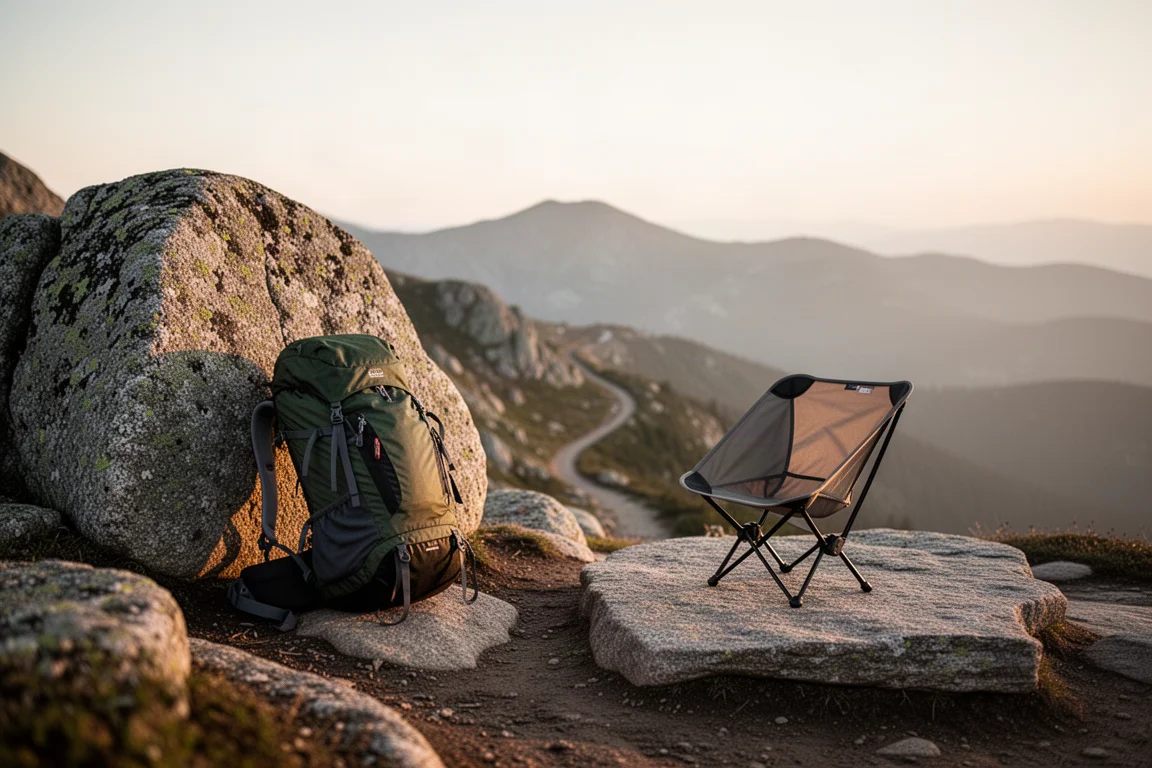
The one caveat is weight. The prototype sits just over two pounds, which is not a gram-counting ultralight figure. This is a chair for people who want something that will survive a decade of use, not the lightest possible object in the pack.
Design and Build
The Viking chair is one of the oldest chair designs in the world, thousands of years old. The traditional version is two flat boards slotted into an X, and this modern version follows the same logic in carbon fiber. Two panels, one joint, and magnets that snap the assembly into alignment.
That simplicity is the point. There are no small plastic hubs, no shock cord, and no cluster of connectors that can snap under load. The structure itself carries the weight. It also means there is nothing to absorb water, so a wet chair wipes dry instead of staying damp in the pack.
The makers set out to take on the best-known ultralight backpacking chairs, including the Helinox Chair Zero and the Nemo Moonlight Elite, with an approach built on durability rather than gram counting. Existing Viking chairs on the market are typically well over ten pounds, which is why they tend to stay at home. Carbon fiber is what makes this version portable at all.
Setup and Stability
Setup is genuinely quick. The panels slot together, the magnets pull the joint into place, and the chair is ready. In practice it takes about two seconds, short enough to use for a break that would never justify a conventional chair.
Stability is where this design separates itself from other folding chairs. Rather than an eggshell feeling with load spread across several joints, the chair feels planted. It supports between 300 and 400 pounds, and it does not dig into the user or shift around underneath them.
Ground contact has been refined along the way. On soft, muddy terrain an early prototype sank, so the feet were given a slight scoop and the tail was scooped as well. That small change helps the chair sit on top of soft ground rather than cutting into it.
Weight and Packability
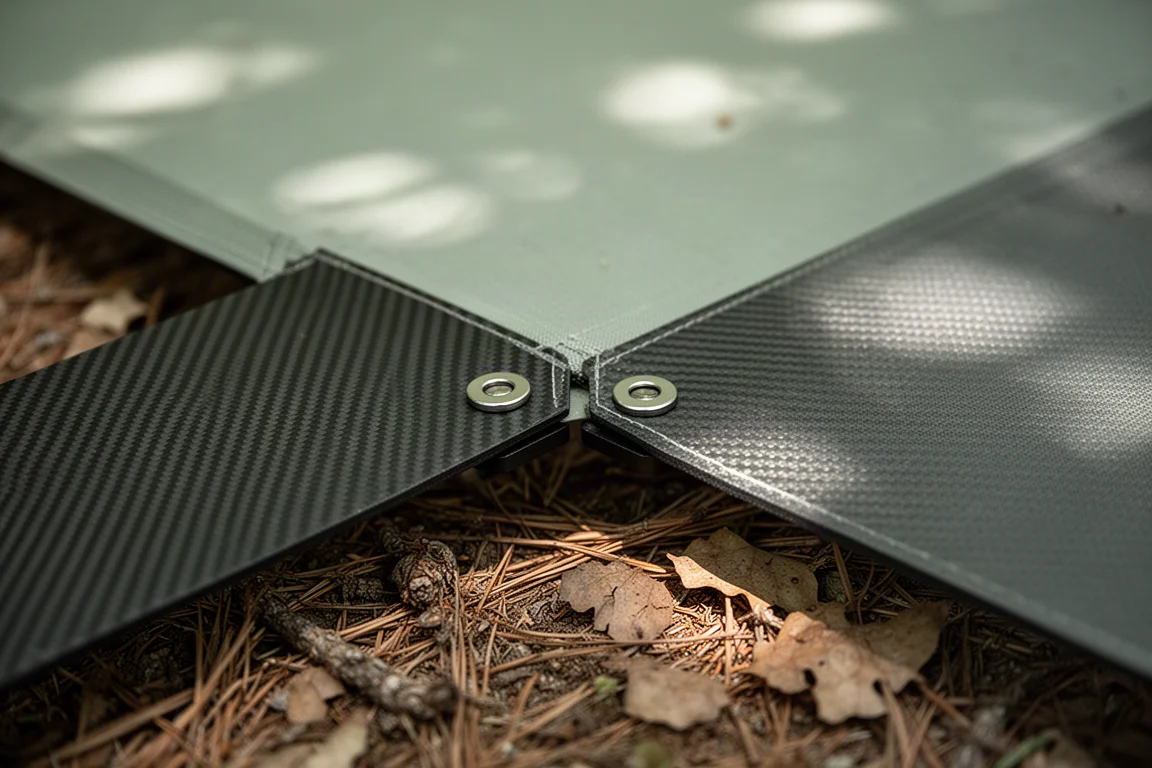
The prototype weighs just over two pounds. The makers are clear that this is not the final figure: production molds were only recently cut, and weight reduction is an active part of the work still to be done.
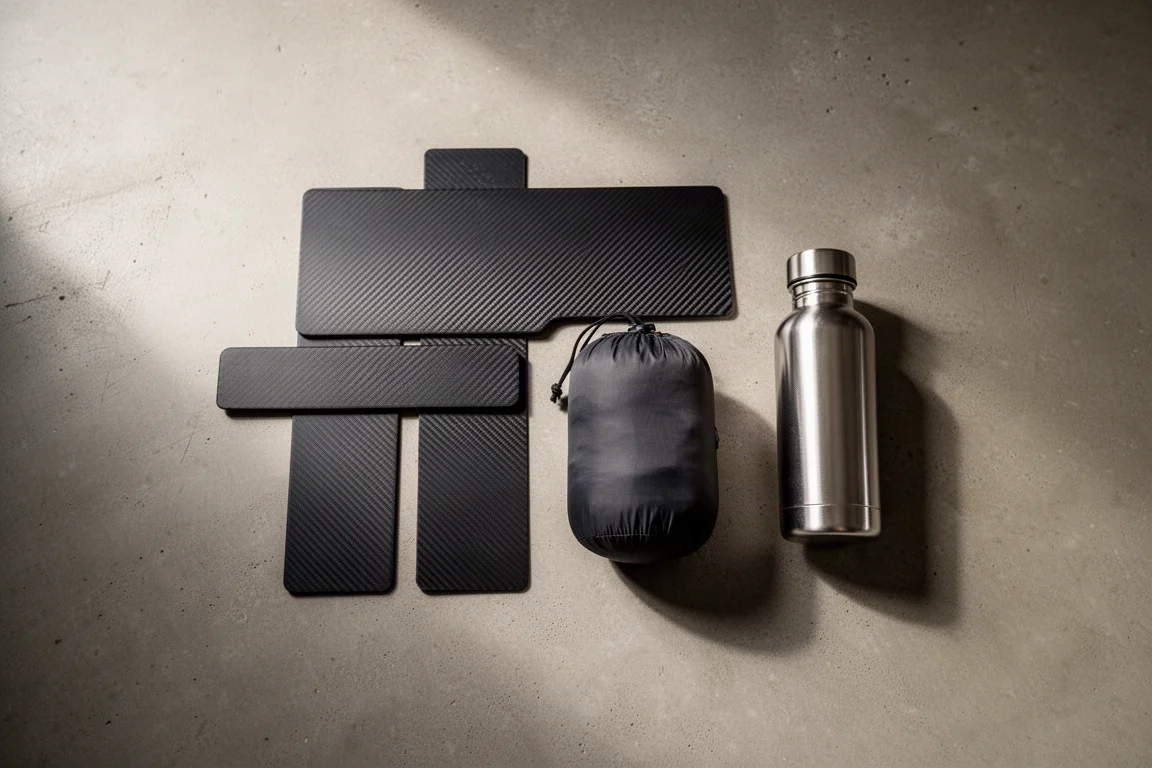
Packability is a different shape rather than a different weight. There is no stuff sack full of poles and fabric. The chair is a set of flat carbon panels, which slide into a pack alongside other flat items instead of forming a bundle. Some hikers will find that easier to live with, and some will find the bulk less convenient than a compact rolled package.
Comfort and Weather Resistance
The seat is firm. It does not compress or sag, and it does not dig into the back of the legs the way some slung fabric seats can. For a short break or an evening around camp, that firmness reads as support rather than hardness.
Weather resistance is one of the strongest arguments for the design. Embers landing on the surface will not burn a hole through it. Water wipes straight off, and there is no fabric to stay wet. Carbon fiber will eventually burn if it is held directly over an open flame, but that is a very different scenario from a stray spark landing on a seat.
Durability has been tested in blunt terms. The chair was driven over with a truck and came away unbroken. That is not a warranty promise, but it does say something about how much abuse the structure will take.
Price and Availability
This is a premium product, and the price reflects the material. The makers expect it to land somewhere between $300 and $400, which would make it the most expensive camp chair on the market by a wide margin. They are working on new manufacturing methods, including thermal plastics, with the goal of bringing the cost down over time.
Availability is still early. Production molds have just been cut, and the plan is a first limited run on the ROA Outdoor Gear website, followed by pre-orders for a second and third run. There is no confirmed date yet, so anyone interested should treat the timeline as a work in progress rather than a firm launch.
The value argument is longevity. A fabric chair that catches an ember is effectively a replacement purchase, and a chair that breaks is another one. The pitch here is a single purchase that survives being sat on, rained on, dropped, and generally mistreated.
Buying Advice
Buy this chair if you want a camp seat that will last and you are willing to pay for it. It suits hikers who skip breaks because setup is a hassle, campers who spend weekends outdoors in all weather, and anyone who has already replaced a flimsy chair more than once. Fast setup, a firm seat, and indifference to mud and embers are the reasons to choose it.
Hold off if weight is your first priority. At just over two pounds on the prototype, this is not the lightest option available, and the final figure is still being worked on. Hold off as well if you need something now, since the first run has not shipped yet, or if a $300 to $400 chair sits outside your budget for camp furniture.
If the durability and the two-second setup are worth more to you than the lowest possible pack weight, this is a chair worth watching closely.

Conclusion
The carbon fiber Viking chair is a genuine departure from the folding chairs most backpackers carry. Two interlocking carbon panels, magnets instead of hubs, a two-second setup, and a structure that has shrugged off mud, embers, and a truck tire. The trade-offs are real: it is heavier than the lightest chairs and priced well above everything else on the market. For anyone who wants the last camp chair they will need to buy, that trade-off is the whole point.
Product link
View more details for ROA Outdoor Gear Carbon Fiber Viking Chair
This product is mentioned in the review. Check the specifications, options, and compatibility before buying.
View more details for ROA Outdoor Gear Carbon Fiber Viking ChairFurther reading
Related Reviews
Camp Chairs
GCI Outdoor Pod Rocker Review: A Camp Chair That Also Rocks
A close look at the GCI Outdoor Pod Rocker, covering setup and pack-away times, seating position, the spring-loaded rocking function, storage, and who it genuinely suits.
Camp Chairs
Rocking and Reclining Camp Chairs Compared: NEMO Stargaze and GCI Outdoor
A close look at the NEMO Stargaze Reclining Camp Chair and two GCI Outdoor rockers, covering setup, seat comfort, recline range, rocking motion, and packed size.
Road Bikes
3T Strada Italia Review: A Radical Aero Road Bike That Rides Smooth
A made in Italy carbon aero road bike with a deep head tube, wide tire clearance and a genuinely comfortable ride. Here is what to know before buying.