Portable Bluetooth Speakers
Rock Steady Stadium 2.0 Review: A Portable Speaker System With a Battery-Powered Subwoofer
A close look at the Rock Steady Stadium 2.0, a scalable portable Bluetooth speaker that pairs with a battery-powered subwoofer for deeper bass on the go.
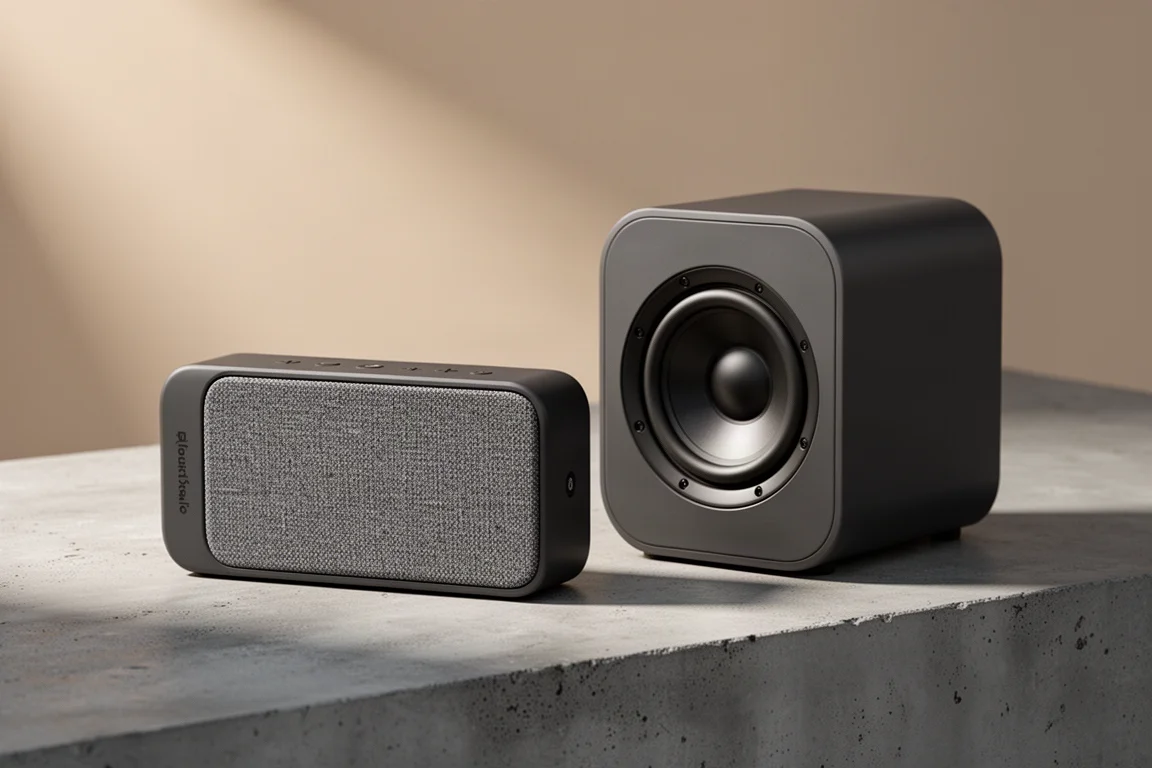
Introduction
The Rock Steady Stadium 2.0 is a portable Bluetooth speaker built to be used alone, in pairs, or in much larger groupings, and it can be paired with a battery-powered portable subwoofer that is an unusual product category in its own right. The satellite speaker carries a 1.1 inch dome tweeter rated at 10 watts and a mid-range driver just under 3 inches rated at 20 watts, supported by two passive radiators that are slightly larger than the previous generation to extend bass output. Usable bass from the speaker alone reaches down to roughly 60 Hz, with the 3 dB point sitting in that same region.
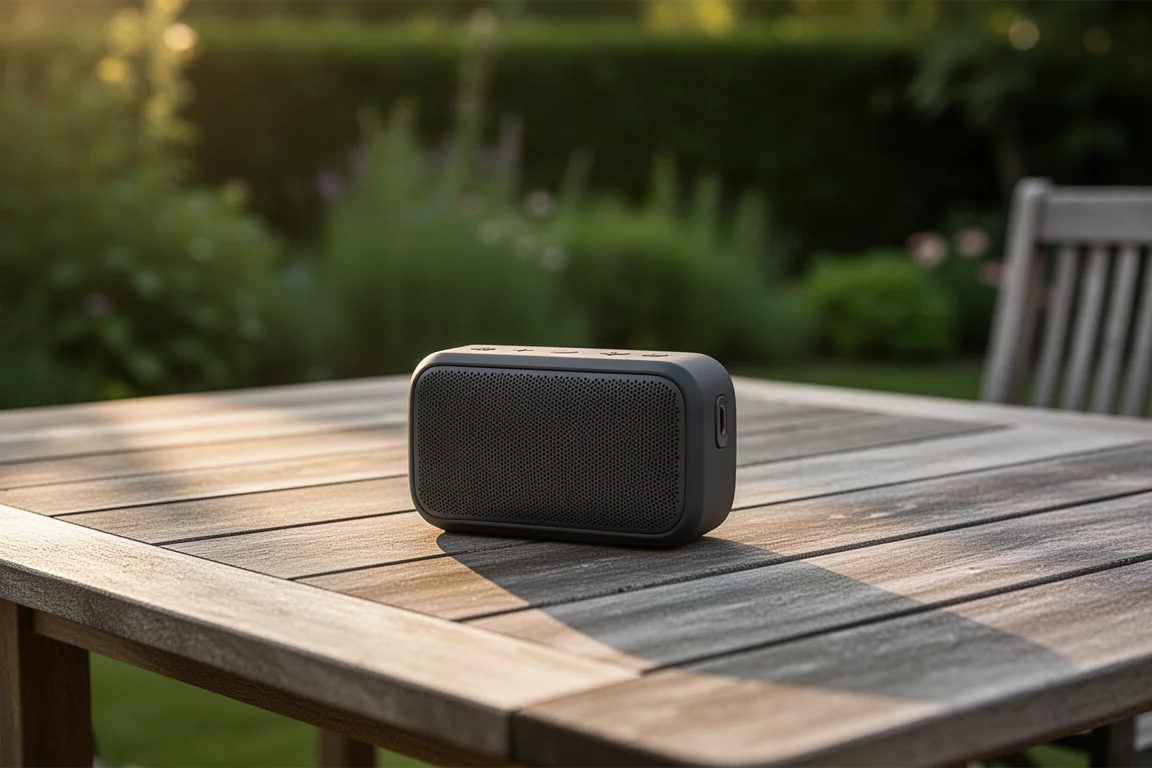
That makes the Stadium 2.0 a genuinely full-range speaker for its size rather than a small box with a thin upper bass hump. The subwoofer exists to push the low end further down, and the two pieces are designed to be carried, charged, and deployed together without a wall outlet nearby.
Who the Rock Steady Stadium 2.0 Is For
This system is aimed at listeners who want real volume and coverage away from a power socket. A single speaker suits a desk, a kitchen counter, or a small gathering. Multiple speakers suit a lanai, a backyard, a beach, or any open space where even sound across a wide area matters more than a pinpoint sweet spot. Because each cabinet has a keyhole on the back, a speaker can also be hung on a wall.
Battery capacity is central to the pitch. The satellite speaker uses a 5,000 mAh battery, while the subwoofer carries a 15,000 mAh battery so it can run for a comparable stretch and still feed 30 watts to its driver. That combination makes the system a practical option during a power outage, when a charged speaker stack and a charged phone can keep a household entertained for an evening.
Main Strengths of the Stadium 2.0
The most useful strength is range. Bluetooth coverage is rated at 150 feet, and that figure holds up in a large, solidly built house with concrete construction, where the connection survived a move from an upstairs office to a bedroom at the opposite end of the property. For outdoor use, that kind of headroom means you can leave the phone on a table and still walk around with the music playing.
Sound quality over Bluetooth is a clear priority here. Rock Steady uses its own digital signal processing to reduce compression artifacts introduced by the Bluetooth link, and the speaker delivers clean, detailed high frequencies with distinct stereo effects. Output is specified at 102 dB SPL for the satellite and 96 dB for the subwoofer, figures that were confirmed under boundary loading conditions of the kind most listeners will actually create by placing the speakers against surfaces. Vocals come across as natural, and layered harmonies and keyboard textures remain easy to separate.
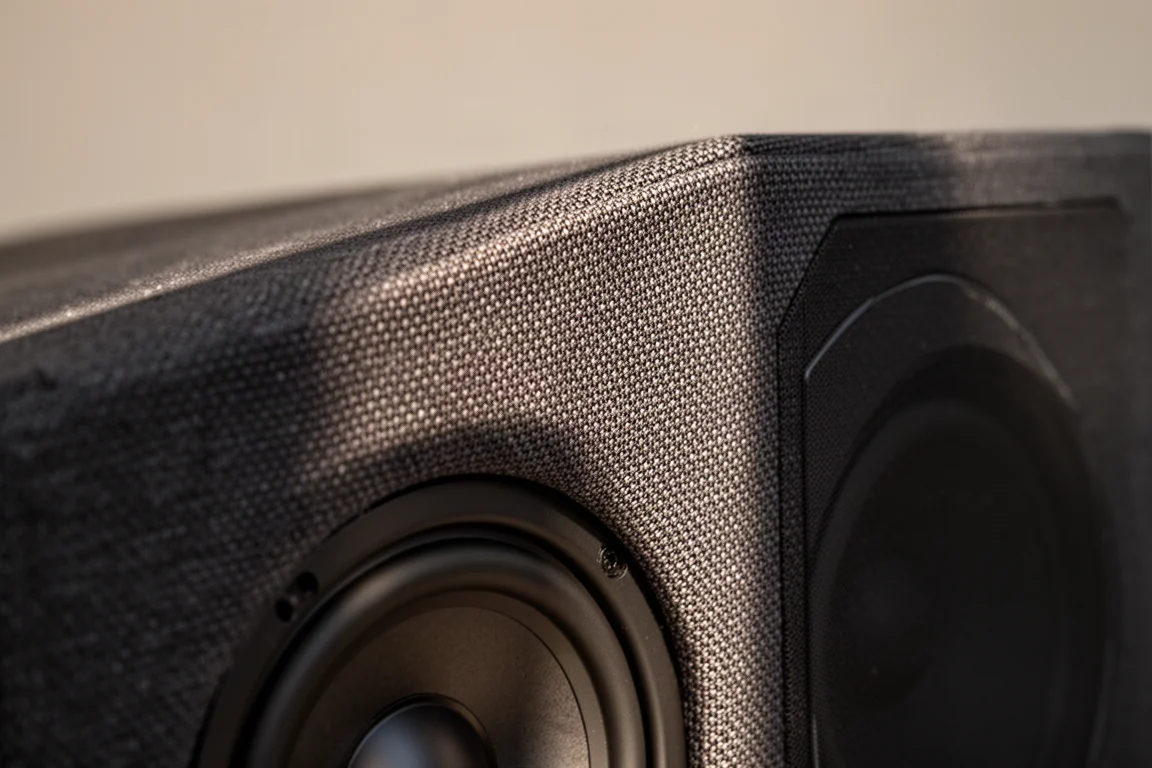
Two DSP settings are available. Clear mode bypasses the internal equalizer and passes full-range sound through, which leaves tonal shaping to the source device. The proprietary mode shelves the mid-range by close to 10 dB and drops overall system level by a couple of dB. In measurements taken at the listening position with two speakers and the subwoofer running, Clear mode produced the more linear response and the more detailed sound, so it is the setting worth starting with.
What the Portable Subwoofer Adds
The subwoofer is the part of this system that has no obvious rival. It houses a long-throw driver of roughly 5.25 inches driven by 30 watts, and its large battery is what makes that power possible without a cable. Most of its bass energy lands between 80 and 100 Hz, with usable output down to 50 Hz, which extends the system’s low-frequency response by about 10 Hz compared with the satellite speakers alone.
Two modes are offered. Original mode is the default, and the extended bass mode rolls off the upper bass slightly while adding a couple of hertz of extra extension. That shelf is welcome, because a compact subwoofer that plays up past 100 Hz becomes easy to locate by ear if it sits too close to the listener. Placement therefore matters more than it would with a larger home subwoofer. The most coherent integration came from putting the subwoofer up front between the main speakers, away from the seating area, and pressed close to a wall so boundary gain reinforces the low end.
The honest limit is depth. This is not a dedicated home theater subwoofer, and it does not reproduce the subharmonic bass that a large, powered home system can deliver. What it does provide is a noticeable thud and a clear sense of bass presence in tracks that lean on low-frequency energy, and a definite improvement over running the satellite speakers by themselves.
Setup, Modes, and Everyday Use
Pairing is straightforward, and the process scales. Charge every speaker first, power one on, choose whether it acts as the left or right channel, then select stereo or long-range mode using the play button. Pair that speaker to your phone over Bluetooth, and it becomes the master unit. Power on the next speaker, set its channel and mode the same way, press the stadium button, and it joins the group. Repeat as many times as you like.
Marking the master speaker is a practical habit worth adopting, since it is the unit directly coupled to your phone, and switching its power off shuts down the whole system, subwoofer included. The rear panel offers a left or right or mono selector, a 3.5 mm aux input for wired sources, and a charging port, and an AC adapter is included for topping up from a wall outlet.
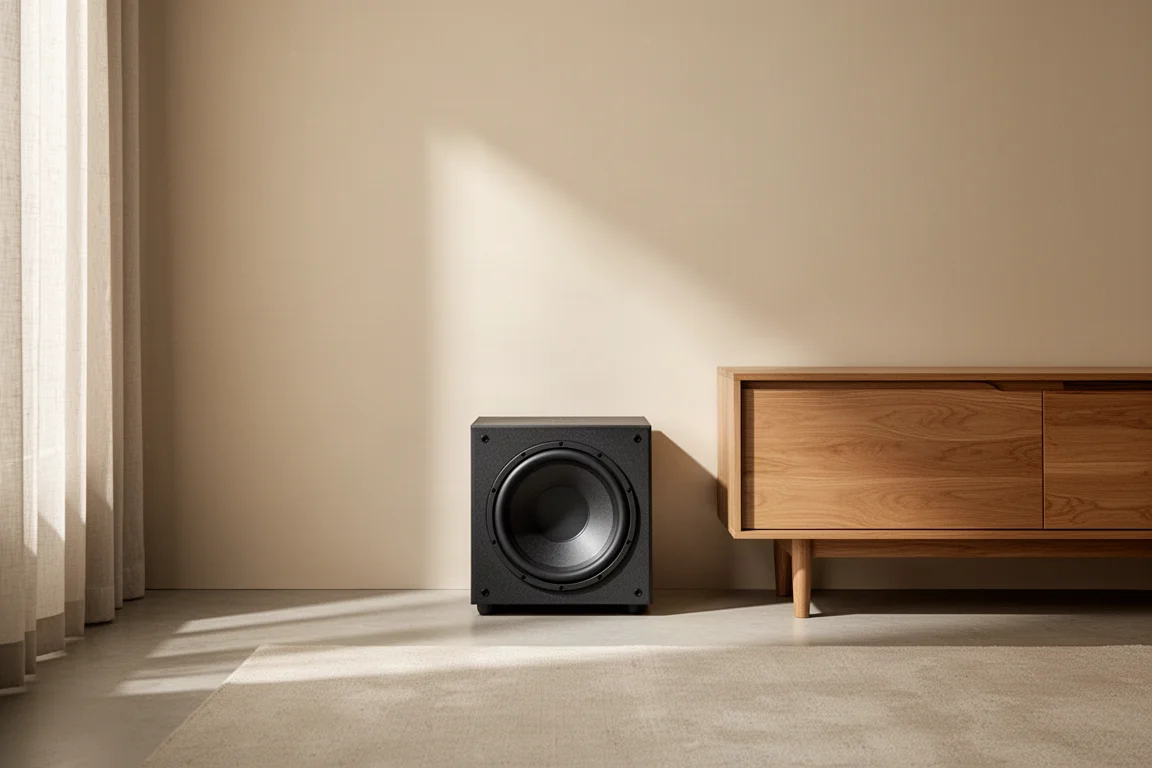
Mono is the better choice when you want even coverage across a large area such as a beach or an open yard. Stereo makes more sense for focused listening. In a four-speaker setup, the rear pair should be treated as fill rather than as equal partners, because there is no digital delay compensation to align them. Running the rear speakers at around 70 percent level and biasing the sound toward the front keeps the rear cabinets from calling attention to themselves. Because there is no app and no bass management, all of this adjustment happens on the speaker panels, and the subwoofer level needs some experimentation to keep energy around 100 Hz in check.
Things to Consider Before Buying
The absence of app control is the clearest limitation. Every setting is handled through the controls on the speakers themselves, which is fine at setup but less convenient when you want to fine-tune from the couch. There is also no bass management, so integration between the satellites and the subwoofer depends on placement and the level dial rather than on calibrated crossover settings.
Because the subwoofer plays above 100 Hz, it can be localized if it sits near the listening position, and it rewards patience with placement. Expect to spend time trying positions before the system sounds its best. Finally, keep expectations realistic about depth: this system adds low-frequency weight and presence, not the deep subharmonic output of a large dedicated home subwoofer.
Buying Advice
The value case rests on configuration flexibility. A single speaker is listed at $150, two speakers at $250, a 2.1 system with the subwoofer at $400 including a carrying case, and a 4.1 system with four speakers and the subwoofer on sale at $600, also with a carrying case. If you mainly want music in one room or on a desk, one or two speakers cover it. If you are chasing fuller range sound outdoors, the 2.1 bundle is the configuration that justifies the subwoofer.
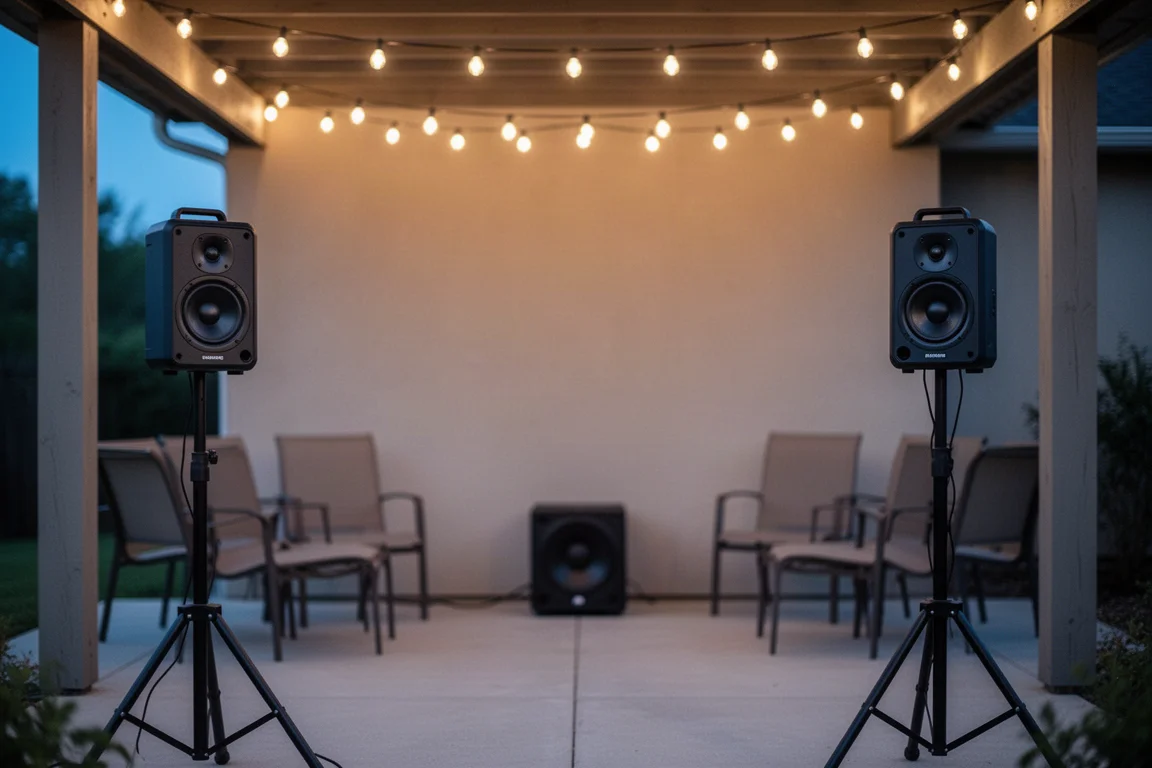
Build quality and ease of use hold up across all of these configurations, and the stacking approach means the system can grow with your needs rather than being replaced. For portable audio in this price class that still does justice to music, it is one of the stronger solutions available, particularly for listeners who value coverage, battery life, and a low end that small speakers normally cannot reach.
Conclusion
The Rock Steady Stadium 2.0 succeeds because it solves two problems at once: it delivers clean, wide-reaching Bluetooth sound, and it adds a battery-powered subwoofer that extends the low end by about 10 Hz without tethering the system to a wall outlet. The trade-offs are real, including no app control, no bass management, and a subwoofer that needs careful placement, but the modular design, simple pairing, and generous battery capacity make it a system that earns its place in a backyard, on a patio, or in a home that occasionally loses power.
Product link
View more details for Rock Steady Stadium 2.0
This product is mentioned in the review. Check the specifications, options, and compatibility before buying.
View more details for Rock Steady Stadium 2.0Further reading
Related Reviews
Portable Bluetooth Speakers
Soundcast VG5 Review: A Rugged Portable Bluetooth Speaker for Outdoor Parties
A practical look at the Soundcast VG5, a 12.5 lb weather-resistant Bluetooth speaker with a 360-degree driver array, deep bass, and a phone-charging USB port.

Backpacking Gear
Building a 10 lb Base Weight: An Ultralight Backpacking Gear List
A practical walkthrough of the ultralight pieces behind a 10 lb base weight, from a 765 g pack and a roomy one-person tent to a full camp chair and a dependable water filter.

Road Bikes
10 New Road Bikes Worth Watching: Aero, Titanium, Steel and Endurance Standouts
A practical roundup of 10 new road bikes, from aero flagships chasing single-watt gains to titanium, steel and endurance platforms built for real roads.