Cycling Gear
Six Road Bike Upgrades Worth Considering: A Practical Roundup
A groupset, wide race tires, an adjustable stem, a moldable saddle, ultra-breathable shoes and an e-bike conversion kit, assessed on real-world use and honest trade-offs.
Introduction
Some products earn a permanent place on a bike, and others raise questions worth answering before you spend money. This roundup covers six items that have seen real miles: a groupset, a wide race tire, a low-cost adjustable stem, a moldable saddle, an ultra-breathable road shoe, and an e-bike conversion kit aimed at high-end road bikes. Each one is here because it does something specific, and each comes with a trade-off worth understanding first.
What These Products Have in Common
These six products sit at different price points and serve very different purposes, but they were assessed on the same practical terms: how easy they are to install and live with, how they behave over longer distances, and whether the compromises they make are reasonable for the money.
Compatibility turned out to be the recurring theme. Several of these products work best when they match the rest of the bike correctly, whether that means the right derailleur hanger, the right rotor mounting standard, or a seat post that accepts oval rails. None of these are deal-breakers on their own, but they are the details that decide whether a purchase feels smooth or frustrating.
Microshift Sword: A No-Frills 1x Groupset
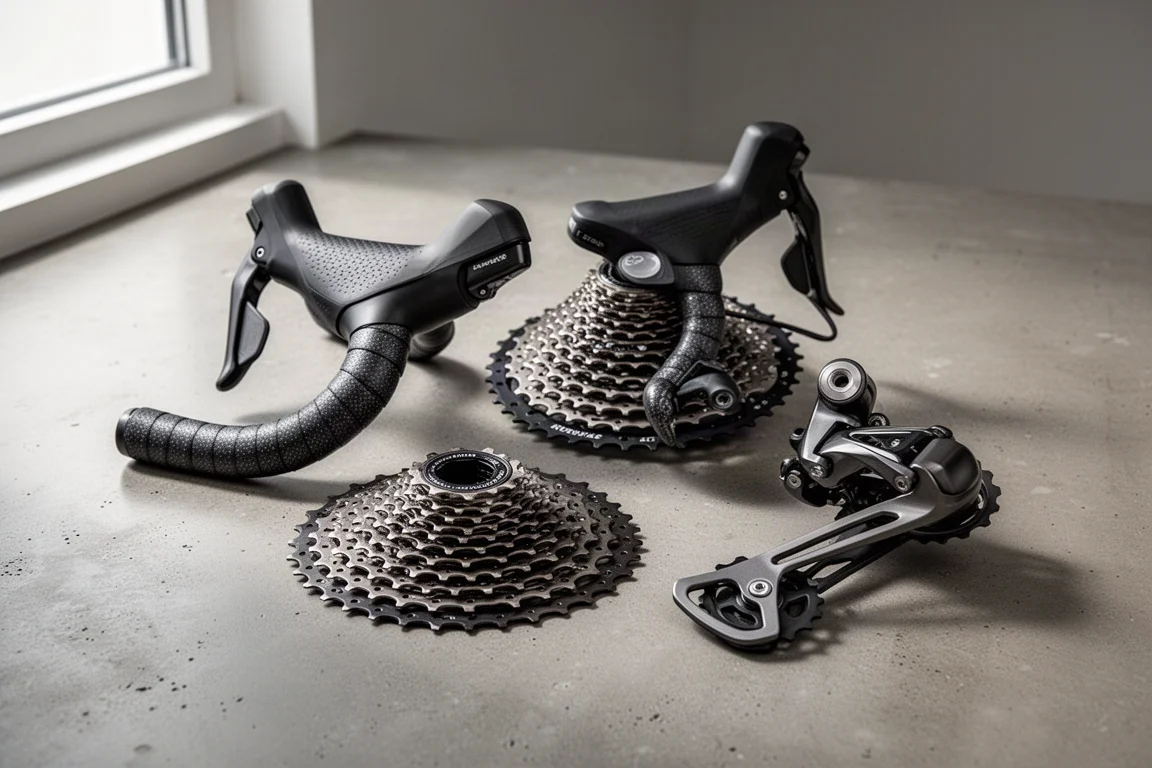
Microshift Sword is a cable-operated groupset that leans hard into simplicity. The 1x version runs a wide-range cassette, and the brand makes a point of the no-frills, no-fuss approach. It is compatible with Shimano free hubs, bottom brackets and chains, which makes it easy to fit and install across a wide range of bikes. The one caveat worth repeating: confirm you have the correct derailleur hanger for your frame before you start.
The levers are comfortable, with grippy rubber hoods, and lever reach is adjustable. They are on the large side, so riders with smaller hands may want to try them before buying. Shifting is smooth and crisp, and the gearing range is generous, with plenty of options across the line.
Braking is cable-operated. With rim brakes the performance was excellent. With cable discs it depends heavily on the calipers: paired with TRP calipers, these levers produced better braking feel and needed less force to generate the same power than another lever set running the same calipers. For around £300, this is a strong value option, and it looks especially well suited to adventure riding.
Pirelli P Zero Race 40 mm: Wide Slicks for Mixed Surfaces
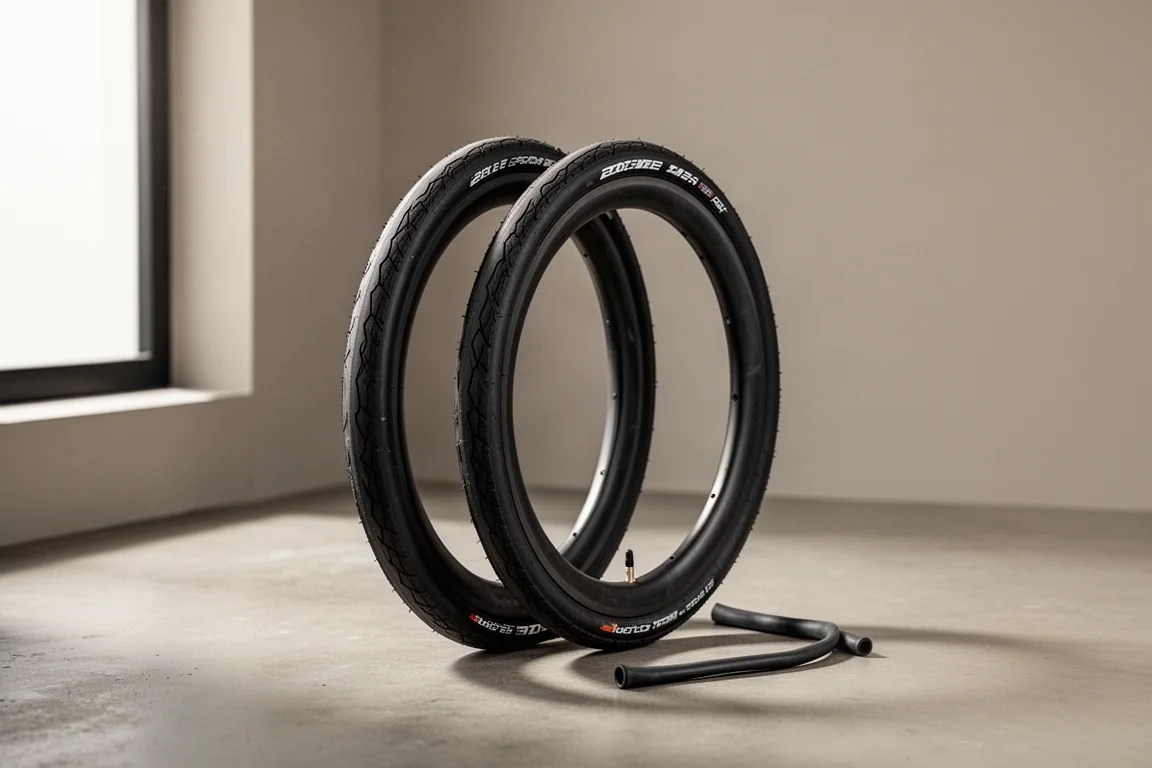
A race tire in a 40 mm width is an unusual proposition, and that is exactly the appeal here. The P Zero Race in this size is extremely supple and grippy, built in Italy with a 120 threads per inch nylon casing. Because of the extra volume, each tire weighs around 460 g, which puts it in light gravel territory.
Run at roughly 50 psi on a loaded bike, and well under 40 psi unloaded, the ride is comfortable, and it was possible to keep pace with riders on much narrower tires. On paper, a wider tire gives up a little rolling resistance and aerodynamics. In practice, the benefit is peace of mind: grip on unexpected gravel, and far less chance of pinch punctures on unknown surfaces. They handle ordinary road riding well too, and would likely work for dry, non-extreme gravel. They are not the choice for chasing personal bests, but they are more than adequate for everyday riding with friends.
Specialized Comp Stem: Cheap Adjustability
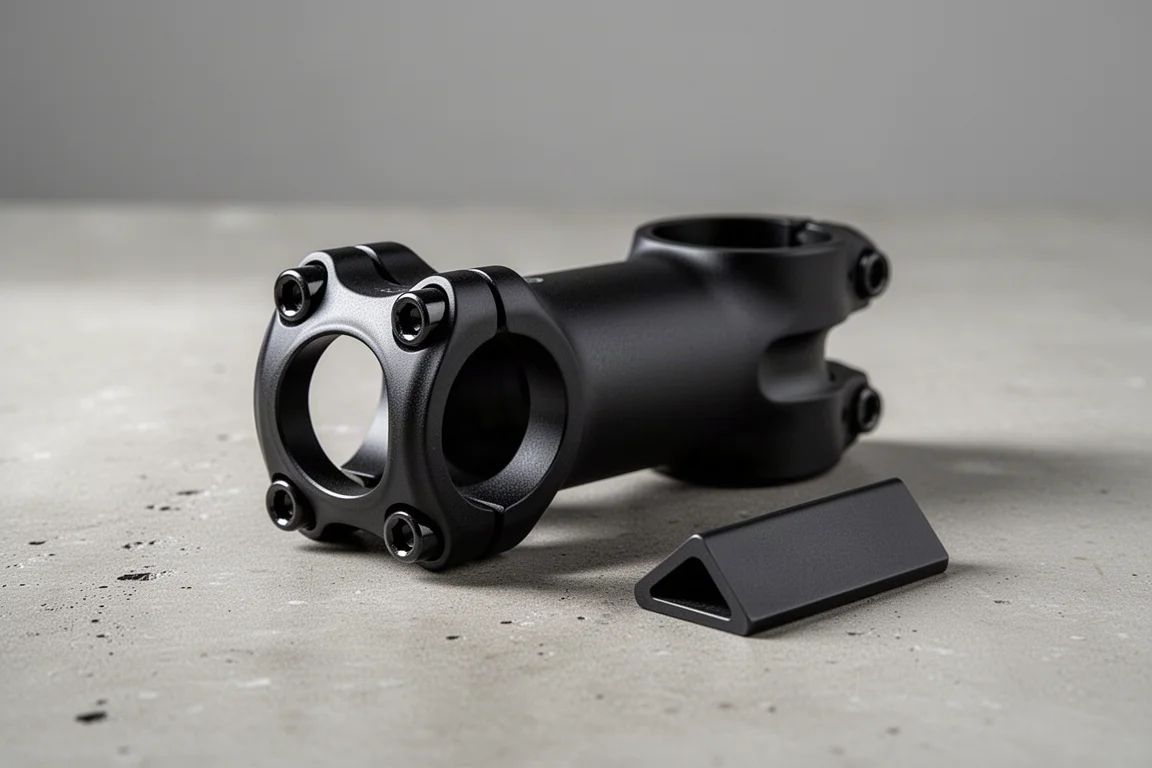
The Specialized Comp Stem looks like a plain black stem, and that is part of its charm. The interesting part is hidden in the box: shims that let you change the stem angle in 2 degree increments, covering a range from plus or minus 8 degrees up to 16 degrees. That is a wide window for experimenting with handlebar height, and the stem can be run positive or negative.
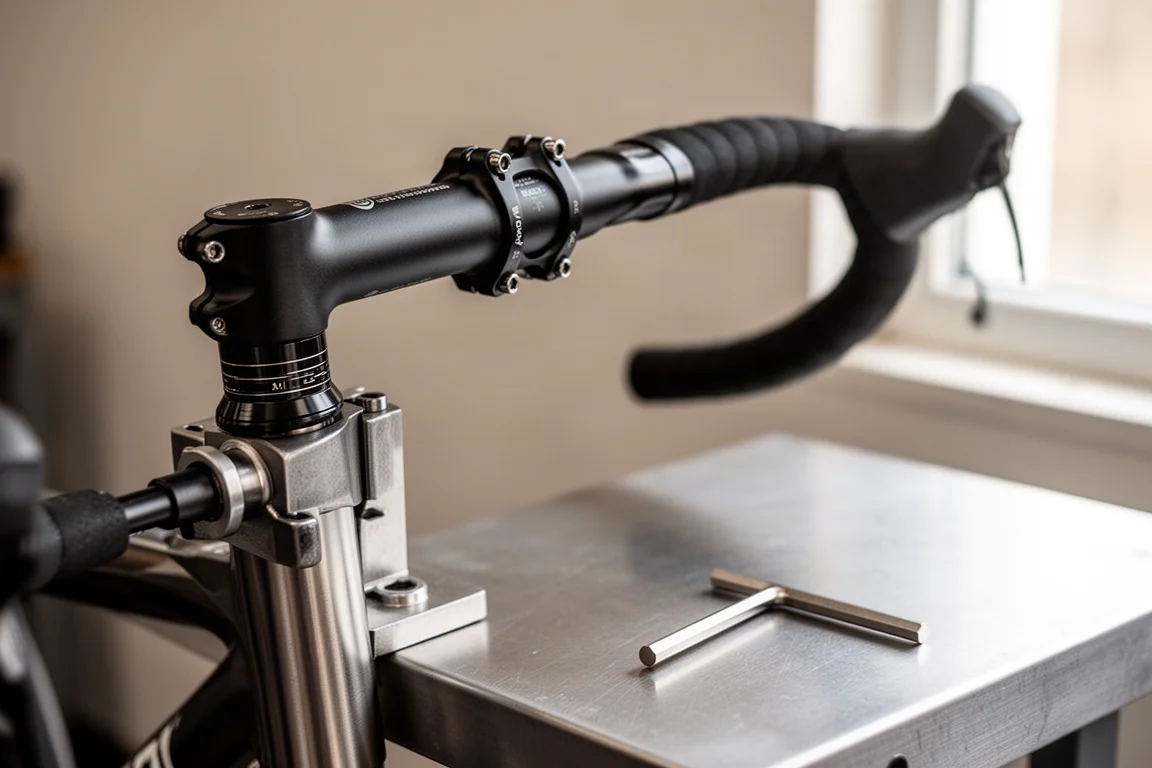
It uses standard measurements, with a 1-1/8 inch steerer clamp and a 31.8 mm handlebar clamp, and every bolt takes a 4 mm Allen key. That means it fits most modern bikes without special tools. Pricing varies considerably by retailer: it was bought for £50, while it was widely available online in the UK for around £20. Even at the higher figure it is a sensible way to explore a more upright position without changing the whole cockpit.
Reform Seymour: A Saddle That Molds to You
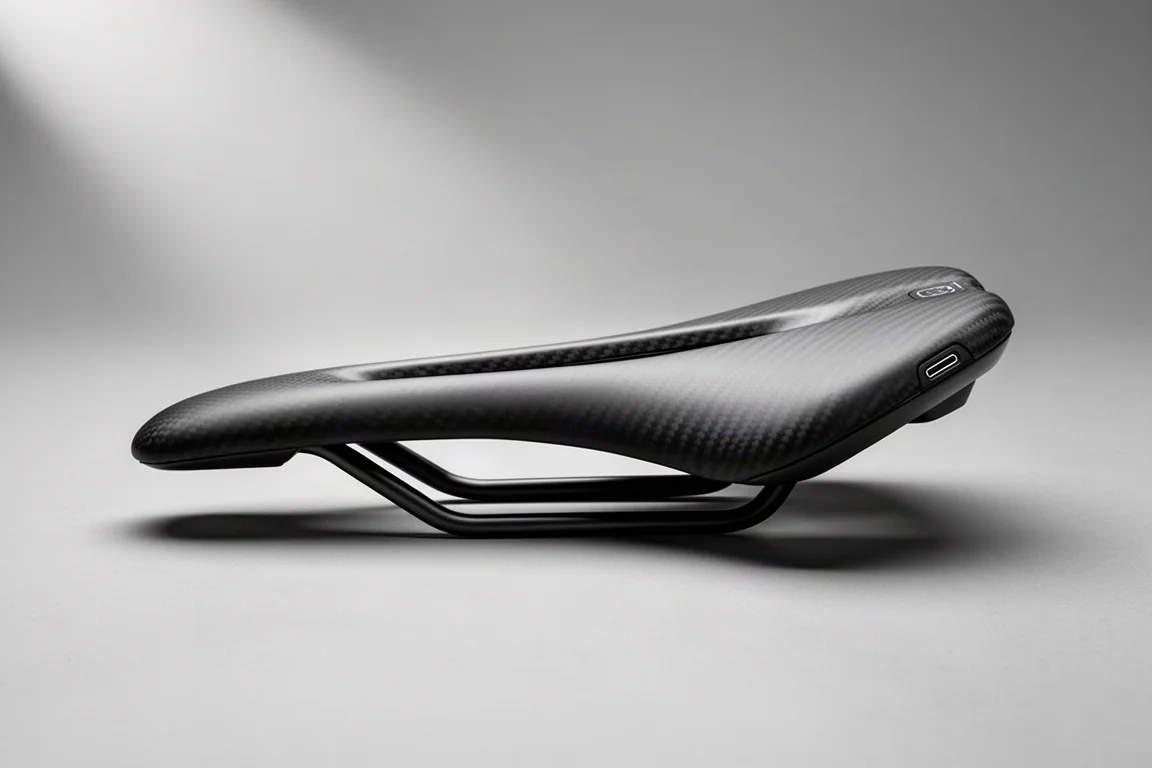
The Reform Seymour is a 260 mm carbon saddle with an unusual feature: it plugs in. The design is built around bike fitting. You mount it on a bike, put the bike on an indoor trainer, plug the saddle in and ride. The saddle heats up and molds to your position over time.
Comfort is genuinely good, and there is a very deep pressure relief channel even though there is no cut-out hole. Weight sits at around 200 g, compared with roughly 143 g for a typical carbon saddle in a similar shape. The molding process produces a measurable change: after a session on the trainer, the carbon underside had visibly adapted. Riders with more asymmetrical sit bones may see more dramatic results, which makes this an interesting option in a bike fitting context.
Two practical points are worth noting. The rails are oval, so the saddle only fits certain seat posts, and the charger uses a proprietary magnetic fitting that is easy to misplace. The price is high, though not dramatically above many high-end carbon saddles.
Fizik Vento Powerstrap Aeroweave: Light, Breathable, Cold
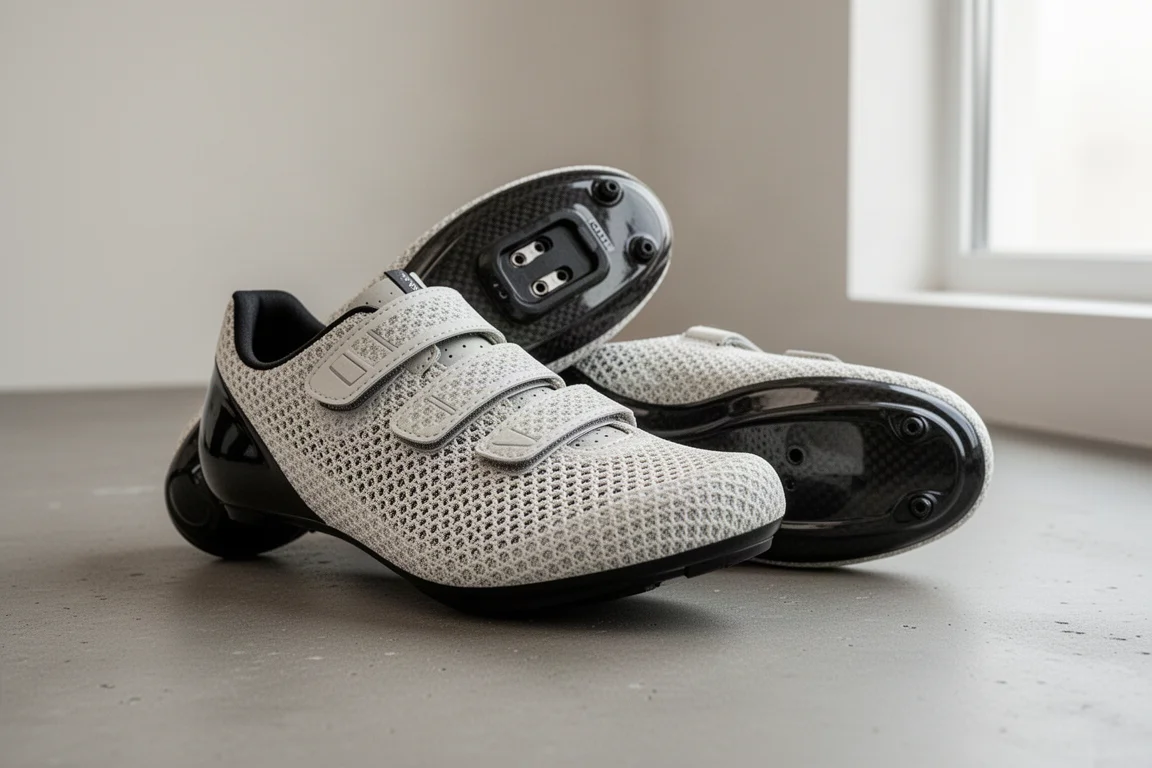
The Vento Powerstrap Aeroweave is one of the most distinctive road shoes around, with a woven upper that looks almost like bandaging. It is a super light road offering, with an extremely breathable net-style upper, a very stiff carbon sole and a three-bolt cleat fitting. The Powerstrap closure is essentially a refined velcro system. At £350 or $399, it sits at the top of the shoe market.
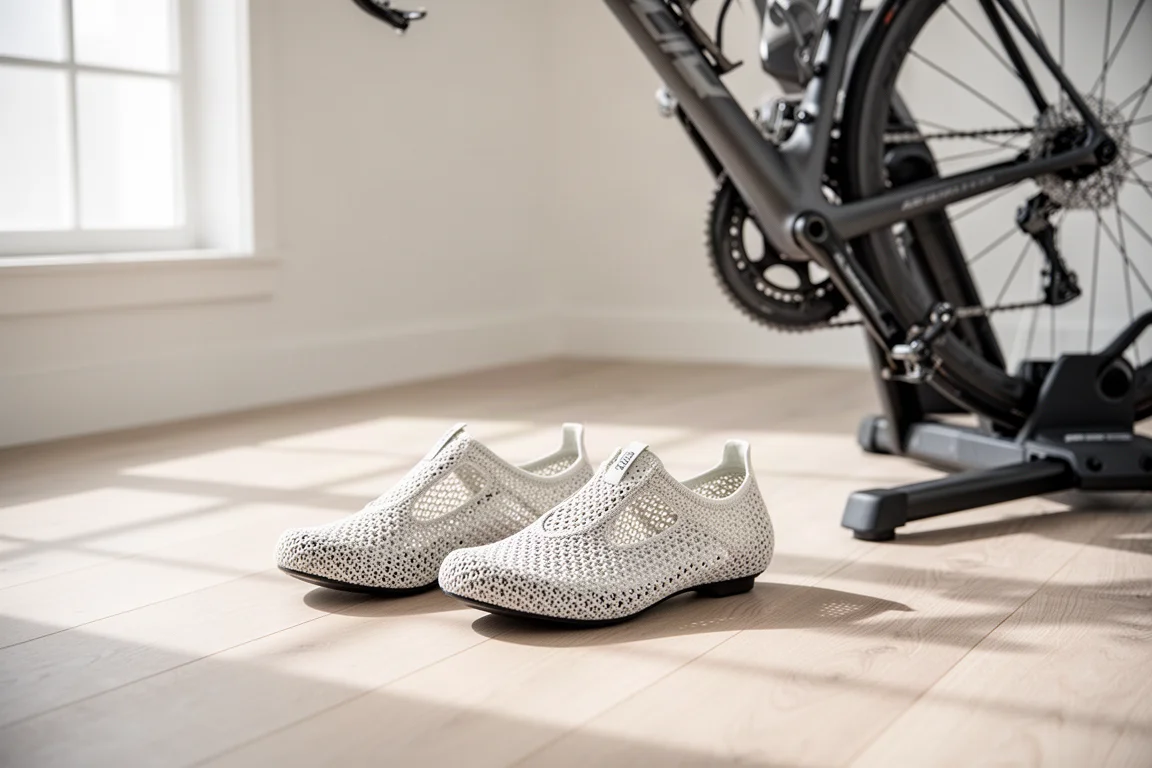
Comfort is excellent, including for wider feet. The sole does not rise very high around the foot, so the soft upper conforms to a wide range of foot shapes. Sizing is generous across the range, with half sizes available for most of it, though not at the extremes. A size 41 weighs just 372 g.
The trade-off is warmth. The upper is so open that wind passes straight through it, and even at around 15 degrees the shoes feel cold. That makes them a great match for hot climates, short efforts, hill climbs and indoor training, and a poor match for cold-weather riding. The closure is also less convenient than a dial system: adjusting velcro on the move tends to overshoot, going too tight and then too loose. Riders who rarely touch their shoes will be perfectly happy; riders whose feet swell during long rides may prefer one of the brand’s dial-based models, which are slightly heavier.
E-Gor eBike Kit: Power With Caveats
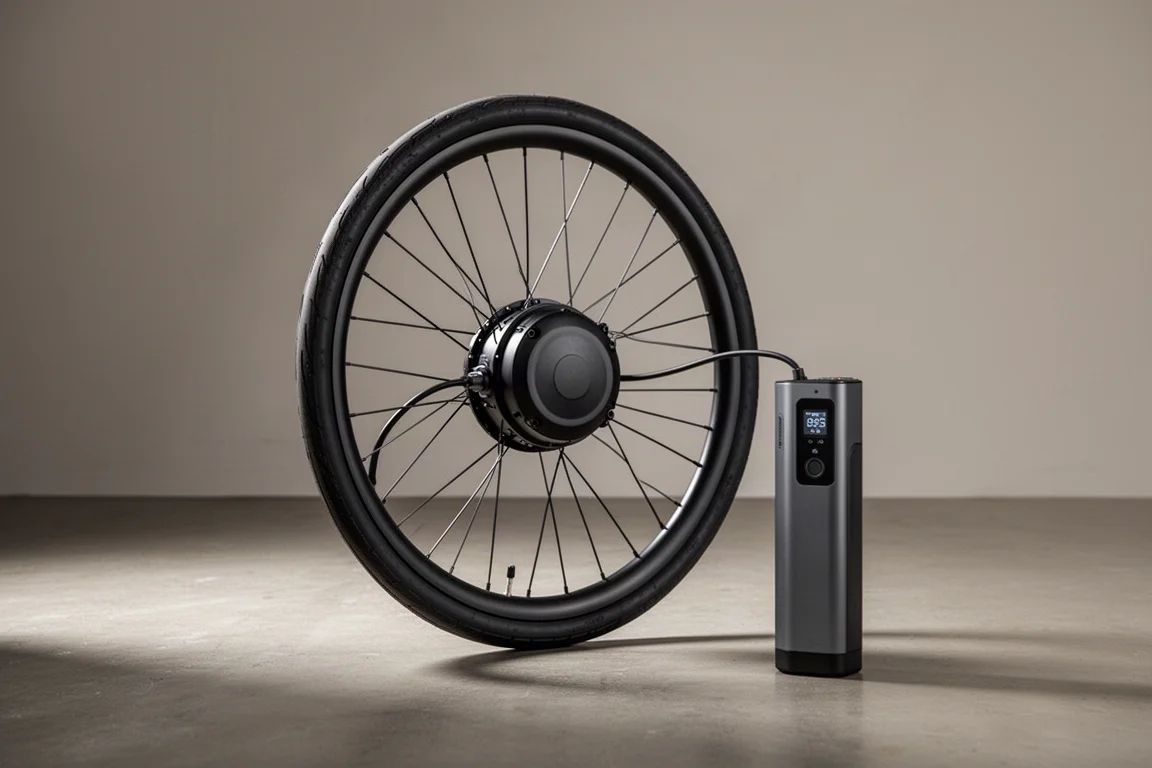
The E-Gor kit is an electric conversion system aimed specifically at high-end road bikes. Installation is straightforward, and while the battery lasts, the experience is genuinely impressive: plenty of power, and the feeling of being the strongest rider on the road.
The problem comes at the end of the charge. When the battery ran down to zero, the rear wheel locked completely, to the point where the bike could not even be pedalled. Recharging did not free it, and neither did dismantling the system. The brand supplied a replacement wheel, a newer matte-finished version with an identical-looking motor. In later testing, the battery eventually flashed an error message, but this time the wheel did not lock, the display stayed on, and the bike could be ridden normally. With the motor switched off, it still felt like an ordinary bike.
Two things are worth weighing carefully. The kit is very expensive, and fitting it will almost certainly void your bike’s warranty. If the goal is simply to ride an e-bike, a purpose-built model from a manufacturer that supports it with a warranty is the safer route.
Buying Advice
The right choice depends less on specifications than on how you ride. A groupset like Microshift Sword rewards riders who want simple, serviceable gearing and do not mind confirming compatibility up front. Wide tires such as the P Zero Race in 40 mm trade a little outright speed for comfort and grip on unpredictable surfaces.
Component upgrades are where small money can change a lot. The Specialized Comp Stem offers a cheap way to test a different handlebar height before committing to a new cockpit, while the Reform Seymour suits riders who want to explore saddle fit seriously, particularly if they sit asymmetrically. The Fizik shoes make sense for warm weather, short events and indoor training, where their breathability is an asset rather than a liability.
The E-Gor kit sits in a different category. It is powerful and it works, but the cost and warranty implications mean it should be a deliberate decision rather than an impulse one.
Conclusion
Across the six products, the pattern is consistent: the ones that deliver the most value are the ones with clear, narrow purposes and honest compromises. A £300 groupset that installs easily and shifts well, a stem that costs very little and offers real adjustability, a saddle designed around fit, and tires that prioritise grip over outright pace all make sense for the right rider. The most expensive item on the list is also the one that asks for the most caution.
Further reading
Related Reviews
Cycling Gear
8 Cycling Products Riders Keep Coming Back To
Eight cycling components and accessories with clear strengths, honest trade-offs and long-standing reputations among riders and mechanics.
Cycling Gear
Aero Helmets and Bottle Setups Tested: Six Options Ranked by Measured Watt Savings
Wind tunnel data on six aero helmets and bottle setups, with real watt savings, practical trade-offs, and guidance on what is worth buying first.
Cycling Gear
Aero Road Bikes and Fast Tires Worth Watching in 2026
Four aero road bikes and one fast road tire, with the real strengths, the open questions, and what to check before you buy.