Welding Equipment
Revolution 2500 Review: 120V vs 240V Welding Performance
A practical look at how the dual-voltage Revolution 2500 handles MIG, TIG, and stick welding on both 120V and 240V outlets.
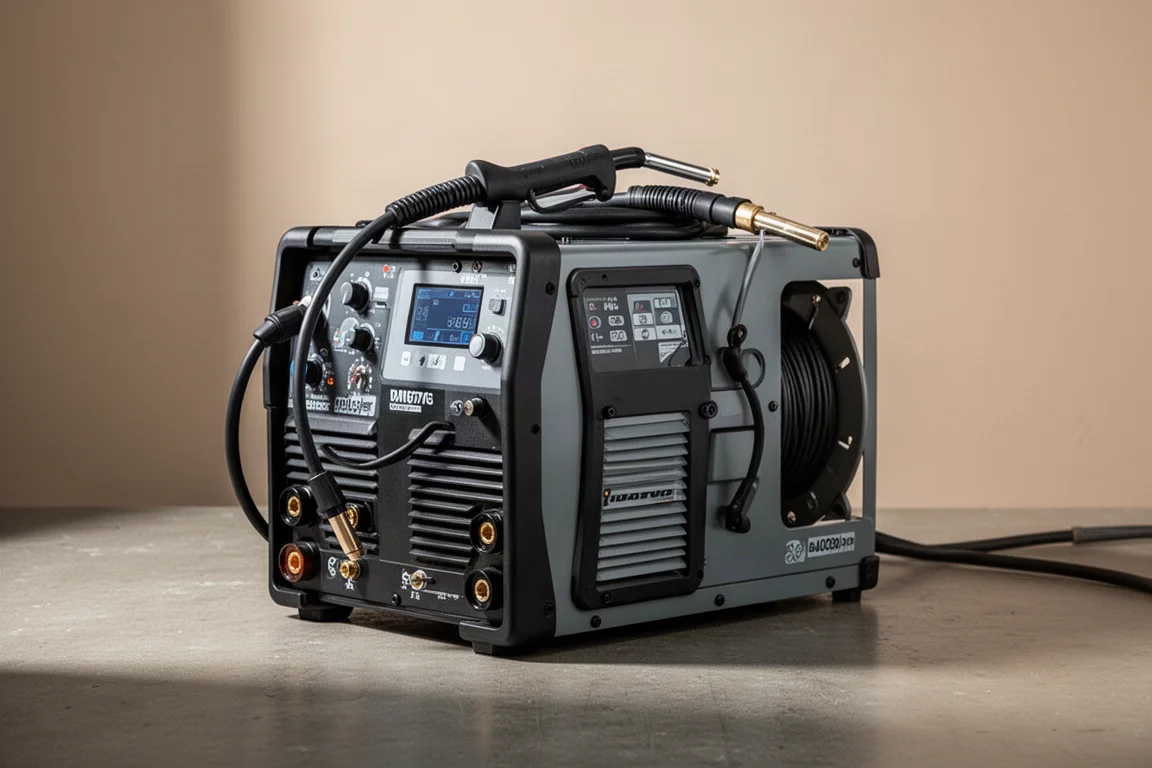
Introduction
Choosing between a 120 volt and a 240 volt welder is one of the most common questions for anyone setting up a home workshop. The answer depends heavily on the welding process you plan to run. This review looks at how the dual-voltage Revolution 2500 performs across MIG, TIG, and stick welding on both power inputs, and where each setup makes the most sense.
Who This Welder Is For
The Revolution 2500 is a dual-voltage machine, meaning it can run on either a standard 120 volt household outlet or a 240 volt outlet. This makes it a strong candidate for home hobbyists who may not have a dedicated 240 volt circuit installed, as well as for more serious fabricators who want the flexibility to move between power sources.
The machine supports MIG, TIG, and stick welding, which covers the three most common processes for general fabrication and repair work. If you are just getting started with welding, or if you work on a mix of thin and thick materials, the dual-voltage capability gives you room to grow without needing to buy a second machine.
MIG Welding on 120V
When MIG welding on 120 volts, the amperage output is limited compared to 240 volts. For 1/8 inch thick material, the Revolution 2500 performs well on 120 volts, and there is no real difference in weld quality compared to running on 240 volts at that thickness. This is effectively the crossover point where the power input stops being a limiting factor.
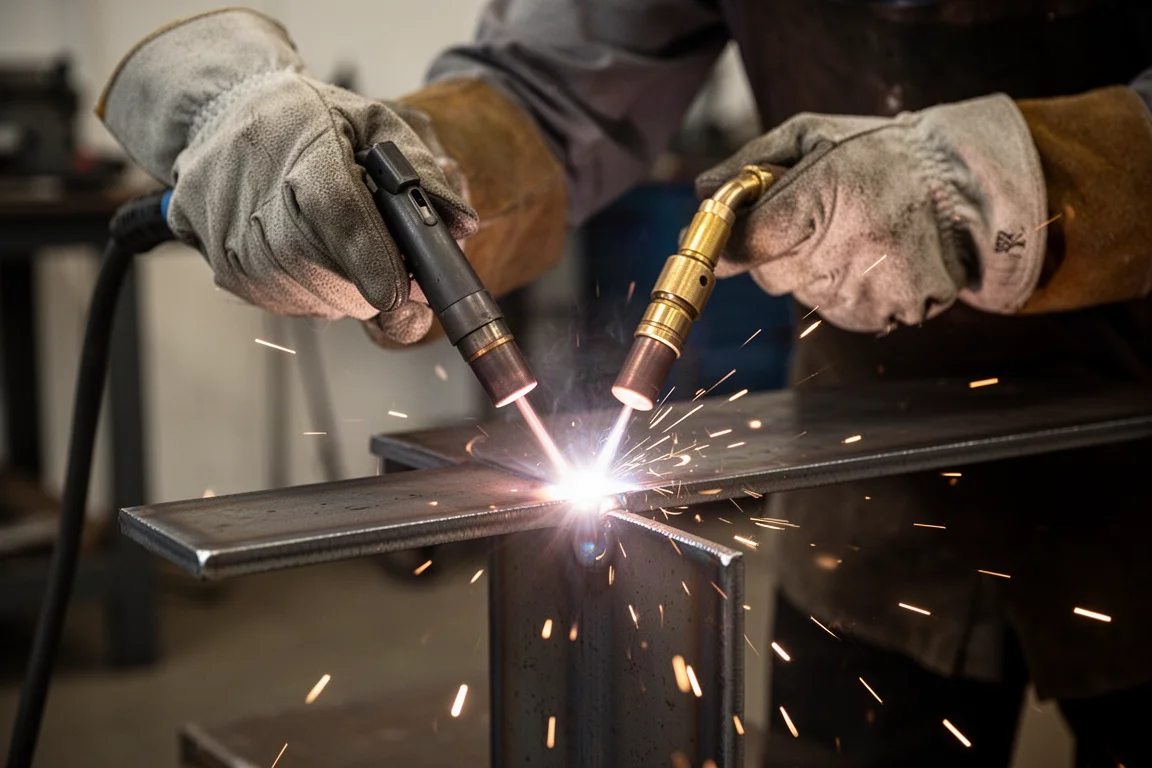
A fillet weld brake test on 1/8 inch material showed a sound, acceptable joint that bent cleanly without failure. This confirms that for thinner material, a 120 volt outlet is perfectly adequate.
Moving up to 1/4 inch thick material on 120 volts requires more attention to technique. The same settings used for 1/8 inch material can be applied, but you will need to weave the torch and stay on the leading edge of the puddle. The first attempt ran cold and did not fully consume the root of the joint. A second attempt with better visibility and a push angle produced a much stronger weld that deformed rather than broke, indicating good penetration.
That said, the weld quality on 1/4 inch material is sensitive to technique when running on 120 volts. For regular work on material thicker than 1/8 inch, a 240 volt machine is the more robust choice.
MIG Welding on 240V
Plugging the Revolution 2500 into a 240 volt outlet unlocks significantly more power. The wire speed can be increased to around 480 inches per minute, which translates to roughly 150 amps with 0.030 wire. This is well beyond what the 120 volt input can deliver.
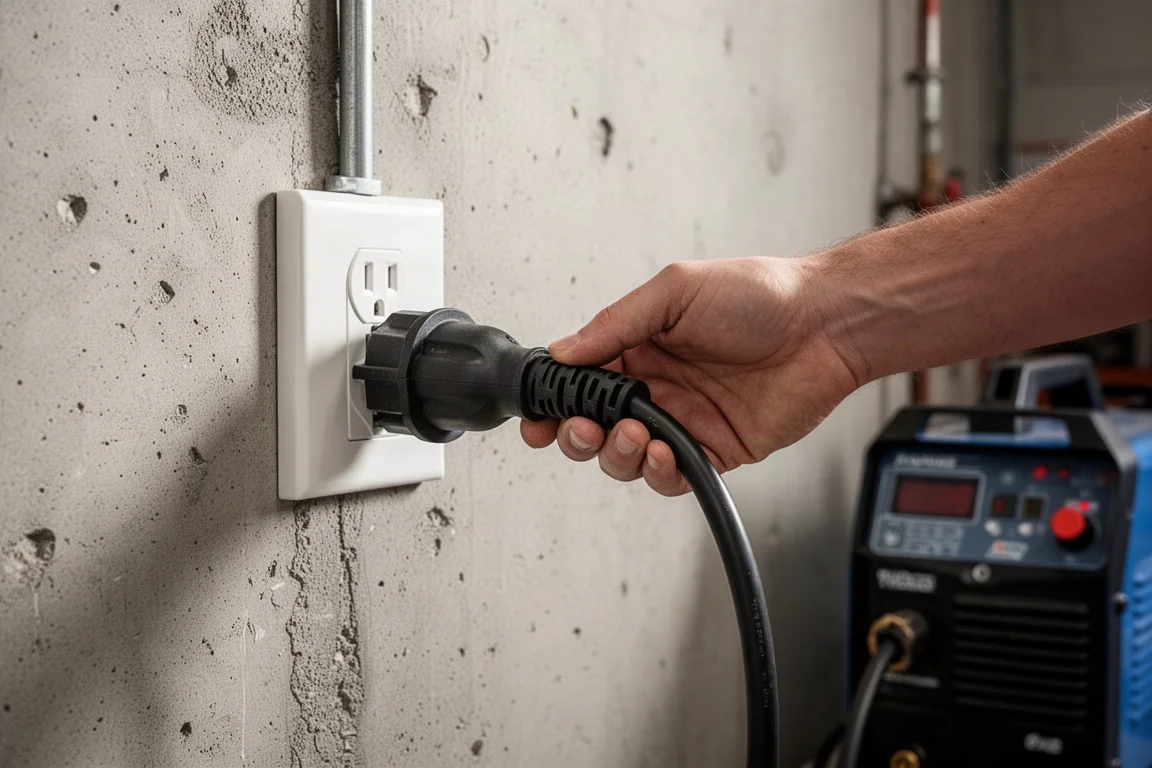
The higher amperage makes the weld much less sensitive to technique. A brake test on 1/4 inch material welded at 240 volts showed a sound joint with good root penetration, similar in quality to the best 120 volt result but achieved with far less effort. The extra power also means you can run larger diameter wire, such as 0.035, for thicker material, which further improves productivity and weld strength.
For anyone planning to weld 1/4 inch material or thicker on a regular basis, the 240 volt capability of this machine is a significant advantage.
Stick Welding on 120V
Stick welding is where 120 volt machines can really surprise you. The Revolution 2500 runs up to 110 amps on 120 volts, which is on the high end for this class of machine. At 95 amps, it can comfortably run a 3/32 inch 7018 electrode, and if your outlet cannot deliver that much power, a 3/32 inch 6013 electrode is a viable alternative.

The key advantage of stick welding is that material thickness does not directly limit your amperage. The electrode diameter and type are the main factors. This means you can weld material as thick as you want using a 3/32 inch 7018 and running multiple passes. The test weld showed good penetration into the root, which is acceptable by most standards.
The trade-off is speed. Welding thick material with a small electrode and multiple passes takes time, but it is a practical option when only 120 volts is available.
TIG Welding on 120V
TIG welding on steel and stainless steel works well on 120 volts for most applications. You can run small beads and multiple passes without issue. The real challenge is aluminum, which requires significantly more heat.
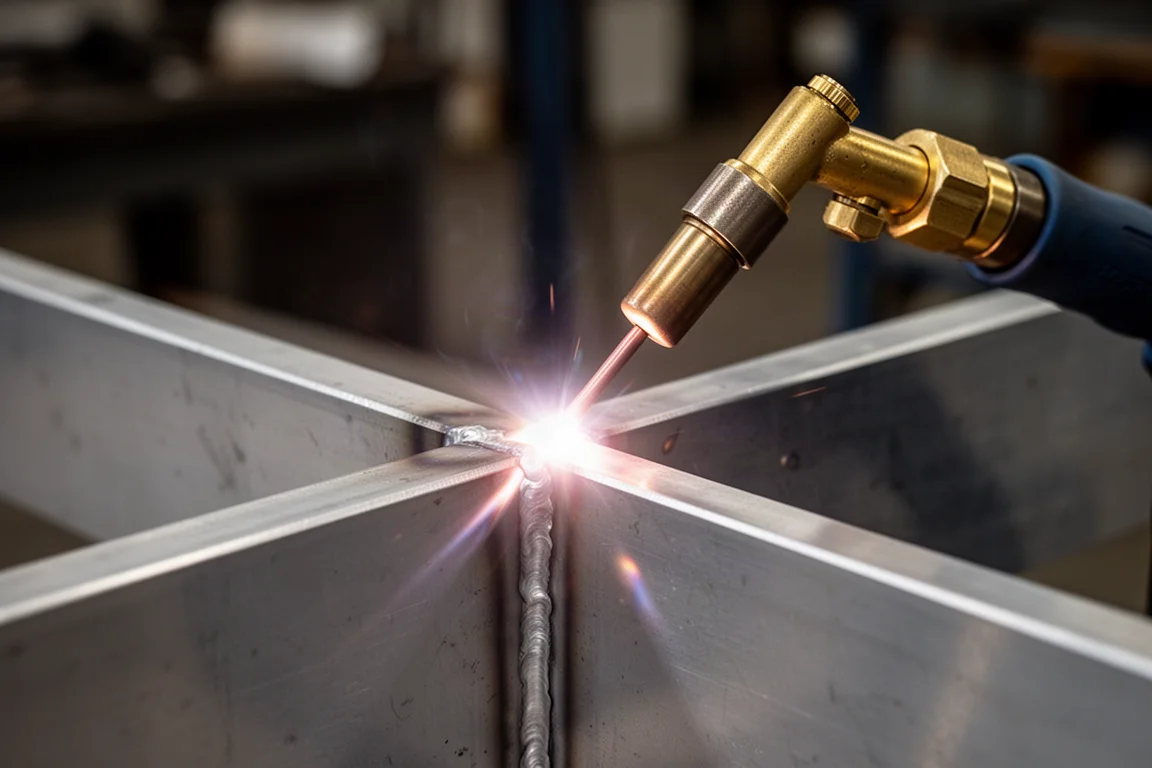
On an outside corner joint with 1/8 inch aluminum, the Revolution 2500 can run up to 150 amps on TIG, and the machine handled the job at about two-thirds pedal. However, a T-joint configuration requires much more heat, and the machine was at full pedal while running slower than ideal. For this type of joint, having closer to 170 amps available would be preferable, and the 150 amp limit on 120 volts is a real constraint.
With preheat, you can push slightly beyond 1/8 inch aluminum on 120 volts, but for regular aluminum TIG work, a 240 volt machine is the better investment.
Comparing 120V and 240V Performance
The Revolution 2500 demonstrates that 120 volt welding is viable for a wide range of tasks, but the limits become clear as material thickness increases.
For MIG welding, 1/8 inch is the crossover point. Below that, 120 volts is indistinguishable from 240 volts. Above that, you can still weld with good technique, but the process is more demanding and the results are more variable.
For stick welding, 120 volts is surprisingly capable. Small diameter electrodes like 3/32 inch 7018 can weld material of any thickness with multiple passes, making this the best option for thicker work on a 120 volt outlet.
For TIG welding, steel and stainless steel are manageable on 120 volts, but aluminum is the limiting case. Plan on 1/8 inch as a practical maximum without preheat, and consider a 240 volt machine if aluminum work is a regular part of your routine.
Buying Advice
The Revolution 2500 is a strong choice if you need a single machine that can handle MIG, TIG, and stick welding across both 120 volt and 240 volt power sources. It is particularly well suited to home hobbyists who are just getting started and may not have a 240 volt outlet installed yet.
If your work is mostly on material 1/8 inch thick or thinner, the 120 volt capability will serve you well. If you regularly weld thicker material, especially aluminum, the 240 volt input is essential, and this machine delivers the power you need when plugged into the right outlet.
The machine’s performance on 120 volts is respectable for its class, with the caveat that thicker material requires more attention to technique. The 240 volt mode removes most of that sensitivity and makes the welding process far more forgiving.
Conclusion
The Revolution 2500 proves that a dual-voltage welder can cover a broad range of work without compromise. On 120 volts, it handles thin material across all three processes with ease, and stick welding even allows for thicker work with multiple passes. On 240 volts, it delivers the amperage needed for robust MIG welds on 1/4 inch material and more comfortable aluminum TIG welding.
The choice between 120 and 240 volts ultimately comes down to the thickness of material you weld most often. For occasional thicker work, 120 volts is workable with the right technique. For regular production on thicker material, the 240 volt capability of this machine is well worth having.
Product link
View more details for Revolution 2500
This product is mentioned in the review. Check the specifications, options, and compatibility before buying.
View more details for Revolution 2500Further reading
Related Reviews
Welding Equipment
Berger 135 MP Multi-Process Welder Review: A $120 Flux Core, Stick, and TIG Machine
A practical look at the Berger 135 MP, a budget multi-process welder that handles flux core and stick welding with surprising competence for the price.
Welding Equipment
Hobart Handler 140EZ Review: A Simple MIG Welder for DIY Projects
A look at the Hobart Handler 140EZ, a 120-volt MIG welder with an easy set mode that makes it approachable for hobbyists and first-time welders.
Welding Equipment
HTP Freedom 250 Pulse MIG Welder Review: A Solid Performer for Controlled Welds
A practical look at the HTP Freedom 250 pulse MIG welder, covering how pulse transfer works, where it shines, and who should consider it.