Loudspeakers
Rega Aya Review: A Compact Floorstanding Speaker That Fits Real Rooms
A close look at the Rega Aya, a small floorstanding loudspeaker with a moulded fibreglass reinforced cement cabinet, a ZRR tweeter and a 2.5-way driver design.
Introduction
Rega has been designing hi-fi equipment in England since 1973, first making its name with tonearms and turntables built around a light and rigid philosophy instead of the heavy, dense approach many rivals favoured. That thinking earned the company awards for sound quality and a devoted following. Since the 1980s Rega has also designed and manufactured amplifiers, speakers and CD players, and the Aya floorstanding loudspeaker follows the same rule: never follow the trend, and use whatever method produces a genuine improvement.
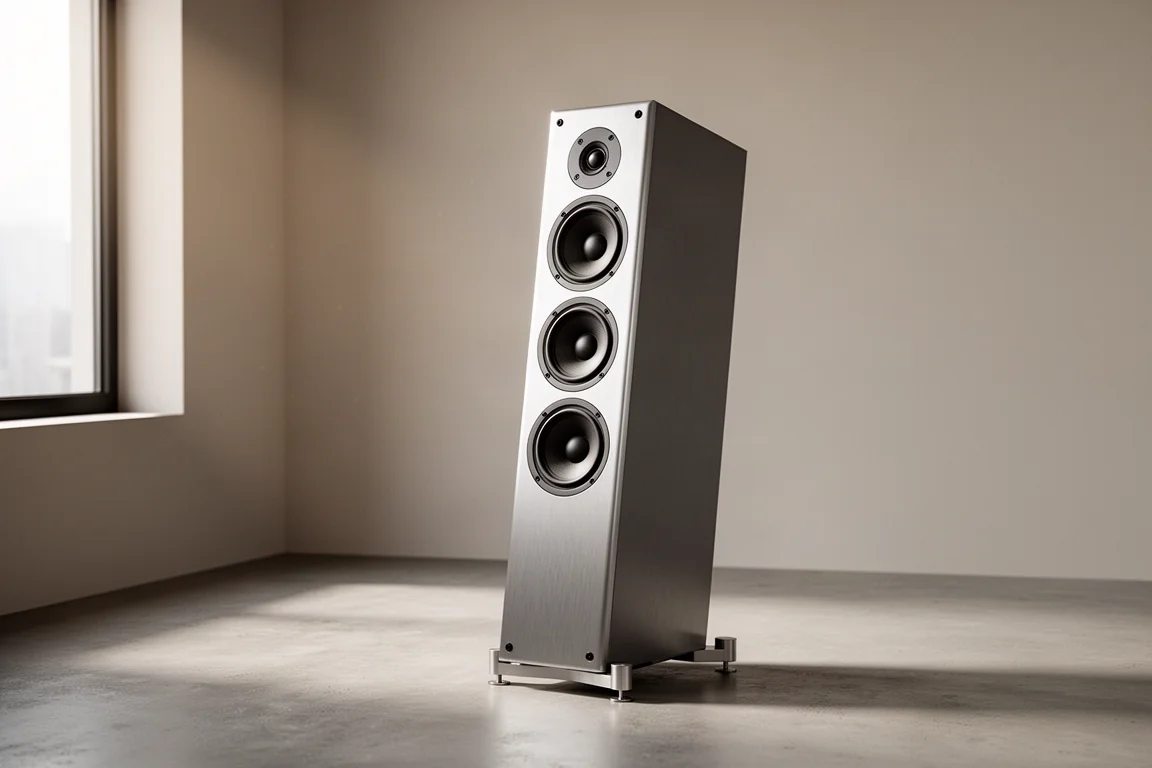
The Aya is a small floorstander with a cabinet moulded from fibreglass reinforced cement, a material Rega settled on after roughly a decade of research and testing. Like almost everything the company makes, it is 100 percent made in England.
Who This Product Is For
The Aya is aimed at listeners who have quietly accepted that a stand-mounted speaker is their only realistic option. At 10.2 by 34.3 by 8.5 inches it is small for a floorstanding design, and at 31.1 lb it is light for one as well. That combination matters in smaller apartments and smaller homes, where room size usually limits speaker choice. Once a stand-mount is sitting on its stands, the Aya is as small or smaller, and about the same weight, yet it produces considerably more bass than most bookshelf speakers occupying the same amount of space.
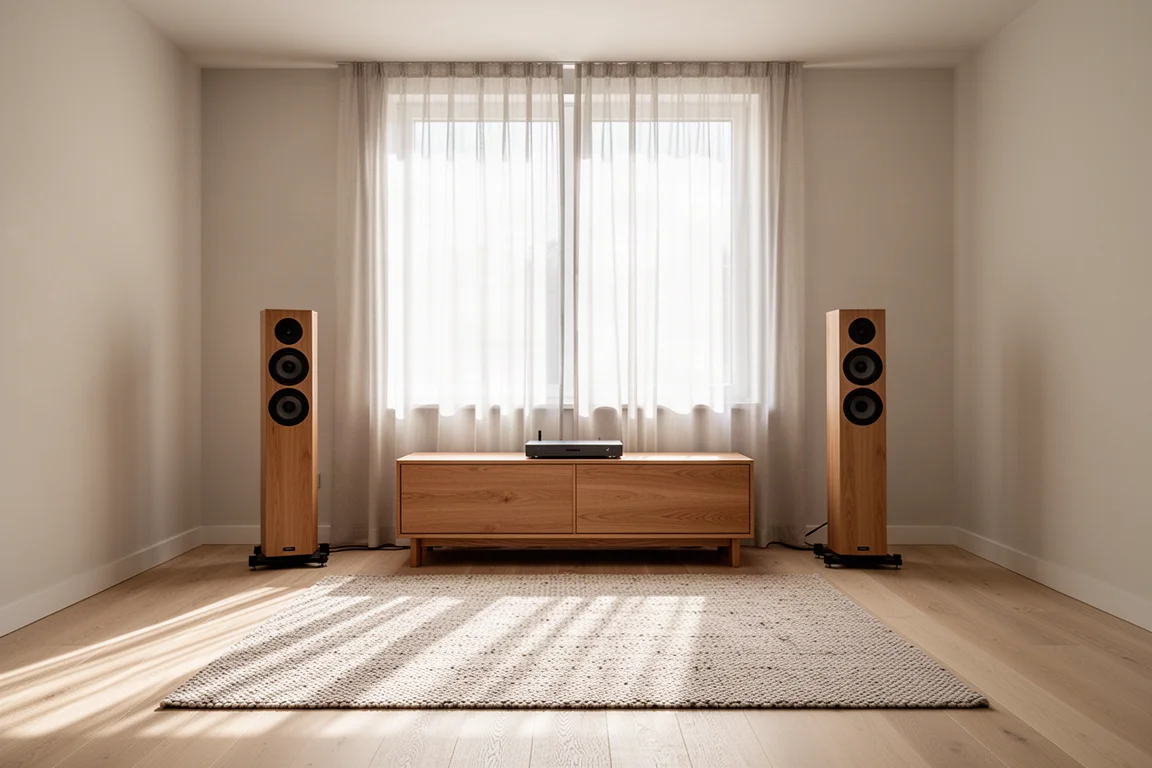
Because the Aya is front ported, it can also sit closer to the wall behind it without the room boom that rear-ported designs often introduce, which widens the number of rooms it can work in.
Design and Cabinet Construction
The enclosure is the most distinctive part of the design. Rising prices for MDF and natural wood veneers pushed those materials past the point of viability for affordable high-end cabinets, so Rega went looking for an alternative with even better damping and resonance behaviour. Cement is dense and non-resonant, but brittle. Blending it with fibreglass produces a cabinet with the density needed for a non-resonant enclosure and the structural integrity to last for years without cracking. The material can also be moulded into the intended shape rather than forcing wood or MDF into it.
The front baffle is made from MDF, vinyl wrapped in a brushed aluminium finish that matches the cabinet, with a plastic inert face plate holding the drivers. Using materials with different resonant characteristics reduces resonance transfer between panels, giving a light, very stiff enclosure with excellent resonance control. The practical result is that you hear the drivers rather than the cabinet, which is what accuracy and transparency depend on. Rega is confident enough in the build to cover the Aya with a limited lifetime warranty against manufacturing defects.
Driver Technology and Crossover Design
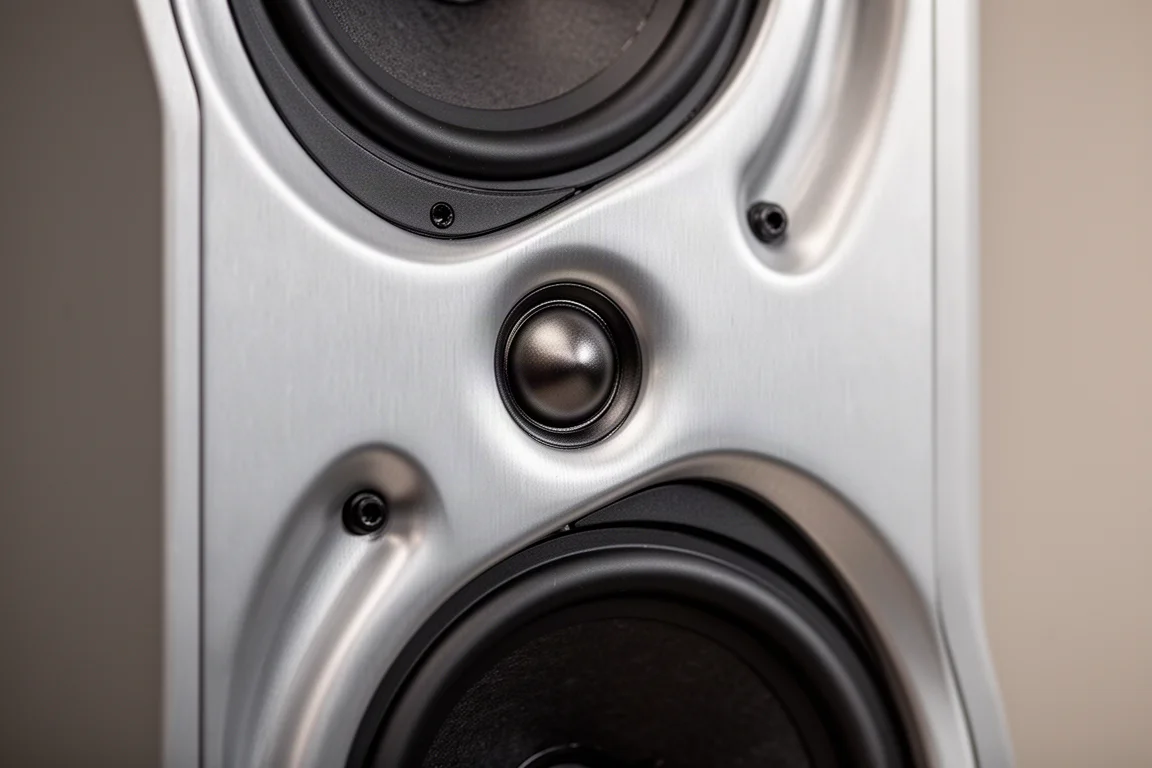
Rega has largely used its own drivers in its speakers, which gives its engineers full control over parameters and quality, and lets them tune each driver to work inside the cement enclosure and to blend with the others across the audio band. The Aya uses the company’s ZRR tweeter, where zero rear reflection technology means a large hole in the pole piece vents the tweeter’s back wave. Instead of being damped and partly reflected back into the tweeter, that wave bounces off a specially shaped rear chamber, so no reflection returns to the dome. Without those reflections the tweeter is more accurate and less distorted.
Below and above it sit two pulp cone drivers: an MX25 5-inch mid-bass unit and a 7-inch RR 7.8 midwoofer that reinforces the bass region. Both are loaded into the same airspace inside the cabinet. The crossover is deliberately simple and uses good quality components to hand the two woofers over to the tweeter. An enclosure-mounted band pass filter lets the 5-inch driver cover the upper midrange up to the tweeter while the 7-inch driver handles the lower bass. Both drivers receive the same music information, and the tuning plus the filter combine to produce a flat response from bass through upper midrange, where the tweeter takes over. Rega describes the result as a 2.5-way design that mixes electrical and acoustical methods.
Main Strengths
Resonance control is the foundation of everything the Aya does well. With the cabinet staying quiet, the soundstage has unusual depth and height for a speaker this size, and instrument placement is precise. The rearward tilt built into the feet helps here too, pushing the perceived image above the top of the cabinet. Even positioned close to the back wall with a piece of furniture between the speakers, the Aya still throws a convincing stage.
Dynamics are the other standout. With engaging material the speaker is lively and rhythmic, and it stays composed across classic rock, jazz and classical. Treble is detailed without harshness, and the midrange gives instruments room to breathe while keeping their detail intact. The overall character is soulful and easy to follow rather than clinical.
Things to Consider Before Buying
The Aya is a 6 ohm design rated at 89.5 dB, which makes it friendly to a very wide range of amplifiers, though it is not the most efficient speaker on the market. It is best served by a high-quality integrated amplifier or receiver, and it rewards better power and a better source with better sound. Running it from a modest amplifier is workable, but the speaker has more to give as the electronics improve.
There is no bi-wiring or bi-amping option, which is a limitation only for listeners who specifically want it. With good amplification it should not be necessary. Grills are not included and can be bought separately, although the tweeter does have a dome protector fitted. Bass output is also sensitive to placement, so plan on experimenting with the distance to the wall behind the speakers.
Amplification and Setup Notes
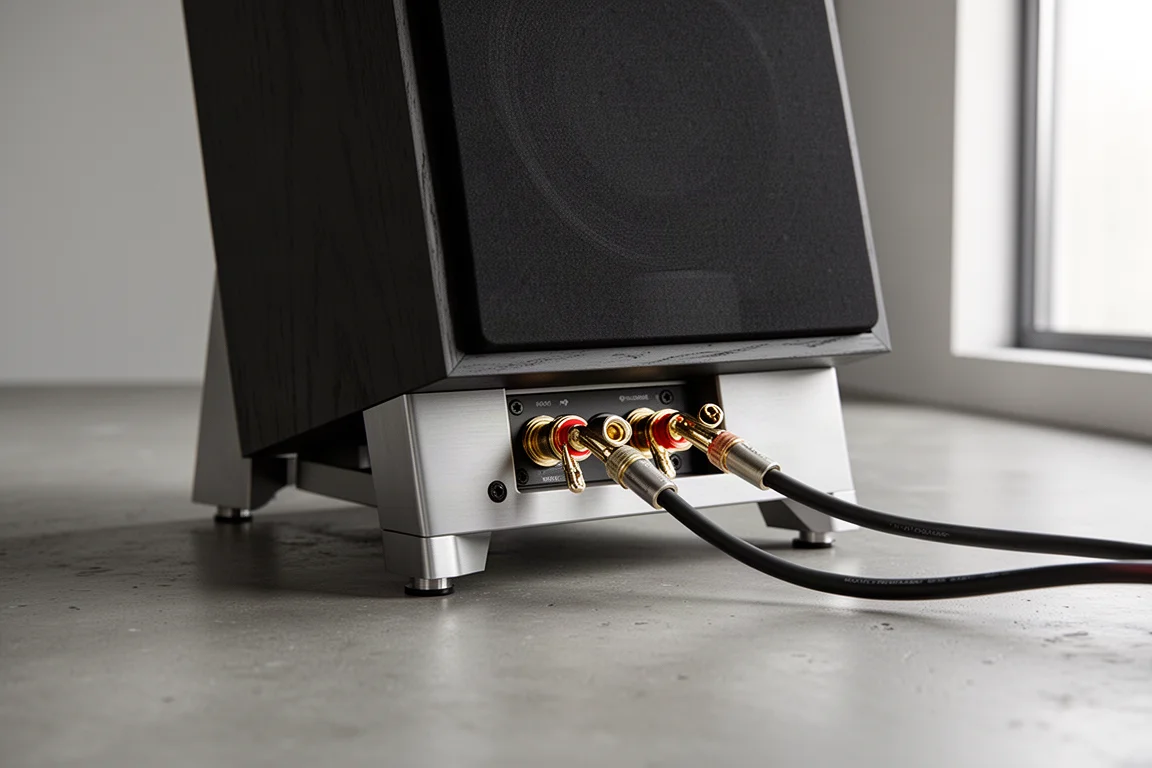
Setup is straightforward. The metal feet lift the cabinet so it appears to float just above the floor, which keeps resonance from transferring into the floor structure. They also tilt the speaker back slightly, improving vertical dispersion and time alignment so the speaker sounds taller than its 34.3 inches suggests. The binding posts are integrated into the metal foot section and accept banana or spade connections.
Positioning has a large effect on bass. With the speakers about two feet from the front wall, low frequencies came across as thin. Moving them closer to the wall behind them dramatically improved bass output and brought the speaker to life, while imaging stayed precise in either position.
Buying Advice
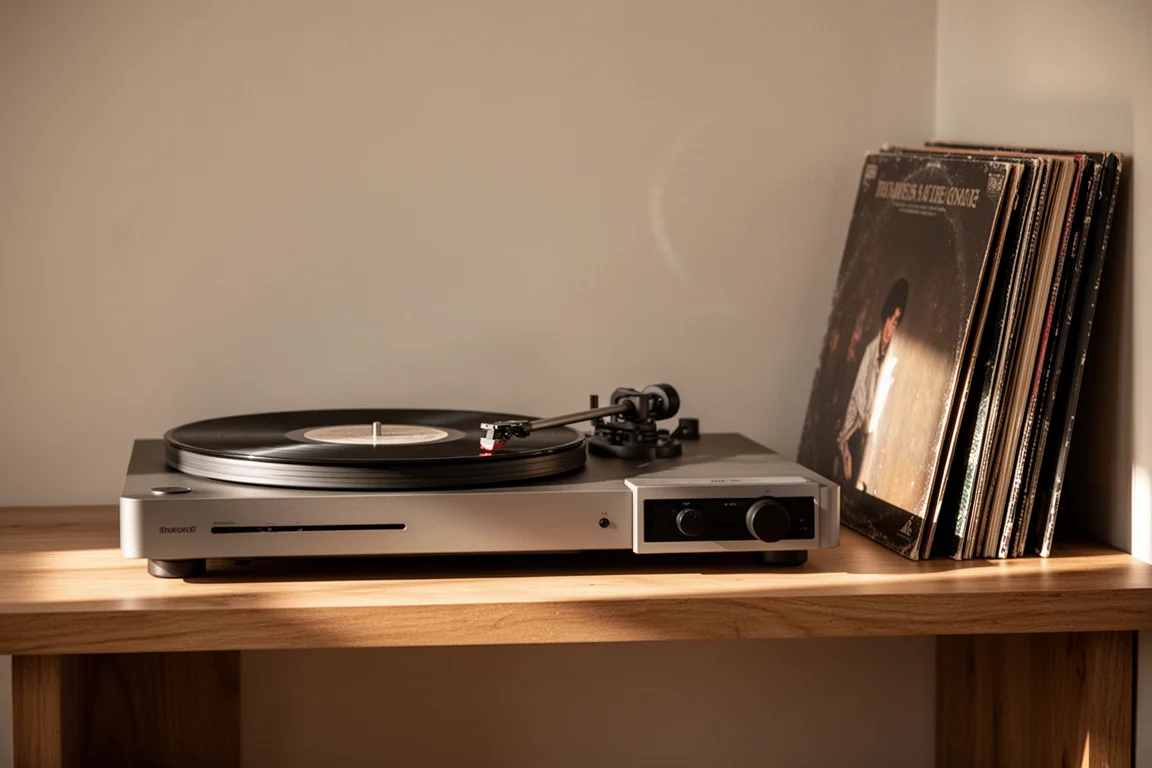
If room size has been the reason you have not bought a floorstanding speaker, the Aya is one of the few genuinely compact options that does not ask you to give up low-frequency weight. Match it with a high-quality integrated amplifier and give it a little time to find the right distance from the wall. A simple, coherent starting system would be a Rega P3 turntable paired with an integrated amplifier, which together make a strong match for the Aya at a sensible overall investment. The limited lifetime warranty against manufacturing defects adds reassurance for a long-term purchase.
Conclusion
The Aya is a beautifully designed and well-built speaker with a look unlike anything else on the market, sized to fit where most floorstanders cannot, and using newer material technology to raise performance while keeping costs in check. For its size and price, it is a viable floorstanding option for listeners who thought only a stand-mount would work in their room, and it draws attention wherever it is placed.
Product link
View more details for Rega Aya Floorstanding Loudspeakers
This product is mentioned in the review. Check the specifications, options, and compatibility before buying.
View more details for Rega Aya Floorstanding LoudspeakersFurther reading
Related Reviews
Loudspeakers
Borresen X2 Review: Deep Bass and a Warm Balance From a Slim Floorstander
A close look at the Borresen X2 loudspeaker: ribbon tweeter and carbon fiber drivers, bass below 30 Hz without a subwoofer, and how it behaves with solid state, integrated and tube amplification.
Loudspeakers
Borresen X3 Review: A Danish Floorstander Built Around Soundstaging
The Borresen X3 pairs a true ribbon tweeter and a slim Danish cabinet with remarkable imaging, fast transients, and a few practical trade-offs worth knowing before you buy.
Loudspeakers
Bowers & Wilkins 705 S3 vs Wharfedale Linton vs Zu Audio DWX: Three Standmount Speakers Compared
A three-way standmount loudspeaker comparison covering the detail-led Bowers & Wilkins 705 S3, the value-focused Wharfedale Linton, and the dynamic Zu Audio DWX.