Loudspeakers
Bowers & Wilkins 705 S3 vs Wharfedale Linton vs Zu Audio DWX: Three Standmount Speakers Compared
A three-way standmount loudspeaker comparison covering the detail-led Bowers & Wilkins 705 S3, the value-focused Wharfedale Linton, and the dynamic Zu Audio DWX.
Introduction
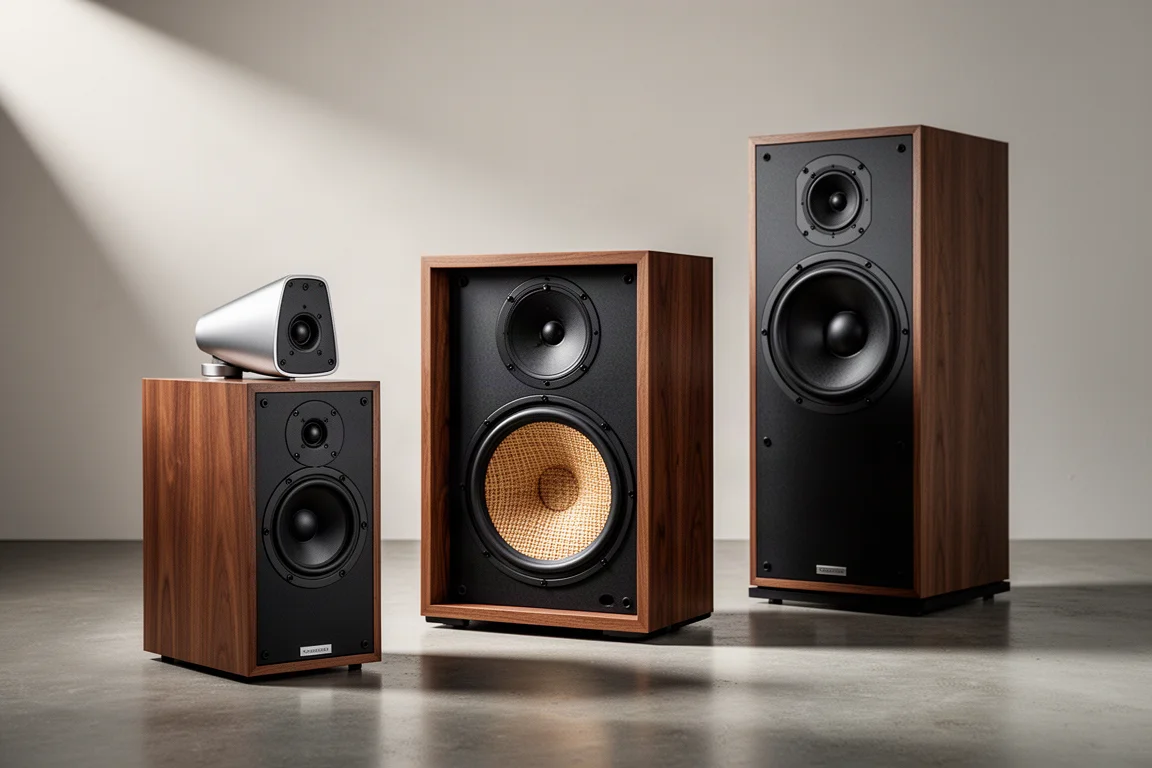
Standmount loudspeakers come in very different flavours, and the gap between them is rarely about cabinet size alone. The Bowers & Wilkins 705 S3, the Wharfedale Linton and the Zu Audio DWX are all standmount designs aimed at the same shelf or stand, yet they chase three different goals: transparency, warmth at a lower price, and sheer dynamic body.
The 705 S3 is the most affordable route into the tweeter-on-top standmount design from Bowers & Wilkins, and it sells for around $3,000 a pair. The Wharfedale Linton comes in at nearly one third of that price. The Zu Audio DWX, in the Supreme version, sells for $2,500 in the United States, while European buyers pay more once shipping from the factory in Utah, import duty and VAT are added.
All three spent an extended period in the same room and in rotation with one another, which makes the differences between them far easier to hear than a single listening session would allow.
What Sets These Three Speakers Apart
The clearest dividing line is how each speaker allocates its budget. The 705 S3 puts money into a tweeter-on-top architecture, a curved baffle and a driver mounting that keeps the front surface area around the mid-bass driver to a minimum. The Linton and the DWX are physically larger standmounts, and that extra cabinet volume is a big part of why they deliver more body and weight than the Bowers & Wilkins.
Sensitivity and load also matter. At 88 dB with an 8 ohm nominal impedance, the 705 S3 is a reasonably easy drive for most amplifiers, which means the choice of amplification is less about raw power and more about tonal character.
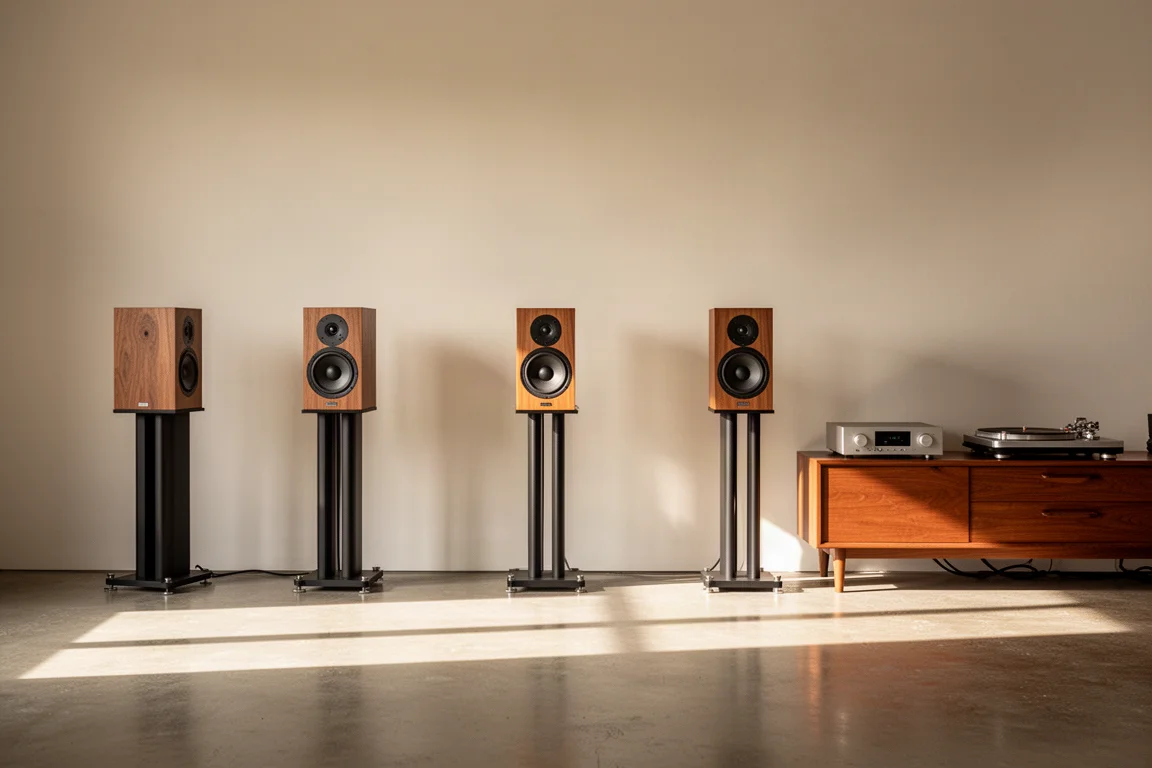
Tonality is the second dividing line. The Bowers & Wilkins is the coolest and most matter-of-fact of the three, the Linton leans warm and generous, and the DWX sits furthest toward richness and drive. None of those positions is objectively better; they simply suit different rooms and different records.
Bowers & Wilkins 705 S3: Transparency and Precision
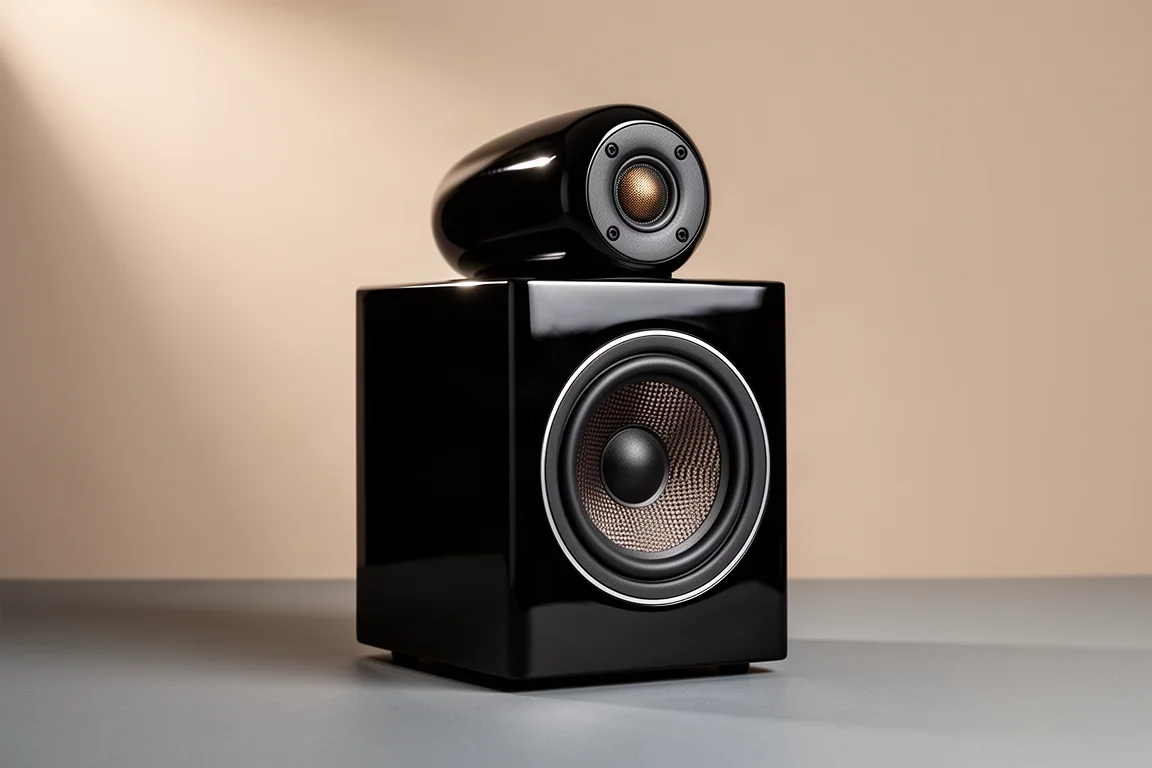
The 705 S3 is built around two defining features. On top of the cabinet sits a tapered aluminium tube housing a 1 inch (2.5 cm) carbon dome tweeter. Because that tube rests above the cabinet rather than inside it, the tweeter is less exposed to vibrations generated by the driver below, and the taper helps the housing deal with the tweeter’s back wave. Underneath, a 6.5 inch Continuum cone mid-bass driver is mounted in its own housing that sits slightly proud of the cabinet, an arrangement the brand calls the Pod.
Bowers & Wilkins also pushes the tweeter slightly forward of the cabinet lip so the drivers are time aligned, which is intended to let all frequencies arrive at the listening position together. The curved front baffle is only just wide enough to carry the mid-bass driver and its mounting, limiting the flat surface that sound can wrap around. This is a bass reflex design with the port on the back, so the speakers want some clearance from the front wall. On the rear, a chrome plate carries four binding posts for bi-wiring.
In use, the 705 S3 is exceptionally transparent. It digs out detail from the mid-range, the upper mid-range and the treble, and it separates instrumental layers more cleanly than either of the larger speakers here. On a track built around piano and acoustic guitar, the individual lines stay distinct rather than blending into one mass. What it does not offer is the body and tonal richness of the Linton or the DWX, and it is noticeably less dynamic than the Zu. Sound staging, on the other hand, is top notch: player placement is pinpoint accurate and the sense of recording space and air around instruments is far stronger than on the other two. In a stereo home cinema setup that translates into atmospheric detail, and male voices arrive with a lighter, crisper tonality.
Two caveats are worth knowing before buying. The treble can turn lively and bright on lesser recordings, particularly guitar-driven indie rock, and the low-frequency response rolls off around 50 Hz, so the bottom octave is essentially absent and the bass that remains is polite.
Wharfedale Linton: Warmth and Value
The Linton is the value play here, and it is a genuinely large standmount. Where the 705 S3 chases forensic detail, the Linton chases fullness. It gives voices more chest and weight, and it carries a warmth through the mid-range that makes long listening sessions easy. If the Bowers & Wilkins sounds matter of fact, the Linton sounds generous.
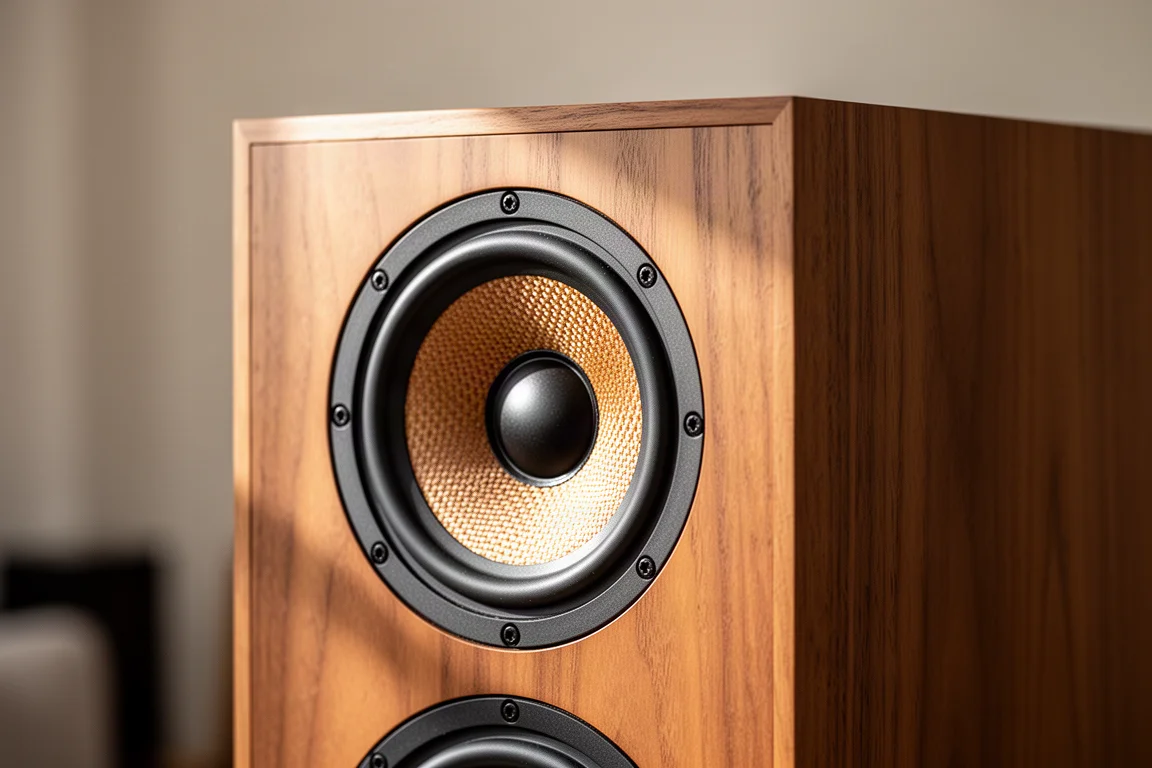
That generosity comes with trade-offs. The Linton does not pull as much detail out of the mid-range and treble, it does not separate a piano layer from an acoustic guitar layer as cleanly, and the specificity of player placement on the sound stage is less exact. It also conveys less of the air and recording space that the 705 S3 handles so well.
Set against its price, though, those gaps are easier to accept. At nearly one third of the cost of the Bowers & Wilkins, the Linton delivers a big, confident, full-bodied presentation that many listeners will prefer in a smaller room, where its warmer balance is less likely to feel forward.
Zu Audio DWX: Dynamics and Body
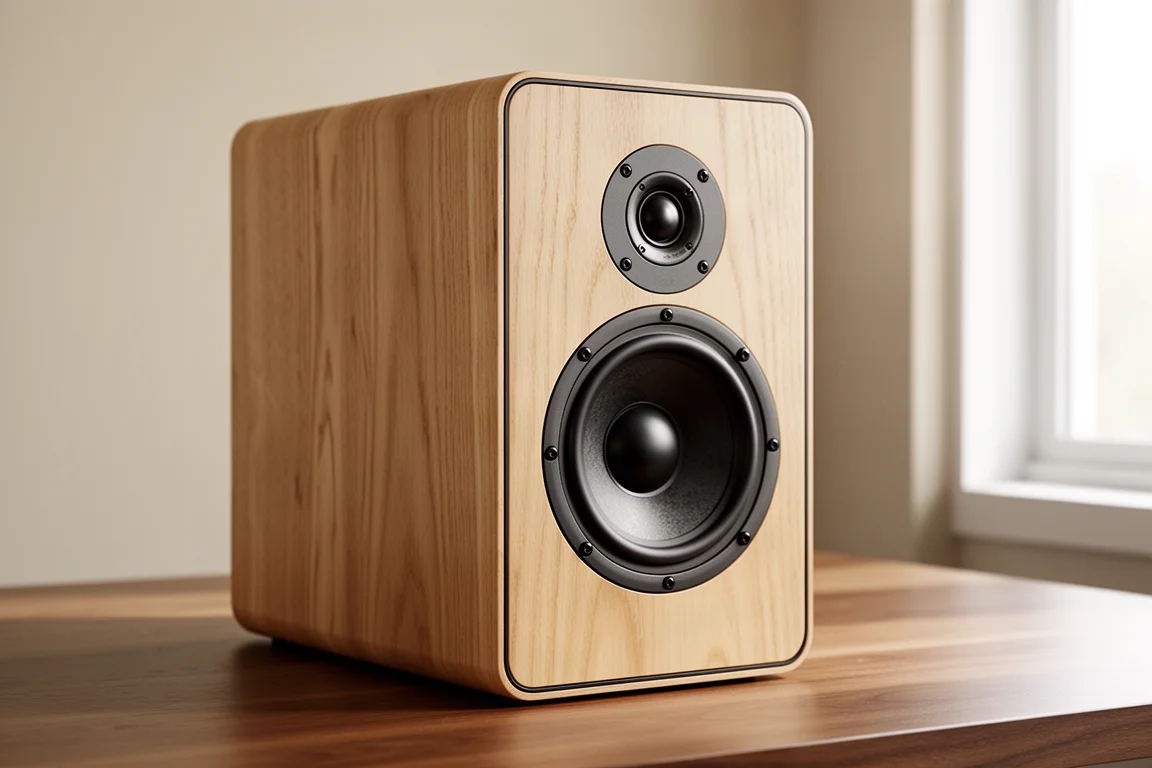
The DWX is the most dynamic of the three and the most musical in the sense that matters most to some listeners: it swings. It brings the greatest tonal richness and the most physical body to instruments, and on rhythmically dense material it simply hits harder than either the Linton or the 705 S3. Where the Bowers & Wilkins delivers information, the DWX delivers weight.
The cost of that approach shows up in precision. Imaging is less pinpoint than on the 705 S3, and the sense of the recording venue, the air around instruments and the space between them, is not as vivid. The DWX also asks more of buyers outside the United States: at $2,500 in the US for the Supreme version, European customers pay extra for shipping from the factory in Utah plus import duty and VAT.
For listeners who prioritise drive, richness and a big, engaging presentation over forensic detail, that trade is a straightforward one.
Amplifier Matching and Subwoofer Considerations
The 705 S3 rewards amplifier matching more than most speakers at its price. Several solid-state designs proved capable partners, delivering detail cleanly, but they left the lively top end untouched, which is exactly the wrong result with brighter recordings. A tube amplifier was the most satisfying match out of the box, fleshing out the sound and stopping the top end from running away with itself. An amplifier with DSP-based parametric EQ offers a more flexible route, since voicings can be used to take the edge off the treble when a record demands it. The practical takeaway is to look for something full-bodied and warm, ideally with a subwoofer output.
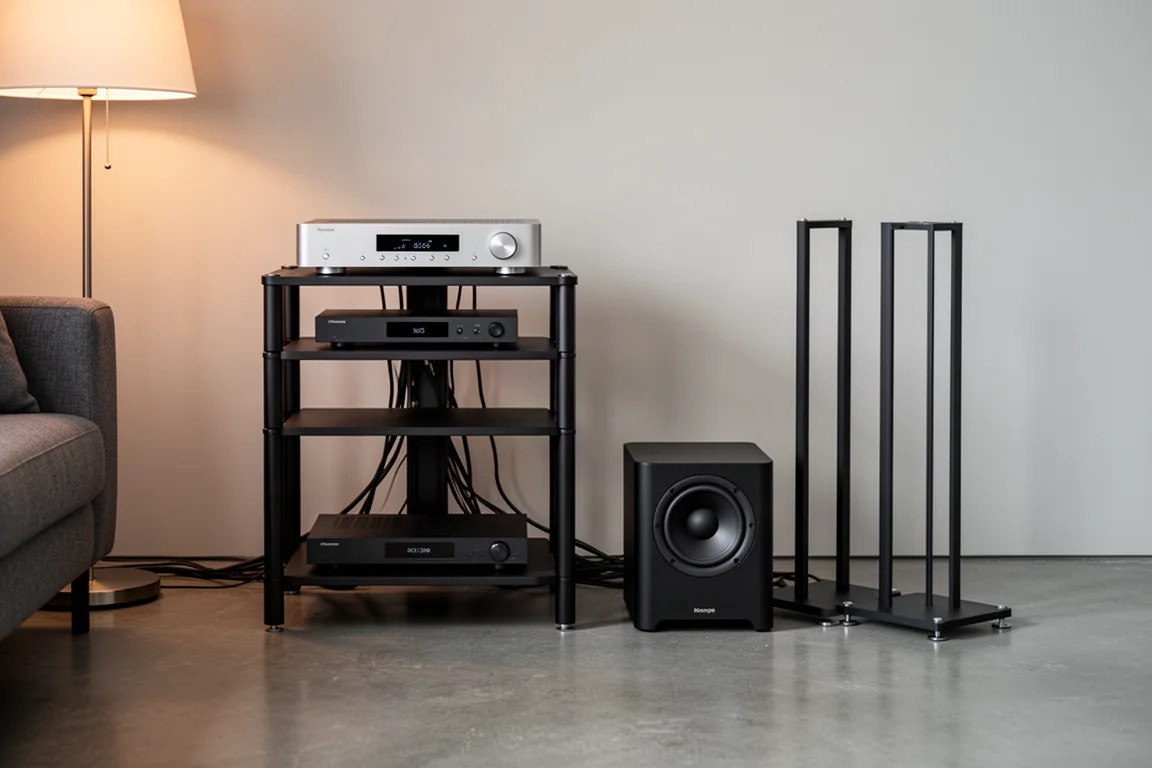
The low end is the bigger structural question. Of these three speakers, the 705 S3 is the one that genuinely benefits from a subwoofer. Pushing it closer to the front wall does add room gain, but the sound stage collapses in the process, so that is not a free fix. A subwoofer in this price class adds roughly $500 to $1,500 to the total cost of ownership, and adding one brings the weight and heft that the standmount alone cannot provide, making the presentation noticeably more engaging.
There is a technical bonus worth knowing about. If the amplifier high-passes the mains and low-passes the sub, the mid-bass driver is relieved of bass duty. Heat build-up in the voice coil is reduced, impedance stays at a more reasonable level, and the distortion that appears when a small driver is asked to produce deep bass is kept in check. Amplifiers with built-in bass management or DSP-based EQ make that straightforward, and the improvement is audible.
The Linton and the DWX need that help far less. Both are larger cabinets with more low-frequency output on their own, which is a meaningful part of their appeal for buyers who would rather not add another box and another cable run to the system.
Buying Advice
If transparency, detail retrieval and pinpoint imaging are what you value most, the Bowers & Wilkins 705 S3 is the strongest of the three. It reveals the recording space, separates instrumental layers cleanly and makes the placement of players easy to follow. Budget for a warm, full-bodied amplifier and plan on a subwoofer, because the bottom octave is not part of the package.
If you want a big, warm, forgiving sound and you would rather spend the difference on records, the Wharfedale Linton is the sensible choice. It gives up detail and sound stage precision, but it delivers body and tonal richness at nearly one third of the Bowers & Wilkins price, and it needs no subwoofer to feel complete.
If dynamics and tonal richness matter more to you than forensic accuracy, the Zu Audio DWX is the most engaging of the three. It hits hardest and sounds fullest, though imaging is less exact and buyers outside the United States should factor in shipping, duty and VAT on top of the $2,500 US price for the Supreme version.
A final consideration: if deep bass is a priority and you have no interest in adding a subwoofer, a floorstanding design is worth investigating instead of any of these three standmounts. The 705 S3 in particular is a specialist tool, and it works best when it is matched to a system that plays to its strengths rather than one that asks it to do everything.
Conclusion
These three standmounts are not really competitors so much as three different answers to the same question. The Bowers & Wilkins 705 S3 answers with transparency, precision and a superb sense of space, provided you pair it carefully and add a subwoofer. The Wharfedale Linton answers with warmth, body and remarkable value. The Zu Audio DWX answers with dynamics and richness. Match the answer to the sound you actually want, and any of the three will serve you well for years.
Further reading
Related Reviews
Loudspeakers
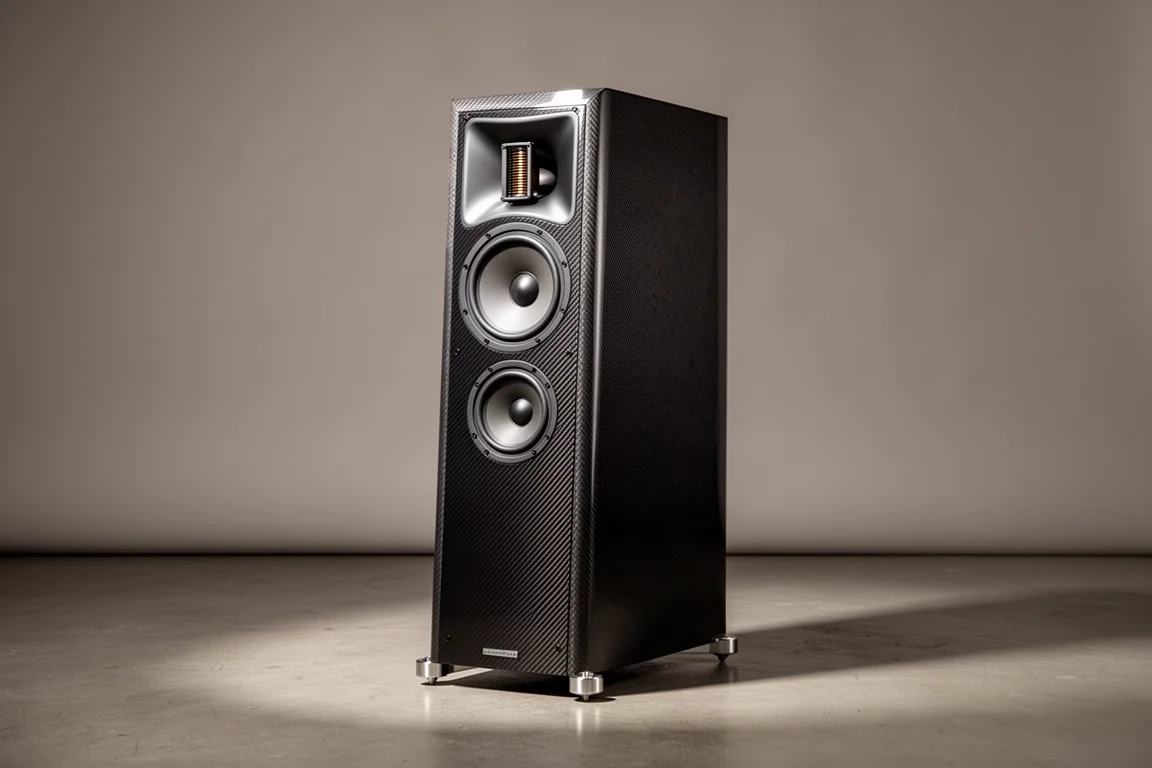
Borresen X2 Review: Deep Bass and a Warm Balance From a Slim Floorstander
A close look at the Borresen X2 loudspeaker: ribbon tweeter and carbon fiber drivers, bass below 30 Hz without a subwoofer, and how it behaves with solid state, integrated and tube amplification.
Loudspeakers
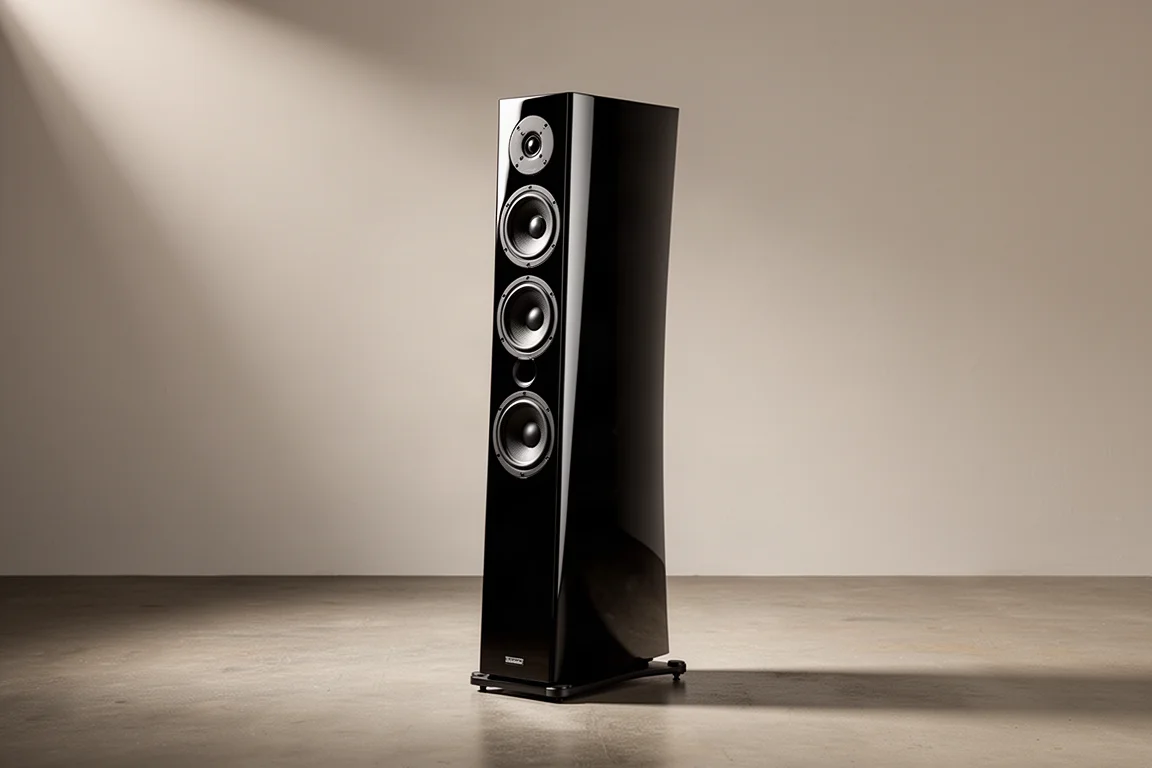
Borresen X3 Review: A Danish Floorstander Built Around Soundstaging
The Borresen X3 pairs a true ribbon tweeter and a slim Danish cabinet with remarkable imaging, fast transients, and a few practical trade-offs worth knowing before you buy.
Loudspeakers
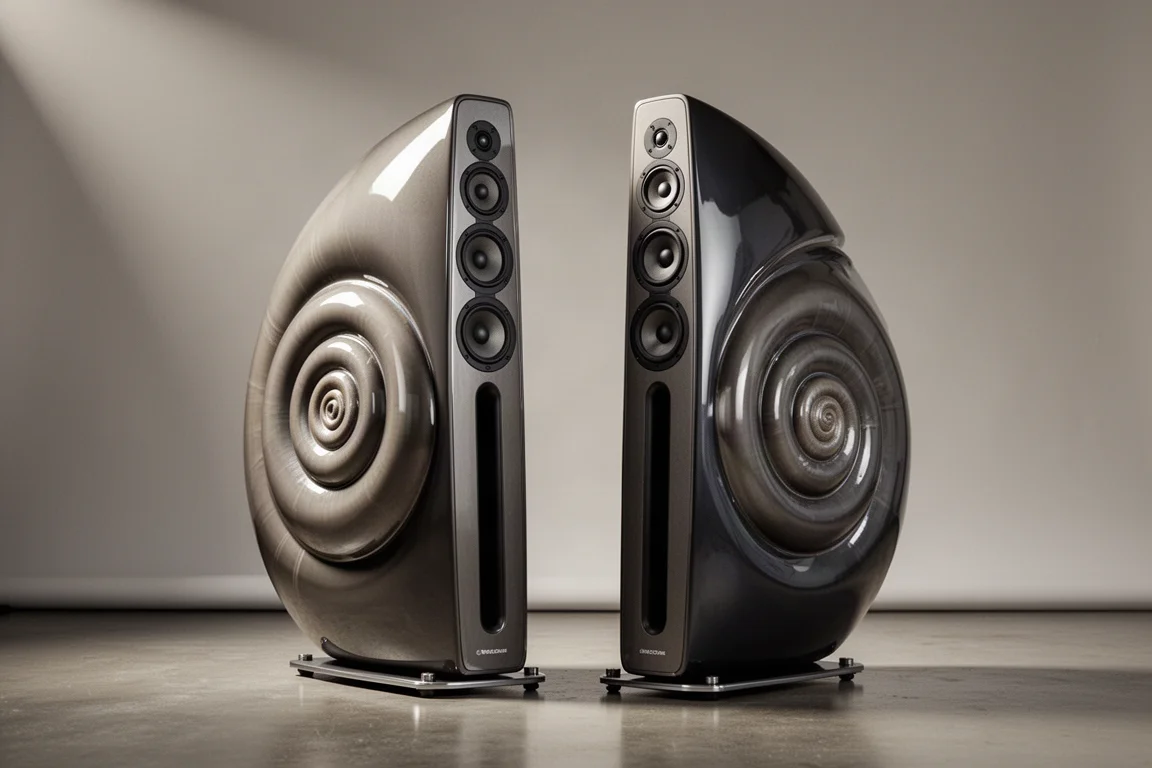
Bowers & Wilkins Nautilus Review: A 31-Year-Old Icon Still in Production
The Bowers & Wilkins Nautilus has been built for 31 years without an acoustic change. Here is what its four-way active design, taper tubes and craftsmanship deliver, and what it asks of an owner.