Aquarium Lighting
Reef Tank LED Spacing: What 2, 3, 4 or 8 Fixtures Really Do Over a 48-Inch Tank
Evenly spaced LED fixtures look tidy over a reef tank, but measured PAR data shows wider spacing flattens the light field and closes the gap between the center hotspot and the tank edges.
Introduction
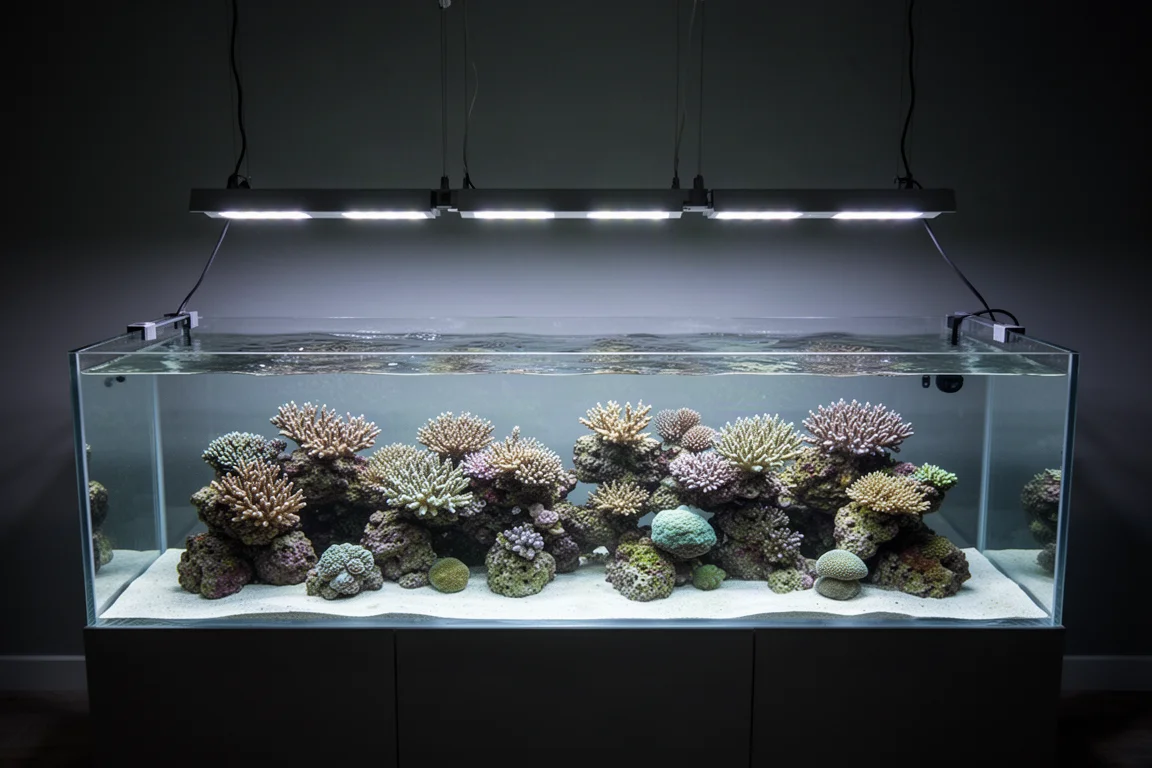
An evenly spaced row of LED fixtures looks tidy above a reef tank. The spacing is symmetrical, the light appears balanced, and nothing looks wasted. Measured PAR output tells a different story.
Across more than 20 tested light configurations over a 48 inch tank, splitting the length into perfectly equal thirds was rarely the layout that produced the flattest light field. In most groups a wider spread beat the balanced placement, and in some cases the difference was large enough to change how much usable light reached the tank edges. This guide breaks the results down by fixture count, then translates them into spacing rules that need no measuring equipment.
The 75% Rule That Defines Even Spread
The benchmark used throughout is straightforward. Compare the average PAR at the left and right tank edges with the average PAR in the dead center. Reach 75% or better at both edges and the layout has effectively removed the center hotspot created where fixture beams intersect, pushing that intensity outward toward the corners.
Anything below that number means the middle of the tank receives meaningfully more light than the ends, which is exactly where many aquarists place demanding corals. The tested configurations were divided into four groups: two fixtures, three fixtures, four fixtures, and a grid of eight compact modules over the same 48 inch tank. Every fixture ran at its own optimal mounting height so the comparison stayed fair.
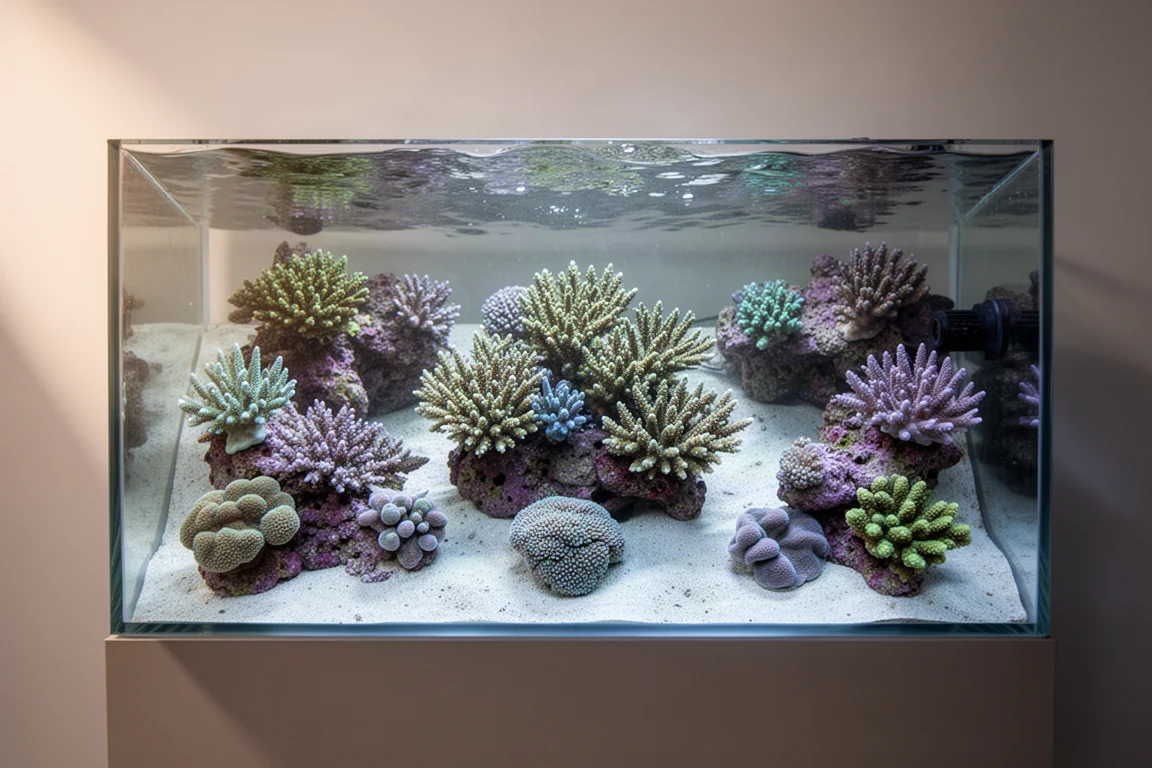
Three of those four groups landed on the same conclusion: balanced, symmetrical spacing is not the layout that wins. The one exception, the four-fixture group, came close enough that an even row is a reasonable starting point.
Orphek Atlantik V4: A Pair That Covers 48 Inches Out of the Box
Two fixtures over a 48 inch tank divide evenly into thirds, centering each unit 16 inches from its nearest edge. Of 11 different two-fixture combinations tested at that spacing, only two met or exceeded the 75% goal without repositioning, and the Atlantik V4 was one of them.
The reason is largely physical. Each unit measures roughly 24 inches across, so a pair spans the full 48 inch length edge to edge before anything moves. Even with a fixture that wide, spreading the pair further still helped, with even coverage climbing as high as 88% across the tank. Anyone who wants full-length coverage without repositioning anything should find that useful.
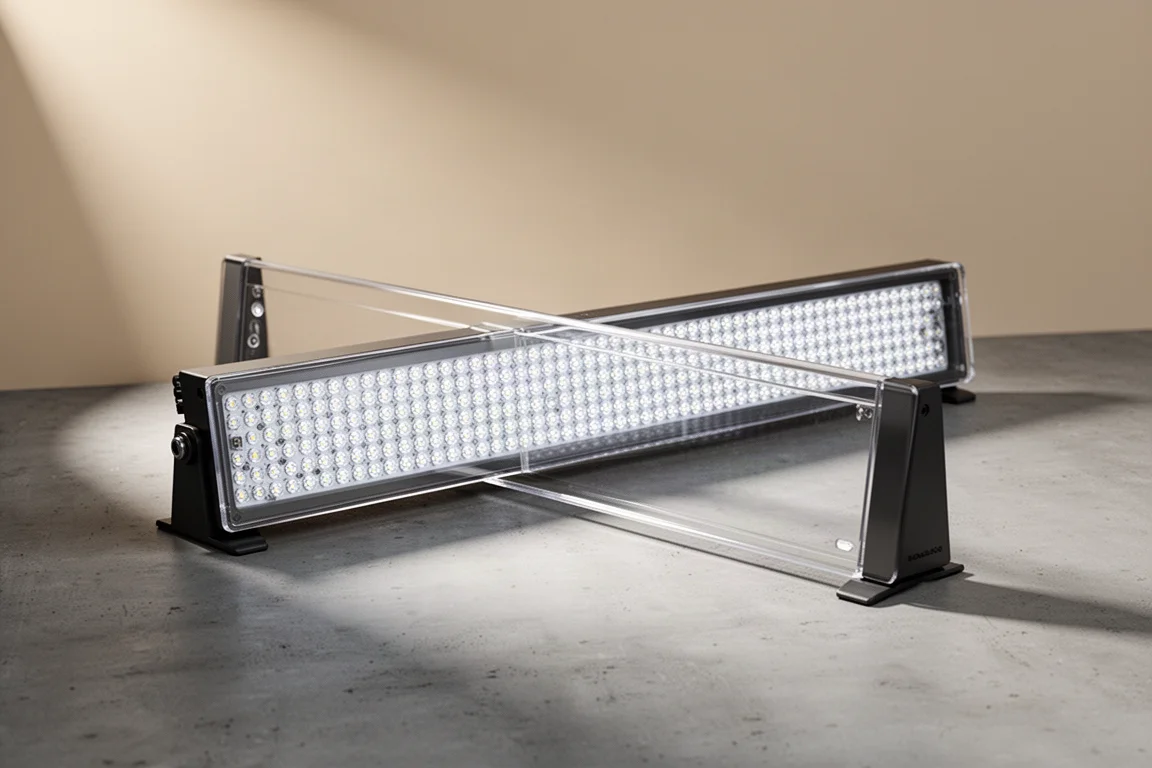
Philips CoralCare: Broad Bodies, Immediate Edge-to-Edge Coverage
The CoralCare was the second of the two pairs that cleared the 75% threshold at balanced 16 inch spacing. Each fixture is about 18 inches wide, and a pair of them blankets the whole 48 inch tank from edge to edge straight out of the box, with no repositioning required.
For a two-light setup on a standard 48 inch tank, that combination of width and spread is the simplest route to flat distribution. This fixture and the Atlantik V4 stand apart from the rest of the two-fixture group, where every other pairing needed an adjustment to reach the target.
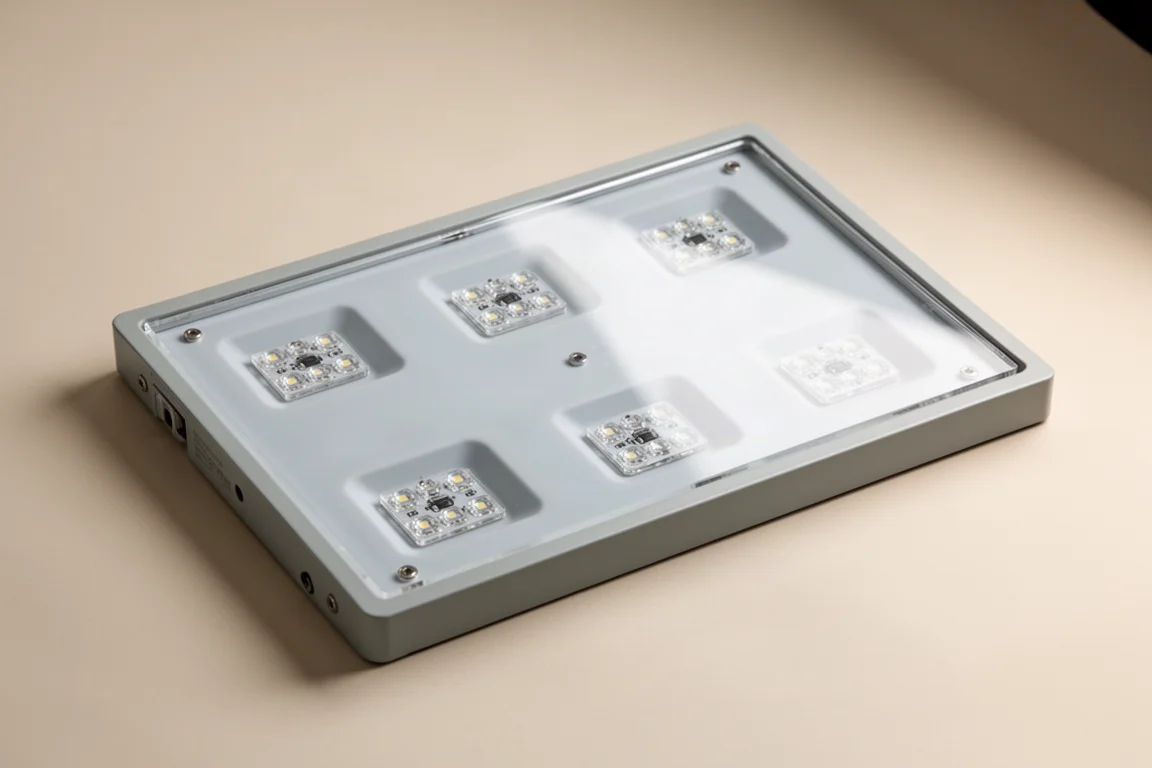
Orphek Compact: The Tightest Beam in the Test
The remaining nine pairs fell short at the balanced 16 inch on-center position, and the Compact pair had the least even spread of the group. The outer edges measured just 45% of the center average PAR, the lowest figure recorded in this dataset.
That result repeated in the three-fixture group, where five brands started at equal 12 inch increments and the Compact again finished lowest at 54% of the center hot spot. It is not a dead end, though. Spreading the outer modules wider, to roughly 9 inches centered from each edge, brought the same fixture to the 75% target in a three-light array. Placement matters more with a narrow beam than with a wide panel.
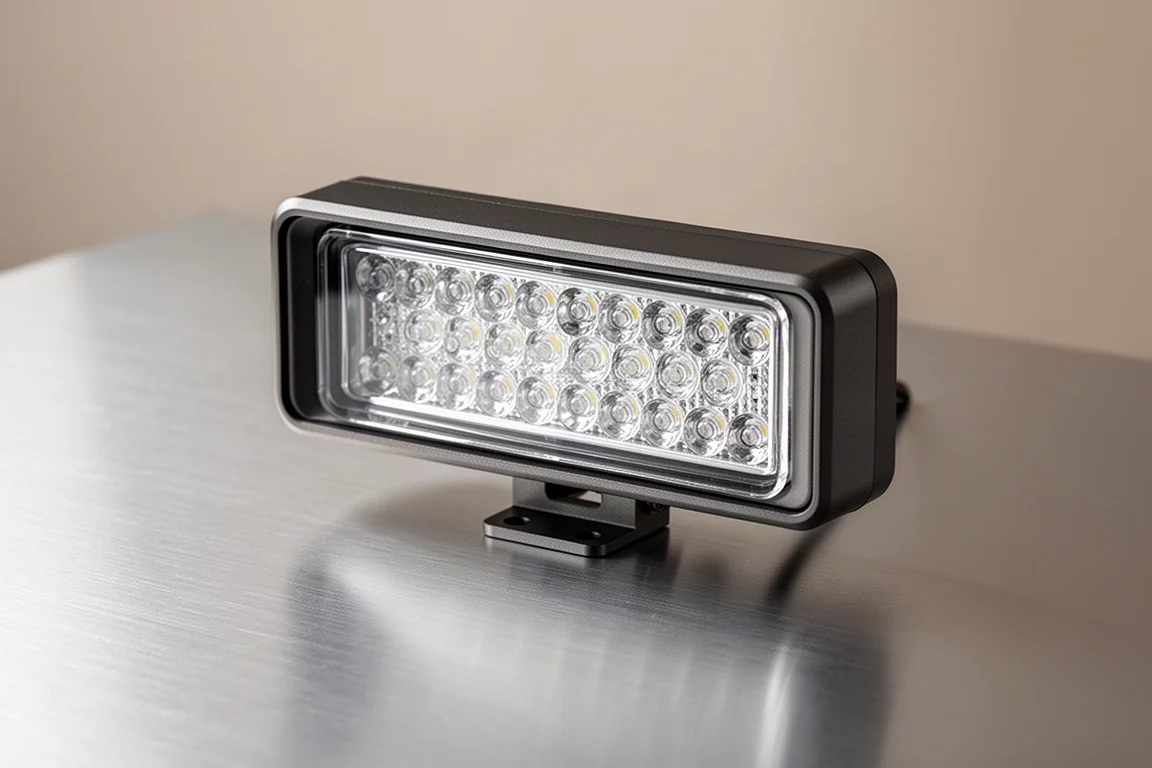
Radion XR15: Closest of the Nine, Still Short at Balanced Spacing
At the even 16 inch spacing, the XR15 pair was the best performer among the nine two-fixture combinations that missed the target, though its edges still measured only 57% of center.
The fix was consistent across every one of those nine combinations. Mounting the fixtures wider, with each centered about 13 inches from its nearest edge, pushed all nine past the 75% goal and delivered even coverage of up to 88%. Nine fixtures with different lenses, LED arrays and module sizes all performed better when spread wider than instinct suggests.
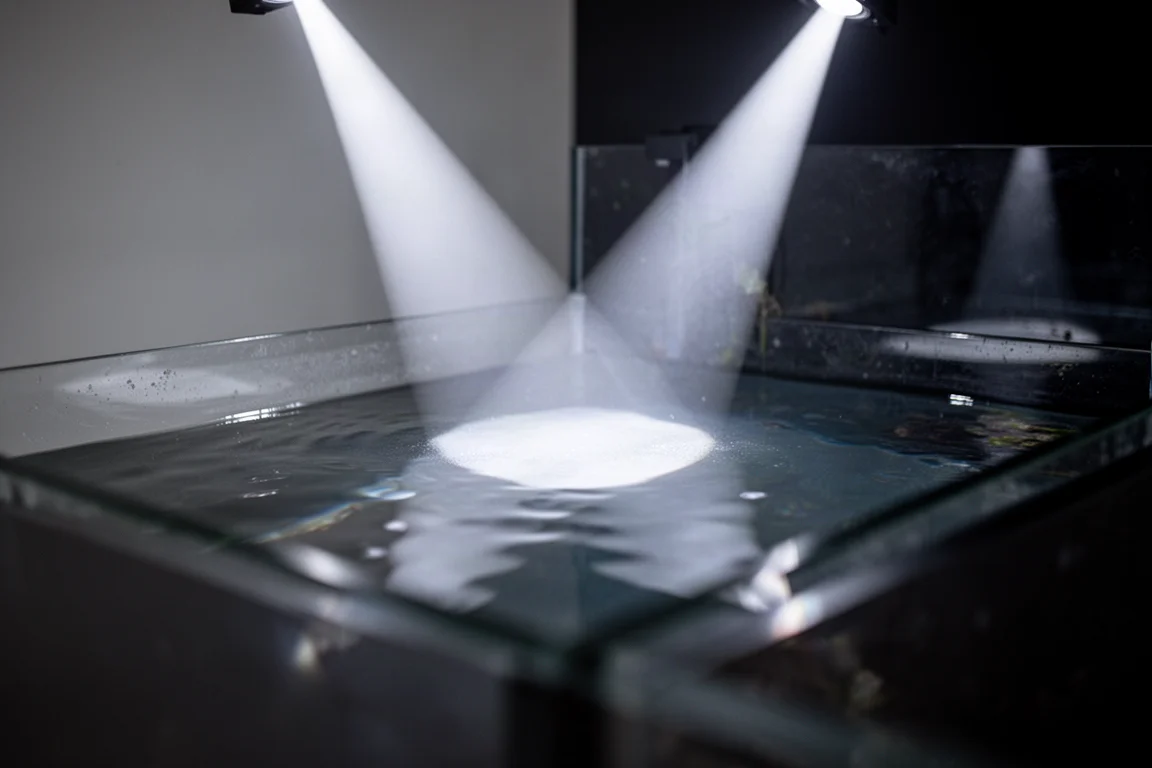
The same fixture also appears in one of the two four-light layouts that reached the top of the range, spaced at 8, 17.2, 17.2 and 8 inches on center. That is a useful reminder that spacing decisions carry over between fixture counts.
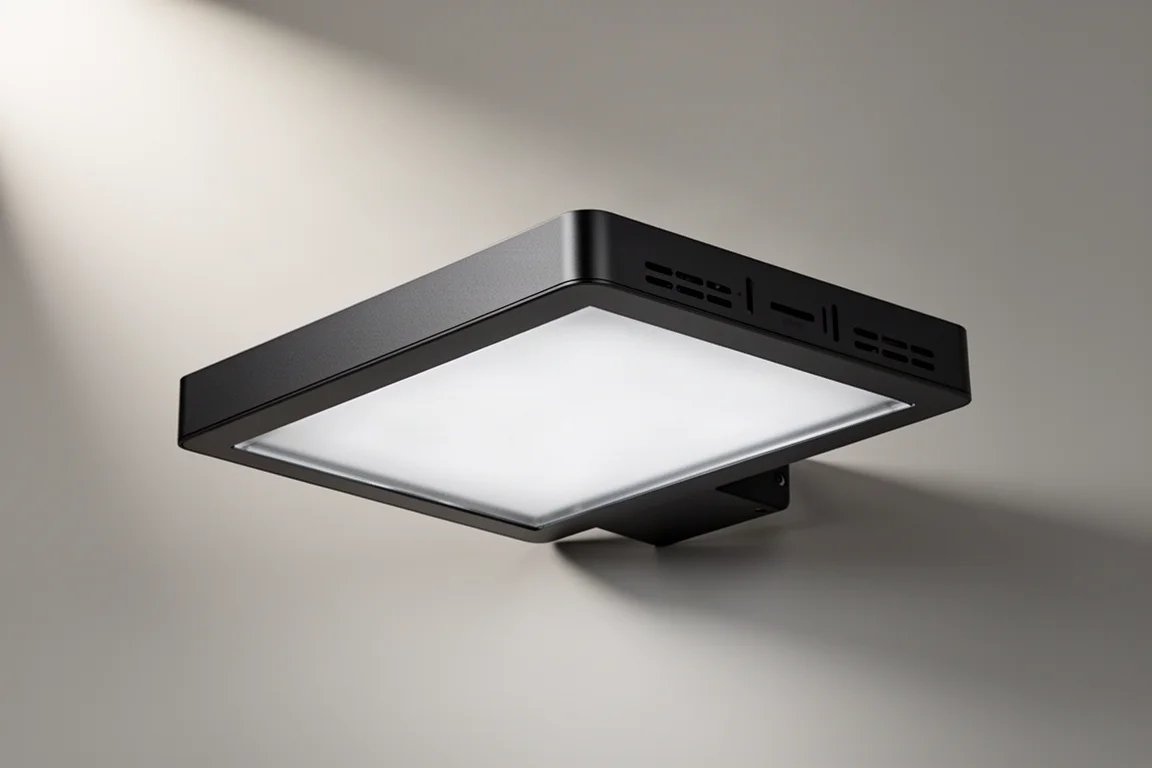
Radion XR30 Gen5: Solid Edges in a Three-Light Row
In the three-fixture group, five brands began at equal 12 inch increments across the 48 inch tank, and the Gen5 XR30 produced edges measuring 62% of the center hot spot. That is better than the lowest result in the group, but still short of the 75% target.
Three fixtures in that group reached the goal once the center module stayed fixed and the outer two moved outward, at a spacing of 10, 24 and 10 inches on center. That wider arrangement generated up to 24% more even distribution of light across the entire tank compared with the balanced starting layout.
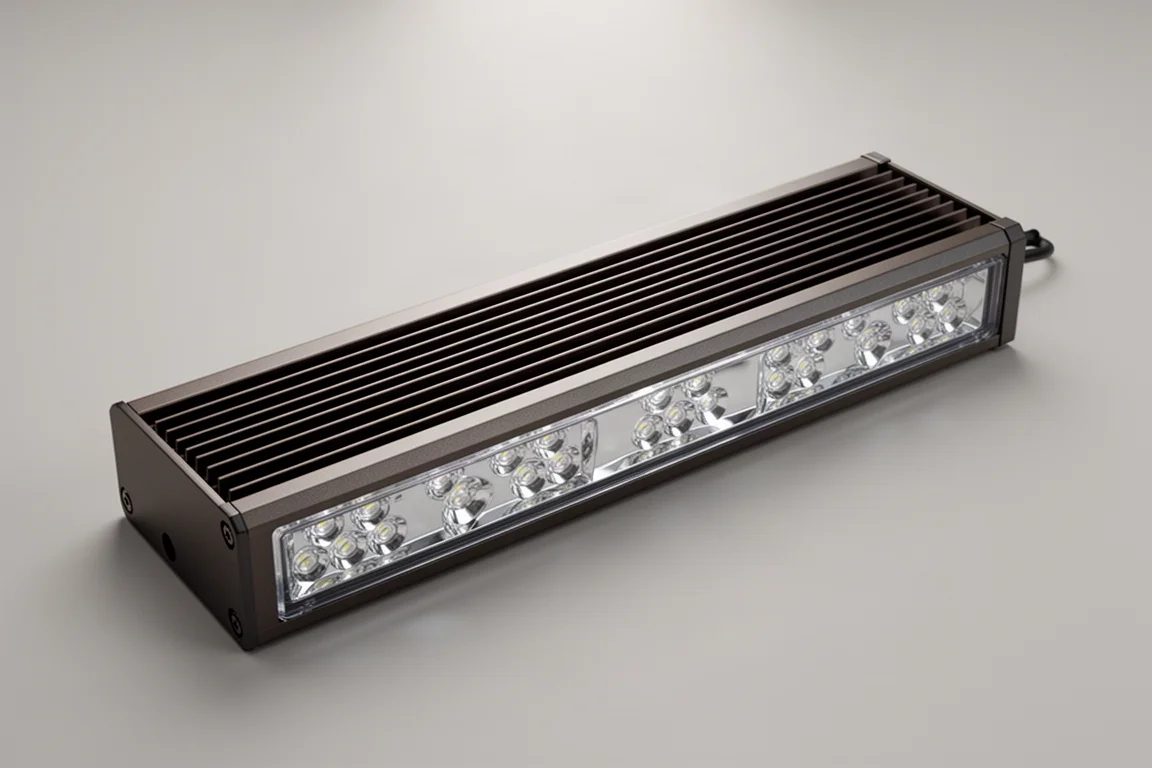
AI Prime: The Widest Spacing in a Three-Light Array
Of the three-light layouts, the AI Primes required the widest spread to reach 75%. Keeping the center module fixed, the left module needed to sit about 8 inches from the left edge and the right module about 8 inches from the right edge. No other fixture in the group demanded that much outward movement.
For anyone running three small modules, that is the key takeaway. A compact fixture with a narrow beam rewards aggressive outward spacing more than a large panel does, and the same module responds well to broader, grid-style mounting when spread across a larger footprint.
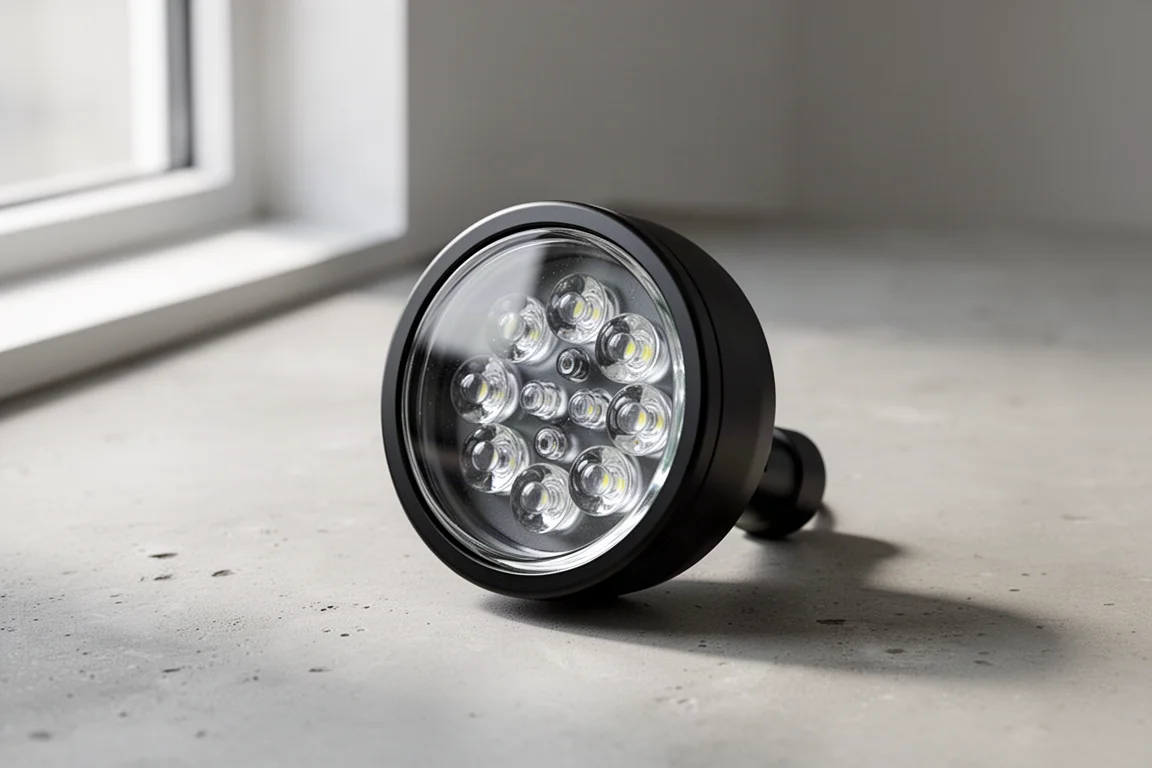
Kessil A360X: Best Result at Balanced Four-Light Spacing
Four modules evenly balanced across a 48 inch tank would sit at 9.6 inch increments. At that spacing, the closest any configuration came to the target was 72%, achieved by four Kessil A360X fixtures. That is near enough to make balanced spacing a workable starting point for a four-light array.
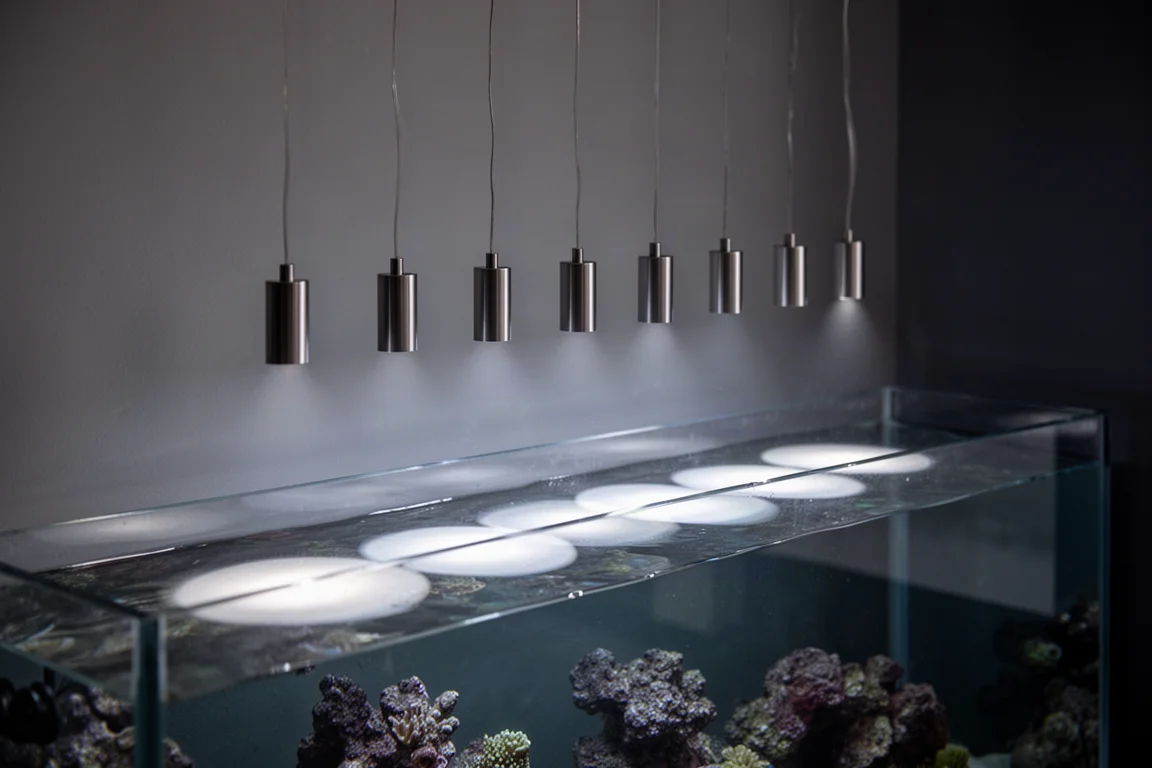
The same fixture appears in one of the two layouts that pushed performance higher, paired with a Radion XR15 at 8, 17.2, 17.2 and 8 inches on center. Those arrangements lifted even coverage from 83% up to 88%.
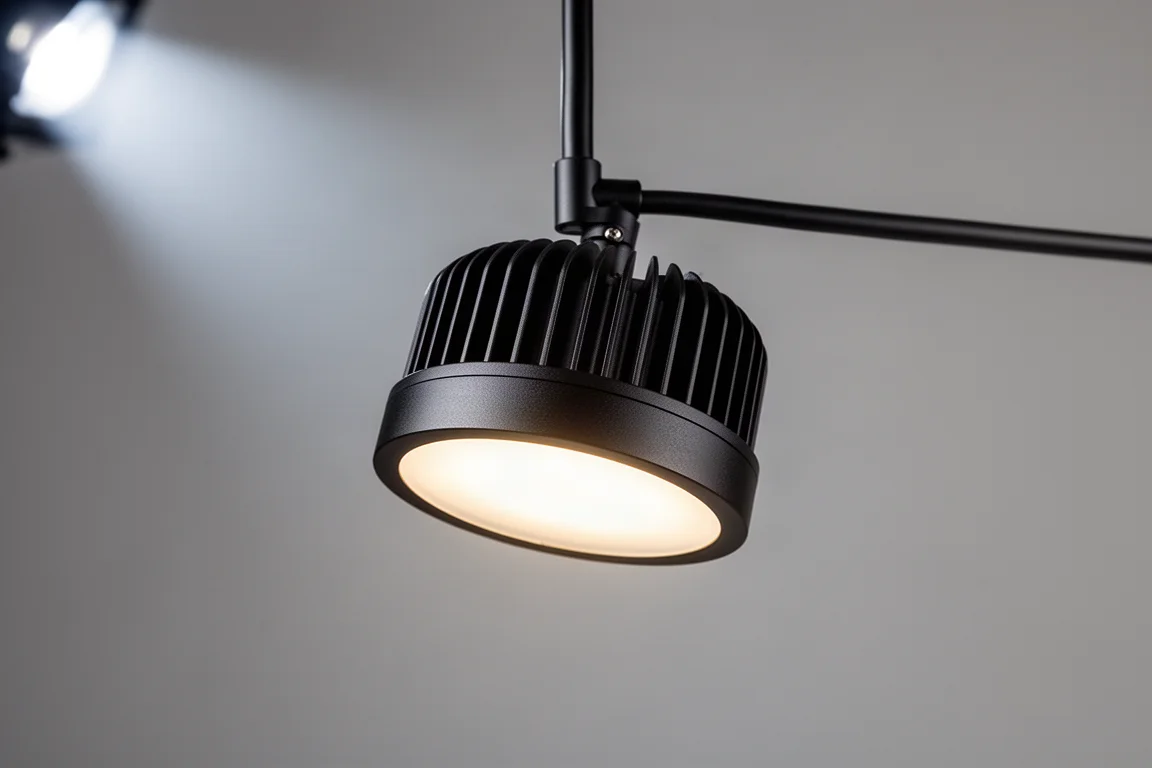
AI Hydra: Zoned Spread in a Four-Light Array
Two AI Hydra configurations made the top group of the four-light test, spaced at 7, 17.2, 17.2 and 7 inches on center. Both spread light from 83% up to 88%, well clear of the 75% benchmark.
The pattern matches every other group: the outer modules move toward the edges, the inner modules move away from each other, and the center hot spot flattens out. Four-light arrays already sit close to optimal when balanced, so this is a refinement rather than a rescue.
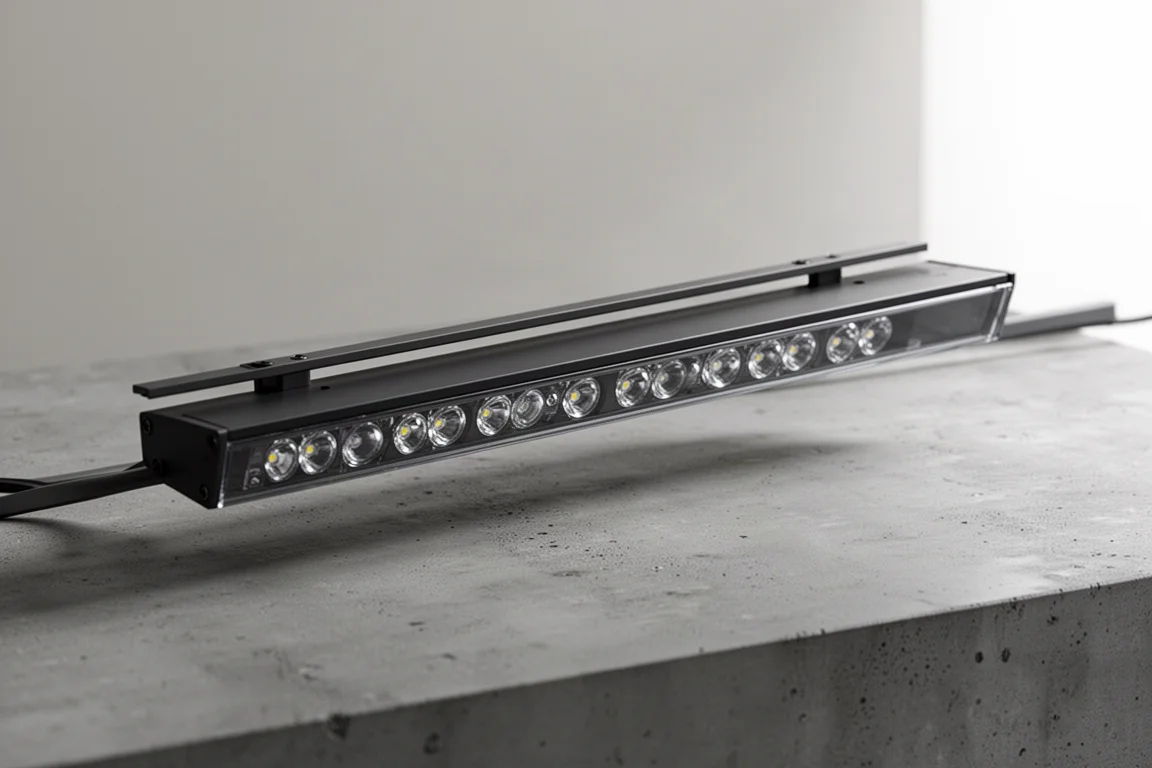
Eight Small Modules: Zoning Instead of Spacing
The most unusual configuration in the dataset used eight AI Prime fixtures over the same 48 inch tank. Rather than testing hundreds of spacing variations, each module was mounted to cover roughly a one foot by one foot square area, and intensity zoning did the rest.
Keeping the outer four modules at 100% intensity and dropping the center four to 40% intensity removed the middle hot spot entirely and produced 84% even spread across the full 48 inches. Zoning individual modules is a tool that spacing alone cannot replicate, because intensity can be raised in specific areas instead of being distributed evenly everywhere.
A Practical Spacing Rule for Two, Three and Four Fixtures
A PAR meter is not required to get better spread performance. A few simple adjustments cover most setups.
Two fixtures: mount them slightly wider than instinct suggests, roughly two to three inches further out on each side. Three fixtures: keep one module centered and move the outer two closer to the edges by about two to three inches each. Four fixtures: balanced spacing is already close to optimal, so this is the one layout where an even row works, though pushing each module slightly away from center trims the remaining hot spot.
How Many Fixtures Does a Reef Tank Actually Need?
Spacing only matters once the fixture count is right, and the count depends on what the tank is meant to grow. As a starting point, two or three fixtures suit an LPS dominated reef, while three or four fixtures suit an SPS dominated reef where higher and more uniform intensity across the whole footprint matters more.
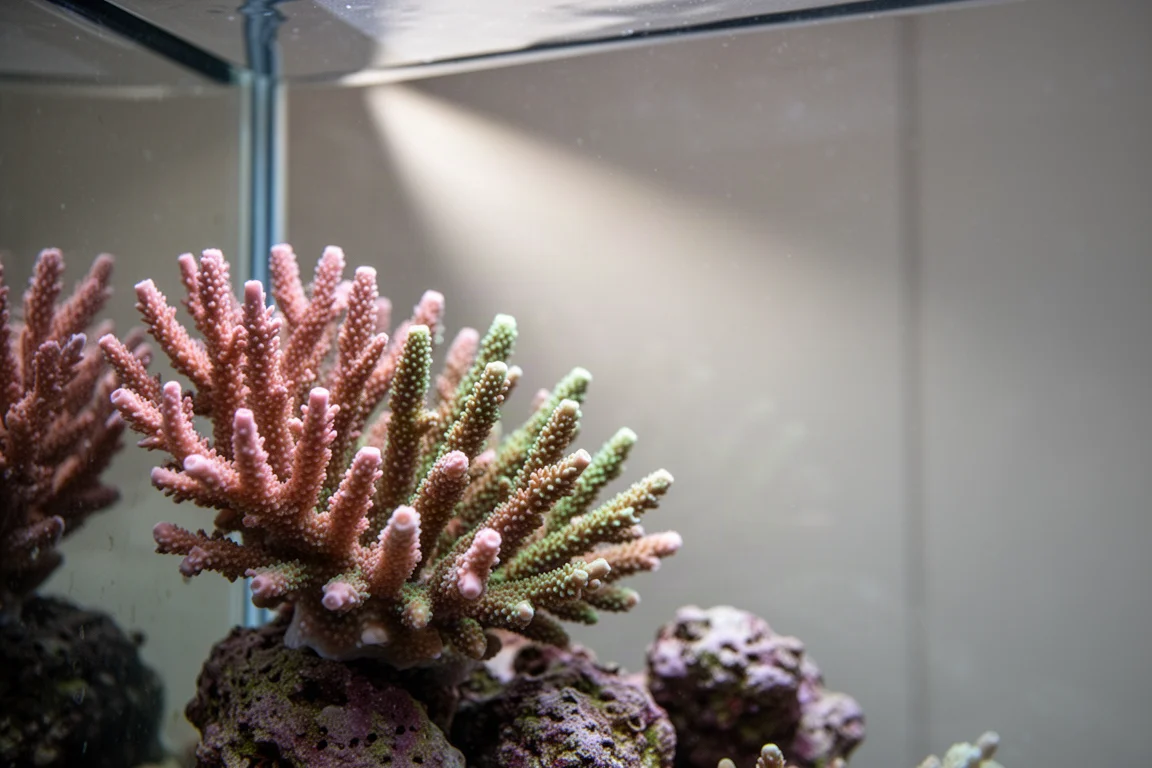
Doubling up on small modules changes the math. A grid of eight compact units can match the coverage of a smaller number of large panels and adds intensity zoning on top, at the cost of more mounting hardware and more settings that can drift out of alignment over time.
Conclusion
Evenly spaced fixtures look better in a photograph than they perform over a reef, at least in the two and three fixture cases. The data points to the same answer each time: move the outer lights wider than feels natural, keep the center stable, and the ends of the tank stop being a light-starved zone.
For a two-light setup, the Orphek Atlantik V4 and the Philips CoralCare already cover a 48 inch tank at balanced spacing, while every other tested pair benefits from being spread to about 13 inches from each edge. Three-light arrays want a fixed center and wider outer modules, and four-light arrays are close enough to optimal that only small refinements are needed. Anyone who would rather buy once for broad, full-length coverage should start with the wide panels, while anyone building a system around compact modules should plan on extra spacing and, where available, intensity zoning.
Further reading
Related Reviews
Aquarium Lighting
AI Blade LED Lights Review: A Versatile Strip Light for Reef Tanks
A practical look at the AI Blade LED line, including the value-focused Grow spectrum, mounting options, app control and PAR performance.
Aquarium Lighting
AI Hydra 32 and Hydra 64 Setup Guide: Mounting Heights, Spacing, and Add-On Lighting
A practical reef lighting guide covering optimal mounting heights for the AI Hydra 32 and Hydra 64, spacing for even coverage, and when add-on lighting is worth it.
Aquarium Lighting
AI Prime Review: A Compact Reef Light That Grows With Your Tank
A small, modular reef aquarium LED that reaches LPS and soft coral PAR levels over a 60-gallon cube, plus the spacing, mounting height, and control habits that make it work.