Aquarium Lighting
AI Prime Review: A Compact Reef Light That Grows With Your Tank
A small, modular reef aquarium LED that reaches LPS and soft coral PAR levels over a 60-gallon cube, plus the spacing, mounting height, and control habits that make it work.
Introduction
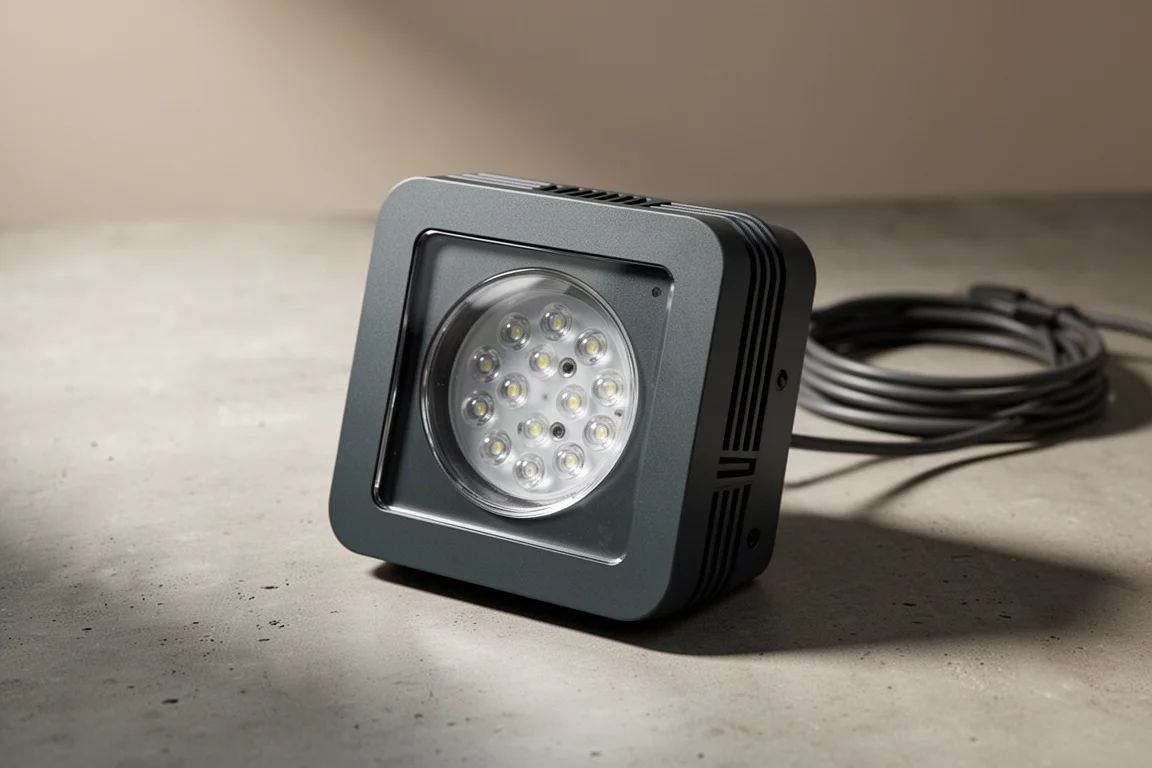
The AI Prime is a small reef aquarium LED that looks almost too compact for anything beyond a nano tank. That assumption is the first and most common mistake. The Prime is built as a modular building block: start with one, add another as the tank grows, and end up with a lighting system that scales with the reef rather than being replaced by it.
That modular design changes how the light should be chosen, spaced, mounted, and programmed. Handle those four things well and a modest-looking fixture can light a mixed reef convincingly. Handle them poorly and even a capable light will leave a bright hotspot in the centre, dim corners, and corals that never quite settle.
Who the AI Prime Is For
The Prime suits reef keepers who want full LED control without committing to a large fixture up front. Measured over a 60-gallon cube at 24 by 24 inches, it reaches PAR levels appropriate for LPS and soft coral tanks, and the hardware sits in the roughly 200 dollar range. That makes it a practical first light for a new reef and a sensible addition to an established system.
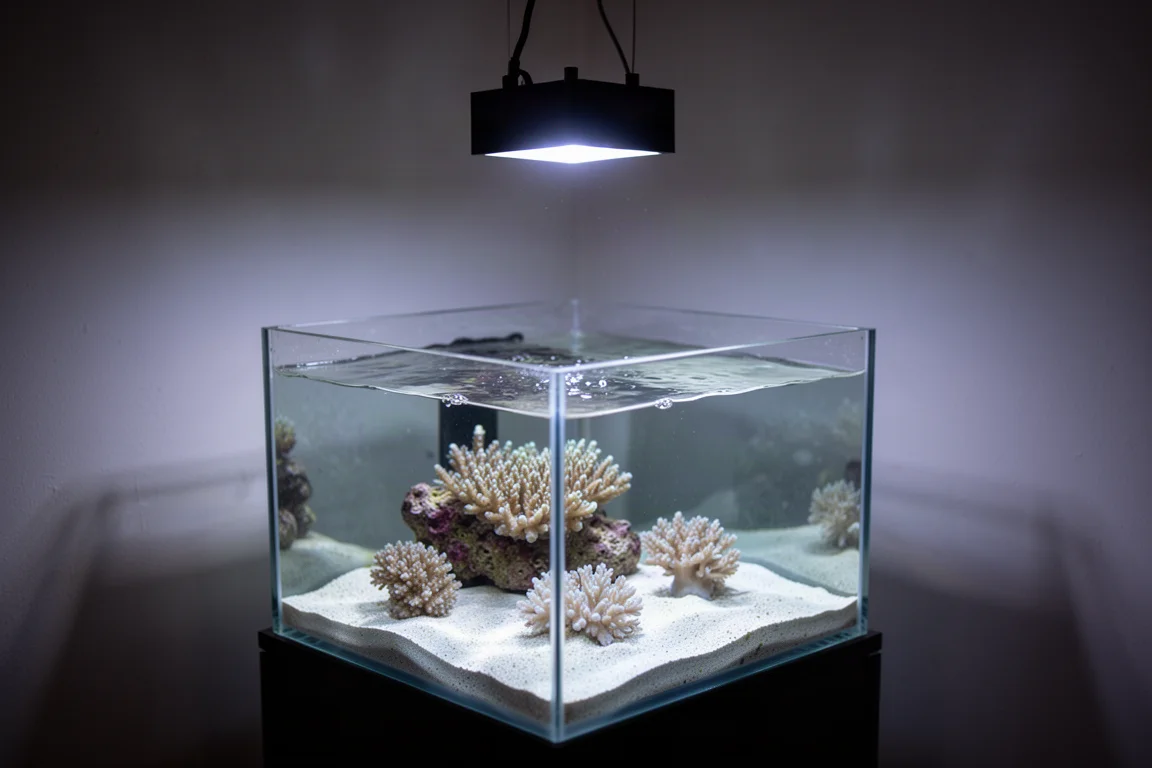
It also rewards planning. Because each unit runs independently, an owner can begin with a single Prime and add a second, third, or fourth as the tank’s demands increase, tightening the spacing between units as the collection grows. Judged by sheer unit sales, the Prime is among the most popular reef lights on the market, and that popularity is largely a reflection of its flexibility rather than any single headline specification.
Main Strengths: Coverage, Control, and Room to Grow
The strongest argument for the Prime is not one specification but the way multiples of it behave together. A single large fixture with several clustered LED pucks produces one intense column of light. Several smaller units placed apart let light arrive from different angles, which softens shadows across the rockwork and creates an even blanket of illumination that is difficult to replicate with one central cluster.
That is why, in many setups, two smaller units are a better choice than one larger multi-cluster fixture. The same logic applies to filling gaps in coverage, where adding another Prime and spreading the sources out often beats bolting on a separate strip of supplementary lighting.
Getting Spacing and Mounting Height Right
Even distribution is not the same as even spacing. On a four-foot tank, the instinct is to place one unit over each two-foot half and call it done. That arrangement lets the two beams intersect in the middle, producing a bright hotspot at the centre and noticeably dimmer areas at the ends. Spreading the units further apart raises PAR at the edges, lowers the centre hotspot, and evens out coverage across the whole tank.
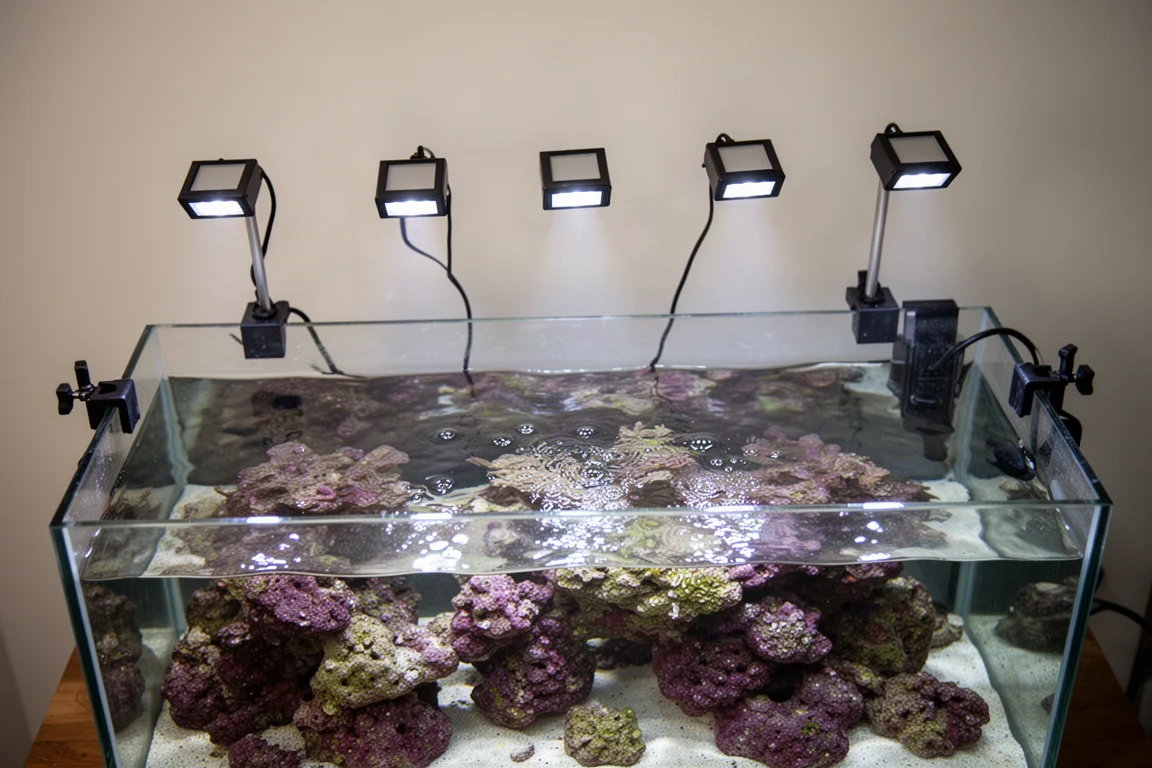
Mounting height matters just as much. Raise the light too high and usable output spills over the sides of the tank; lower it too far and the beam concentrates into something close to a focused column. There is a height that balances spread against spill, and for this light it sits at roughly 12 inches above the tank. It is worth settling on that height before buying mounts or building a canopy, because the fixture only performs as intended when it has room to sit there.
Spectrum, Control, and the Case for Stability
The Prime gives independent control over each of its LED channels, which is both its greatest strength and the source of another common mistake. Adjusting channels one at a time and guessing at a spectrum is rarely productive. A two-finger pinch shortcut scales every channel up or down in unison while preserving the ratio between them, so a schedule that already looks right can be raised or lowered as a whole without recalculating individual percentages.
Two problems tend to follow blind tuning. The first is PAR. Corals that look dull may actually be receiving too much light, and adding output stresses them further, while corals receiving too little often stretch or fade slowly. Neither is easy to judge by eye, which is why measurement matters more than tinkering.
The second is colour chasing. A vivid tank on a forum is vivid because those corals carry that colour, not because a particular spectrum created it. More blue light on a brown coral generally produces a bluer brown coral. What actually moves a coral from dull to colourful is stability: settle on a sensible spectrum, then leave it alone.
Things to Consider Before Buying
A single unit is a starting point rather than a complete solution. It reaches suitable PAR levels for LPS and soft coral tanks over a 60-gallon cube, but larger systems, or tanks leaning toward demanding SPS colonies, will need more than one fixture to cover the footprint properly.
Mounting height is part of the shopping decision, not an afterthought. Roughly 12 inches of clearance above the tank is the target, and a low fixed canopy can work against the light before it is even switched on. Spacing takes experimentation too, since the arrangement that produces the most even coverage often looks distinctly uneven to the eye.
Channel-by-channel control is genuinely useful, but it is easy to overuse. Without measurement, it becomes tempting to correct every coral problem by adjusting the light, which usually makes the underlying issue harder to diagnose.
How to Dial In the Prime for Your Tank
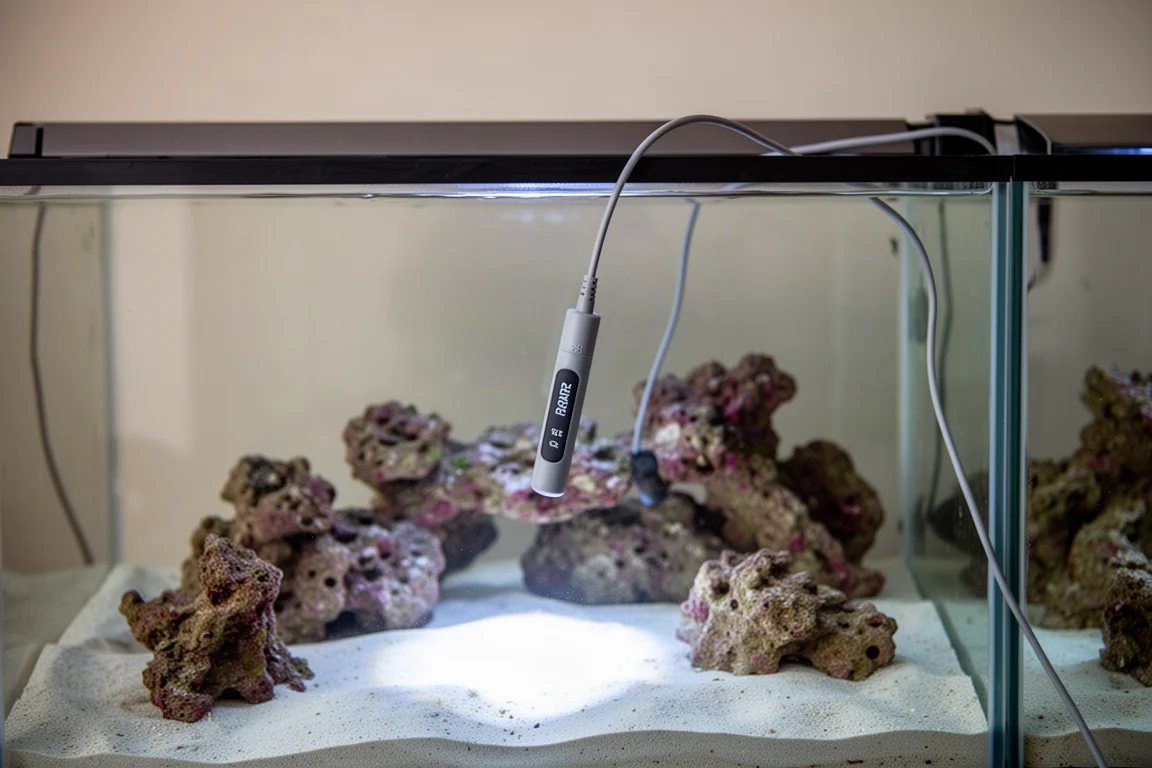
The most reliable path is measurement. Renting a PAR meter for around 70 dollars and mapping the tank gives a clear picture of where output is sufficient and where it is not, and it turns the light’s channel control into a tool rather than a guess. Setting the fixture to the ranges the target corals thrive in and then leaving it there produces better results than any amount of switch-flipping.
Shared schedules are a useful shortcut when a PAR meter is not on hand. Owners running similar tank types publish their Prime schedules, and starting from a proven setup is far more sensible than building a spectrum from scratch. Whichever route you take, the goal is a stable spectrum the tank can settle into over the long term.
Buying Advice
The Prime makes most sense for keepers who value flexibility. One unit covers a nano or soft coral tank well, and additional units can be added later rather than replacing the fixture outright. That upgrade path is the main reason to choose a modular light over a single larger unit: the budget can be spread across time, and the system expands as the tank’s needs grow.
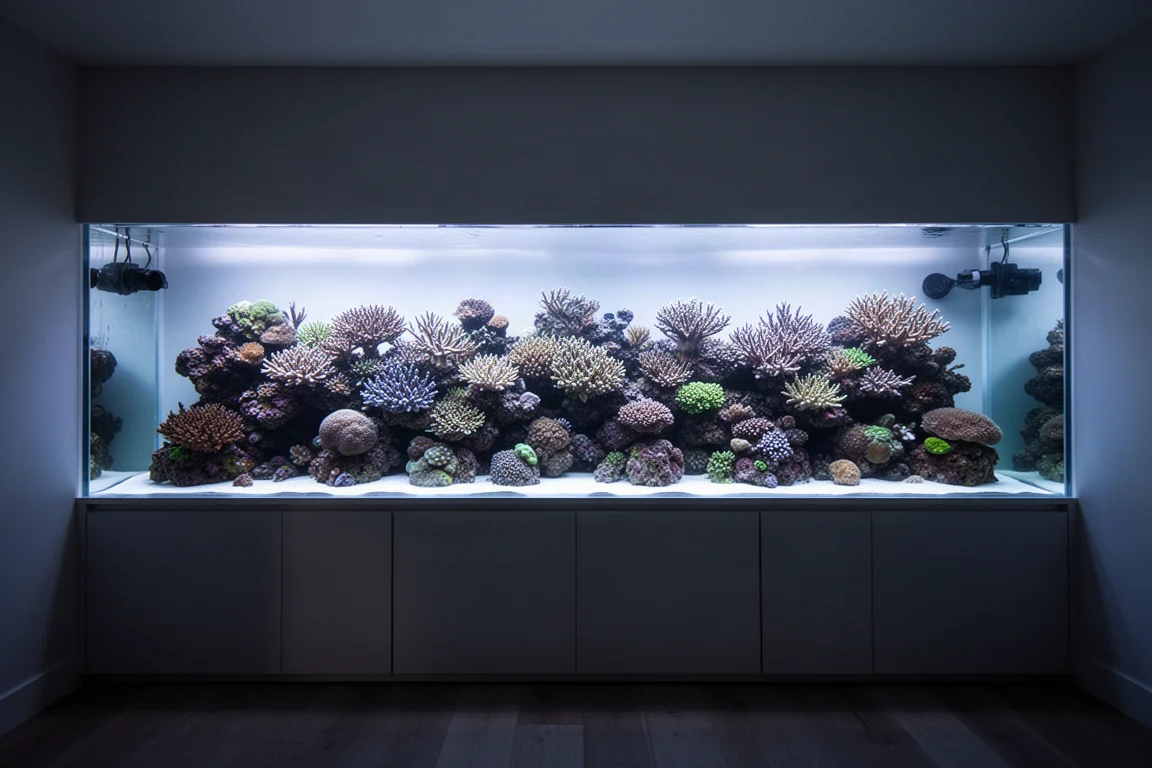
When adding units to an existing setup, mixing generations is entirely workable. Older units can sit in the middle of the arrangement, where their beams intersect with newer, slightly brighter ones at the edges. The light does not have to be brand new across the board to be effective, which keeps the cost of expanding a reef manageable.
Conclusion
The value of the AI Prime comes down to how it is used: a small light that becomes a system once you add more of them, spaced thoughtfully, mounted at roughly 12 inches, and programmed once to a stable spectrum. The mistakes around it are predictable ones, from assuming it is only for nano tanks to chasing colour with the channel sliders. Avoid those and a fixture in the 200 dollar range can carry a soft coral or LPS reef, and grow with it from there.
Product link
View more details for AI Prime
This product is mentioned in the review. Check the specifications, options, and compatibility before buying.
View more details for AI PrimeFurther reading
Related Reviews
Aquarium Lighting
AI Blade LED Lights Review: A Versatile Strip Light for Reef Tanks
A practical look at the AI Blade LED line, including the value-focused Grow spectrum, mounting options, app control and PAR performance.
Aquarium Lighting
AI Hydra 32 and Hydra 64 Setup Guide: Mounting Heights, Spacing, and Add-On Lighting
A practical reef lighting guide covering optimal mounting heights for the AI Hydra 32 and Hydra 64, spacing for even coverage, and when add-on lighting is worth it.
Aquarium Lighting
Aqua Illumination Blade Grow and Glow: A Beginner-Friendly Reef Tank Lighting Setup
A practical look at the Aqua Illumination Blade strip LEDs, why three fixtures reduce shadowing, and how to set intensity and schedule for a new reef tank.