Aquarium Lighting
AI Hydra 32 and Hydra 64 Setup Guide: Mounting Heights, Spacing, and Add-On Lighting
A practical reef lighting guide covering optimal mounting heights for the AI Hydra 32 and Hydra 64, spacing for even coverage, and when add-on lighting is worth it.
Introduction
Reef lighting is one of the few areas of the hobby where small setup decisions show up visibly months later. The AI Hydra 32 and AI Hydra 64 are widely used LED fixtures, and most of the frustration people run into comes down to mounting height, spacing, and intensity control rather than the hardware itself.
This guide collects the practical lessons: where each fixture sits best above the water, how to space multiple units, when add-on lighting earns its place, and how to dial intensity without guessing.
What Makes a Good Reef Light Setup
Three variables matter most: mounting height, spread across the tank, and the ability to adjust intensity accurately.
Mounting height determines the shape of the light cone. Mount a fixture too high and the cone spills past the edges of the tank. Mount it too low and the cone narrows into an intense beam that creates hot spots on the rockwork below.
For a 24 by 24 inch area, the optimal range is roughly 12 to 14 inches above the water. The AI Hydra 64 is best positioned at around 12 inches, while the AI Hydra 32 works well at about 14 inches. Planning for those numbers before you buy mounting hardware avoids a lot of rework.
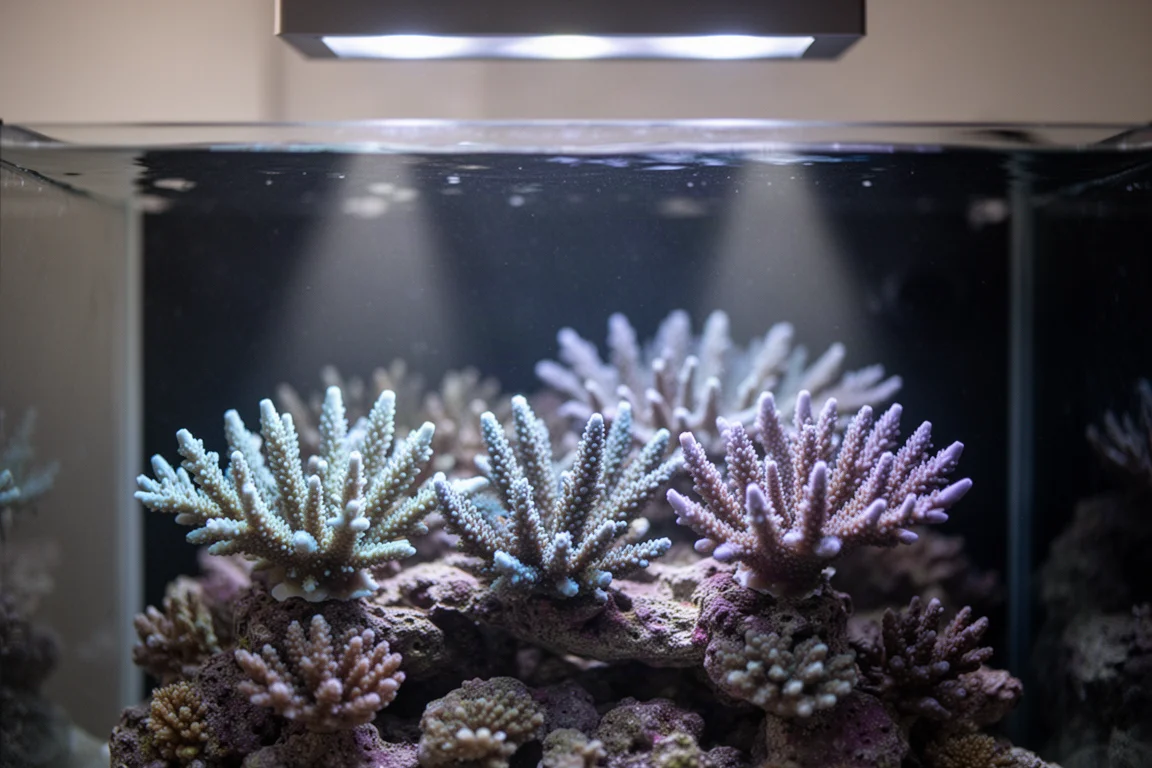
Spacing matters just as much. Symmetrical placement looks tidy above the tank, but even spacing is not always the best way to distribute light. Testing shows that spreading fixtures further apart often produces a more even result than lining them up at equal intervals.
AI Hydra 32: The Two-Puck Workhorse
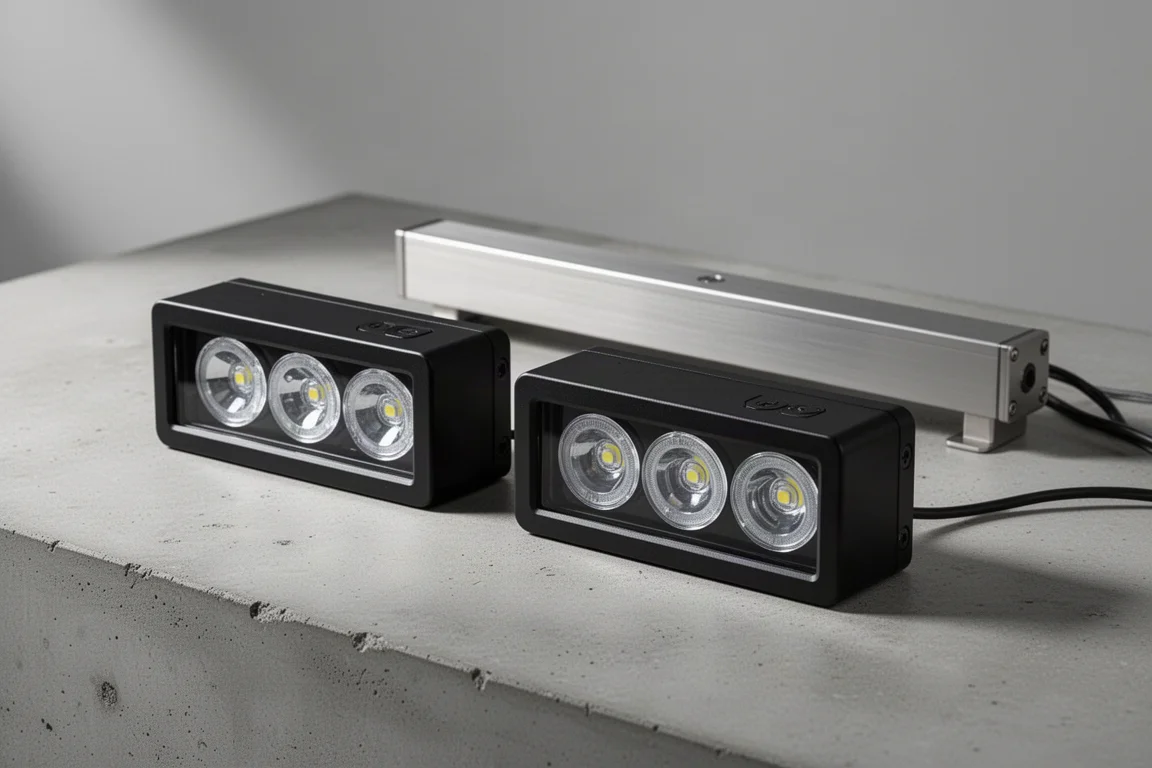
The AI Hydra 32 uses two LED pucks and is the more popular of the two fixtures. It suits reefers who want to spread light across a wider footprint rather than concentrate it in one place.
That preference is practical rather than aesthetic. Two or more Hydra 32 units positioned apart create intersecting light paths, which reduces shadowing across the aquascape. For many tanks, splitting output across four smaller fixtures delivers better coverage than running one or two larger ones, even when the total amount of light ends up roughly similar.
The trade-off is planning. More fixtures mean more mounting points, more careful positioning, and a slightly longer setup process. The payoff is more even light and fewer dark corners.
AI Hydra 64: More Power, Different Planning
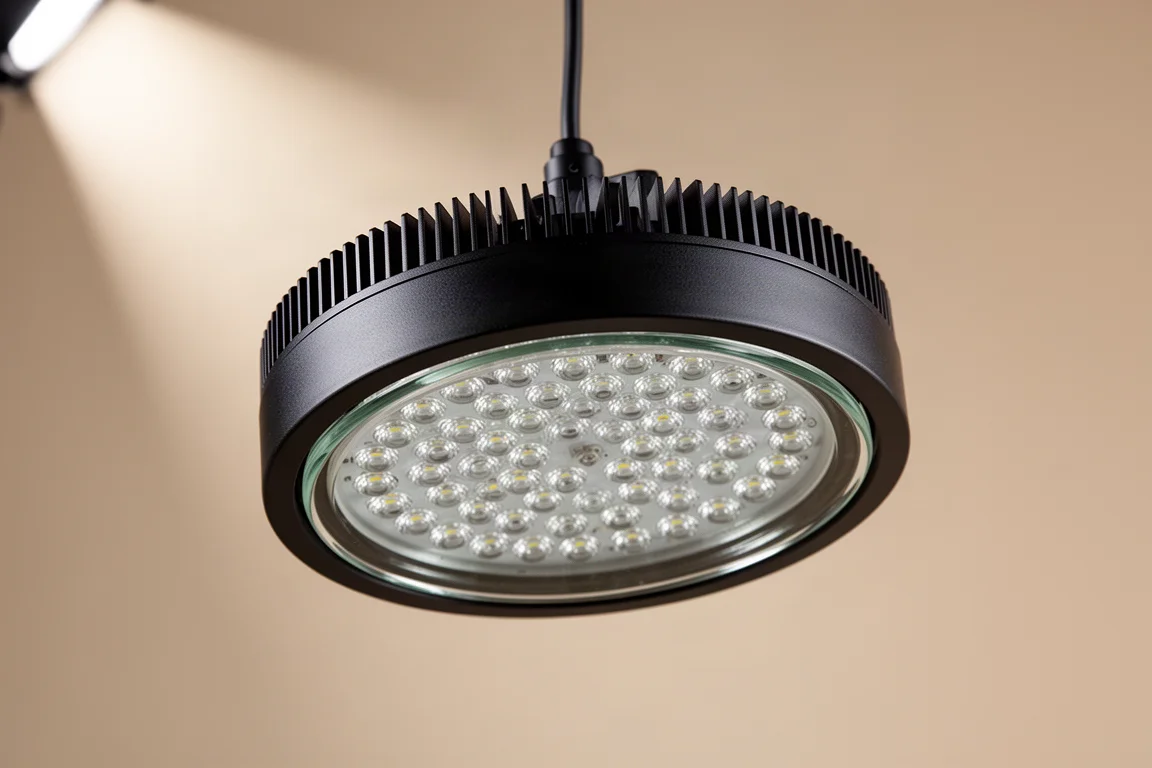
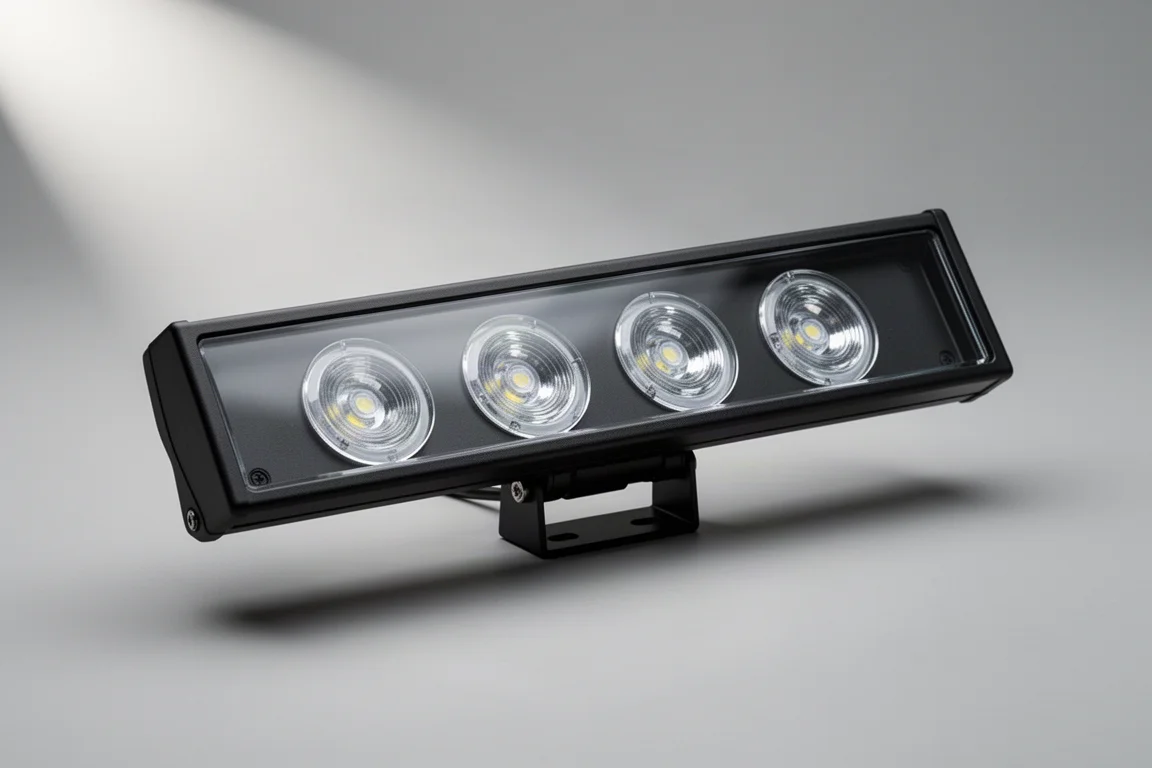
The AI Hydra 64 carries four LED pucks and suits setups where fewer, higher-output fixtures make sense. Its recommended mounting height is around 12 inches, slightly lower than the Hydra 32.
Its rectangular footprint can be mounted either parallel or perpendicular to the front of the tank. Orienting it front to back gives more even coverage across the full depth of the aquarium. For LPS tanks or large, lightly stocked layouts, mounting the fixture a little higher and running it parallel to the front is a reasonable compromise.
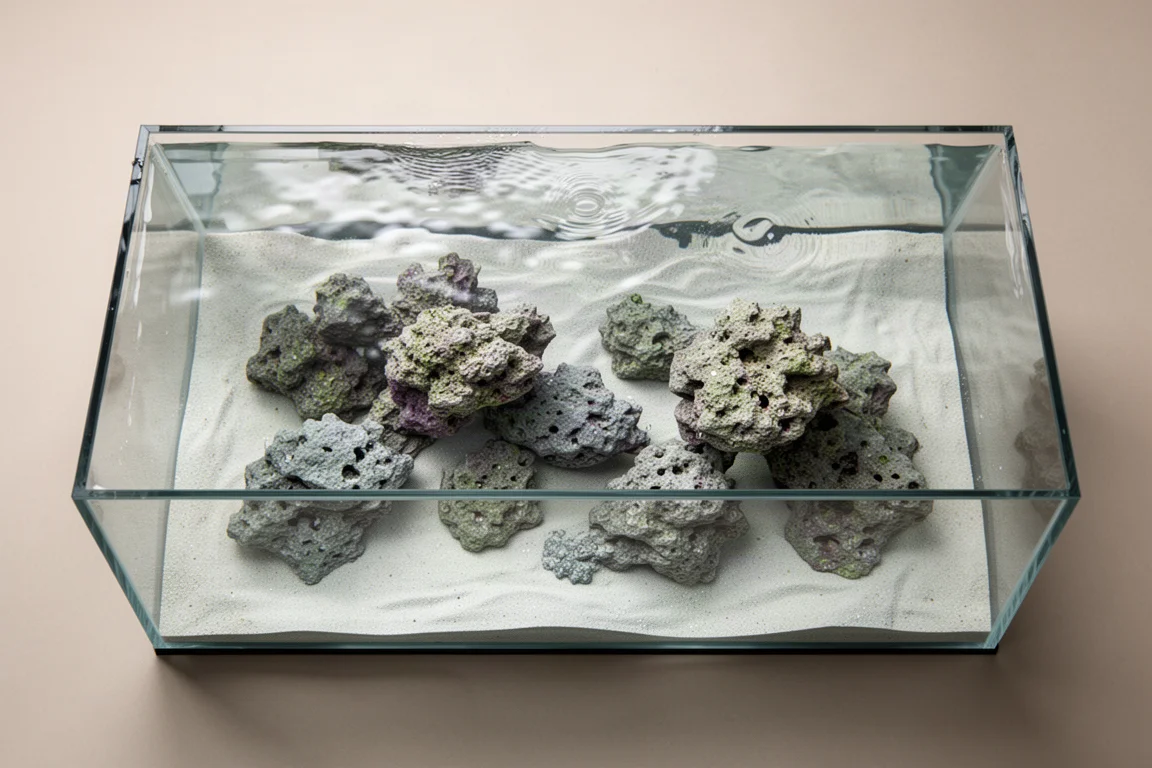
Spacing deserves attention with this fixture. Two Hydra 64 units placed directly side by side create a hot spot where the light cones intersect in the centre, along with darker areas toward the sides of the tank. Moving the two fixtures further apart evens out the spread noticeably. With a single unit, centring it over the area you want to illuminate remains the right approach.
Reef Brite XHO Add-On Kit: Fill Light and Blue Pop
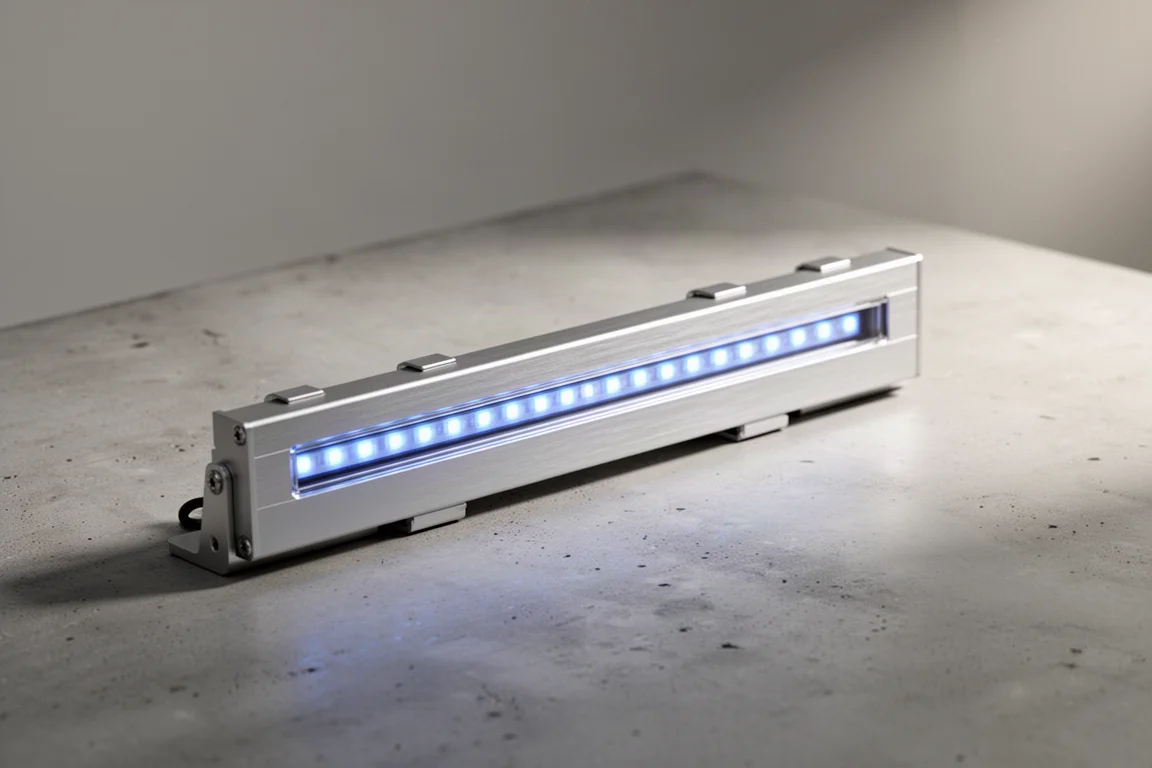
The Reef Brite XHO add-on kits are made specifically for the Hydra 64 and the Hydra 32. They work as a supplement to an existing fixture rather than a replacement for it.
Two benefits stand out. Added fill light softens the shadows a directional LED fixture can cast, which matters most in tanks with dense rockwork and overhangs. The kits also add peak blue spectrum, which helps coral colour stand out under normal viewing.
For reefers who already own a Hydra and want more even coverage without buying another full fixture, these kits are a straightforward upgrade path. They also address the spotlight effect that appears when a fixture is mounted closer to the water than recommended.
Aquatic Life T5 Hybrid: Mixing Mounting Heights
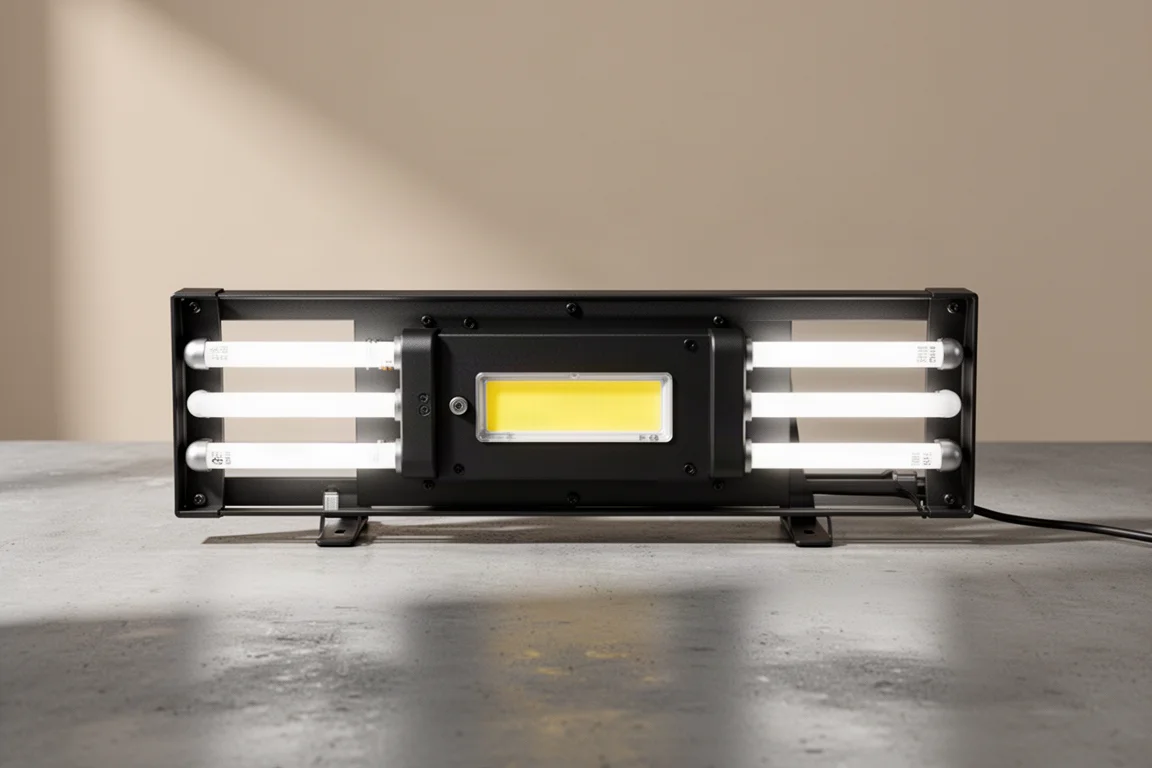
The Aquatic Life T5 Hybrid combines T5 fluorescent tubes with LED fixtures, and it has a much lower optimal mounting height, around 8 inches. That creates a conflict: the hybrid wants to sit close to the water, while the Hydra fixtures want 12 to 14 inches.
Splitting the difference at roughly 10 inches is the practical answer. Shorter mounting plates on the end of the hybrid are another option, since they allow the fixture to be lifted higher and bring the two ideal heights closer together.
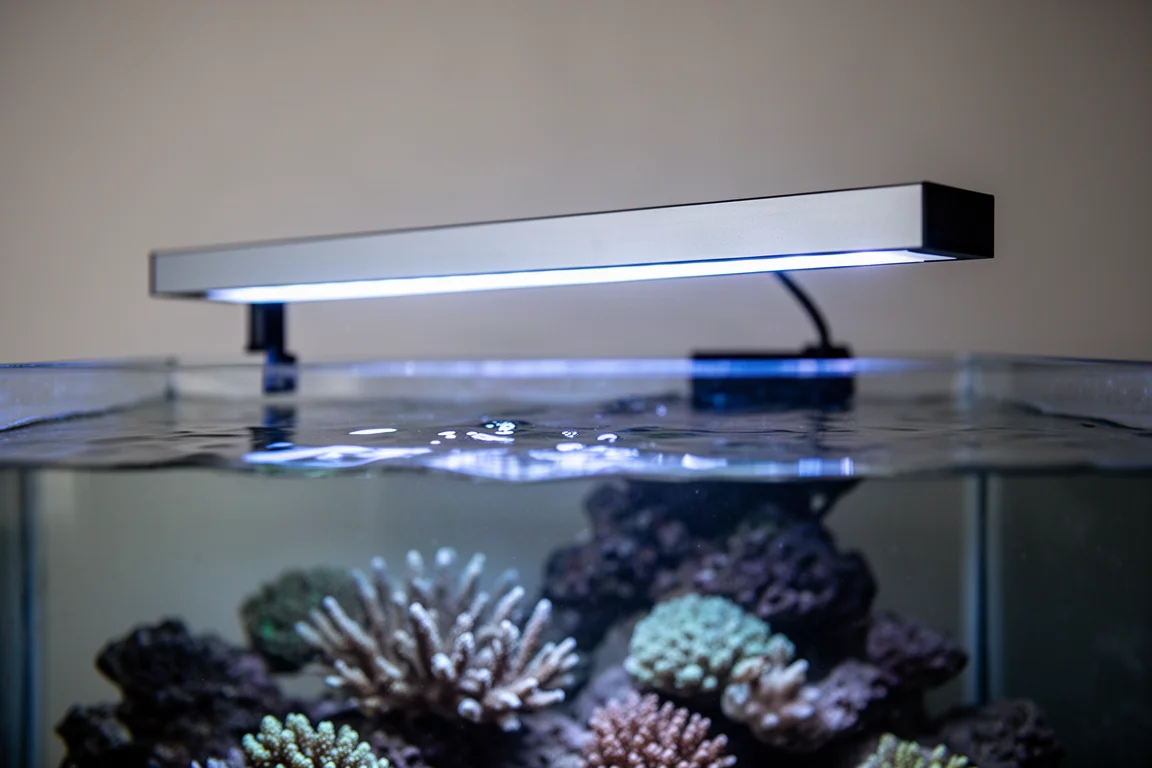
The pairing is appealing for SPS-focused tanks. The Hydra provides the primary light, the shimmer, and the high-definition look, while the T5 tubes supply broad fill across the tank. Settling the height question first is what makes the combination work together rather than compete.
Mounting, Spacing, and Control Tips That Apply to Both
Mounting hardware is a genuine consideration. The Hydra fixtures are built to be mounted at 12 to 14 inches, and most mounting options support that height. A bendable arm is fine for a single fixture, but with two or more it becomes difficult to bend each one identically, and mismatched arms are visible above the tank. Fixed mounting solutions tend to look cleaner in multi-fixture layouts.
Intensity control is simpler than it first appears. On the main display, placing two fingers on the screen and scrolling adjusts every channel up or down together, which preserves the overall spectrum balance while changing total output. Individual channels can still be tuned separately when you want to fine-tune the mix.
A PAR meter removes most of the guesswork. Aquascape, water clarity, and coral placement all change how much light actually reaches the corals, so settings that work in one tank do not transfer automatically to another. Measuring takes the uncertainty out of the process and gives you a number to adjust toward.
Overall Buying Advice
Choose the AI Hydra 32 when you want to spread light across a wide footprint with multiple fixtures and are comfortable with a little more planning. Choose the AI Hydra 64 when fewer, higher-output units suit your tank, and be deliberate about spacing if you plan to run two of them.
If you already run a Hydra, the Reef Brite XHO add-on kit is the lower-commitment way to add fill light and blue spectrum without changing your existing setup. If you want a hybrid look with broad fluorescent fill, the Aquatic Life T5 Hybrid is worth planning around, provided you settle the mounting height question before you install it.
Whichever route you take, budget for a PAR meter and take the time to set intensity properly. Lighting is one of the few variables in a reef tank that can be measured and controlled precisely, and getting it right early saves months of adjustment later.
Conclusion
The AI Hydra 32 and AI Hydra 64 are capable fixtures, and most of the difference between a frustrating setup and a successful one comes down to three decisions: mounting height, spacing, and intensity.
Mount the Hydra 64 near 12 inches and the Hydra 32 near 14 inches, spread multiple fixtures further apart than looks symmetrical, and use a PAR meter rather than your eye to set output. If you want more fill and blue spectrum, the Reef Brite XHO add-on kits are designed for exactly these fixtures. If you prefer a hybrid approach, the Aquatic Life T5 Hybrid works well when you split the difference on mounting height at around 10 inches.
Get those basics right and lighting stops being the variable that holds a reef tank back.
Further reading
Related Reviews
Aquarium Lighting
AI Blade LED Lights Review: A Versatile Strip Light for Reef Tanks
A practical look at the AI Blade LED line, including the value-focused Grow spectrum, mounting options, app control and PAR performance.
Aquarium Lighting
AI Prime Review: A Compact Reef Light That Grows With Your Tank
A small, modular reef aquarium LED that reaches LPS and soft coral PAR levels over a 60-gallon cube, plus the spacing, mounting height, and control habits that make it work.
Aquarium Lighting
Aqua Illumination Blade Grow and Glow: A Beginner-Friendly Reef Tank Lighting Setup
A practical look at the Aqua Illumination Blade strip LEDs, why three fixtures reduce shadowing, and how to set intensity and schedule for a new reef tank.