Reef Aquarium Supplies
Reef Tank Cleanup Crew Supplies: 9 Essentials for a New Saltwater Tank
A practical guide to the foods, additives, and mounting gear that keep a new reef tank cleanup crew fed, stable, and thriving.
Introduction
A cleanup crew is a collection of fish and invertebrates added to an aquarium to solve specific problems. Those problems are usually algae growing on the glass and rockwork, leftover food and fish waste, and pests such as aiptasia anemones and asterina starfish. A crew cannot replace a robust water change and maintenance schedule, but a carefully chosen one can improve water quality and reduce how much maintenance a tank needs. It can also be genuinely entertaining, because many of these animals are colorful, active, and full of personality.
The harder part is supporting them. Most crew animals go into a young tank long before there is enough natural algae and leftover food to sustain them, so the first few weeks depend on prepared foods, additives, and a small amount of practical gear. This guide covers nine supplies that make that early stage work: a live copepod culture and two phytoplankton options, a macro algae nutrient, a frozen staple food, a grazing food, a fine particulate coral food, and the epoxy and mounting kit used to place corals and gorgonians on the rockwork.
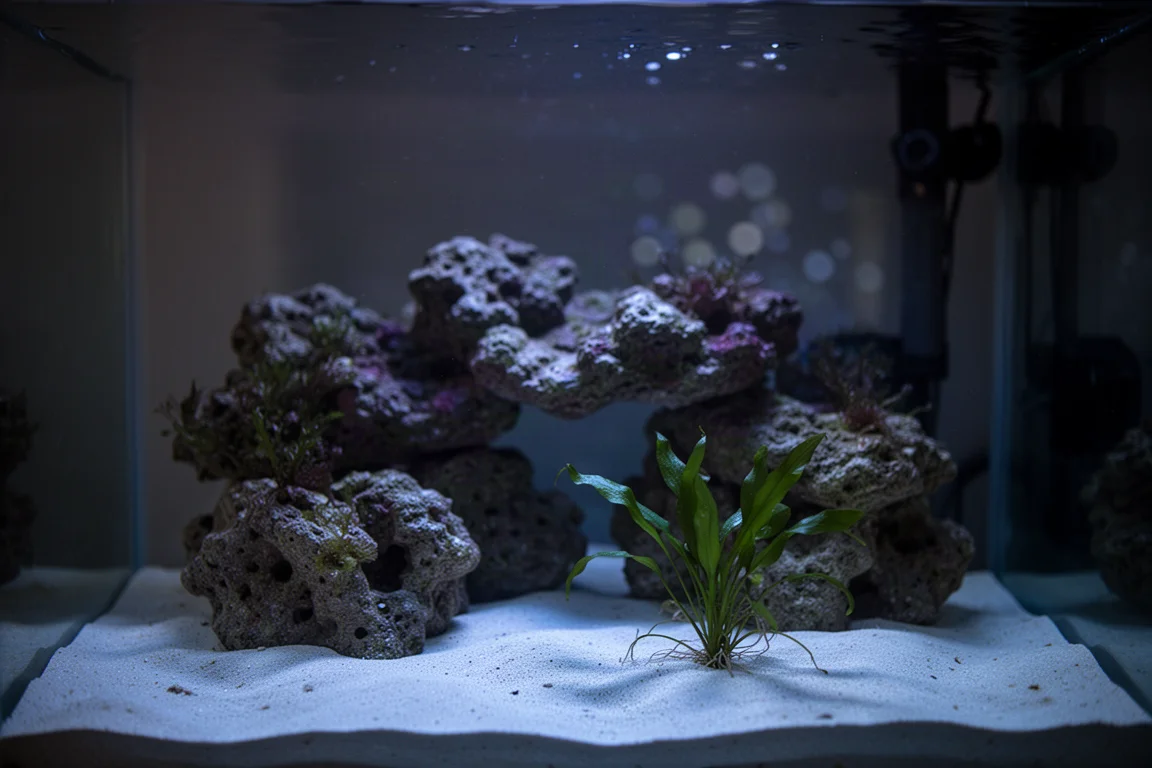
For scale, one 45 gallon all-in-one reef tank was stocked with 22 species and more than 70 individual animals and macro algae, spread across a few weeks. That is far more livestock than a beginner should introduce at once, and it only works when water parameters are tested and adjusted daily.
What a Cleanup Crew Actually Needs
Most crews are built from the same handful of groups. Snails are the backbone: some scour the glass and rockwork for algae, while carnivorous species spend most of their time buried in the sand and emerge at night or when the tank is fed. Shrimp actively hunt leftover food, and some will eat aiptasia anemones. Conchs use a long trunk-like proboscis to eat anything low in the tank and aerate the sand bed as they move through it. Sea urchins graze algae off glass and rockwork so aggressively that they can scrape the color off the rock. Brittle stars come out of the rock at night to search for leftover food, while sand-sifting starfish bury themselves and keep the sand bed clean. Copepods consume diatoms and other fine material, and macro algae consume nitrate and phosphate from the water column.
Timing matters as much as selection. The trick is to add the right members, in the right amount, at the right time. A sand-sifting goby added early, for example, will either starve or need careful spot feeding several times a day, because the sand bed simply has no food in it yet.
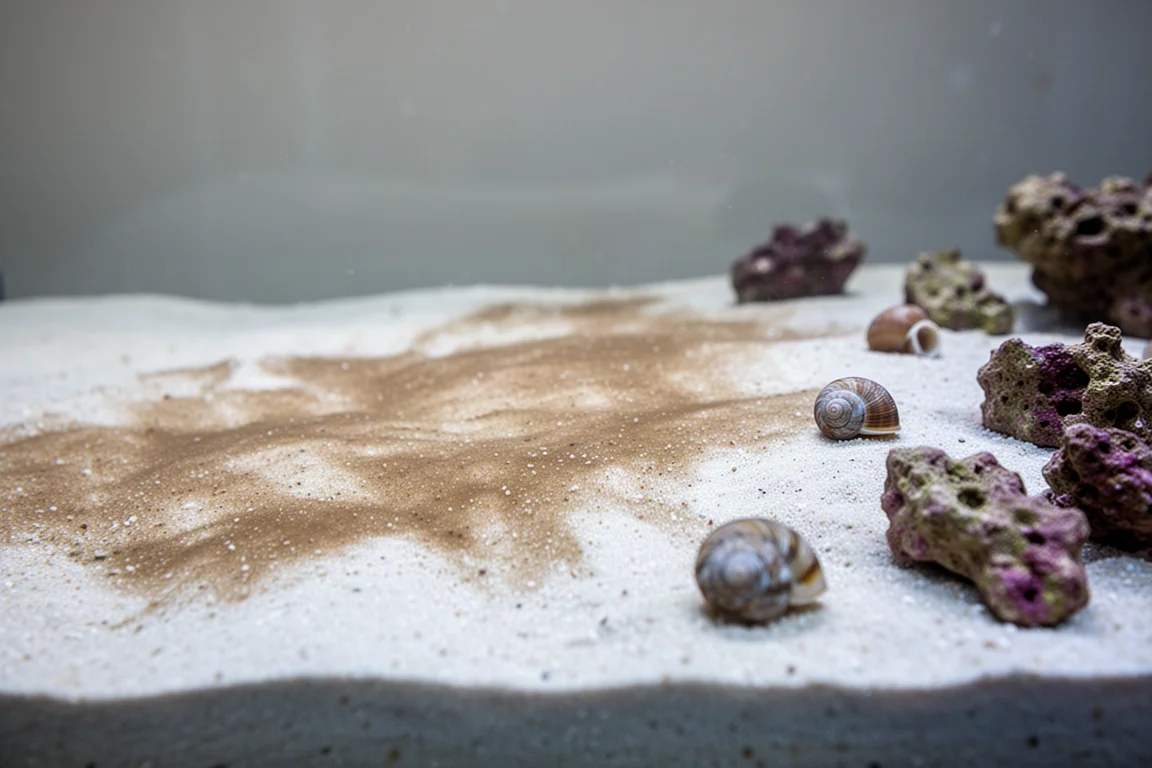
Because natural food takes weeks to accumulate, a new crew has to be fed deliberately. That means adding algae and prepared foods on a schedule until there is enough natural growth and leftover food to take care of the animals. It is also why stocking a tank is usually spread over several weeks rather than completed in a single order.
Best for Pods and Biodiversity: AlgaeBarn Galaxy Pods
Copepods are the first addition for good reason. Adding them immediately after the nitrogen cycle completes shortens and shrinks the new-tank diatom bloom, the brown film that covers the sand bed, and raises the overall biodiversity of the tank. Higher biodiversity benefits corals, gorgonians, and anemones.
A thriving population keeps working after that. Copepods scour rockwork and sand for leftover food and algae, and because they consume live phytoplankton, they can also help reduce nitrate and phosphate. They double as a live food source for fish and filter feeders. Introduction is simple: remove the filter socks, switch off the return pump, pour the bottles into the display tank, allow about 30 minutes for the animals to settle, restart the pumps, run them for another 30 minutes, then replace the socks.
Best Live Phytoplankton: AlgaeBarn Ocean Magic
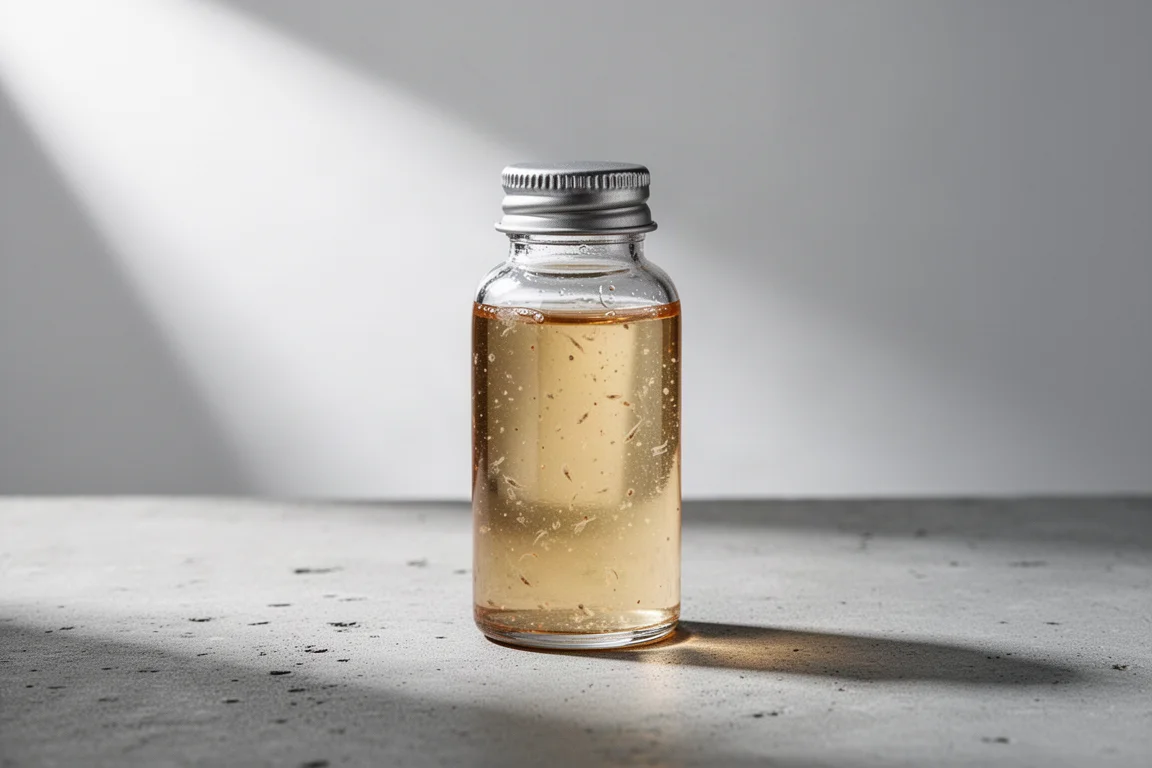
Copepods need feeding every day, and live phytoplankton is the option that gives back the most. A live culture has a shorter shelf life than a gel, but it is more beneficial for the tank and for water quality, since live phytoplankton can help draw down nitrate and phosphate.
Dosing is straightforward: about 10 ml a day. Store the bottle in the refrigerator and discard whatever is left after about a month.
Best Shelf-Stable Phytoplankton: Easy Reefs Easy Booster 25
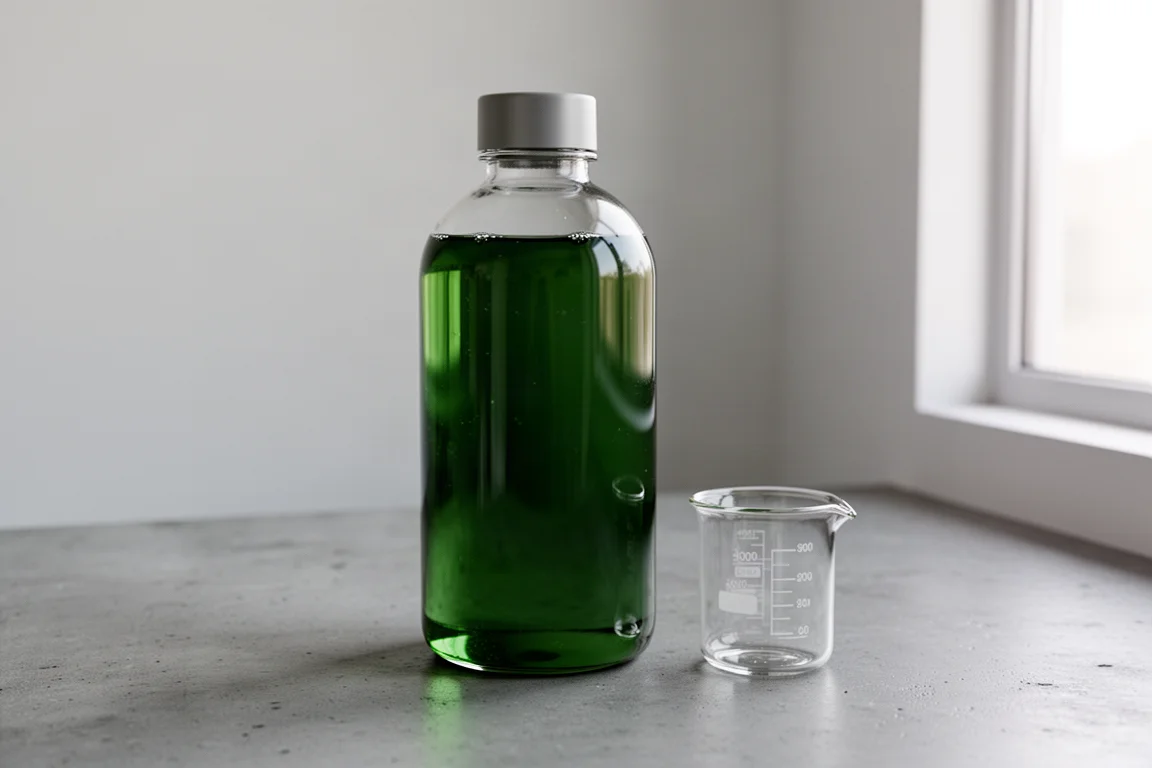
A gel-suspended phytoplankton solves the storage problem. It has a much longer shelf life than a live culture, which makes it a practical choice when refrigeration space is tight or when a tank is left for a stretch of time. The trade-off is honest: a gel feed will likely not provide the same nitrate and phosphate reducing effect as live phytoplankton.
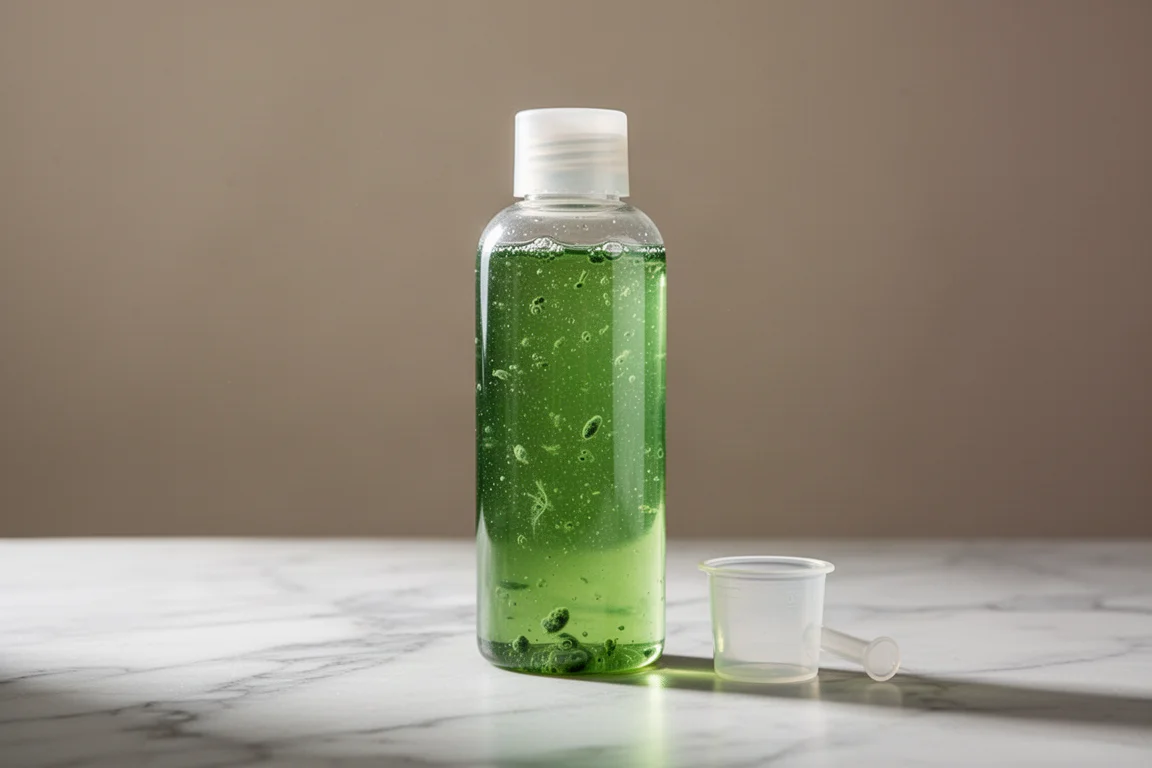
Best Nutrition for Macro Algae: Brightwell Aquatics Kog
Rooted macro algae, including halimeda, pompom, and mermaid fan varieties, can take about a month to establish their roots in the sand. During that period they need plenty of light and additional nutrients. A dedicated supplement supplies those nutrients, and the routine is simple: shake the bottle and add about half a cap a day.
Macro algae take most of their nutrition from light, but they also consume phosphate and nitrate from the water column, which is exactly why they are worth adding to a young tank. Test frequently during this stage so both stay in their proper range. Placement is easy too: choose a spot where the algae look good and bury the root ball fully in the sand.
Best Frozen Food for Meaty Feeders: Hikari Mysis Shrimp
Frozen mysis is the base of the meaty feeding routine. Thaw one cube in tank water in a specimen cup, give it a swirl, and add roughly a third of it to the tank, keeping the rest in the refrigerator to feed over the next two days. Because several of the animals in a crew are filter feeders that feed throughout the day, it helps to run a longer feeding window with the flow turned right down, so slower animals have time to capture what is in the water column.
Rotating a second frozen food alongside mysis is common practice, and the habit is worth keeping once a tank is stocked. The point of the longer feed window is not extra food, it is more time for the animals that need it most.
Best Grazing Food: Two Little Fishies Sea Veggies
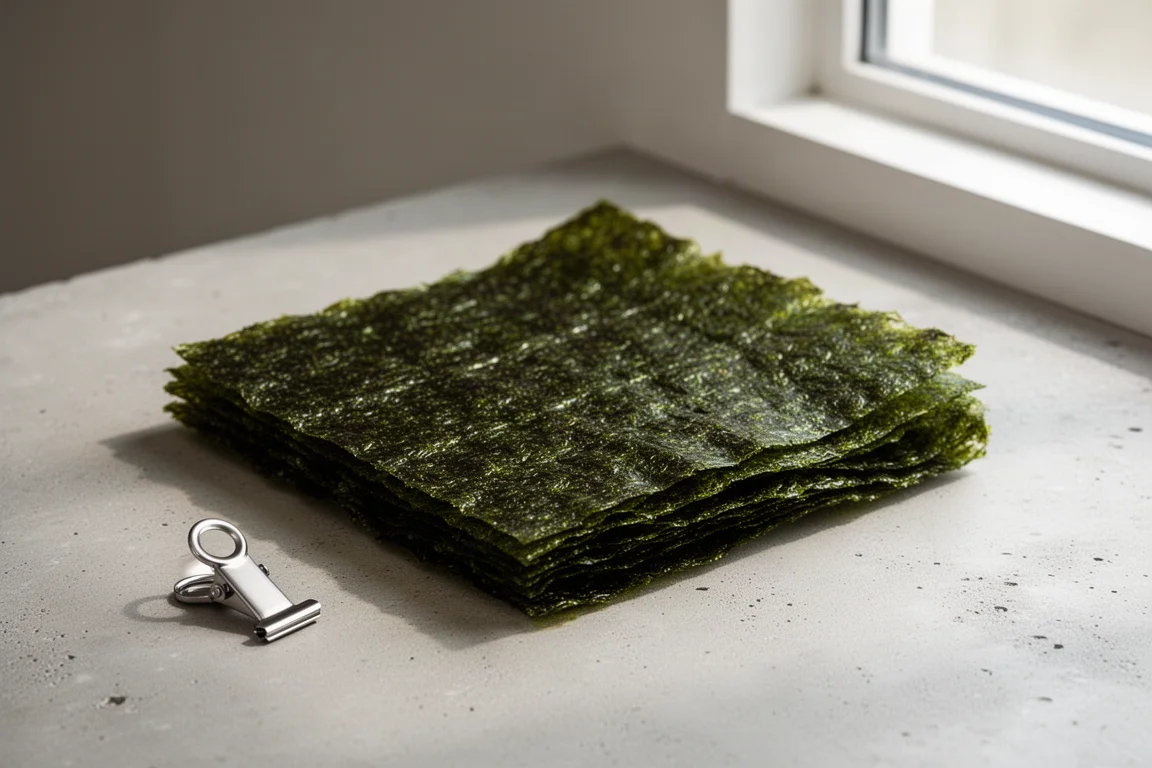
Algae eaters need plant matter, and pressed nori sheets are the simplest way to deliver it. Fold a single sheet several times until it is compact, place it in a magnetic algae clip, and move the magnet down near the rockwork so snails, shrimp, and crabs can reach it. The sheet floats at first and sinks once it is waterlogged. One sheet a week usually lasts a couple of days, and it can be rotated with algae wafers on other days.
Snails do a lot of the visible work. Astrea snails graze film algae off the glass and rockwork all day, which is one of the main reasons glass only needs scraping weekly in a well-stocked tank. Their one drawback is worth knowing: if an astrea snail ends up on its back, it cannot right itself.
Best Fine Particulate Coral Food: Reef Chili Coral Food
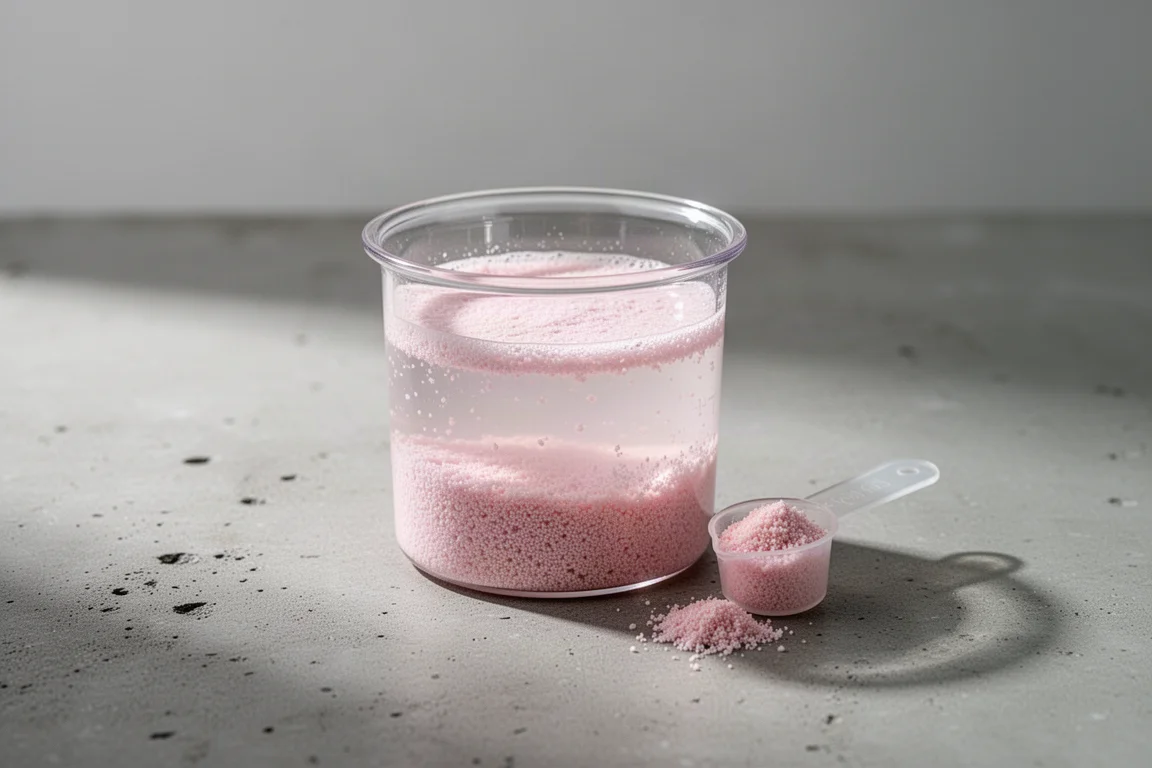
Gorgonians are built from genetically identical polyps, each of which captures small particulate matter from the water column. A fine particulate food matches that feeding method, and it suits other filter feeders too. Preparation takes a moment: shake a small amount into a specimen cup of tank water and pour it in.
Because gorgonians and similar filter feeders capture food throughout the day rather than in a single sitting, splitting the dose works better than one large feeding. A second small batch later in the day keeps food in the water column for longer. Gorgonians also need strong light and strong flow, and they shed periodically, so flow matters both for keeping their bodies clear and for delivering food to the polyps.
Best Mounting Epoxy: Tunze Coral Gum
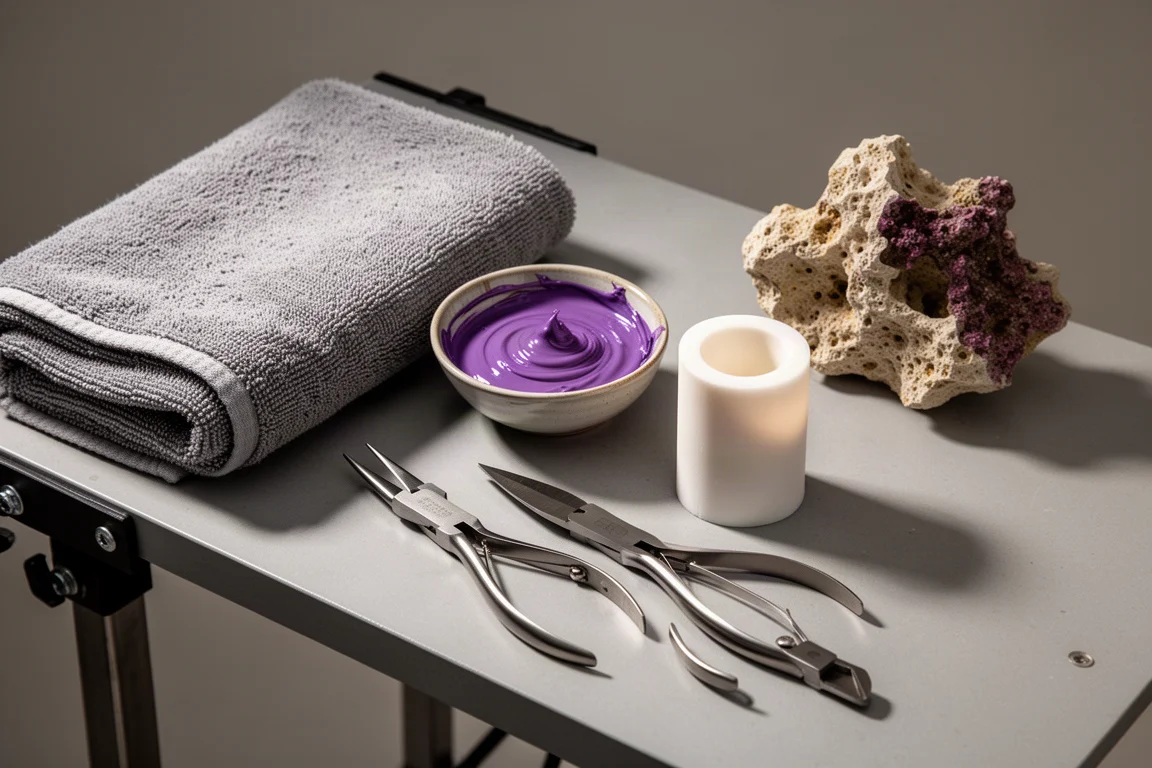
Two-part epoxy is what holds a gorgonian in place on the rockwork, working together with extra-thick adhesive. Mix two small pieces of epoxy until they are a solid purple, apply a generous dollop of thick adhesive to one side, push the coral’s hard stem through the wet glue into the setting epoxy, then add another dollop on the side that will contact the rock. The adhesive provides the initial grip, while the epoxy supplies the long-term structure. The piece is stable enough to hold almost immediately, though it fully cures over several hours.
Gorgonians need more thought than most corals when it comes to placement. Different species can sting one another, so they should be spaced apart. They also shed and need strong water movement to help them slough it off. Where they arrive on ceramic mounts, the mount can simply be buried in the sand for upright species, keeping the living tissue above the sand line.

Best Mounting Kit: BRS Coral Frag Kit
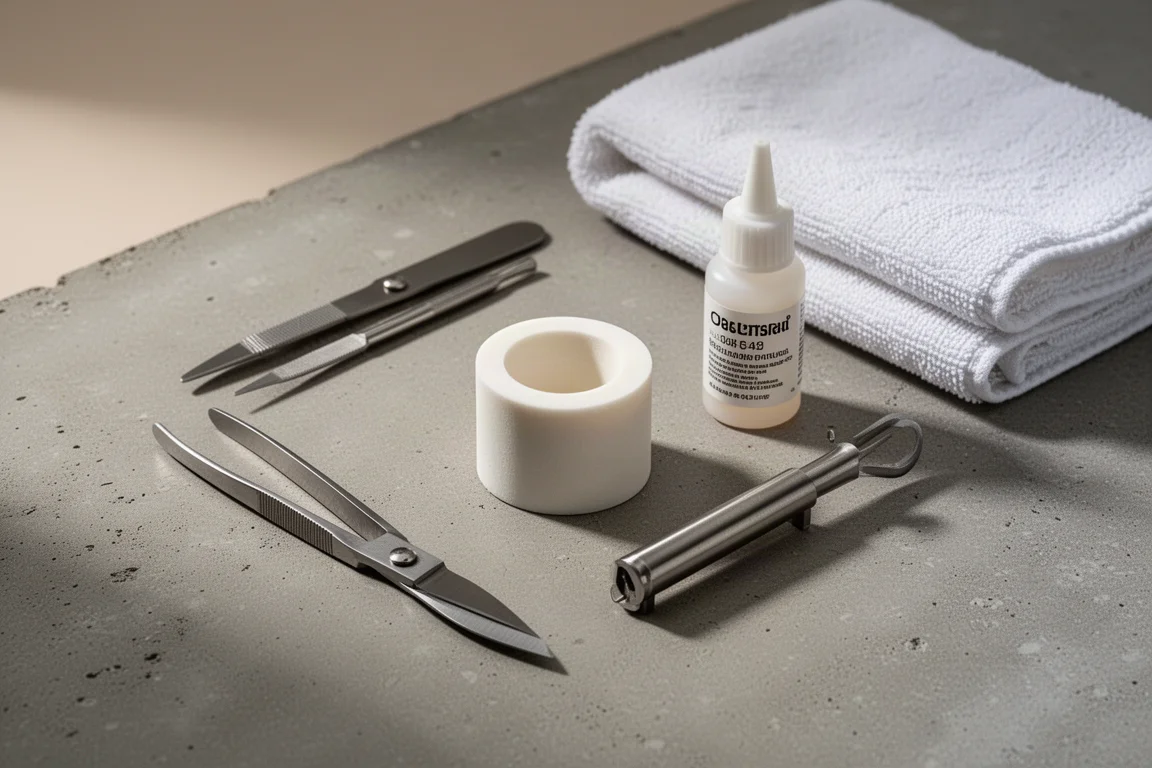
A dedicated mounting station keeps this kind of work contained and tidy: a towel, a frag kit, extra-thick adhesive, and the epoxy. The kit supplies the cutting tools needed to remove ceramic mounting plugs, which are hollow on the inside, so the plug can be cut away without damaging the coral. Every coral has a hard section of stem at its base with no tissue on it, and that is the part that gets attached to the rock.
Removing the plug is worth the effort for spindly gorgonians. Corals that spread and encrust will eventually cover a plug, but a gorgonian will not, leaving the plug visible for the life of the tank. Encrusting gorgonians are the exception: a large dollop of extra-thick adhesive on the base, pressed directly onto the aquascape, is enough, since the coral spreads over the rock in time. Disposable gloves are worth having on hand, because cyanoacrylate adhesive takes days to wear off skin.
Buying Advice
The order of purchase matters as much as the products themselves. Copepods and phytoplankton come first, because they address the diatom bloom that follows a cycle and they build a live food base that everything else benefits from. Macro algae nutrition belongs in the same early window, while rooted algae are still establishing.
Foods should be matched to the animals actually in the tank. A tank stocked with grazers needs plant matter; a tank with gorgonians and other filter feeders needs fine particulate food split across the day; a tank with shrimp and crabs needs a meaty staple. For anyone adding a crew for the first time, the most valuable purchase is patience. Introducing a large group of animals at once means testing and adjusting water parameters daily, and that level of attention is the difference between a thriving tank and a struggling one. Budget for test kits and water changes alongside the foods, because heavy feeding raises nitrate and phosphate quickly.
Conclusion
A cleanup crew is only as effective as the support around it. Copepods and phytoplankton shorten the ugly early stage and add biodiversity. A macro algae supplement carries rooted algae through their first month. Frozen, grazing, and fine particulate foods cover the different feeding methods a mixed crew contains. Epoxy plus a proper mounting kit keep gorgonians and corals where they belong. Buy in the right order, feed for the animals you actually keep, and test often. That combination gives a new reef tank the best chance of settling in cleanly.
Further reading
Related Reviews
Reef Aquarium Supplies
Aquaforest Salt Mixes Comparison: Which Reef Salt Is Right for Your Tank?
A detailed breakdown of Aquaforest's three salt formulations—Reef Salt, Sea Salt, and Probiotic Reef Salt—to help you choose the best match for your reefing style.
Reef Aquarium Supplies
Best Coral Mounting Supplies: Glue, Epoxy and Frag Mount Options
A practical look at coral mounting supplies that hold securely, stay out of sight and can be removed later when a placement needs to change.
Reef Aquarium Supplies
Tropic Marin Salt Comparison: Classic vs Pro Reef vs Bioactif vs Symbiotic
A practical comparison of the four Tropic Marin salt mixes, what each alkalinity profile and bacterial additive is designed for, and how to pick the right one for your tank.