Reef Aquarium Supplies
Best Coral Mounting Supplies: Glue, Epoxy and Frag Mount Options
A practical look at coral mounting supplies that hold securely, stay out of sight and can be removed later when a placement needs to change.
Introduction
Coral mounting looks like a five minute job until you are standing over an open tank with a frag in one hand and an adhesive in the other. The choice you make in that moment decides how the coral looks for years, how well it holds against flow and fish, and how easily you can move it if the placement turns out to be wrong.
Most failures come down to the same short list of problems: a mount that cures too slowly to hold, a material that is still visible on the rockwork months later, or a bond so stubborn that removing a dead frag means chipping set epoxy out of the aquascape.
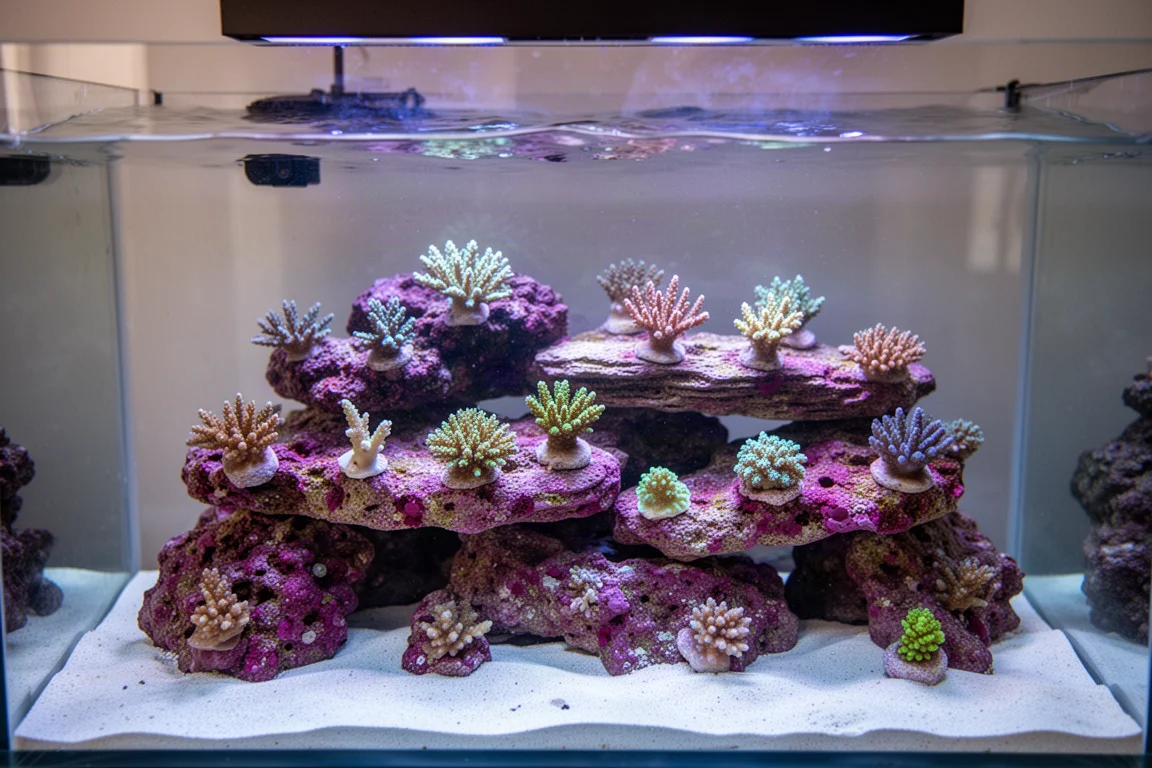
The supplies below solve those specific problems rather than promising a universal answer. They are not interchangeable. The right pick depends on whether you are mounting one frag or a whole batch, whether the coral is staying forever, and whether you want the option of taking it back out.
Placement matters just as much as the adhesive. Light zones, flow, growth pattern and how aggressively a coral spreads all influence whether a mount succeeds, and the best glue in the world will not rescue a coral that was never going to thrive in that spot.
What Separates a Good Mount from a Bad One
Four qualities decide whether a mounting material is worth keeping in the cabinet.
Cure speed. Something that sets in under two minutes lets you press the frag into place, hold it briefly and walk away. Slow materials force you to prop the coral up and hope the flow does not take it overnight.
Visibility. The less material used, the better. A dark or purple adhesive against pale rock is the classic eyesore, and even a covered mount can leave a visible base underneath the coral.
Reversibility. Corals die, placements turn out wrong, and colonies get moved. A mount that can be snapped out cleanly leaves the rockwork intact instead of permanently marked.
Fit for the coral. Some corals encrust, some plate outward, some grow into dense bushes, and some spread so aggressively that they belong on their own island rather than on the main structure.
Best Reversible Bond: Tunze Coral Gum
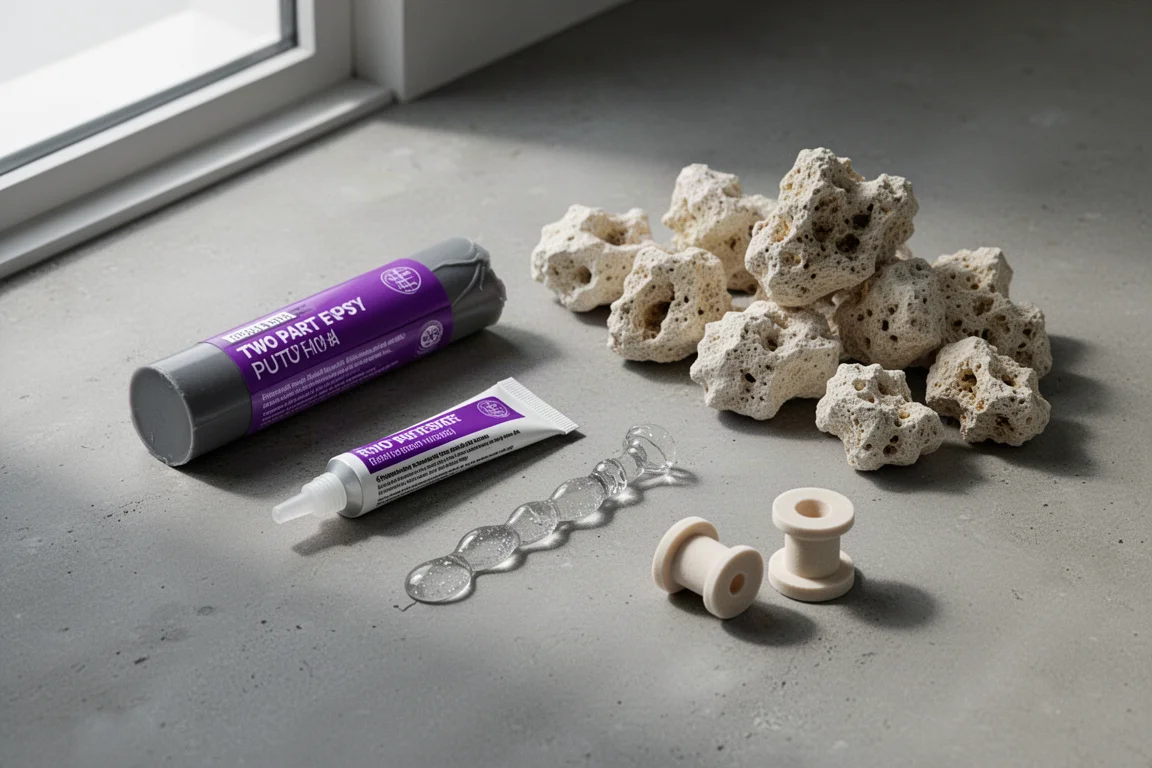
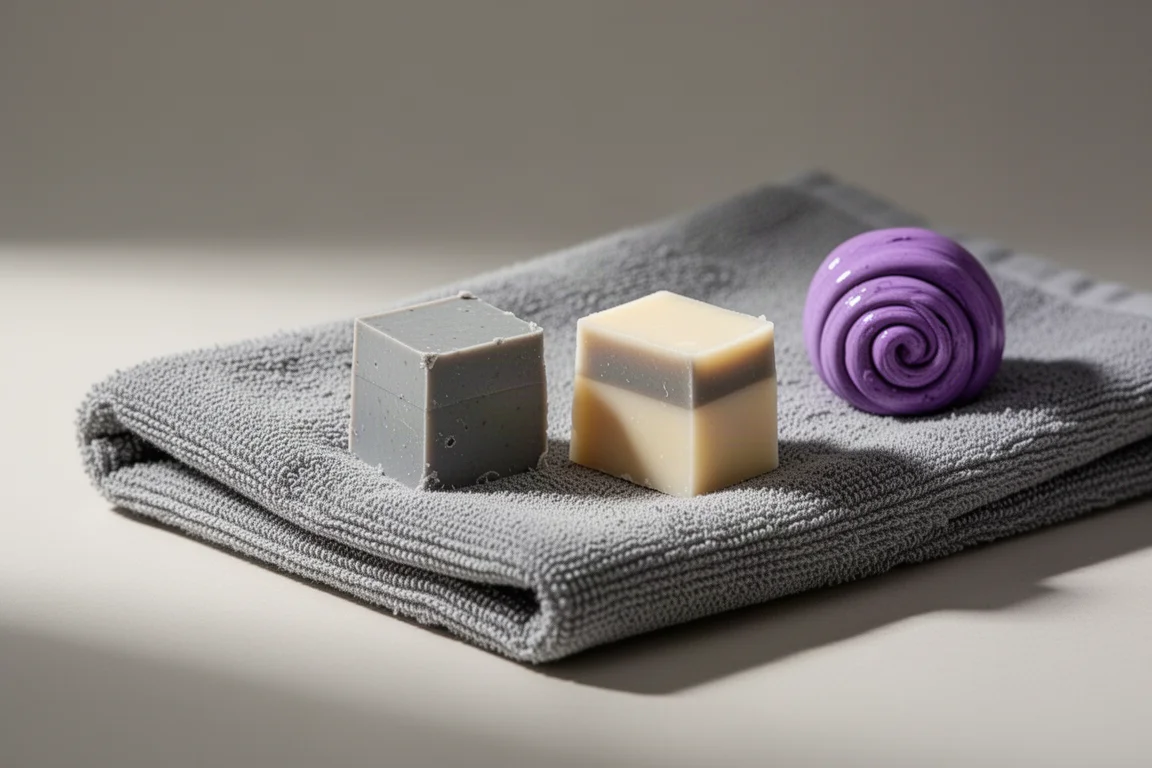
Tunze Coral Gum is a two part epoxy that handles more like a soft putty than a rigid cement. It is mixed by hand, which keeps the process simple, and it cures in roughly 90 seconds, so the coral only needs to be held in place for a short moment before the bond takes over.
The appeal is the material itself. It stays slightly flexible instead of hardening into a brittle plug, which means it can be dug out later in one piece rather than chipped away in fragments. It does not flake off in the water, and it does not send a protein skimmer into overdrive the way some epoxies can.
Because so little is needed per mount, the higher cost per pack does not translate into a higher cost per coral. A small amount pressed into a nook disappears almost completely, and encrusting corals will base out over it in time until nothing is visible at all.
Best Thick Gel for Underwater Work: IC-Gel
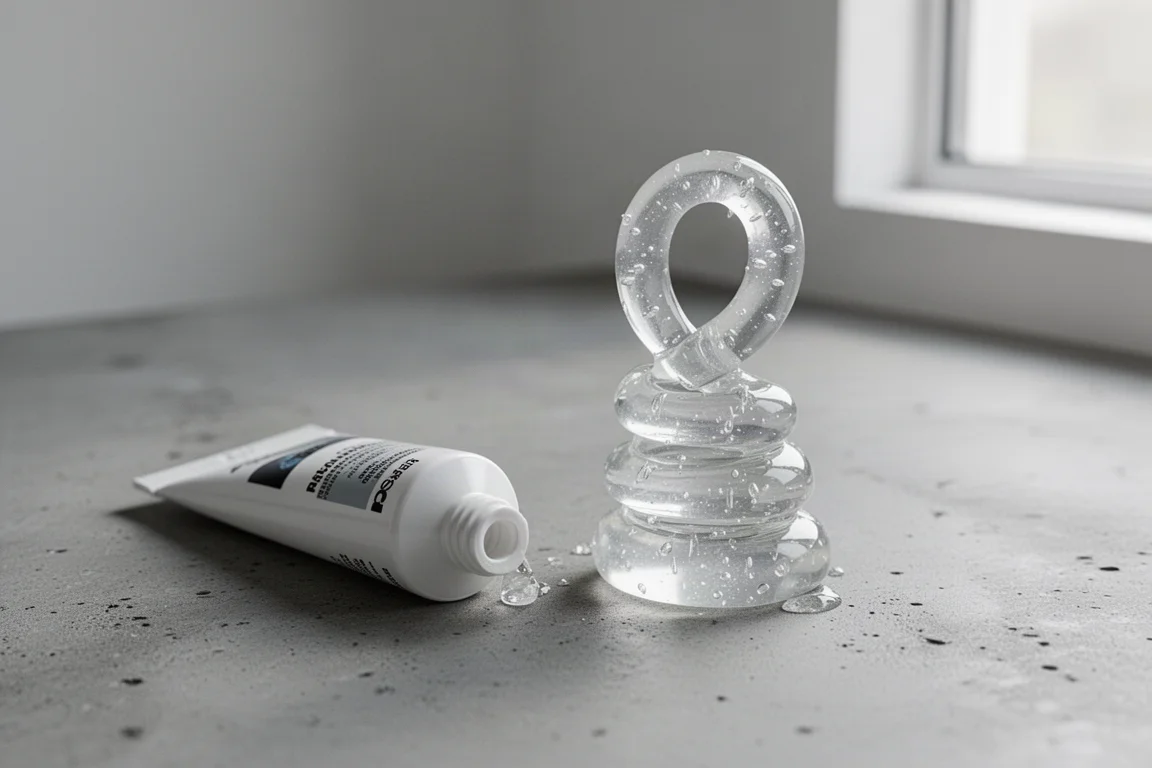
Viscosity is the entire point of IC-Gel. It is the thickest gel of its kind, which means it can be squeezed into a gap or a small hollow and it stays where it is put long enough for a coral to be pressed into it. Thinner glues run and sag underwater, and they often lose the frag before the bond has a chance to set.
It is inexpensive, and it is normally used generously, so it suits a session where a whole batch of frags is going onto the rock in one go. It is also the practical answer when a two part epoxy would be far more material than the job actually needs.
There is one caution worth knowing. Use too much and the cured glue can take on a frosted, glassy sheen in the water, almost like a trapped bubble sitting just under the surface. Keeping the bead small avoids that look entirely.
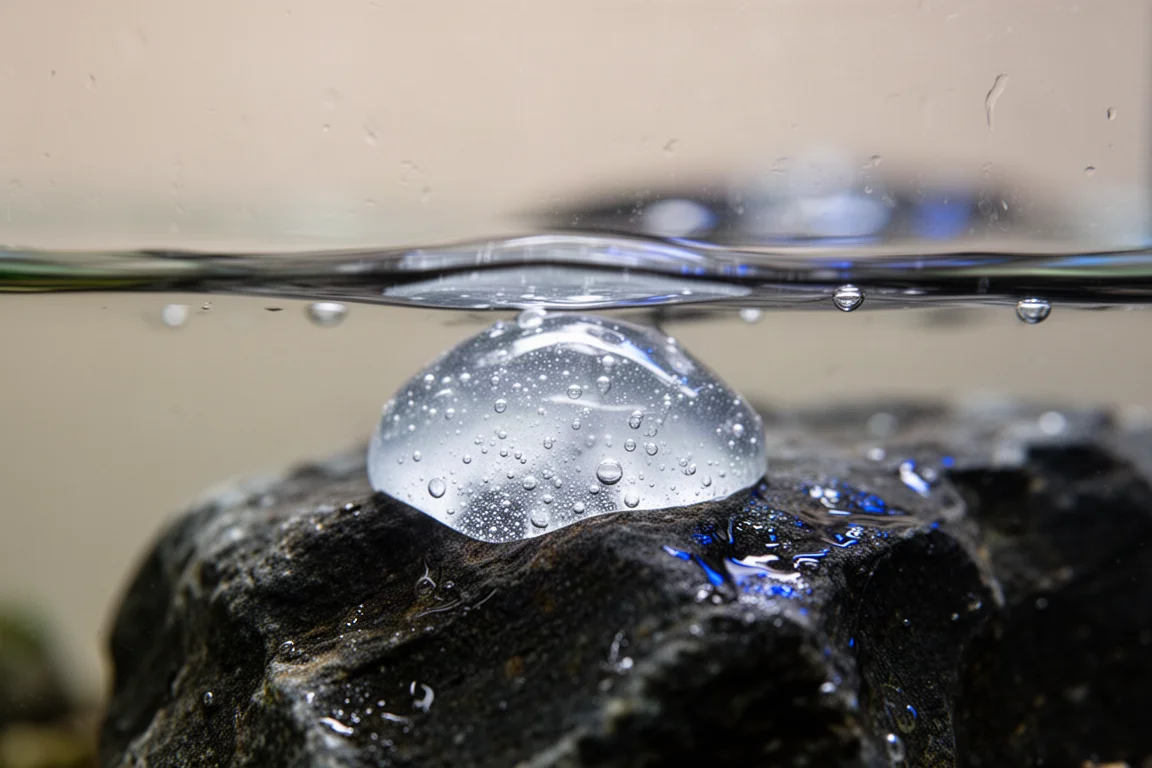
Because a thick gel holds its shape, it can also fill a depression in the rock and effectively become the socket the coral sits in. That is a useful trick when the natural mounting point is awkward, angled or too shallow for putty to grip.
Best Permanent Frag Display: Tunze Coral Rack
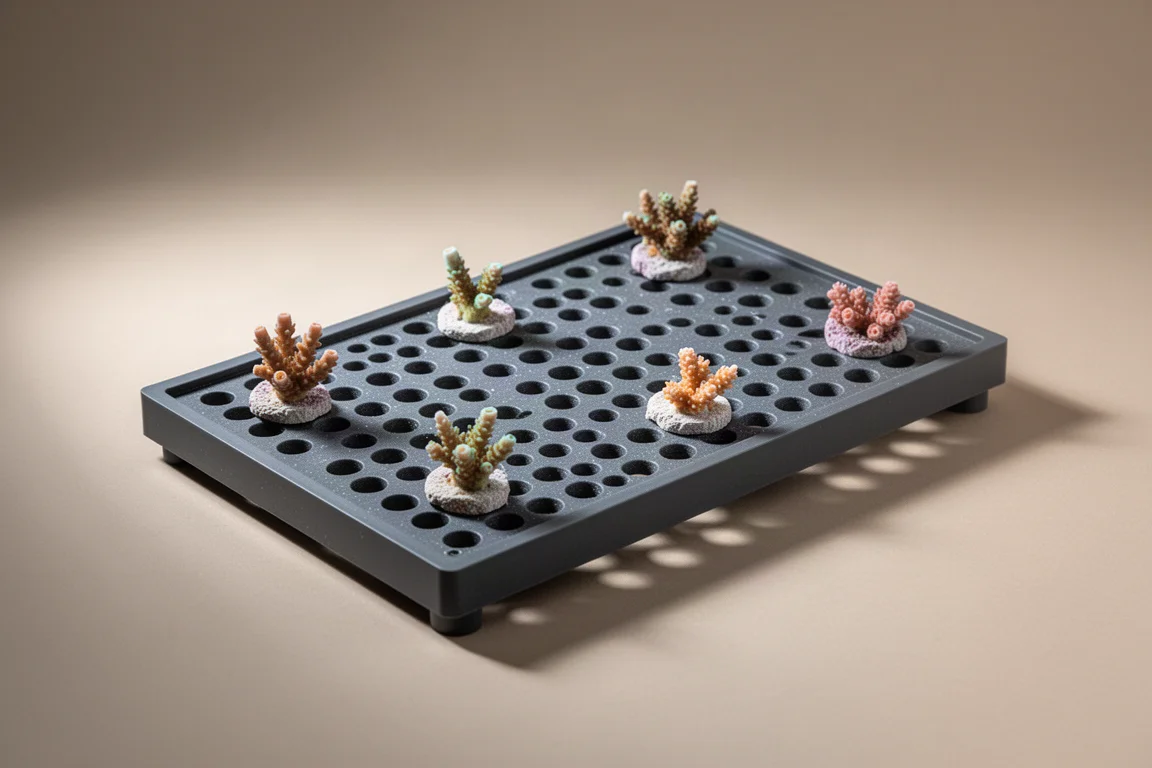
A frag rack is usually treated as a temporary holding pen, but a rack like the Tunze Coral Rack can be left in place permanently as part of the display. Mounted high at the back or along the side of the tank, it adds a dimension that rockwork alone cannot provide, and it lets a group of frags be viewed closely without being glued down.
It is a particularly good home for zoanthid frags. Set a group out on the rack and the different colors can spread and mix while you decide which ones have earned a permanent place on the rock. In the meantime, the rack itself is doing useful work rather than sitting in a cabinet.
Best Natural Rubble Mount: Marco Rock
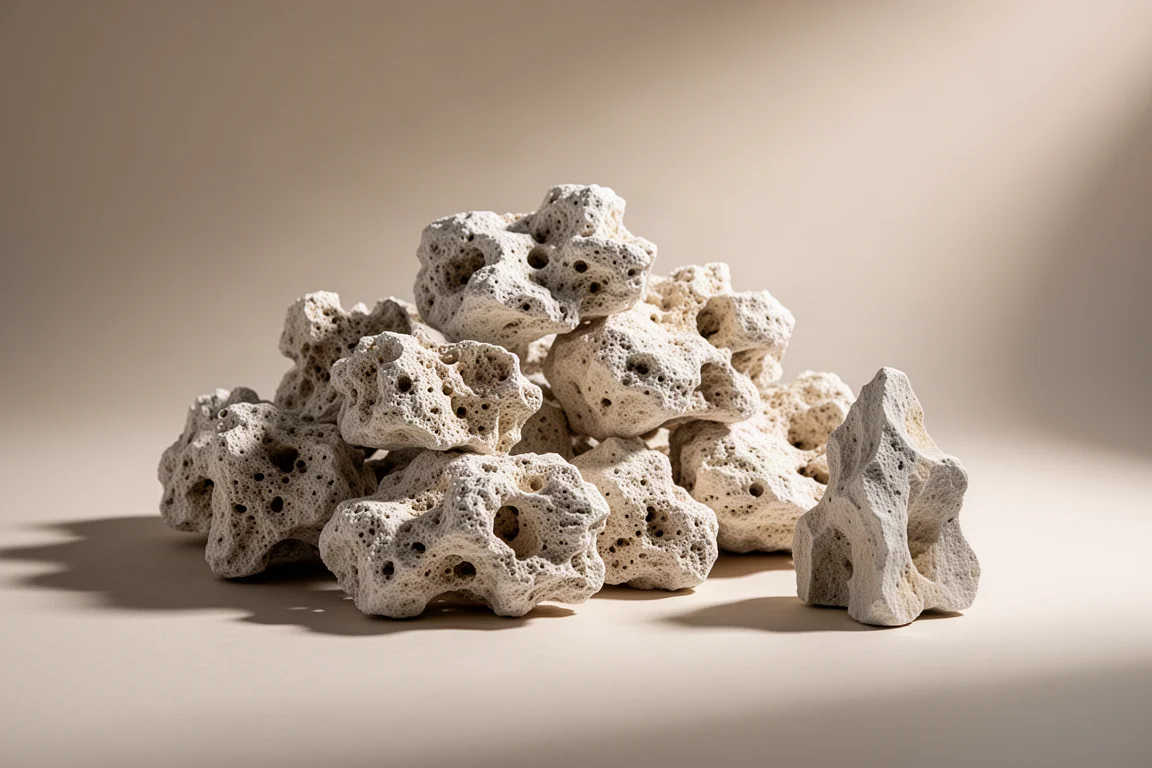
The standard ceramic frag plug announces itself. It is a perfectly round disc or peg sitting on natural stone, and even after the coral grows over it, the base remains visible underneath.
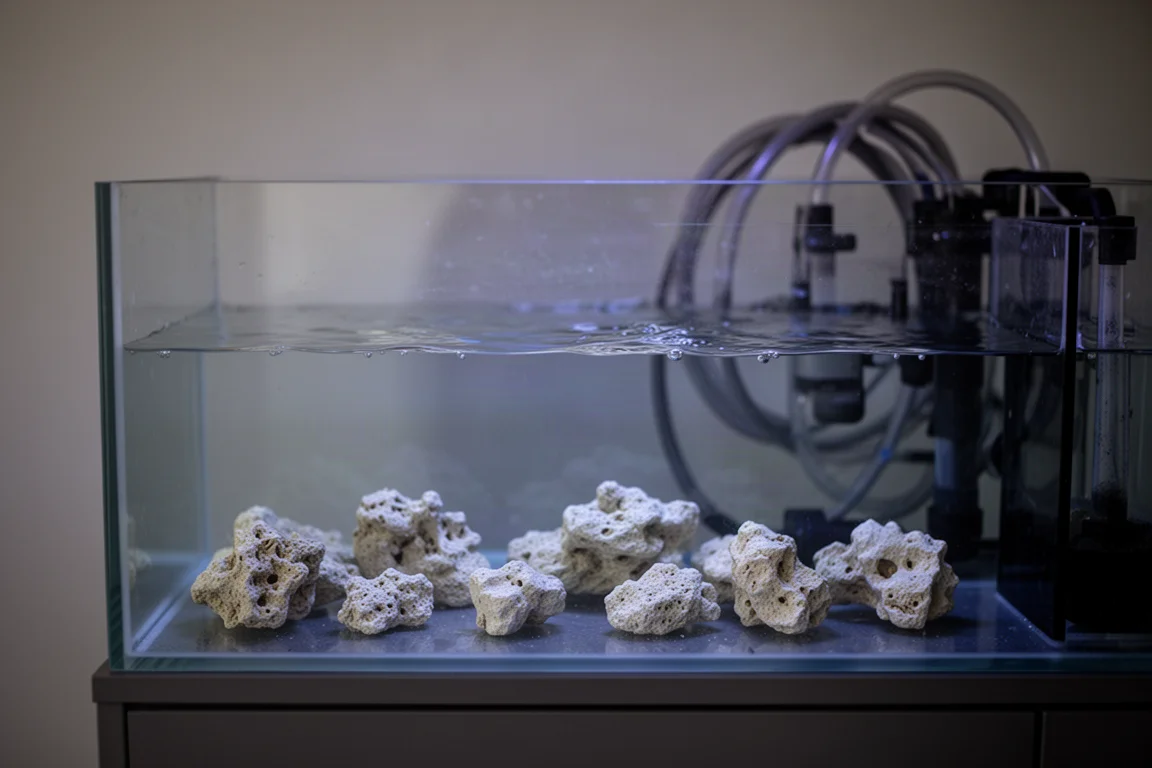
A piece of Marco Rock rubble solves that problem. A coral grown onto a small natural stone can be glued almost anywhere, and it reads as an extension of the aquascape rather than an accessory dropped on top of it. Keep spare pieces in the sump so they are cured and carry a natural biofilm before they go anywhere near the display.
This makes rubble the better option for hobbyists who grow their own frags, or for anyone who cares how the mount looks two years later. Pieces prepared this way usually cost a little more than a plain plug, and for most reef keepers that is a fair trade for a mount that disappears.
Best Alternative Rubble Mount: Reef Saver Rock
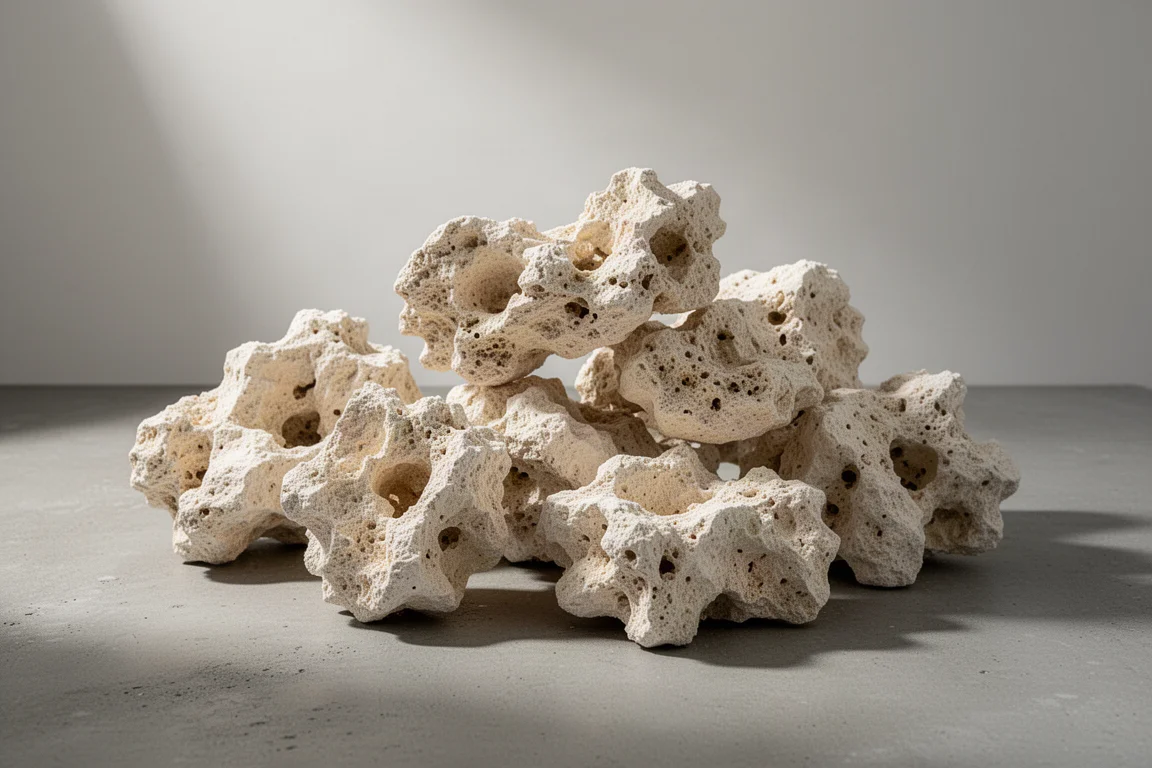
Reef Saver Rock works on exactly the same principle. Broken into small pieces, it provides a natural mounting base that blends into the rockwork instead of sitting on top of it as a peg would.
Because the material arrives dry, the pieces can be prepared well ahead of time and stored in the sump so they are ready whenever a frag needs a home. That preparation is what separates a mount you can see from one that vanishes into the structure.
Buying Advice: Matching the Mount to the Coral
The method should follow the coral, not the other way around.
When a mount might need to be reversed, a hybrid approach works well. Press a small amount of two part gum into the rock, add a thin layer of gel glue, then seat the coral into it. The result holds against flow and fish, yet it can still be snapped out with a little effort, and the gum comes away in one piece so the rock underneath stays clean.
When the mounting point is a hollow or an awkward angle, a thick gel used a little more generously will hold the frag while it sets. When you want the smallest possible footprint and the option to remove the coral later, a small amount of two part gum does the job with almost nothing left on show.
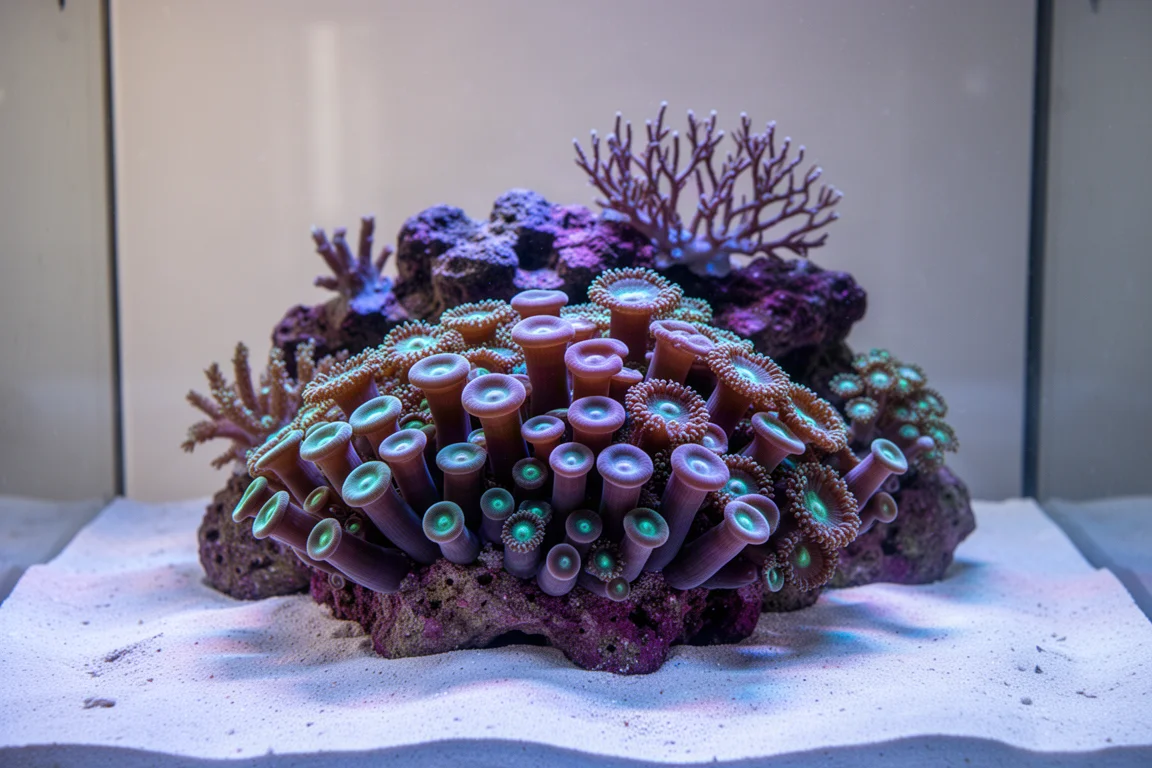
Placement deserves the same care. Fast growing corals such as birdsnest and green slimer will shade and overwhelm slower growers, so they belong lower in the structure where they cannot steal prime real estate from acropora. Corals with long sweepers need clear space around their radius, because sweepers extend at night and will sting anything within reach.
Aggressive spreaders, including star polyps, zoanthids, mushrooms and xenia, are best kept on isolated islands in the sand. One strain usually wins when several are packed together, and it will wipe out the rest. Grouping similar coral types into deliberate gardens is how densely packed show tanks are built, since closely related corals can sit side by side without poisoning each other.
Light zones decide the rest. A range of roughly 200 to 350 PAR suits SPS corals, while 75 to 150 suits softies, LPS and other lower light corals. A coral placed too bright can be lost overnight, whereas too little light takes far longer to cause real harm, which makes lower placement and a gradual move upward the safer route.
Finally, never glue anything with tissue on its underside. Fungi plates and clams do not want to be glued, and clams will settle themselves where they are happiest.
Conclusion
There is no single best coral mounting supply, only the right one for the job in front of you. Two part gum earns its higher cost whenever you want a clean, reversible bond with almost no visible material. A thick gel is the workhorse for underwater mounting, especially when a batch of frags needs to go onto the rock quickly. A permanent rack gives you a display space that rockwork cannot provide. And natural rubble is the quiet upgrade that makes a mounted frag look like it was always part of the aquascape.
Pick the material to match the coral and the placement, plan where the tank is heading rather than only where it is today, and the mounts you make now will still look intentional years from now.
Further reading
Related Reviews
Reef Aquarium Supplies
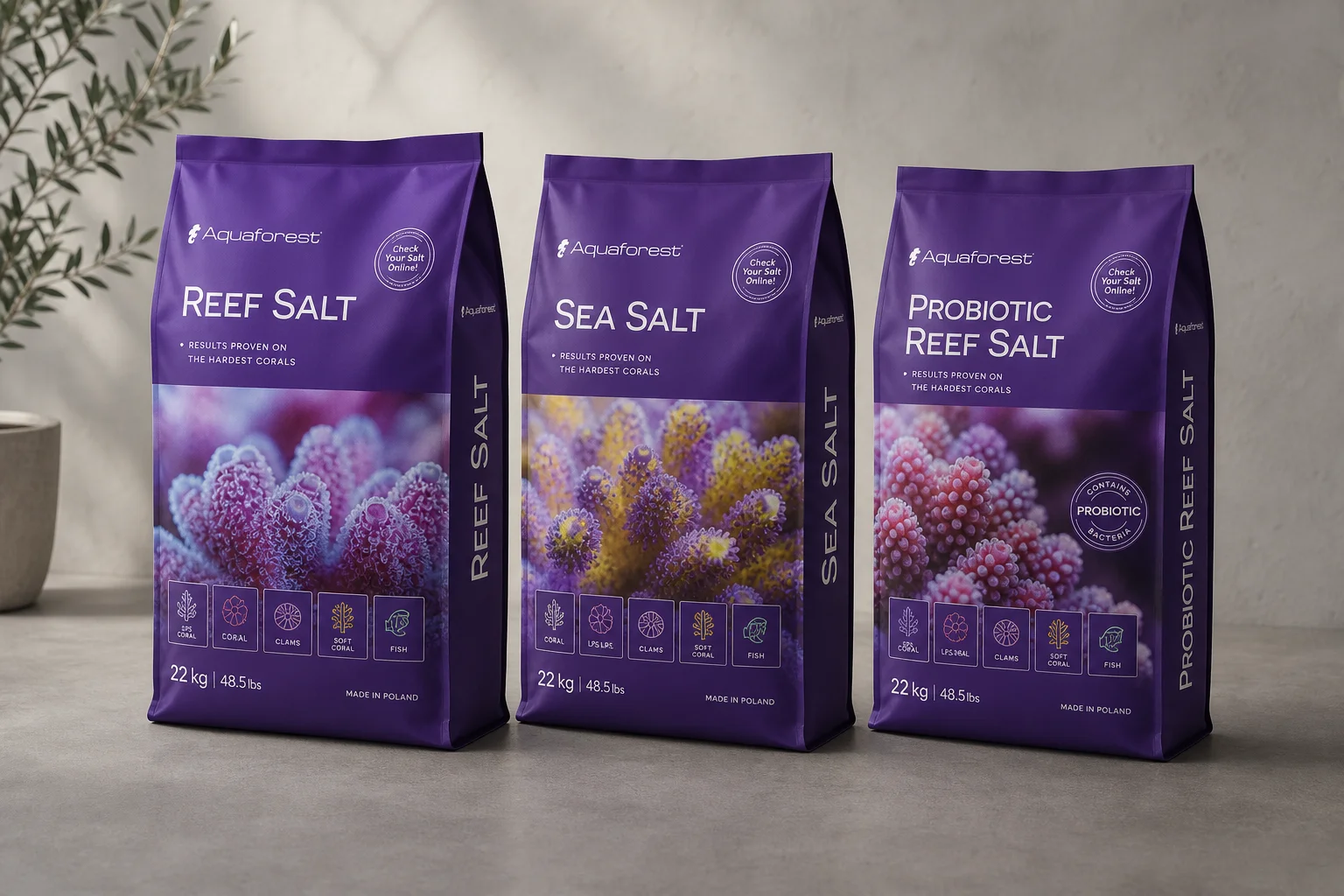
Aquaforest Salt Mixes Comparison: Which Reef Salt Is Right for Your Tank?
A detailed breakdown of Aquaforest's three salt formulations—Reef Salt, Sea Salt, and Probiotic Reef Salt—to help you choose the best match for your reefing style.
Reef Aquarium Supplies
Reef Tank Cleanup Crew Supplies: 9 Essentials for a New Saltwater Tank
A practical guide to the foods, additives, and mounting gear that keep a new reef tank cleanup crew fed, stable, and thriving.
Reef Aquarium Supplies
Tropic Marin Salt Comparison: Classic vs Pro Reef vs Bioactif vs Symbiotic
A practical comparison of the four Tropic Marin salt mixes, what each alkalinity profile and bacterial additive is designed for, and how to pick the right one for your tank.